
Search
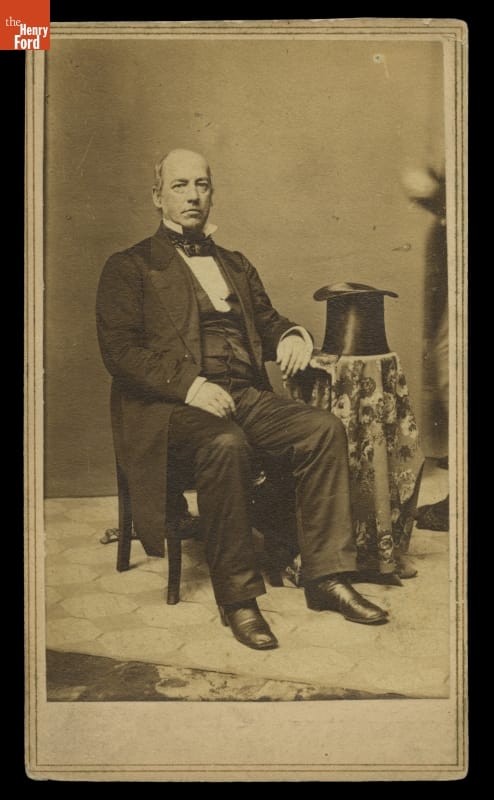
- Portrait of Caleb B. Smith, 1861-1863 - Cartes-de-visite, small, professionally made photographs on cardboard stock, remained popular in the United States from the Civil War in the 1860s through the 1880s. Many were given to friends and loved ones, but enterprising photographers also produced images of famous individuals to sell to the collecting-crazed public. Celebrities, military officers and politicians, such as Caleb Smith, President Abraham Lincoln's first Secretary of the Interior, were popular subjects.
- 1861-1863
- Collections - Artifact
Portrait of Caleb B. Smith, 1861-1863
Cartes-de-visite, small, professionally made photographs on cardboard stock, remained popular in the United States from the Civil War in the 1860s through the 1880s. Many were given to friends and loved ones, but enterprising photographers also produced images of famous individuals to sell to the collecting-crazed public. Celebrities, military officers and politicians, such as Caleb Smith, President Abraham Lincoln's first Secretary of the Interior, were popular subjects.
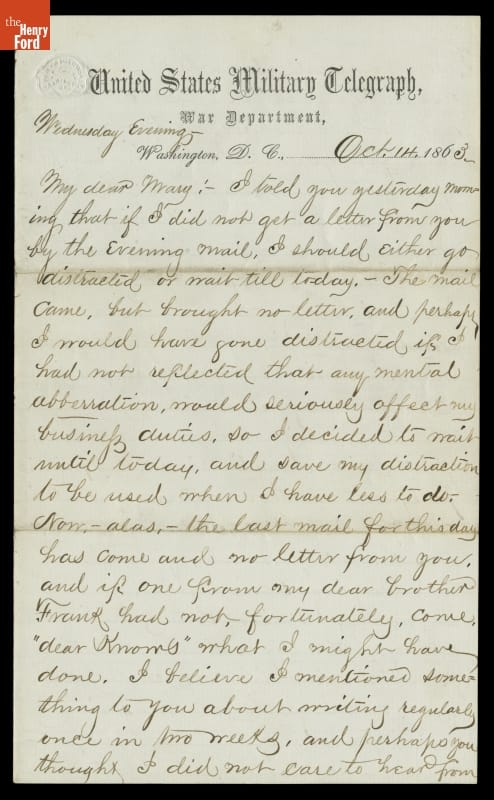
- Letter from Albert B. Chandler to Marilla Stedman, October 14, 1863 - Albert B. Chandler served as a cipher operator at the War Department office in Washington, D.C., during the Civil War. He transmitted coded messages to and decoded messages from Union military field commanders. While at this post, he became acquainted with President Abraham Lincoln. Chandler describes some of his wartime experiences in this letter to Marilla Stedman, his future bride.
- October 14, 1863
- Collections - Artifact
Letter from Albert B. Chandler to Marilla Stedman, October 14, 1863
Albert B. Chandler served as a cipher operator at the War Department office in Washington, D.C., during the Civil War. He transmitted coded messages to and decoded messages from Union military field commanders. While at this post, he became acquainted with President Abraham Lincoln. Chandler describes some of his wartime experiences in this letter to Marilla Stedman, his future bride.
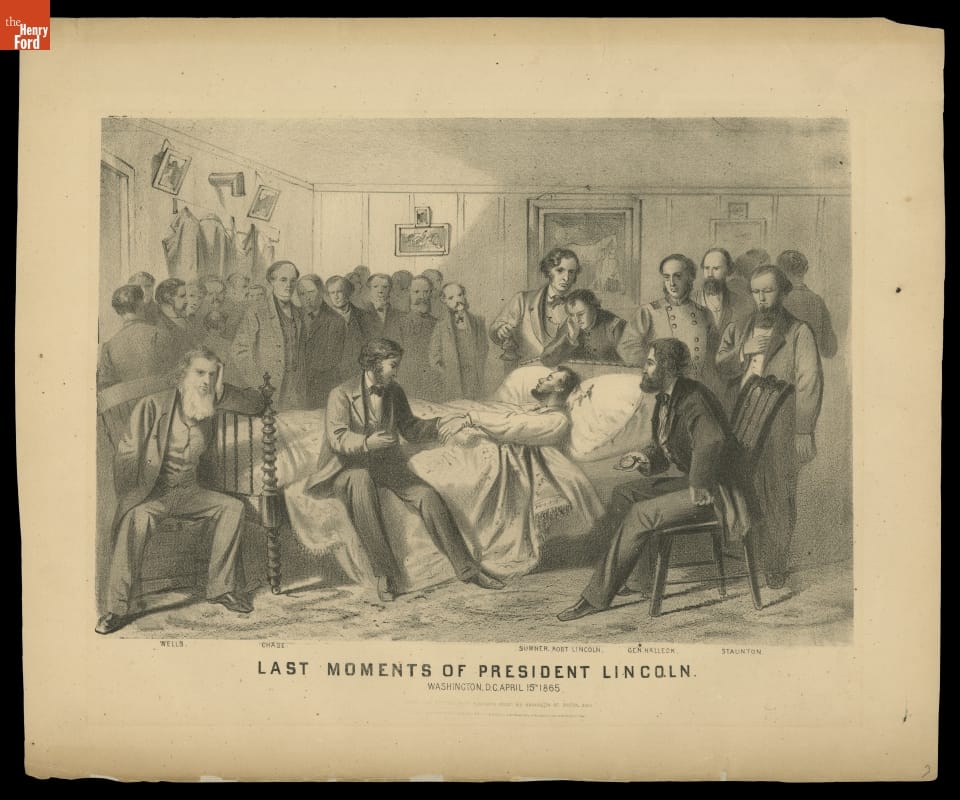
- Lithograph, "Last Moments of President LIncoln," 1865 - Abraham Lincoln's assassination in April 1865 plunged Americans into deep mourning. Before the existence of newspaper photos and television, lithographs helped people to understand the tragic event. This print depicts a room of the Petersen House, where the president died, across the street from Ford's Theatre in Washington, D.C. Not all of these people were actually in the room the morning Lincoln died.
- April 15, 1865
- Collections - Artifact
Lithograph, "Last Moments of President LIncoln," 1865
Abraham Lincoln's assassination in April 1865 plunged Americans into deep mourning. Before the existence of newspaper photos and television, lithographs helped people to understand the tragic event. This print depicts a room of the Petersen House, where the president died, across the street from Ford's Theatre in Washington, D.C. Not all of these people were actually in the room the morning Lincoln died.
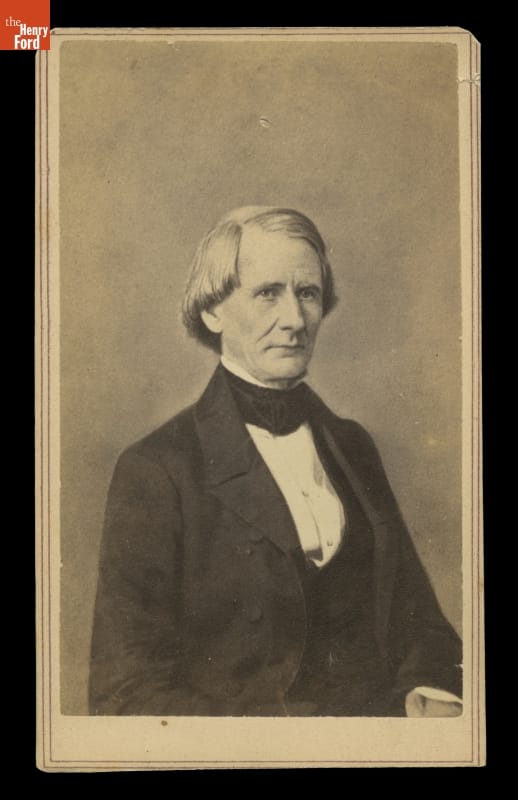
- Portrait of Simon Cameron, circa 1861 - Cartes-de-visite, small, professionally made photographs on cardboard stock, remained popular in the United States from the Civil War in the 1860s through the 1880s. Many were given to friends and loved ones, but enterprising photographers also produced images of famous individuals to sell to the collecting-crazed public. Celebrities, military officers and politicians, such as Simon Cameron, President Abraham Lincoln's first Secretary of War, were popular subjects.
- circa 1861
- Collections - Artifact
Portrait of Simon Cameron, circa 1861
Cartes-de-visite, small, professionally made photographs on cardboard stock, remained popular in the United States from the Civil War in the 1860s through the 1880s. Many were given to friends and loved ones, but enterprising photographers also produced images of famous individuals to sell to the collecting-crazed public. Celebrities, military officers and politicians, such as Simon Cameron, President Abraham Lincoln's first Secretary of War, were popular subjects.
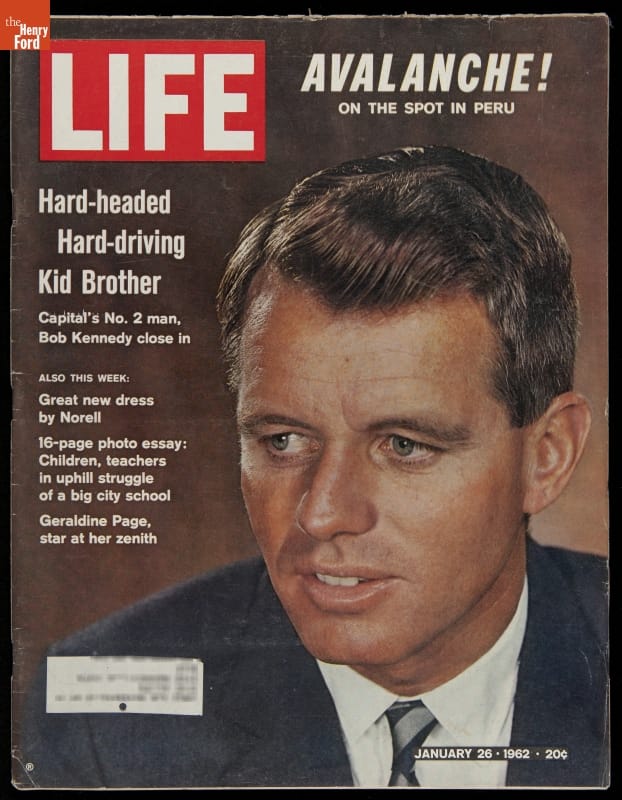
- Life Magazine for January 26, 1962, "Hard-headed, Hard-driving Kid Brother" - Kennedy family members often appeared on the covers of <EM>Life</EM> magazines during the early 1960s, attracting attention and increasing magazine sales. This <EM>Life</EM> cover story features President Kennedy's "kid brother" Robert. As the President's Attorney General and most trusted adviser, "Bobby" Kennedy was called in this article "a political phenomenon such as never quite existed before in the United States."
- January 26, 1962
- Collections - Artifact
Life Magazine for January 26, 1962, "Hard-headed, Hard-driving Kid Brother"
Kennedy family members often appeared on the covers of Life magazines during the early 1960s, attracting attention and increasing magazine sales. This Life cover story features President Kennedy's "kid brother" Robert. As the President's Attorney General and most trusted adviser, "Bobby" Kennedy was called in this article "a political phenomenon such as never quite existed before in the United States."
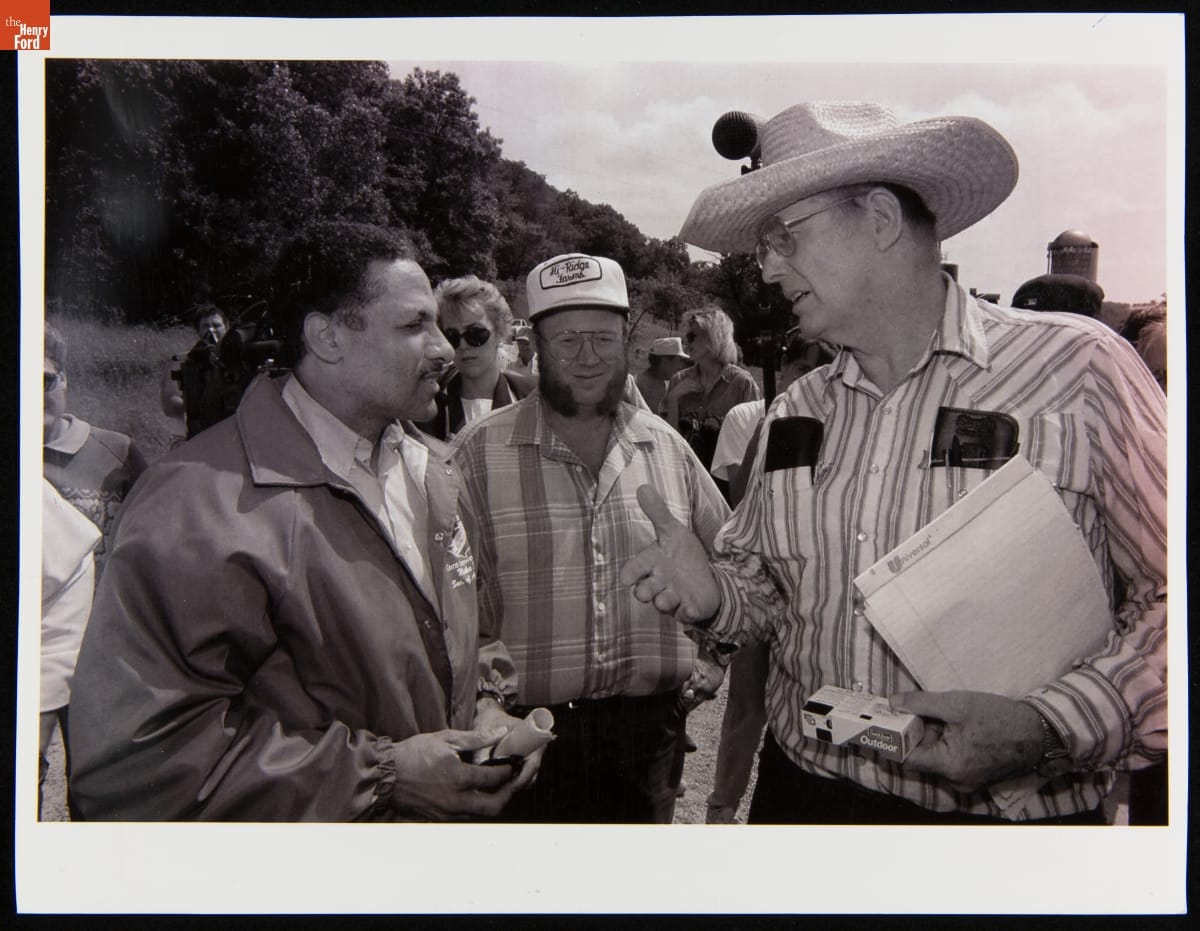
- United States Secretary of Agriculture Mike Espy Talking with Wisconsin Farmer Marcus Gumz, July 1, 1993 -
- July 01, 1993
- Collections - Artifact
United States Secretary of Agriculture Mike Espy Talking with Wisconsin Farmer Marcus Gumz, July 1, 1993
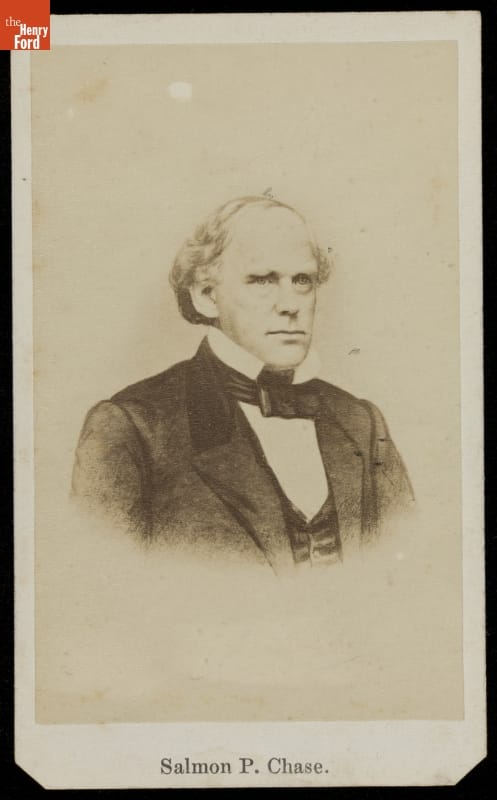
- Portrait of Salmon P. Chase, 1861-1864 - This portrait carte-de-visite shows Salmon Portland Chase, Secretary of the Treasury under Abraham Lincoln. The carte-de-visite was a small photographic print on cardboard stock made by professional photographers. People exchanged and collected cartes-de-visite, popular in the United States from the Civil War in the 1860s through the 1880s, to help them remember family and celebrities.
- 1861-1864
- Collections - Artifact
Portrait of Salmon P. Chase, 1861-1864
This portrait carte-de-visite shows Salmon Portland Chase, Secretary of the Treasury under Abraham Lincoln. The carte-de-visite was a small photographic print on cardboard stock made by professional photographers. People exchanged and collected cartes-de-visite, popular in the United States from the Civil War in the 1860s through the 1880s, to help them remember family and celebrities.
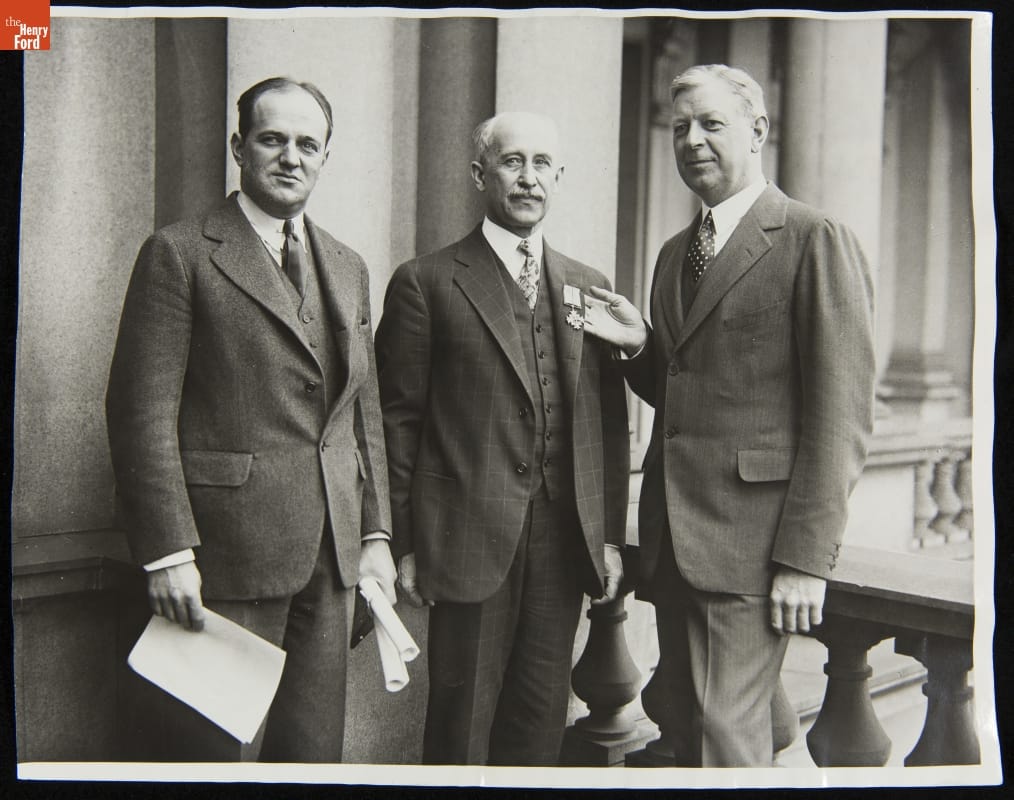
- Orville Wright Receives the Distinguished Flying Cross from Secretary of War Frank Davis, 1929 - Until his death in 1948, Orville Wright was respected as an elder statesman -- <em>the</em> elder statesman -- of aviation. He received the U.S. military's Distinguished Flying Cross in 1929. The award citation recognized "heroism and extraordinary achievement while participating in aerial flight." Wilbur Wright, who had died in 1912, was awarded the medal posthumously.
- 1929
- Collections - Artifact
Orville Wright Receives the Distinguished Flying Cross from Secretary of War Frank Davis, 1929
Until his death in 1948, Orville Wright was respected as an elder statesman -- the elder statesman -- of aviation. He received the U.S. military's Distinguished Flying Cross in 1929. The award citation recognized "heroism and extraordinary achievement while participating in aerial flight." Wilbur Wright, who had died in 1912, was awarded the medal posthumously.
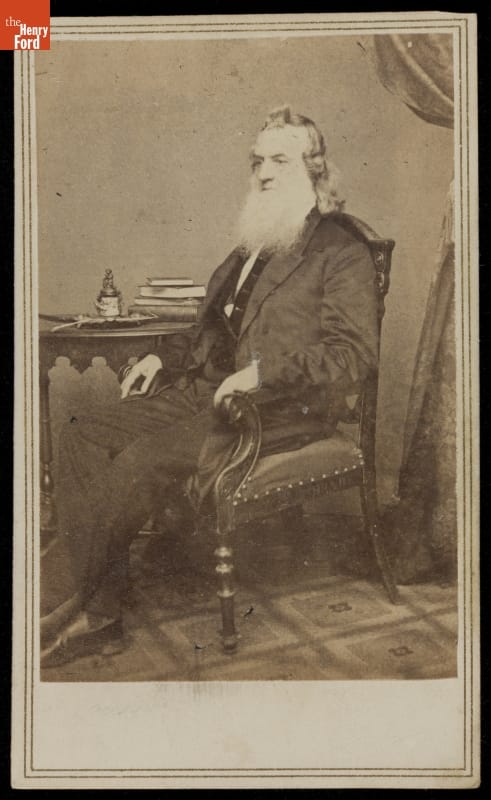
- Portrait of Gideon Welles, 1863-1865 - Gideon Welles, Secretary of the Navy under Abraham Lincoln, posed for this carte-de-visite in New York City. The carte-de-visite was a small photographic print on cardboard stock made by professional photographers. People exchanged and collected portrait cartes-de-visite, popular in the United States from the Civil War in the 1860s through the 1880s, to help them remember family and celebrities.
- 1863-1865
- Collections - Artifact
Portrait of Gideon Welles, 1863-1865
Gideon Welles, Secretary of the Navy under Abraham Lincoln, posed for this carte-de-visite in New York City. The carte-de-visite was a small photographic print on cardboard stock made by professional photographers. People exchanged and collected portrait cartes-de-visite, popular in the United States from the Civil War in the 1860s through the 1880s, to help them remember family and celebrities.
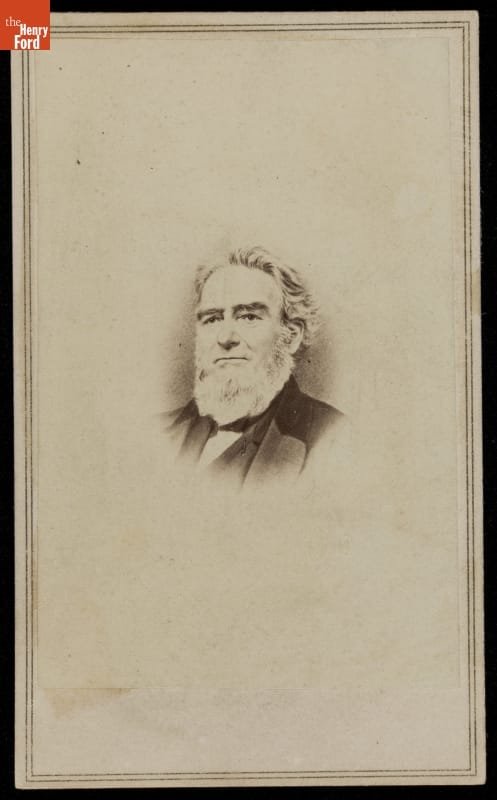
- Portrait of Edward Bates, 1861-1864 - Edward Bates, Attorney-General of the United States under Abraham Lincoln, posed for this carte-de-visite in New York City. The carte-de-visite was a small photographic print on cardboard stock made by professional photographers. People exchanged and collected portrait cartes-de-visite, popular in the United States from the Civil War in the 1860s through the 1880s, to help them remember family and celebrities.
- 1861-1864
- Collections - Artifact
Portrait of Edward Bates, 1861-1864
Edward Bates, Attorney-General of the United States under Abraham Lincoln, posed for this carte-de-visite in New York City. The carte-de-visite was a small photographic print on cardboard stock made by professional photographers. People exchanged and collected portrait cartes-de-visite, popular in the United States from the Civil War in the 1860s through the 1880s, to help them remember family and celebrities.