
Search
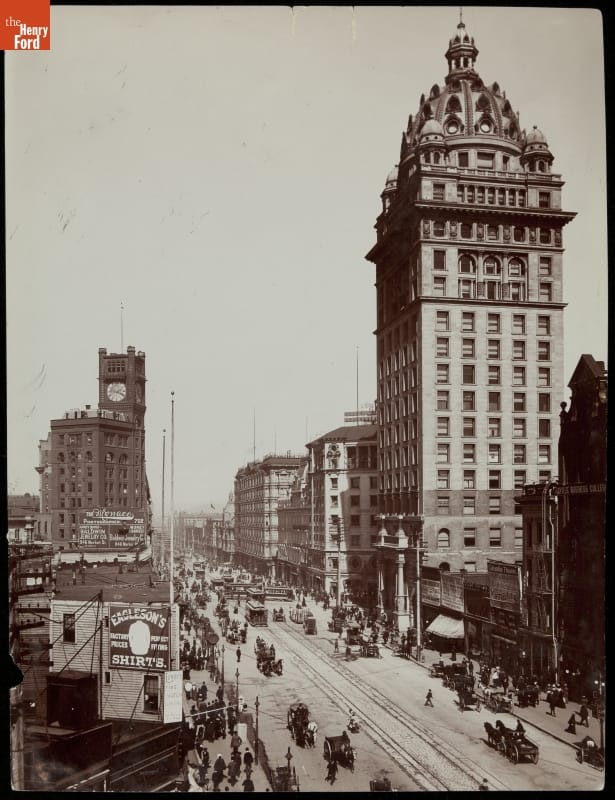
- Street Scene, San Francisco, California, circa 1900 - From 1895 to 1924, the Detroit Publishing Company was one of the major image publishers in the world. The company had a wide-ranging stock of original photographs, including this image of the busy Third and Market Street intersection in San Francisco. The tall, ornate building at left is the Call Building, home of the <EM>San Francisco Call</EM> newspaper.
- circa 1900
- Collections - Artifact
Street Scene, San Francisco, California, circa 1900
From 1895 to 1924, the Detroit Publishing Company was one of the major image publishers in the world. The company had a wide-ranging stock of original photographs, including this image of the busy Third and Market Street intersection in San Francisco. The tall, ornate building at left is the Call Building, home of the San Francisco Call newspaper.
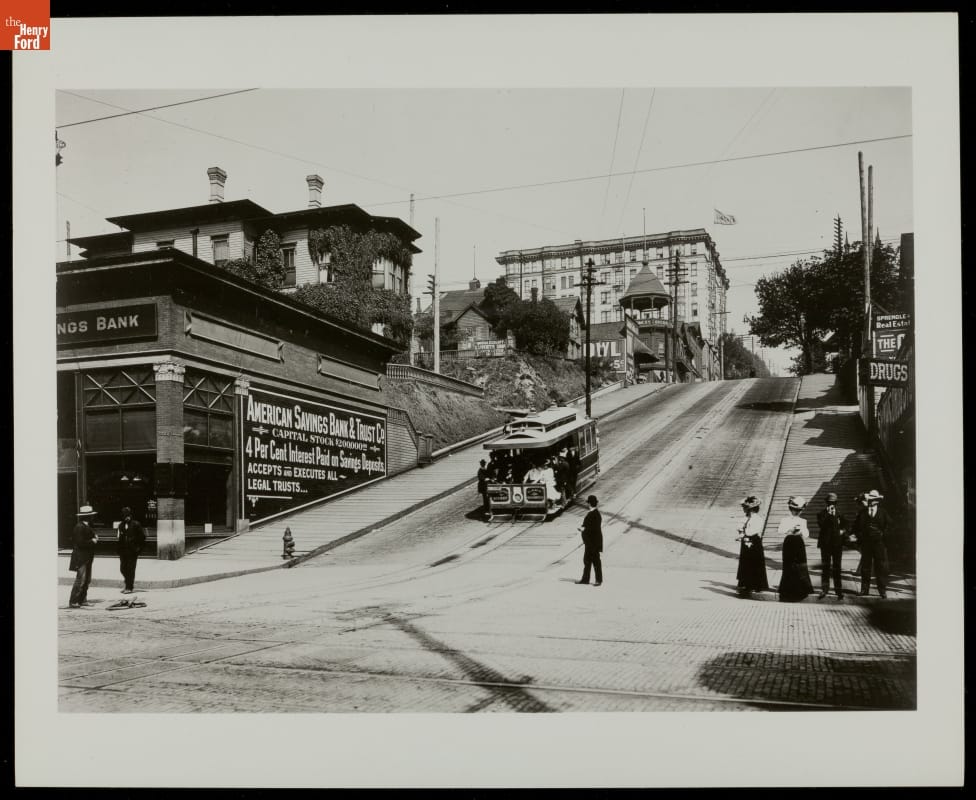
- Cable Car on Madison Street, Seattle, Washington, circa 1905 - The Madison Street cable car line carried passengers between Elliot Bay and Lake Washington. At the end of the line, Madison Park offered paying riders a boathouse, piers, bandstand, baseball and football fields, and even a beer hall. This helped make the Madison Street line especially popular during summer weekends.
- circa 1905
- Collections - Artifact
Cable Car on Madison Street, Seattle, Washington, circa 1905
The Madison Street cable car line carried passengers between Elliot Bay and Lake Washington. At the end of the line, Madison Park offered paying riders a boathouse, piers, bandstand, baseball and football fields, and even a beer hall. This helped make the Madison Street line especially popular during summer weekends.
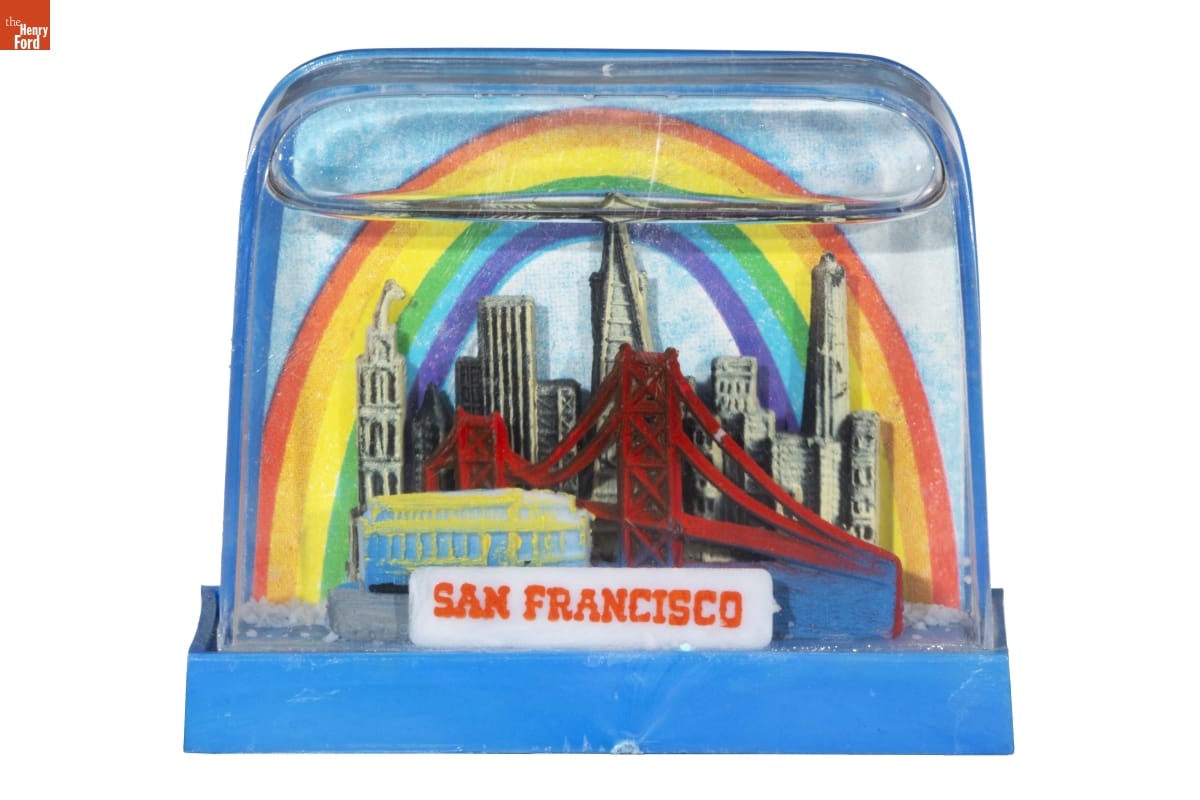
- "San Francisco" Snow Globe, 1980-1995 - Tourist attractions offered souvenir seekers something new beginning in the 1950s: inexpensive plastic snow globes. These evolved from fancier versions through innovations in plastics and manufacturing technology, and they quickly became connected with travel. Snow globes were fun to collect, easy to transport, and served as both proof of the journey and a lasting representation of vacation memories.
- 1980-1995
- Collections - Artifact
"San Francisco" Snow Globe, 1980-1995
Tourist attractions offered souvenir seekers something new beginning in the 1950s: inexpensive plastic snow globes. These evolved from fancier versions through innovations in plastics and manufacturing technology, and they quickly became connected with travel. Snow globes were fun to collect, easy to transport, and served as both proof of the journey and a lasting representation of vacation memories.
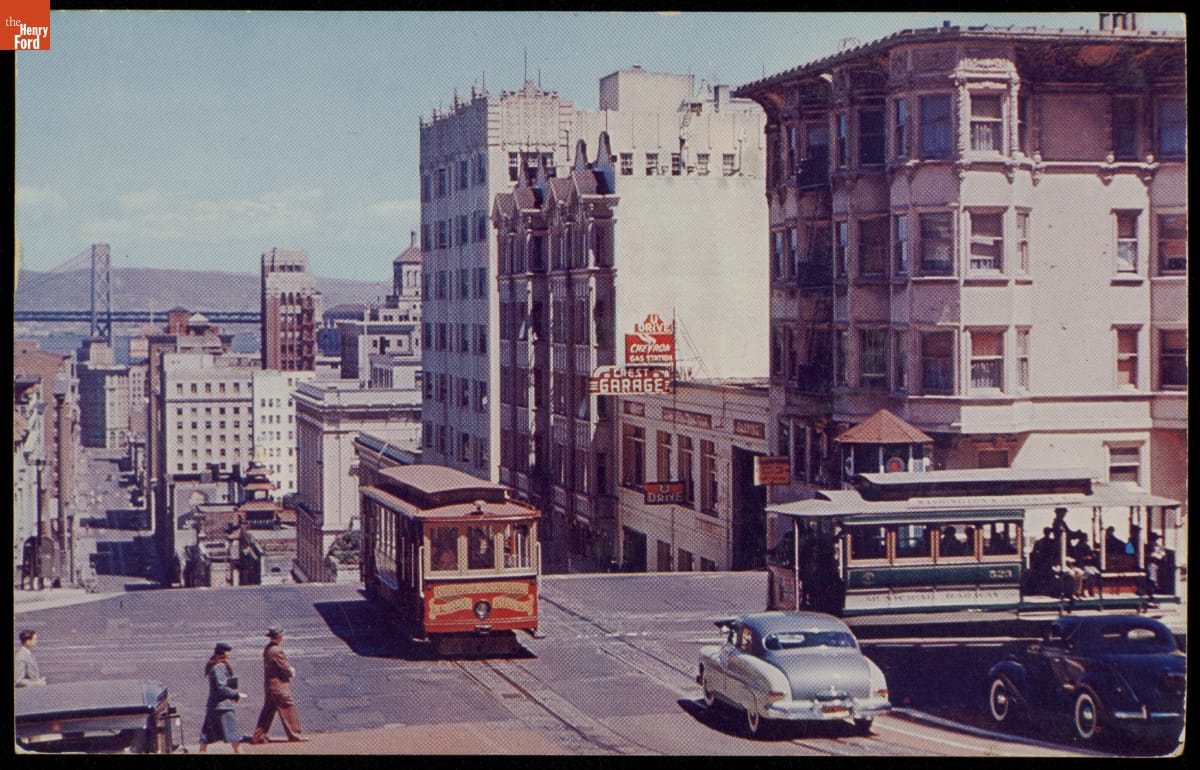
- "San Francisco's Cable Cars," circa 1950 - San Francisco installed its first cable railway in 1873. Cars were pulled by an underground cable powered from a central station. Other cities built similar railways, but most removed their complex cable-based systems once electric streetcars became practical. San Francisco kept three cable car lines, which worked well on the city's hilly streets. They remain a beloved community symbol.
- circa 1950
- Collections - Artifact
"San Francisco's Cable Cars," circa 1950
San Francisco installed its first cable railway in 1873. Cars were pulled by an underground cable powered from a central station. Other cities built similar railways, but most removed their complex cable-based systems once electric streetcars became practical. San Francisco kept three cable car lines, which worked well on the city's hilly streets. They remain a beloved community symbol.
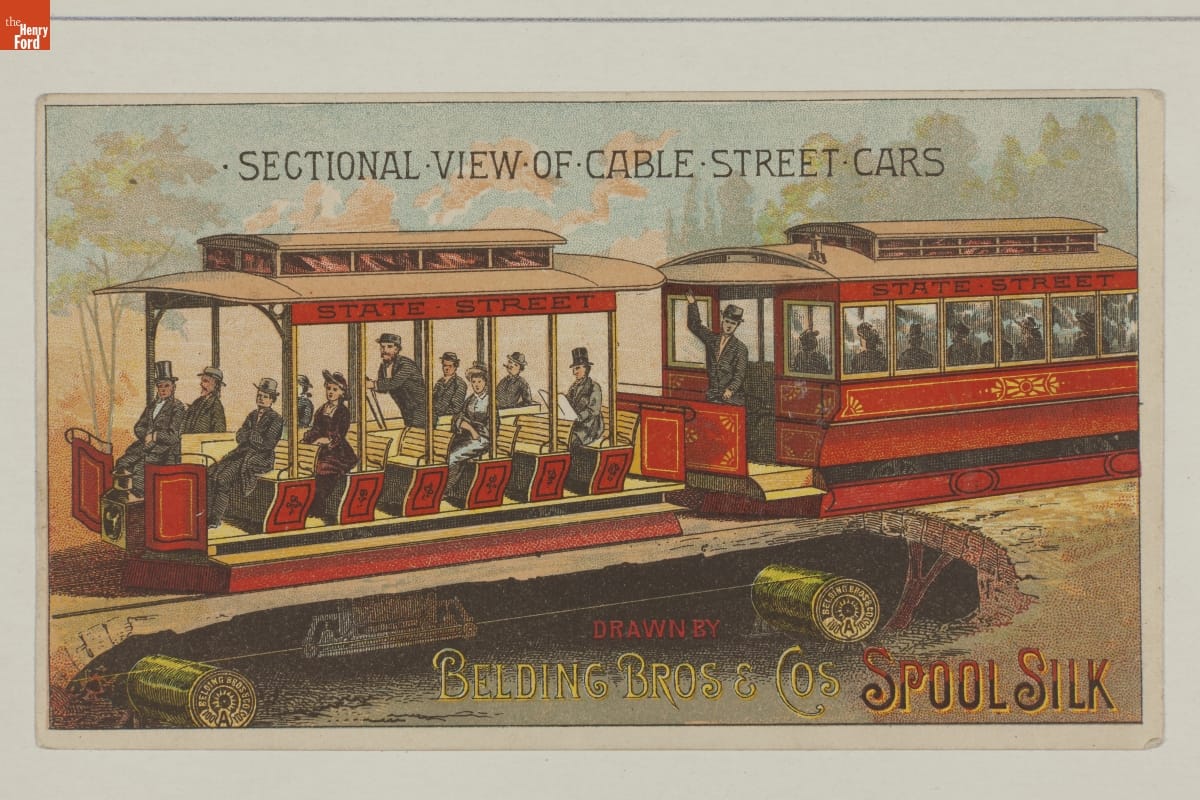
- Lithograph Advertising Belding Bros. & Co. Silk Thread, "Sectional View of Cable Street Cars," circa 1880 - This print shows a cutaway of Chicago City Railways' State Street cable car line. In the 1880s Chicago transit companies invested heavily in cable railways, but most had switched to electric streetcars by 1900. Belding Brothers, a leading manufacturer of silk thread, put the strong fiber to work pulling cable cars-but most transit companies eventually settled on cheap, sturdy wire rope.
- circa 1880
- Collections - Artifact
Lithograph Advertising Belding Bros. & Co. Silk Thread, "Sectional View of Cable Street Cars," circa 1880
This print shows a cutaway of Chicago City Railways' State Street cable car line. In the 1880s Chicago transit companies invested heavily in cable railways, but most had switched to electric streetcars by 1900. Belding Brothers, a leading manufacturer of silk thread, put the strong fiber to work pulling cable cars-but most transit companies eventually settled on cheap, sturdy wire rope.
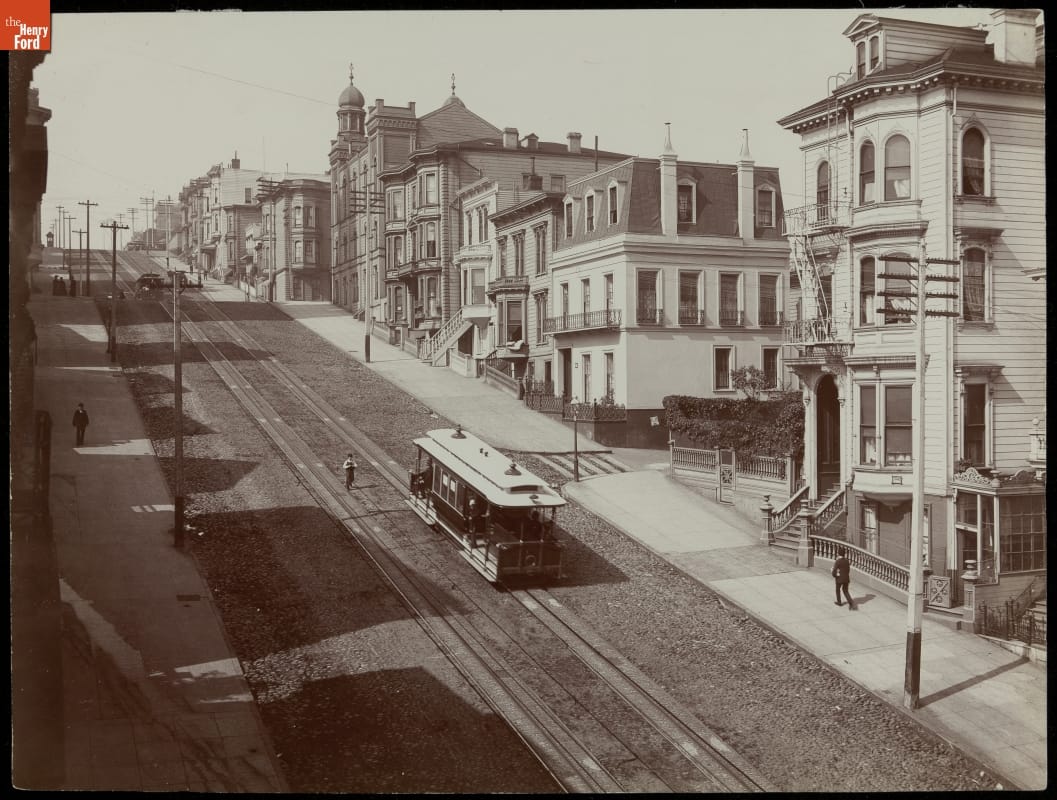
- Cable Car on California Street Hill, San Francisco, 1901 - For nearly thirty years, 1895 to 1924, the Detroit Publishing Company was one of the major image publishers in the world. The company had a wide-ranging stock of original photographs, including this image of a cable car climbing a hill in a residential San Francisco, California, neighborhood. A few pedestrians confront the slope on foot.
- 1901
- Collections - Artifact
Cable Car on California Street Hill, San Francisco, 1901
For nearly thirty years, 1895 to 1924, the Detroit Publishing Company was one of the major image publishers in the world. The company had a wide-ranging stock of original photographs, including this image of a cable car climbing a hill in a residential San Francisco, California, neighborhood. A few pedestrians confront the slope on foot.
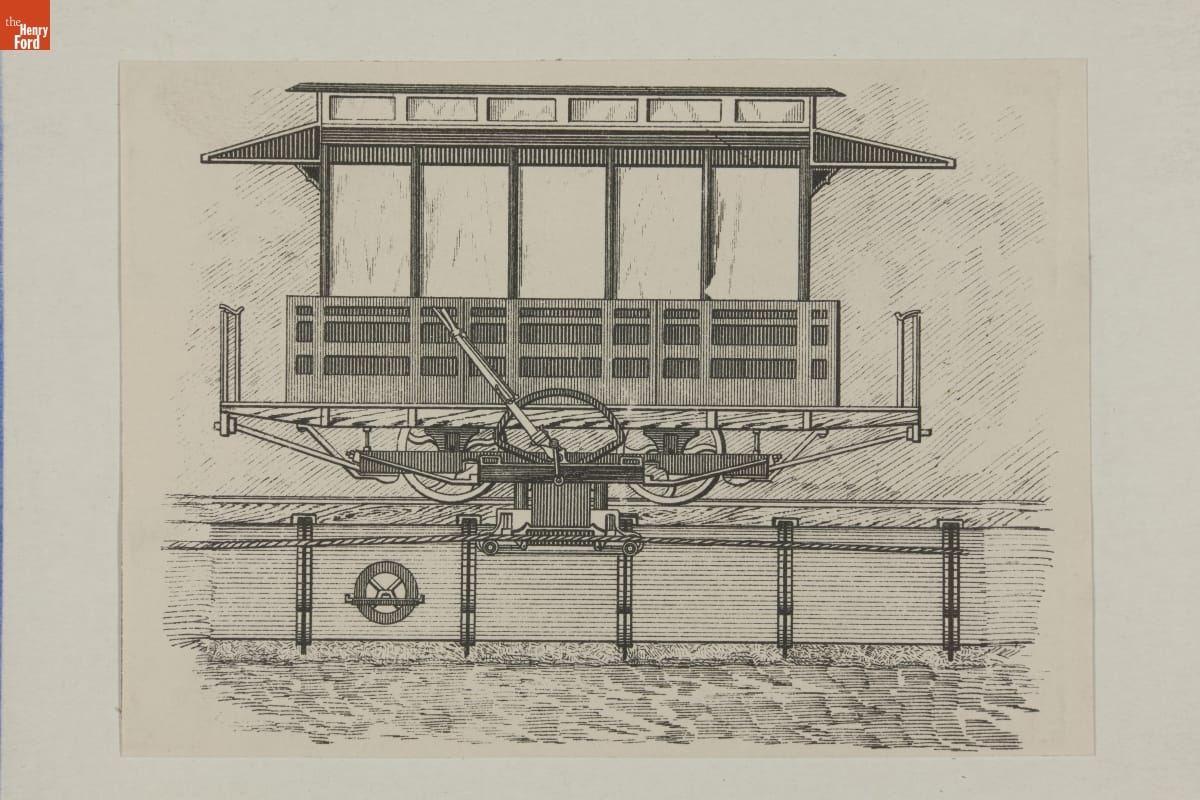
- Street Car and Underground Cable System, circa 1880 - Horsecars on steel rails were more efficient than omnibuses, but horses were expensive, vulnerable to disease, and left a mess on city streets. Cable railways -- with stationary steam engines that pulled cars using steel cables -- solved these problems but introduced difficulties of their own. This image illustrates the complex mechanical grip that connected a car to the underground tow cable.
- circa 1880
- Collections - Artifact
Street Car and Underground Cable System, circa 1880
Horsecars on steel rails were more efficient than omnibuses, but horses were expensive, vulnerable to disease, and left a mess on city streets. Cable railways -- with stationary steam engines that pulled cars using steel cables -- solved these problems but introduced difficulties of their own. This image illustrates the complex mechanical grip that connected a car to the underground tow cable.
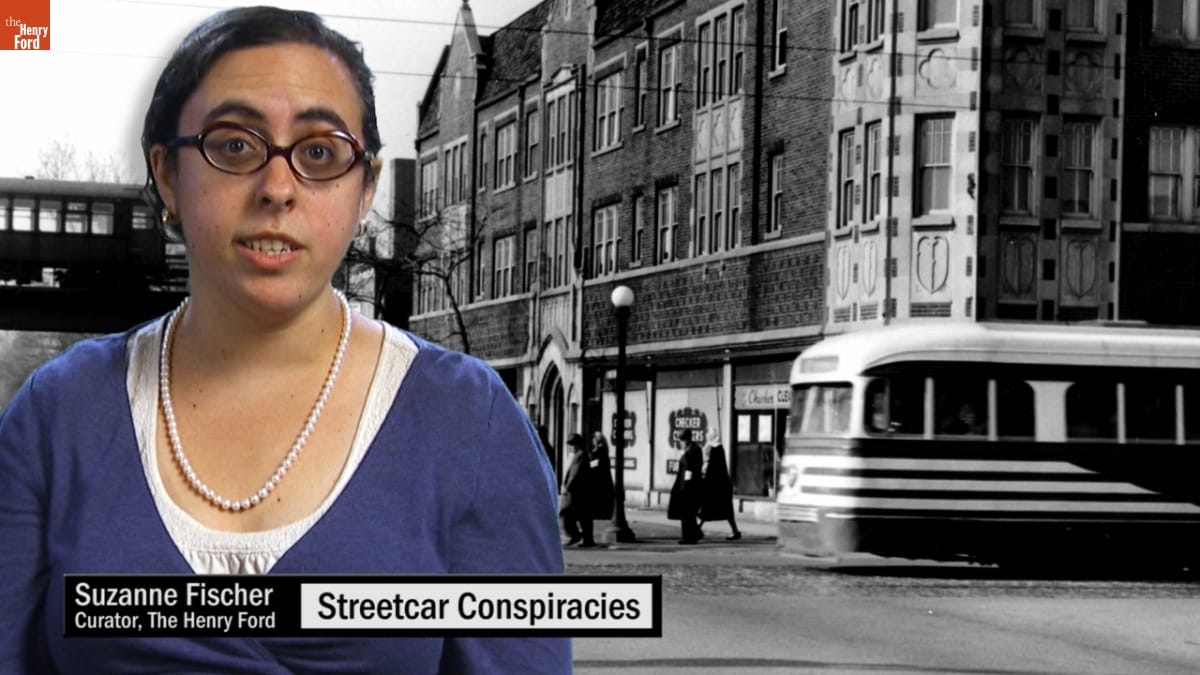
- "Streetcar Conspiracies" Clip from Interview with Suzanne Fischer, 2011 - Suzanne M. Fischer is the former Curator of Technology at The Henry Ford.
- 2011
- Collections - Artifact
"Streetcar Conspiracies" Clip from Interview with Suzanne Fischer, 2011
Suzanne M. Fischer is the former Curator of Technology at The Henry Ford.
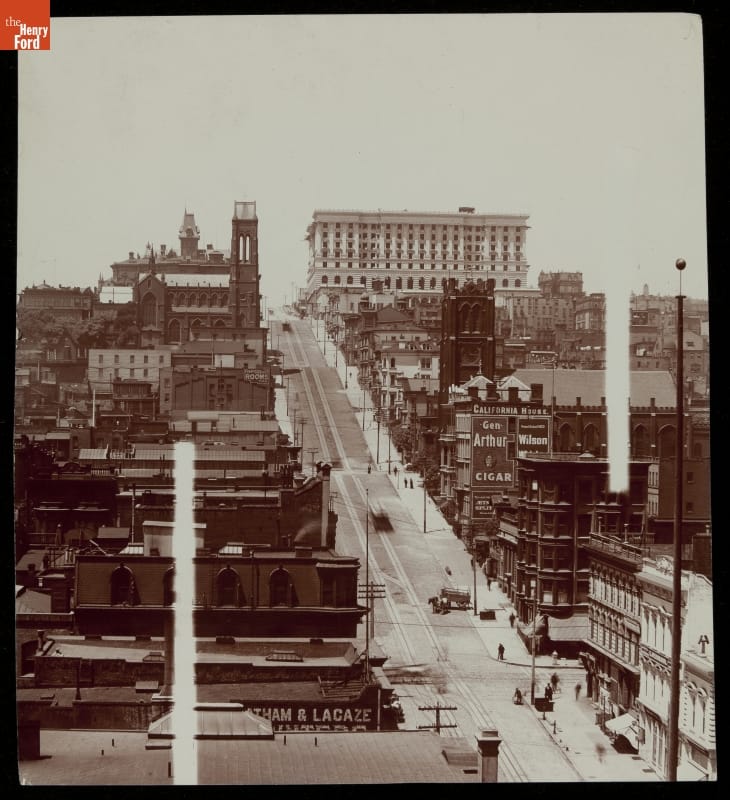
- "California Street Hill and Fairmont Hotel," circa 1905 - Streetcars blur past buildings in the Nob Hill neighborhood of San Francisco in this Detroit Publishing Company photograph. Atop the hill is the unfinished Fairmont Hotel. Most of the buildings seen here would be destroyed or severely damaged in April 1906 by the city's famous earthquake and the fires that followed.
- 1905-1906
- Collections - Artifact
"California Street Hill and Fairmont Hotel," circa 1905
Streetcars blur past buildings in the Nob Hill neighborhood of San Francisco in this Detroit Publishing Company photograph. Atop the hill is the unfinished Fairmont Hotel. Most of the buildings seen here would be destroyed or severely damaged in April 1906 by the city's famous earthquake and the fires that followed.
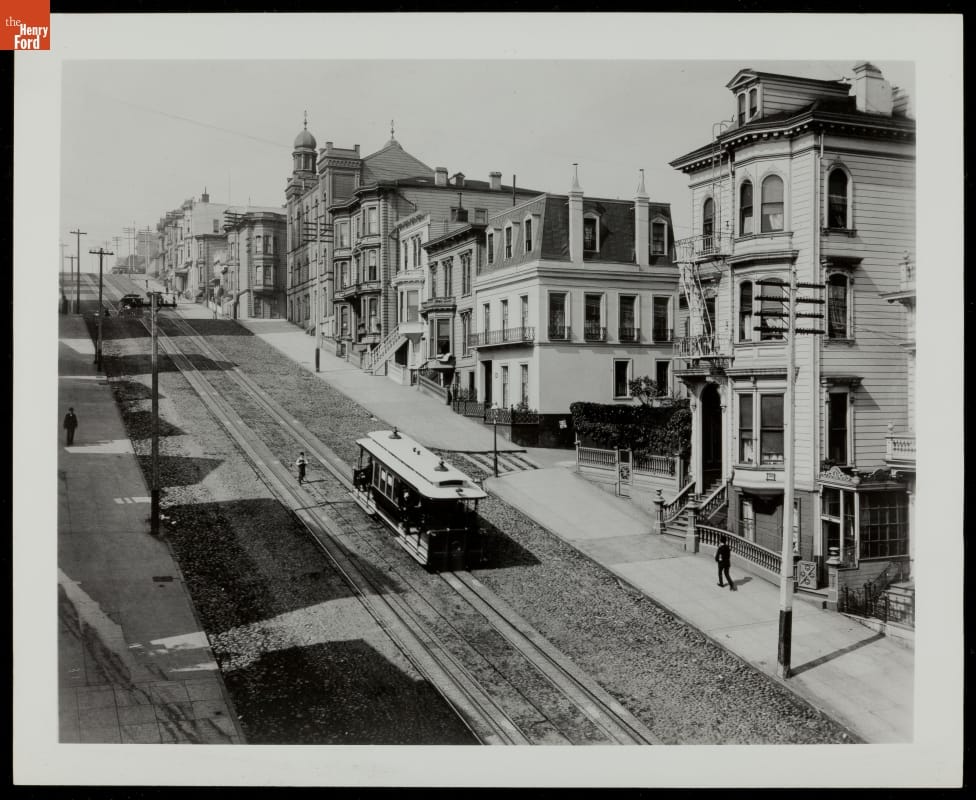
- Cable Car on Street in San Francisco, California, 1900 - For nearly thirty years, 1895 to 1924, the Detroit Publishing Company was one of the major image publishers in the world. The company had a wide-ranging stock of original photographs, including this image of a cable car climbing a hill in a residential San Francisco, California, neighborhood. A few pedestrians confront the slope on foot.
- 1900
- Collections - Artifact
Cable Car on Street in San Francisco, California, 1900
For nearly thirty years, 1895 to 1924, the Detroit Publishing Company was one of the major image publishers in the world. The company had a wide-ranging stock of original photographs, including this image of a cable car climbing a hill in a residential San Francisco, California, neighborhood. A few pedestrians confront the slope on foot.