
Search
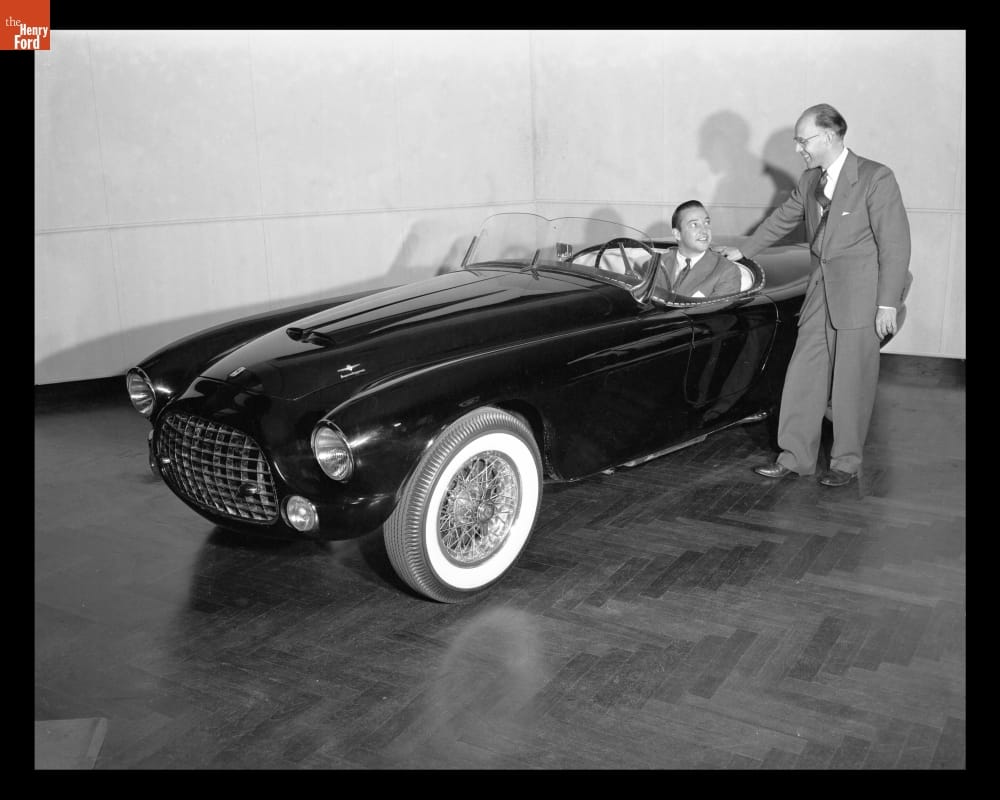
- William Clay Ford and Frank Caddy with 1952 Ferrari 212 Barchetta, Henry Ford Museum, 6 January 1954 - Ford Motor Company executive William Clay Ford and Henry Ford Museum administrator Frank Caddy posed with a 1952 Ferrari 212 Barchetta. The roadster was a gift from Enzo Ferrari to Henry Ford II. Though Ford owned the car only for a few years, it was apparently long enough for the Barchetta to influence the styling of the 1955 Ford Thunderbird.
- January 06, 1954
- Collections - Artifact
William Clay Ford and Frank Caddy with 1952 Ferrari 212 Barchetta, Henry Ford Museum, 6 January 1954
Ford Motor Company executive William Clay Ford and Henry Ford Museum administrator Frank Caddy posed with a 1952 Ferrari 212 Barchetta. The roadster was a gift from Enzo Ferrari to Henry Ford II. Though Ford owned the car only for a few years, it was apparently long enough for the Barchetta to influence the styling of the 1955 Ford Thunderbird.
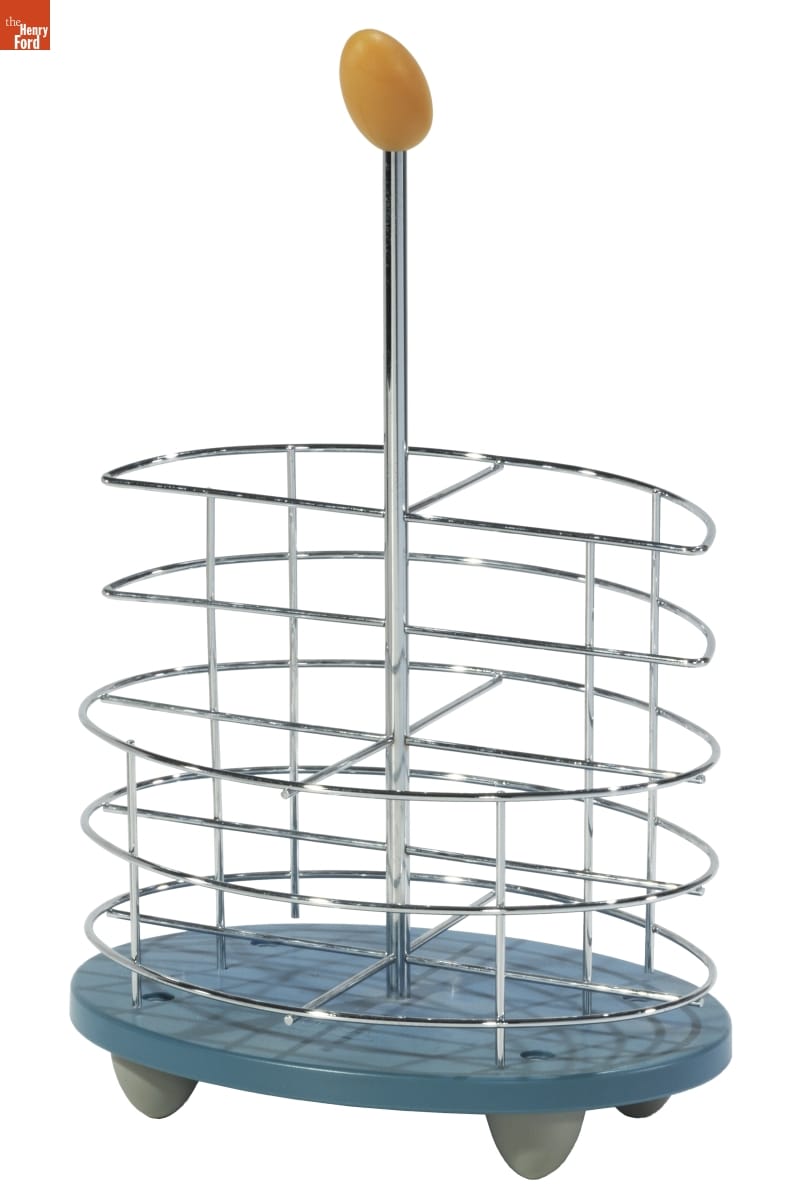
- Kitchen Tools Caddy, 1999 - Starting in the early 1980s--and already established as an internationally recognized architect--Michael Graves began to pursue a parallel career as a product designer. Over the following three and a half decades he and his collaborators designed everything from humble household goods to limited edition luxury items for clients as diverse as Steuben, Alessi, Target, J. C. Penney, and Disney.
- 1999
- Collections - Artifact
Kitchen Tools Caddy, 1999
Starting in the early 1980s--and already established as an internationally recognized architect--Michael Graves began to pursue a parallel career as a product designer. Over the following three and a half decades he and his collaborators designed everything from humble household goods to limited edition luxury items for clients as diverse as Steuben, Alessi, Target, J. C. Penney, and Disney.
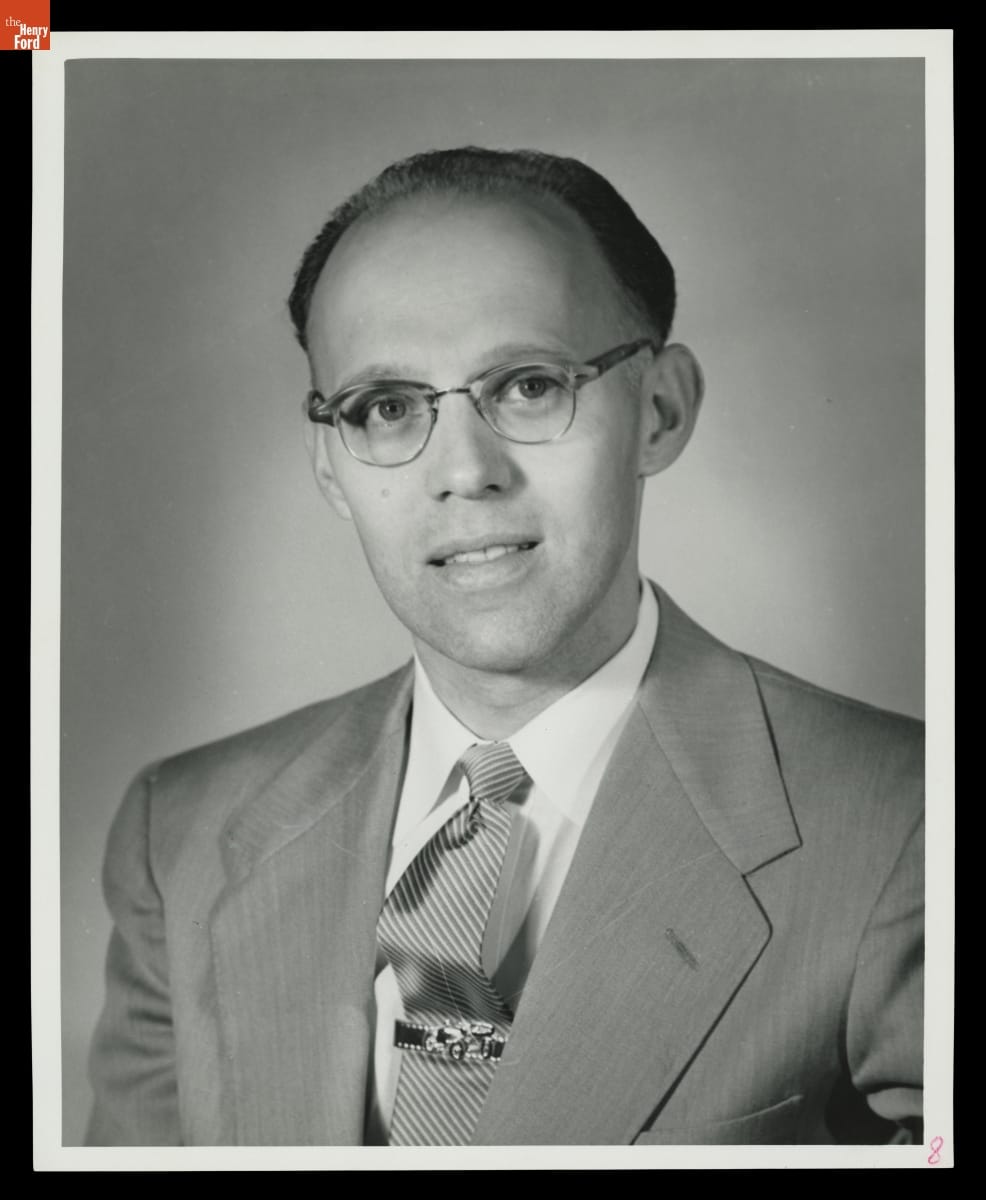
- Frank Caddy, May 1954 - Frank Caddy first came to the Edison Institute museum -- today's The Henry Ford -- as a student at Henry Ford Trade School in 1932. He earned a degree at Detroit Business College and worked his way up through the museum's business offices. Caddy was appointed president of the Edison Institute in 1976 and held that title until his retirement in 1980.
- May 20, 1954
- Collections - Artifact
Frank Caddy, May 1954
Frank Caddy first came to the Edison Institute museum -- today's The Henry Ford -- as a student at Henry Ford Trade School in 1932. He earned a degree at Detroit Business College and worked his way up through the museum's business offices. Caddy was appointed president of the Edison Institute in 1976 and held that title until his retirement in 1980.
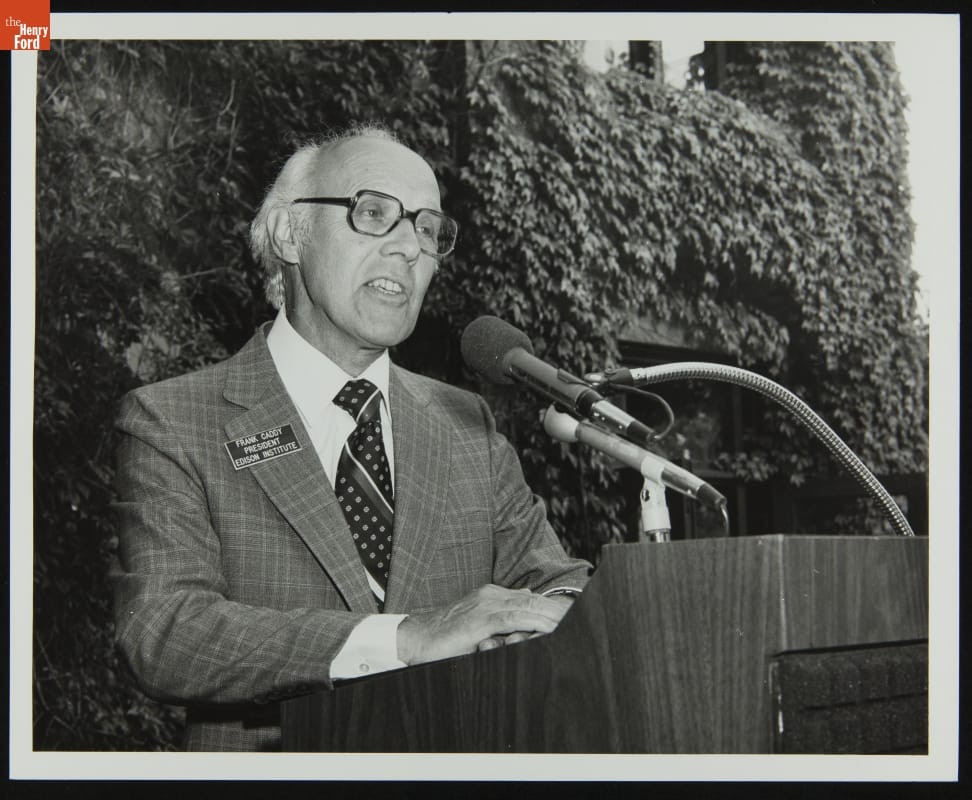
- Edison Illuminating Co.--People--Item 25 - Frank Caddy first came to the Edison Institute museum -- today's The Henry Ford -- as a student at Henry Ford Trade School in 1932. He earned a degree at Detroit Business College and worked his way up through the museum's business offices. Caddy was appointed president of the Edison Institute in 1976 and held that title until his retirement in 1980.
- May 29, 1980
- Collections - Artifact
Edison Illuminating Co.--People--Item 25
Frank Caddy first came to the Edison Institute museum -- today's The Henry Ford -- as a student at Henry Ford Trade School in 1932. He earned a degree at Detroit Business College and worked his way up through the museum's business offices. Caddy was appointed president of the Edison Institute in 1976 and held that title until his retirement in 1980.
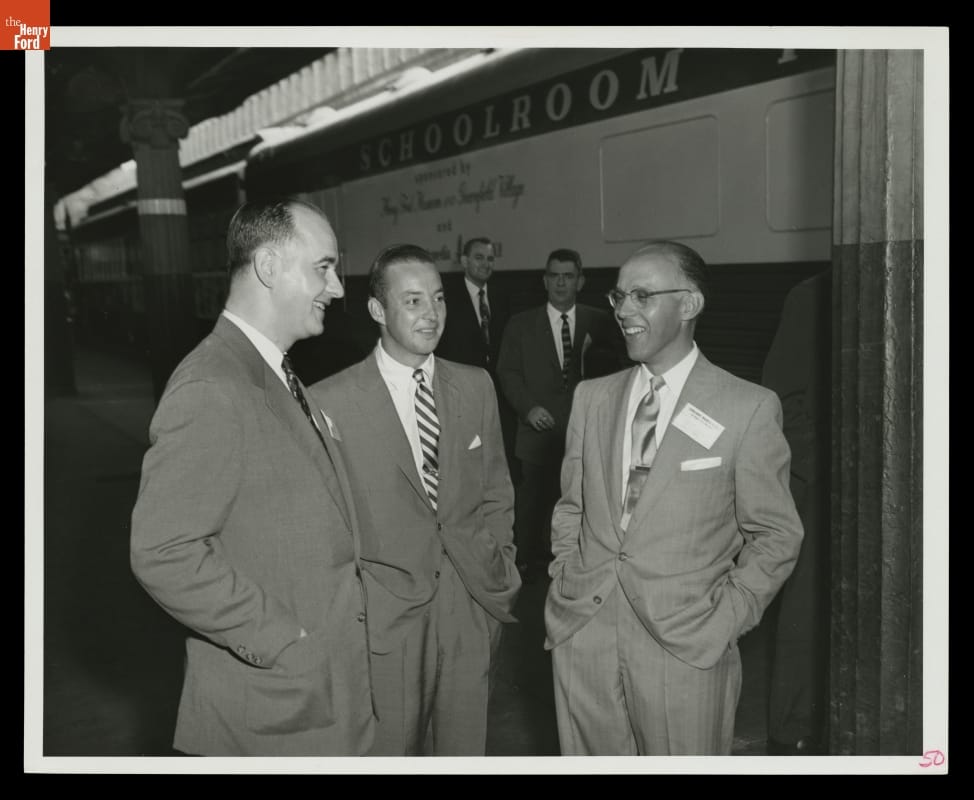
- Donald A. Shelly, William Clay Ford, and Frank Caddy at Press Preview for Schoolroom Progress USA, 1955 - The Henry Ford produced <em>Schoolroom Progress, U.S.A.</em>, a traveling exhibition housed in two railroad cars, in 1955-1956. The exhibit featured re-creations of American classrooms from different periods in history to that point. <em>Schoolroom Progress, U.S.A.</em> included artifacts from The Henry Ford's holdings, and it increased national recognition of the museum and its collections.
- 16 September 1955-19 September 1955
- Collections - Artifact
Donald A. Shelly, William Clay Ford, and Frank Caddy at Press Preview for Schoolroom Progress USA, 1955
The Henry Ford produced Schoolroom Progress, U.S.A., a traveling exhibition housed in two railroad cars, in 1955-1956. The exhibit featured re-creations of American classrooms from different periods in history to that point. Schoolroom Progress, U.S.A. included artifacts from The Henry Ford's holdings, and it increased national recognition of the museum and its collections.
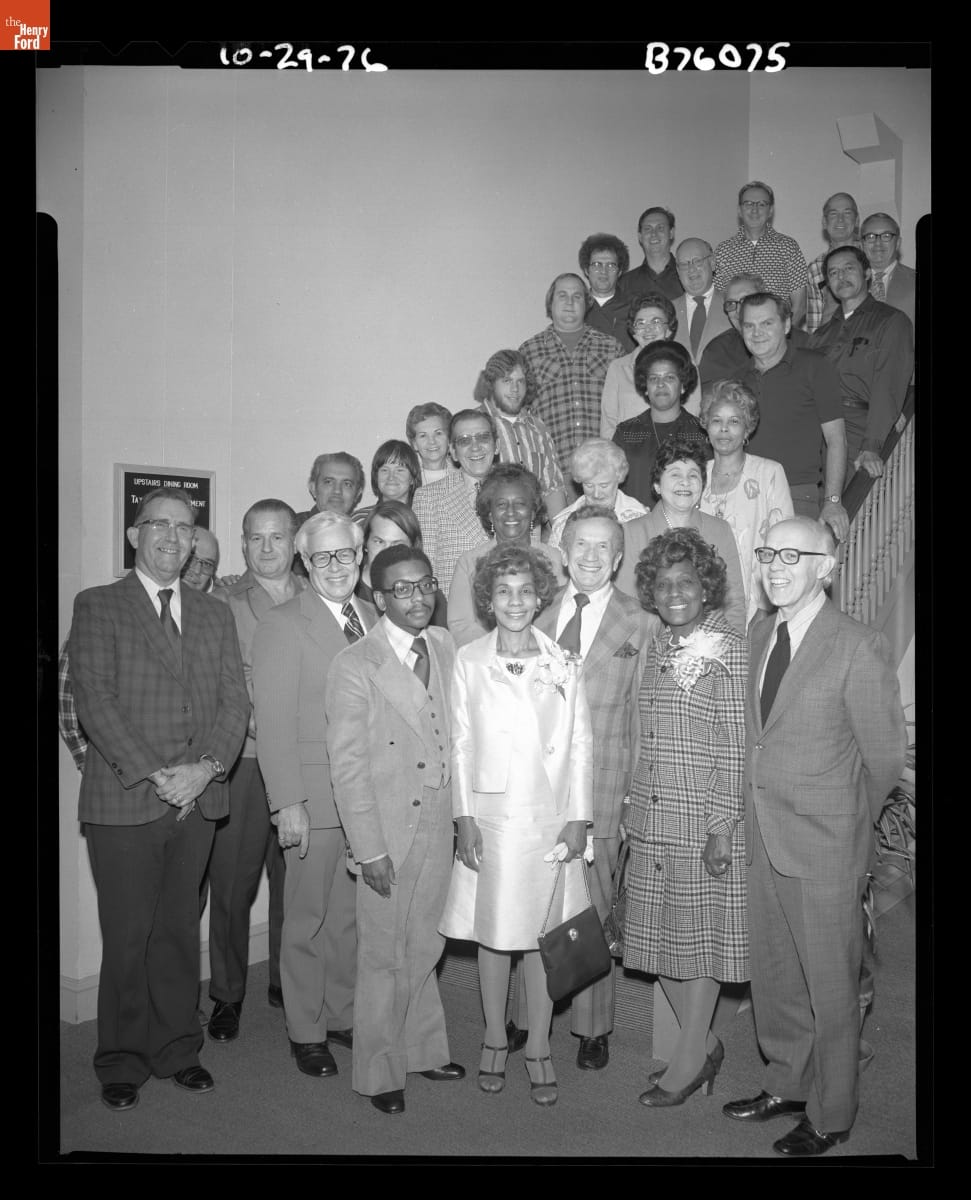
- Pauline Taylor and Friends from the Greenfield Village Cleaning Department at her Retirement Luncheon, October 29, 1976 -
- October 29, 1976
- Collections - Artifact
Pauline Taylor and Friends from the Greenfield Village Cleaning Department at her Retirement Luncheon, October 29, 1976
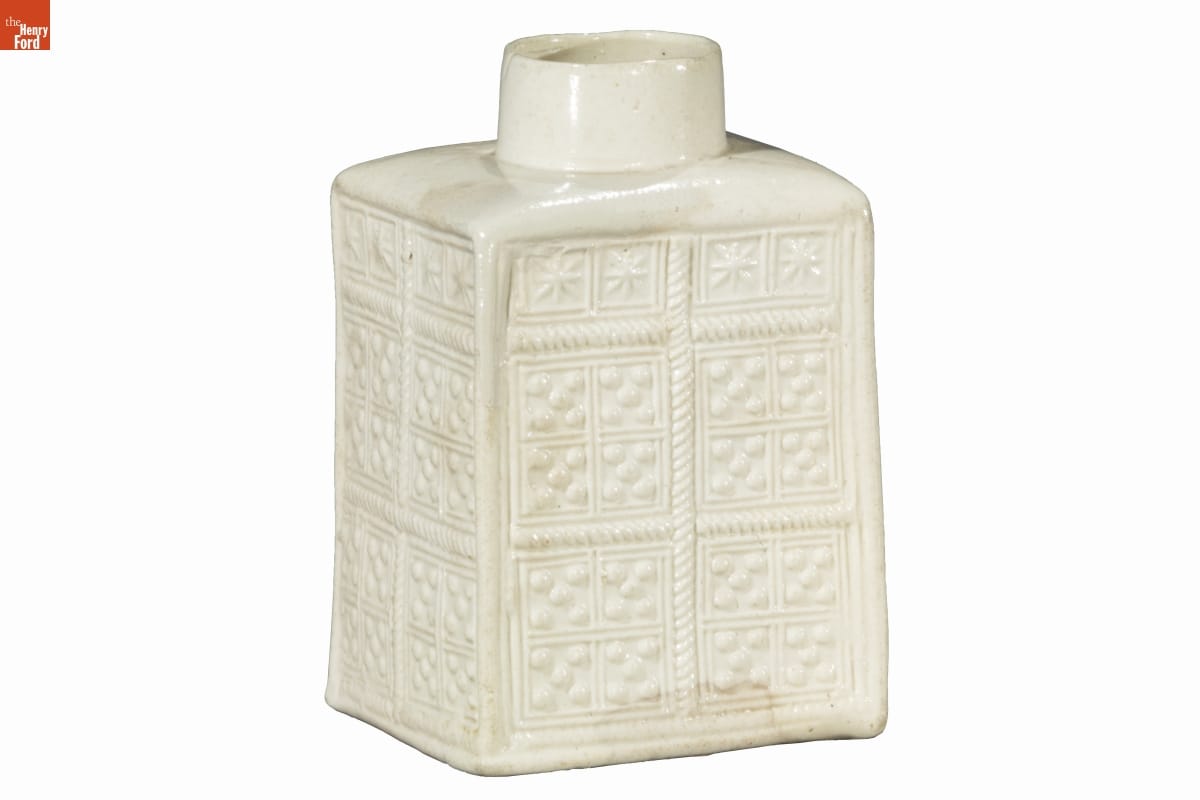
- Tea Caddy, 1750-1760 -
- 1750-1760
- Collections - Artifact
Tea Caddy, 1750-1760
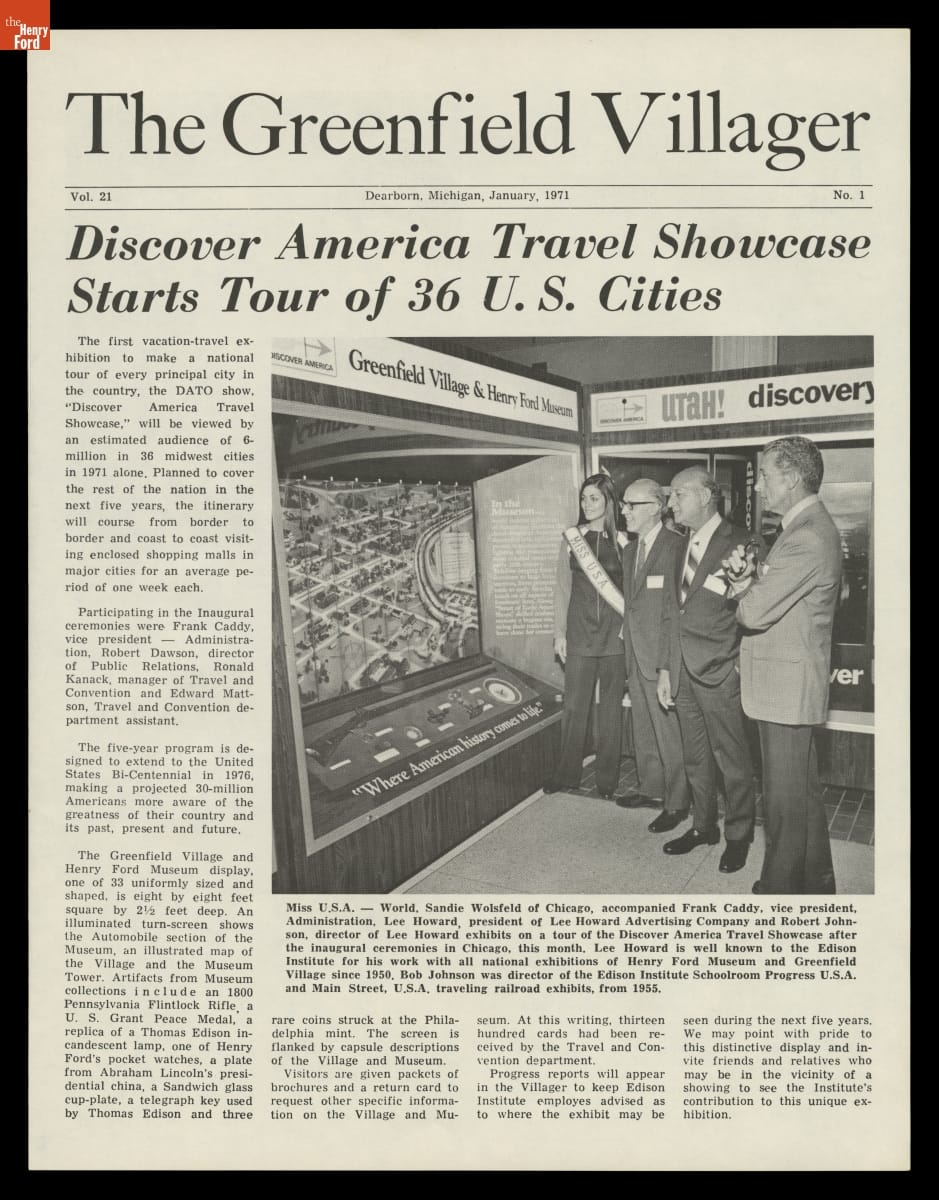
- "The Greenfield Villager," January 1971 - <em>The Greenfield Villager</em> was a regular publication of the Edison Institute created for its employees. First published in 1951, the newspaper kept employees abreast of institutional special events and acquisitions and provided information about employee recreational and educational opportunities, work benefits, and personal milestones. The last issue of <em>The Greenfield Villager</em> came out in 1981.
- January 01, 1971
- Collections - Artifact
"The Greenfield Villager," January 1971
The Greenfield Villager was a regular publication of the Edison Institute created for its employees. First published in 1951, the newspaper kept employees abreast of institutional special events and acquisitions and provided information about employee recreational and educational opportunities, work benefits, and personal milestones. The last issue of The Greenfield Villager came out in 1981.
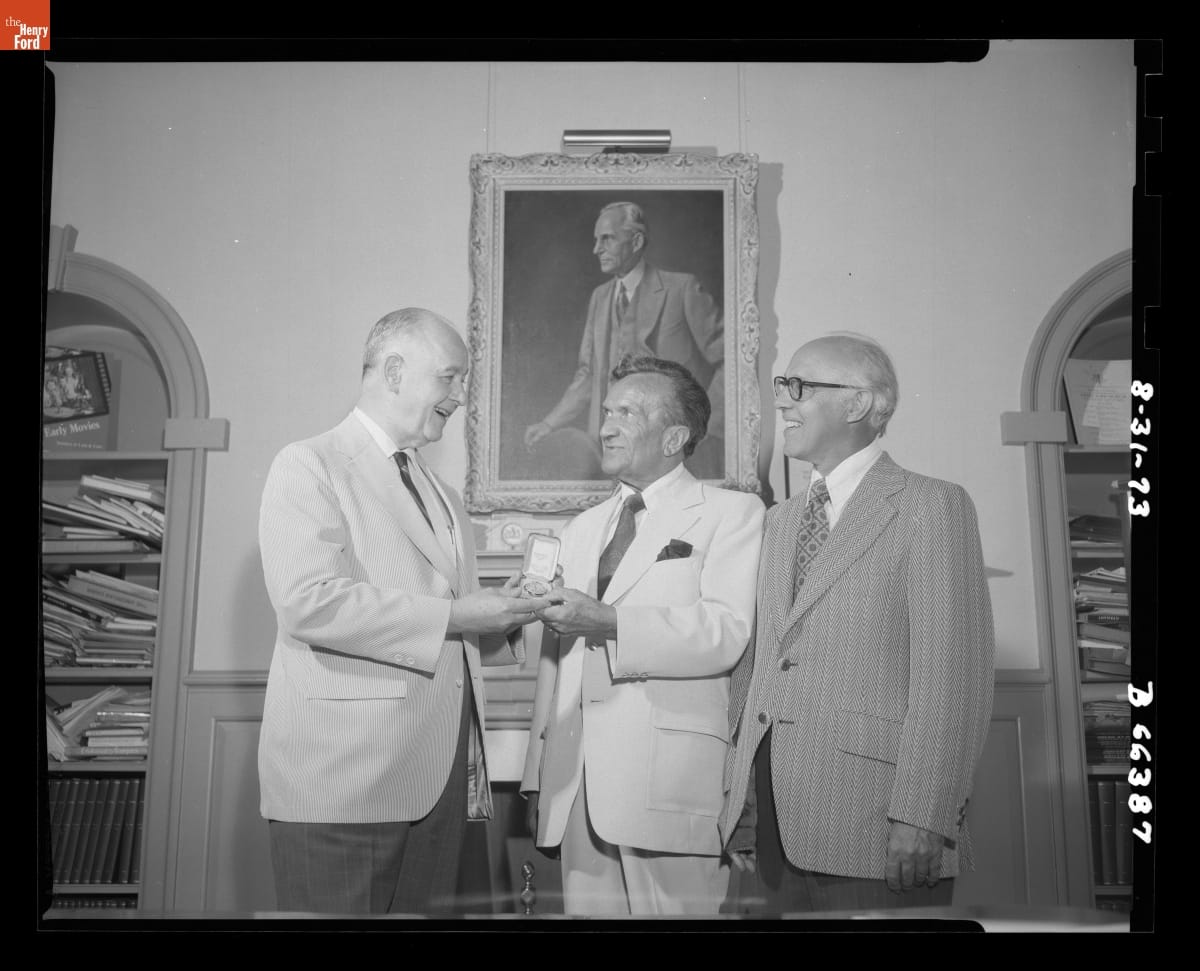
- Dr. Donald Shelley and Frank Caddy Present a Watch to Gus Munchow at His Retirement Party, October 1973 - Gustav Munchow became the gardener at Henry and Clara Ford's Fair Lane estate in Dearborn, Michigan, around 1930, after emigrating from Germany. Soon after, Henry asked him to landscape the gardens of the Cotswold Cottage, an English cottage Ford had recently moved to Greenfield Village. Munchow's work impressed the Fords. Munchow later led the grounds and maintenance departments for the Museum and Greenfield Village.
- October 01, 1973
- Collections - Artifact
Dr. Donald Shelley and Frank Caddy Present a Watch to Gus Munchow at His Retirement Party, October 1973
Gustav Munchow became the gardener at Henry and Clara Ford's Fair Lane estate in Dearborn, Michigan, around 1930, after emigrating from Germany. Soon after, Henry asked him to landscape the gardens of the Cotswold Cottage, an English cottage Ford had recently moved to Greenfield Village. Munchow's work impressed the Fords. Munchow later led the grounds and maintenance departments for the Museum and Greenfield Village.
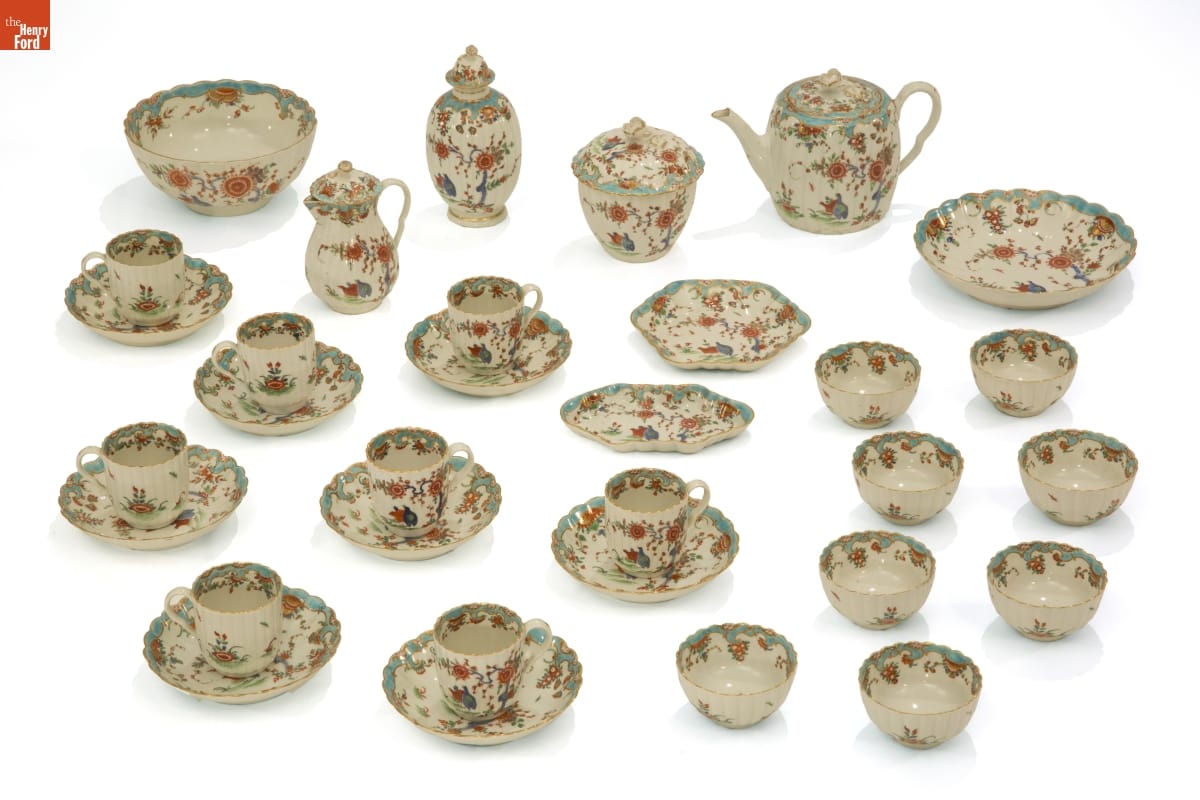
- Tea Service, Made by Worcester Royal Porcelain Company, 1765-1770 -
- 1765-1770
- Collections - Artifact
Tea Service, Made by Worcester Royal Porcelain Company, 1765-1770