
Search
- Garments Knitted for the War Effort by Employees at the Ford Motor Company Rouge Plant, October 1942 -
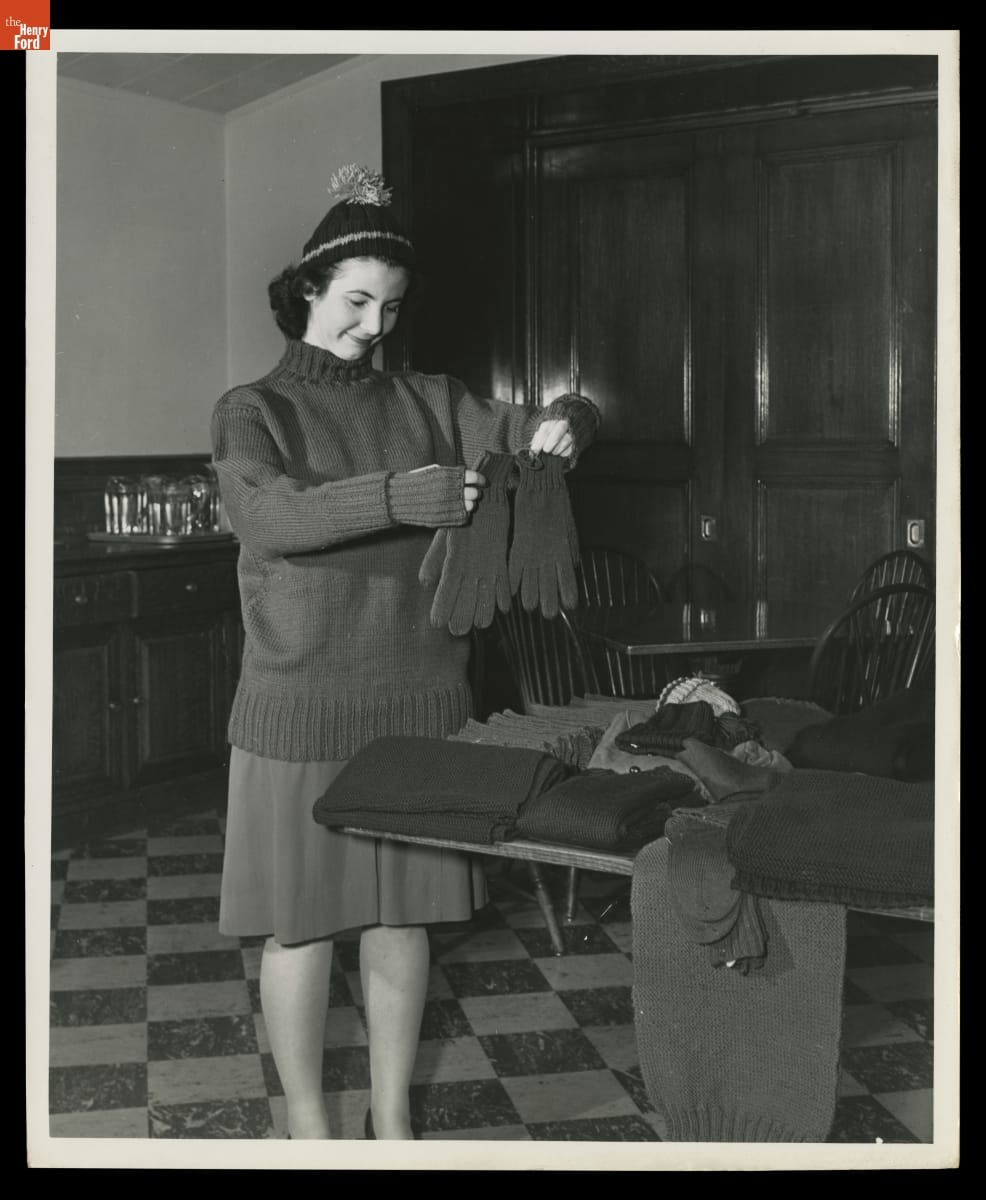
- October 26, 1942
- Collections - Artifact
Garments Knitted for the War Effort by Employees at the Ford Motor Company Rouge Plant, October 1942
- Employees Knitting for the War Effort during Lunchtime at the Ford Motor Company Rouge Plant, October 1942 -
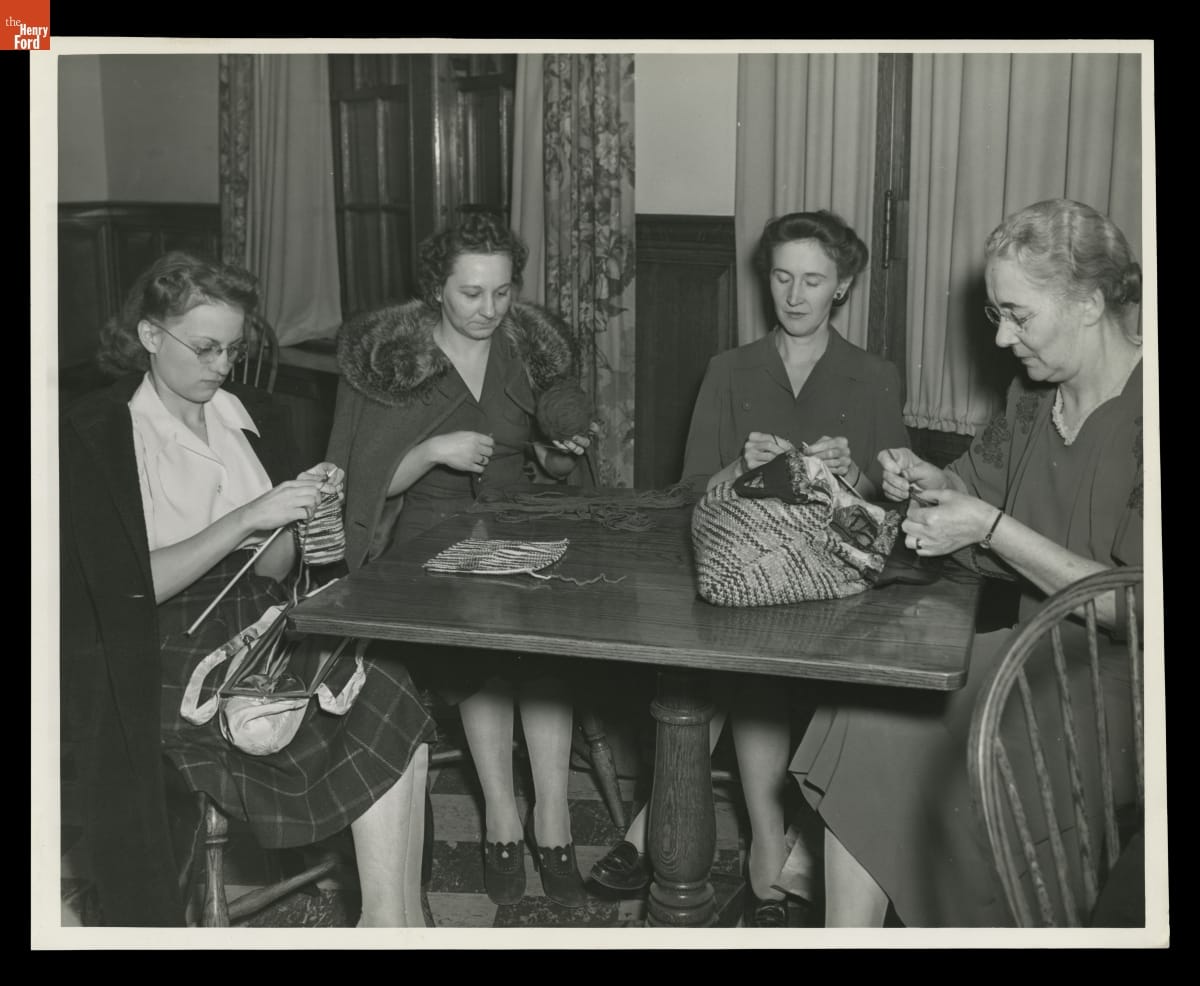
- October 26, 1942
- Collections - Artifact
Employees Knitting for the War Effort during Lunchtime at the Ford Motor Company Rouge Plant, October 1942
- Pennant, "New Castle, Delaware," 1952-1965 - Tourists purchase simple, inexpensive souvenirs as proof of their travels. These mementos transport travelers back to the places they visited and the things they did. In the mid-20th century, felt pennants were trendy. Clemente's Cafeteria was a stop on the Greyhound bus line. The roadside cafeteria offered passengers and passing auto tourists a place to eat, rest and pick up a souvenir.
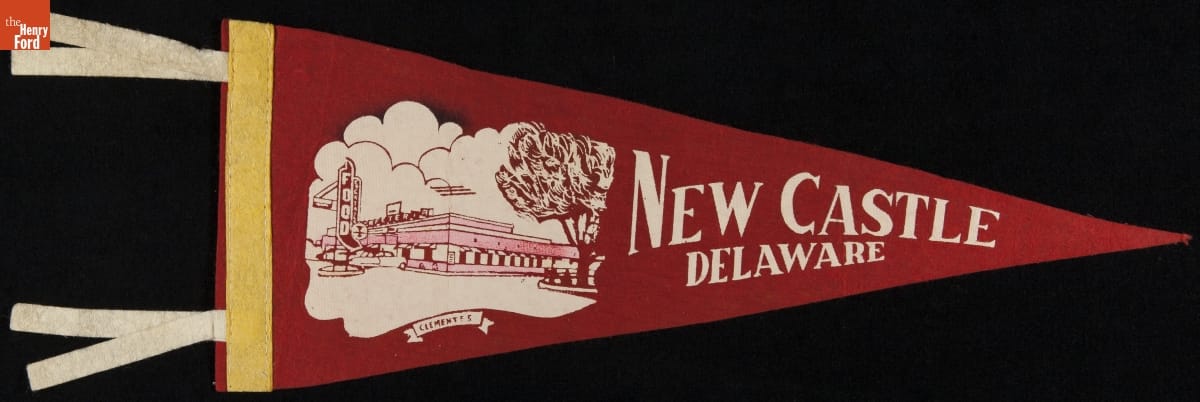
- 1952-1965
- Collections - Artifact
Pennant, "New Castle, Delaware," 1952-1965
Tourists purchase simple, inexpensive souvenirs as proof of their travels. These mementos transport travelers back to the places they visited and the things they did. In the mid-20th century, felt pennants were trendy. Clemente's Cafeteria was a stop on the Greyhound bus line. The roadside cafeteria offered passengers and passing auto tourists a place to eat, rest and pick up a souvenir.
- Garments Knitted for the War Effort by Employees at the Ford Motor Company Rouge Plant, October 1942 -
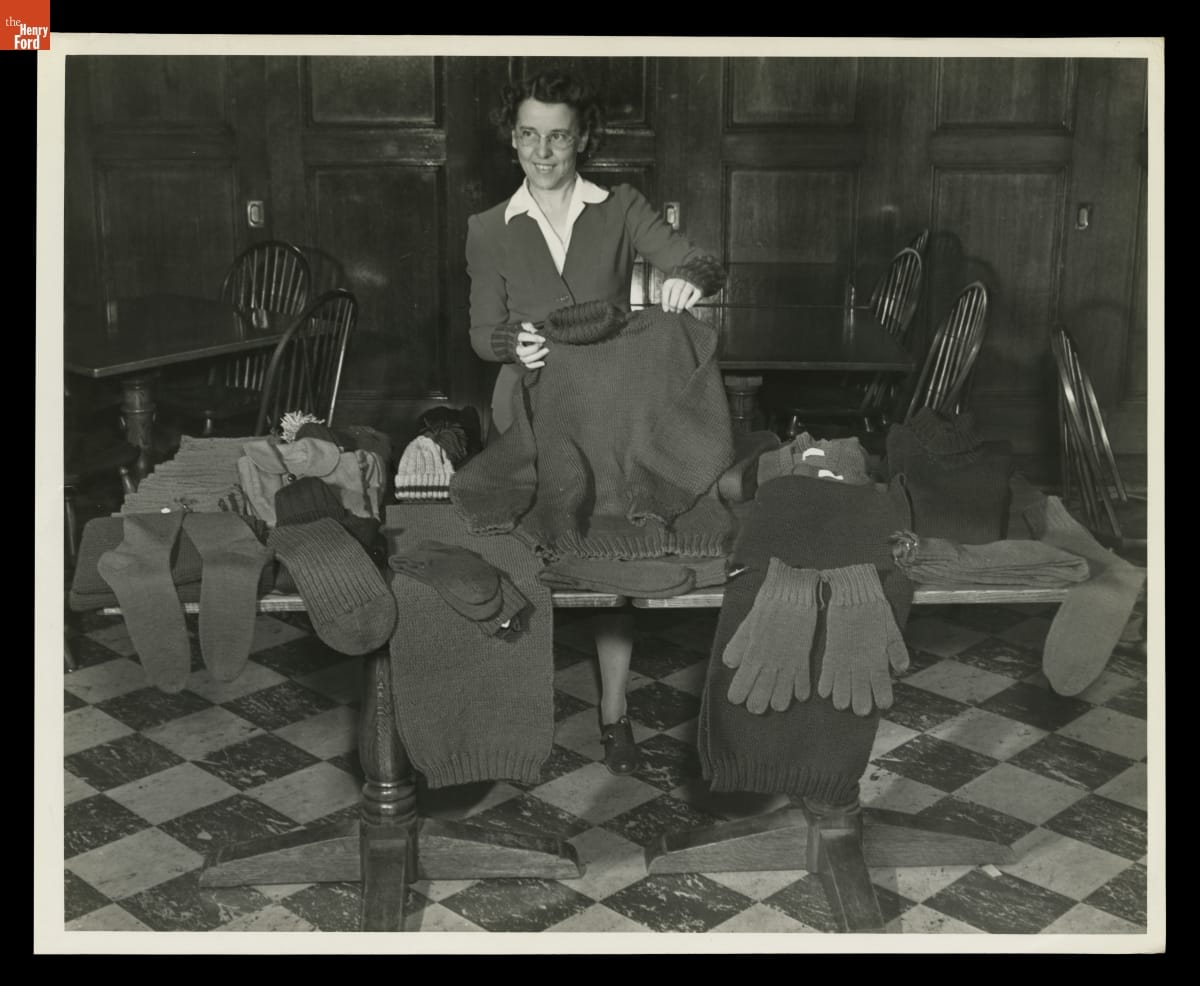
- October 26, 1942
- Collections - Artifact
Garments Knitted for the War Effort by Employees at the Ford Motor Company Rouge Plant, October 1942
- Employees Knitting for the War Effort during Lunchtime at the Ford Motor Company Rouge Plant, October 1942 -
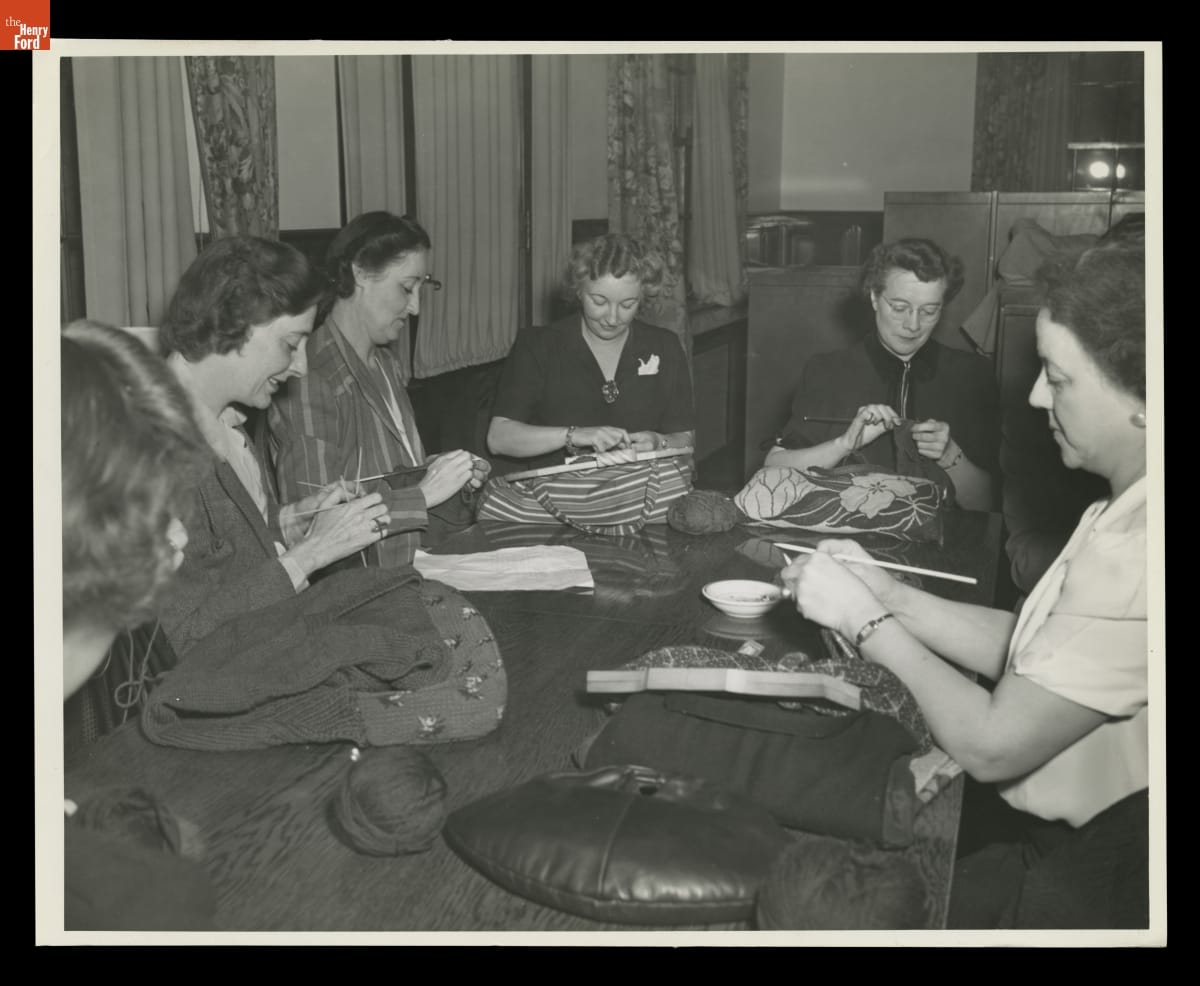
- October 26, 1942
- Collections - Artifact
Employees Knitting for the War Effort during Lunchtime at the Ford Motor Company Rouge Plant, October 1942
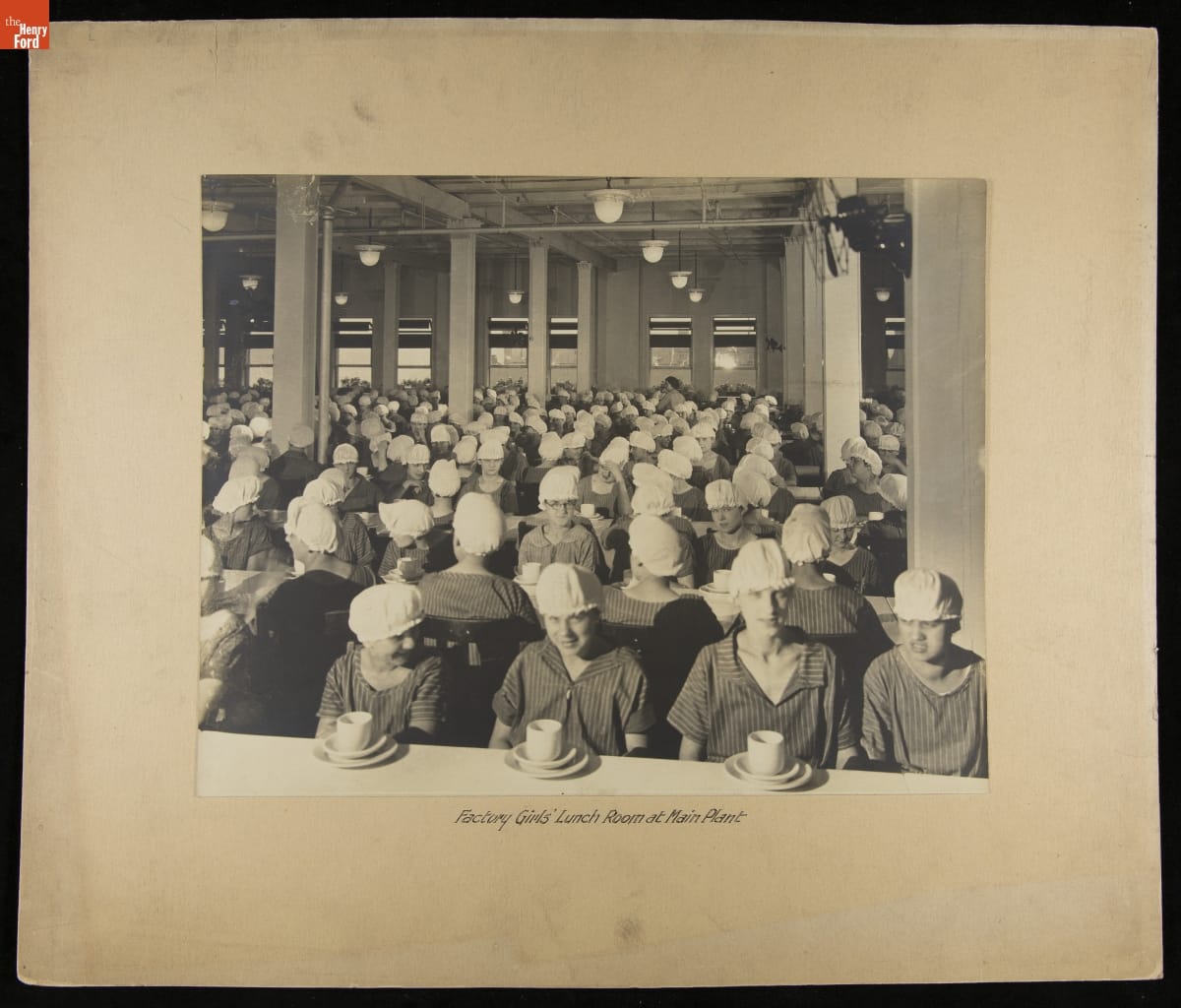
- Employees' Lunch Room at the Heinz Main Plant in Pittsburgh, Pennsylvania, circa 1920 - The H.J. Heinz Company was at the forefront of the employee welfare movement during the late 19th and early 20th centuries. Employees were provided with conveniences and amenities, such as the women's dining room (seen here) where each girl had an assigned seat. Music was played during lunch hours and artwork adorned the walls for the employees' enjoyment.
- circa 1920
- Collections - Artifact
Employees' Lunch Room at the Heinz Main Plant in Pittsburgh, Pennsylvania, circa 1920
The H.J. Heinz Company was at the forefront of the employee welfare movement during the late 19th and early 20th centuries. Employees were provided with conveniences and amenities, such as the women's dining room (seen here) where each girl had an assigned seat. Music was played during lunch hours and artwork adorned the walls for the employees' enjoyment.
- Employees Knitting for the War Effort during Lunchtime at the Ford Motor Company Rouge Plant, October 1942 -
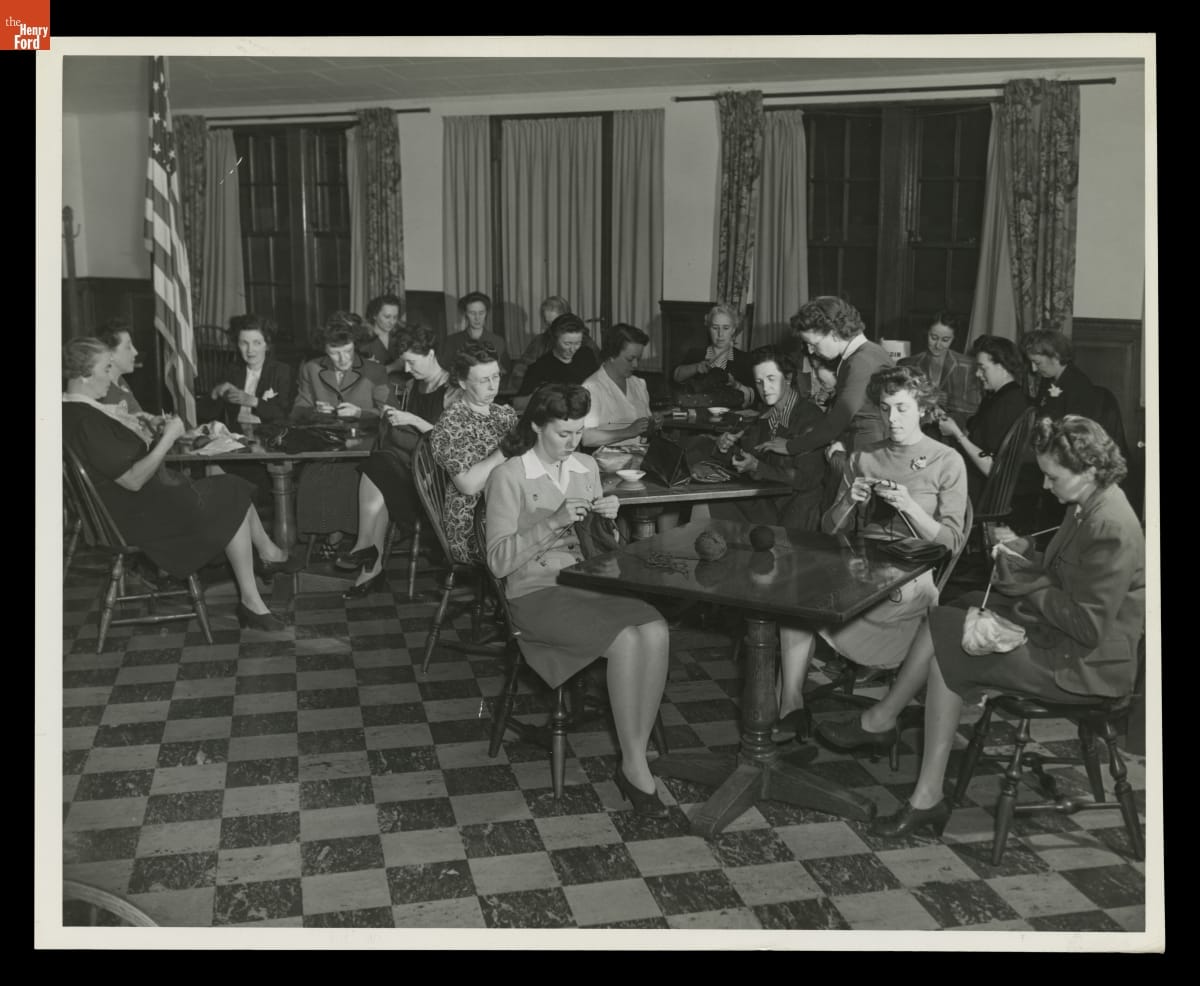
- October 26, 1942
- Collections - Artifact
Employees Knitting for the War Effort during Lunchtime at the Ford Motor Company Rouge Plant, October 1942
- Employees Knitting for the War Effort during Lunchtime at the Ford Motor Company Rouge Plant, October 1942 -
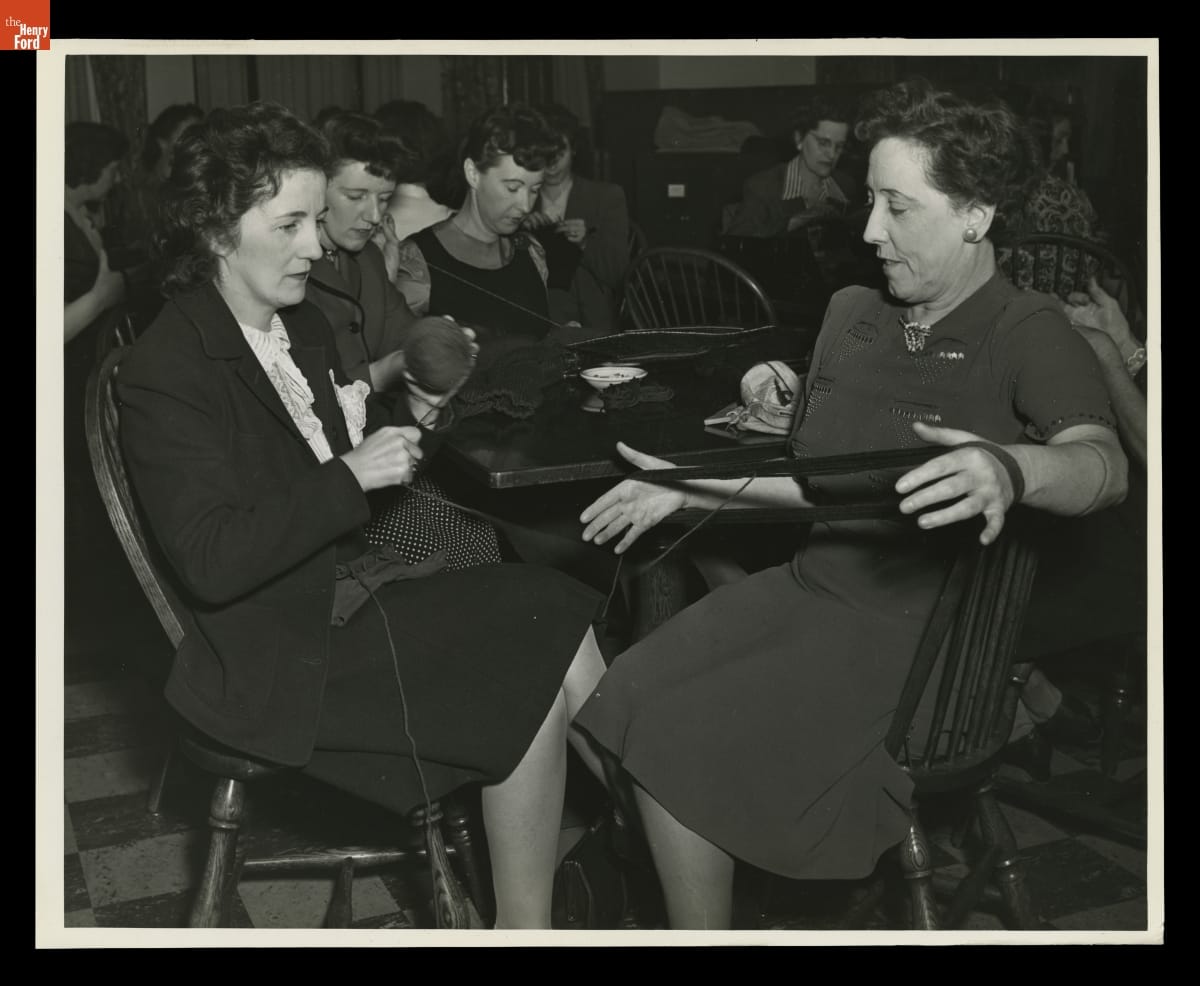
- October 26, 1942
- Collections - Artifact
Employees Knitting for the War Effort during Lunchtime at the Ford Motor Company Rouge Plant, October 1942
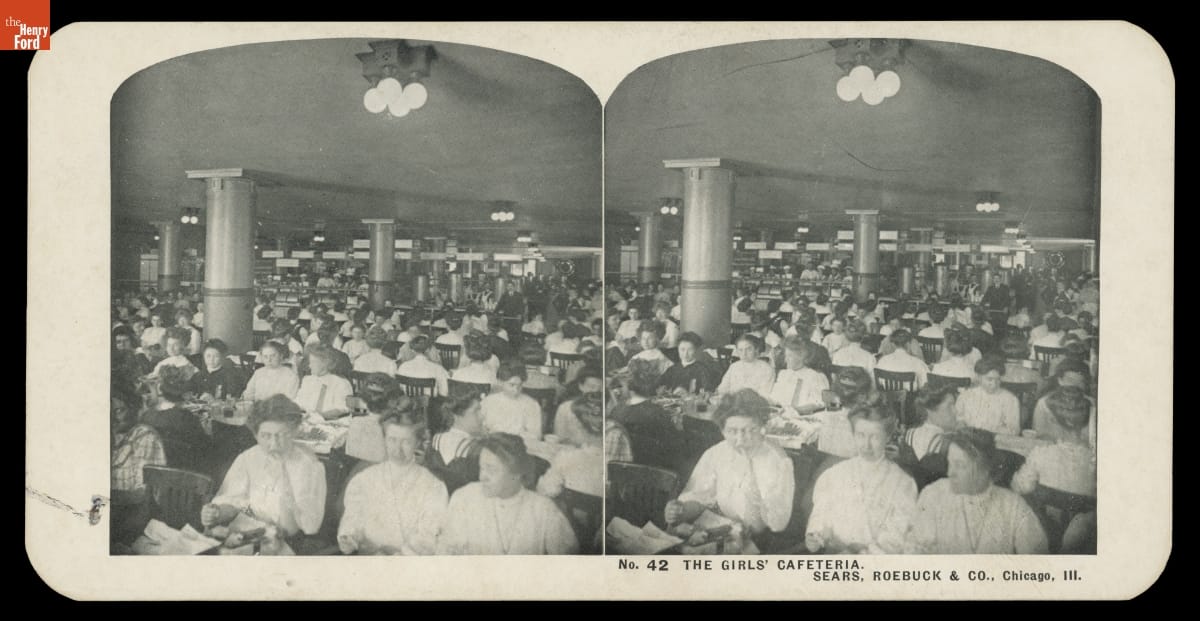
- "The Girls' Cafeteria. Sears, Roebuck & Co., Chicago, Ill.," 1906-1908 - Mail-order firm Sears, Roebuck, & Co. had become one of America's largest corporations by the early 1900s. Sears was particularly popular among rural Americans, as it offered better options, lower costs, and more efficient delivery methods than traditional general stores. This stereograph, one of a set of 50 sold through the Sears catalog beginning in 1908, offered a behind-the-scenes look at the company's operation.
- 1906-1908
- Collections - Artifact
"The Girls' Cafeteria. Sears, Roebuck & Co., Chicago, Ill.," 1906-1908
Mail-order firm Sears, Roebuck, & Co. had become one of America's largest corporations by the early 1900s. Sears was particularly popular among rural Americans, as it offered better options, lower costs, and more efficient delivery methods than traditional general stores. This stereograph, one of a set of 50 sold through the Sears catalog beginning in 1908, offered a behind-the-scenes look at the company's operation.
- Garden Room Cafeteria in Henry Ford Museum, 1971 -

- September 01, 1971
- Collections - Artifact
Garden Room Cafeteria in Henry Ford Museum, 1971