
Search
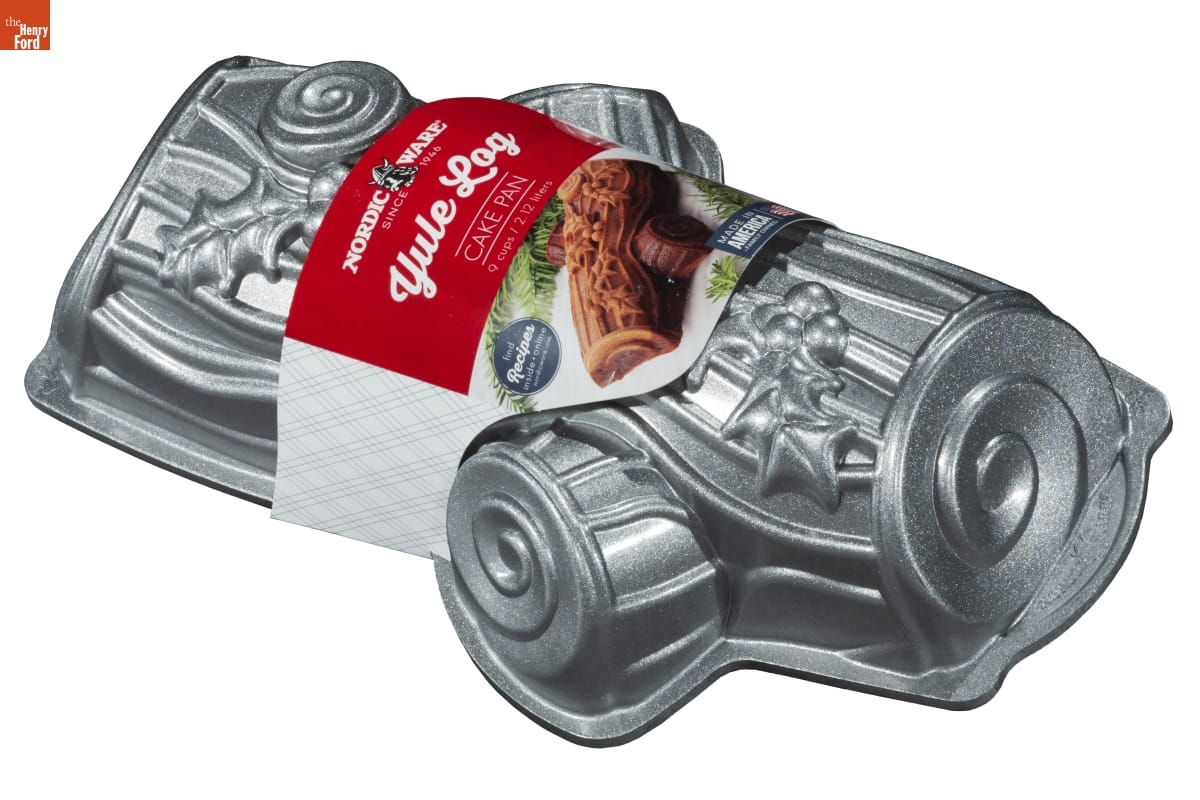
- Yule Log Cake Pan, circa 2021 - Winter Solstice marks the shortest day and longest night of year. Throughout history, world cultures have held festivals and ceremonies that look forward to the light, warmth, and life-giving properties of the returning sun. Burning the Yule log and baking Yule log cakes are often considered Christmas traditions, but they date back to the pre-Christian Winter Solstice observance.
- circa 2021
- Collections - Artifact
Yule Log Cake Pan, circa 2021
Winter Solstice marks the shortest day and longest night of year. Throughout history, world cultures have held festivals and ceremonies that look forward to the light, warmth, and life-giving properties of the returning sun. Burning the Yule log and baking Yule log cakes are often considered Christmas traditions, but they date back to the pre-Christian Winter Solstice observance.
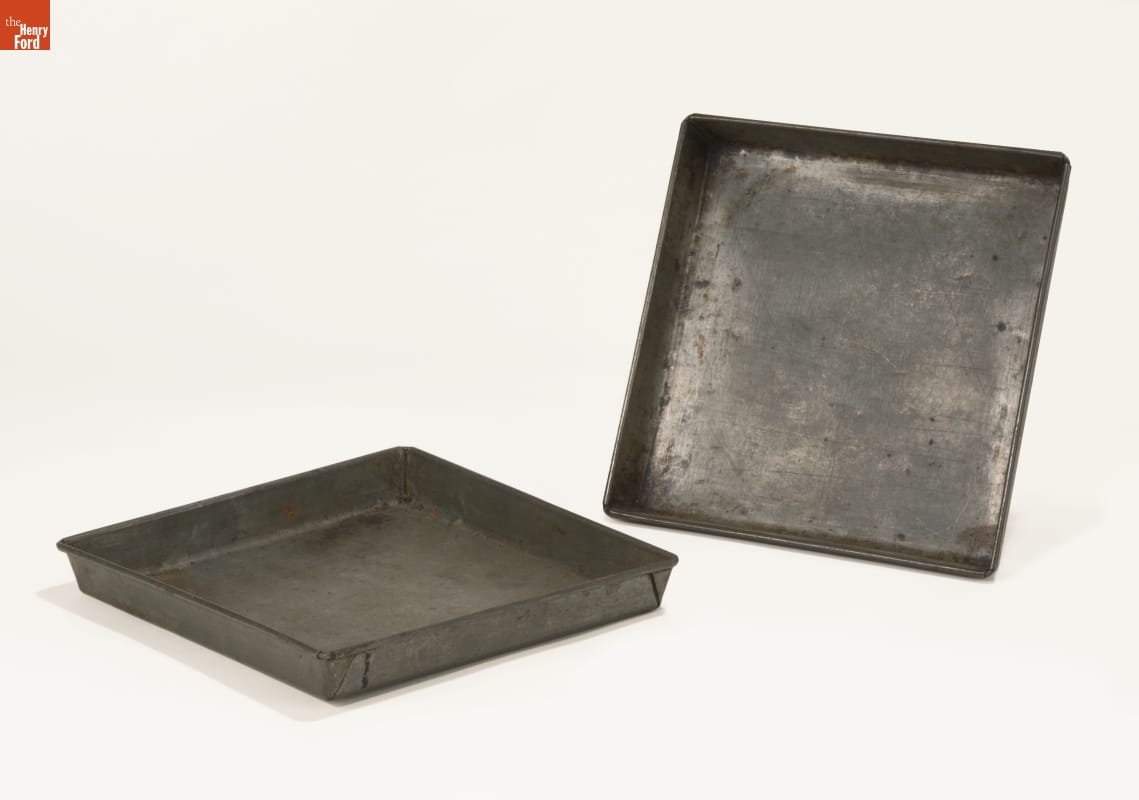
- Cake Pans, 1875-1900 - Tin-plated iron, commonly called "tin," was the dominant material for utilitarian items in 19th-century America. It was lightweight, inexpensive, easy to clean, non-toxic, and durable. Tinware also resisted corrosion and had a pleasing silvery appearance that could be enhanced through decoration. Middle-class Americans happily purchased tinware in place of goods made from earlier materials, like wood or pottery.
- 1875-1900
- Collections - Artifact
Cake Pans, 1875-1900
Tin-plated iron, commonly called "tin," was the dominant material for utilitarian items in 19th-century America. It was lightweight, inexpensive, easy to clean, non-toxic, and durable. Tinware also resisted corrosion and had a pleasing silvery appearance that could be enhanced through decoration. Middle-class Americans happily purchased tinware in place of goods made from earlier materials, like wood or pottery.
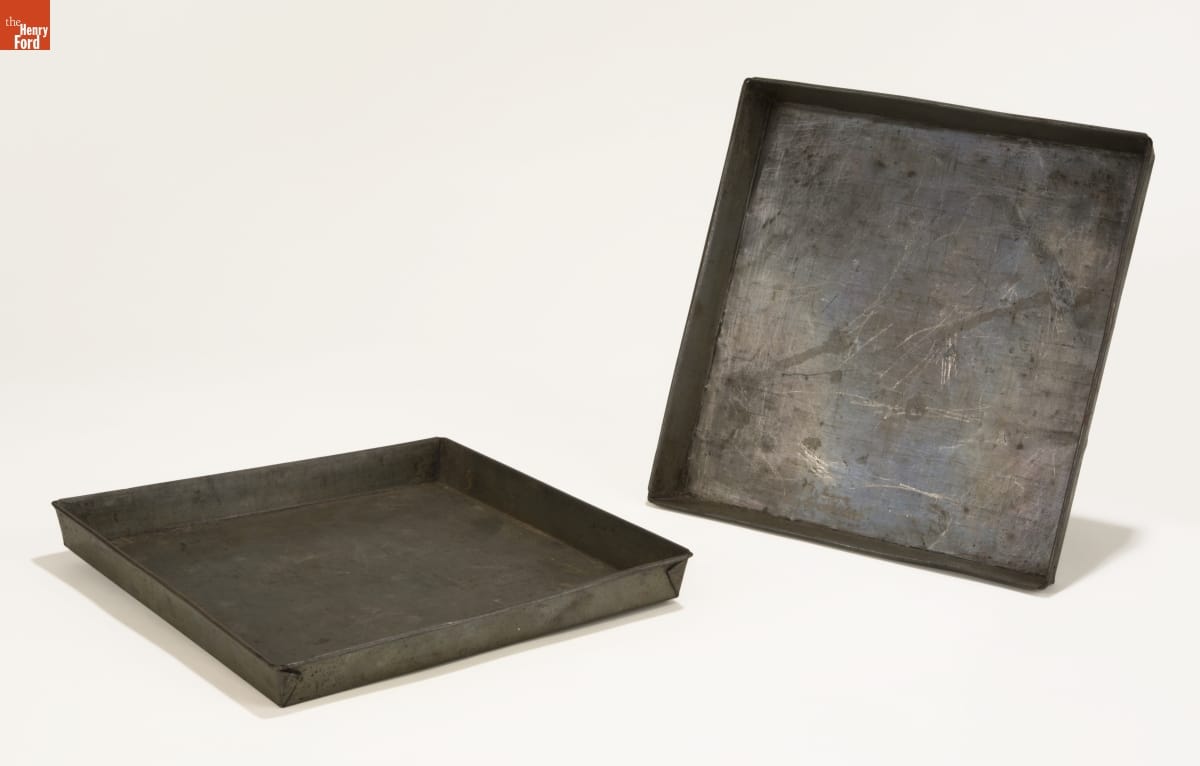
- Cake Pans, 1875-1900 - Tin-plated iron, commonly called "tin," was the dominant material for utilitarian items in 19th-century America. It was lightweight, inexpensive, easy to clean, non-toxic, and durable. Tinware also resisted corrosion and had a pleasing silvery appearance that could be enhanced through decoration. Middle-class Americans happily purchased tinware in place of goods made from earlier materials, like wood or pottery.
- 1875-1900
- Collections - Artifact
Cake Pans, 1875-1900
Tin-plated iron, commonly called "tin," was the dominant material for utilitarian items in 19th-century America. It was lightweight, inexpensive, easy to clean, non-toxic, and durable. Tinware also resisted corrosion and had a pleasing silvery appearance that could be enhanced through decoration. Middle-class Americans happily purchased tinware in place of goods made from earlier materials, like wood or pottery.
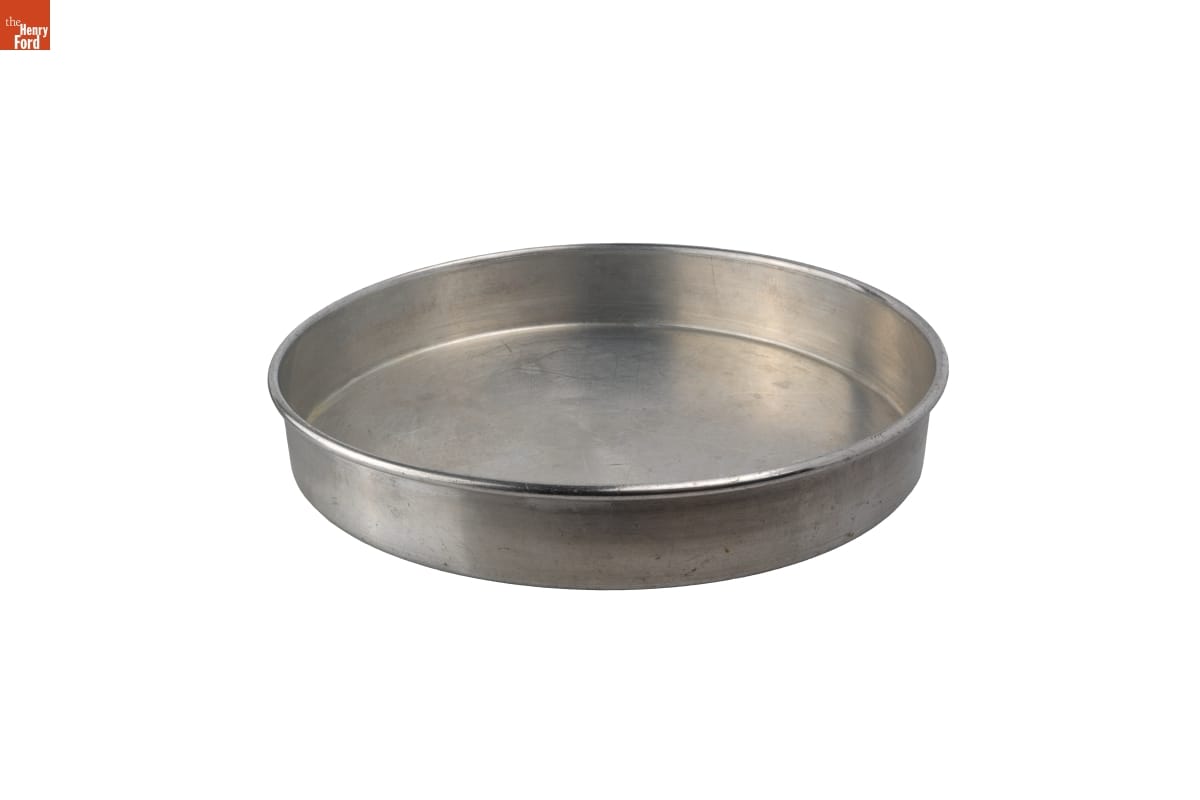
- Cake Pan Used by the Jackson Family, Selma, Alabama - In 2023, The Henry Ford acquired the Selma, Alabama, home of Dr. Sullivan and Richie Jean Sherrod Jackson, where Dr. Martin Luther King and Civil Rights leaders planned the 1965 Selma-to-Montgomery Voting Rights marches. The Jackson Home opened in Greenfield Village in 2026. The home and its contents not only document the voting rights struggle but also shed light on 20th-century Black American middle-class life.
- Collections - Artifact
Cake Pan Used by the Jackson Family, Selma, Alabama
In 2023, The Henry Ford acquired the Selma, Alabama, home of Dr. Sullivan and Richie Jean Sherrod Jackson, where Dr. Martin Luther King and Civil Rights leaders planned the 1965 Selma-to-Montgomery Voting Rights marches. The Jackson Home opened in Greenfield Village in 2026. The home and its contents not only document the voting rights struggle but also shed light on 20th-century Black American middle-class life.
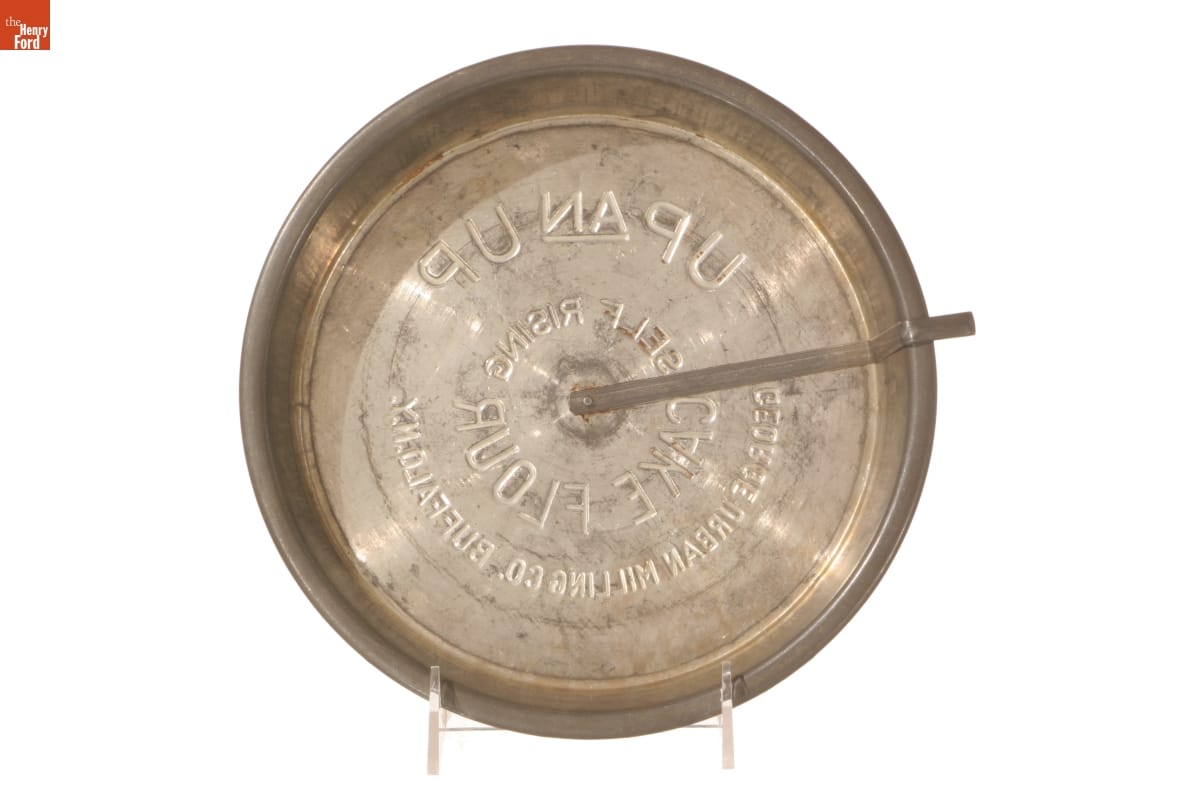
- Cake Pan, 1930-1940 - George Urban, Sr., established a flour mill in Buffalo, New York, in the mid-1800s. The family-owned business expanded during the next 125 years, providing products, like Up-an-Up self-rising cake flour, for New England and Mid-Atlantic states. In the 1960s, the company was sold, and during the next twenty years, purchased by larger food conglomerates. The mill closed in 1984.
- 1930-1940
- Collections - Artifact
Cake Pan, 1930-1940
George Urban, Sr., established a flour mill in Buffalo, New York, in the mid-1800s. The family-owned business expanded during the next 125 years, providing products, like Up-an-Up self-rising cake flour, for New England and Mid-Atlantic states. In the 1960s, the company was sold, and during the next twenty years, purchased by larger food conglomerates. The mill closed in 1984.