
Search
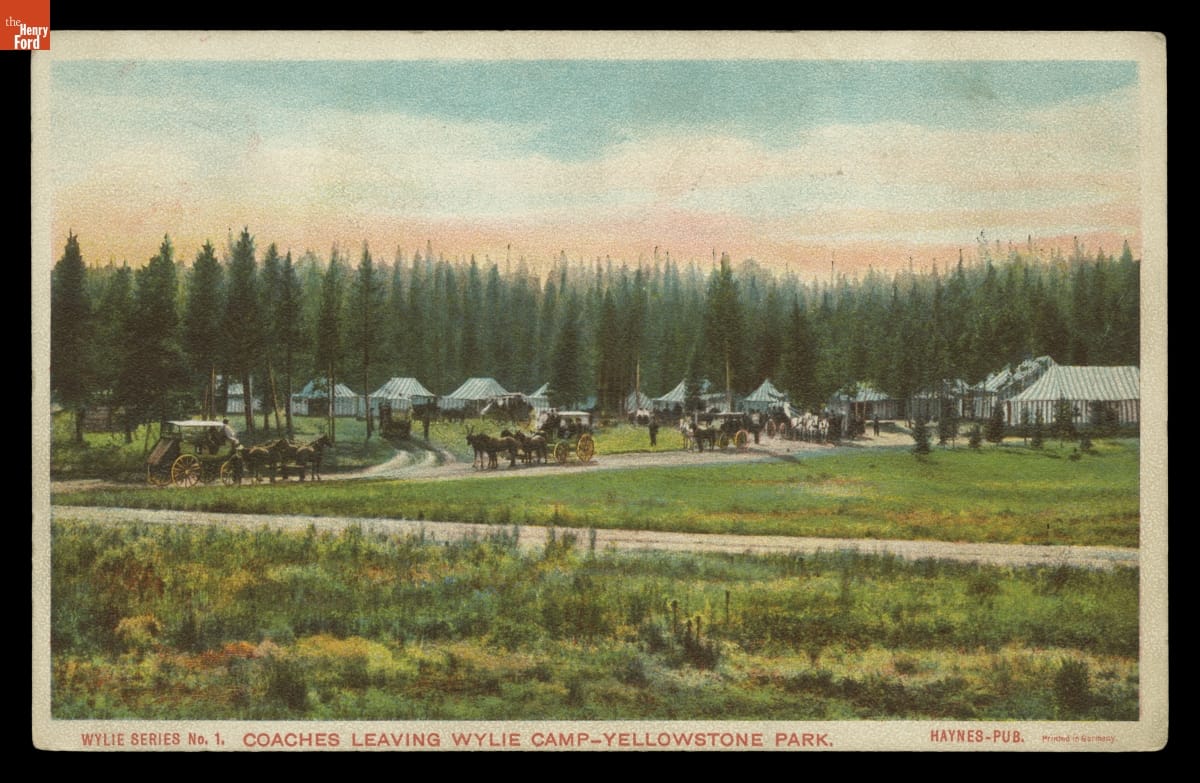
- Coaches Leaving Wylie Camp, Yellowstone Park, circa 1910 - Yellowstone National Park, established 1872, was America's first national park. During the first decade of the 1900s, tourists could take the park's Grand Tour by horse-drawn carriage, which involved stopping at a fancy hotel every night. Those who couldn't afford this option might choose the less expensive "Wylie Way," which involved lodging in canvas tents overnight.
- circa 1910
- Collections - Artifact
Coaches Leaving Wylie Camp, Yellowstone Park, circa 1910
Yellowstone National Park, established 1872, was America's first national park. During the first decade of the 1900s, tourists could take the park's Grand Tour by horse-drawn carriage, which involved stopping at a fancy hotel every night. Those who couldn't afford this option might choose the less expensive "Wylie Way," which involved lodging in canvas tents overnight.
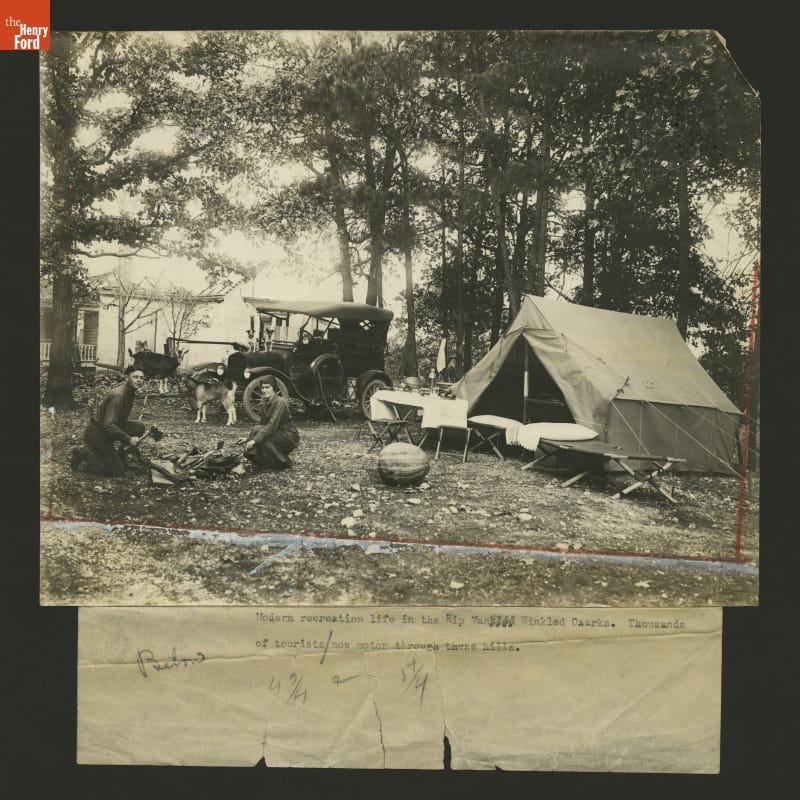
- Cooking Over a Campfire in the Missouri Ozarks, 1923 - Affordable cars promised freedom for average Americans. This couple escaped to the Ozarks in their Model T to enjoy the country. The caption of this 1923 photograph commented on the "Thousands of tourists, [who] now motor through these hills."
- 1922-1923
- Collections - Artifact
Cooking Over a Campfire in the Missouri Ozarks, 1923
Affordable cars promised freedom for average Americans. This couple escaped to the Ozarks in their Model T to enjoy the country. The caption of this 1923 photograph commented on the "Thousands of tourists, [who] now motor through these hills."
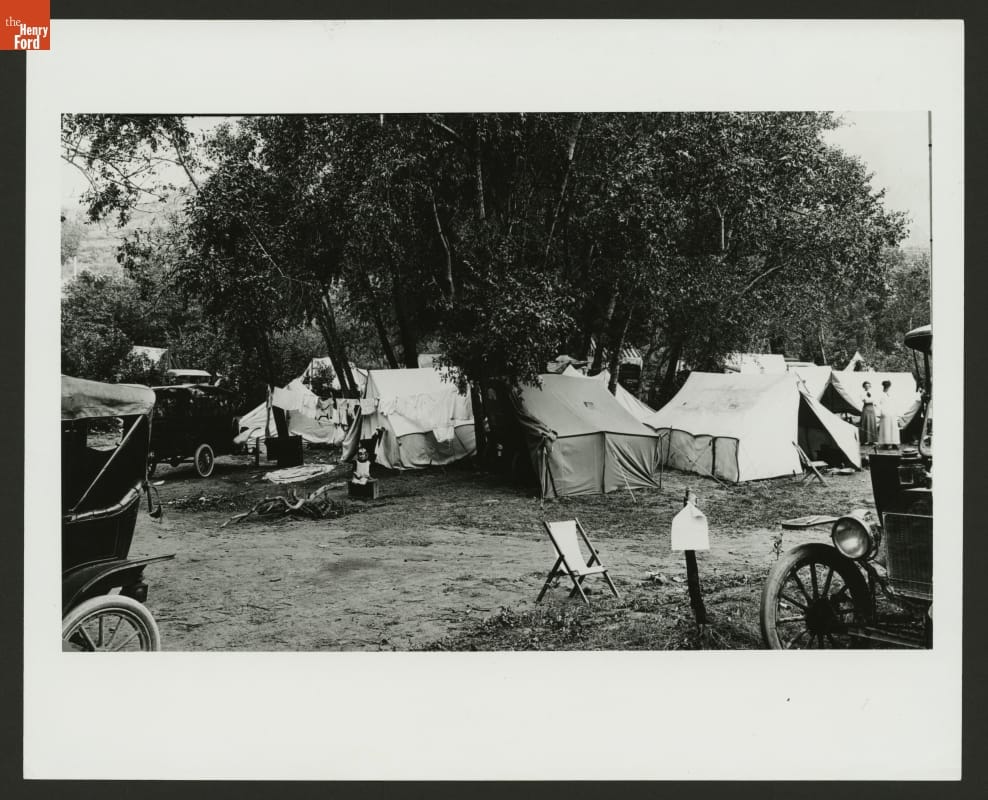
- Auto Campground with Ford Model T Cars and Tents, circa 1917 - During the late teens and 1920s, hordes of middle-class motorists were answering the call of the open road. But overnight lodgings were hard to find, so many people packed a tent, a few cots, and a supply of food, and enjoyed the freedom of autocamping. All the automobiles in this crowded campground are Model Ts.
- circa 1918
- Collections - Artifact
Auto Campground with Ford Model T Cars and Tents, circa 1917
During the late teens and 1920s, hordes of middle-class motorists were answering the call of the open road. But overnight lodgings were hard to find, so many people packed a tent, a few cots, and a supply of food, and enjoyed the freedom of autocamping. All the automobiles in this crowded campground are Model Ts.
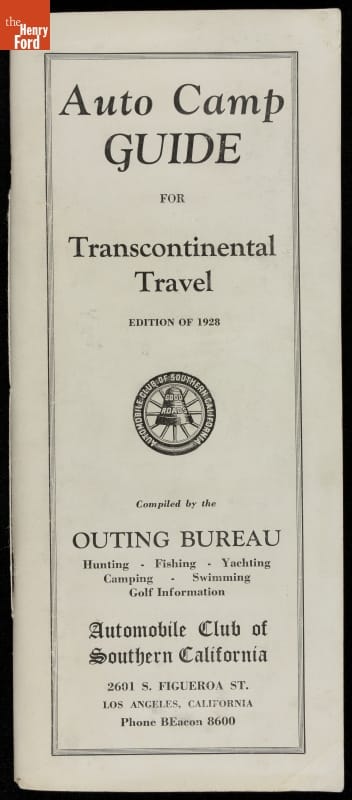
- "Auto Camp Guide for Transcontinental Travel," 1928 - Improving cars and improving highways encouraged Americans to start taking road trips in the 1920s. Thrifty travelers either slept in their cars or pitched tents along the roadside. "Auto camps" were established to cater to these tourists' needs. This guide, published by the Automobile Club of Southern California, lists locations and amenities for auto camps throughout the country.
- 1928
- Collections - Artifact
"Auto Camp Guide for Transcontinental Travel," 1928
Improving cars and improving highways encouraged Americans to start taking road trips in the 1920s. Thrifty travelers either slept in their cars or pitched tents along the roadside. "Auto camps" were established to cater to these tourists' needs. This guide, published by the Automobile Club of Southern California, lists locations and amenities for auto camps throughout the country.
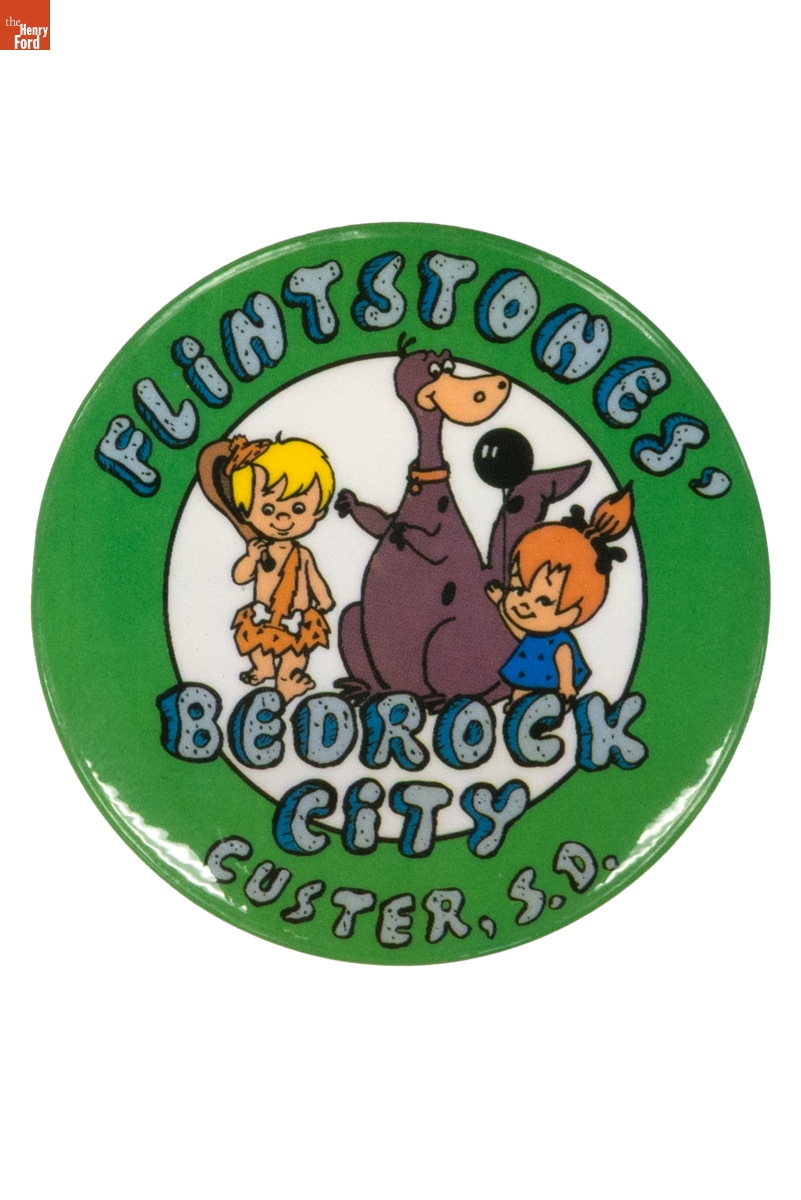
- "Flintstones' Bedrock City Custer, S.D." Button - Flintstones' Bedrock City was a theme park and campground inspired by the early 1960s animated television series about a modern Stone Age family, The Flintstones. Located in Custer, South Dakota, in the Black Hills, the park featured romanticized prehistoric settings (based on mid-20th-century suburbia) and costumed characters for families to enjoy. The park opened in 1966 and ceased operation in 2015.
- Collections - Artifact
"Flintstones' Bedrock City Custer, S.D." Button
Flintstones' Bedrock City was a theme park and campground inspired by the early 1960s animated television series about a modern Stone Age family, The Flintstones. Located in Custer, South Dakota, in the Black Hills, the park featured romanticized prehistoric settings (based on mid-20th-century suburbia) and costumed characters for families to enjoy. The park opened in 1966 and ceased operation in 2015.
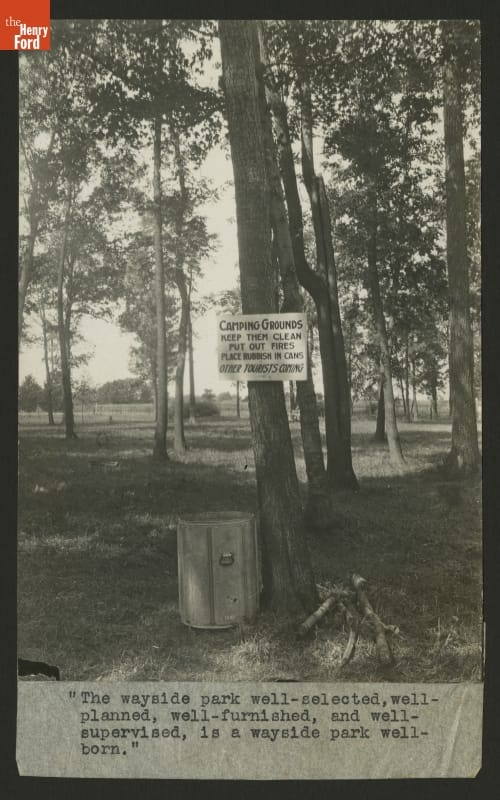
- Rules Sign Posted at Camping Grounds, 1921-1922 - Litter, fire, and lack of sanitary facilities became concerns as more campers hit the road in the early 20th century. Many communities established public autocamps with clean water and privies to deal with the problem. This photograph from 1922 shows one attempt to remind users to keep the campgrounds clean.
- 1921-1922
- Collections - Artifact
Rules Sign Posted at Camping Grounds, 1921-1922
Litter, fire, and lack of sanitary facilities became concerns as more campers hit the road in the early 20th century. Many communities established public autocamps with clean water and privies to deal with the problem. This photograph from 1922 shows one attempt to remind users to keep the campgrounds clean.
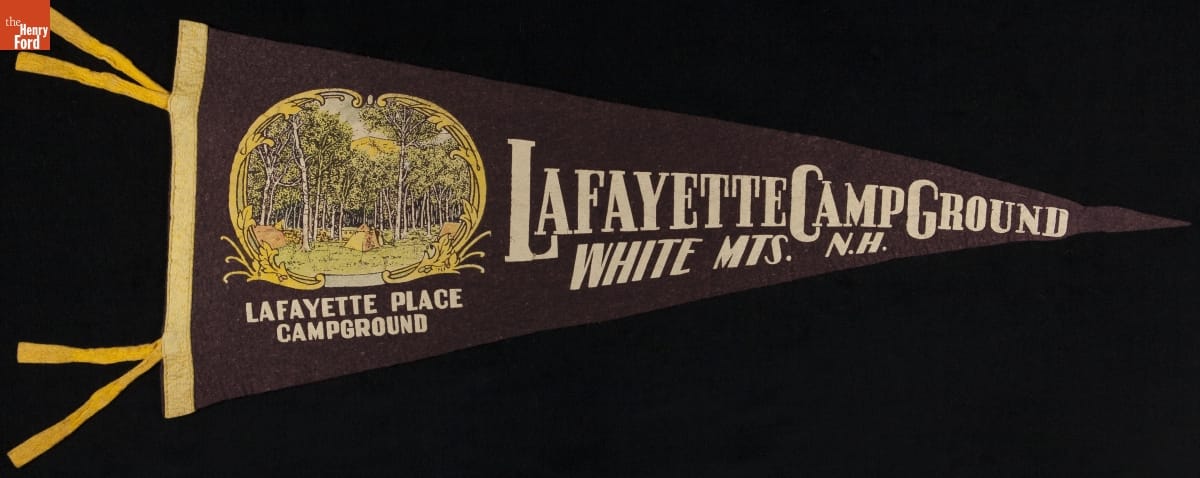
- Pennant, "Lafayette Camp Ground, White Mts., N. H.," 1940-1965 -
- 1940-1965
- Collections - Artifact
Pennant, "Lafayette Camp Ground, White Mts., N. H.," 1940-1965