
Search
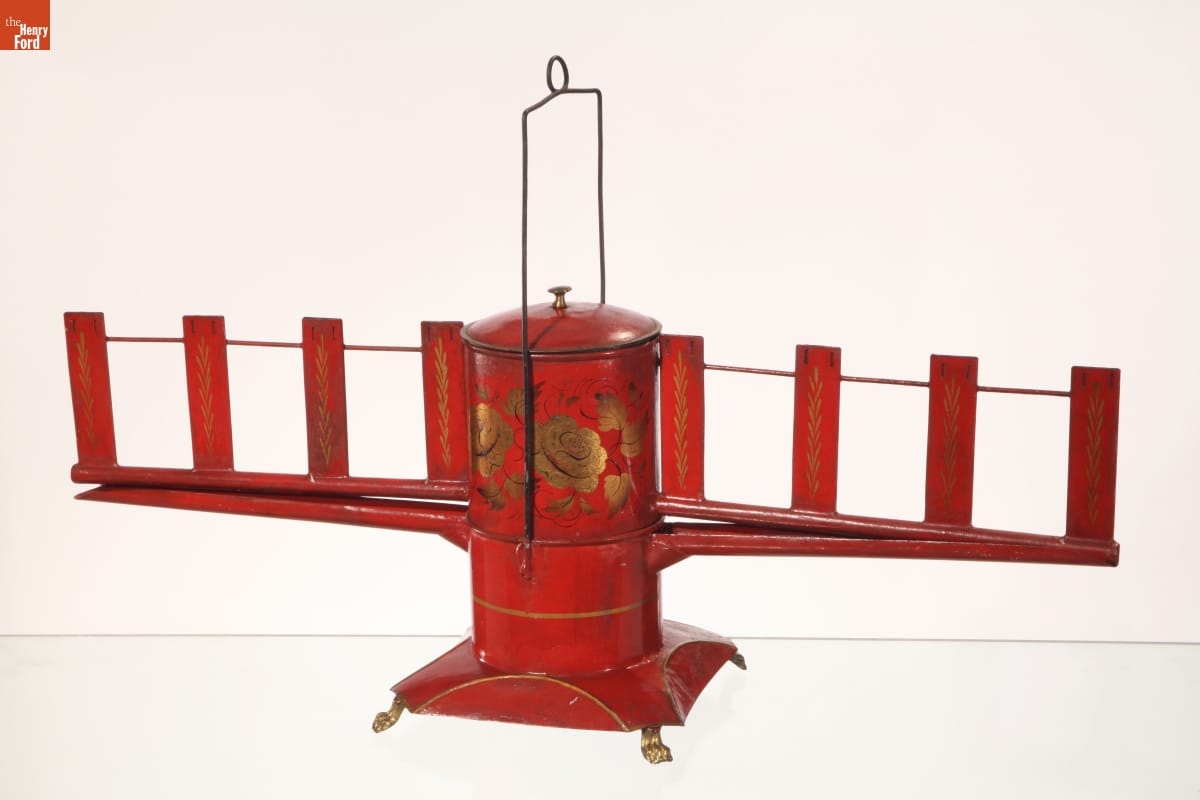
- Camphene Hanging Lamp, circa 1835 - The hanger at the top suggests that this lamp may have been used in a public space, such as a church or courtroom. However, the paw feet indicate that it could have sat on a table. The original wicks are visible and the paint shows no sign of wear, indicating it may not have been used.
- circa 1835
- Collections - Artifact
Camphene Hanging Lamp, circa 1835
The hanger at the top suggests that this lamp may have been used in a public space, such as a church or courtroom. However, the paw feet indicate that it could have sat on a table. The original wicks are visible and the paint shows no sign of wear, indicating it may not have been used.
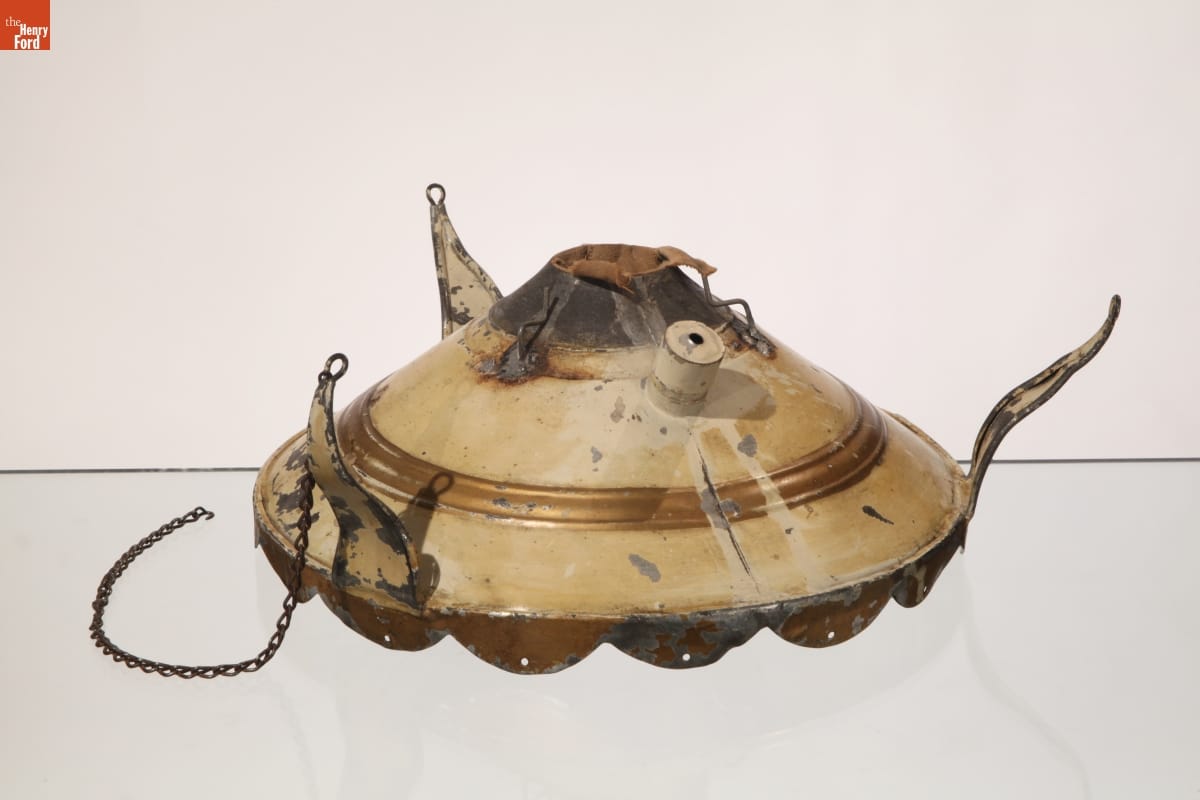
- Camphene Lamp, circa 1840 - "Burning fluid" chandeliers used highly volatile fuels like Camphene, a fuel similar to turpentine. Though dangerous, these fuels were popular because they were inexpensive and burned brightly. Along the bottom is an apron containing holes, from which glass pendants hung. The three hooks allowed the lamp to hang from the ceiling in a dining room or parlor.
- circa 1840
- Collections - Artifact
Camphene Lamp, circa 1840
"Burning fluid" chandeliers used highly volatile fuels like Camphene, a fuel similar to turpentine. Though dangerous, these fuels were popular because they were inexpensive and burned brightly. Along the bottom is an apron containing holes, from which glass pendants hung. The three hooks allowed the lamp to hang from the ceiling in a dining room or parlor.
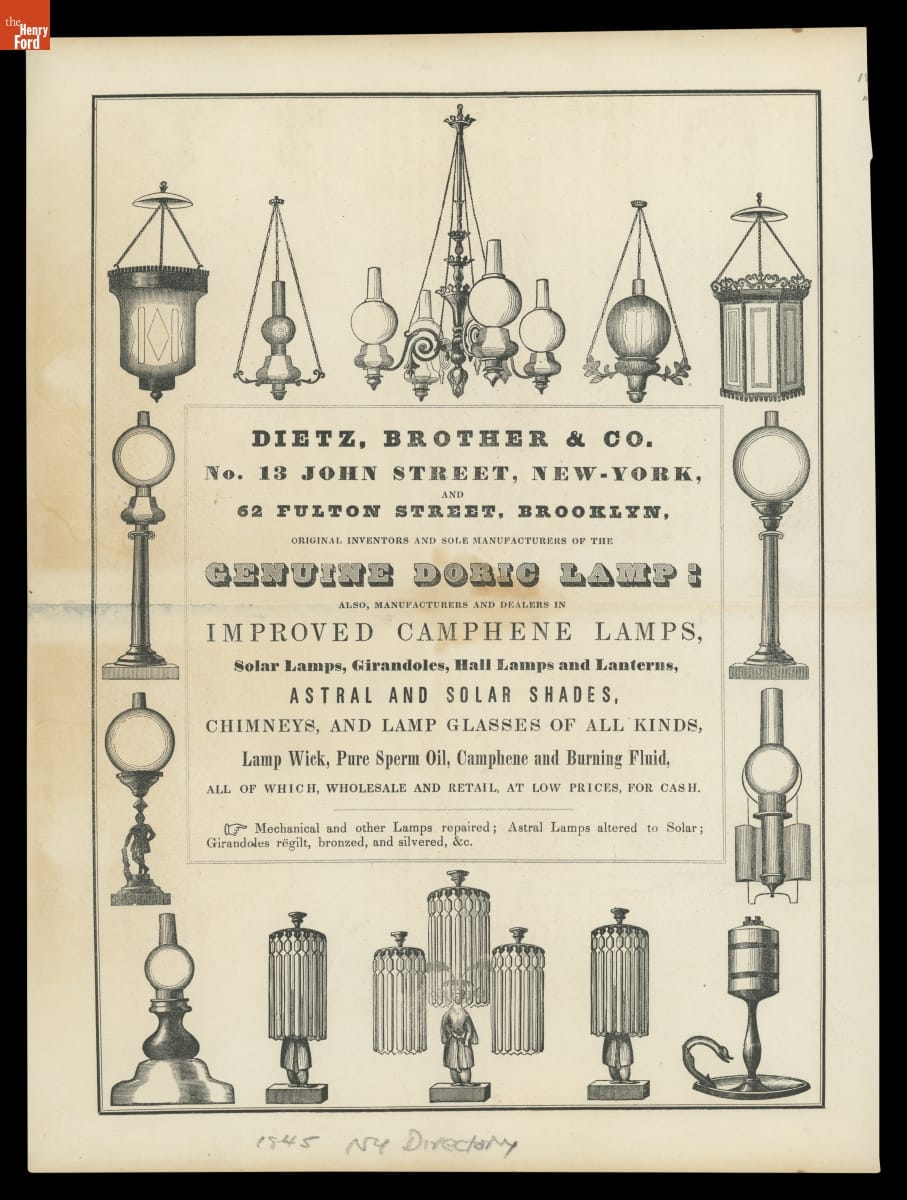
- Advertisement for Dietz, Brother & Co. Genuine Doric Lamp, 1845 -
- 1845
- Collections - Artifact
Advertisement for Dietz, Brother & Co. Genuine Doric Lamp, 1845
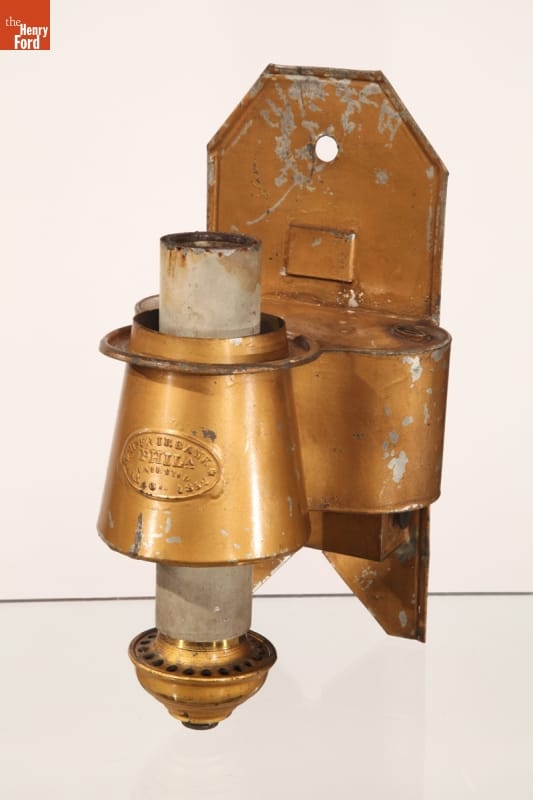
- Camphene Sconce, 1852-1865 - Consumers in the 19th century were concerned with an improved quality of light and access to affordable fuel. Inventors worked hard to develop lamps that met these expectations and were safe for the user. This wall sconce could burn a variety of inexpensive, highly volatile fuels including Camphene, a fuel similar to turpentine.
- 1852-1865
- Collections - Artifact
Camphene Sconce, 1852-1865
Consumers in the 19th century were concerned with an improved quality of light and access to affordable fuel. Inventors worked hard to develop lamps that met these expectations and were safe for the user. This wall sconce could burn a variety of inexpensive, highly volatile fuels including Camphene, a fuel similar to turpentine.
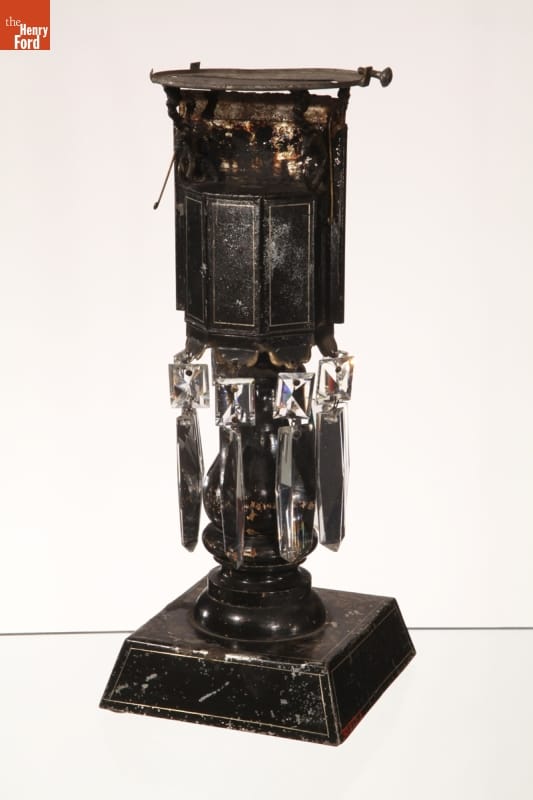
- Camphene Lamp, 1840-1860 - Camphene lamps produced bright light for general illumination. Camphene was a trade name for a number of burning fluids used as alternatives to expensive whale oil. Intended to dress up a parlor or sitting room, this simple tin lamp is stylishly decorated with painted stencils and glass pendants.
- 1840-1860
- Collections - Artifact
Camphene Lamp, 1840-1860
Camphene lamps produced bright light for general illumination. Camphene was a trade name for a number of burning fluids used as alternatives to expensive whale oil. Intended to dress up a parlor or sitting room, this simple tin lamp is stylishly decorated with painted stencils and glass pendants.
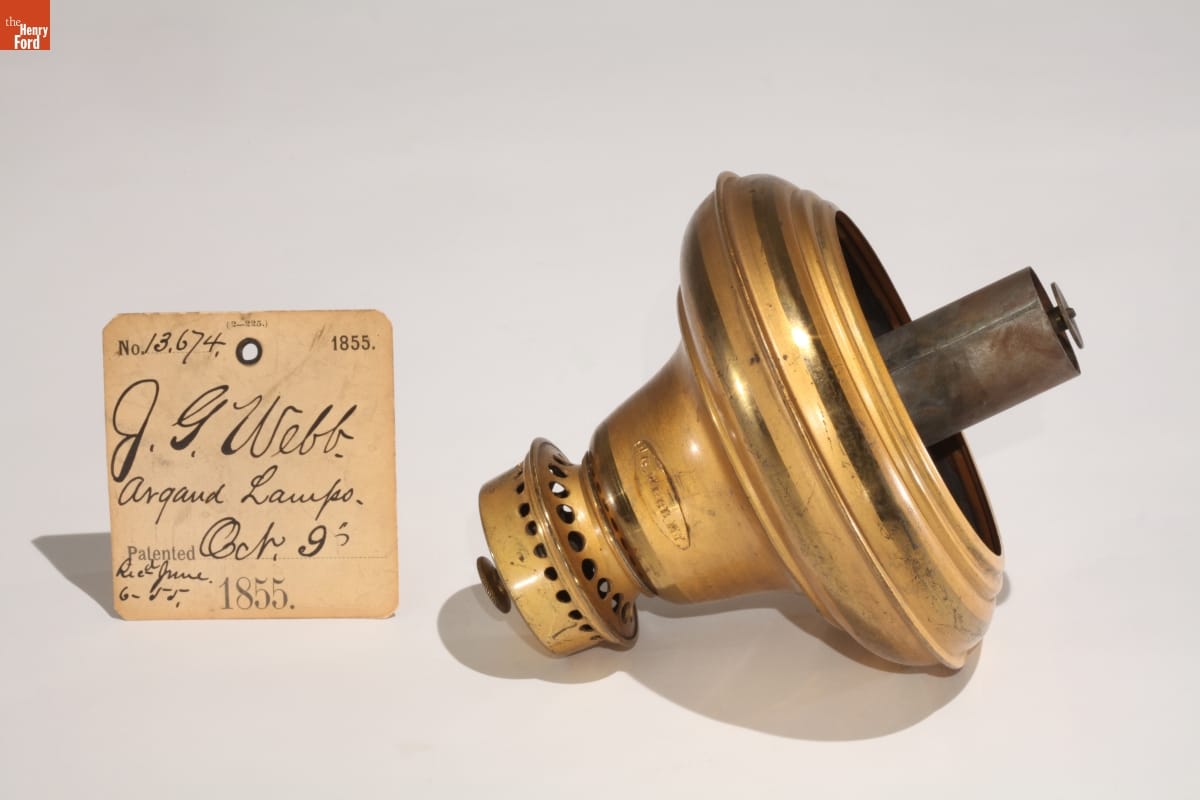
- Patent Model of Argand Lamp Burner, 1855 - Nineteenth century inventors constantly sought to create more efficient lighting technology, leading to improved patents such as this Argand burner. This principle forced air through the center of a hollow wick tube, allowing for a more complete combustion and a longer burning period. This burner would fit into a lamp hung from a ceiling.
- October 09, 1855
- Collections - Artifact
Patent Model of Argand Lamp Burner, 1855
Nineteenth century inventors constantly sought to create more efficient lighting technology, leading to improved patents such as this Argand burner. This principle forced air through the center of a hollow wick tube, allowing for a more complete combustion and a longer burning period. This burner would fit into a lamp hung from a ceiling.
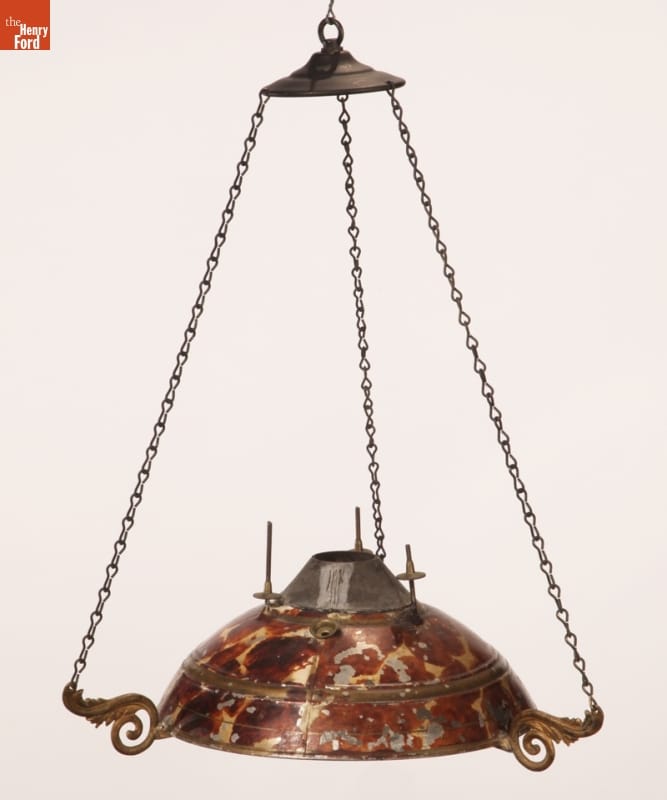
- Burning Fluid Hanging Lamp, 1840-1860 - "Burning Fluid" chandeliers used highly explosive fluids that, though dangerous, were popular because they were inexpensive and burned brightly. The oil font is in the center and the three hooks surrounding it allowed the lamp to hang from the ceiling. The fancy painted decoration enhanced its appeal in a parlor or dining room.
- 1840-1860
- Collections - Artifact
Burning Fluid Hanging Lamp, 1840-1860
"Burning Fluid" chandeliers used highly explosive fluids that, though dangerous, were popular because they were inexpensive and burned brightly. The oil font is in the center and the three hooks surrounding it allowed the lamp to hang from the ceiling. The fancy painted decoration enhanced its appeal in a parlor or dining room.
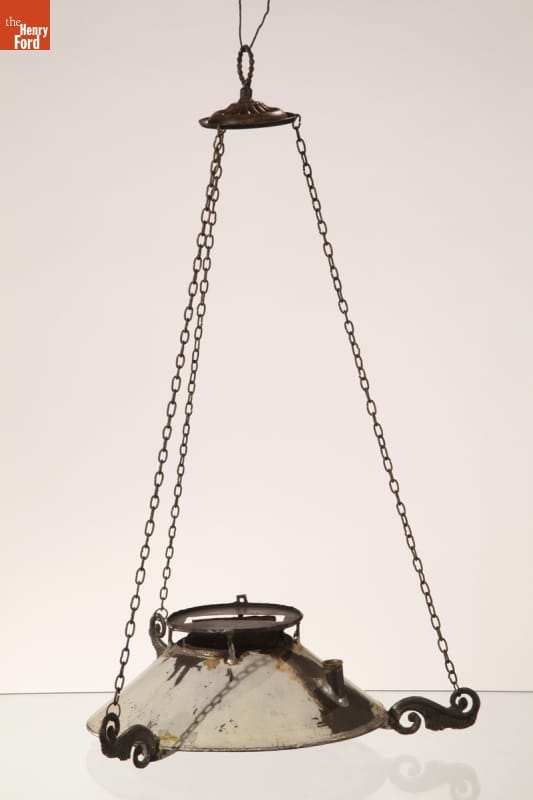
- Camphene or Burning Fluid Hanging Lamp, 1849 - Burning fluid hanging lamps were perfect for middle class families, burning Camphene, an inexpensive fuel similar to turpentine. Camphene and other "burning fluid" fuels were highly volatile. After the Civil War, kerosene took the place of these burning fluids because it burned brighter, was safer to use, and less expensive.
- 1849
- Collections - Artifact
Camphene or Burning Fluid Hanging Lamp, 1849
Burning fluid hanging lamps were perfect for middle class families, burning Camphene, an inexpensive fuel similar to turpentine. Camphene and other "burning fluid" fuels were highly volatile. After the Civil War, kerosene took the place of these burning fluids because it burned brighter, was safer to use, and less expensive.