
Search
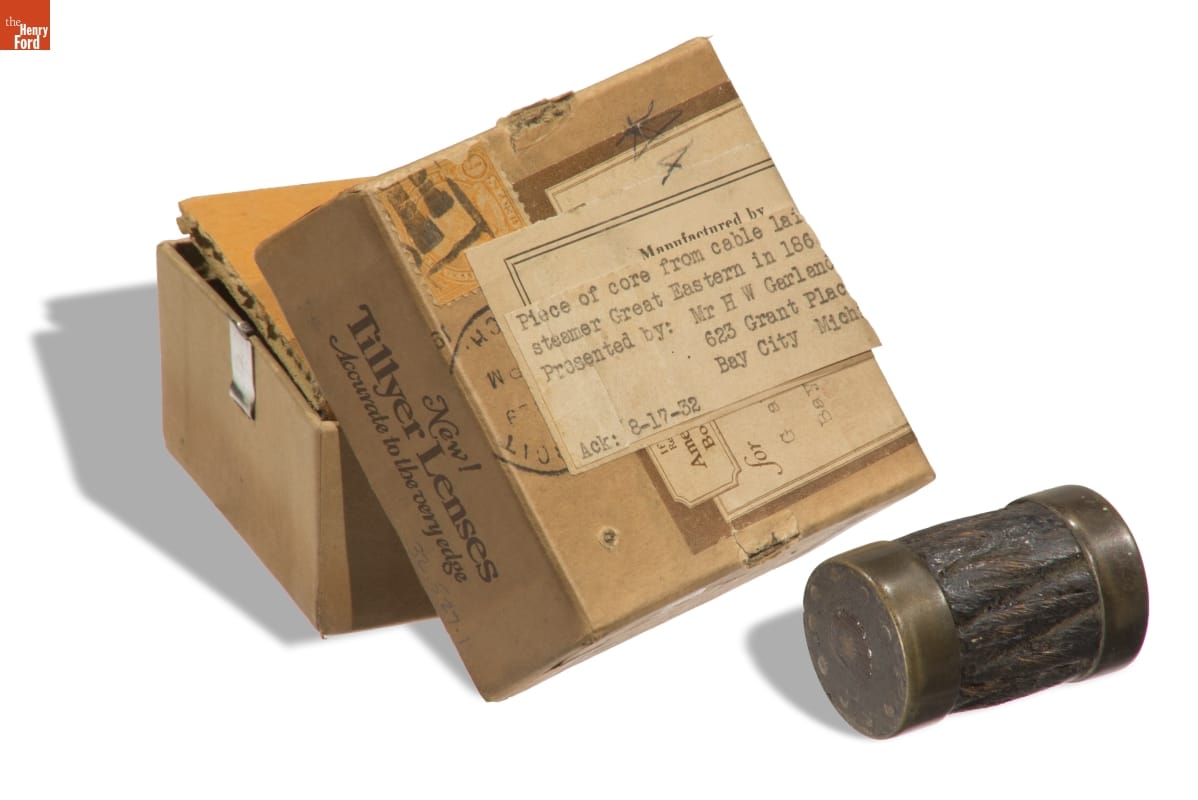
- Section of the Second Transatlantic Cable, 1865-1866 - Celebrations surrounding the installation of the 1858 transatlantic telegraph cable were short-lived. Three weeks after it was laid, it succeeded, faltered--and then failed. In 1866, a second cable was installed by the SS <EM>Great Eastern</EM>. This cable was more durable and able to send messages eighty times faster than the original.
- 1865-1866
- Collections - Artifact
Section of the Second Transatlantic Cable, 1865-1866
Celebrations surrounding the installation of the 1858 transatlantic telegraph cable were short-lived. Three weeks after it was laid, it succeeded, faltered--and then failed. In 1866, a second cable was installed by the SS Great Eastern. This cable was more durable and able to send messages eighty times faster than the original.
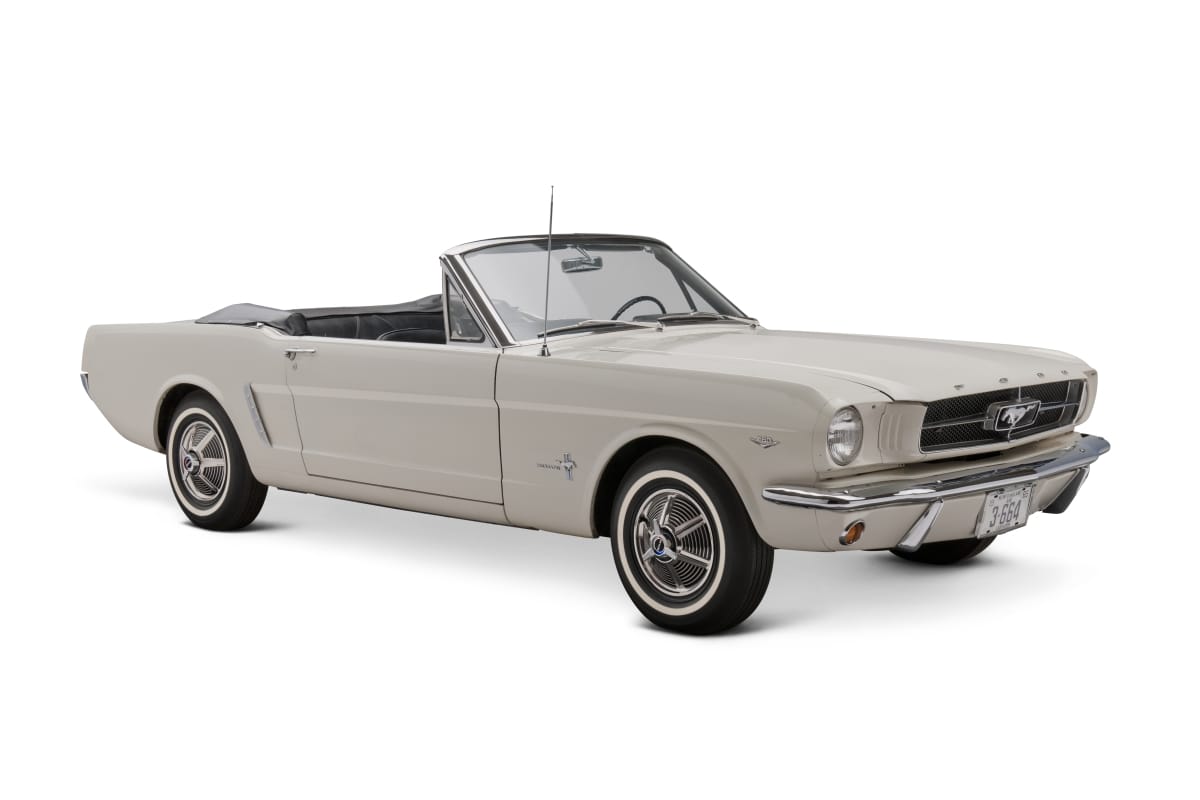
- 1965 Ford Mustang Convertible, Serial Number One - It's an old auto industry cliche -- "you can't sell a young man an old man's car, but you can sell an old man a young man's car." It's also true. The sporty Mustang was a young man's -- and woman's -- car. The under-30 crowd loved it. But older people also bought them, often as a second car. The Mustang hit a sweet spot in the market, appealing to a wide range of buyers.
- 1964
- Collections - Artifact
1965 Ford Mustang Convertible, Serial Number One
It's an old auto industry cliche -- "you can't sell a young man an old man's car, but you can sell an old man a young man's car." It's also true. The sporty Mustang was a young man's -- and woman's -- car. The under-30 crowd loved it. But older people also bought them, often as a second car. The Mustang hit a sweet spot in the market, appealing to a wide range of buyers.
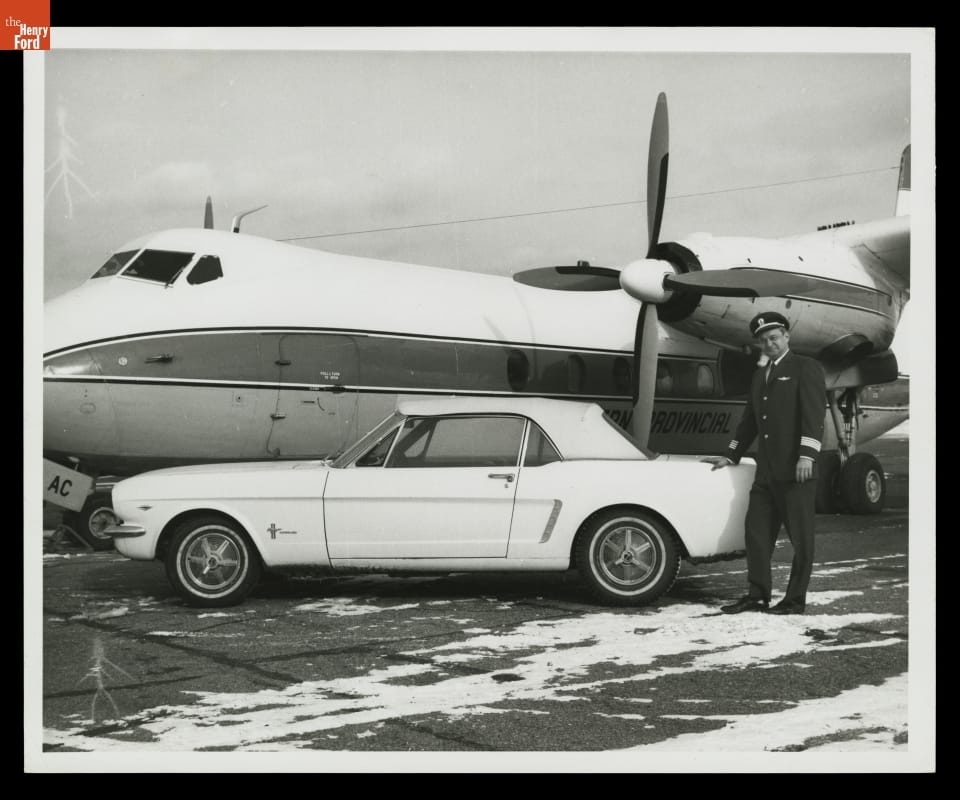
- Ford Mustang Serial Number 1 and Original Owner Captain Stanley Tucker, 1966 - Ford Mustang serial number 1 rolled off the assembly line in March of 1964 and embarked on a Canadian publicity tour. It was purchased by airline pilot Captain Stanley Tucker in Newfoundland on April 14 -- three days before the 1965 Mustang was introduced to the public. In this photograph, Captain Tucker poses with his Wimbledon White convertible.
- February 22, 1966
- Collections - Artifact
Ford Mustang Serial Number 1 and Original Owner Captain Stanley Tucker, 1966
Ford Mustang serial number 1 rolled off the assembly line in March of 1964 and embarked on a Canadian publicity tour. It was purchased by airline pilot Captain Stanley Tucker in Newfoundland on April 14 -- three days before the 1965 Mustang was introduced to the public. In this photograph, Captain Tucker poses with his Wimbledon White convertible.
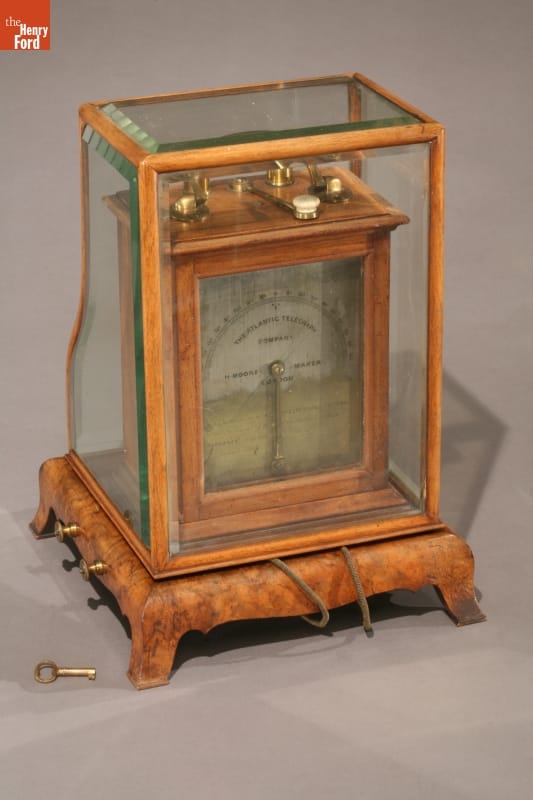
- Galvanometer Used to Receive Queen Victoria's Message to President James Buchanan Over the First Transatlantic Cable, 1858 - A galvanometer is an instrument that detects and measures electric current. On August 16, 1858, this device was used by President James Buchanan to receive the first public message sent across the transatlantic cable. The message was sent by Queen Victoria to celebrate "a link between nations." It was 98 words long--and took 16.5 hours to transmit.
- August 16, 1858
- Collections - Artifact
Galvanometer Used to Receive Queen Victoria's Message to President James Buchanan Over the First Transatlantic Cable, 1858
A galvanometer is an instrument that detects and measures electric current. On August 16, 1858, this device was used by President James Buchanan to receive the first public message sent across the transatlantic cable. The message was sent by Queen Victoria to celebrate "a link between nations." It was 98 words long--and took 16.5 hours to transmit.
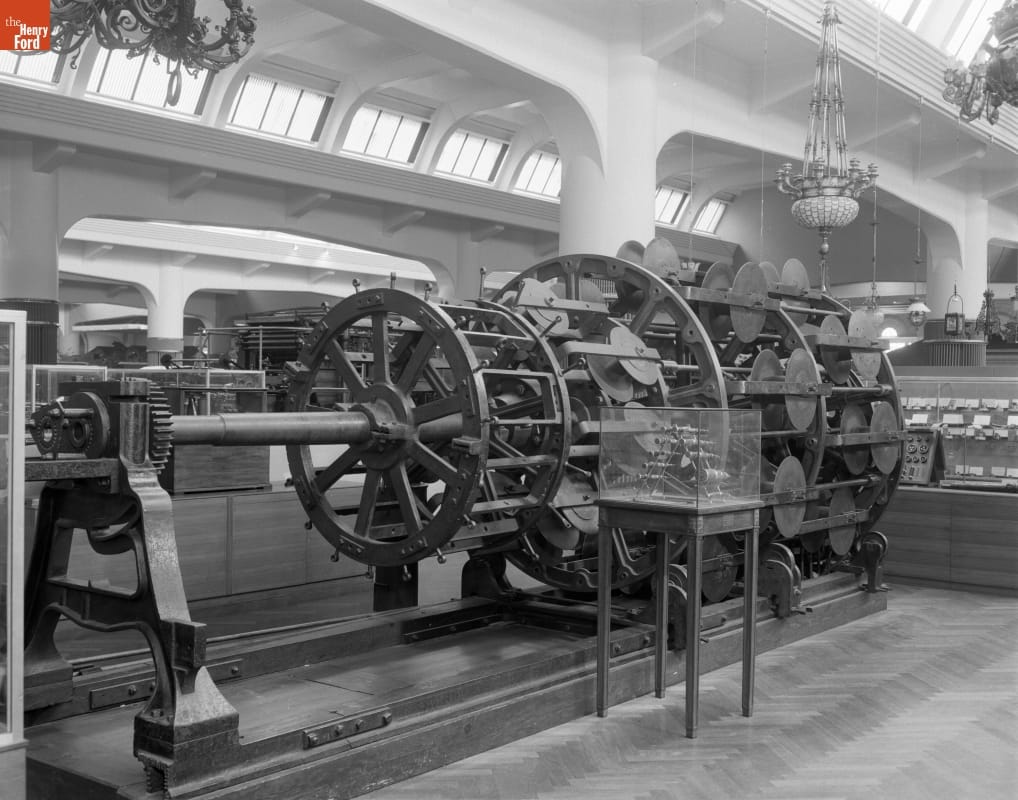
- Machine Used to Strand Transatlantic Cable, 1860-1865 - Laying telegraph cable across the Atlantic Ocean in the 1860s was a huge undertaking. This massive cable stranding machine was used in Greenwich, England, to wind together the different elements of the cable: iron for strength, copper for conductivity, gutta-percha rubber for insulation, and tarred hemp for durability. Following several failed attempts, the heavy, flexible cable was laid successfully by the SS <EM>Great Eastern</EM> in 1866.
- 1860-1865
- Collections - Artifact
Machine Used to Strand Transatlantic Cable, 1860-1865
Laying telegraph cable across the Atlantic Ocean in the 1860s was a huge undertaking. This massive cable stranding machine was used in Greenwich, England, to wind together the different elements of the cable: iron for strength, copper for conductivity, gutta-percha rubber for insulation, and tarred hemp for durability. Following several failed attempts, the heavy, flexible cable was laid successfully by the SS Great Eastern in 1866.
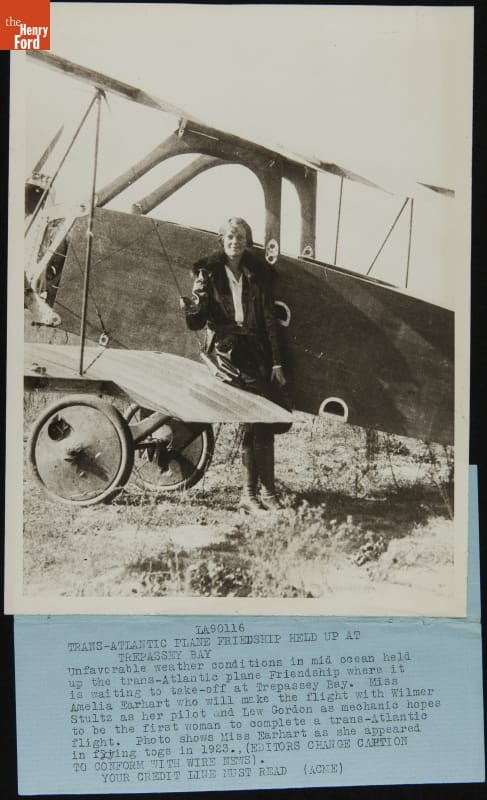
- 1923 Amelia Earhart Photo Used in a News Release While the "Friendship" was Held Up at Trepassey Bay, June 5-17, 1928 - Amelia Earhart took her first airplane ride in December 1920. From then on, she devoted her life to aviation. She worked odd jobs to pay for flying lessons and earned her pilot's license in 1923 -- only the 16th woman to do so. Earhart set records, made headlines and became one of the world's most famous pilots, female or male.
- 1923
- Collections - Artifact
1923 Amelia Earhart Photo Used in a News Release While the "Friendship" was Held Up at Trepassey Bay, June 5-17, 1928
Amelia Earhart took her first airplane ride in December 1920. From then on, she devoted her life to aviation. She worked odd jobs to pay for flying lessons and earned her pilot's license in 1923 -- only the 16th woman to do so. Earhart set records, made headlines and became one of the world's most famous pilots, female or male.
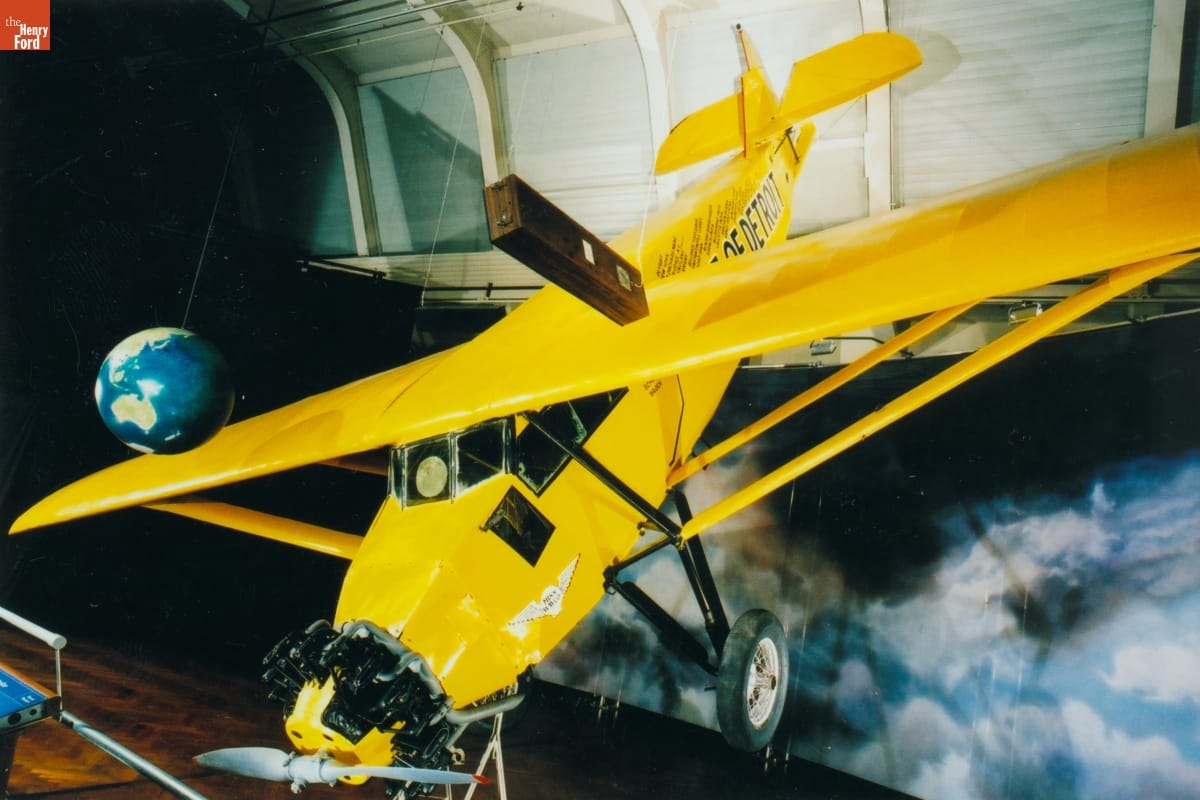
- 1927 Stinson SM-1 Detroiter Monoplane, "The Pride of Detroit" - William S. Brock and Detroit businessman Edward F. Schlee tried to fly this airplane around the world in 1927. Starting from Harbour Grace, Canada, they flew east for 12,295 miles. At Tokyo, Japan, a typhoon -- and worried telegrams from family and friends -- convinced them to end the attempt. Nevertheless, they were celebrated as heroes when they returned to the United States -- by ship.
- 1927
- Collections - Artifact
1927 Stinson SM-1 Detroiter Monoplane, "The Pride of Detroit"
William S. Brock and Detroit businessman Edward F. Schlee tried to fly this airplane around the world in 1927. Starting from Harbour Grace, Canada, they flew east for 12,295 miles. At Tokyo, Japan, a typhoon -- and worried telegrams from family and friends -- convinced them to end the attempt. Nevertheless, they were celebrated as heroes when they returned to the United States -- by ship.
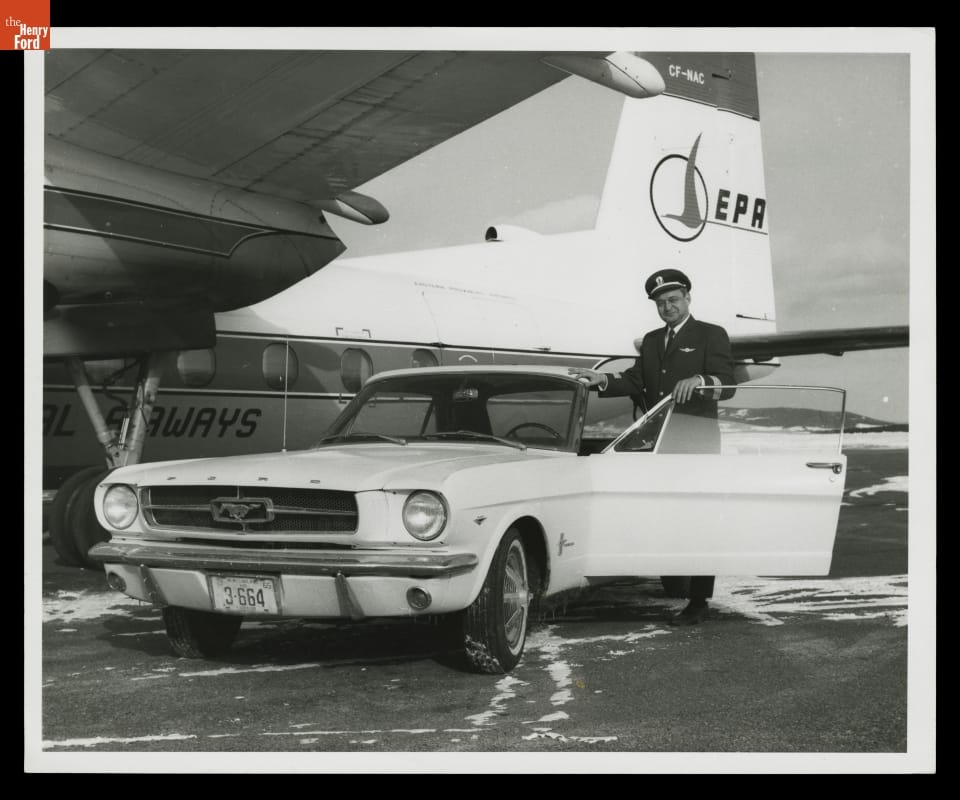
- Ford Mustang Serial Number 1 with Original Owner, Captain Stanley Tucker, 1966 - Ford Mustang serial number 1 rolled off the assembly line in March of 1964 and embarked on a Canadian publicity tour. It was purchased by airline pilot Captain Stanley Tucker in Newfoundland on April 14 -- three days before the 1965 Mustang was introduced to the public. In this photograph, Captain Tucker poses with his Wimbledon White convertible.
- February 22, 1966
- Collections - Artifact
Ford Mustang Serial Number 1 with Original Owner, Captain Stanley Tucker, 1966
Ford Mustang serial number 1 rolled off the assembly line in March of 1964 and embarked on a Canadian publicity tour. It was purchased by airline pilot Captain Stanley Tucker in Newfoundland on April 14 -- three days before the 1965 Mustang was introduced to the public. In this photograph, Captain Tucker poses with his Wimbledon White convertible.
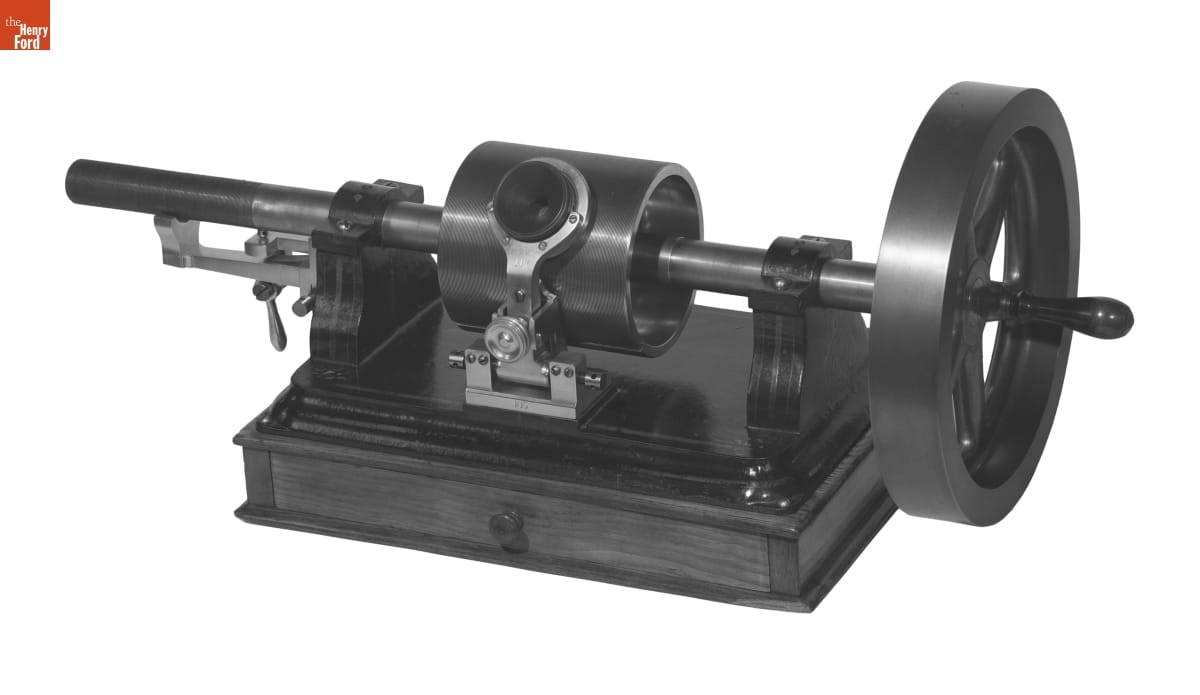
- S. Bergmann & Company Tinfoil Phonograph, Used to Entertain Miners at the Betts Cove Mine, 1878 -
- 1878
- Collections - Artifact
S. Bergmann & Company Tinfoil Phonograph, Used to Entertain Miners at the Betts Cove Mine, 1878
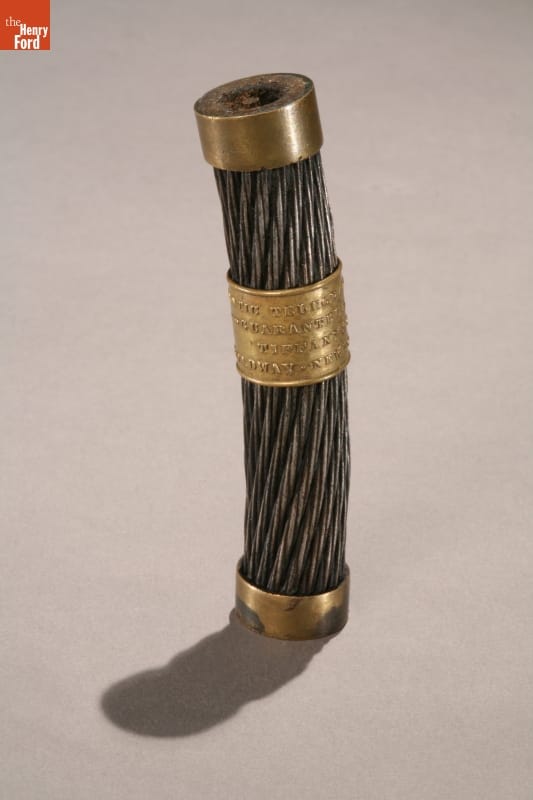
- Section of the First Transatlantic Cable, 1858 - Telegraphs could be sent wherever wires could be hung in the 1850s, but hardwiring signals between transoceanic continents required a feat of engineering. In 1858, a team laid underwater cable across the Atlantic and sent a successful telegram. Though the cable soon failed, pieces were sold as souvenirs in Charles Tiffany's renowned jewelry store as symbols of speed and progress.
- 1858
- Collections - Artifact
Section of the First Transatlantic Cable, 1858
Telegraphs could be sent wherever wires could be hung in the 1850s, but hardwiring signals between transoceanic continents required a feat of engineering. In 1858, a team laid underwater cable across the Atlantic and sent a successful telegram. Though the cable soon failed, pieces were sold as souvenirs in Charles Tiffany's renowned jewelry store as symbols of speed and progress.