
Search
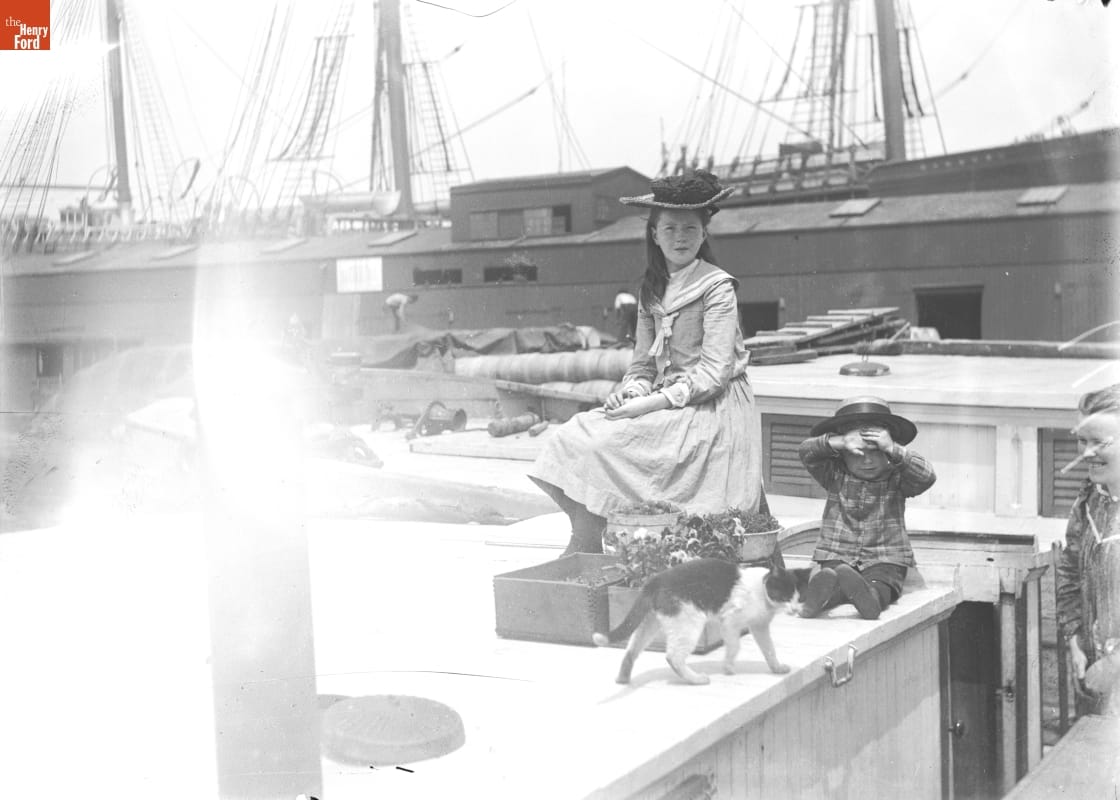
- Engineer and Children on Canal Boat at Palmer's Dock, 1890-1915 - In 1890, Jenny Young Chandler, 25 years old and recently widowed, began working for the <EM>New York Herald</EM>. As a photojournalist and feature writer, Chandler captured life in Brooklyn, New York, and vicinity. By 1922, the time of her death, she had produced over 800 glass plate negatives. Her sensitive, insightful photographs depict people from all walks of life and the world in which they lived.
- 1890-1915
- Collections - Artifact
Engineer and Children on Canal Boat at Palmer's Dock, 1890-1915
In 1890, Jenny Young Chandler, 25 years old and recently widowed, began working for the New York Herald. As a photojournalist and feature writer, Chandler captured life in Brooklyn, New York, and vicinity. By 1922, the time of her death, she had produced over 800 glass plate negatives. Her sensitive, insightful photographs depict people from all walks of life and the world in which they lived.
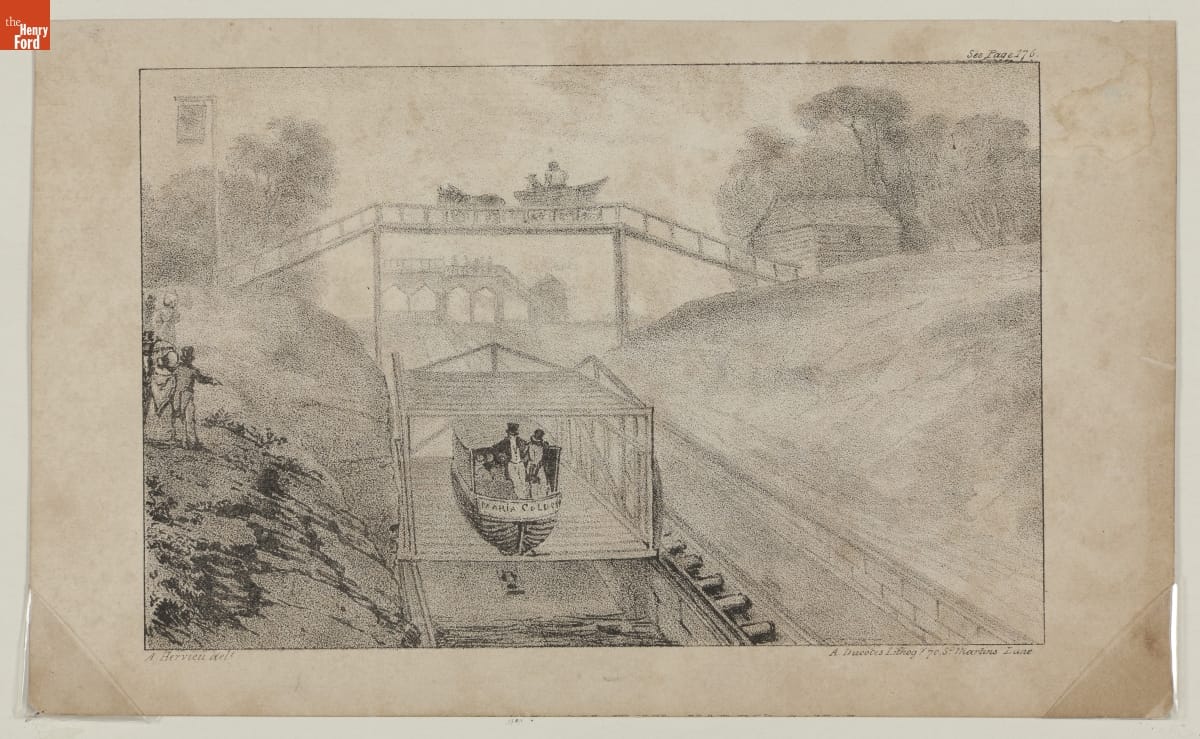
- Lithograph, Canal Boat on New Jersey Canal, circa 1830 - This image illustrates a method of shifting boats from one level to another that was used on parts of New Jersey canals. A boat was floated, and then fastened, on a submerged wheeled cradle. The cradle was then lowered or pulled up an inclined plane. At the new level the cradle moved on submerged tracks, and the boat was released.
- circa 1830
- Collections - Artifact
Lithograph, Canal Boat on New Jersey Canal, circa 1830
This image illustrates a method of shifting boats from one level to another that was used on parts of New Jersey canals. A boat was floated, and then fastened, on a submerged wheeled cradle. The cradle was then lowered or pulled up an inclined plane. At the new level the cradle moved on submerged tracks, and the boat was released.
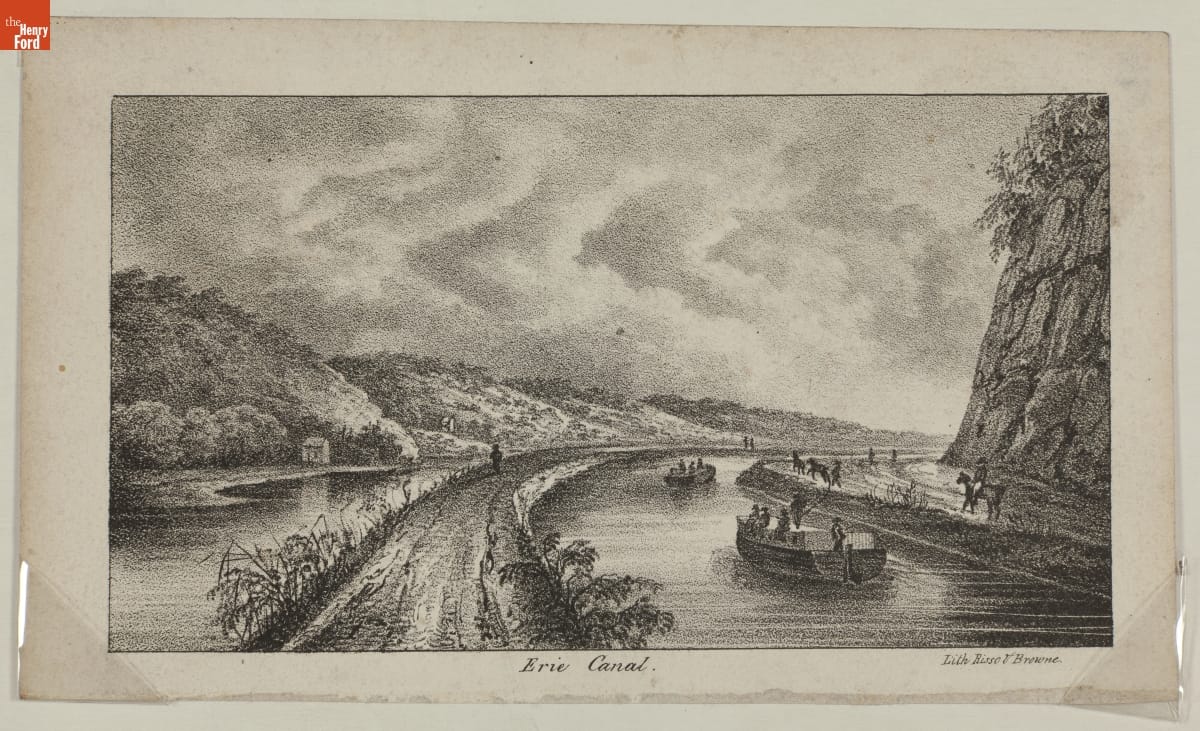
- Packet Boats Rounding a Curve on the Erie Canal, Print, circa 1832 - This engraving, made about 1832, shows an idyllic view of travel and transportation on the Erie Canal. Completed in 1825, the canal opened the western regions of New York and states of the Old Northwest to greater settlement and commerce. The Erie Canal extends from the Hudson River to Lake Erie.
- circa 1832
- Collections - Artifact
Packet Boats Rounding a Curve on the Erie Canal, Print, circa 1832
This engraving, made about 1832, shows an idyllic view of travel and transportation on the Erie Canal. Completed in 1825, the canal opened the western regions of New York and states of the Old Northwest to greater settlement and commerce. The Erie Canal extends from the Hudson River to Lake Erie.
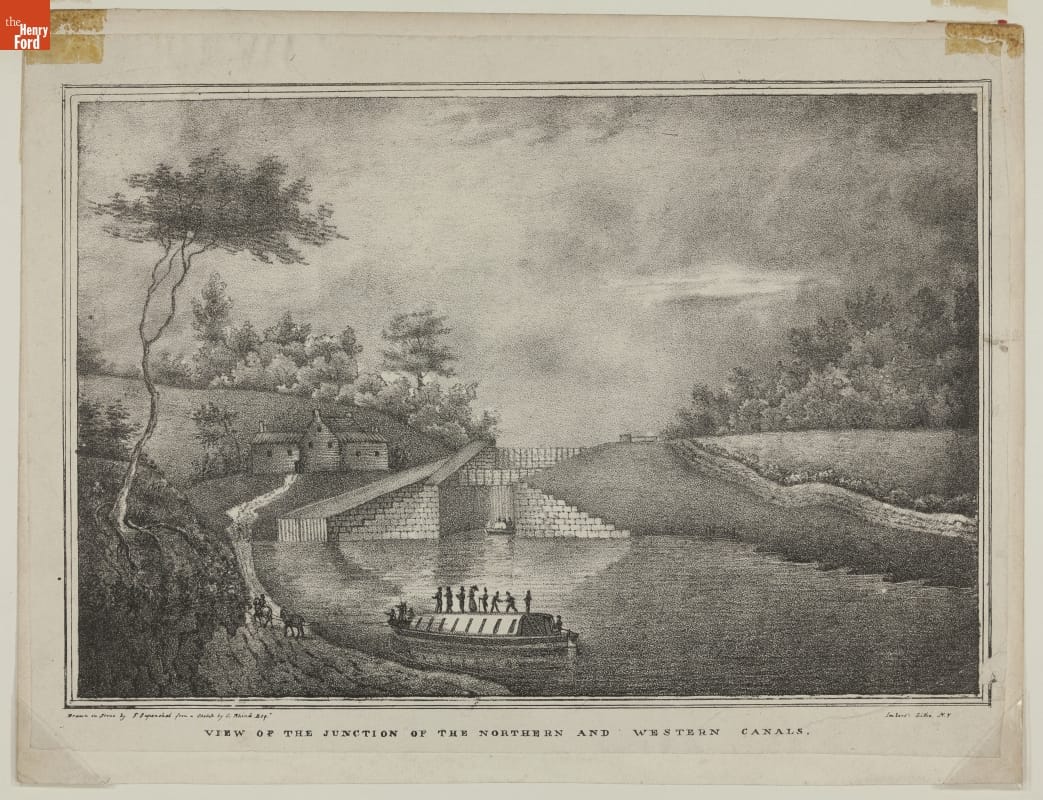
- Lithograph, "View of the Junction of the Northern and Western Canals," 1825 - The construction of Erie Canal, connecting the Hudson River to Lake Erie, began in 1817 and completed in 1825, opened the Midwest of the United States to settlement and commerce. Passengers assembled on the roof of a packet boat on the Erie Canal to watch the process of pulling the boat through a lock, while experienced travelers remained below.
- 1825
- Collections - Artifact
Lithograph, "View of the Junction of the Northern and Western Canals," 1825
The construction of Erie Canal, connecting the Hudson River to Lake Erie, began in 1817 and completed in 1825, opened the Midwest of the United States to settlement and commerce. Passengers assembled on the roof of a packet boat on the Erie Canal to watch the process of pulling the boat through a lock, while experienced travelers remained below.
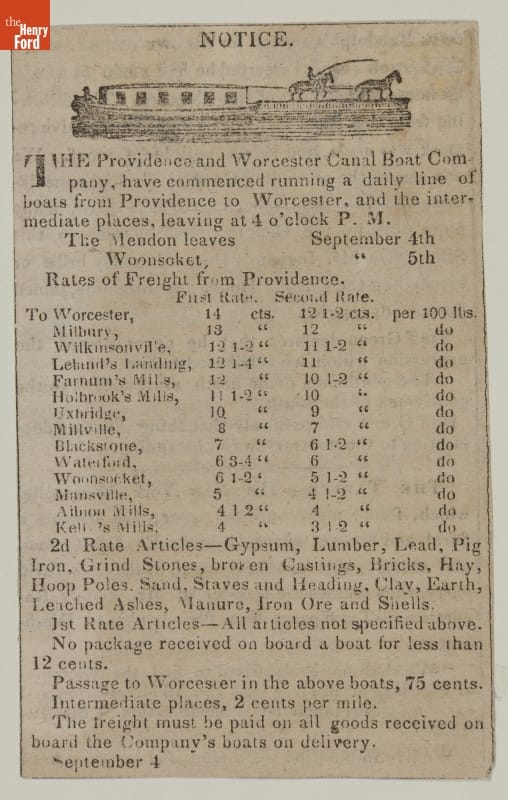
- Providence and Worcester Canal Boat Company Schedule from Newspaper, Rhode Island, 1829 - The first half of the 19th century was the heyday of canal construction and use in the United States, providing easier access to territories for settlement and commerce. This advertisement of the Providence and Worcester Canal Boat Company, from September 8, 1829, supplied dates and times of departure, along with freight and passenger rates between the two cities.
- September 08, 1829
- Collections - Artifact
Providence and Worcester Canal Boat Company Schedule from Newspaper, Rhode Island, 1829
The first half of the 19th century was the heyday of canal construction and use in the United States, providing easier access to territories for settlement and commerce. This advertisement of the Providence and Worcester Canal Boat Company, from September 8, 1829, supplied dates and times of departure, along with freight and passenger rates between the two cities.
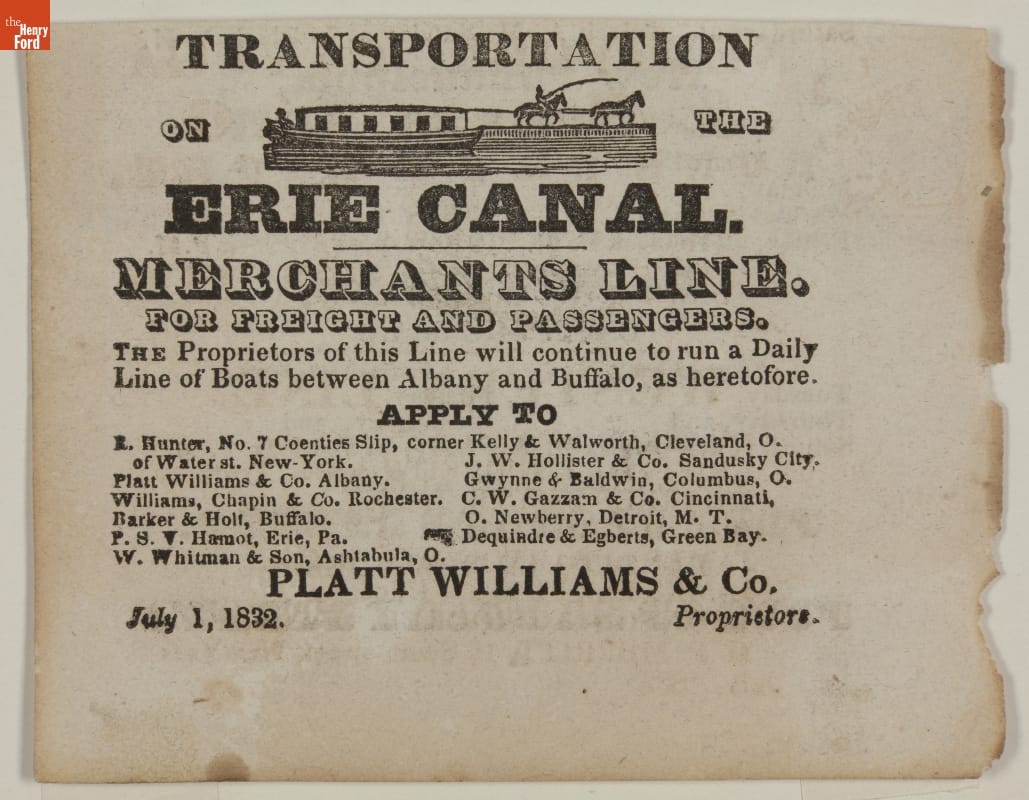
- Broadside, Transportation on the Erie Canal Merchants Line, 1832 - The first half of the 19th century was the heyday of canals in the United States, opening up new territories to settlement and commerce. The Erie Canal, connecting Albany to Buffalo, began in 1817 and was completed in 1825. This broadside, printed July 1, 1832, advertised the "Merchants Line" of boats, a daily line that transported freight and passengers.
- July 01, 1832
- Collections - Artifact
Broadside, Transportation on the Erie Canal Merchants Line, 1832
The first half of the 19th century was the heyday of canals in the United States, opening up new territories to settlement and commerce. The Erie Canal, connecting Albany to Buffalo, began in 1817 and was completed in 1825. This broadside, printed July 1, 1832, advertised the "Merchants Line" of boats, a daily line that transported freight and passengers.
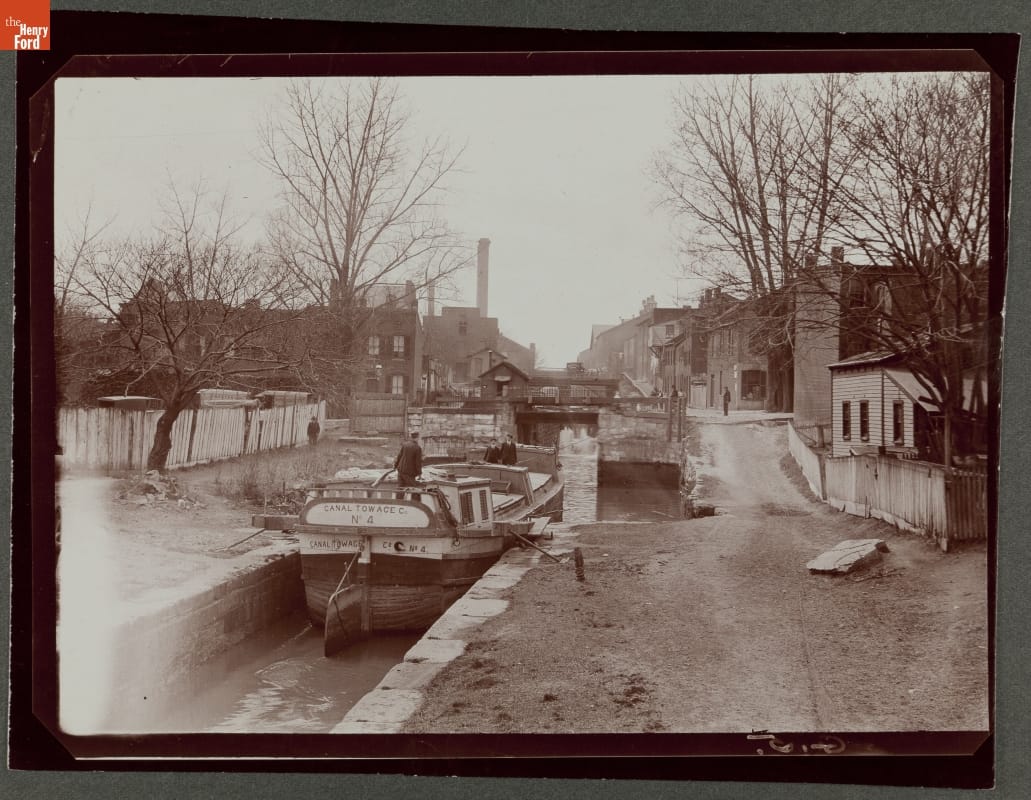
- The Lower Locks, Chesapeake and Ohio Canal, Washington D.C., 1910-1920 - President George Washington was devoted to improving the Potomac, the only river bisecting the Appalachian mountain barrier and an important trade route. Americans continued work on the waterway, completing the Chesapeake and Ohio Canal in 1850. This photograph shows a boat using one of many lift locks, which raised or lowered water to make the canal navigable.
- 1910-1920
- Collections - Artifact
The Lower Locks, Chesapeake and Ohio Canal, Washington D.C., 1910-1920
President George Washington was devoted to improving the Potomac, the only river bisecting the Appalachian mountain barrier and an important trade route. Americans continued work on the waterway, completing the Chesapeake and Ohio Canal in 1850. This photograph shows a boat using one of many lift locks, which raised or lowered water to make the canal navigable.
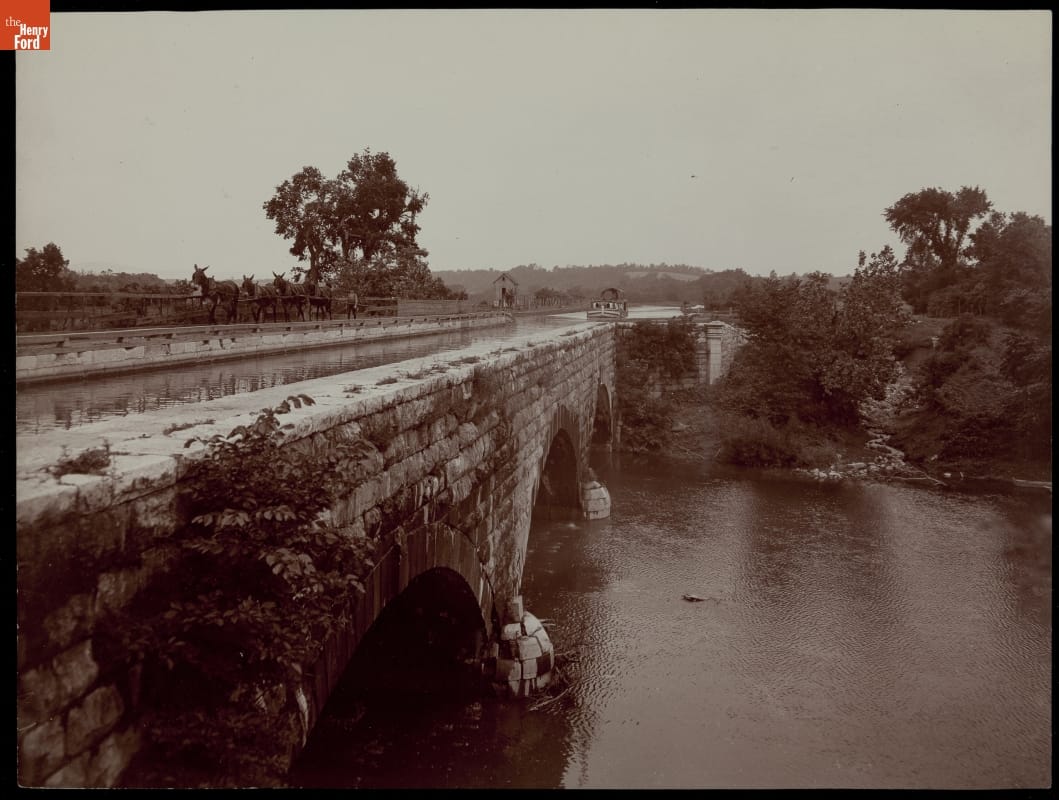
- Chesapeake and Ohio Canal at Williamsport, Maryland, circa 1903 - President George Washington was devoted to improving the Potomac, the only river bisecting the Appalachian mountain barrier and an important trade route. Americans continued work on the waterway, completing the Chesapeake and Ohio Canal in 1850. In this Detroit Publishing Company photograph, a team of mules pulls a boat over one of the canal's aqueducts.
- circa 1903
- Collections - Artifact
Chesapeake and Ohio Canal at Williamsport, Maryland, circa 1903
President George Washington was devoted to improving the Potomac, the only river bisecting the Appalachian mountain barrier and an important trade route. Americans continued work on the waterway, completing the Chesapeake and Ohio Canal in 1850. In this Detroit Publishing Company photograph, a team of mules pulls a boat over one of the canal's aqueducts.
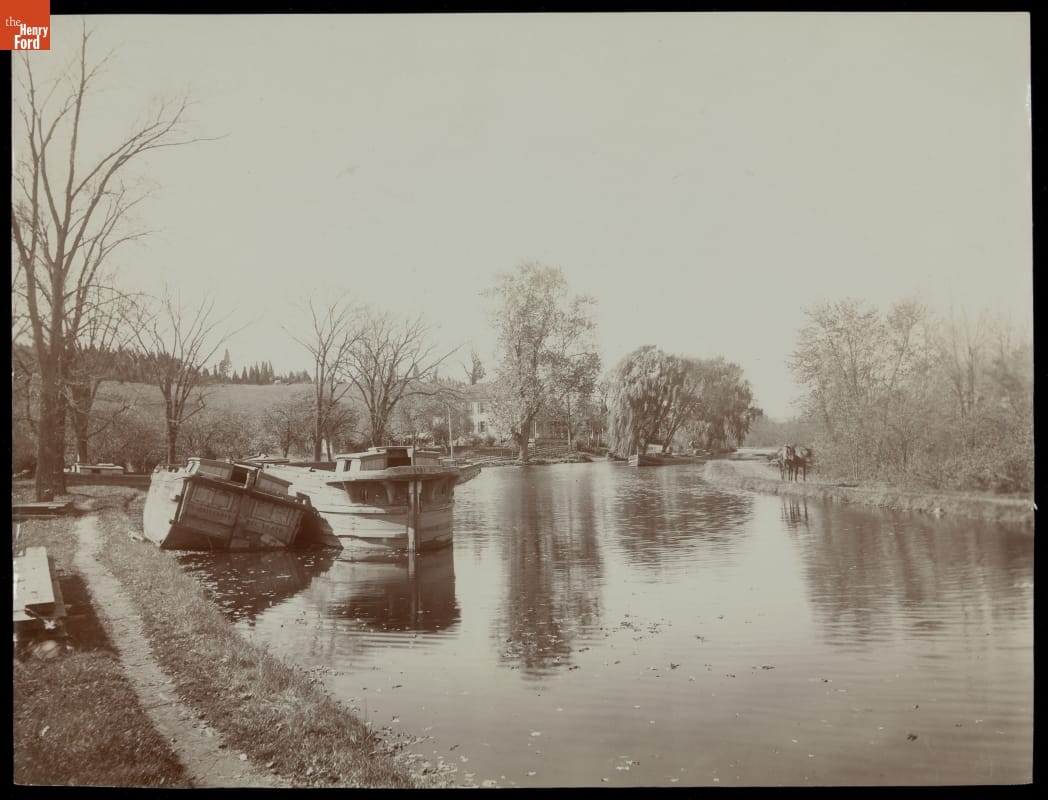
- Morris and Essex Canal, near Mountain View, New Jersey, 1890-1901 - For nearly thirty years, 1895 to 1924, the Detroit Publishing Company was one of the major image publishers in the world. The company had a wide-ranging stock of original photographs, including this image of a section of the Morris Canal. The canal used a series of water-driven inclined planes to move anthracite, a type of coal, across northern New Jersey.
- 1890-1901
- Collections - Artifact
Morris and Essex Canal, near Mountain View, New Jersey, 1890-1901
For nearly thirty years, 1895 to 1924, the Detroit Publishing Company was one of the major image publishers in the world. The company had a wide-ranging stock of original photographs, including this image of a section of the Morris Canal. The canal used a series of water-driven inclined planes to move anthracite, a type of coal, across northern New Jersey.
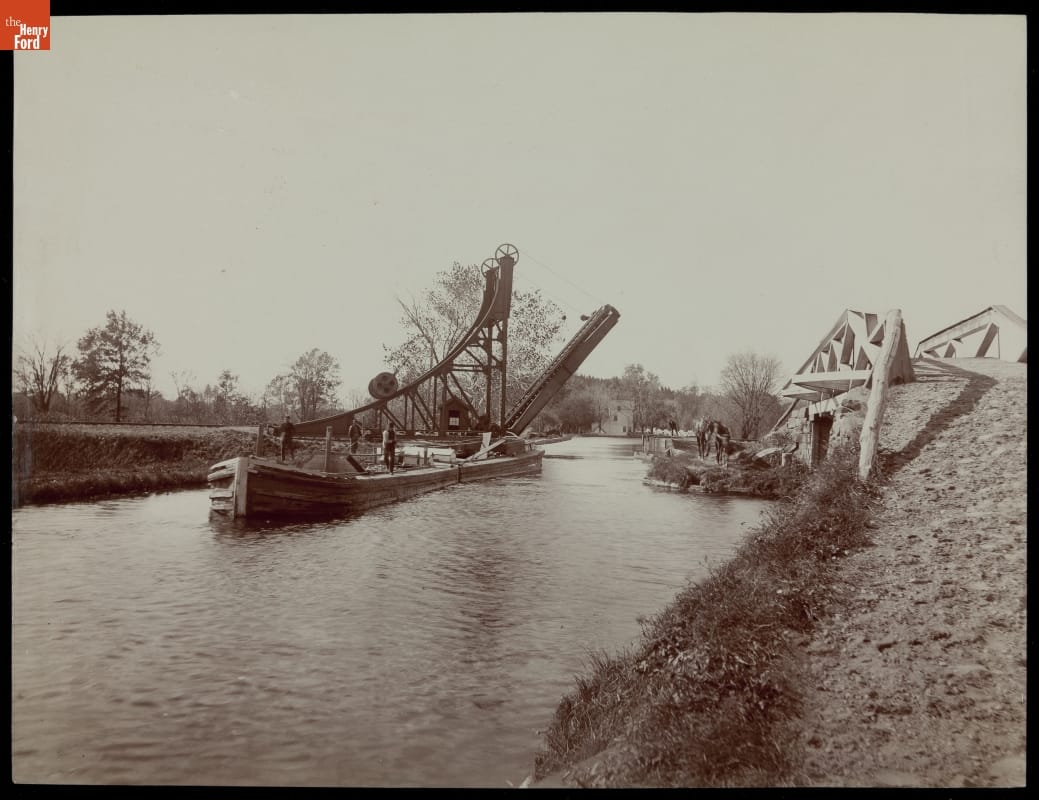
- Railroad Drawbridge, Morris and Essex Canal, near Mountain View, New Jersey, 1890-1901 - For nearly thirty years, 1895 to 1924, the Detroit Publishing Company was one of the major image publishers in the world. The company had a wide-ranging stock of original photographs, including this image of a section of the Morris Canal. The canal used a series of water-driven inclined planes to move anthracite, a type of coal, across northern New Jersey.
- 1890-1901
- Collections - Artifact
Railroad Drawbridge, Morris and Essex Canal, near Mountain View, New Jersey, 1890-1901
For nearly thirty years, 1895 to 1924, the Detroit Publishing Company was one of the major image publishers in the world. The company had a wide-ranging stock of original photographs, including this image of a section of the Morris Canal. The canal used a series of water-driven inclined planes to move anthracite, a type of coal, across northern New Jersey.