
Search
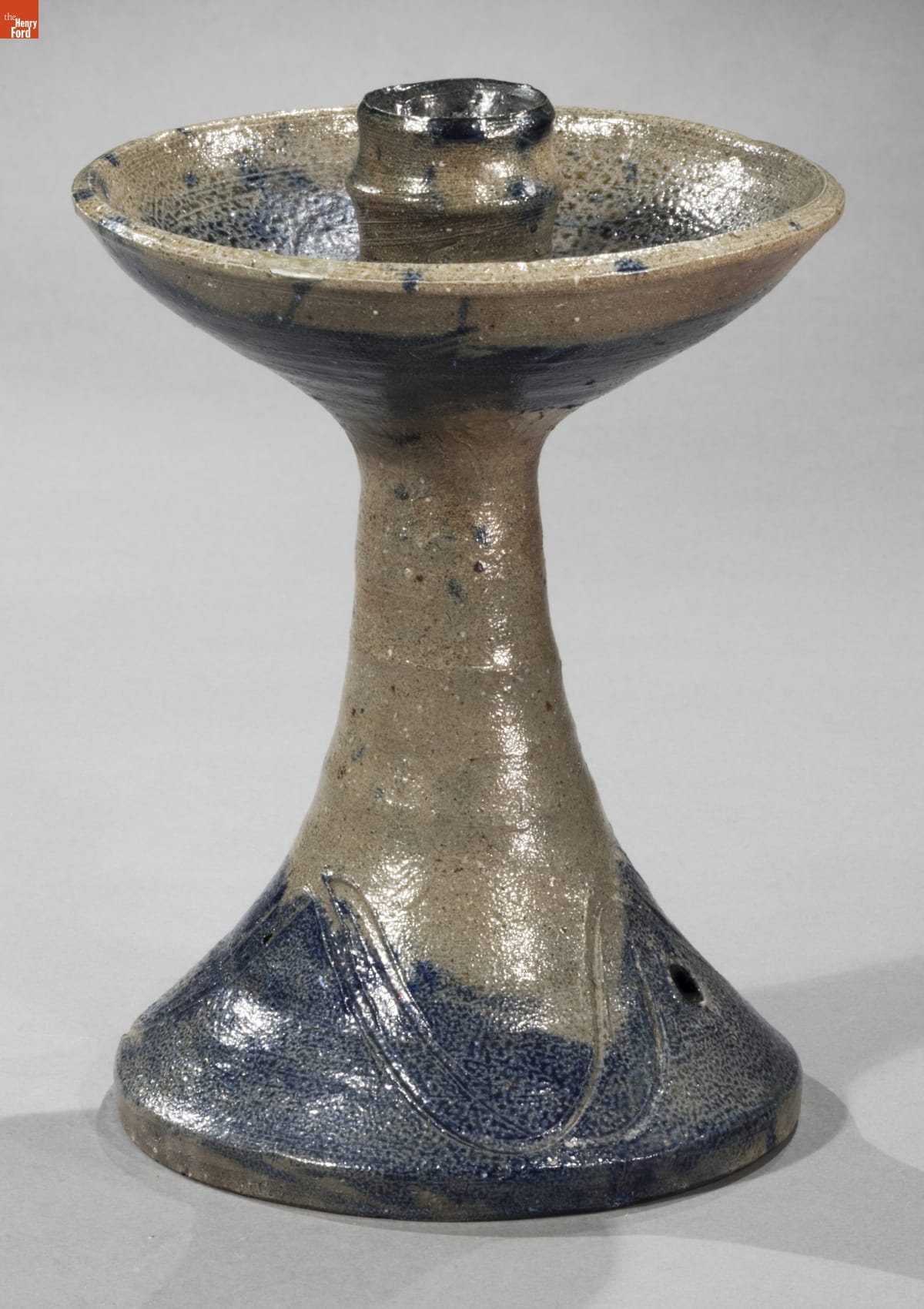
- Candlestick, 1917-1921 - Jugtown Pottery was founded by artists Jacques and Juliana Busbee who attempted to save local craft traditions in North Carolina. The Busbees hired local potters and made the wares available at a shop in Greenwich Village, New York. This rough, salt glaze candlestick is typical of their early pieces, appearing very much like a survivor of the 18th or 19th century.
- 1917-1921
- Collections - Artifact
Candlestick, 1917-1921
Jugtown Pottery was founded by artists Jacques and Juliana Busbee who attempted to save local craft traditions in North Carolina. The Busbees hired local potters and made the wares available at a shop in Greenwich Village, New York. This rough, salt glaze candlestick is typical of their early pieces, appearing very much like a survivor of the 18th or 19th century.
- Candlestick, 1930-1948 -
- 1930-1948
- Collections - Artifact
Candlestick, 1930-1948
- Candlestick, 1920-1930 -
- 1920-1930
- Collections - Artifact
Candlestick, 1920-1930
- Candlestick, 1920-1930 -
- 1920-1930
- Collections - Artifact
Candlestick, 1920-1930
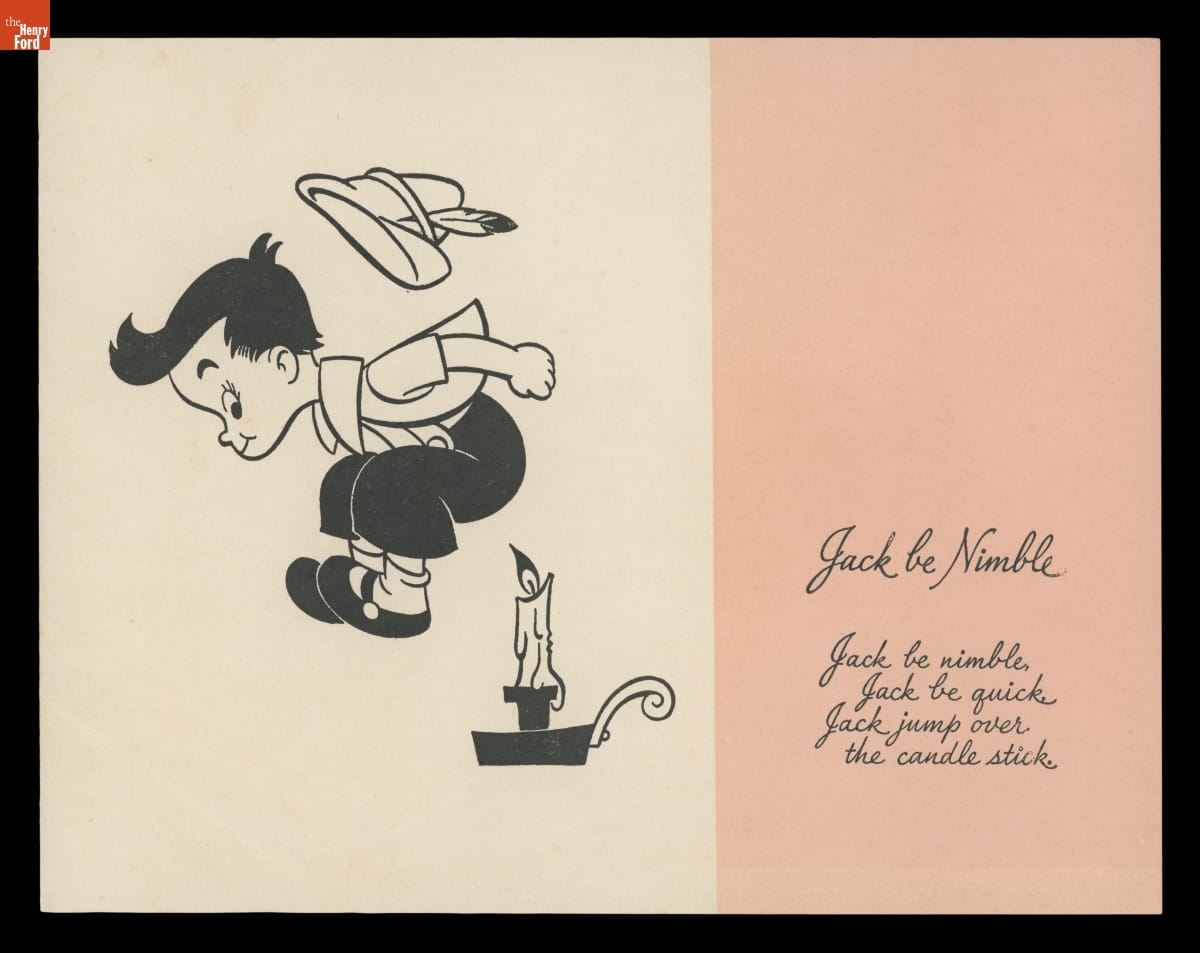
- Booklet from "Jack Be Nimble" Wall Decoration Set - The Dolly Toy Company, established in 1923, is best known for making inexpensive toys and seasonal novelties from laminated boxboard. After World War II, the company patented an idea for wall pin-ups for children's rooms. It was a success. The pin-ups featured religious themes and characters based on children's fairy tales and stories, including some licensed Disney characters.
- 1948-1968
- Collections - Artifact
Booklet from "Jack Be Nimble" Wall Decoration Set
The Dolly Toy Company, established in 1923, is best known for making inexpensive toys and seasonal novelties from laminated boxboard. After World War II, the company patented an idea for wall pin-ups for children's rooms. It was a success. The pin-ups featured religious themes and characters based on children's fairy tales and stories, including some licensed Disney characters.
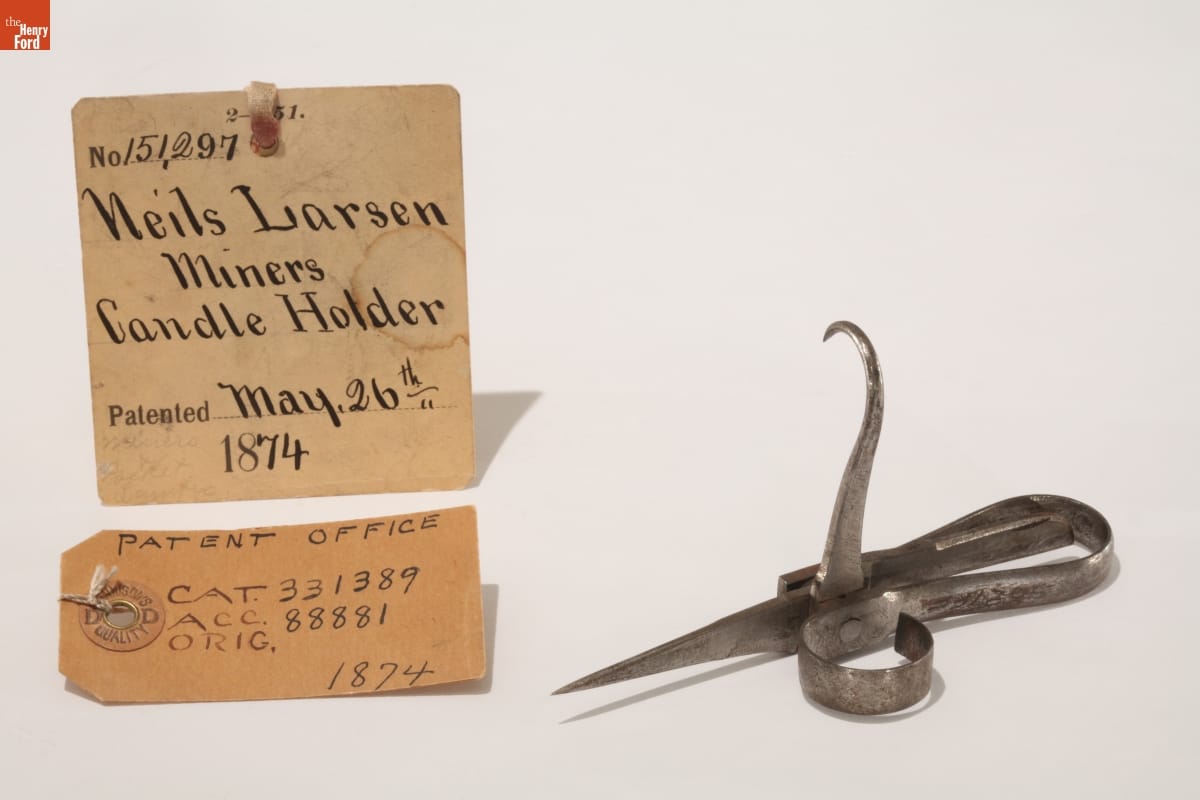
- Patent Model of Miners' Candle Holder, 1874 - From 1790 to 1880, the U.S. Patent Office required applicants to submit a miniature model along with diagrams and written descriptions detailing the operation of their invention. Patent models could be no larger than 12" by 12" by 12". Though they were usually not operational, these models helped explain an inventor's idea and protect it from competitors.
- May 26, 1874
- Collections - Artifact
Patent Model of Miners' Candle Holder, 1874
From 1790 to 1880, the U.S. Patent Office required applicants to submit a miniature model along with diagrams and written descriptions detailing the operation of their invention. Patent models could be no larger than 12" by 12" by 12". Though they were usually not operational, these models helped explain an inventor's idea and protect it from competitors.
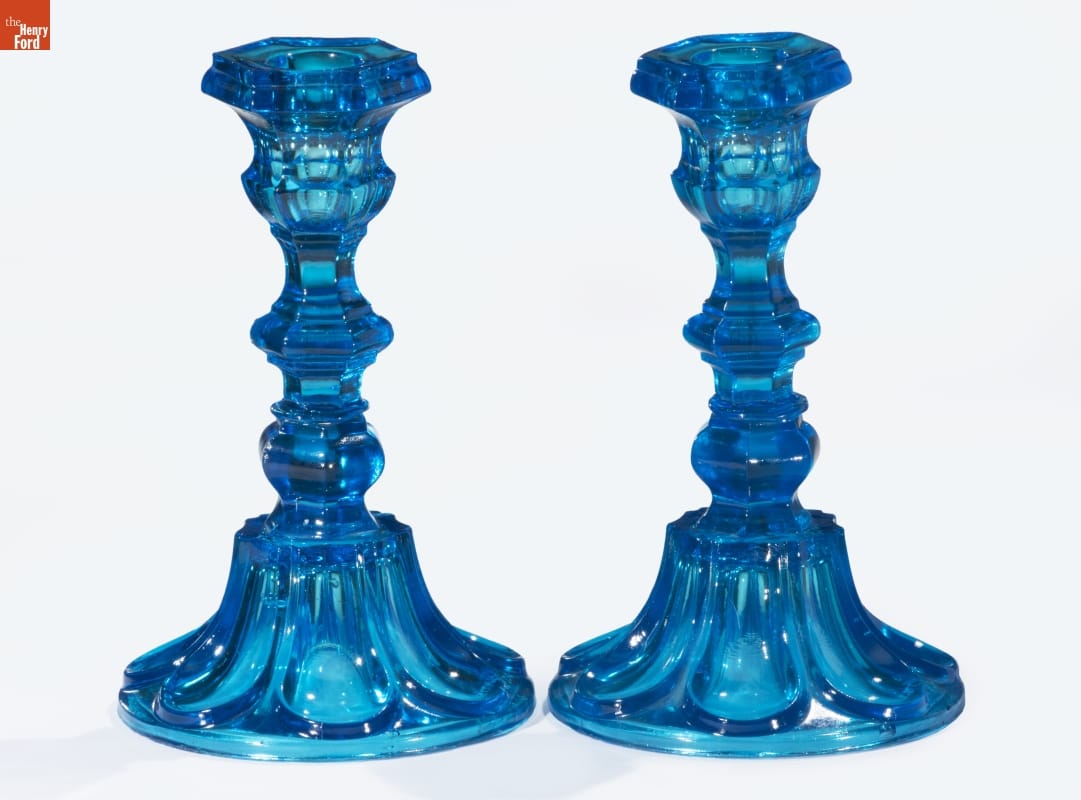
- Candlesticks, 1840-1855 - Nineteenth-century American glassmakers experimented with new methods to create products for a growing consumer market. In the 1820s, pressing glass into metal molds by machine was perfected, and by the mid-1800s, manufacturers were creating a variety of inexpensive pressed glass housewares. America's middle-class consumers could now decorate their homes with attractive glass bowls, creamers, dishes, plates, vases, and even candlesticks.
- 1840-1855
- Collections - Artifact
Candlesticks, 1840-1855
Nineteenth-century American glassmakers experimented with new methods to create products for a growing consumer market. In the 1820s, pressing glass into metal molds by machine was perfected, and by the mid-1800s, manufacturers were creating a variety of inexpensive pressed glass housewares. America's middle-class consumers could now decorate their homes with attractive glass bowls, creamers, dishes, plates, vases, and even candlesticks.
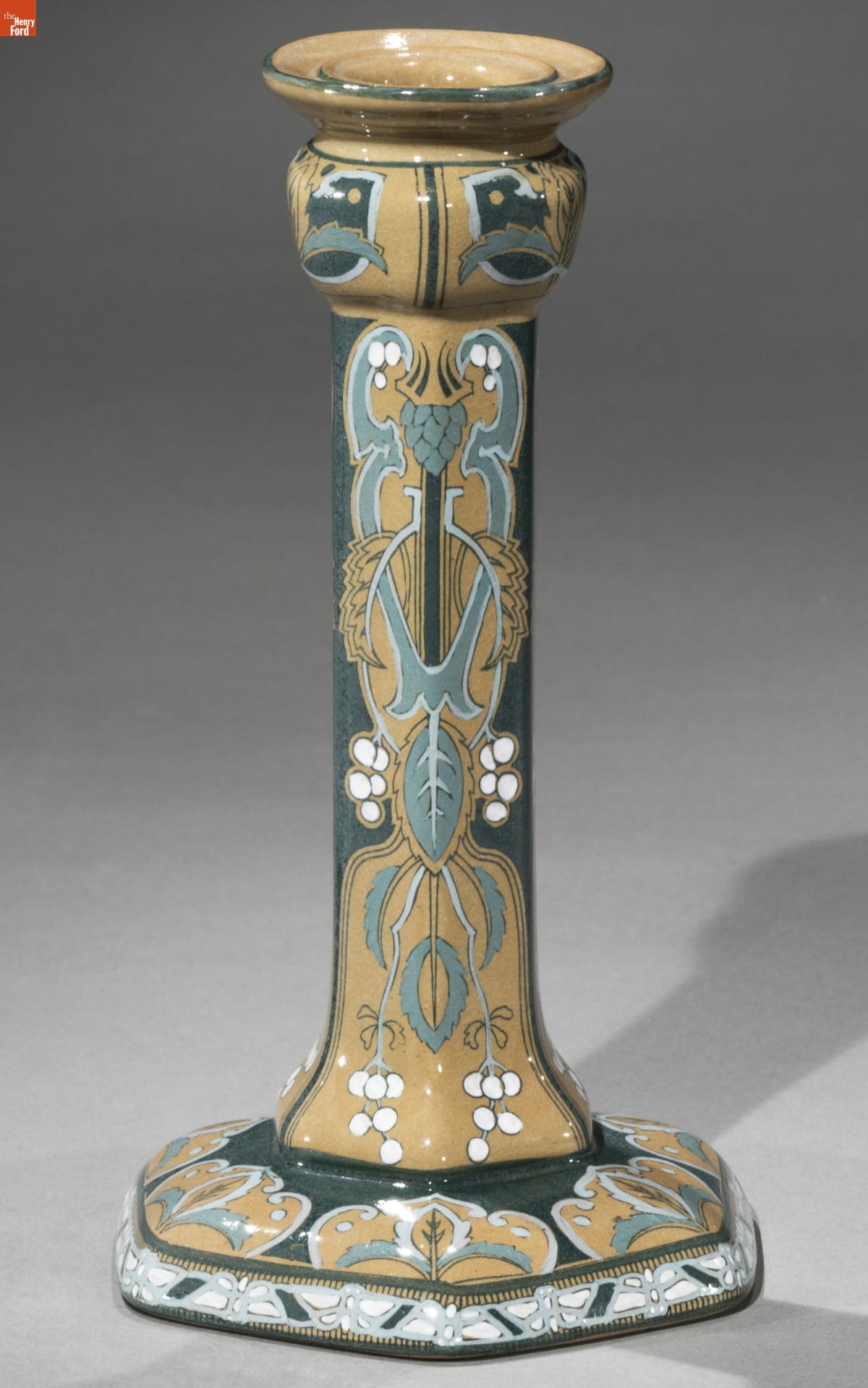
- Candlestick, 1911 -
- 1911
- Collections - Artifact
Candlestick, 1911
- Candlestick, 1860-1890 - Nineteenth-century American glassmakers experimented with new methods to create products for a growing consumer market. In the 1820s, pressing glass into metal molds by machine was perfected, and by the mid-1800s, manufacturers were creating a variety of inexpensive pressed glass housewares. America's middle-class consumers could now decorate their homes with attractive glass bowls, creamers, dishes, plates, vases, and even candlesticks.
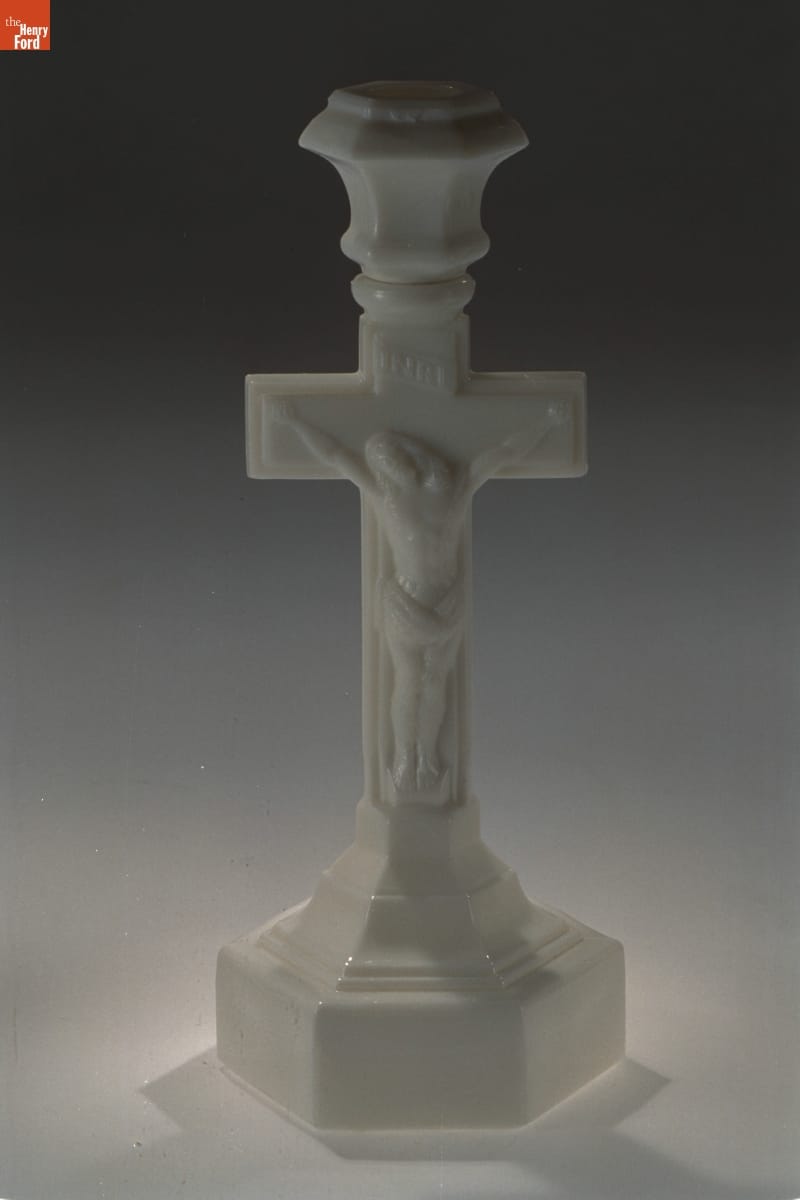
- 1860-1890
- Collections - Artifact
Candlestick, 1860-1890
Nineteenth-century American glassmakers experimented with new methods to create products for a growing consumer market. In the 1820s, pressing glass into metal molds by machine was perfected, and by the mid-1800s, manufacturers were creating a variety of inexpensive pressed glass housewares. America's middle-class consumers could now decorate their homes with attractive glass bowls, creamers, dishes, plates, vases, and even candlesticks.
- Candlestick, 1840-1860 - Nineteenth-century American glassmakers experimented with new methods to create products for a growing consumer market. In the 1820s, pressing glass into metal molds by machine was perfected, and by the mid-1800s, manufacturers were creating a variety of inexpensive pressed glass housewares. America's middle-class consumers could now decorate their homes with attractive glass bowls, creamers, dishes, plates, vases, and even candlesticks.
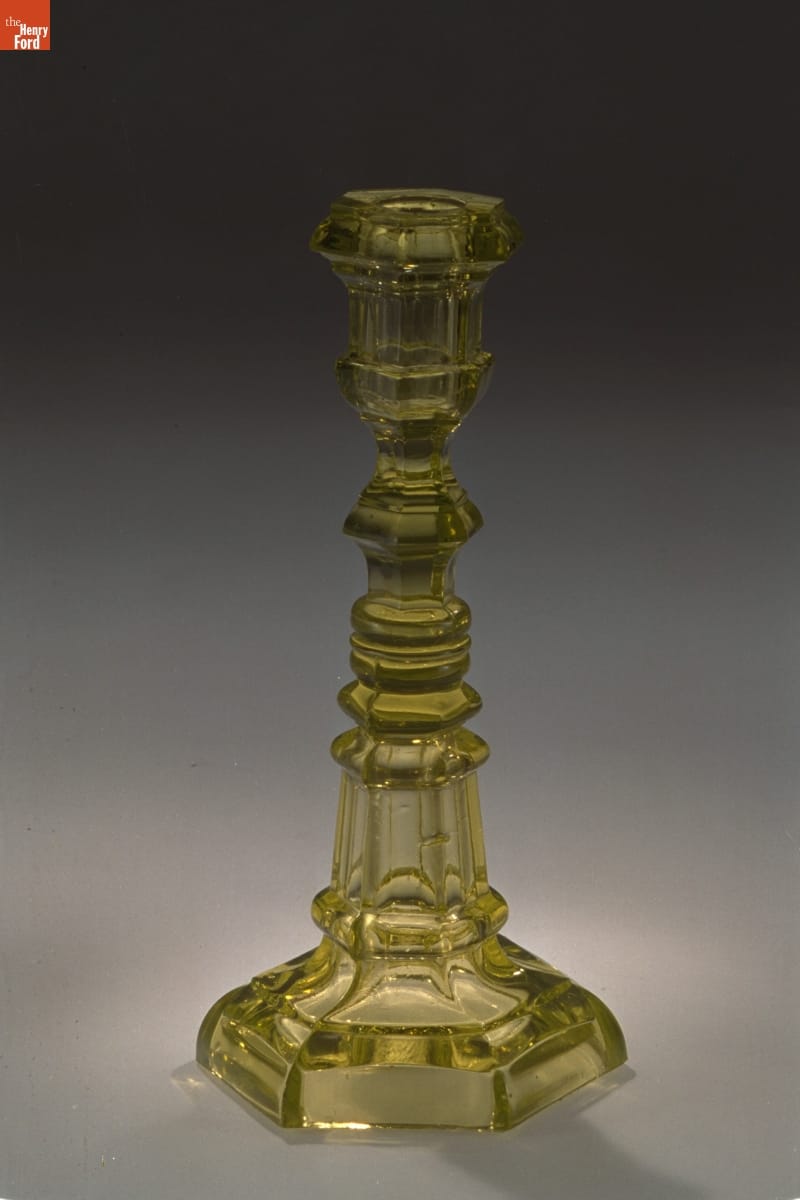
- 1840-1860
- Collections - Artifact
Candlestick, 1840-1860
Nineteenth-century American glassmakers experimented with new methods to create products for a growing consumer market. In the 1820s, pressing glass into metal molds by machine was perfected, and by the mid-1800s, manufacturers were creating a variety of inexpensive pressed glass housewares. America's middle-class consumers could now decorate their homes with attractive glass bowls, creamers, dishes, plates, vases, and even candlesticks.