
Search
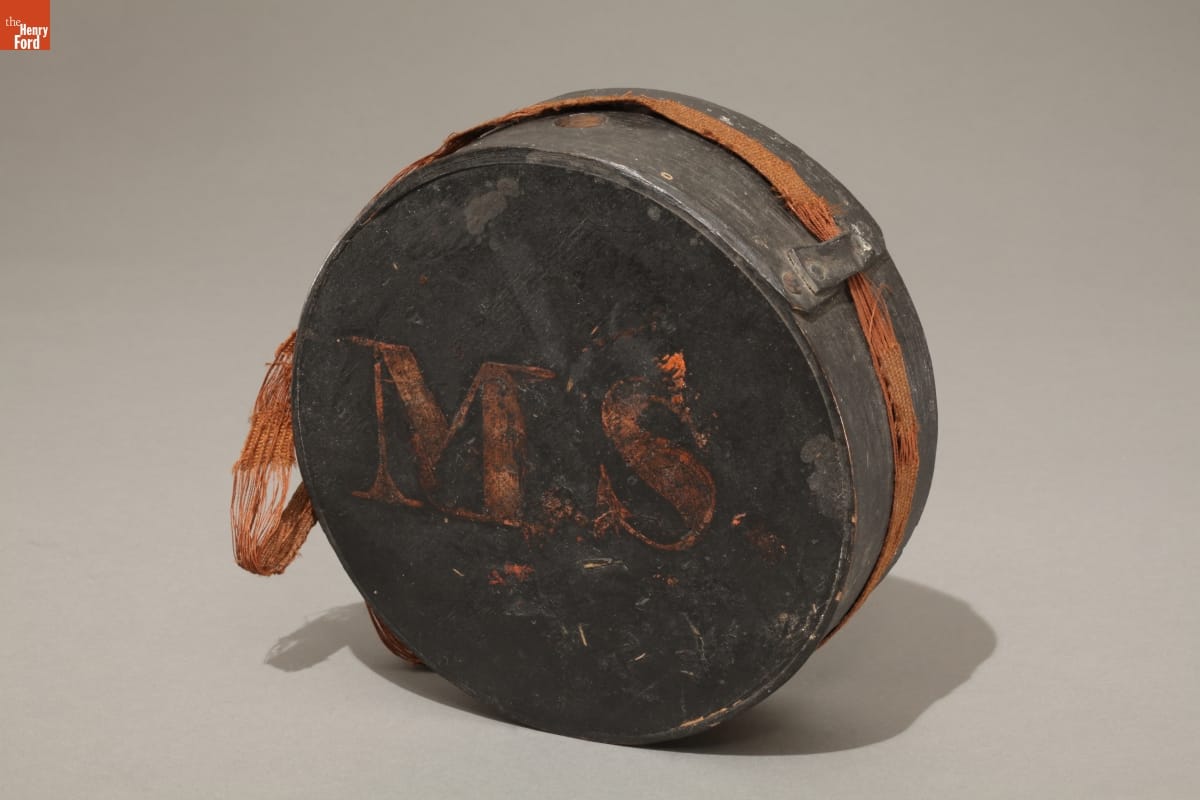
- Canteen, Made for a Massachusetts Militia, circa 1810 - This canteen, called a "cheesebox" for its similarity to boxes made to hold wheels of cheese, identifies the Massachusetts Militia (M.S.). A number of similarly decorated canteens survive. The reverse is labeled N.R., possibly a maker's mark. The O B scratched into the surface may be the militia member's initials or those of a later owner.
- circa 1810
- Collections - Artifact
Canteen, Made for a Massachusetts Militia, circa 1810
This canteen, called a "cheesebox" for its similarity to boxes made to hold wheels of cheese, identifies the Massachusetts Militia (M.S.). A number of similarly decorated canteens survive. The reverse is labeled N.R., possibly a maker's mark. The O B scratched into the surface may be the militia member's initials or those of a later owner.
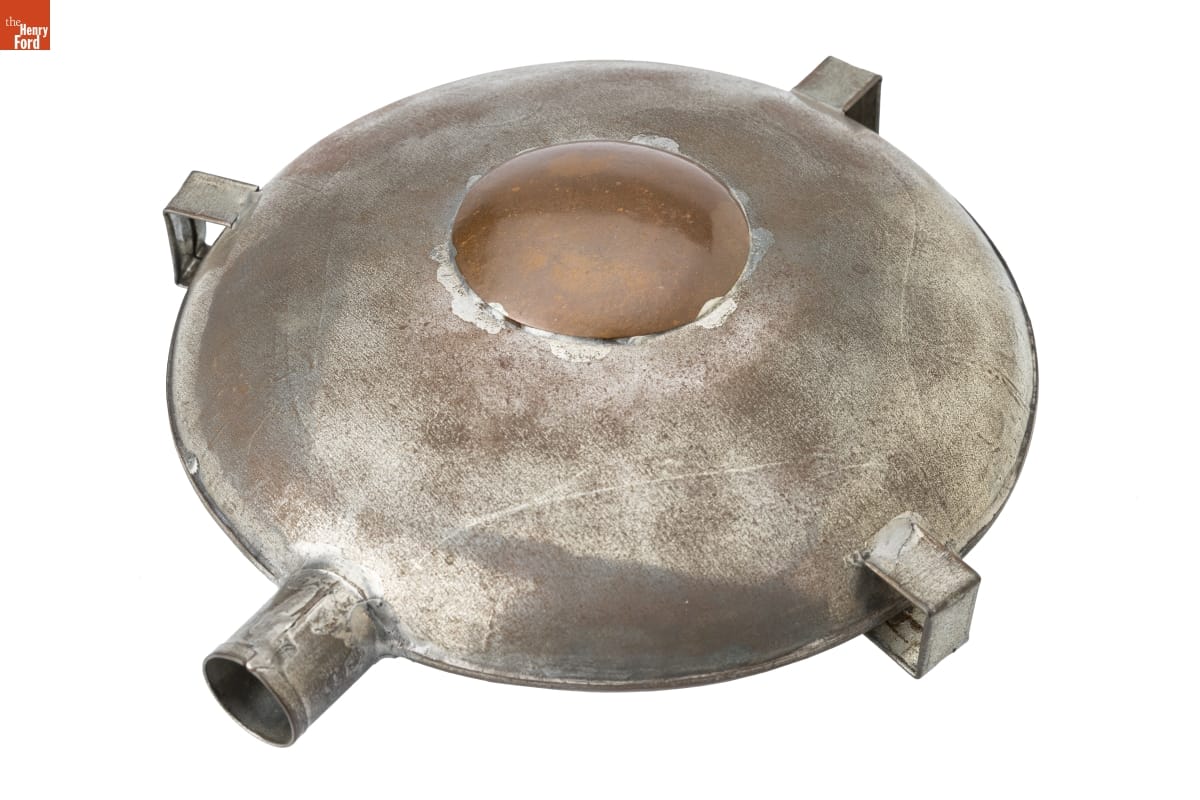
- Canteen - Tin-plated iron, commonly called "tin," was the dominant material for utilitarian items in 19th-century America. Local tinsmiths produced an almost endless range of goods. But as more durable and lower maintenance materials emerged, handmade tinware came to be considered a folk art or heritage craft. This 20th-century example was produced in the Greenfield Village tin shop using historical tinsmithing tools and techniques.
- Collections - Artifact
Canteen
Tin-plated iron, commonly called "tin," was the dominant material for utilitarian items in 19th-century America. Local tinsmiths produced an almost endless range of goods. But as more durable and lower maintenance materials emerged, handmade tinware came to be considered a folk art or heritage craft. This 20th-century example was produced in the Greenfield Village tin shop using historical tinsmithing tools and techniques.
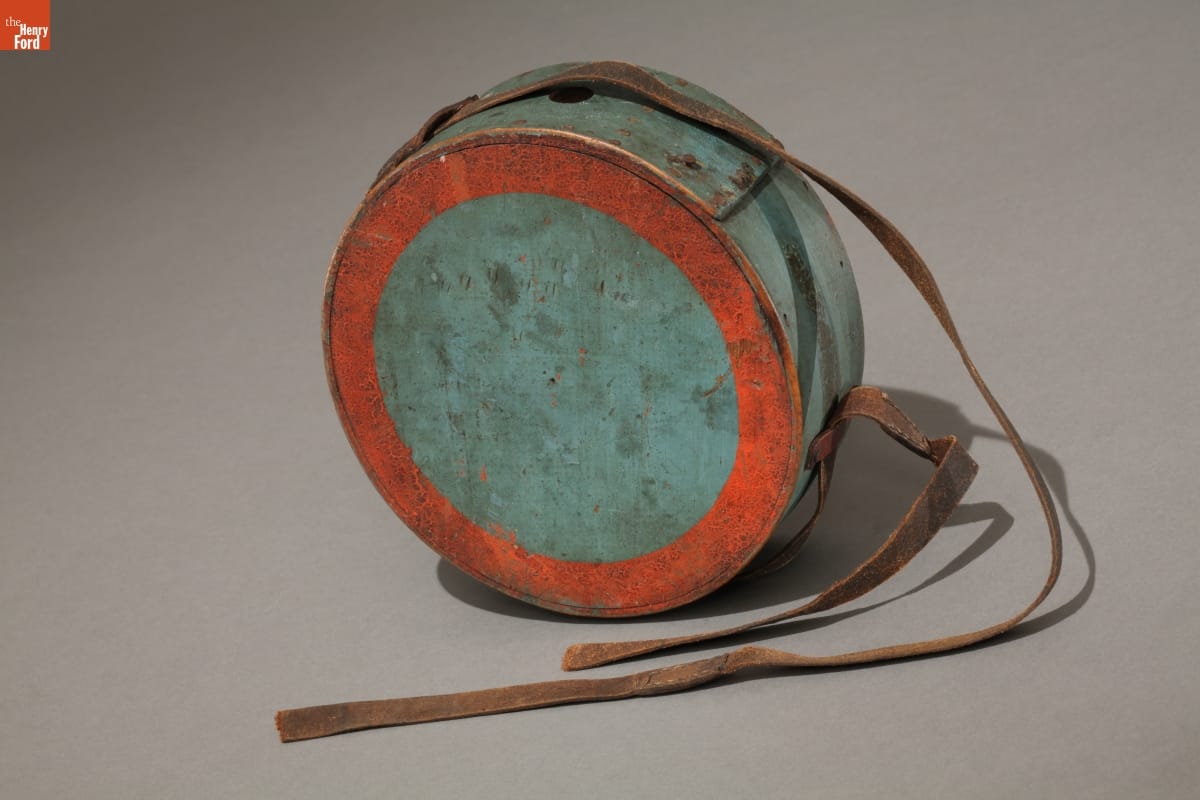
- Canteen, Possibly Made for the Salem, Massachusetts Light Infantry Militia, circa 1810 - The Salem Light Infantry used light blue "cheesebox" type canteens (so named for their similarity to boxes made to hold wheels of cheese) edged with red. Because this canteen lacks markings, specifically the initials of the company and soldier, it was likely surplus stock.
- circa 1810
- Collections - Artifact
Canteen, Possibly Made for the Salem, Massachusetts Light Infantry Militia, circa 1810
The Salem Light Infantry used light blue "cheesebox" type canteens (so named for their similarity to boxes made to hold wheels of cheese) edged with red. Because this canteen lacks markings, specifically the initials of the company and soldier, it was likely surplus stock.
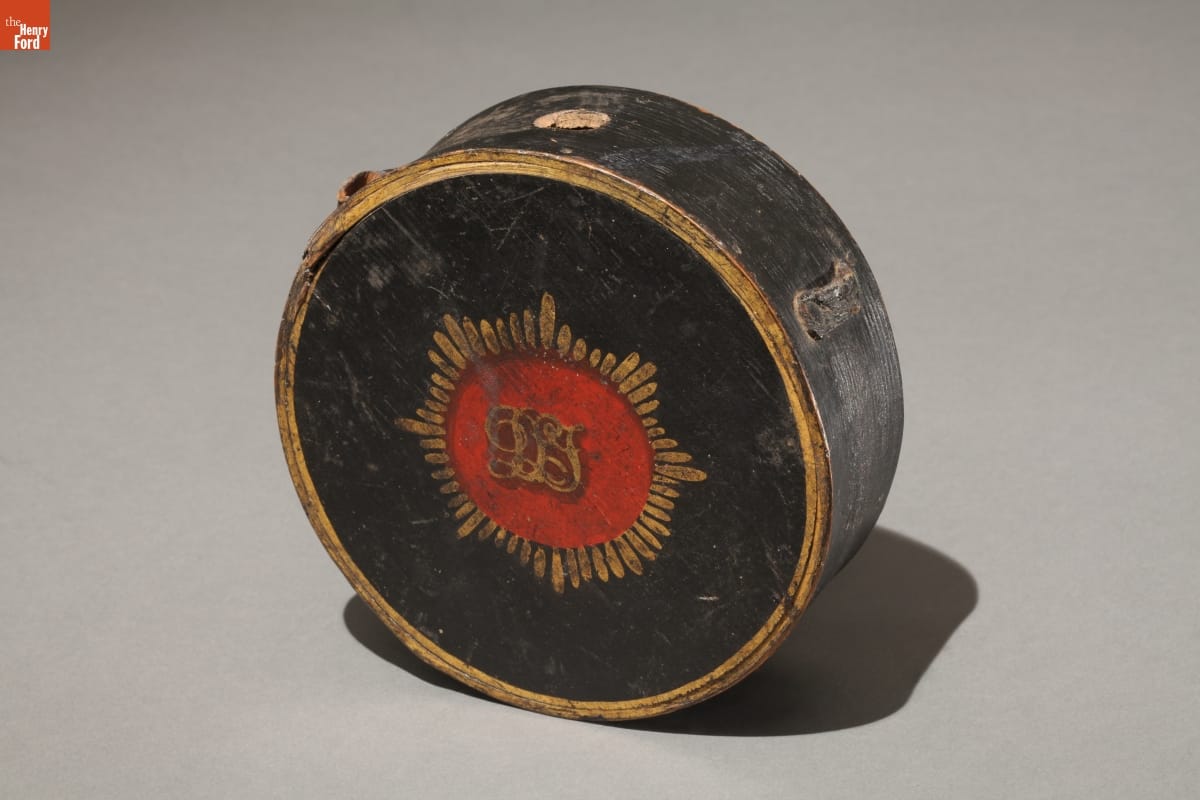
- Canteen, Made for a New York State Militia, circa 1810 - The number 21 on the reverse of this canteen refers to the New York State Militia soldier who used it. As with many New York canteens, the script initials stand for State of New York. But this example's gold rim and decorative painting distinguish it as a rare and ornate survival.
- circa 1810
- Collections - Artifact
Canteen, Made for a New York State Militia, circa 1810
The number 21 on the reverse of this canteen refers to the New York State Militia soldier who used it. As with many New York canteens, the script initials stand for State of New York. But this example's gold rim and decorative painting distinguish it as a rare and ornate survival.
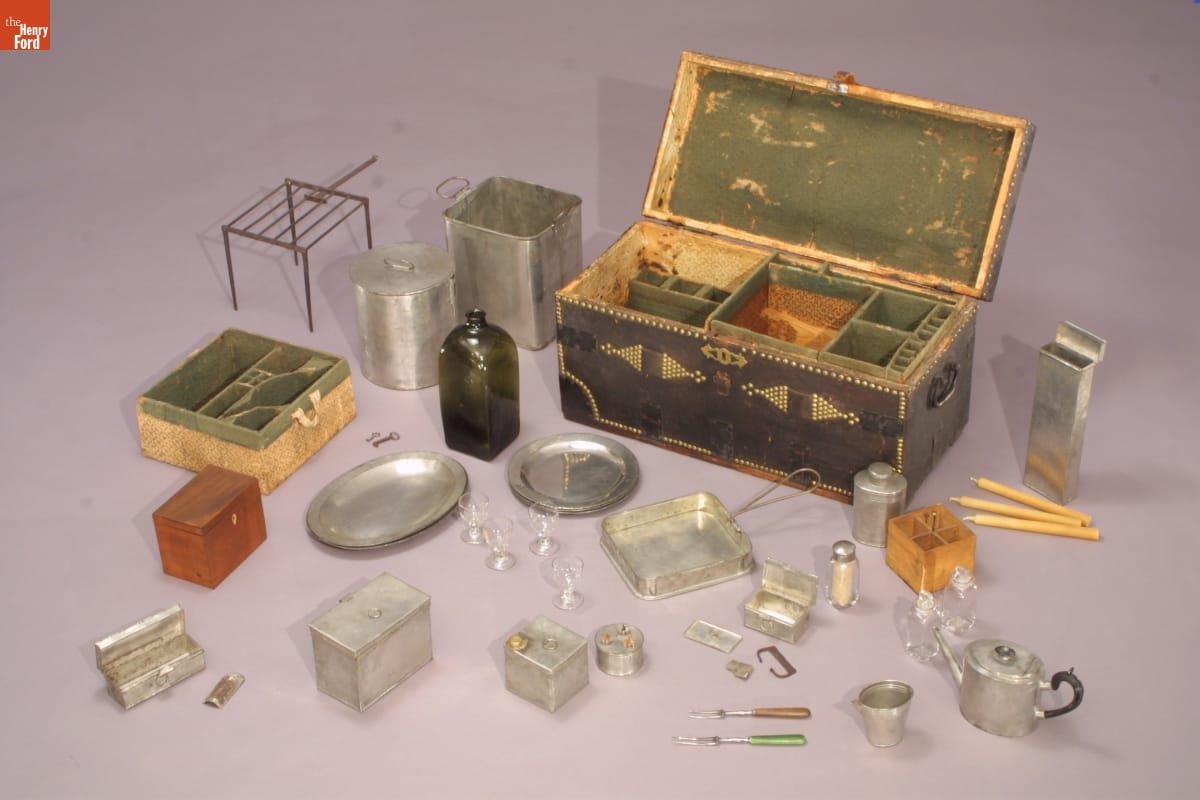
- George Washington's Camp Chest, 1783 - Many high-ranking officers of the American Revolution carried camp chests, called canteens, for dining while encamped with their armies. This canteen belonged to General George Washington. It enabled him to take meals on the battlefield in a manner befitting his rank as commander-in-chief -- with tea, liquor, freshly ground nutmeg and other spices, candles, and relatively fine tableware.
- 1783
- Collections - Artifact
George Washington's Camp Chest, 1783
Many high-ranking officers of the American Revolution carried camp chests, called canteens, for dining while encamped with their armies. This canteen belonged to General George Washington. It enabled him to take meals on the battlefield in a manner befitting his rank as commander-in-chief -- with tea, liquor, freshly ground nutmeg and other spices, candles, and relatively fine tableware.
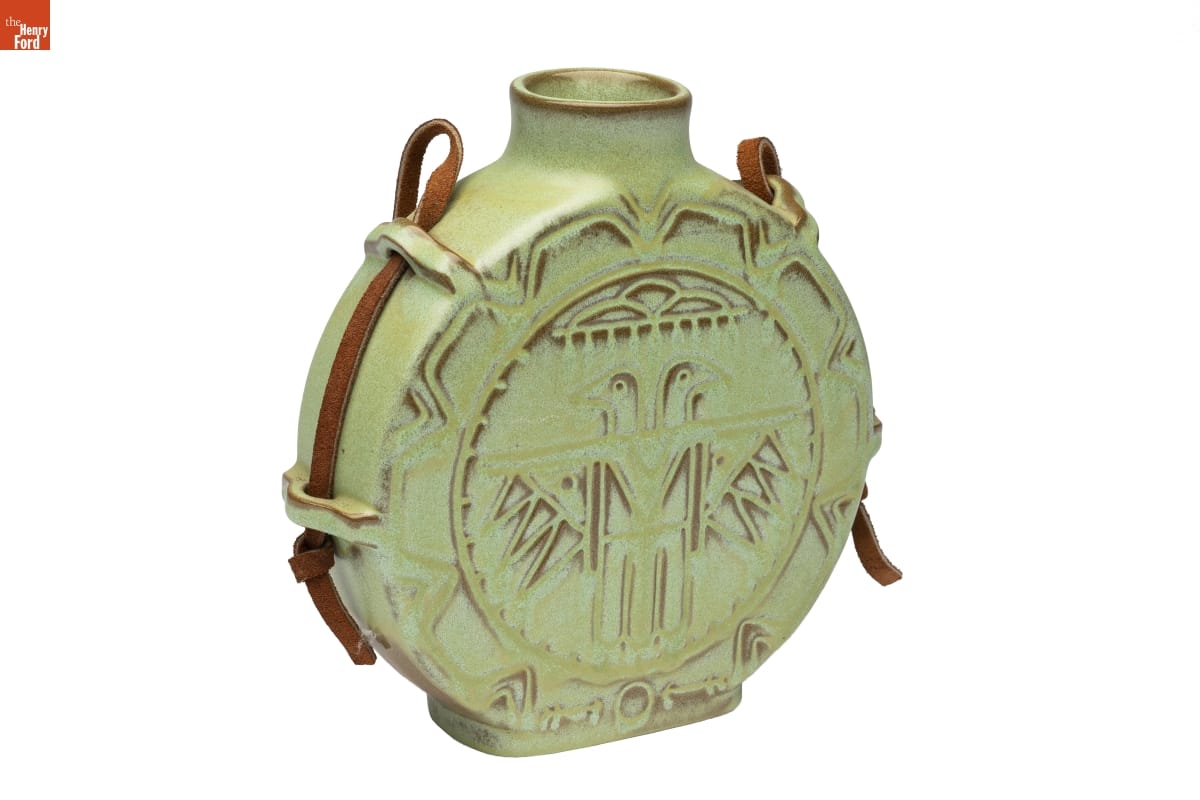
- Thunderbird Canteen with Strap, 1942 - The native clays of Oklahoma provided a foundation for the decorative ceramics and dinnerware produced by Frankoma Pottery. John Frank, who headed the ceramics department at the University of Oklahoma, and his wife Grace Lee began the business in 1933. They moved to Sapulpa, Oklahoma, in 1938 and sold their Southwestern-inspired wares coated with prairie-colored glazes at an affordable price. The pottery remained family-owned until 1990.
- 1942
- Collections - Artifact
Thunderbird Canteen with Strap, 1942
The native clays of Oklahoma provided a foundation for the decorative ceramics and dinnerware produced by Frankoma Pottery. John Frank, who headed the ceramics department at the University of Oklahoma, and his wife Grace Lee began the business in 1933. They moved to Sapulpa, Oklahoma, in 1938 and sold their Southwestern-inspired wares coated with prairie-colored glazes at an affordable price. The pottery remained family-owned until 1990.
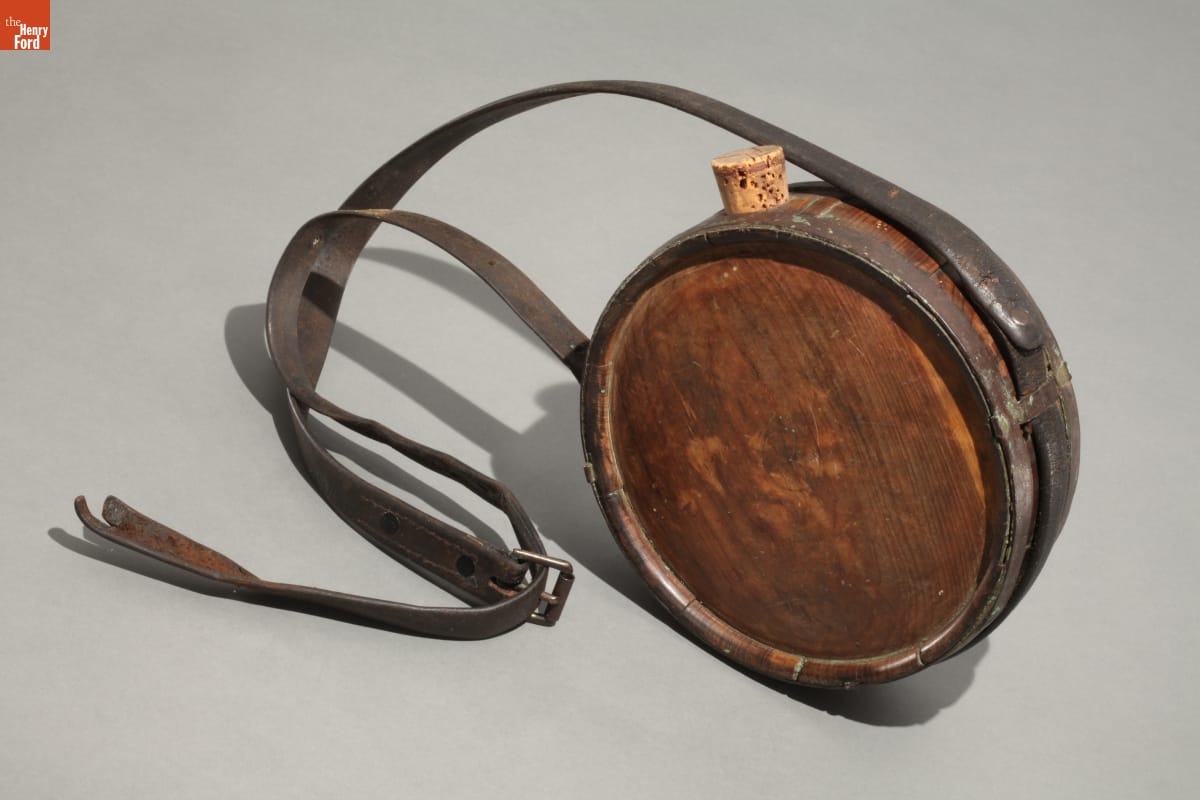
- Gardner-Pattern Wooden Canteen, 1863-1865 - Wooden canteens of various designs were manufactured throughout the South during the Civil War. F. J. Gardner, a worker at the Richmond, Virginia, armory, created this version. It became the standard Confederate issue later in the war. Numerous Southern armories and contractors produced the Gardner-pattern canteen.
- 1863-1865
- Collections - Artifact
Gardner-Pattern Wooden Canteen, 1863-1865
Wooden canteens of various designs were manufactured throughout the South during the Civil War. F. J. Gardner, a worker at the Richmond, Virginia, armory, created this version. It became the standard Confederate issue later in the war. Numerous Southern armories and contractors produced the Gardner-pattern canteen.
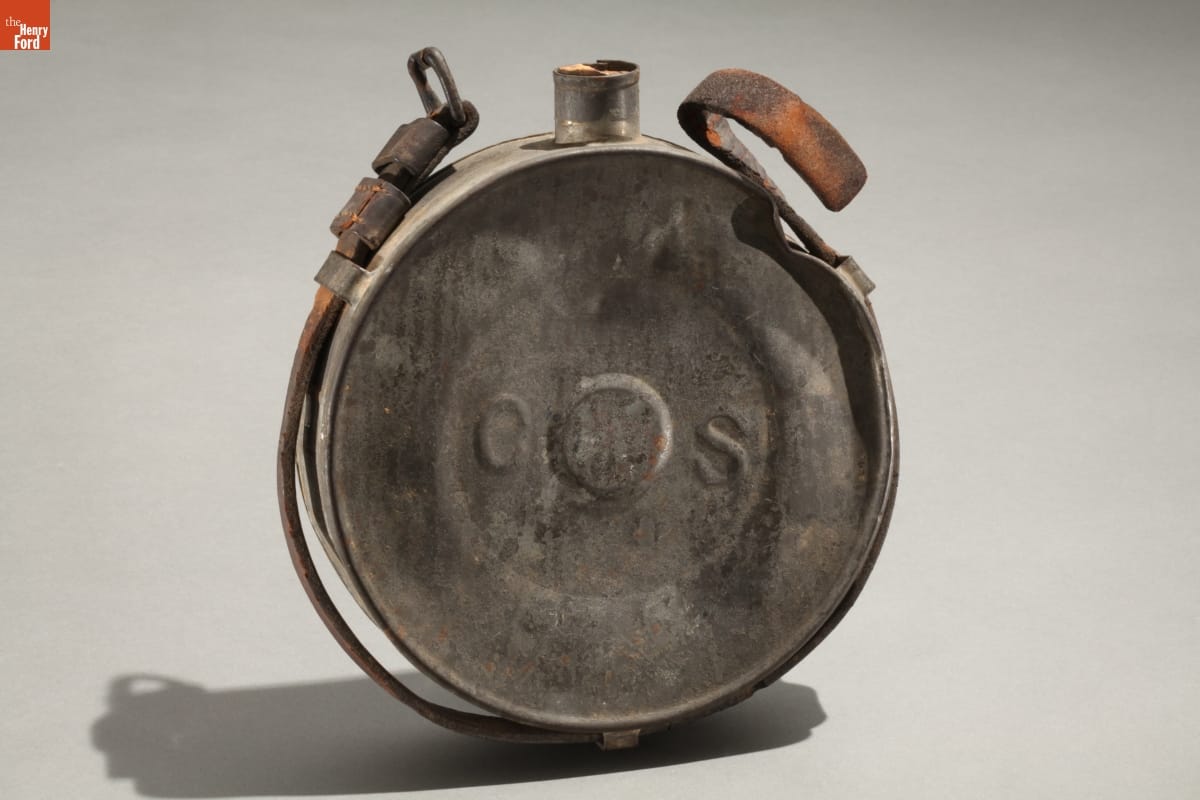
- Confederate Soldier's Tin Canteen, circa 1861 - During the Civil War, Southern tinsmiths made canteens in simple drum or cylindrical forms like this one. This tin canteen - rare because it is embossed with "C S" - is thought to have been made in New Orleans in 1861 for Louisiana's troops. Confederate soldiers usually preferred metal canteens over wooden ones--they were more durable.
- 1861-1865
- Collections - Artifact
Confederate Soldier's Tin Canteen, circa 1861
During the Civil War, Southern tinsmiths made canteens in simple drum or cylindrical forms like this one. This tin canteen - rare because it is embossed with "C S" - is thought to have been made in New Orleans in 1861 for Louisiana's troops. Confederate soldiers usually preferred metal canteens over wooden ones--they were more durable.
- War of 1812 Era Canteen - This "barrel" type canteen, constructed with wooden slats and a metal band, is inscribed Jos Allison (presumably the owner) and September 17, 1814. This was the date of the Battle of Fort Erie, located on the Niagara River in Ontario, Canada. Here, American forces repulsed a British siege in one of the last engagements of the War of 1812's Niagara campaign.
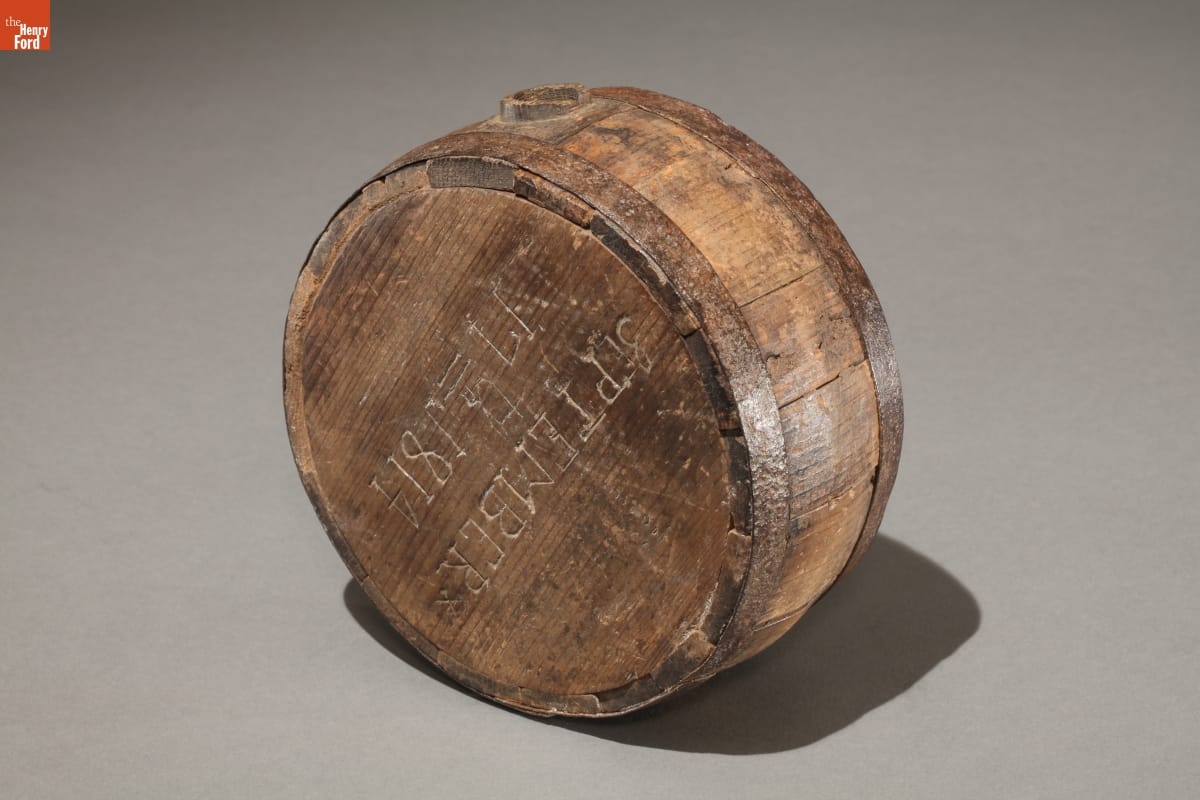
- September 17, 1814
- Collections - Artifact
War of 1812 Era Canteen
This "barrel" type canteen, constructed with wooden slats and a metal band, is inscribed Jos Allison (presumably the owner) and September 17, 1814. This was the date of the Battle of Fort Erie, located on the Niagara River in Ontario, Canada. Here, American forces repulsed a British siege in one of the last engagements of the War of 1812's Niagara campaign.