
Search
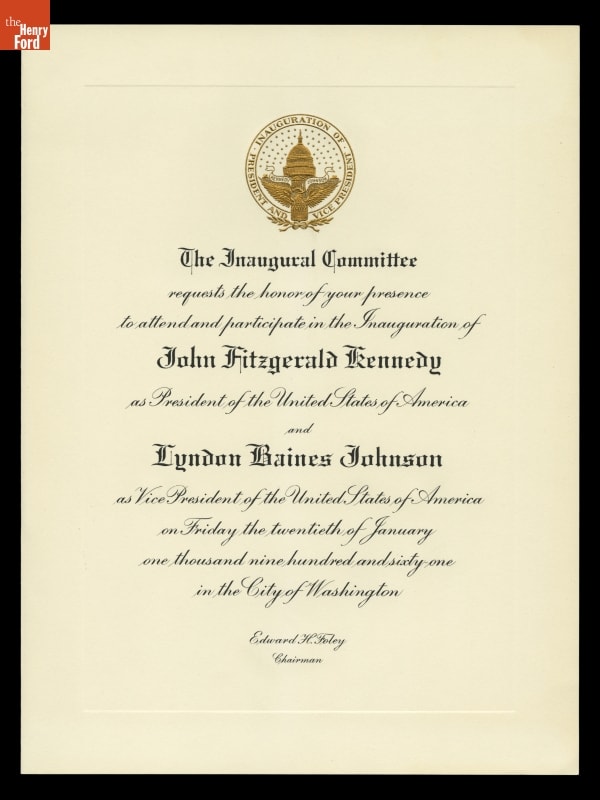
- Invitation to John F. Kennedy Inauguration, January 20, 1961 - Mrs. Arnold J. Zimmer of Detroit, Michigan, received this personal invitation from the Joint Congressional Committee on Inaugural Ceremonies, to attend the inauguration of John F. Kennedy and Lyndon Johnson on January 20, 1961 in Washington, D.C. The recipient was guaranteed a place in a special area where the new president and vice president were to take their oath of office.
- January 20, 1961
- Collections - Artifact
Invitation to John F. Kennedy Inauguration, January 20, 1961
Mrs. Arnold J. Zimmer of Detroit, Michigan, received this personal invitation from the Joint Congressional Committee on Inaugural Ceremonies, to attend the inauguration of John F. Kennedy and Lyndon Johnson on January 20, 1961 in Washington, D.C. The recipient was guaranteed a place in a special area where the new president and vice president were to take their oath of office.
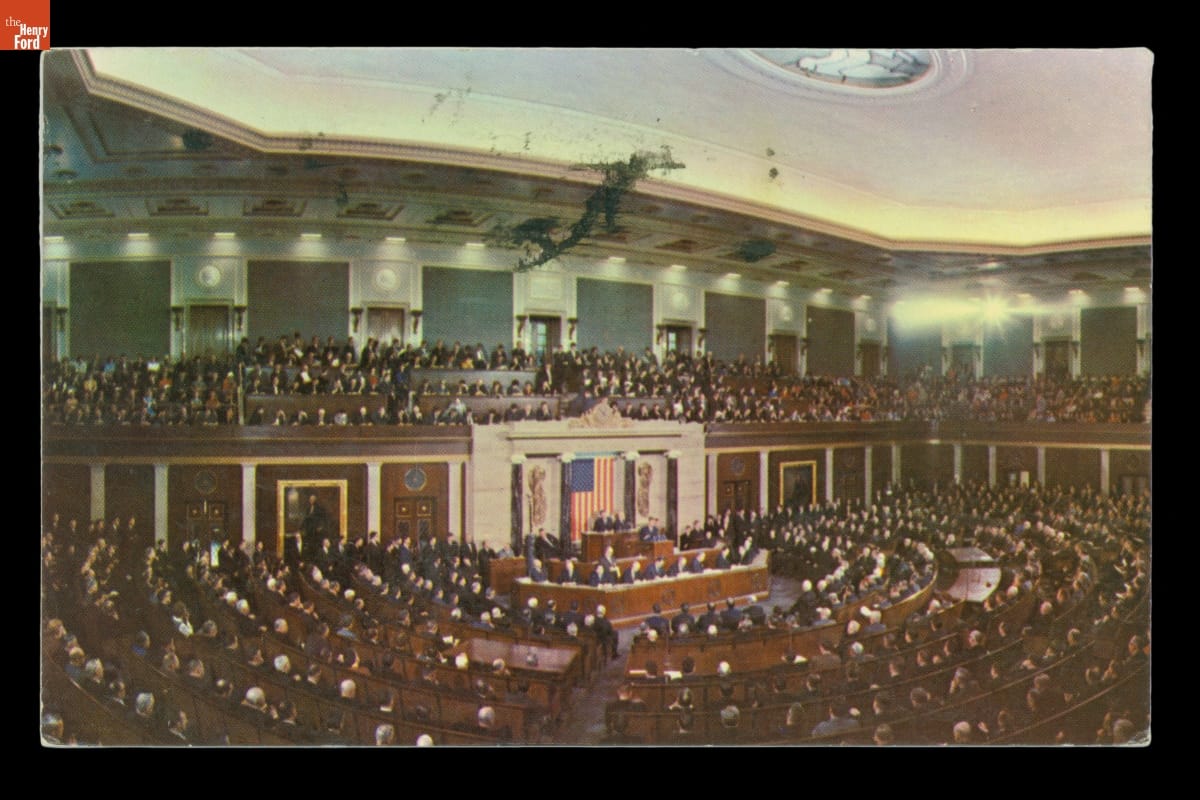
- President Kennedy Addressing a Joint Session of Congress, 1962 or 1963 - This picture postcard -- published by the United States Capitol Historical Society -- depicts President John F. Kennedy delivering a State of the Union message in a Joint Session of Congress during January of 1962 or 1963. It was mailed by Mr. and Mrs. Don Andrews on August 3, 1968, during a two-week vacation to Pennsylvania, Maryland, and Washington, D.C.
- 1962-1963
- Collections - Artifact
President Kennedy Addressing a Joint Session of Congress, 1962 or 1963
This picture postcard -- published by the United States Capitol Historical Society -- depicts President John F. Kennedy delivering a State of the Union message in a Joint Session of Congress during January of 1962 or 1963. It was mailed by Mr. and Mrs. Don Andrews on August 3, 1968, during a two-week vacation to Pennsylvania, Maryland, and Washington, D.C.
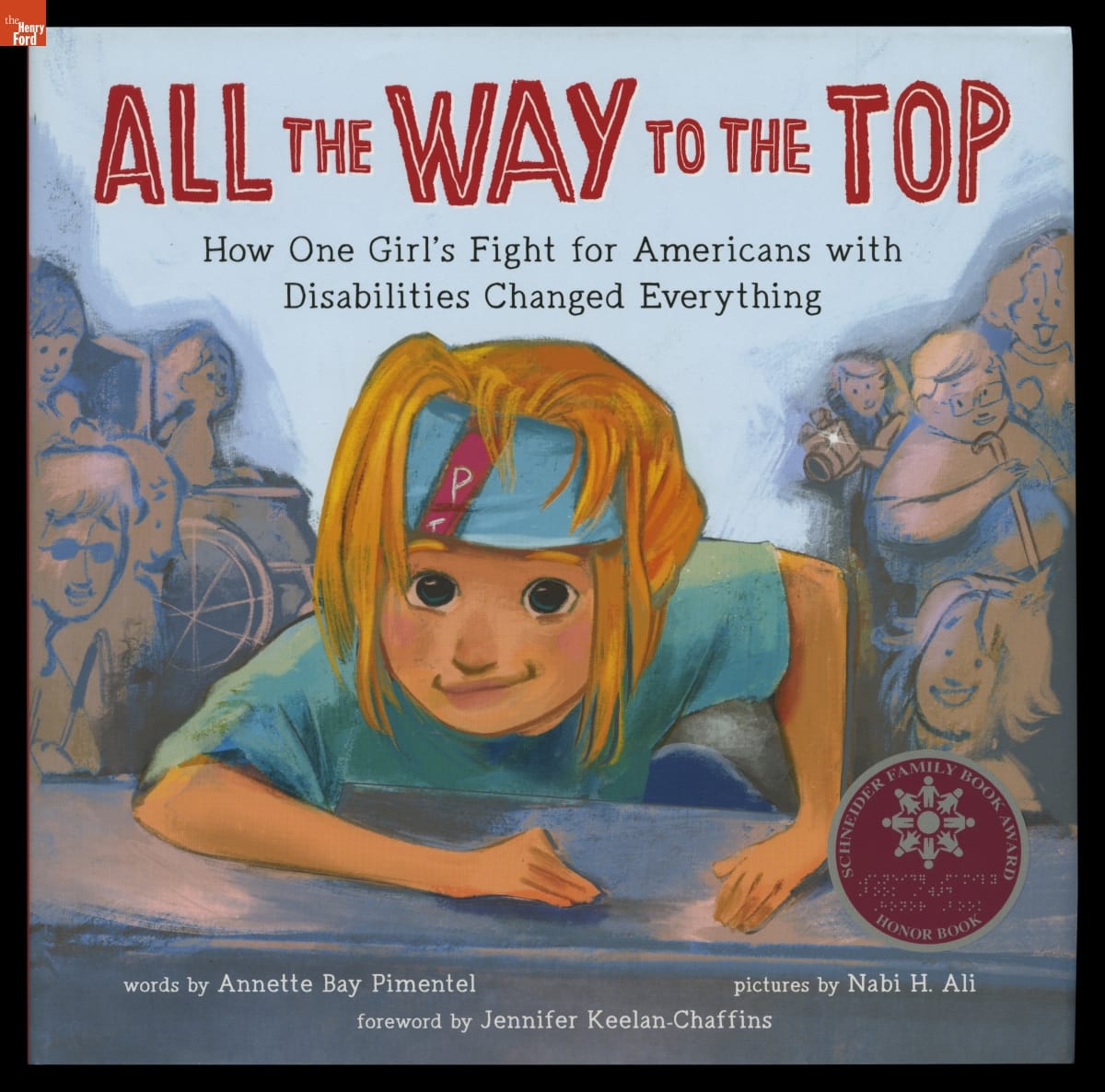
- "All the Way to the Top: How One Girl's Fight for Americans with Disabilities Changed Everything," 2020 -
- 1990
- Collections - Artifact
"All the Way to the Top: How One Girl's Fight for Americans with Disabilities Changed Everything," 2020
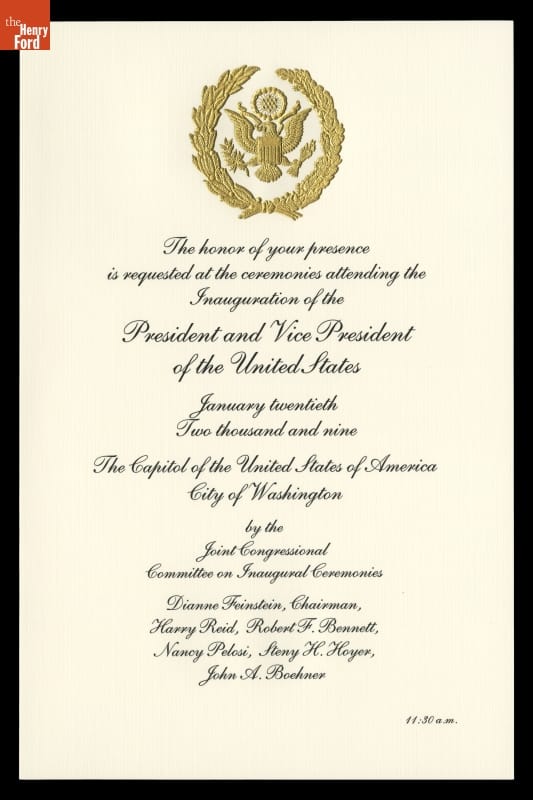
- Invitation to Attend the Presidential Inauguration of Barack H. Obama, January 20, 2009 -
- January 20, 2009
- Collections - Artifact
Invitation to Attend the Presidential Inauguration of Barack H. Obama, January 20, 2009
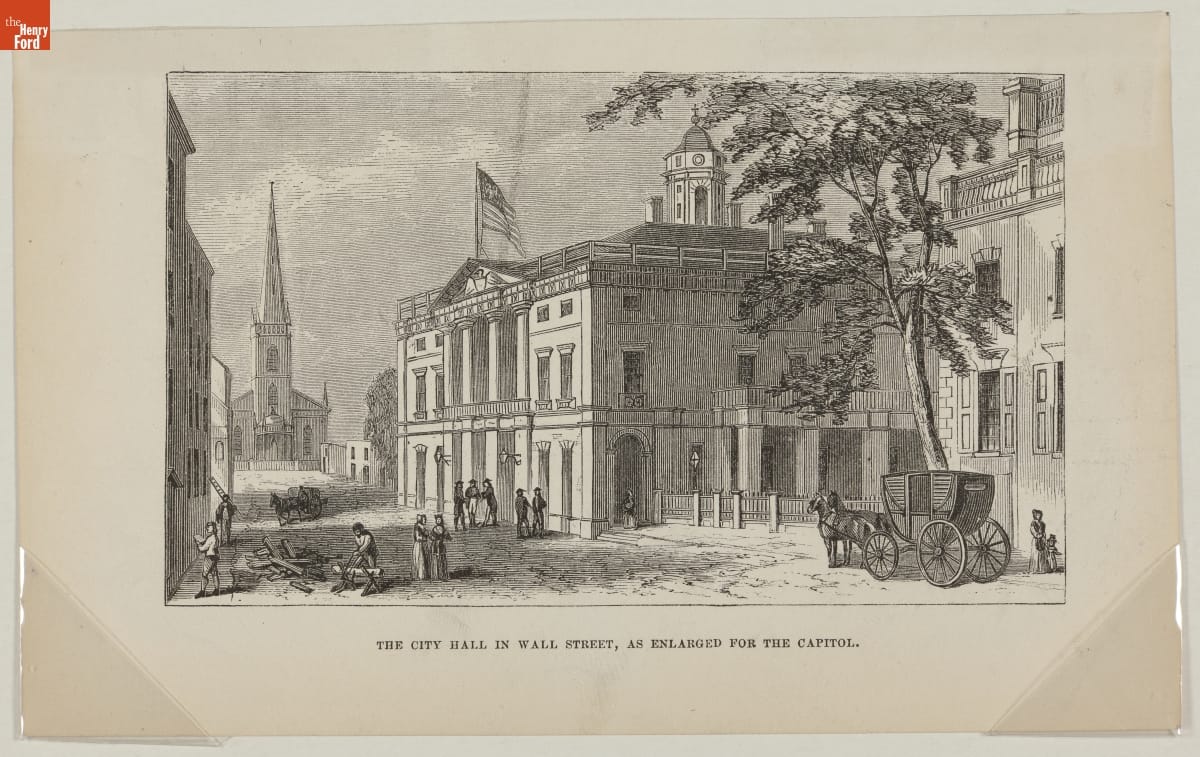
- "City Hall in Wall Street, as Enlarged for the Capitol" (Depicted as 1785-1790), Wood Engraving, circa 1855 - This circa 1855 wood engraving depicts City Hall on Wall Street in New York City, and is likely based on painter Archibald Robertson's 1790s image, "View Up Wall Street." Originally built in 1700, the building was enlarged in 1788 for use as the first federal capitol for the United States, and was demolished in 1812.
- 1785-1790
- Collections - Artifact
"City Hall in Wall Street, as Enlarged for the Capitol" (Depicted as 1785-1790), Wood Engraving, circa 1855
This circa 1855 wood engraving depicts City Hall on Wall Street in New York City, and is likely based on painter Archibald Robertson's 1790s image, "View Up Wall Street." Originally built in 1700, the building was enlarged in 1788 for use as the first federal capitol for the United States, and was demolished in 1812.
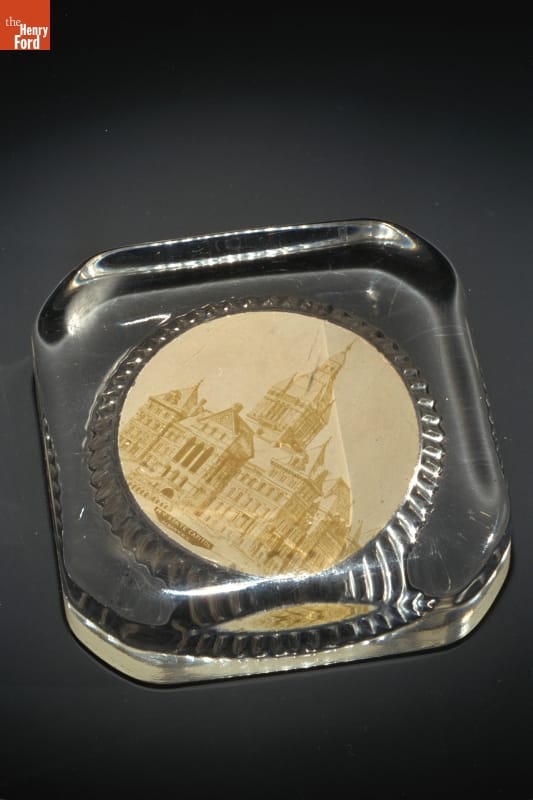
- New York State Capitol Souvenir Paperweight, circa 1891 -
- circa 1891
- Collections - Artifact
New York State Capitol Souvenir Paperweight, circa 1891
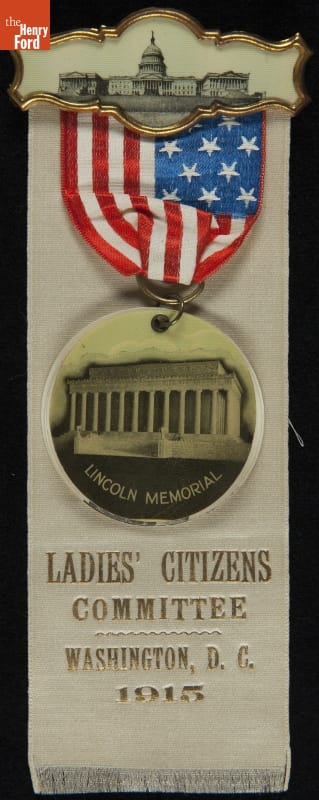
- Ladies' Citizens Committee Washington, D.C. Badge, 1915 -
- 1915
- Collections - Artifact
Ladies' Citizens Committee Washington, D.C. Badge, 1915
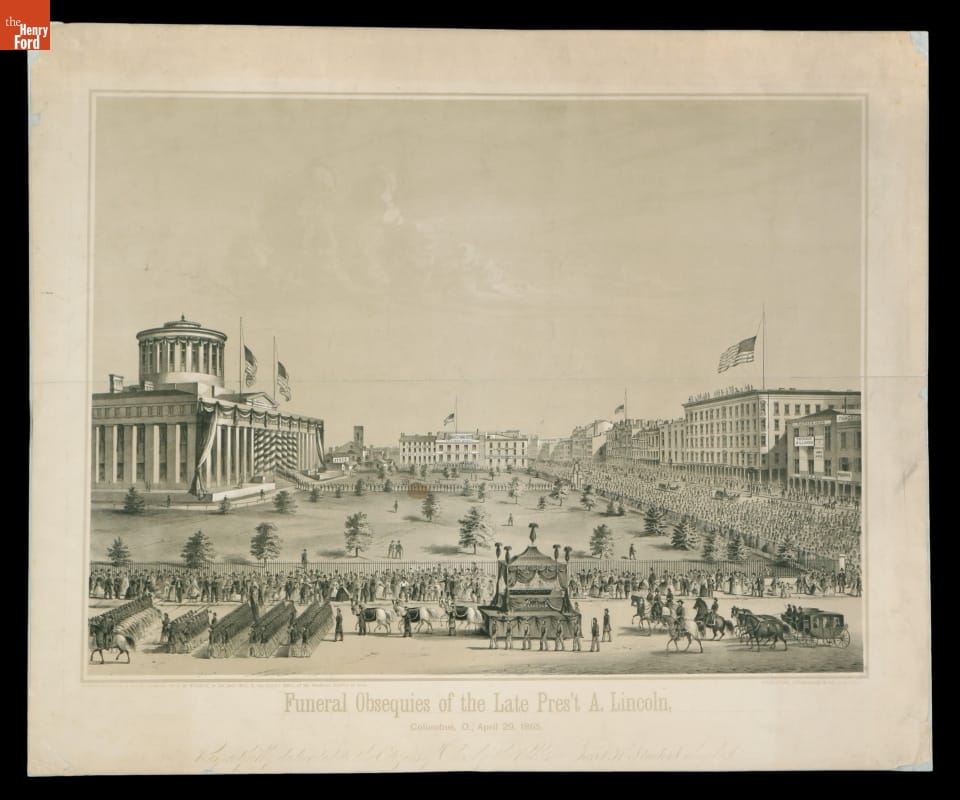
- Lithograph, "Funeral Obsequies of the Late President A. Lincoln, Columbus, O., April 29, 1865" - Abraham Lincoln's assassination on April 15, 1865, plunged Americans into deep mourning. All over the nation, communities joined in public ceremonies honoring the 16th president. This illustrates the procession through Columbus, Ohio, after the funeral train's arrival on April 29. Lincoln's casket, carried on an impressively large hearse drawn by six horses, is shown heading toward the mourning-draped Ohio State Capitol building.
- April 29, 1865
- Collections - Artifact
Lithograph, "Funeral Obsequies of the Late President A. Lincoln, Columbus, O., April 29, 1865"
Abraham Lincoln's assassination on April 15, 1865, plunged Americans into deep mourning. All over the nation, communities joined in public ceremonies honoring the 16th president. This illustrates the procession through Columbus, Ohio, after the funeral train's arrival on April 29. Lincoln's casket, carried on an impressively large hearse drawn by six horses, is shown heading toward the mourning-draped Ohio State Capitol building.
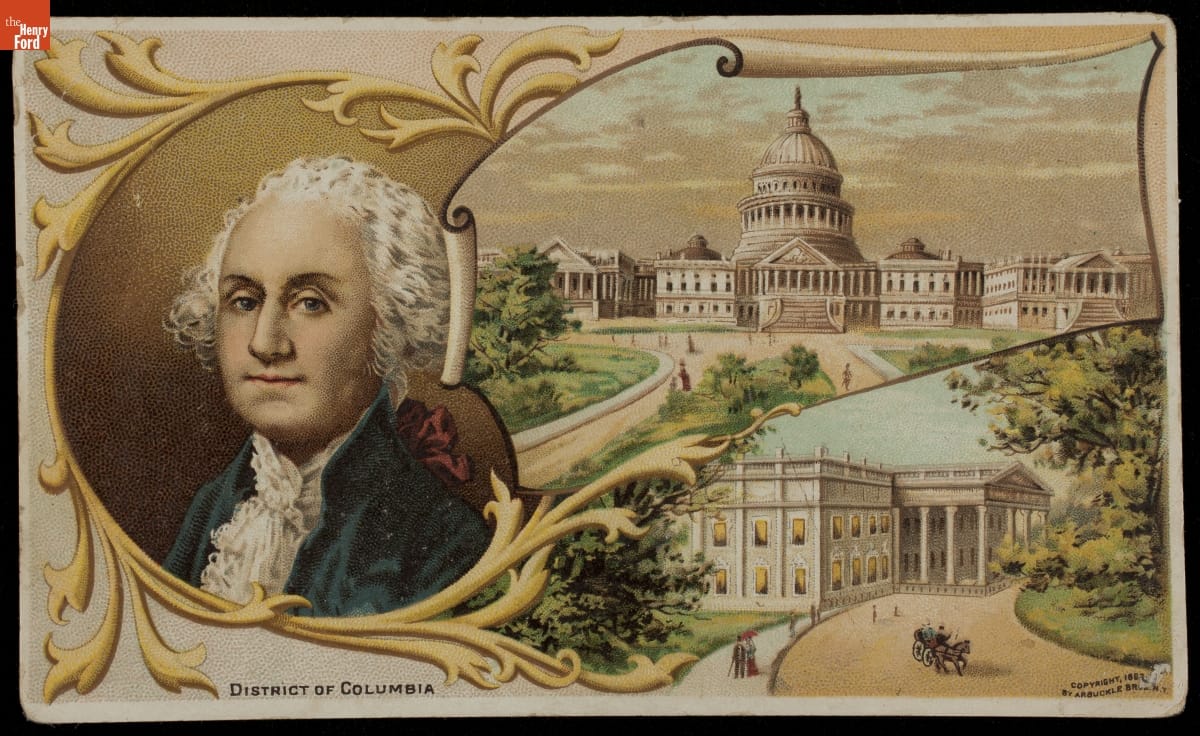
- Trade Card for Ariosa Coffee, Arbuckle Bros., "District of Columbia," 1883 - As color printing gained momentum in the late 19th century, trade cards were a major means of advertising goods and services. Americans enjoyed and often saved the vibrant little advertisements found in product packages or distributed by local merchants. This trade card for Arbuckle Bros. Coffee Company provides information about its Ariosa coffee and features a colorful image in a series depicting the United States and its territories.
- 1883
- Collections - Artifact
Trade Card for Ariosa Coffee, Arbuckle Bros., "District of Columbia," 1883
As color printing gained momentum in the late 19th century, trade cards were a major means of advertising goods and services. Americans enjoyed and often saved the vibrant little advertisements found in product packages or distributed by local merchants. This trade card for Arbuckle Bros. Coffee Company provides information about its Ariosa coffee and features a colorful image in a series depicting the United States and its territories.
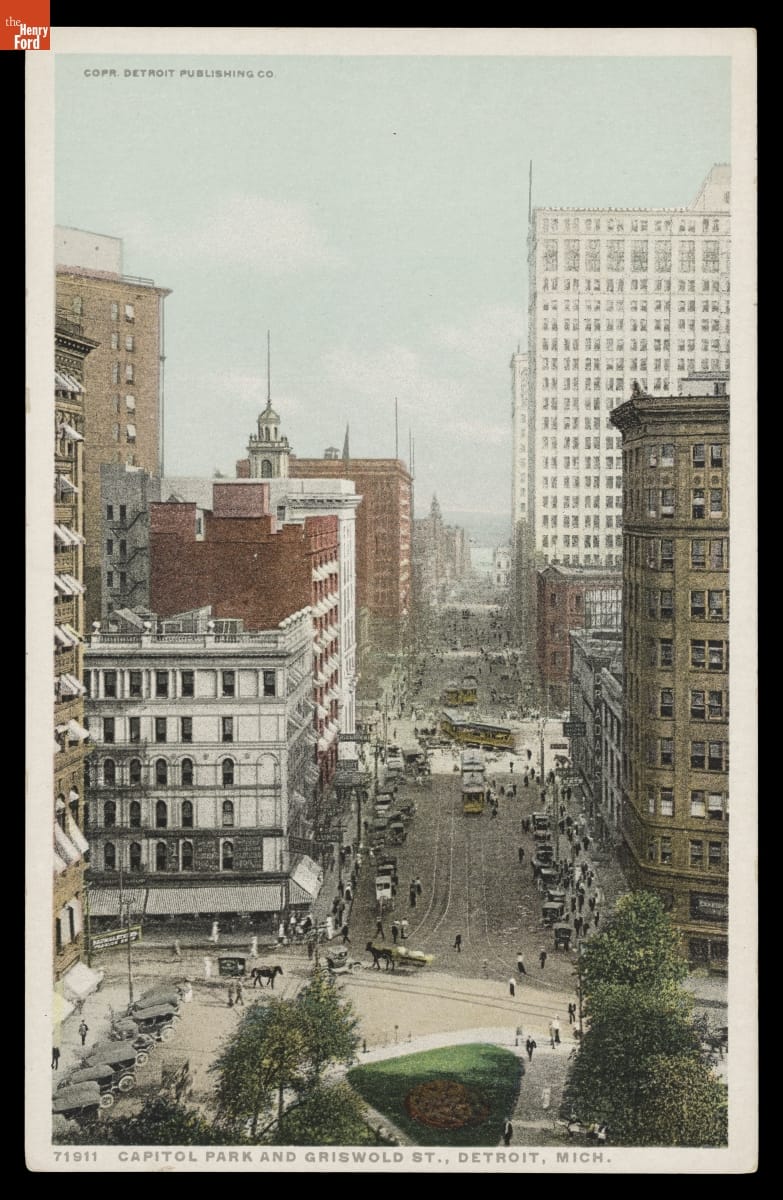
- Capitol Park and Griswold Street, Detroit, Michigan -
- 1910-1913
- Collections - Artifact
Capitol Park and Griswold Street, Detroit, Michigan