
Search
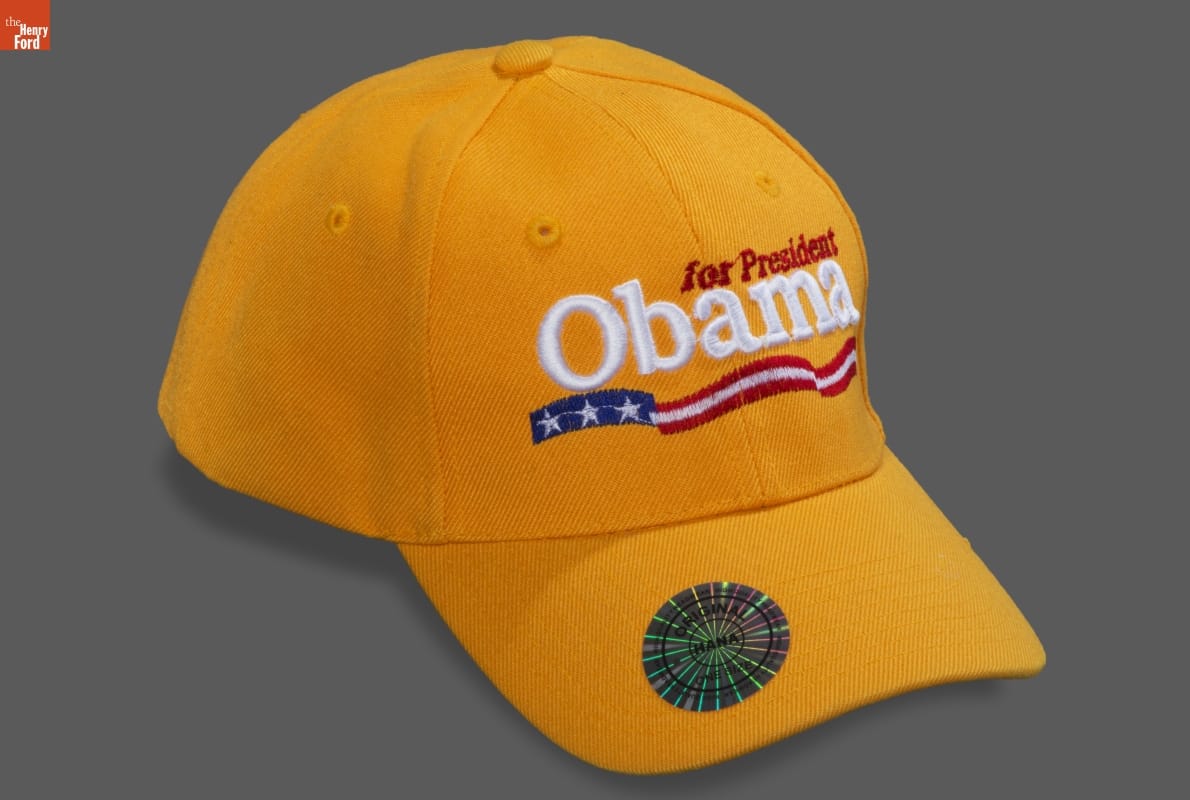
- Baseball Cap, "Obama For President," 2009 - On January 20th, 2009, Barack Obama was sworn in as the 44th President of the United States. More than one million Americans came to Washington, D.C., to witness the inauguration of America's first African American president. Vendors sold Obama-branded souvenirs -- including ones used during the campaign -- to enthusiastic supporter as a tangible remembrance of this historic event.
- 2008-2009
- Collections - Artifact
Baseball Cap, "Obama For President," 2009
On January 20th, 2009, Barack Obama was sworn in as the 44th President of the United States. More than one million Americans came to Washington, D.C., to witness the inauguration of America's first African American president. Vendors sold Obama-branded souvenirs -- including ones used during the campaign -- to enthusiastic supporter as a tangible remembrance of this historic event.
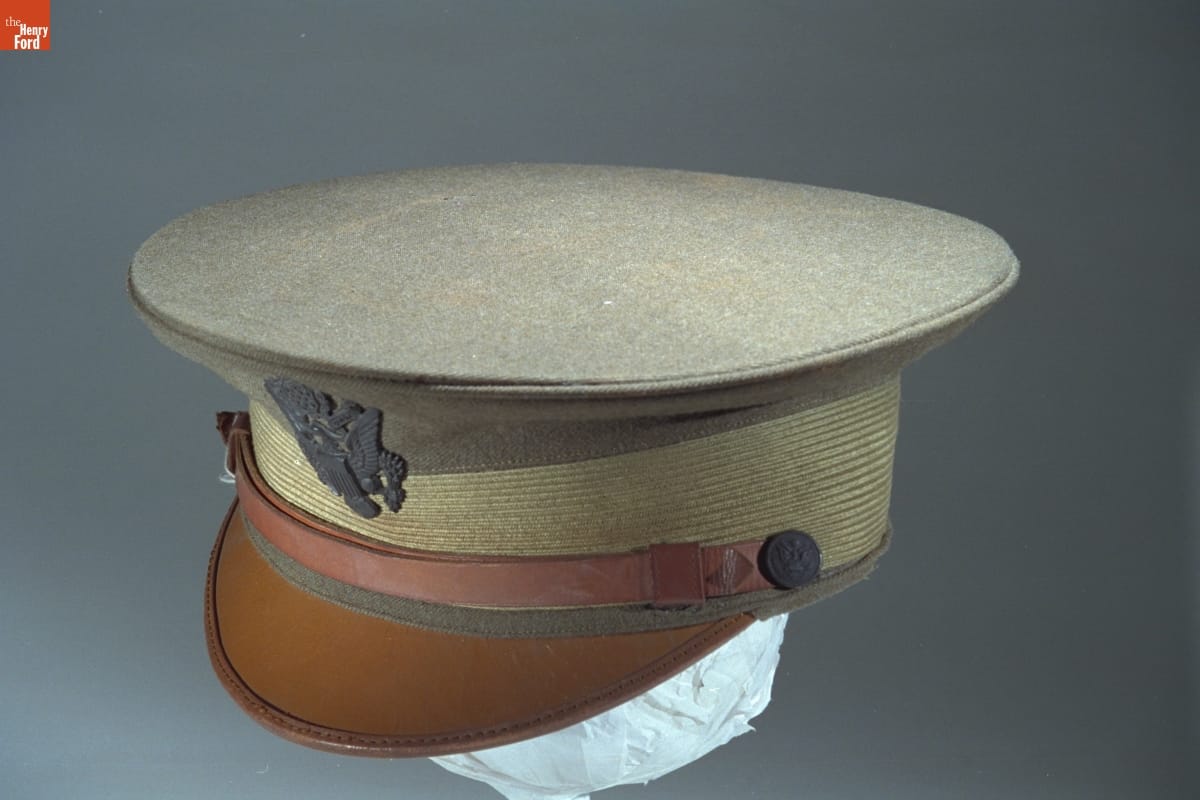
- United States Army Service Cap, 1915-1920 - Dr. Frank Sladen served in the U.S. Army Medical Corps at Camp Sherman, Ohio, during the First World War. Prior to his military service, Sladen was physician-in-chief at the Henry Ford Hospital in Detroit, Michigan. He returned to the hospital after the war and remained in practice until 1971. This army officer's service cap belonged to Dr. Sladen.
- 1915-1920
- Collections - Artifact
United States Army Service Cap, 1915-1920
Dr. Frank Sladen served in the U.S. Army Medical Corps at Camp Sherman, Ohio, during the First World War. Prior to his military service, Sladen was physician-in-chief at the Henry Ford Hospital in Detroit, Michigan. He returned to the hospital after the war and remained in practice until 1971. This army officer's service cap belonged to Dr. Sladen.
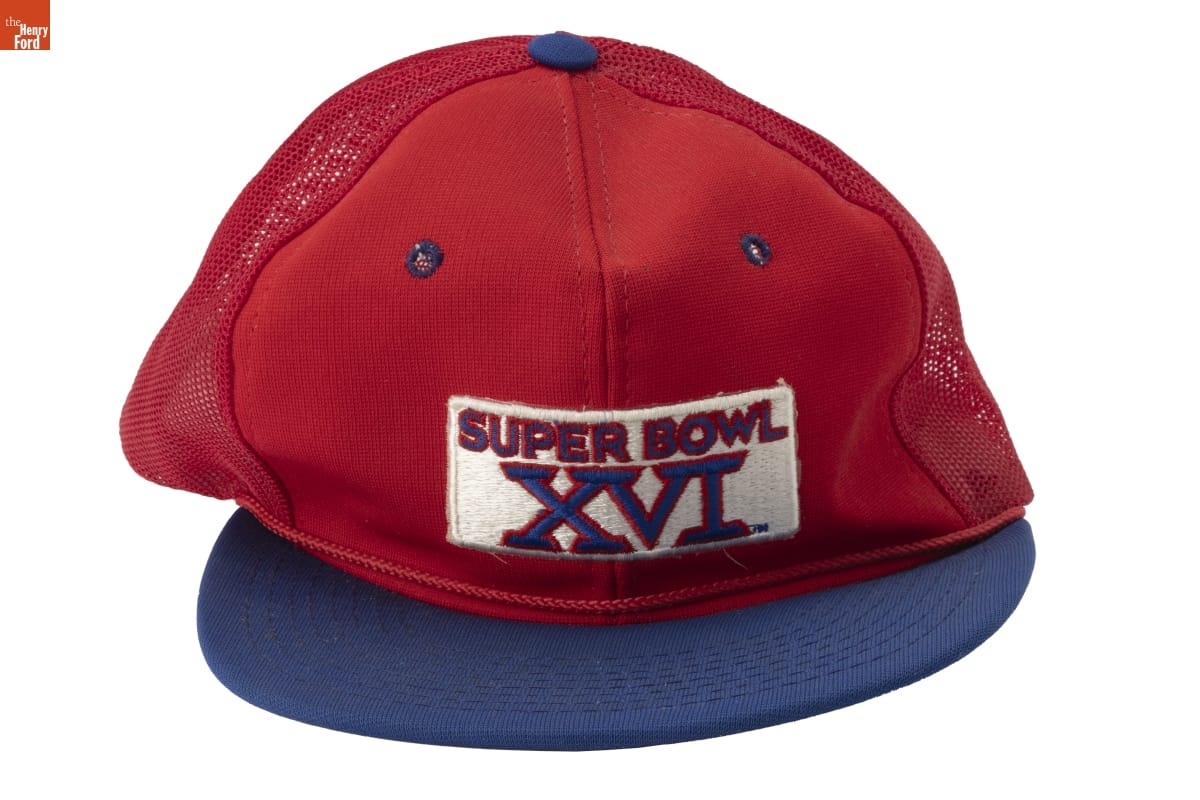
- "Super Bowl XVI" Baseball Cap, Worn by Joseph Wright, 1982 - In 1982, the National Football League held Super Bowl XVI at the Pontiac (Michigan) Silverdome. The end-of-season game pitted the San Francisco 49ers against the Cincinnati Bengals. The 49ers defeated the Bengals, 26 to 21. This cap was worn by one of the concessionaires.
- 1982
- Collections - Artifact
"Super Bowl XVI" Baseball Cap, Worn by Joseph Wright, 1982
In 1982, the National Football League held Super Bowl XVI at the Pontiac (Michigan) Silverdome. The end-of-season game pitted the San Francisco 49ers against the Cincinnati Bengals. The 49ers defeated the Bengals, 26 to 21. This cap was worn by one of the concessionaires.
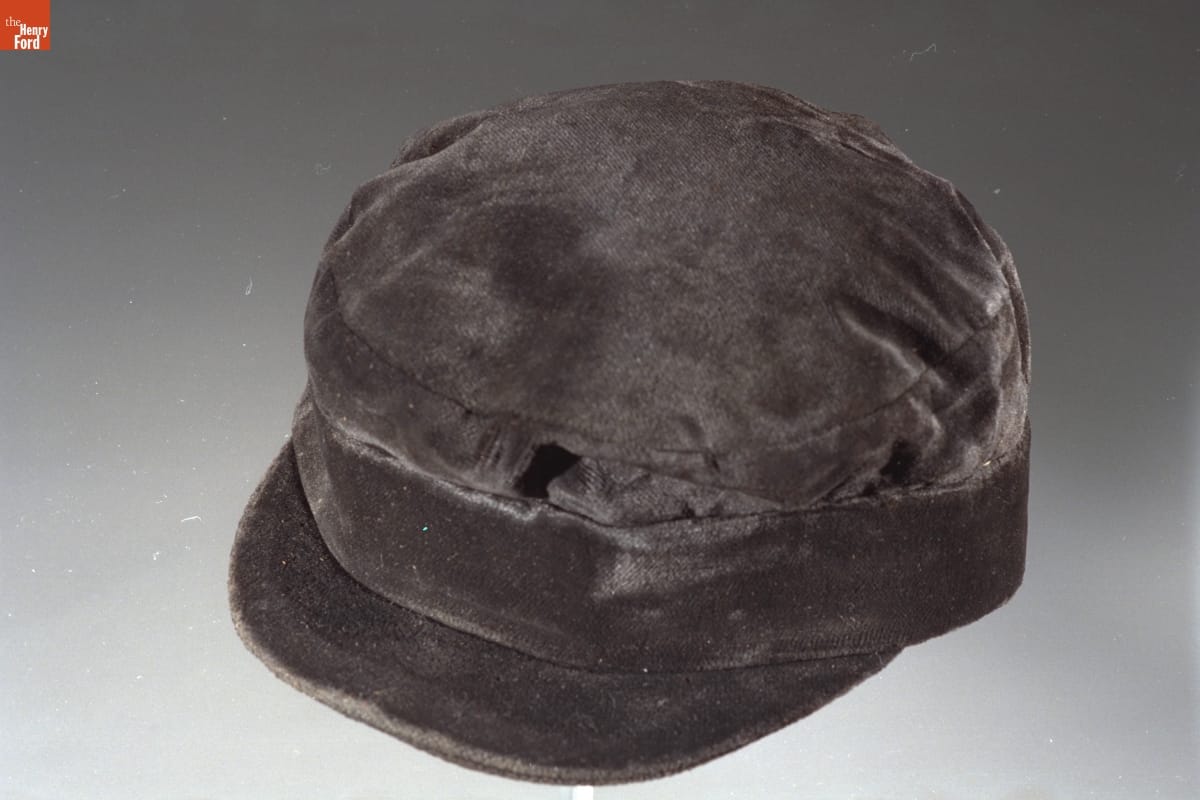
- Cap, 1880-1910 -
- 1880-1910
- Collections - Artifact
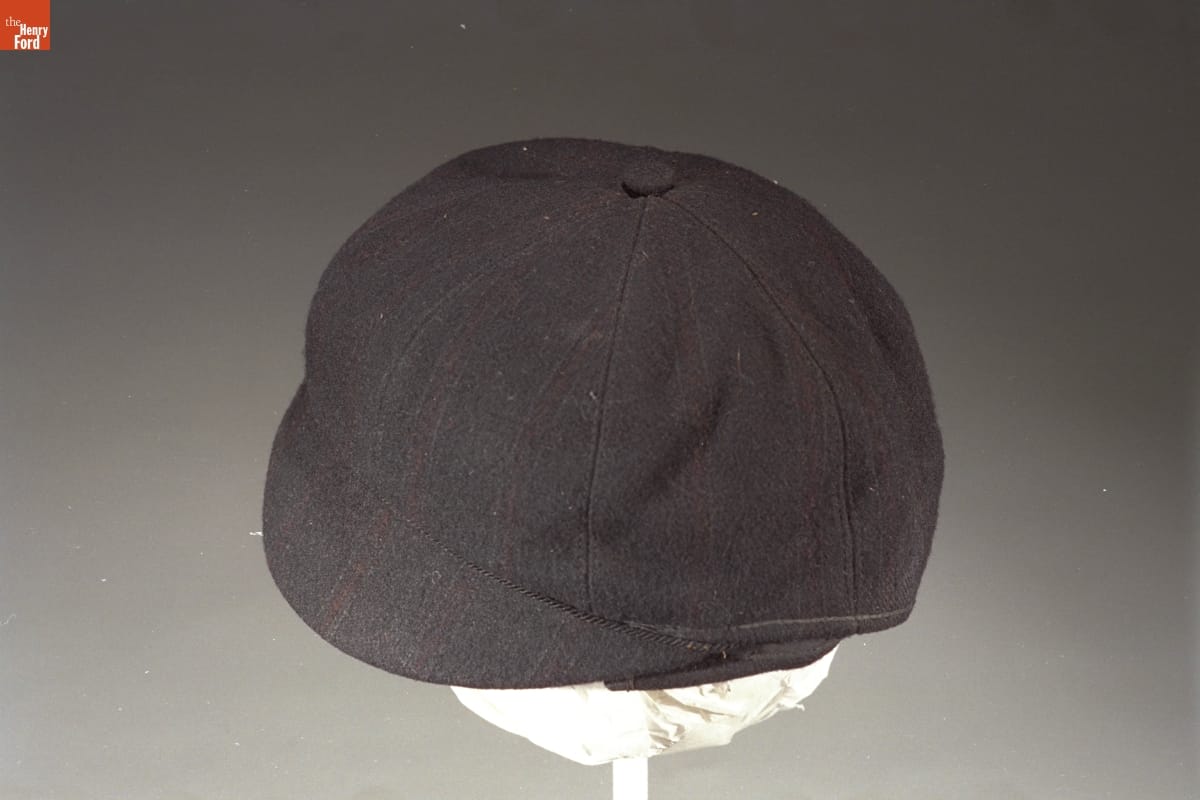
Cap, 1880-1910
- Cap, 1880-1900 -
- 1880-1900
- Collections - Artifact
Cap, 1880-1900
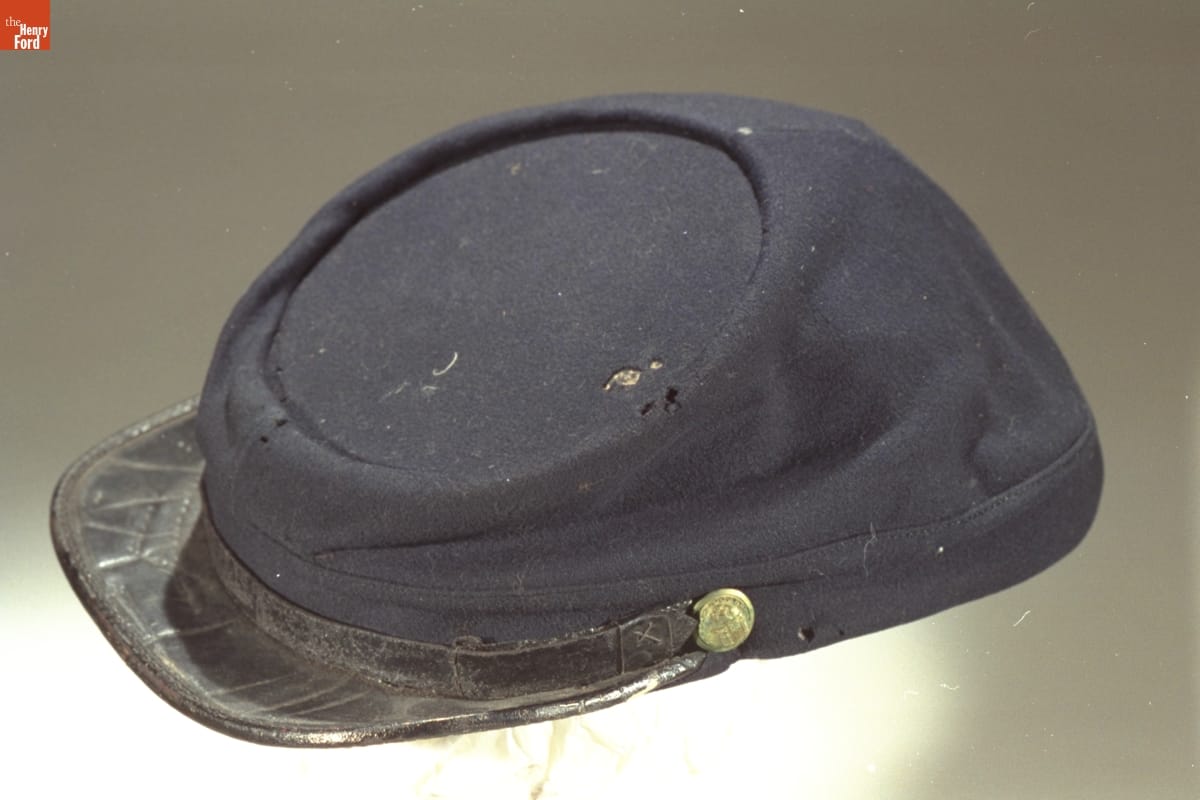
- Forage Cap or Kepi, 1888-1895 -
- 1888-1895
- Collections - Artifact
Forage Cap or Kepi, 1888-1895
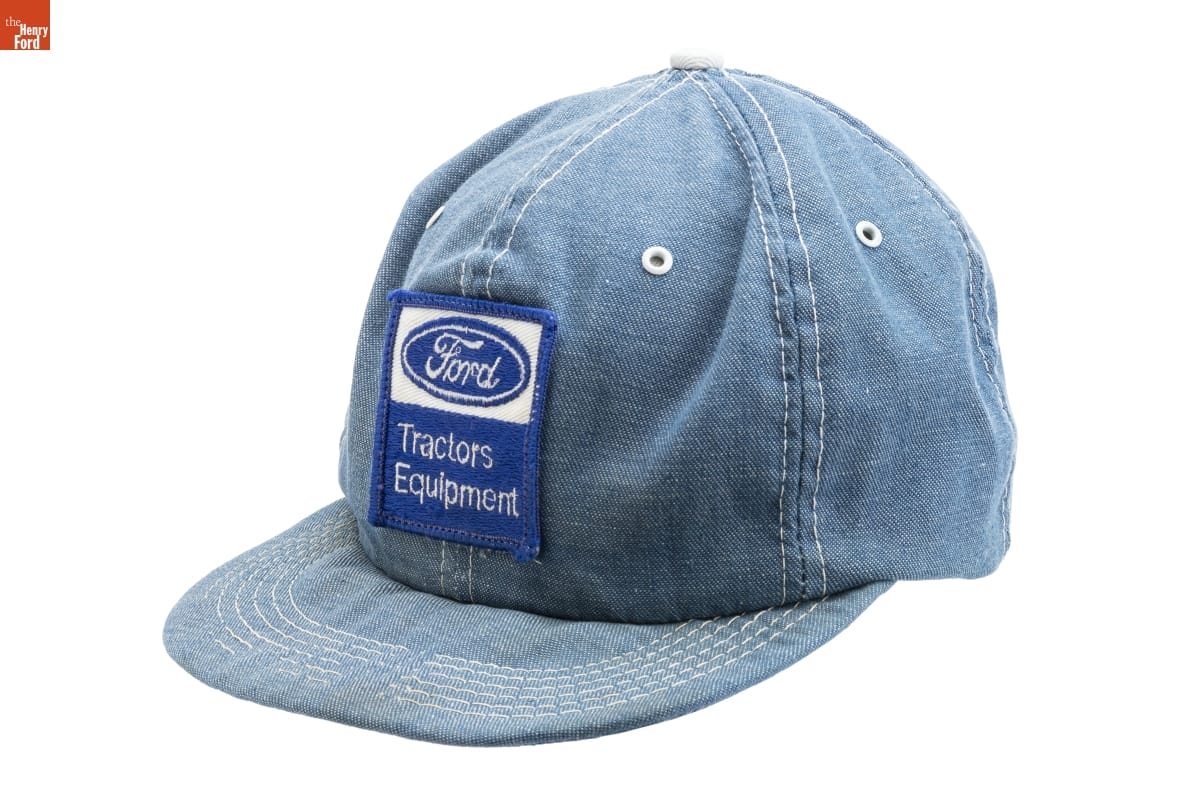
- Ford Tractors Equipment Baseball Cap, Worn by George S. Wilkerson - George S. Wilkerson served in World War II and then earned a degree in Agricultural Engineering from the University of Missouri in 1947. His long career included time at Ford Tractor offices in St. Louis, Missouri; Marion, Illinois; and Atlanta, Georgia. By the time he retired in the mid-1980s, Wilkerson was training mechanics throughout the southeastern United States.
- Collections - Artifact
Ford Tractors Equipment Baseball Cap, Worn by George S. Wilkerson
George S. Wilkerson served in World War II and then earned a degree in Agricultural Engineering from the University of Missouri in 1947. His long career included time at Ford Tractor offices in St. Louis, Missouri; Marion, Illinois; and Atlanta, Georgia. By the time he retired in the mid-1980s, Wilkerson was training mechanics throughout the southeastern United States.
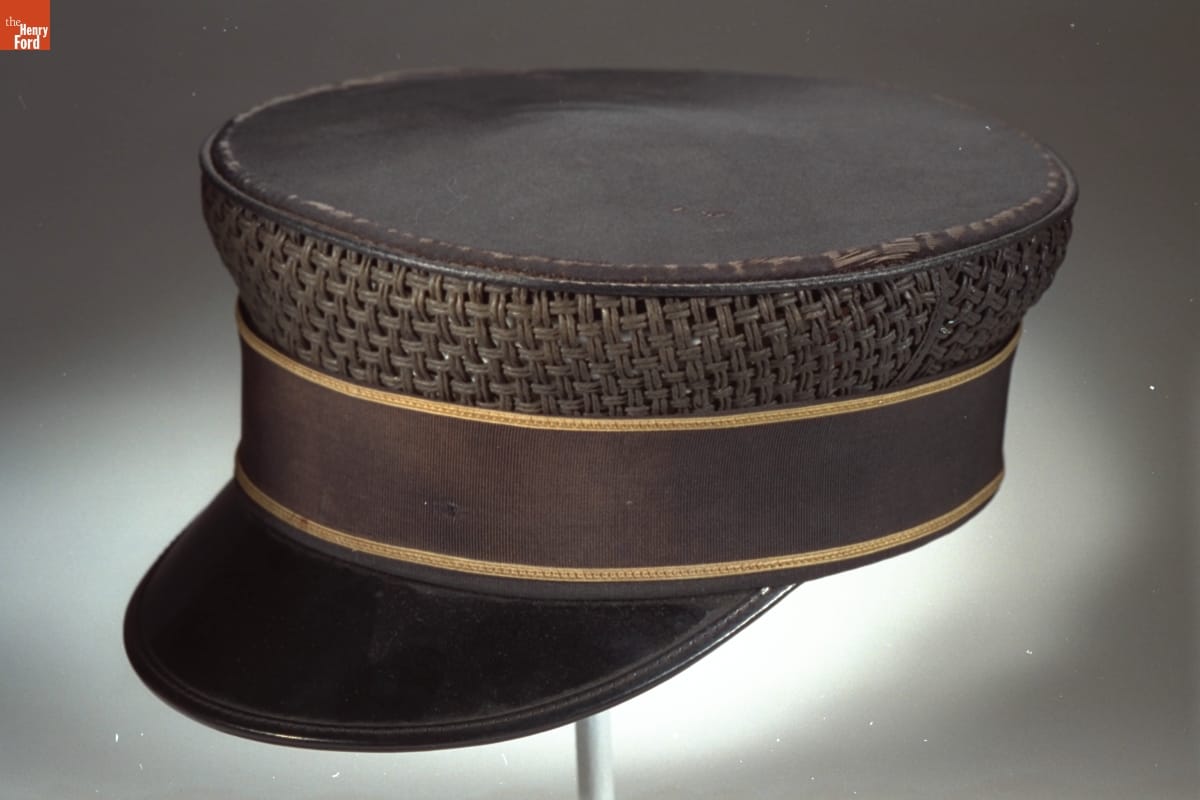
- Conductor's Cap, 1885-1920 - Standard uniforms and caps made railroad staff easily recognizable to passengers. This hat, by Marshall Field & Company of Chicago, projects authority while also providing practical benefits to the wearer. The patent leather visor shades the eyes while the ventilated crown prevents overheating. Marshall Field's supplied uniforms, linens and upholstery to the nearby Pullman Company, builder of railroad passenger cars.
- 1885-1920
- Collections - Artifact
Conductor's Cap, 1885-1920
Standard uniforms and caps made railroad staff easily recognizable to passengers. This hat, by Marshall Field & Company of Chicago, projects authority while also providing practical benefits to the wearer. The patent leather visor shades the eyes while the ventilated crown prevents overheating. Marshall Field's supplied uniforms, linens and upholstery to the nearby Pullman Company, builder of railroad passenger cars.
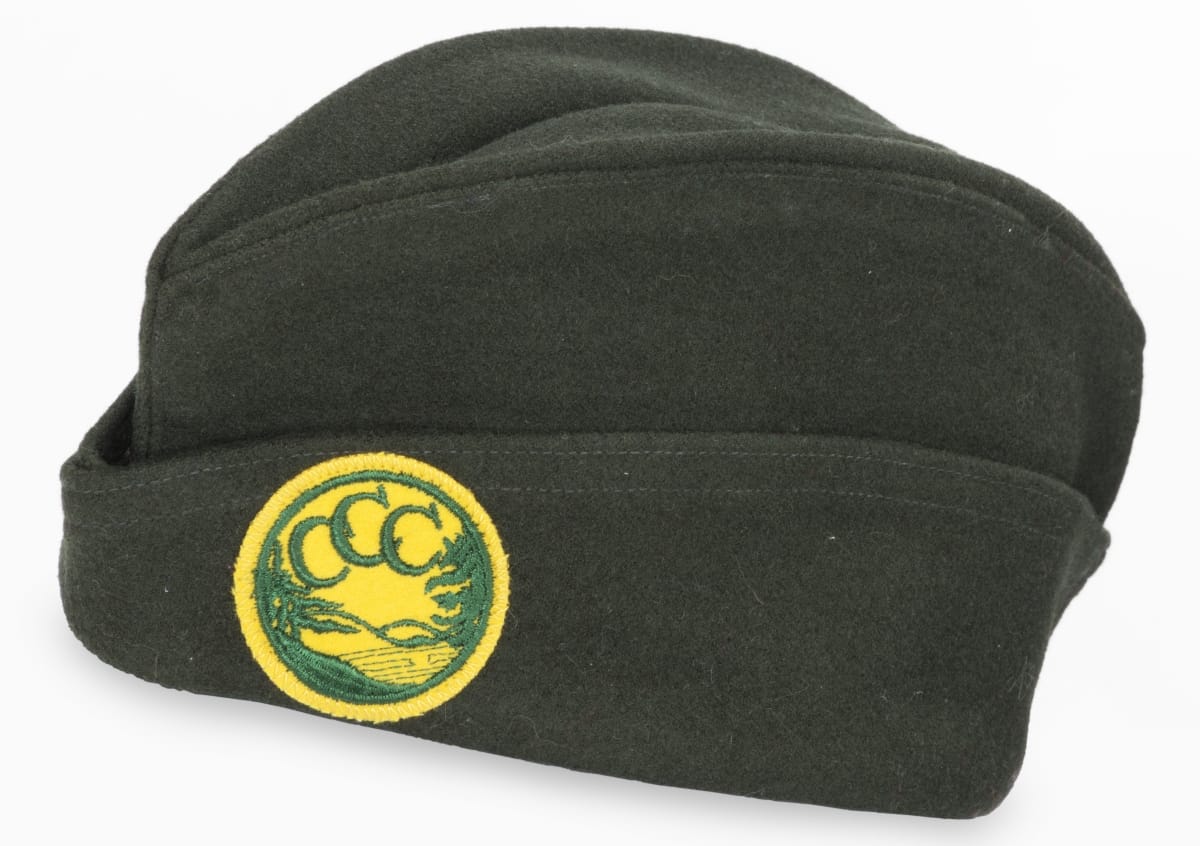
- Civilian Conservation Corps Garrison Cap, 1939-1942 - President Franklin Roosevelt established the Civilian Conservation Corps (CCC) in 1933 during the early years of the Great Depression. The Corps enlisted unemployed, single young men to work in America's public lands, forests, and national parks. The men earned $30 a month and received food, clothing, and lodging. More than 2 1/2 million men served by the time the program ended in 1942.
- 1939-1942
- Collections - Artifact
Civilian Conservation Corps Garrison Cap, 1939-1942
President Franklin Roosevelt established the Civilian Conservation Corps (CCC) in 1933 during the early years of the Great Depression. The Corps enlisted unemployed, single young men to work in America's public lands, forests, and national parks. The men earned $30 a month and received food, clothing, and lodging. More than 2 1/2 million men served by the time the program ended in 1942.
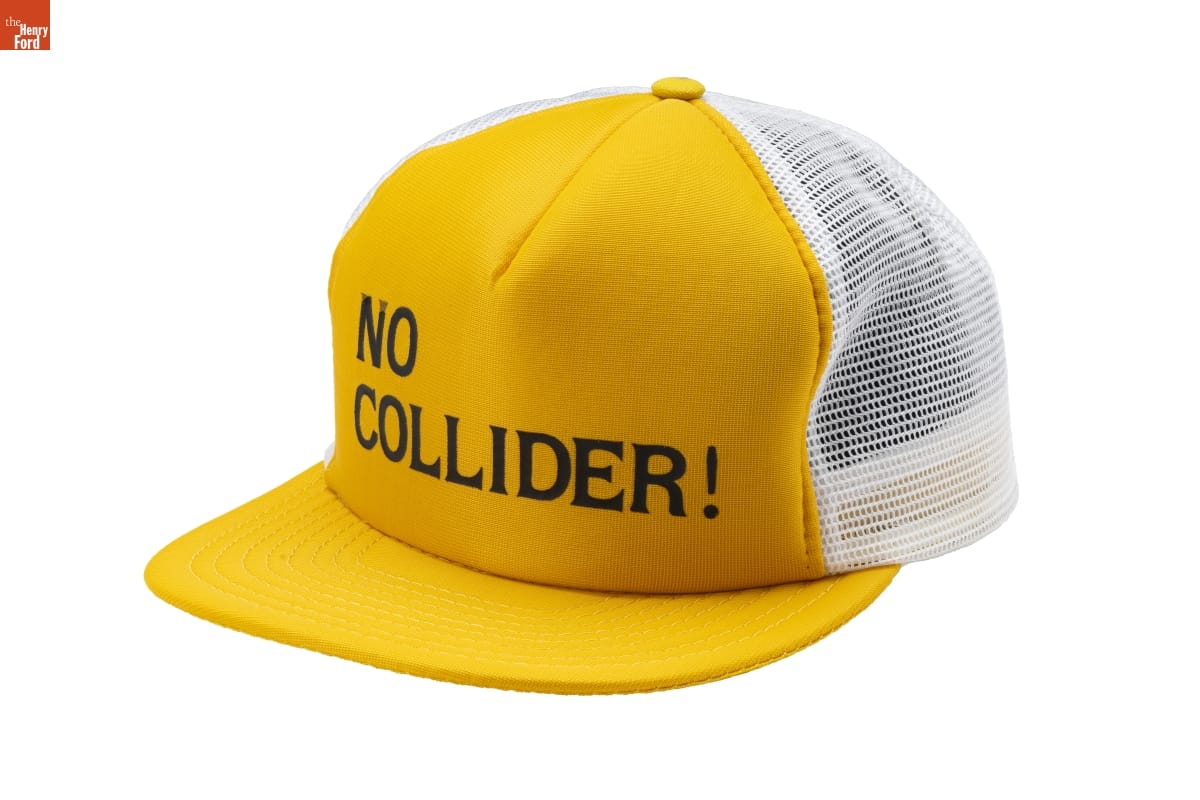
- "No Collider!" Baseball Cap, 1987-1993 - In the 1980s, several states vied to become the home of the Superconducting Super Collider (SSC), intended as the world's largest particle accelerator. The SSC would have enabled scientists to study the basic particles from which all matter is formed. Planners factored in public support, both positive and negative, before selecting Texas. The project, however, was canceled in 1993.
- 1987-1993
- Collections - Artifact
"No Collider!" Baseball Cap, 1987-1993
In the 1980s, several states vied to become the home of the Superconducting Super Collider (SSC), intended as the world's largest particle accelerator. The SSC would have enabled scientists to study the basic particles from which all matter is formed. Planners factored in public support, both positive and negative, before selecting Texas. The project, however, was canceled in 1993.