
Search
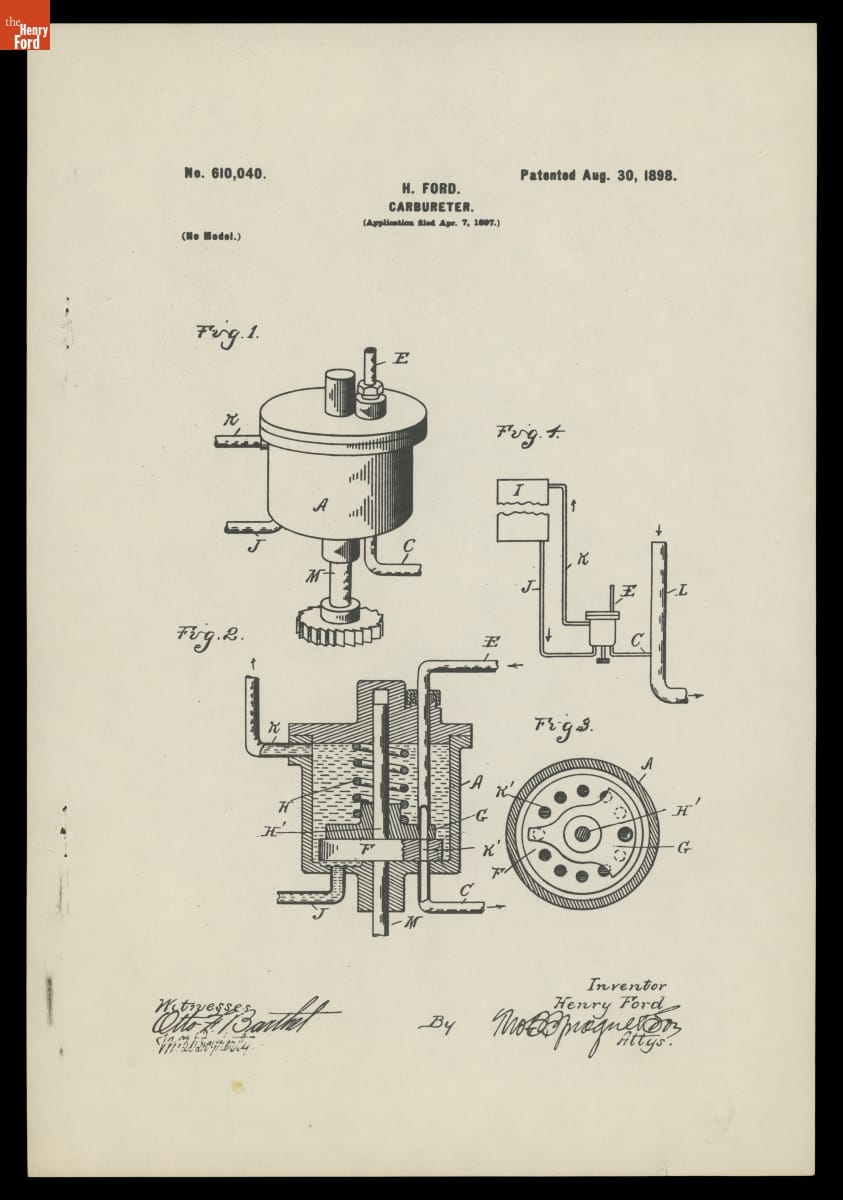
- Patent #610,040, Carburetor Improvements by Henry Ford, Granted August 30, 1898 - Henry Ford received a patent in August 1898 for an improved automobile carburetor -- the device that mixes the fuel and air sent to an engine's cylinders. It was part of Ford's work to design and build his first marketable automobile. Ford's first company, the Detroit Automobile Company, was formed in July 1899 but closed after 15 months.
- August 30, 1898
- Collections - Artifact
Patent #610,040, Carburetor Improvements by Henry Ford, Granted August 30, 1898
Henry Ford received a patent in August 1898 for an improved automobile carburetor -- the device that mixes the fuel and air sent to an engine's cylinders. It was part of Ford's work to design and build his first marketable automobile. Ford's first company, the Detroit Automobile Company, was formed in July 1899 but closed after 15 months.
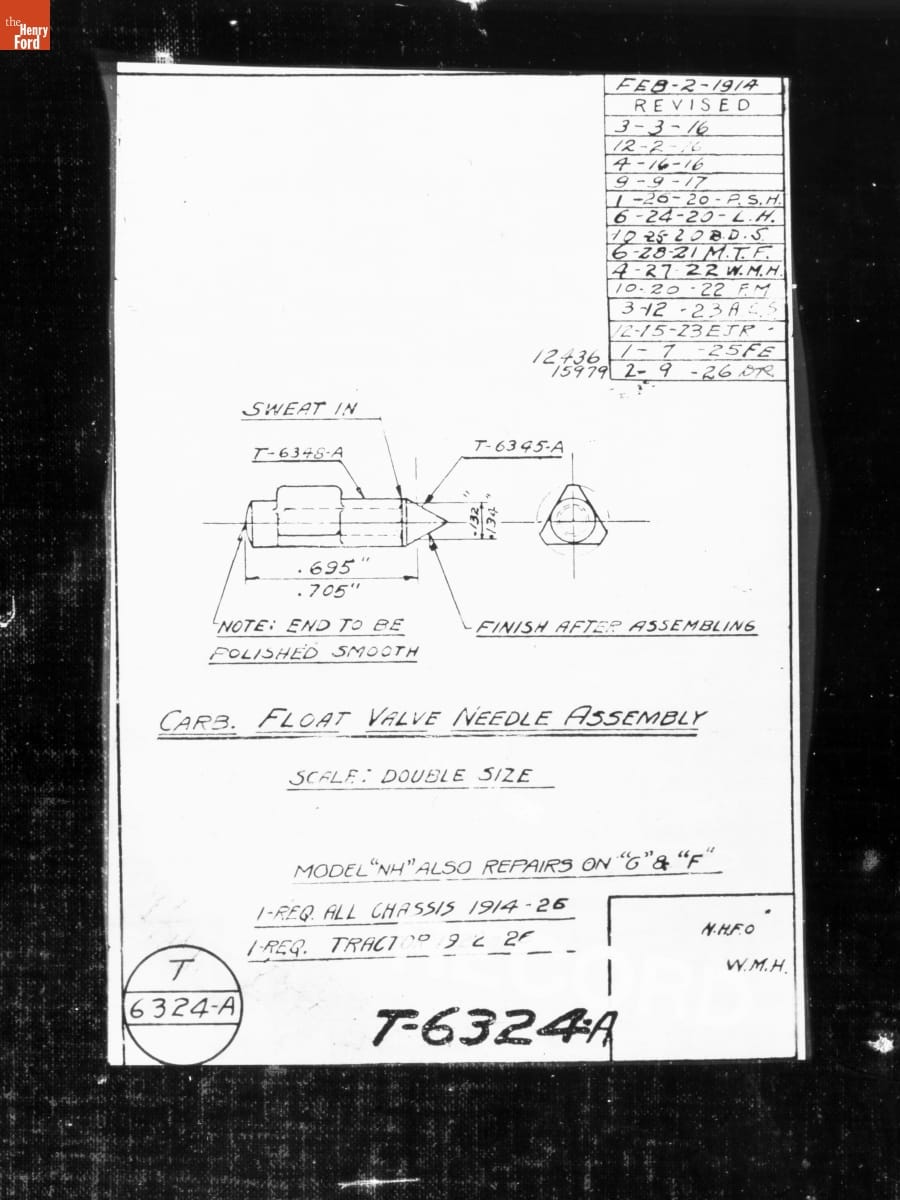
- Drawing, "Carb. Float Valve Needle Assembly," Ford Model T, February 9, 1926 - The Ford Motor Company created over a million parts drawings from 1903 to 1957. Many of these drawings specify engineering requirements for the components of Ford-made vehicles--including automobiles, trucks, tractors, military vehicles and Tri-motor airplanes. Others document assembly components, stages of casting and forging, or experimental designs. Beginning in the 1940s, Ford transferred the drawings to microfilm.
- February 09, 1926
- Collections - Artifact
Drawing, "Carb. Float Valve Needle Assembly," Ford Model T, February 9, 1926
The Ford Motor Company created over a million parts drawings from 1903 to 1957. Many of these drawings specify engineering requirements for the components of Ford-made vehicles--including automobiles, trucks, tractors, military vehicles and Tri-motor airplanes. Others document assembly components, stages of casting and forging, or experimental designs. Beginning in the 1940s, Ford transferred the drawings to microfilm.
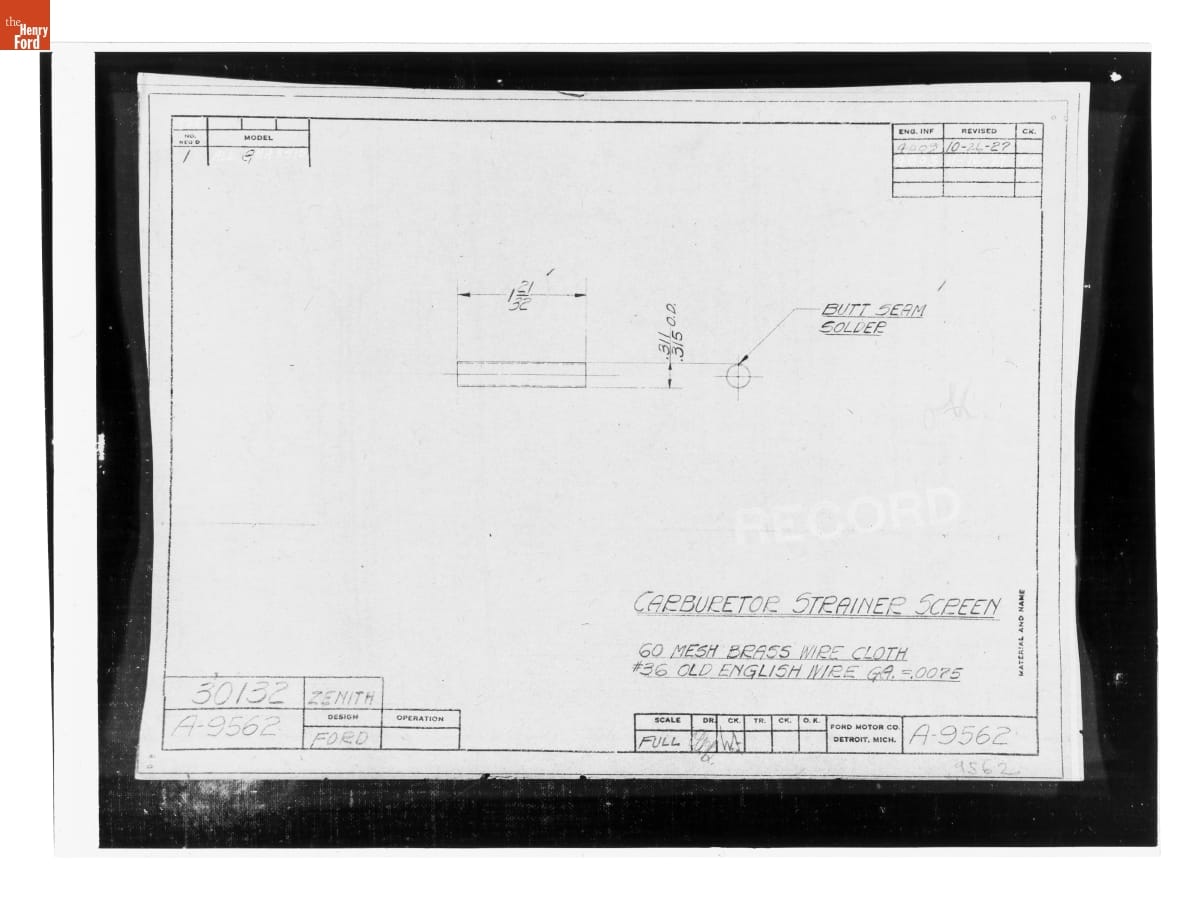
- Drawing, "Carburetor Strainer Screen," Ford Model A, November 16, 1927 - The Ford Motor Company created over a million parts drawings from 1903 to 1957. Many of these drawings specify engineering requirements for the components of Ford-made vehicles--including automobiles, trucks, tractors, military vehicles and Tri-motor airplanes. Others document assembly components, stages of casting and forging, or experimental designs. Beginning in the 1940s, Ford transferred the drawings to microfilm.
- November 16, 1927
- Collections - Artifact
Drawing, "Carburetor Strainer Screen," Ford Model A, November 16, 1927
The Ford Motor Company created over a million parts drawings from 1903 to 1957. Many of these drawings specify engineering requirements for the components of Ford-made vehicles--including automobiles, trucks, tractors, military vehicles and Tri-motor airplanes. Others document assembly components, stages of casting and forging, or experimental designs. Beginning in the 1940s, Ford transferred the drawings to microfilm.
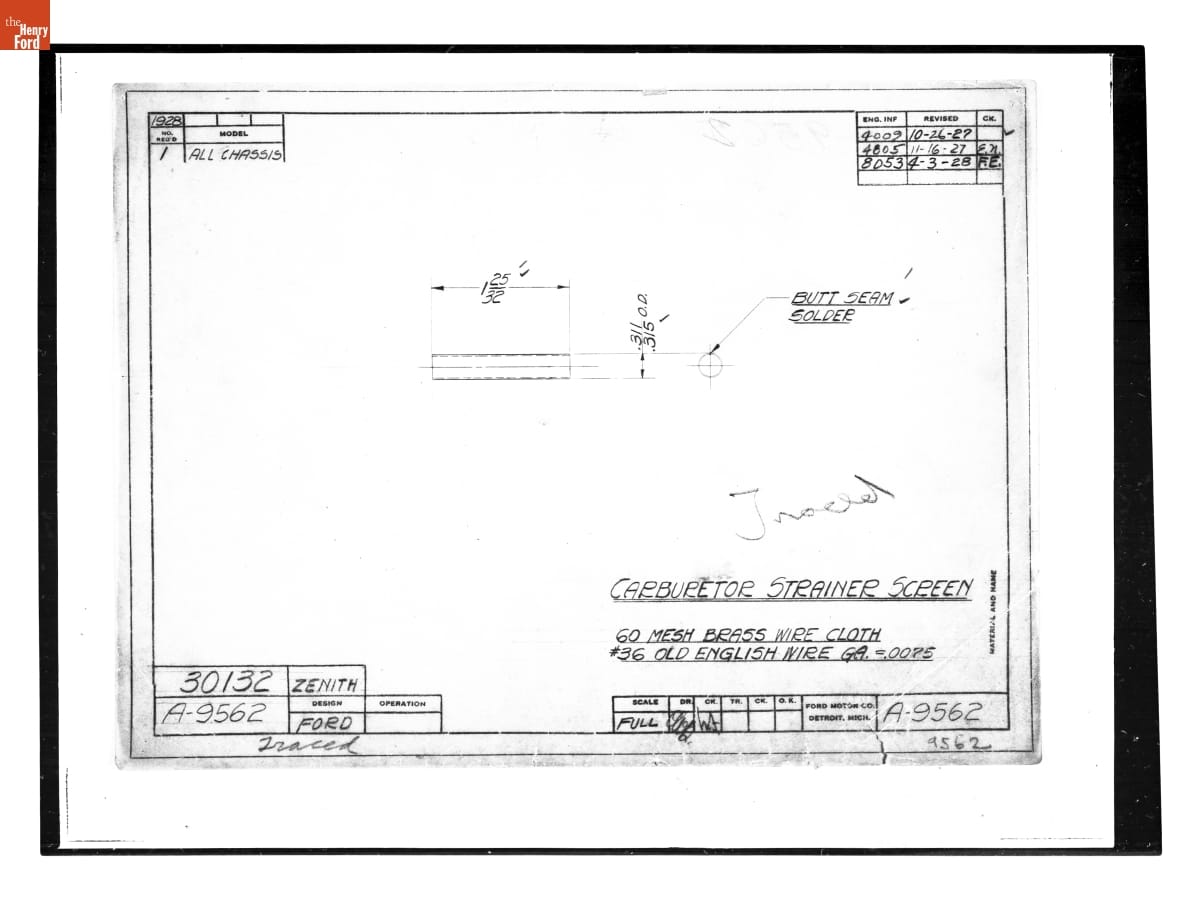
- Drawing, "Carburetor Strainer Screen," Ford Model A, April 3, 1928 - The Ford Motor Company created over a million parts drawings from 1903 to 1957. Many of these drawings specify engineering requirements for the components of Ford-made vehicles--including automobiles, trucks, tractors, military vehicles and Tri-motor airplanes. Others document assembly components, stages of casting and forging, or experimental designs. Beginning in the 1940s, Ford transferred the drawings to microfilm.
- April 03, 1928
- Collections - Artifact
Drawing, "Carburetor Strainer Screen," Ford Model A, April 3, 1928
The Ford Motor Company created over a million parts drawings from 1903 to 1957. Many of these drawings specify engineering requirements for the components of Ford-made vehicles--including automobiles, trucks, tractors, military vehicles and Tri-motor airplanes. Others document assembly components, stages of casting and forging, or experimental designs. Beginning in the 1940s, Ford transferred the drawings to microfilm.
- Drawing, "Carburetor Strainer Cap," Ford Model A, December 6, 1927 - The Ford Motor Company created over a million parts drawings from 1903 to 1957. Many of these drawings specify engineering requirements for the components of Ford-made vehicles--including automobiles, trucks, tractors, military vehicles and Tri-motor airplanes. Others document assembly components, stages of casting and forging, or experimental designs. Beginning in the 1940s, Ford transferred the drawings to microfilm.
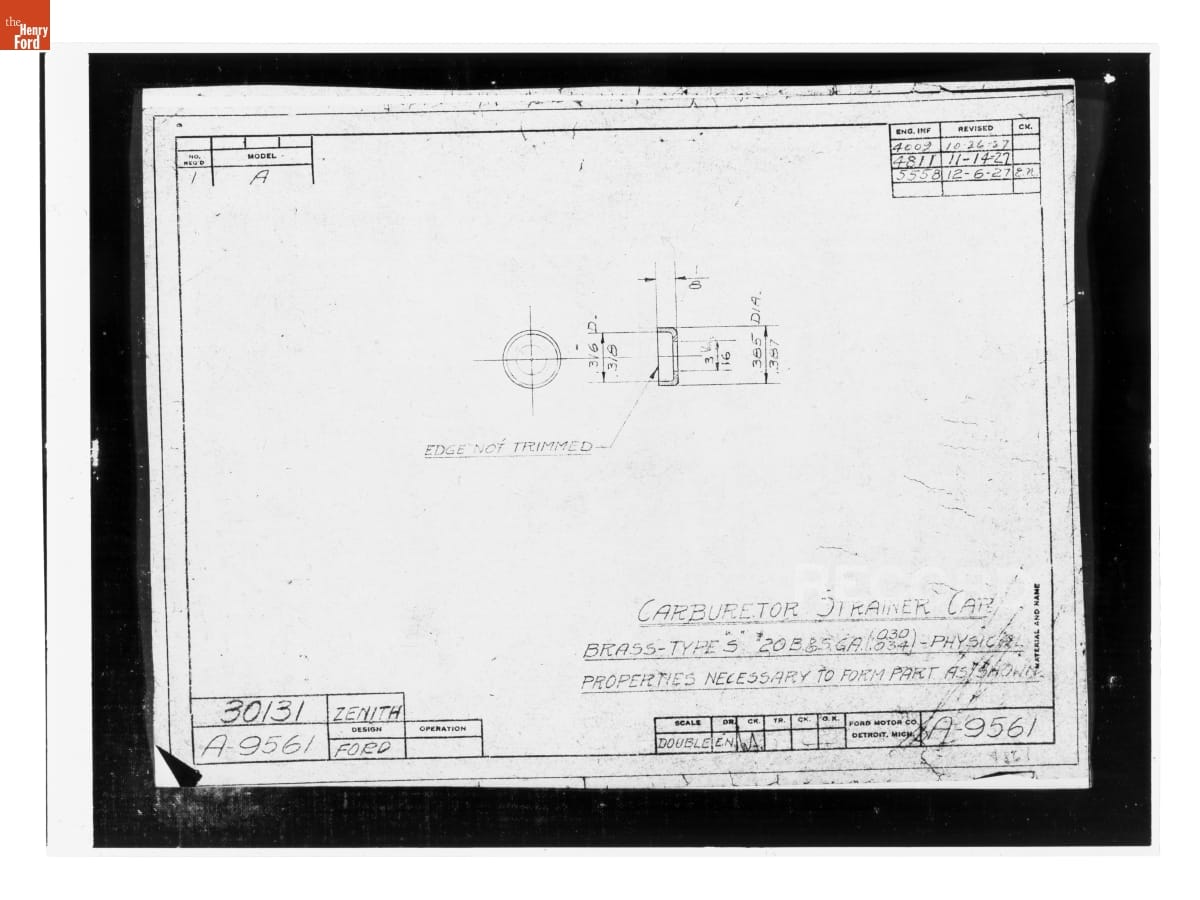
- December 06, 1927
- Collections - Artifact
Drawing, "Carburetor Strainer Cap," Ford Model A, December 6, 1927
The Ford Motor Company created over a million parts drawings from 1903 to 1957. Many of these drawings specify engineering requirements for the components of Ford-made vehicles--including automobiles, trucks, tractors, military vehicles and Tri-motor airplanes. Others document assembly components, stages of casting and forging, or experimental designs. Beginning in the 1940s, Ford transferred the drawings to microfilm.
- Drawing, "Carburetor Strainer Plug," Ford Model A, April 3, 1928 - The Ford Motor Company created over a million parts drawings from 1903 to 1957. Many of these drawings specify engineering requirements for the components of Ford-made vehicles--including automobiles, trucks, tractors, military vehicles and Tri-motor airplanes. Others document assembly components, stages of casting and forging, or experimental designs. Beginning in the 1940s, Ford transferred the drawings to microfilm.
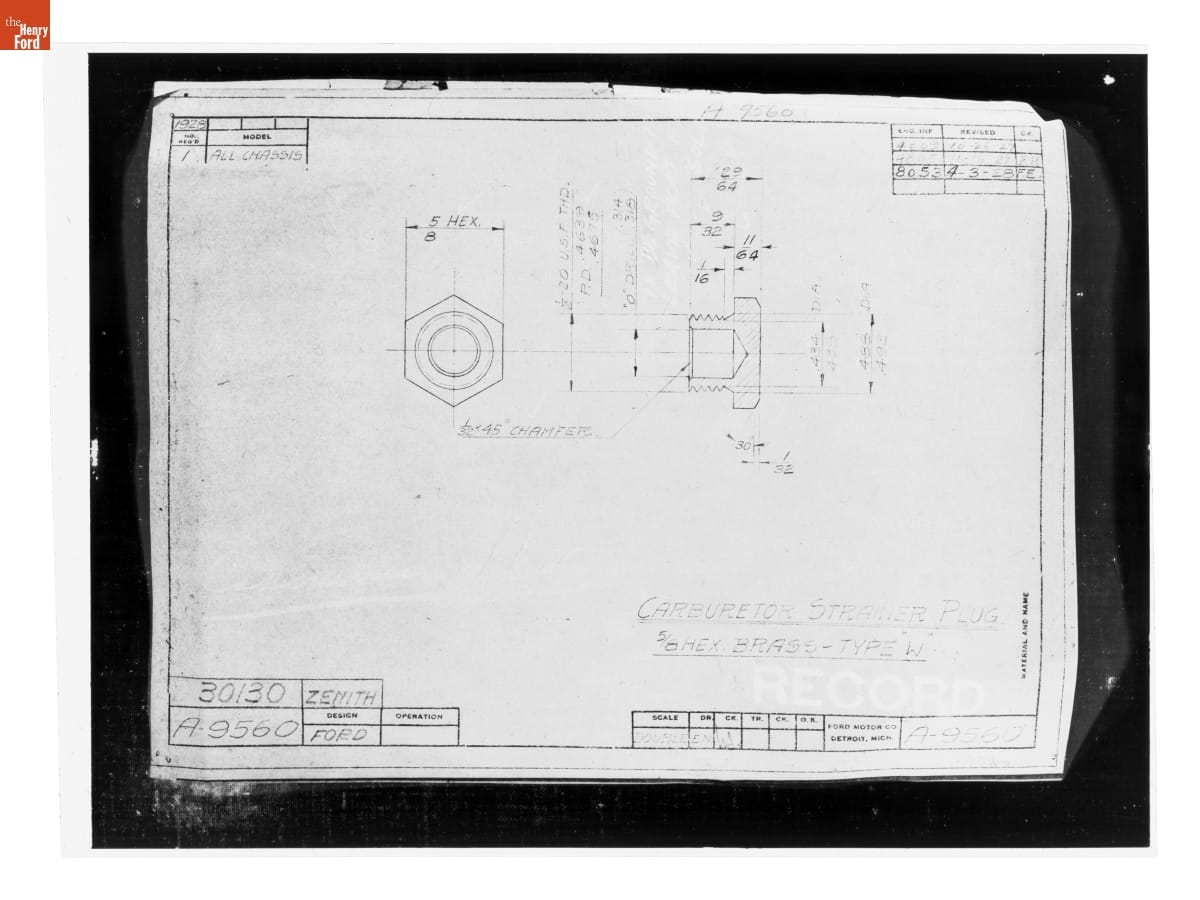
- April 03, 1928
- Collections - Artifact
Drawing, "Carburetor Strainer Plug," Ford Model A, April 3, 1928
The Ford Motor Company created over a million parts drawings from 1903 to 1957. Many of these drawings specify engineering requirements for the components of Ford-made vehicles--including automobiles, trucks, tractors, military vehicles and Tri-motor airplanes. Others document assembly components, stages of casting and forging, or experimental designs. Beginning in the 1940s, Ford transferred the drawings to microfilm.
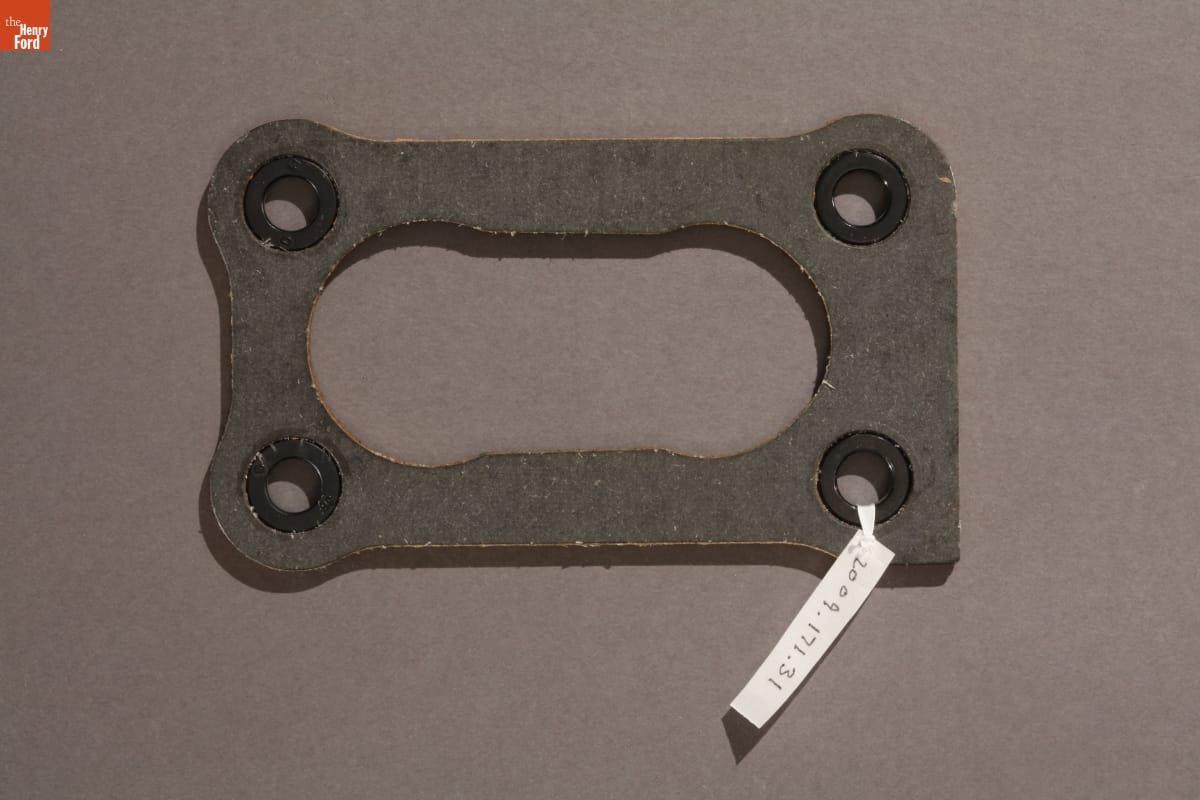
- Carburetor Gasket, 1978-1982 - Bobby Unser used this carburetor gasket on his flow bench to help test race car engine parts. A flow bench is typically used to test the airflow through engine parts such as cylinder heads, air filters and carburetors. Testing led to better designs and engine performance -- and better race results.
- 1978-1982
- Collections - Artifact
Carburetor Gasket, 1978-1982
Bobby Unser used this carburetor gasket on his flow bench to help test race car engine parts. A flow bench is typically used to test the airflow through engine parts such as cylinder heads, air filters and carburetors. Testing led to better designs and engine performance -- and better race results.
- Drawing, "Carburetor Cap Jet Body," Ford Model A, June 14, 1928 - The Ford Motor Company created over a million parts drawings from 1903 to 1957. Many of these drawings specify engineering requirements for the components of Ford-made vehicles--including automobiles, trucks, tractors, military vehicles and Tri-motor airplanes. Others document assembly components, stages of casting and forging, or experimental designs. Beginning in the 1940s, Ford transferred the drawings to microfilm.
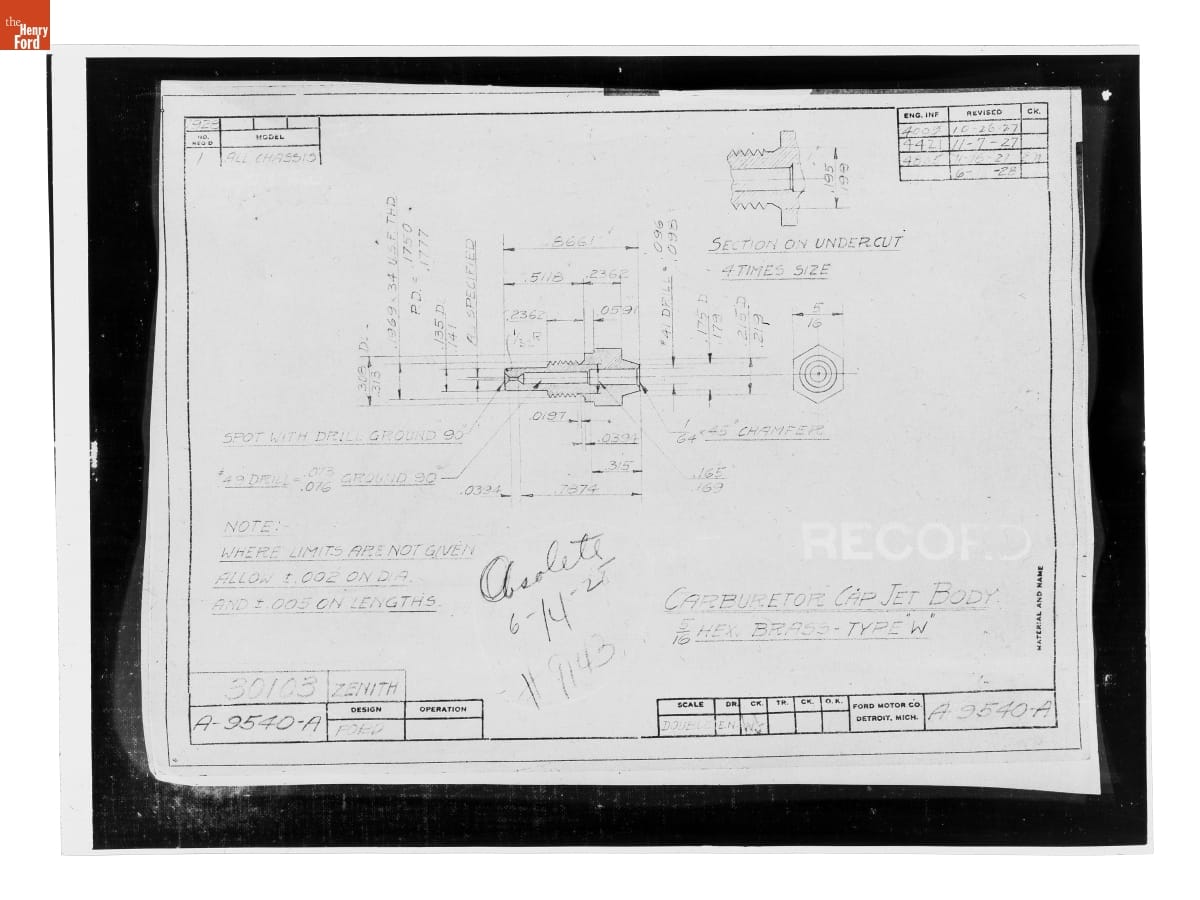
- June 14, 1928
- Collections - Artifact
Drawing, "Carburetor Cap Jet Body," Ford Model A, June 14, 1928
The Ford Motor Company created over a million parts drawings from 1903 to 1957. Many of these drawings specify engineering requirements for the components of Ford-made vehicles--including automobiles, trucks, tractors, military vehicles and Tri-motor airplanes. Others document assembly components, stages of casting and forging, or experimental designs. Beginning in the 1940s, Ford transferred the drawings to microfilm.
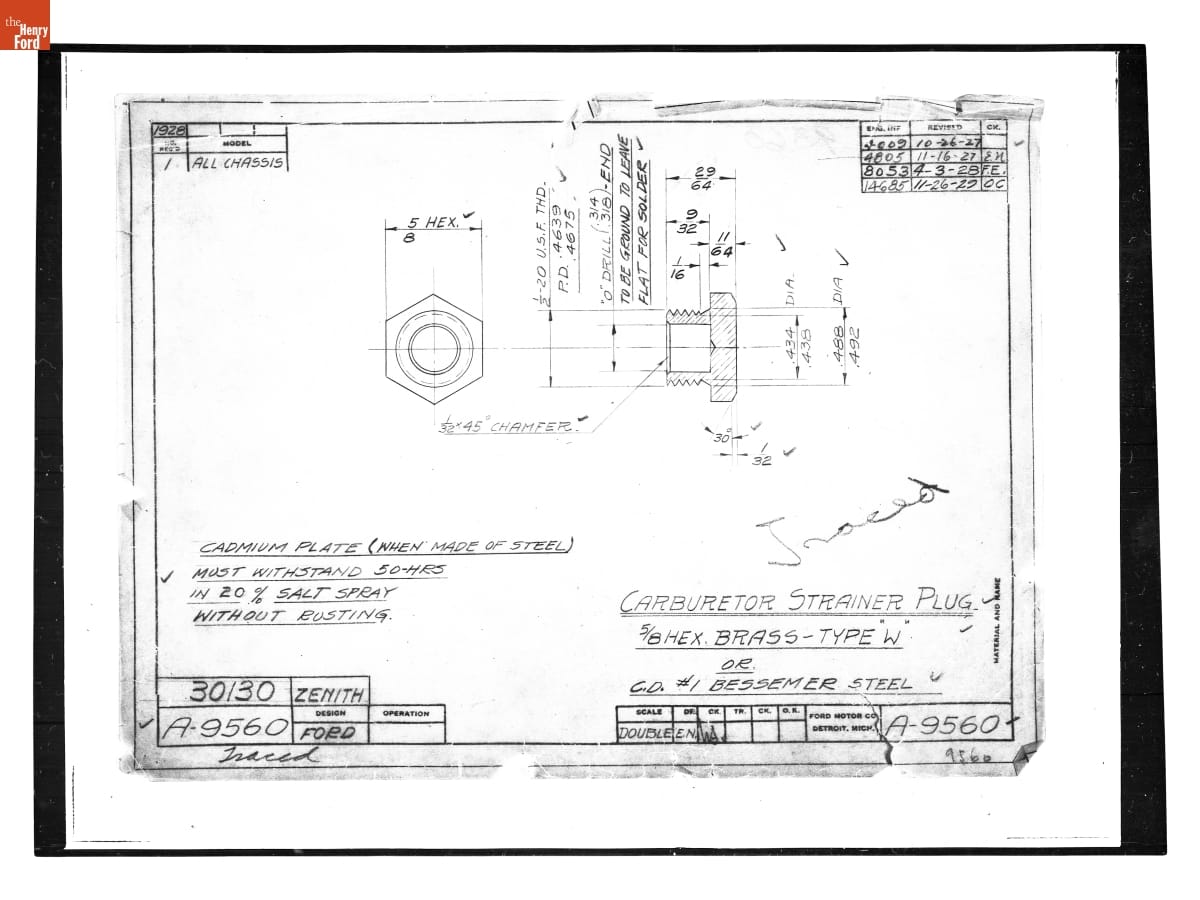
- Drawing, "Carburetor Strainer Plug," Ford Model A, November 26, 1929 - The Ford Motor Company created over a million parts drawings from 1903 to 1957. Many of these drawings specify engineering requirements for the components of Ford-made vehicles--including automobiles, trucks, tractors, military vehicles and Tri-motor airplanes. Others document assembly components, stages of casting and forging, or experimental designs. Beginning in the 1940s, Ford transferred the drawings to microfilm.
- November 26, 1929
- Collections - Artifact
Drawing, "Carburetor Strainer Plug," Ford Model A, November 26, 1929
The Ford Motor Company created over a million parts drawings from 1903 to 1957. Many of these drawings specify engineering requirements for the components of Ford-made vehicles--including automobiles, trucks, tractors, military vehicles and Tri-motor airplanes. Others document assembly components, stages of casting and forging, or experimental designs. Beginning in the 1940s, Ford transferred the drawings to microfilm.
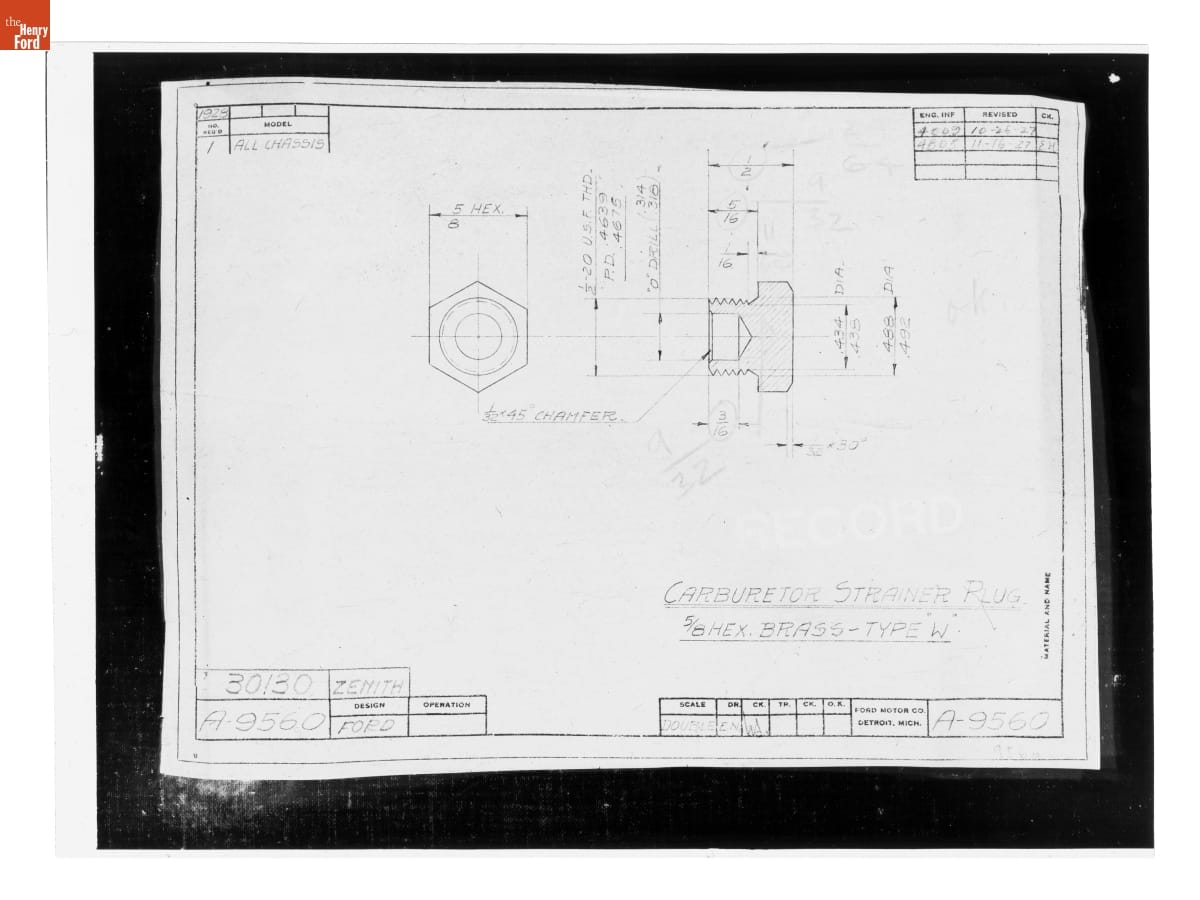
- Drawing, "Carburetor Strainer Plug," Ford Model A, November 16, 1927 - The Ford Motor Company created over a million parts drawings from 1903 to 1957. Many of these drawings specify engineering requirements for the components of Ford-made vehicles--including automobiles, trucks, tractors, military vehicles and Tri-motor airplanes. Others document assembly components, stages of casting and forging, or experimental designs. Beginning in the 1940s, Ford transferred the drawings to microfilm.
- November 16, 1927
- Collections - Artifact
Drawing, "Carburetor Strainer Plug," Ford Model A, November 16, 1927
The Ford Motor Company created over a million parts drawings from 1903 to 1957. Many of these drawings specify engineering requirements for the components of Ford-made vehicles--including automobiles, trucks, tractors, military vehicles and Tri-motor airplanes. Others document assembly components, stages of casting and forging, or experimental designs. Beginning in the 1940s, Ford transferred the drawings to microfilm.