
Search
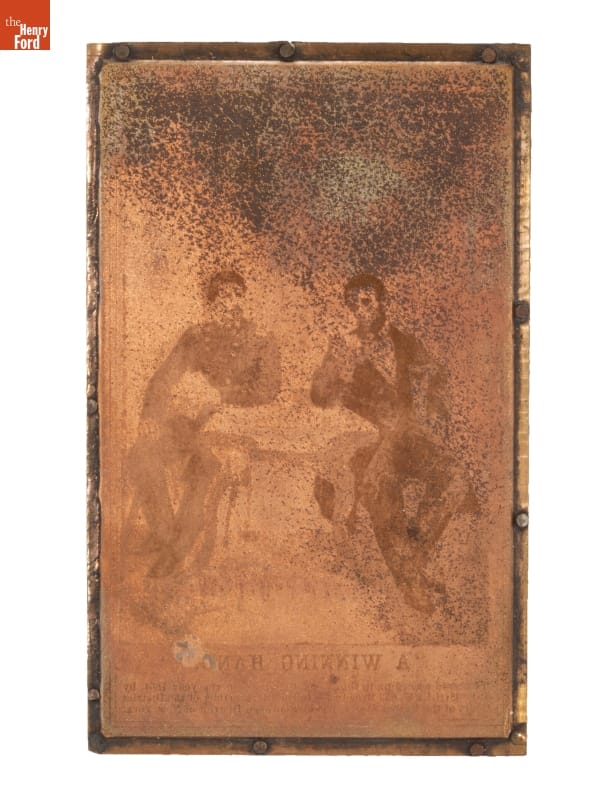
- Printing Block, "The Winning Hand," 1864 - Thomas Irwin Starr (1903-1965) had a lifelong interest in President Abraham Lincoln. He began collecting Lincoln-related materials at an auction in 1929. Starr, editorial director for publications at Michigan Bell Telephone Company, amassed a collection of Lincolniana and wrote several books and articles about our 16th President. This printing block reproduces an 1864 political cartoon that shows Democratic Presidential candidate General George McClellan supposedly holding "The Winning Hand."
- 1864
- Collections - Artifact
Printing Block, "The Winning Hand," 1864
Thomas Irwin Starr (1903-1965) had a lifelong interest in President Abraham Lincoln. He began collecting Lincoln-related materials at an auction in 1929. Starr, editorial director for publications at Michigan Bell Telephone Company, amassed a collection of Lincolniana and wrote several books and articles about our 16th President. This printing block reproduces an 1864 political cartoon that shows Democratic Presidential candidate General George McClellan supposedly holding "The Winning Hand."
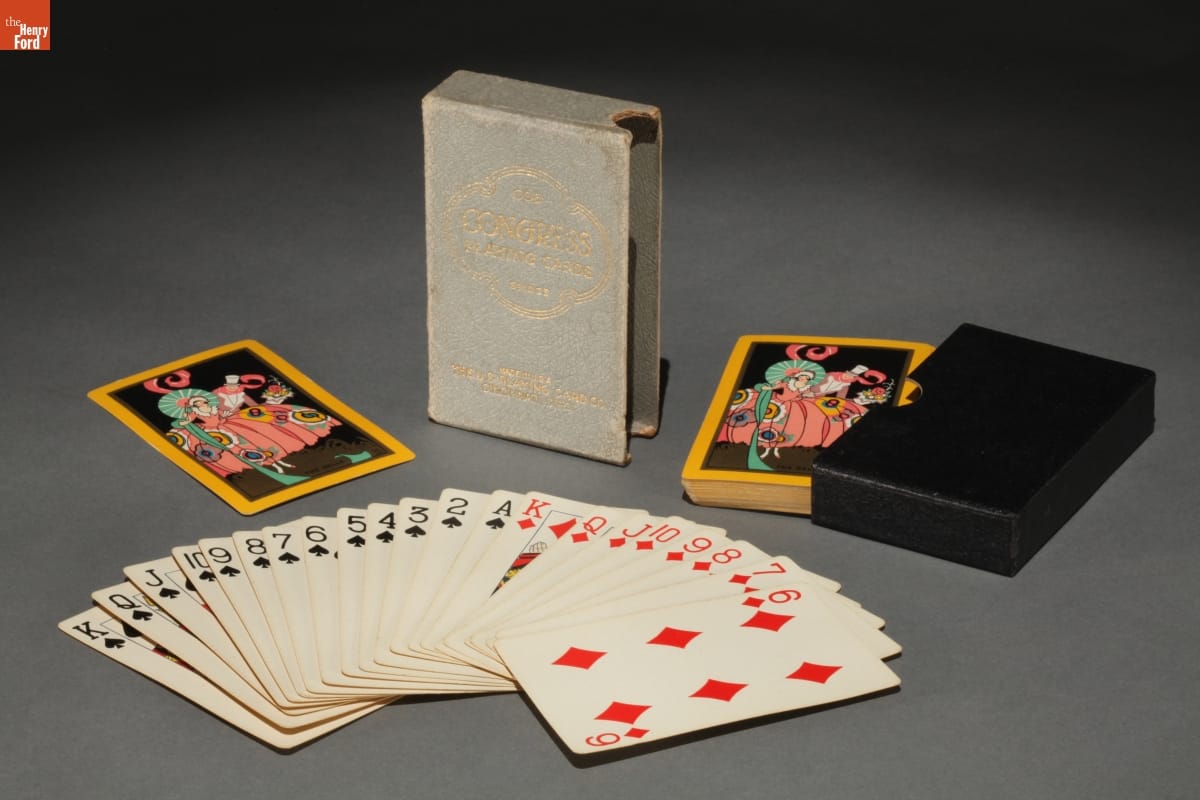
- Congress "The Belle" Playing Cards, 1928 - The U.S. Playing Card Company produced a number of decorative decks of cards for playing bridge or other card games in the 1920s and 30s. Bridge had recently grown in popularity and bridge parties provided a social outlet for many in the middle-class.
- 1928
- Collections - Artifact
Congress "The Belle" Playing Cards, 1928
The U.S. Playing Card Company produced a number of decorative decks of cards for playing bridge or other card games in the 1920s and 30s. Bridge had recently grown in popularity and bridge parties provided a social outlet for many in the middle-class.
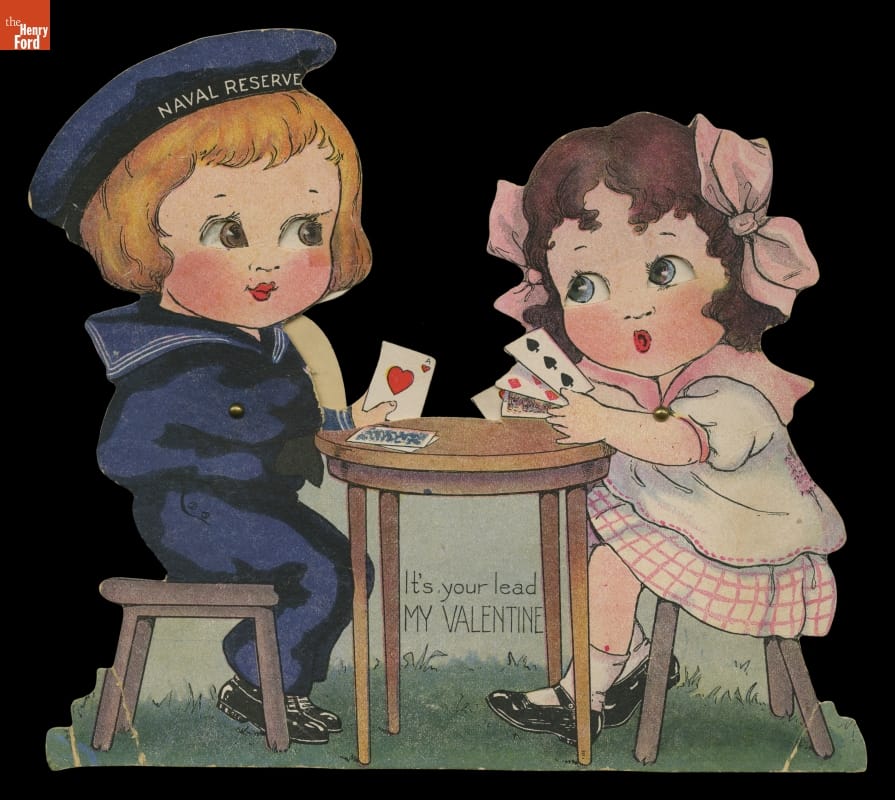
- Valentine Card, "It's Your Lead, My Valentine," circa 1925 - The custom of sending messages of affection on February 14 dates back to Roman times, when mid-February was a time to meet and court prospective mates. The earliest American valentines were labors of love, handmade by the sender. The spread of commercially produced valentines in the second half of the nineteenth century made sending and receiving Valentine's Day cards a more lighthearted activity.
- circa 1925
- Collections - Artifact
Valentine Card, "It's Your Lead, My Valentine," circa 1925
The custom of sending messages of affection on February 14 dates back to Roman times, when mid-February was a time to meet and court prospective mates. The earliest American valentines were labors of love, handmade by the sender. The spread of commercially produced valentines in the second half of the nineteenth century made sending and receiving Valentine's Day cards a more lighthearted activity.
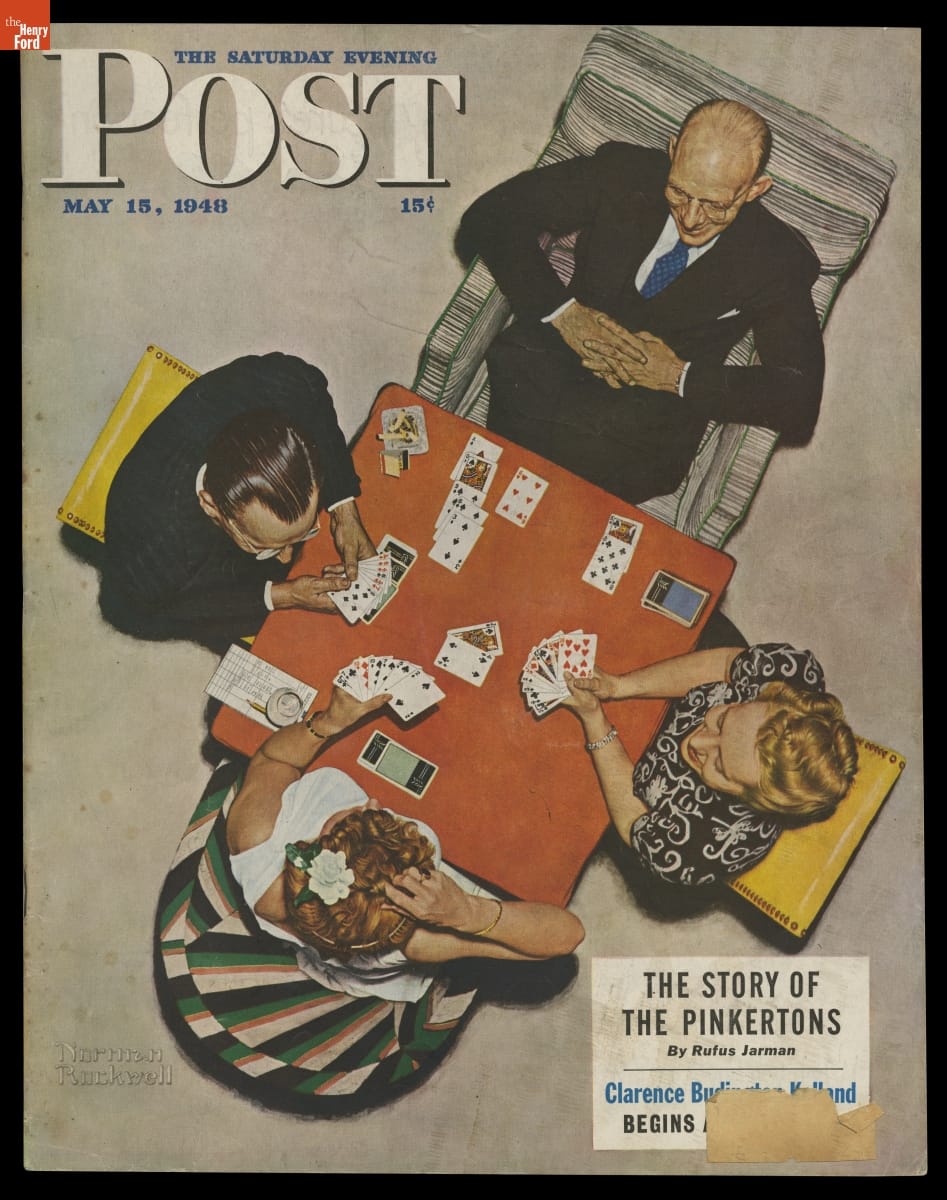
- "The Saturday Evening Post," May 15, 1948 - <em>The Saturday Evening Post</em>, first published in 1821 as a four-page weekly newspaper, became one of America's most popular weekly publications by the mid-1900s. The magazine contained news, commentaries, fiction, and general interest articles. But its most distinctive feature was its front cover illustrations by artists such as George Hughes, John Falter, J.C. Leyendecker, and Norman Rockwell.
- May 15, 1948
- Collections - Artifact
"The Saturday Evening Post," May 15, 1948
The Saturday Evening Post, first published in 1821 as a four-page weekly newspaper, became one of America's most popular weekly publications by the mid-1900s. The magazine contained news, commentaries, fiction, and general interest articles. But its most distinctive feature was its front cover illustrations by artists such as George Hughes, John Falter, J.C. Leyendecker, and Norman Rockwell.
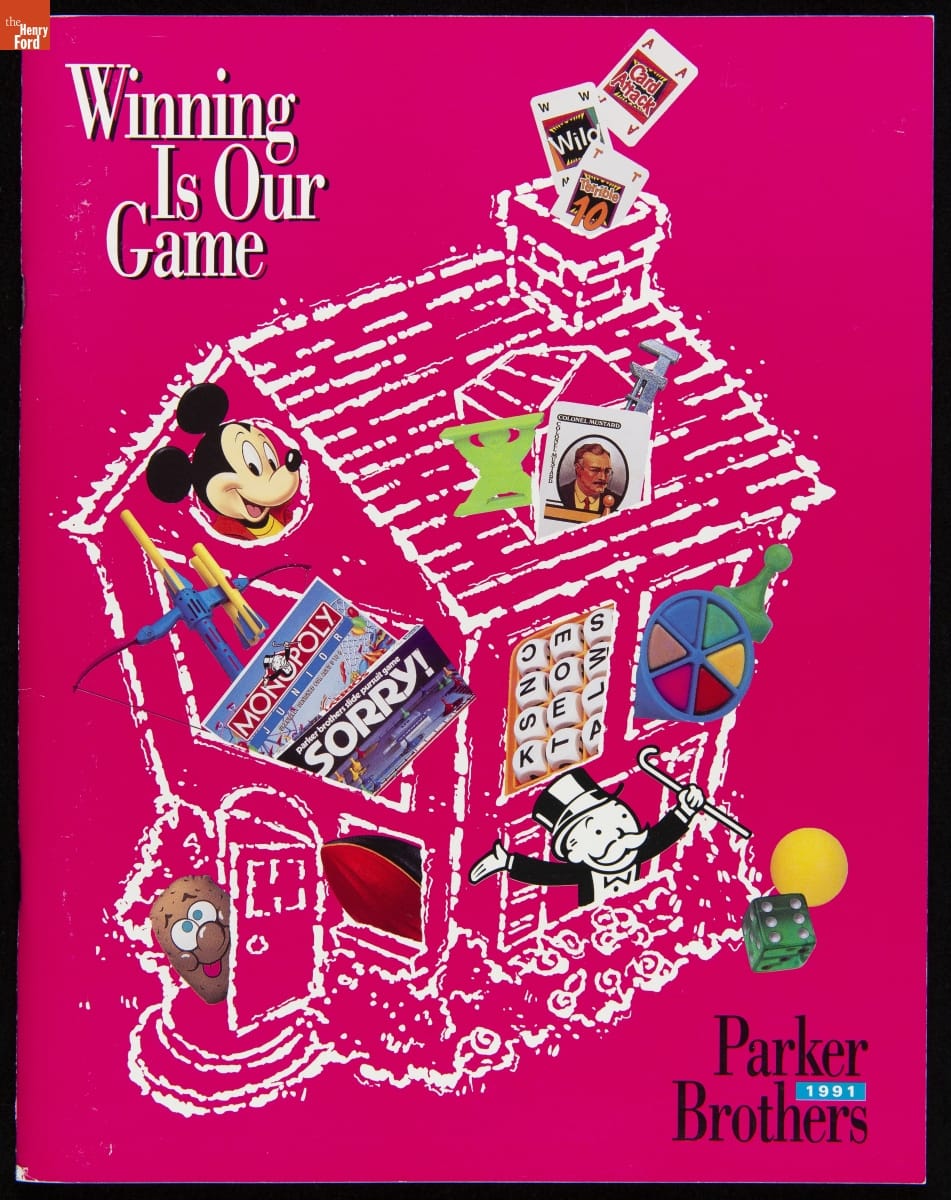
- Parker Brothers Trade Catalog, "Winning is Our Game," 1991 -
- 1991
- Collections - Artifact
Parker Brothers Trade Catalog, "Winning is Our Game," 1991
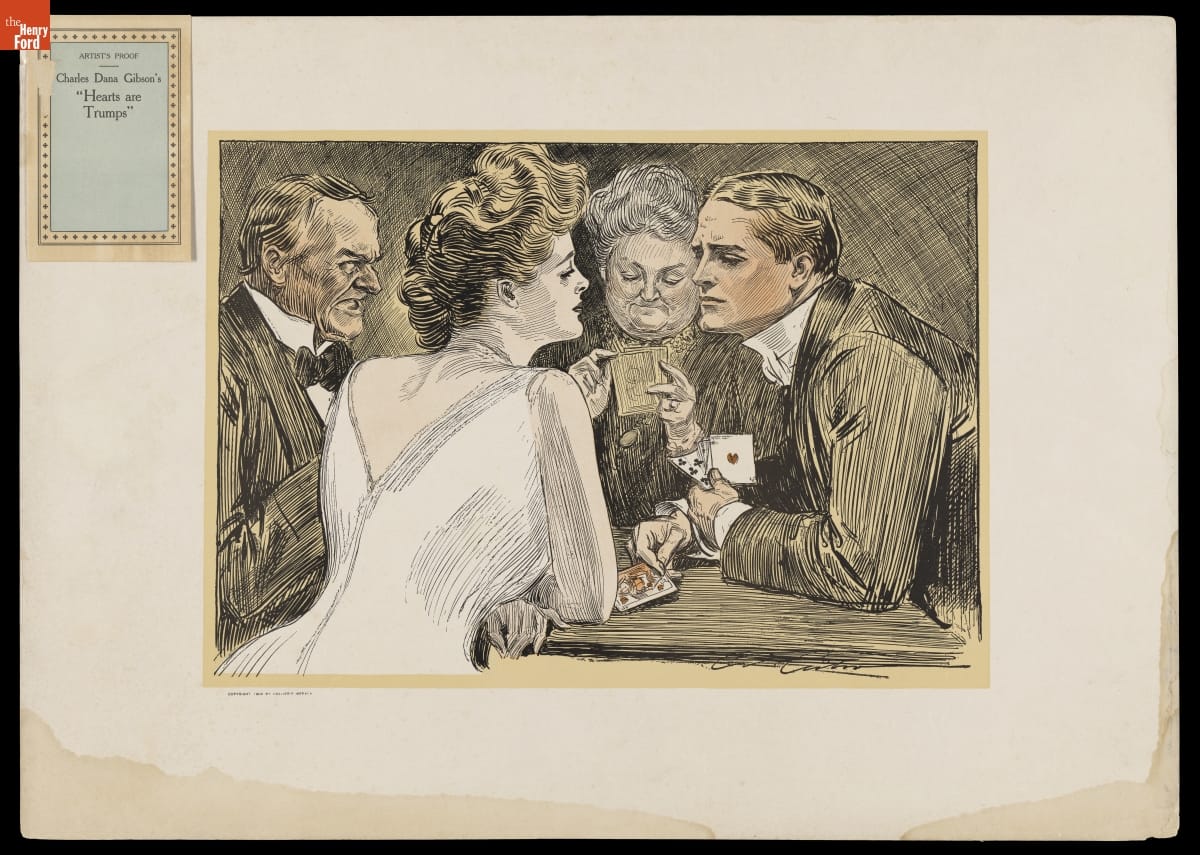
- Engraving, "Hearts are Trumps," 1903 - Charles Dana Gibson's illustrations of beautiful, independent young women reflected and helped define a new ideal of American femininity in the 1890s and early 1900s. These popular images, known collectively as "the Gibson Girl," became a cultural phenomenon referenced in fashion and entertainment. A powerful marketing tool, the widely imitated Gibson Girl proliferated in advertisements and on product packaging.
- 1903
- Collections - Artifact
Engraving, "Hearts are Trumps," 1903
Charles Dana Gibson's illustrations of beautiful, independent young women reflected and helped define a new ideal of American femininity in the 1890s and early 1900s. These popular images, known collectively as "the Gibson Girl," became a cultural phenomenon referenced in fashion and entertainment. A powerful marketing tool, the widely imitated Gibson Girl proliferated in advertisements and on product packaging.
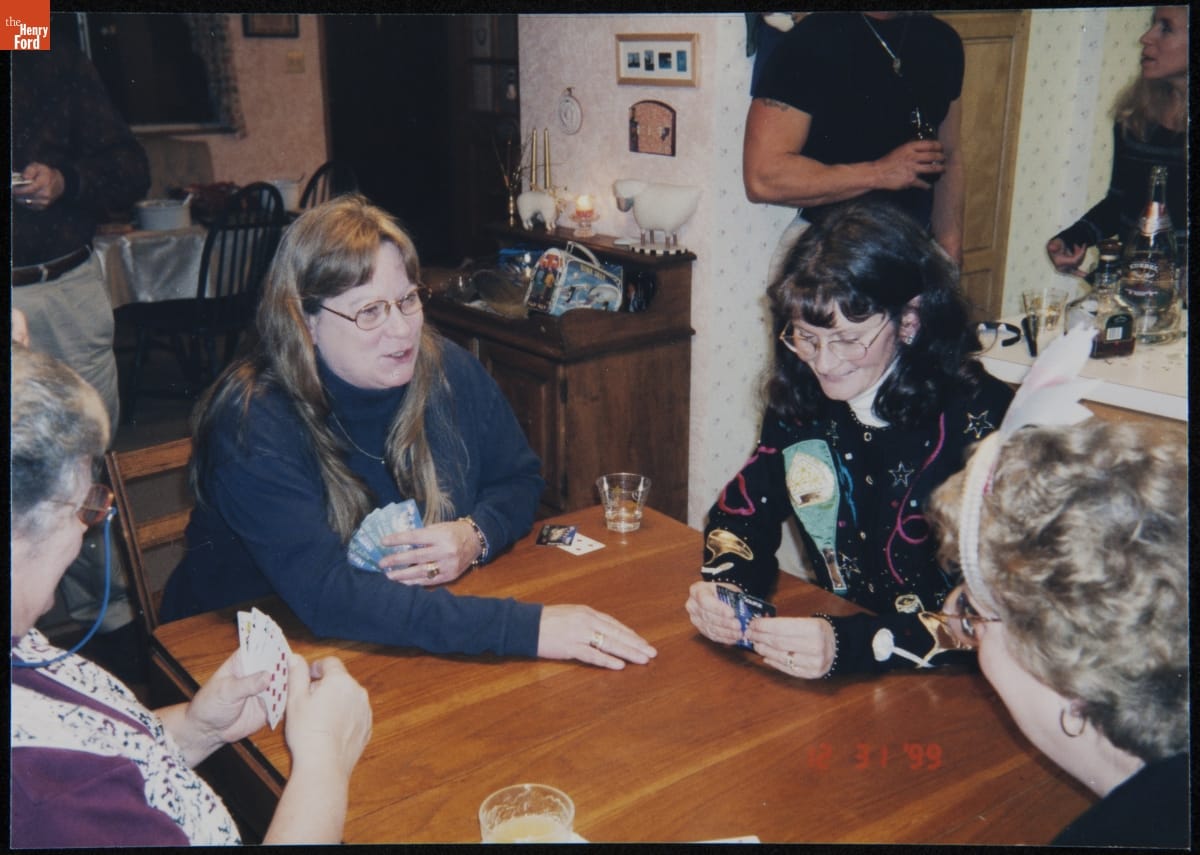
- Women Playing a Card Game at a New Year's Eve Party, December 31, 1999 -
- December 31, 1999
- Collections - Artifact
Women Playing a Card Game at a New Year's Eve Party, December 31, 1999
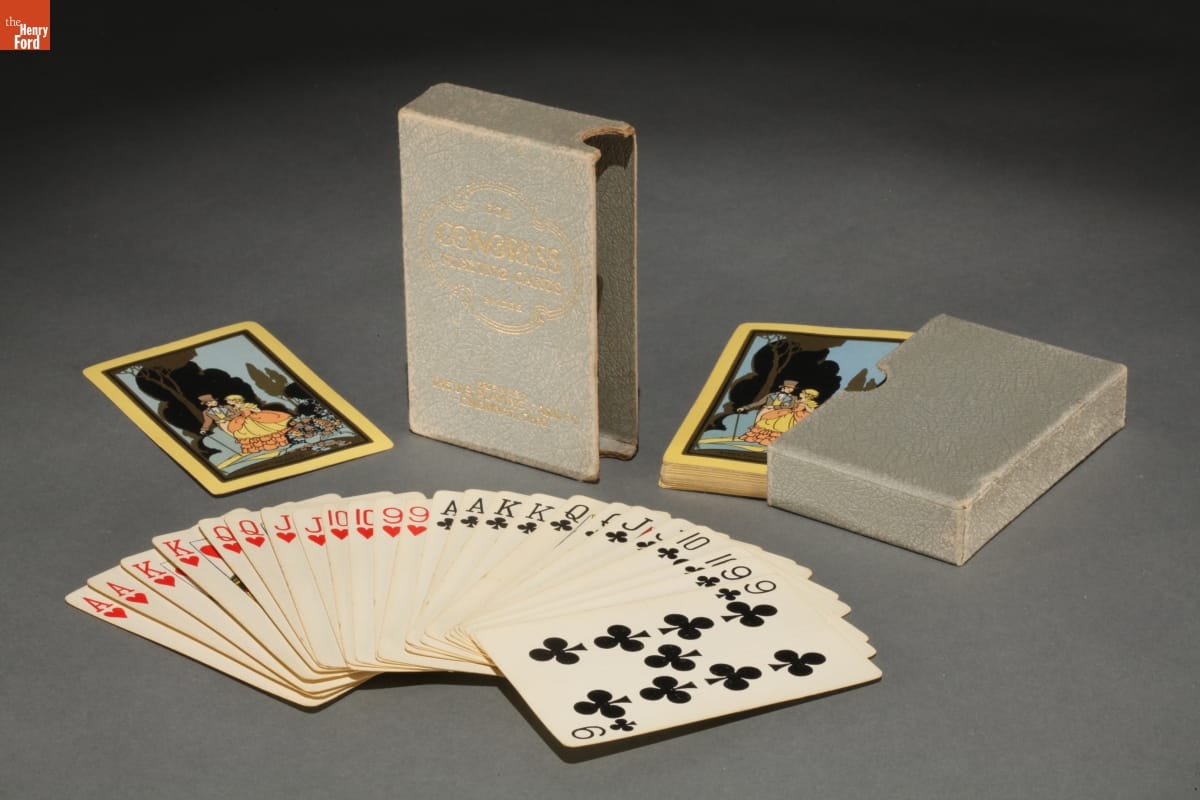
- Congress "Sweethearts" Playing Cards, 1928 - The U.S. Playing Card Company produced a number of decorative decks of cards for playing pinochle or other card games in the 1920s and 30s. Card parties provided a social outlet for many in the middle-class.
- 1928
- Collections - Artifact
Congress "Sweethearts" Playing Cards, 1928
The U.S. Playing Card Company produced a number of decorative decks of cards for playing pinochle or other card games in the 1920s and 30s. Card parties provided a social outlet for many in the middle-class.
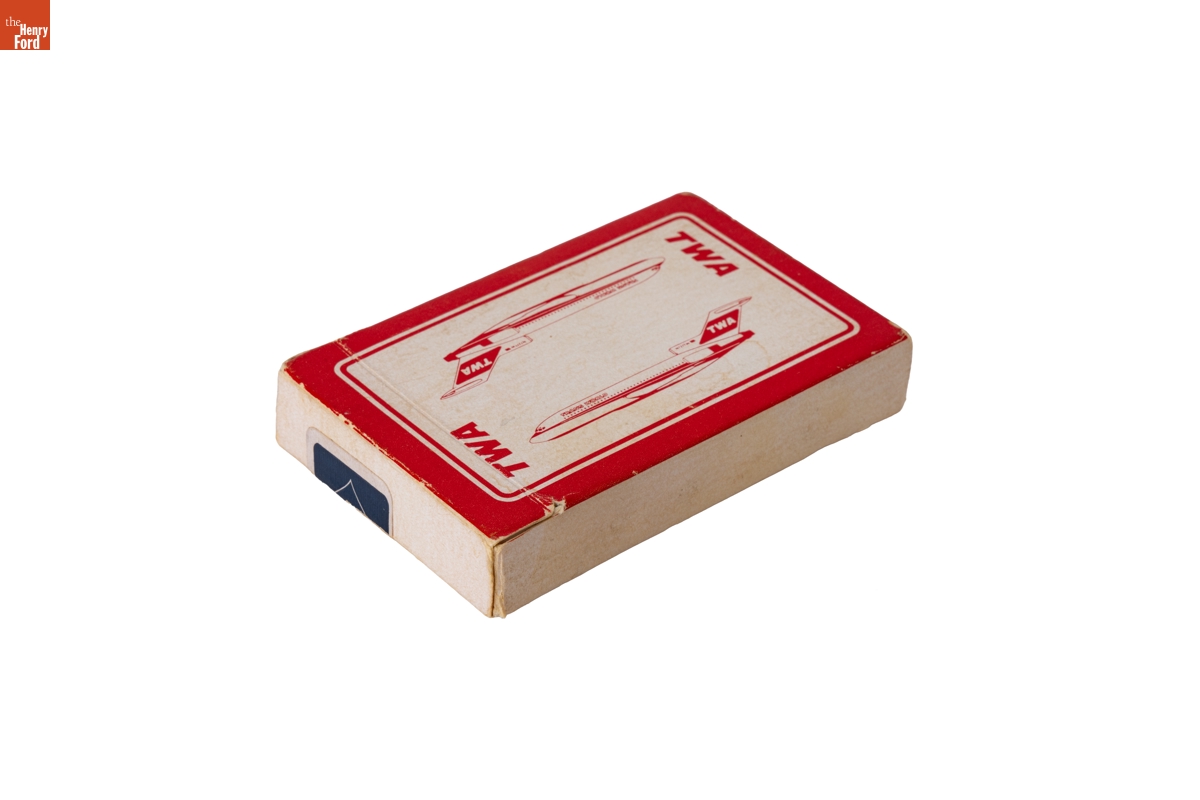
- TWA Playing Cards, 1975-1979 - Diane Beers joined TWA as a flight attendant in 1965 but left to marry Richard Hill a year later -- a time when many airlines employed only single women in that job. Beers Hill continued her interest in the airline industry and assembled an impressive collection of promotional items, models, toiletries, and advertisements from various air carriers.
- 1975-1979
- Collections - Artifact
TWA Playing Cards, 1975-1979
Diane Beers joined TWA as a flight attendant in 1965 but left to marry Richard Hill a year later -- a time when many airlines employed only single women in that job. Beers Hill continued her interest in the airline industry and assembled an impressive collection of promotional items, models, toiletries, and advertisements from various air carriers.
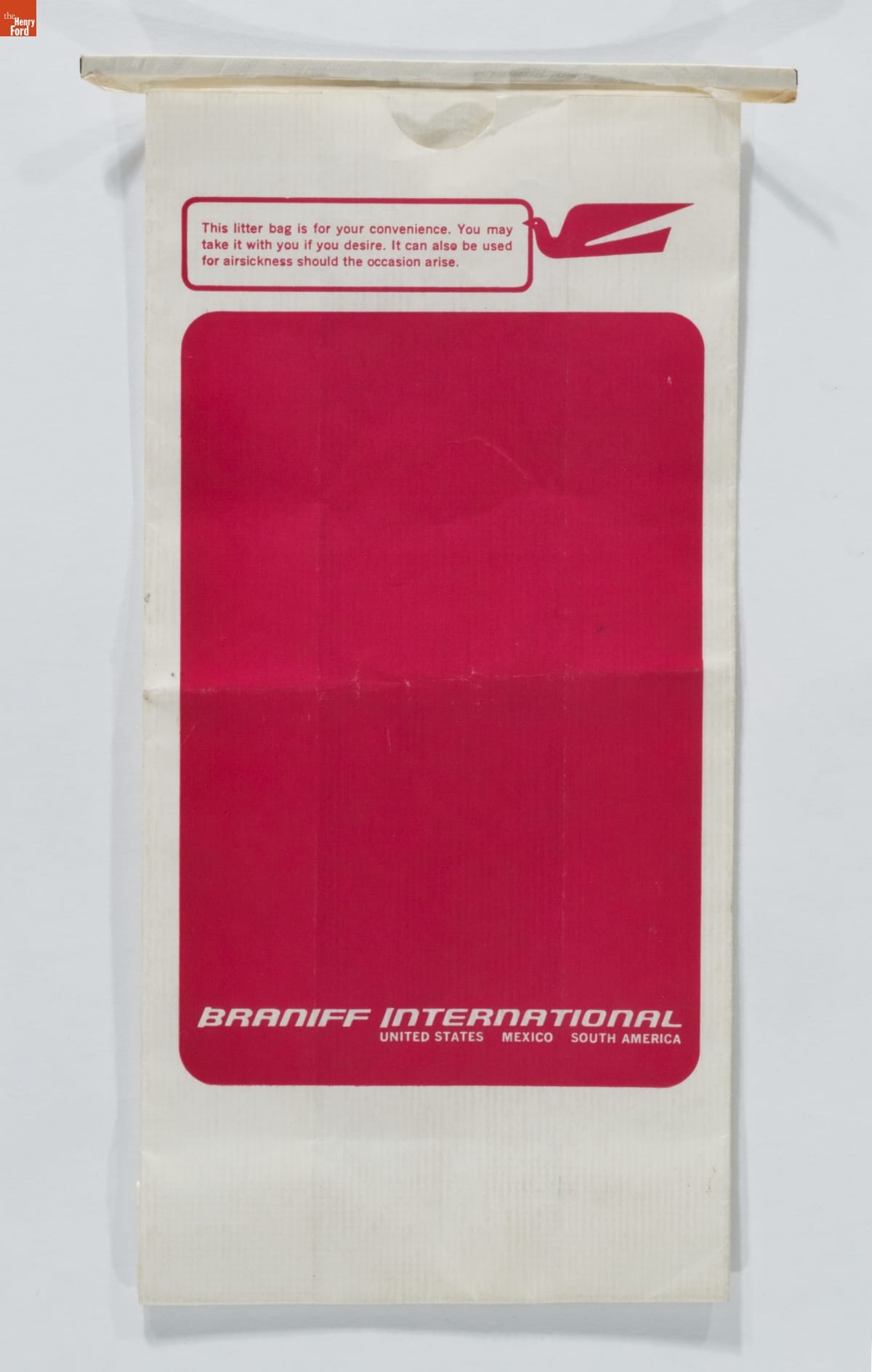
- Braniff International Airways Litter Bag, 1965-1975 - Braniff International Airways turned to architect-designer Alexander Girard when it refreshed its brand in 1965. Girard moved the airline away from its traditional color palette and toward bold hues like turquoise, orange, yellow, and blue. Girard's colors and themes spread throughout the company -- from the airplanes themselves, to ticket counters and waiting areas, to bar soaps and paper cups.
- 1965-1975
- Collections - Artifact
Braniff International Airways Litter Bag, 1965-1975
Braniff International Airways turned to architect-designer Alexander Girard when it refreshed its brand in 1965. Girard moved the airline away from its traditional color palette and toward bold hues like turquoise, orange, yellow, and blue. Girard's colors and themes spread throughout the company -- from the airplanes themselves, to ticket counters and waiting areas, to bar soaps and paper cups.