
Search
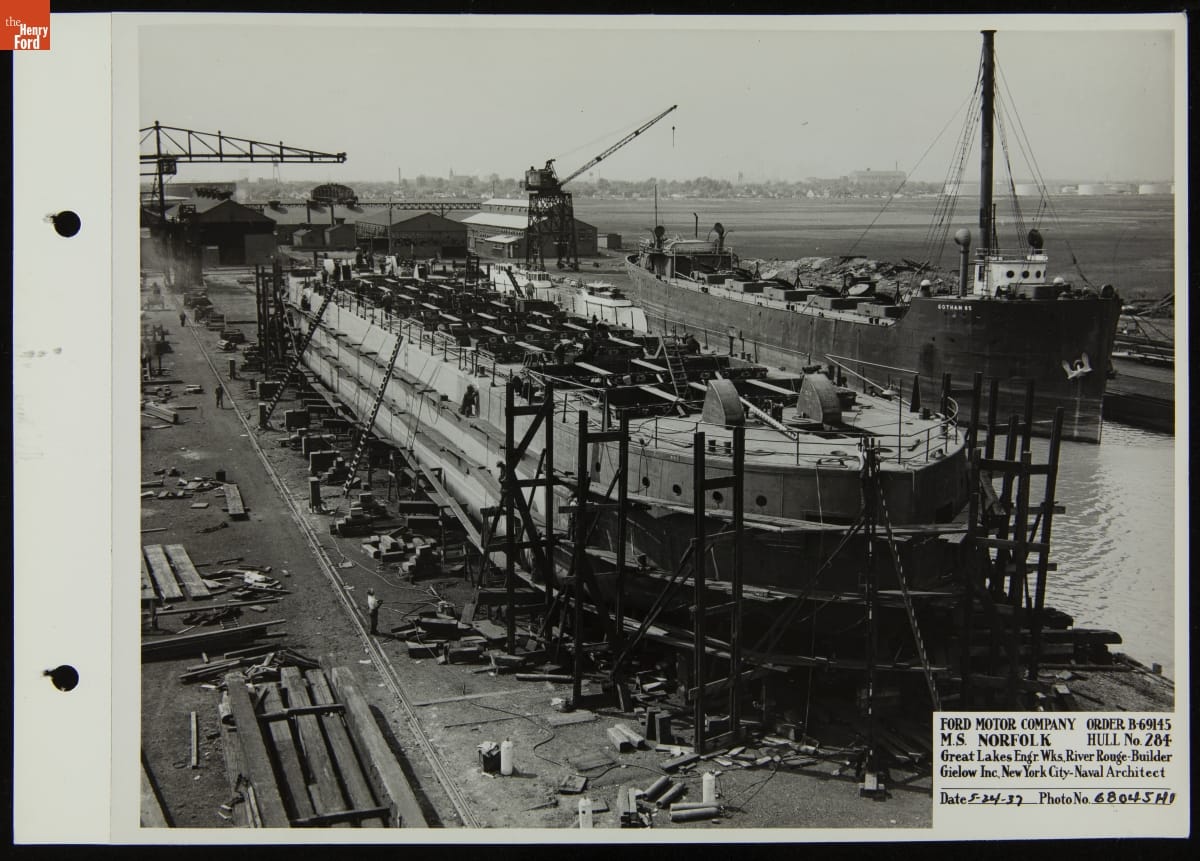
- Ford Freighter "Norfolk" under Construction at Great Lakes Engineering Works, May 24, 1937 - Ford Motor Company built four canal boats in the 1930s to transport finished auto parts between Ford's production plants on the East Coast and its River Rouge complex in Michigan. The freighters were designed to travel on the New York State Barge Canal. The <em>Norfolk</em>, named for the location of one of the Ford's East Coast plants, began service in 1937.
- April 30, 1937
- Collections - Artifact
Ford Freighter "Norfolk" under Construction at Great Lakes Engineering Works, May 24, 1937
Ford Motor Company built four canal boats in the 1930s to transport finished auto parts between Ford's production plants on the East Coast and its River Rouge complex in Michigan. The freighters were designed to travel on the New York State Barge Canal. The Norfolk, named for the location of one of the Ford's East Coast plants, began service in 1937.
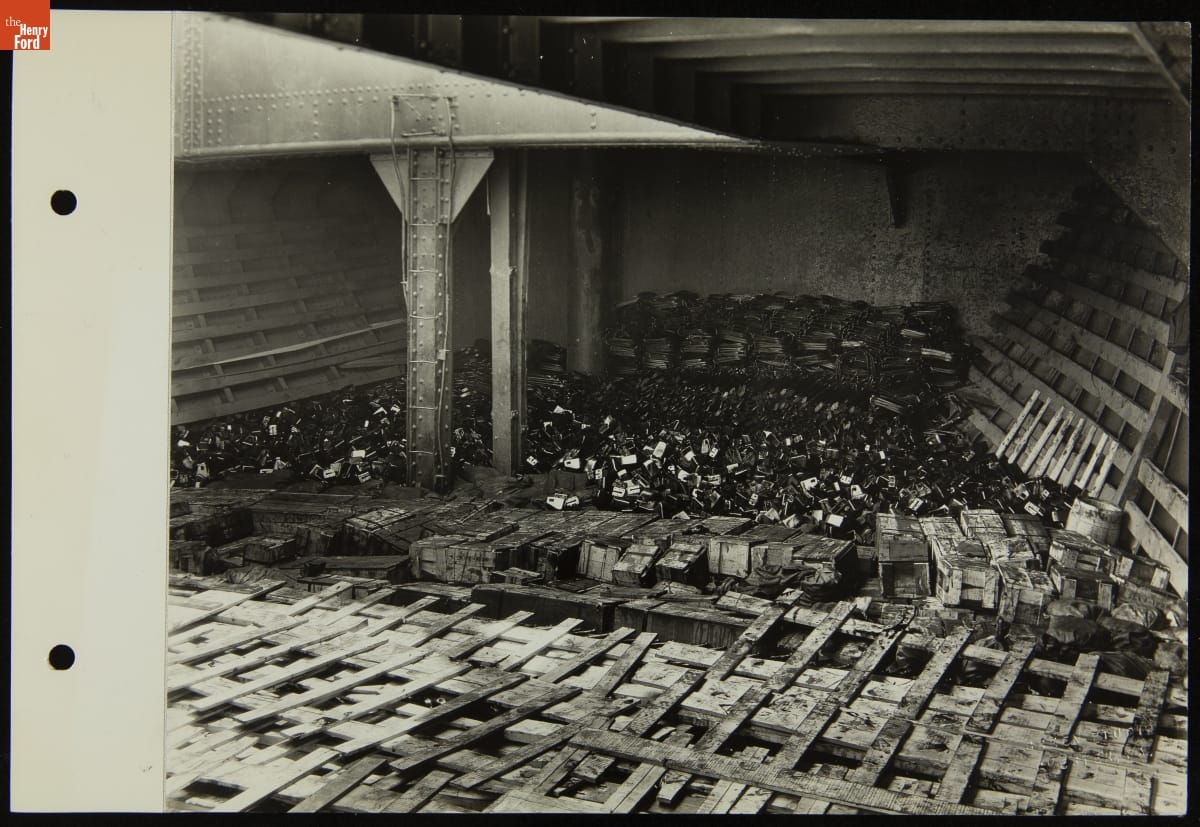
- Hull of Freighter "Onondaga" Loaded with Automobile Parts, circa 1929 - In the 1920s, Henry Ford assembled a fleet of cargo carriers, ocean-going ships, barges, tugboats and canal boats to bring raw materials to or take finished products from his new manufacturing complex on the Rouge River. The <em>Onondaga</em>, a small ocean-going freighter acquired in 1923, carried automobile parts to Ford plants located in cities along America's seaboard and around the world.
- circa 1929
- Collections - Artifact
Hull of Freighter "Onondaga" Loaded with Automobile Parts, circa 1929
In the 1920s, Henry Ford assembled a fleet of cargo carriers, ocean-going ships, barges, tugboats and canal boats to bring raw materials to or take finished products from his new manufacturing complex on the Rouge River. The Onondaga, a small ocean-going freighter acquired in 1923, carried automobile parts to Ford plants located in cities along America's seaboard and around the world.
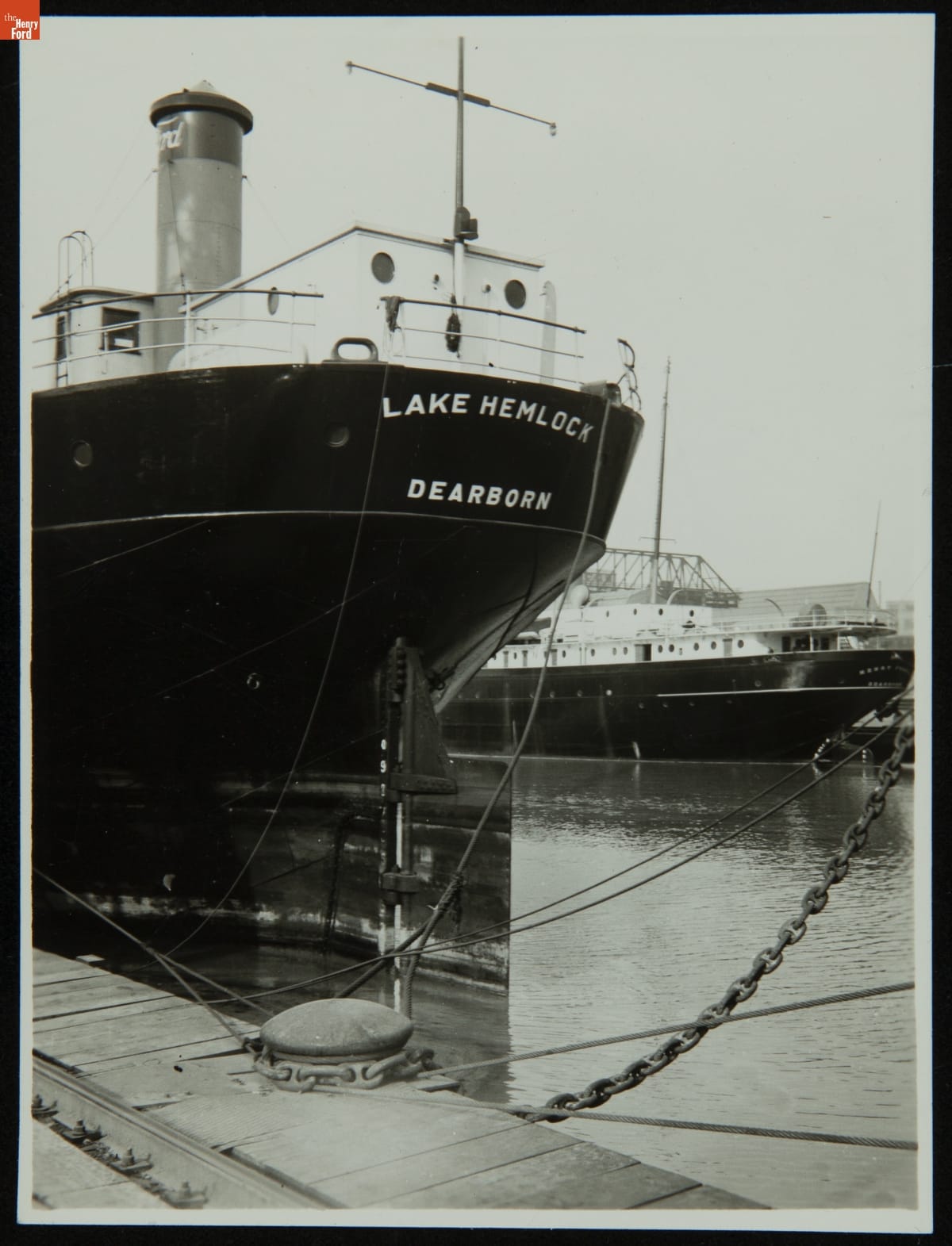
- Ford Barge "Lake Hemlock" at the Rouge Plant, Dearborn, Michigan, February 10, 1938 - Henry Ford purchased 199 surplus World War I merchant ships from the United States government in 1925. Most of these ships were scrapped and the materials were used at Ford's new automobile manufacturing complex on the Rouge River. But 13 were converted into barges, like the <em>Lake Hemlock</em>. These barges transported products and material as part of Ford's operation.
- February 10, 1938
- Collections - Artifact
Ford Barge "Lake Hemlock" at the Rouge Plant, Dearborn, Michigan, February 10, 1938
Henry Ford purchased 199 surplus World War I merchant ships from the United States government in 1925. Most of these ships were scrapped and the materials were used at Ford's new automobile manufacturing complex on the Rouge River. But 13 were converted into barges, like the Lake Hemlock. These barges transported products and material as part of Ford's operation.
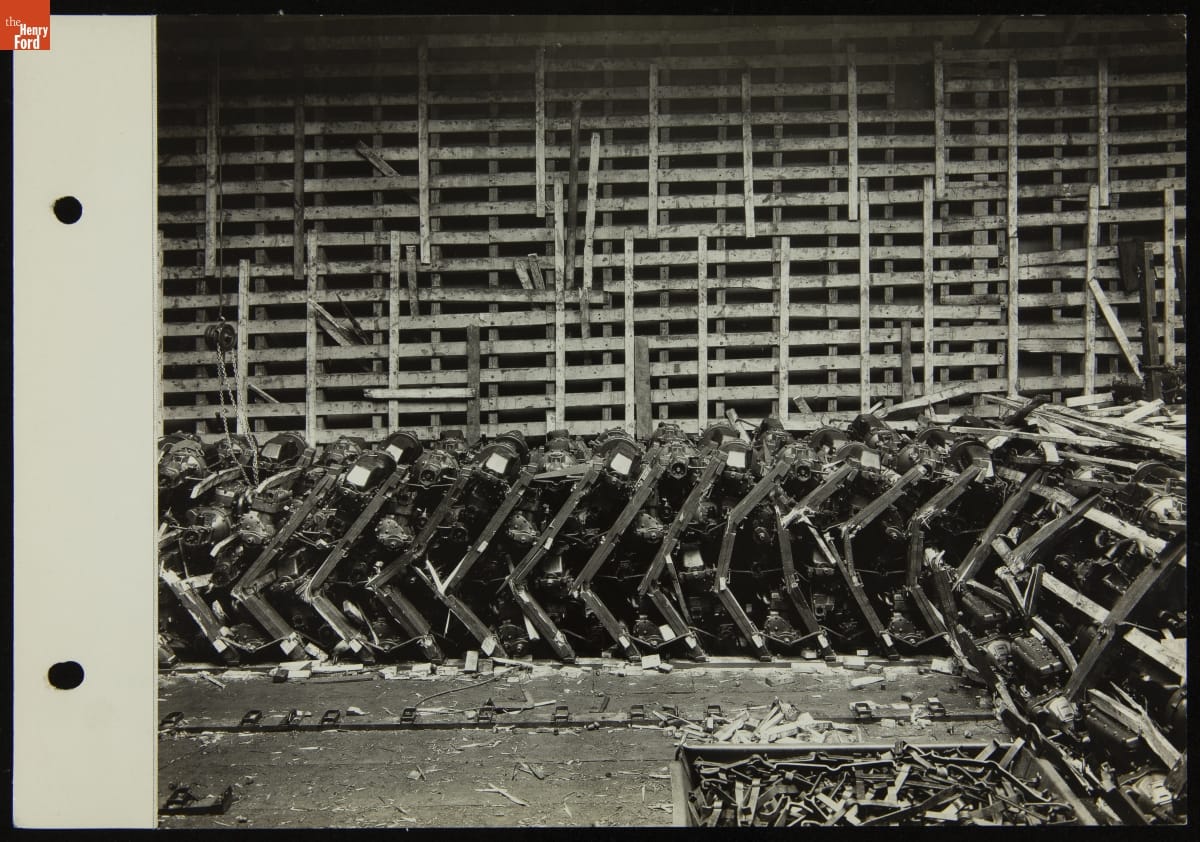
- Hull of Freighter "Oneida" Loaded with Automobile Parts, circa 1924 - In the 1920s, Henry Ford assembled a fleet of cargo carriers, ocean-going ships, barges, tugboats and canal boats to bring raw materials to or take finished products from his new manufacturing complex on the Rouge River. The <em>Oneida</em>, a small ocean-going freighter acquired in 1923, carried automobile parts to Ford plants along America's Atlantic and Gulf coasts, and to foreign plants in South America and Europe.
- circa 1924
- Collections - Artifact
Hull of Freighter "Oneida" Loaded with Automobile Parts, circa 1924
In the 1920s, Henry Ford assembled a fleet of cargo carriers, ocean-going ships, barges, tugboats and canal boats to bring raw materials to or take finished products from his new manufacturing complex on the Rouge River. The Oneida, a small ocean-going freighter acquired in 1923, carried automobile parts to Ford plants along America's Atlantic and Gulf coasts, and to foreign plants in South America and Europe.
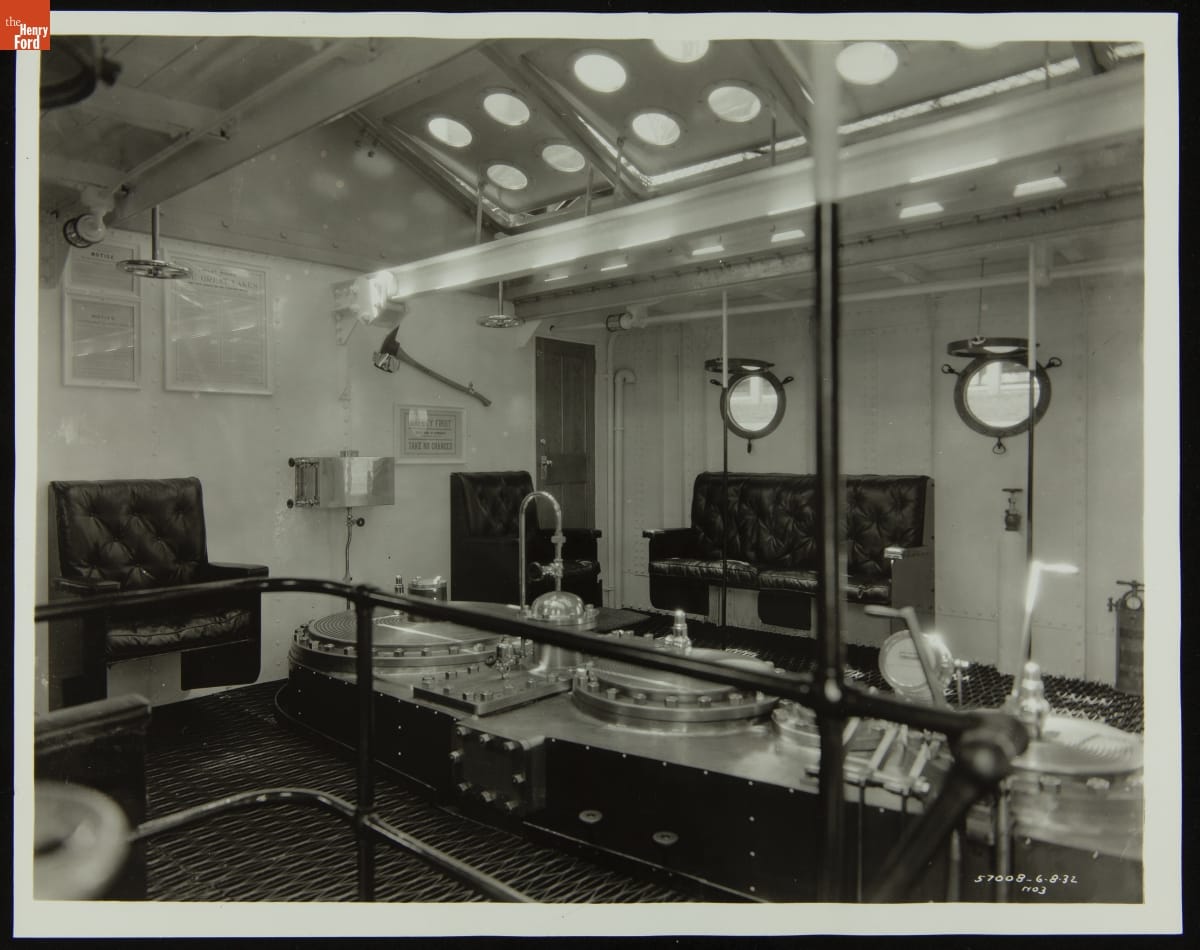
- Interior of Ford Tugboat "Barlow," June 8, 1932 - Henry Ford purchased 199 surplus World War I merchant ships from the United States government in 1925. Many of these ships were scrapped at Ford's River Rouge Plant. The rest operated as part of a fleet of vessels transporting products and materials as part of Ford's operation. Tugboats, like the <em>Barlow</em>, initially guided ships to Ford's scrapping facilities or towed barges around the Great Lakes.
- June 08, 1932
- Collections - Artifact
Interior of Ford Tugboat "Barlow," June 8, 1932
Henry Ford purchased 199 surplus World War I merchant ships from the United States government in 1925. Many of these ships were scrapped at Ford's River Rouge Plant. The rest operated as part of a fleet of vessels transporting products and materials as part of Ford's operation. Tugboats, like the Barlow, initially guided ships to Ford's scrapping facilities or towed barges around the Great Lakes.
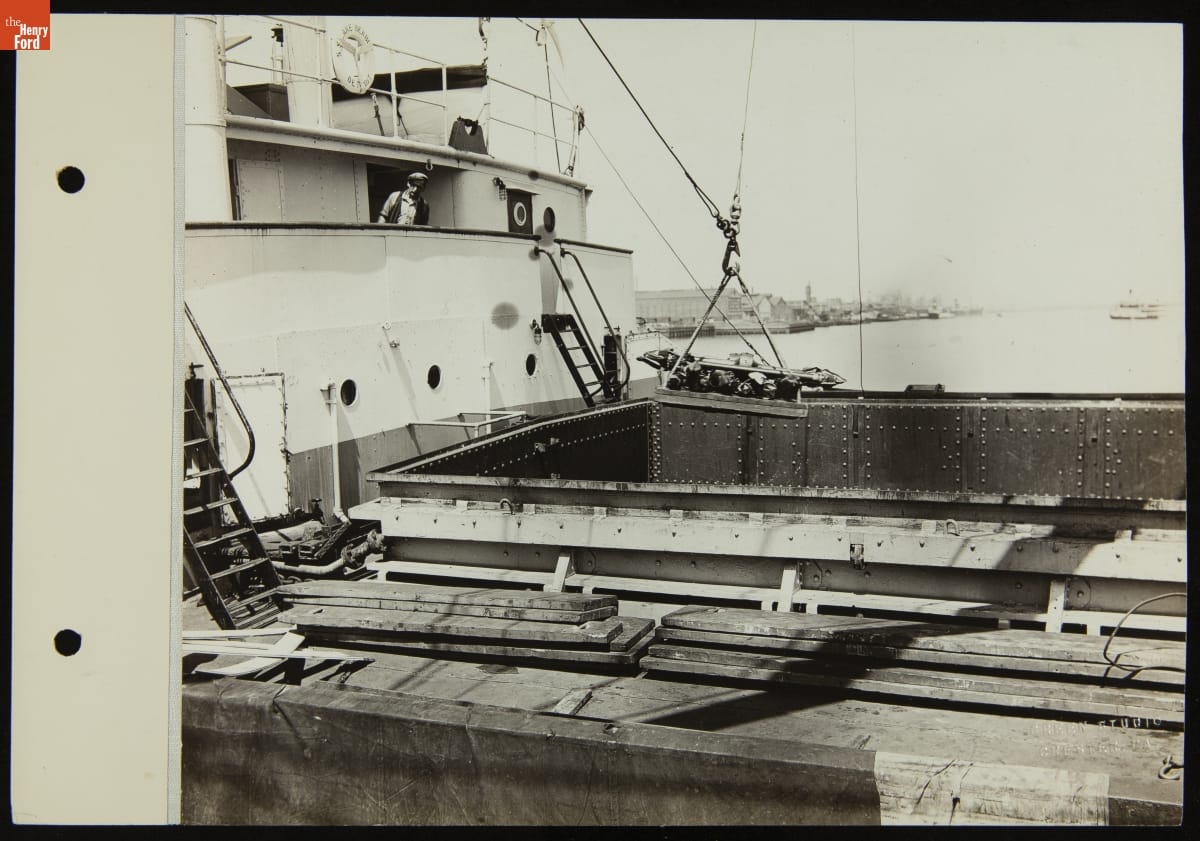
- Ford Freighter "Lake Benbow" Loaded with Cargo in Chester, Pennsylvania, circa 1929 - Henry Ford purchased 199 surplus World War I merchant ships from the United States government in 1925. Most of these ships were scrapped. But a few, like the <em>Lake Benbow</em>, were refitted into ocean-going freighters. The freighters transported parts and supplies between Ford facilities located in cities along the American seaboard and to the Ford plant in Manchester, England.
- circa 1929
- Collections - Artifact
Ford Freighter "Lake Benbow" Loaded with Cargo in Chester, Pennsylvania, circa 1929
Henry Ford purchased 199 surplus World War I merchant ships from the United States government in 1925. Most of these ships were scrapped. But a few, like the Lake Benbow, were refitted into ocean-going freighters. The freighters transported parts and supplies between Ford facilities located in cities along the American seaboard and to the Ford plant in Manchester, England.
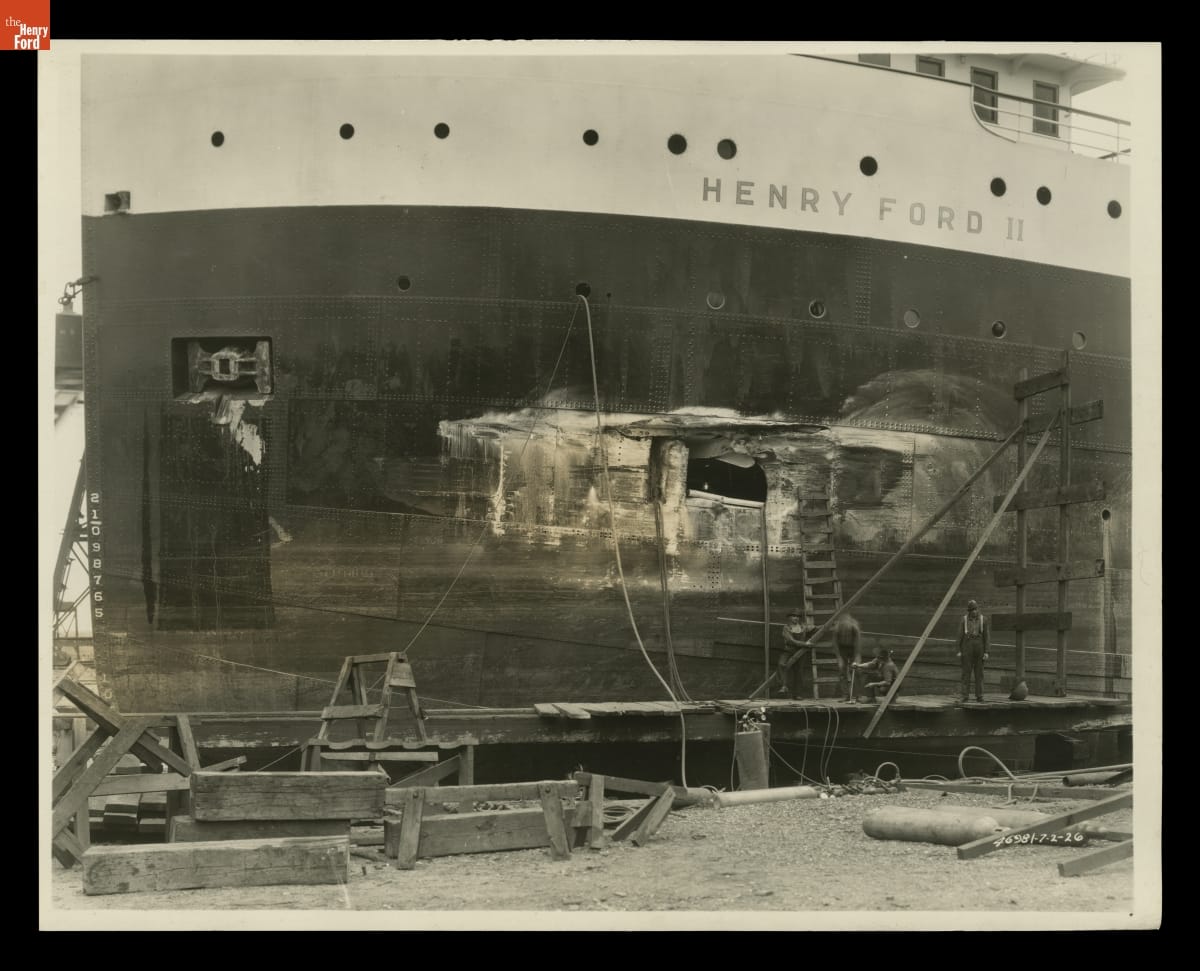
- Repairing Damage to Ford Motor Company Ship "Henry Ford II" at the Ford Rouge Plant, July 1926 -
- July 02, 1926
- Collections - Artifact
Repairing Damage to Ford Motor Company Ship "Henry Ford II" at the Ford Rouge Plant, July 1926
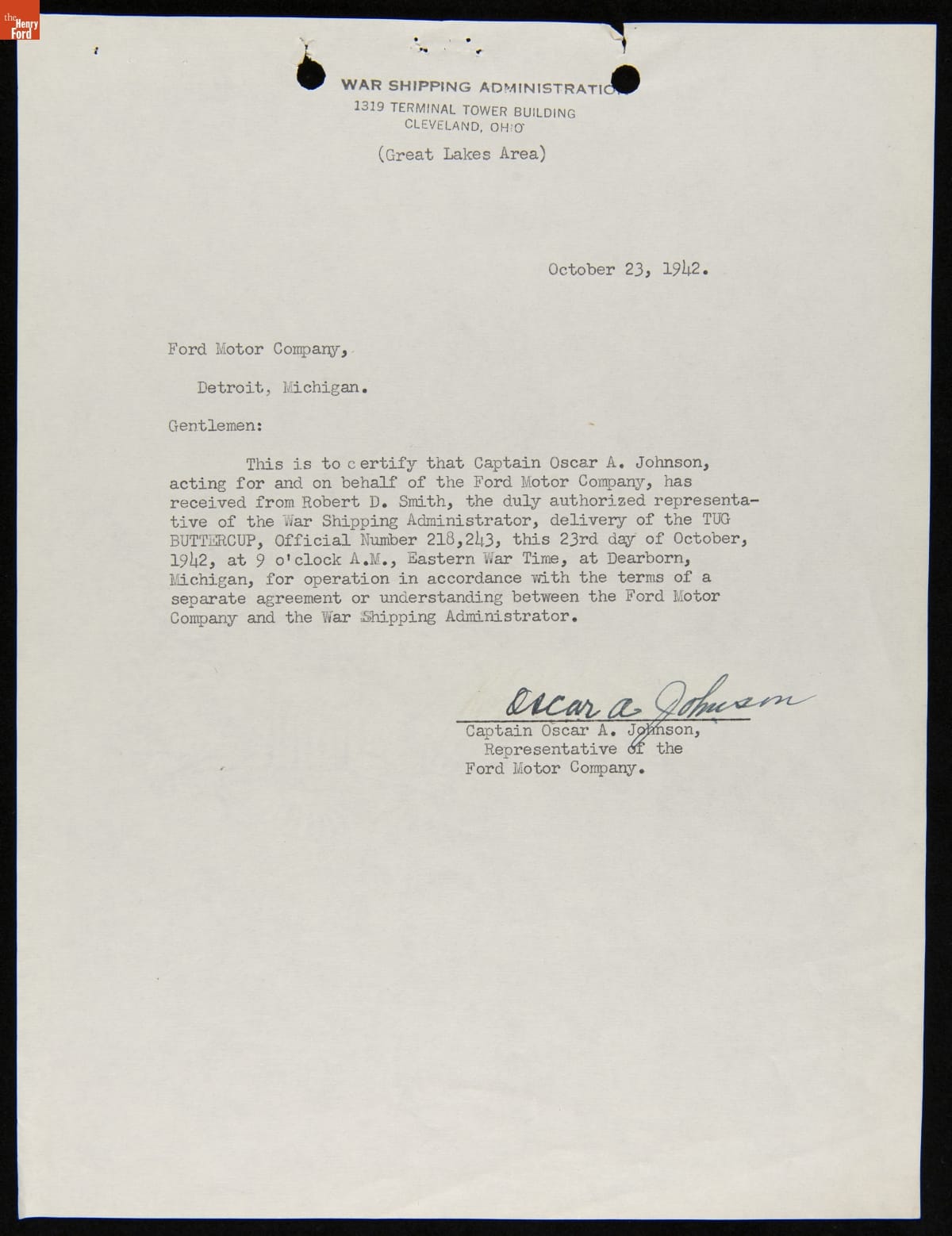
- Letter Certifying Receipt of Ford Tugboat "Buttercup" for War Service, October 23, 1942 - Ford Motor Company owned a fleet of barges, tugs, canal boats, cargo carriers, and ocean freighters that transported company products and materials before the Second World War. In 1942, with growing military demands, the United States began requisitioning all available ships for wartime service. Government maritime and shipping administrations worked with Ford to identify and acquire ships needed for the war effort.
- October 23, 1942
- Collections - Artifact
Letter Certifying Receipt of Ford Tugboat "Buttercup" for War Service, October 23, 1942
Ford Motor Company owned a fleet of barges, tugs, canal boats, cargo carriers, and ocean freighters that transported company products and materials before the Second World War. In 1942, with growing military demands, the United States began requisitioning all available ships for wartime service. Government maritime and shipping administrations worked with Ford to identify and acquire ships needed for the war effort.
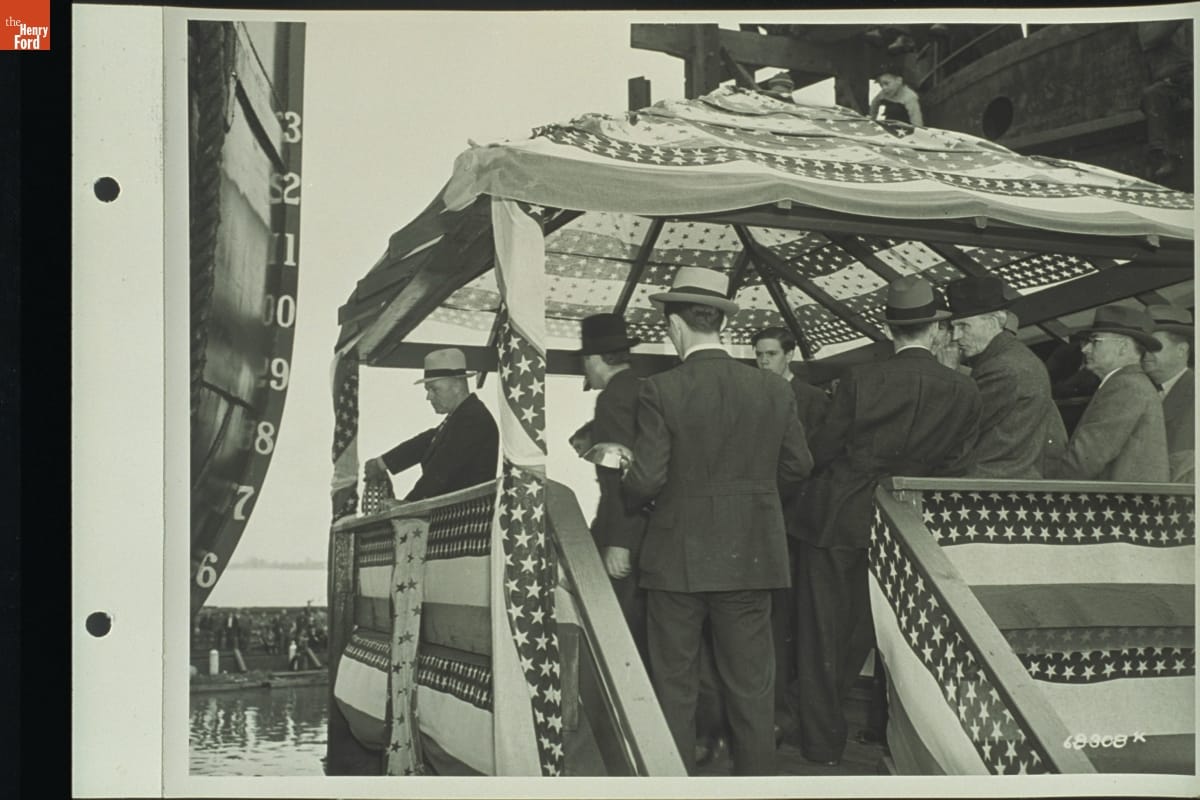
- Launching the Green Island Freighter at the Great Lakes Engineering Works, Ecorse, Michigan, May 1937 - Ford Motor Company launched the MS <EM>Green Island</EM> in 1937. The 300-foot vessel was part of a fleet that carried raw material, auto parts and other goods to and from Ford's mines, mills and factories. <EM>Green Island</EM>, with its low twelve-foot draft, was one of the longest ships to move through the New York State Barge Canal system.
- May 15, 1937
- Collections - Artifact
Launching the Green Island Freighter at the Great Lakes Engineering Works, Ecorse, Michigan, May 1937
Ford Motor Company launched the MS Green Island in 1937. The 300-foot vessel was part of a fleet that carried raw material, auto parts and other goods to and from Ford's mines, mills and factories. Green Island, with its low twelve-foot draft, was one of the longest ships to move through the New York State Barge Canal system.
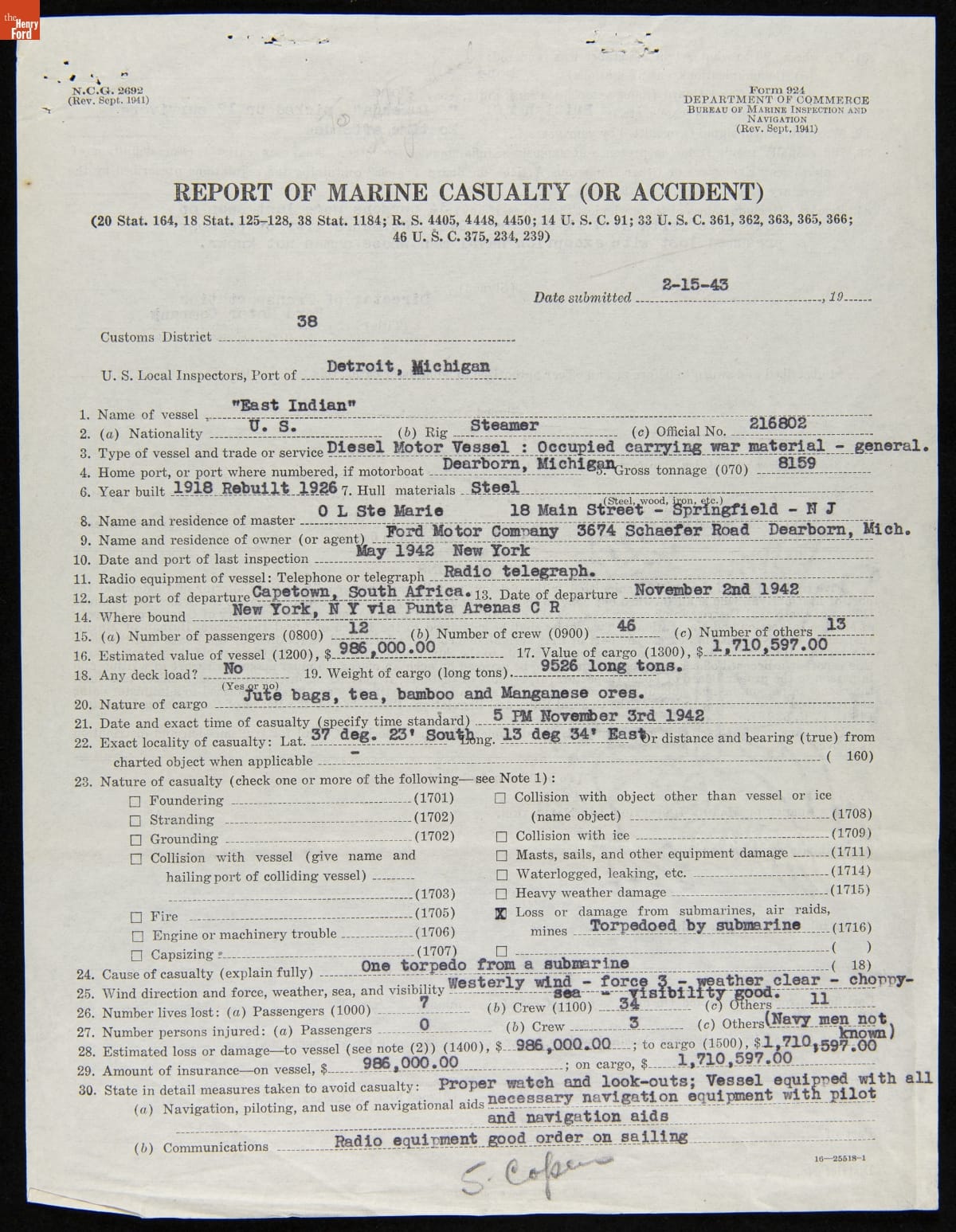
- Report of Marine Casualty or Accident for Sunken Ford Freighter "East Indian," February 15, 1943 - The United States government requisitioned the Ford Motor Company's ocean-going freighter <em>East Indian</em> for wartime service. Newly fitted with anti-submarine and anti-aircraft guns, the freighter left for the Indian Ocean in May 1942. As the <em>East Indian</em> returned to America, the ship was sunk by a German U-boat. Four lifeboats with survivors were lost, but crew members on a fifth were rescued after being adrift nearly two weeks.
- November 03, 1942
- Collections - Artifact
Report of Marine Casualty or Accident for Sunken Ford Freighter "East Indian," February 15, 1943
The United States government requisitioned the Ford Motor Company's ocean-going freighter East Indian for wartime service. Newly fitted with anti-submarine and anti-aircraft guns, the freighter left for the Indian Ocean in May 1942. As the East Indian returned to America, the ship was sunk by a German U-boat. Four lifeboats with survivors were lost, but crew members on a fifth were rescued after being adrift nearly two weeks.