
Search
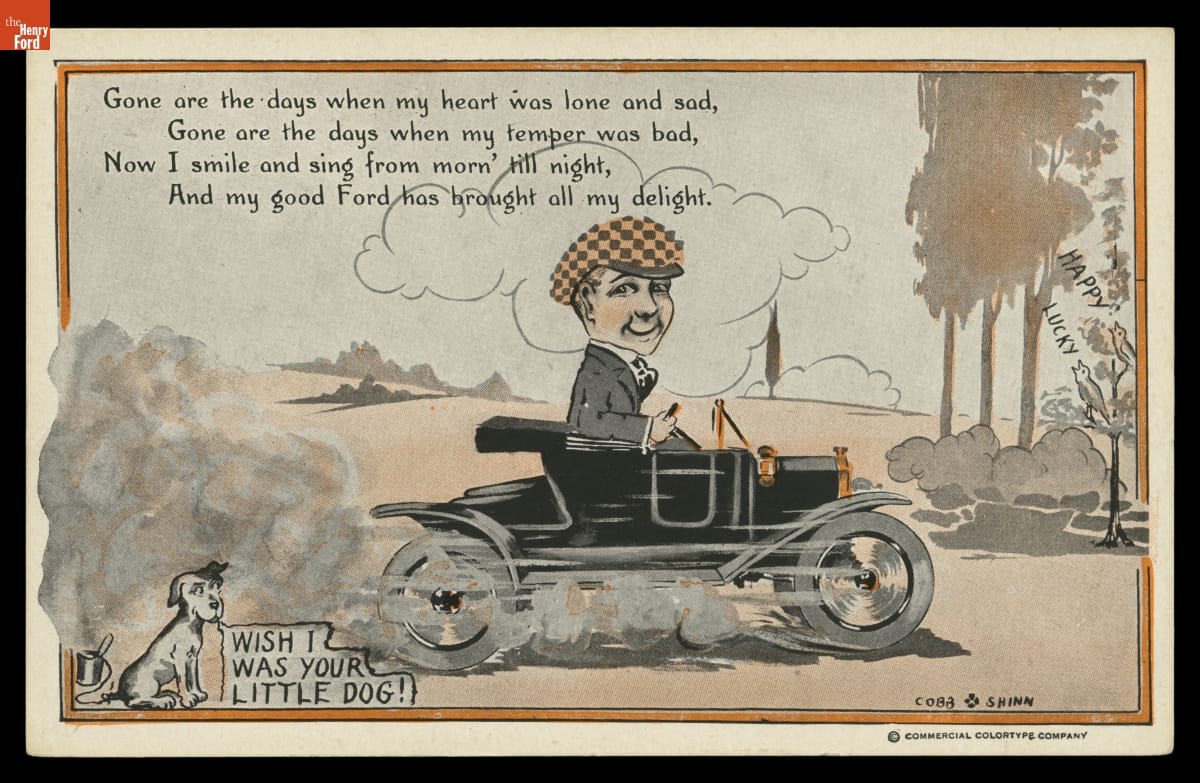
- "...And My Good Ford Has Brought All My Delight," Ford Motor Company, circa 1915 - It's not usual for an advertisement to credit a car for feelings of freedom, pride, or even youth. But this postcard from 1915 goes further, with the owner crediting his Ford Model T for "all my delight."
- circa 1915
- Collections - Artifact
"...And My Good Ford Has Brought All My Delight," Ford Motor Company, circa 1915
It's not usual for an advertisement to credit a car for feelings of freedom, pride, or even youth. But this postcard from 1915 goes further, with the owner crediting his Ford Model T for "all my delight."
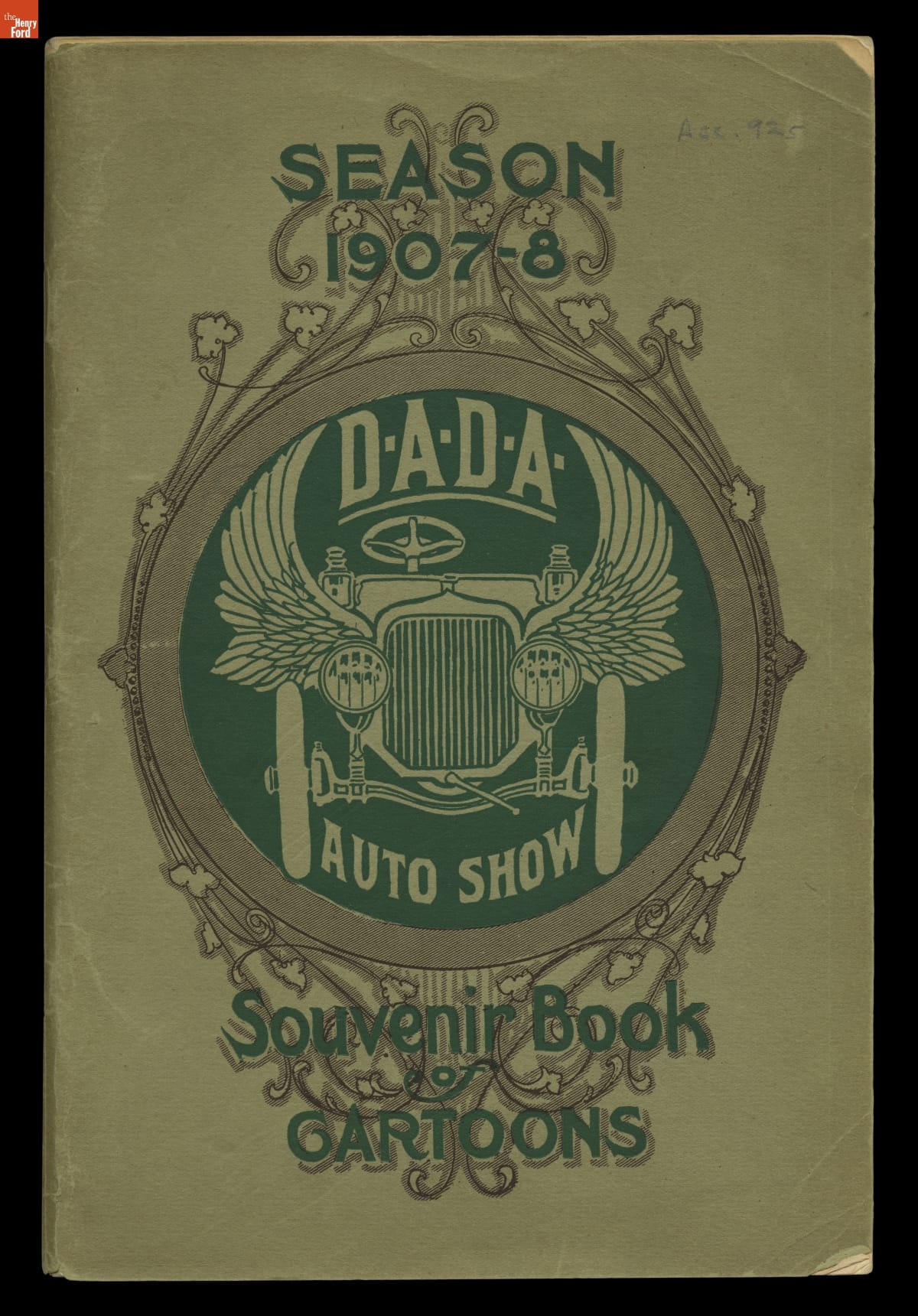
- "Souvenir Book of Cartoons" from Detroit Auto Show, 1907 - Not surprisingly, Detroit's auto show is among the oldest in the United States. This souvenir book from 1907 offers a look at the various manufacturers and dealers who participated that year. Upmarket cars from Cadillac and Detroit Electric appeared alongside less expensive models from Brush and Ford. Industry trade journal <em>Motor Age</em> was present too.
- 1907-1908
- Collections - Artifact
"Souvenir Book of Cartoons" from Detroit Auto Show, 1907
Not surprisingly, Detroit's auto show is among the oldest in the United States. This souvenir book from 1907 offers a look at the various manufacturers and dealers who participated that year. Upmarket cars from Cadillac and Detroit Electric appeared alongside less expensive models from Brush and Ford. Industry trade journal Motor Age was present too.
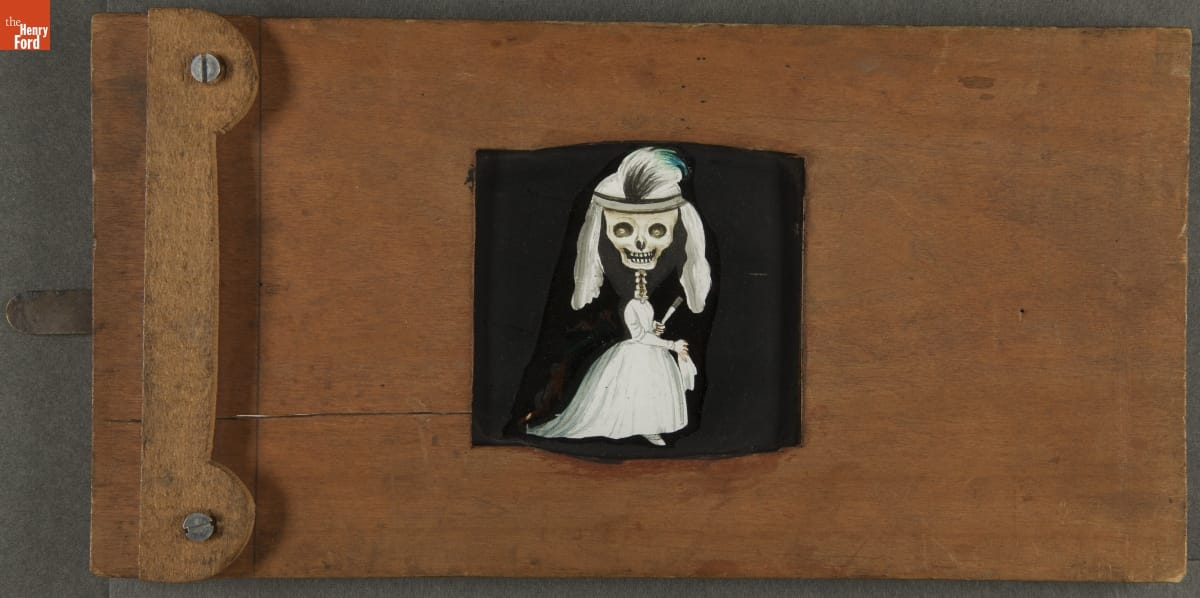
- Mechanical Lantern Slide, Skeleton in a Gown, 1860-1900 - Magic lanterns use a concave mirror and light source to project images on glass slides with painted or photographic scenes. Developed in the 17th century, magic lanterns predate slide projectors and motion pictures. In the hands of magicians, they became "lanterns of fright," projecting wondrous images and apparitions. Slide themes ranged widely: exotic travel, folklore, advertising, history, science, and art.
- 1860-1900
- Collections - Artifact
Mechanical Lantern Slide, Skeleton in a Gown, 1860-1900
Magic lanterns use a concave mirror and light source to project images on glass slides with painted or photographic scenes. Developed in the 17th century, magic lanterns predate slide projectors and motion pictures. In the hands of magicians, they became "lanterns of fright," projecting wondrous images and apparitions. Slide themes ranged widely: exotic travel, folklore, advertising, history, science, and art.
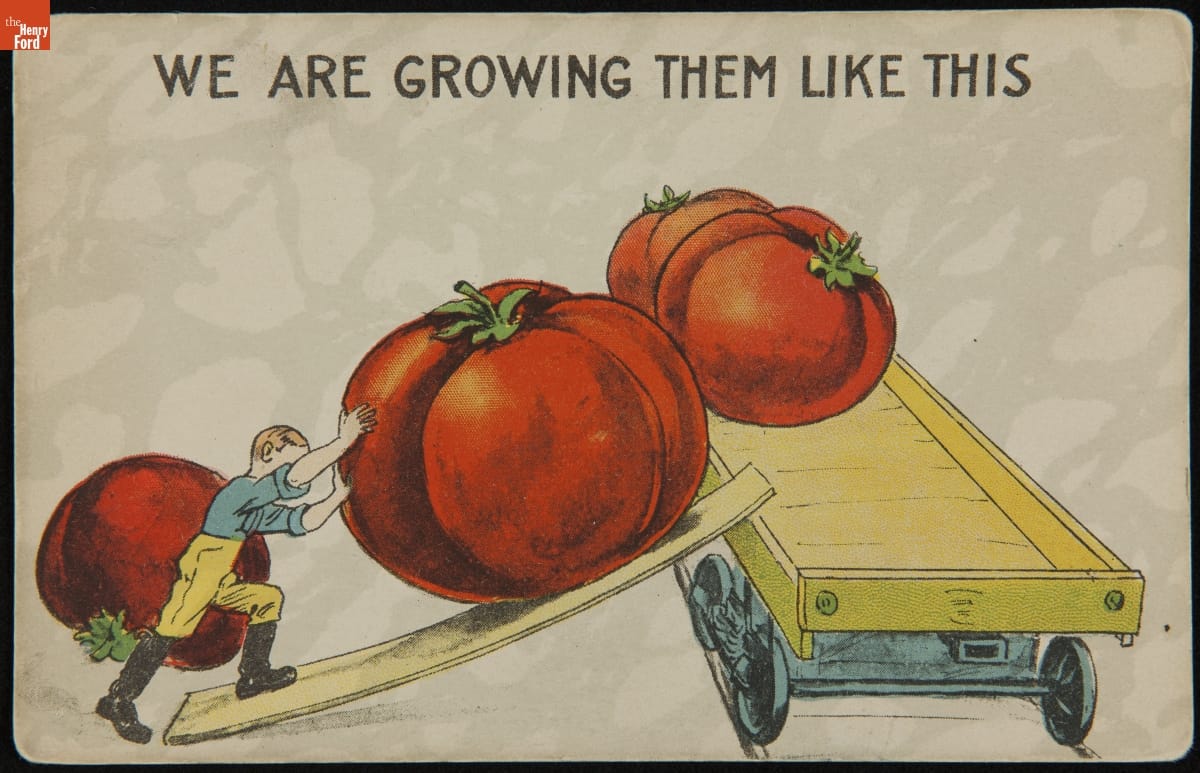
- Postcard, "We Are Growing Them Like This," circa 1910 -
- circa 1910
- Collections - Artifact
Postcard, "We Are Growing Them Like This," circa 1910
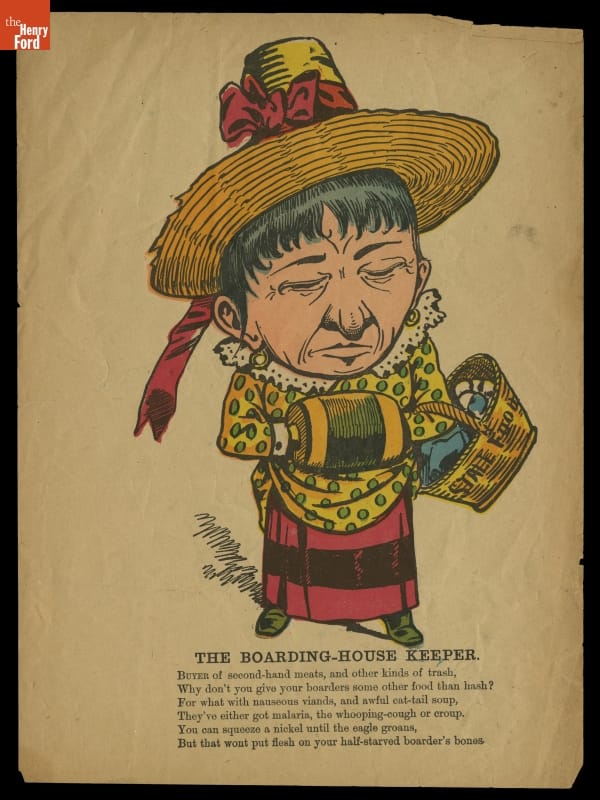
- Comic Valentine, "The Boarding-House Keeper," circa 1885 - From the 1840s into the early 1900s, some people sent inexpensive Valentine's Day greetings that chided, warned, or insulted the recipient. An exaggerated, often garish cartoon and short verse described and dismissed someone's looks, intelligence, personality, or behavior. Within the atmosphere of a festive holiday, under the cover of humor, these "vinegar valentines" were acceptable critiques of behaviors that deviated from social norms.
- circa 1885
- Collections - Artifact
Comic Valentine, "The Boarding-House Keeper," circa 1885
From the 1840s into the early 1900s, some people sent inexpensive Valentine's Day greetings that chided, warned, or insulted the recipient. An exaggerated, often garish cartoon and short verse described and dismissed someone's looks, intelligence, personality, or behavior. Within the atmosphere of a festive holiday, under the cover of humor, these "vinegar valentines" were acceptable critiques of behaviors that deviated from social norms.
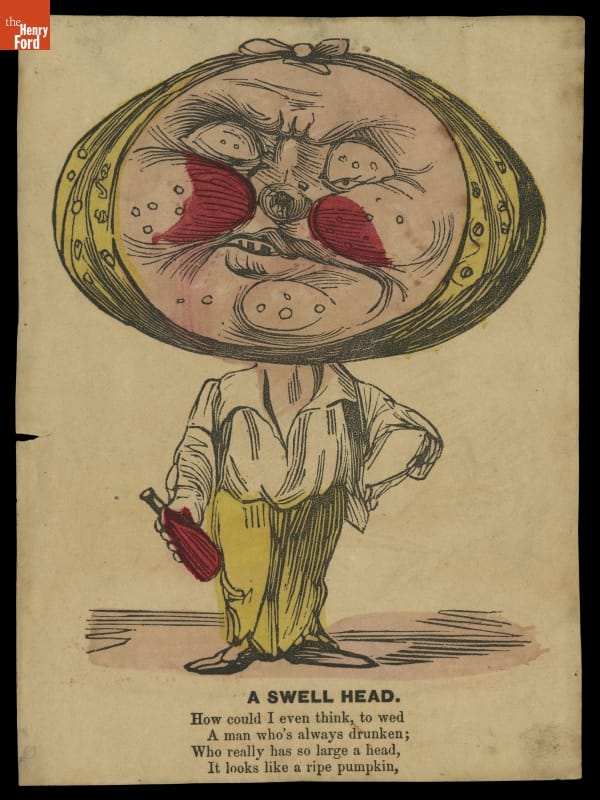
- Comic Valentine, "A Swell Head," circa 1855 - From the 1840s into the early 1900s, some people sent inexpensive Valentine's Day greetings that chided, warned, or insulted the recipient. An exaggerated, often garish cartoon and short verse described and dismissed someone's looks, intelligence, personality, or behavior. Within the atmosphere of a festive holiday, under the cover of humor, these "vinegar valentines" were acceptable critiques of behaviors that deviated from social norms.
- circa 1855
- Collections - Artifact
Comic Valentine, "A Swell Head," circa 1855
From the 1840s into the early 1900s, some people sent inexpensive Valentine's Day greetings that chided, warned, or insulted the recipient. An exaggerated, often garish cartoon and short verse described and dismissed someone's looks, intelligence, personality, or behavior. Within the atmosphere of a festive holiday, under the cover of humor, these "vinegar valentines" were acceptable critiques of behaviors that deviated from social norms.
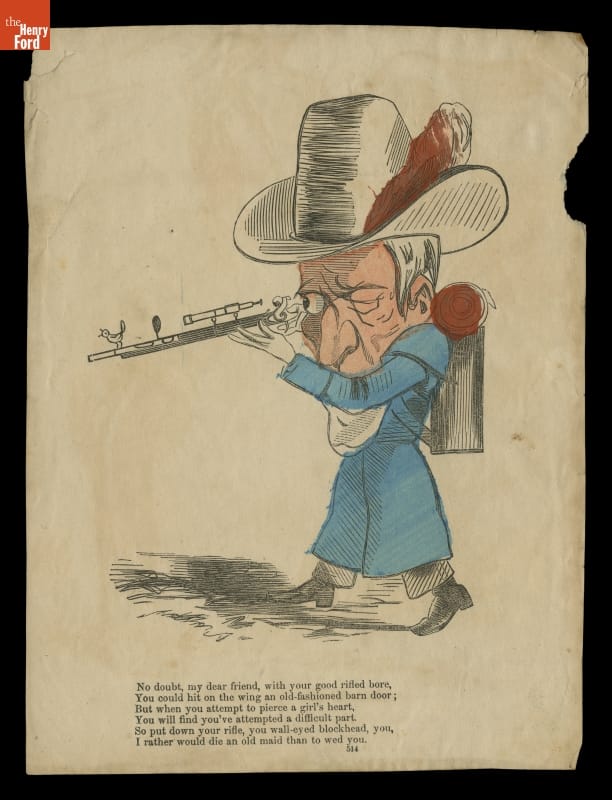
- Comic Valentine for a Marksman, circa 1855 - From the 1840s into the early 1900s, some people sent inexpensive Valentine's Day greetings that chided, warned, or insulted the recipient. An exaggerated, often garish cartoon and short verse described and dismissed someone's looks, intelligence, personality, or behavior. Within the atmosphere of a festive holiday, under the cover of humor, these "vinegar valentines" were acceptable critiques of behaviors that deviated from social norms.
- circa 1855
- Collections - Artifact
Comic Valentine for a Marksman, circa 1855
From the 1840s into the early 1900s, some people sent inexpensive Valentine's Day greetings that chided, warned, or insulted the recipient. An exaggerated, often garish cartoon and short verse described and dismissed someone's looks, intelligence, personality, or behavior. Within the atmosphere of a festive holiday, under the cover of humor, these "vinegar valentines" were acceptable critiques of behaviors that deviated from social norms.
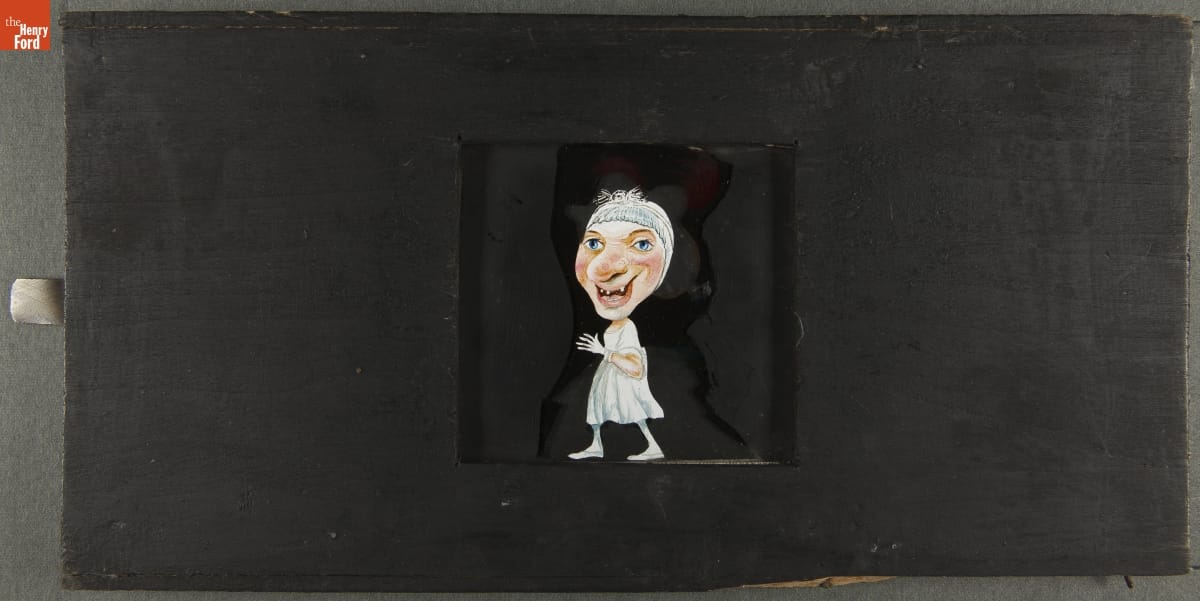
- Mechanical Lantern Slide, "Mirabelle - Horsewoman of the Paris Hippodrome," 1870-1915 - Magic lanterns use a concave mirror and light source to project images on glass slides with painted or photographic scenes. Developed in the 17th century, magic lanterns predate slide projectors and motion pictures. In the hands of magicians, they became "lanterns of fright," projecting wondrous images and apparitions. Slide themes ranged widely: exotic travel, folklore, advertising, history, science, and art.
- 1870-1915
- Collections - Artifact
Mechanical Lantern Slide, "Mirabelle - Horsewoman of the Paris Hippodrome," 1870-1915
Magic lanterns use a concave mirror and light source to project images on glass slides with painted or photographic scenes. Developed in the 17th century, magic lanterns predate slide projectors and motion pictures. In the hands of magicians, they became "lanterns of fright," projecting wondrous images and apparitions. Slide themes ranged widely: exotic travel, folklore, advertising, history, science, and art.
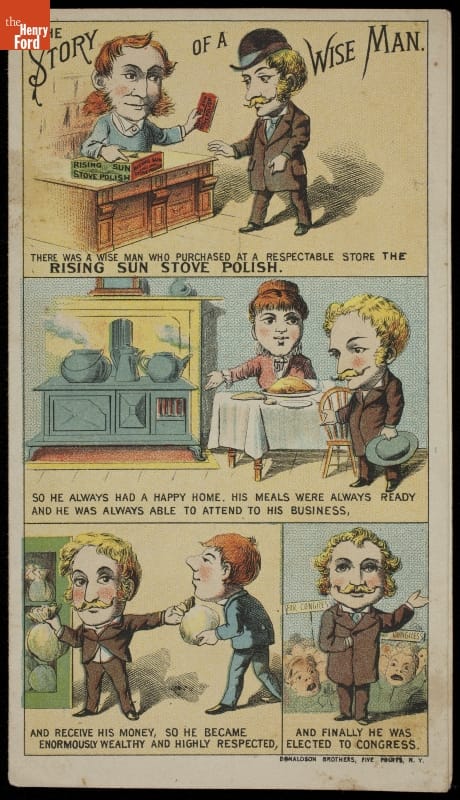
- Trade Card for Rising Sun Stove Polish, Morse Bros., 1870-1900 - In the last third of the nineteenth century, an unprecedented variety of consumer goods and services flooded the American market. Advertisers, armed with new methods of color printing, bombarded potential customers with trade cards. Americans enjoyed and often saved the vibrant little advertisements found in product packages or distributed by local merchants. Many survive as historical records of commercialism in the United States.
- 1870-1900
- Collections - Artifact
Trade Card for Rising Sun Stove Polish, Morse Bros., 1870-1900
In the last third of the nineteenth century, an unprecedented variety of consumer goods and services flooded the American market. Advertisers, armed with new methods of color printing, bombarded potential customers with trade cards. Americans enjoyed and often saved the vibrant little advertisements found in product packages or distributed by local merchants. Many survive as historical records of commercialism in the United States.
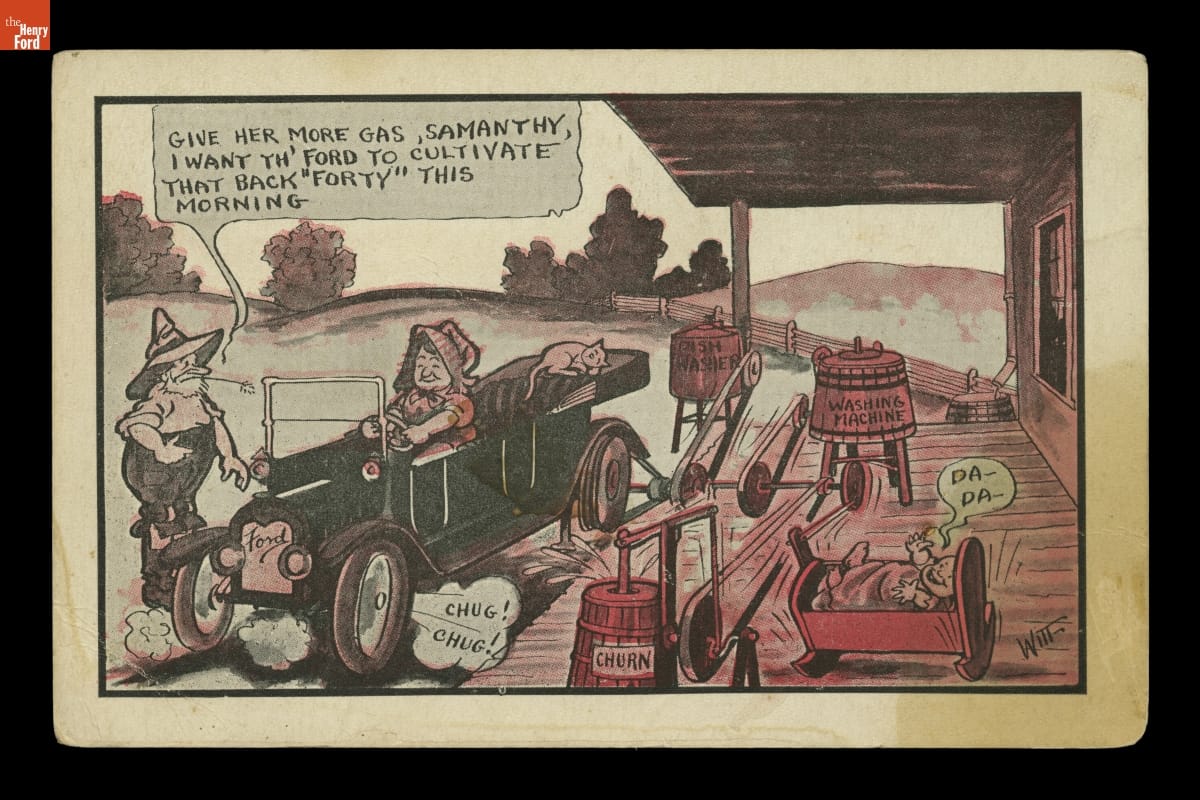
- Postcard, "Let Lizzie Do It!" circa 1915 - People loved the Ford Model T. It took you where you wanted to go, was easy to operate, parts were cheap, and you could fix it yourself. Thousands of jokes celebrated the Model T's sturdiness and reliability -- and poked fun at its homeliness and rattles. These jokes always amused Henry Ford. He often said that every Ford joke sold a car.
- circa 1915
- Collections - Artifact
Postcard, "Let Lizzie Do It!" circa 1915
People loved the Ford Model T. It took you where you wanted to go, was easy to operate, parts were cheap, and you could fix it yourself. Thousands of jokes celebrated the Model T's sturdiness and reliability -- and poked fun at its homeliness and rattles. These jokes always amused Henry Ford. He often said that every Ford joke sold a car.