
Search
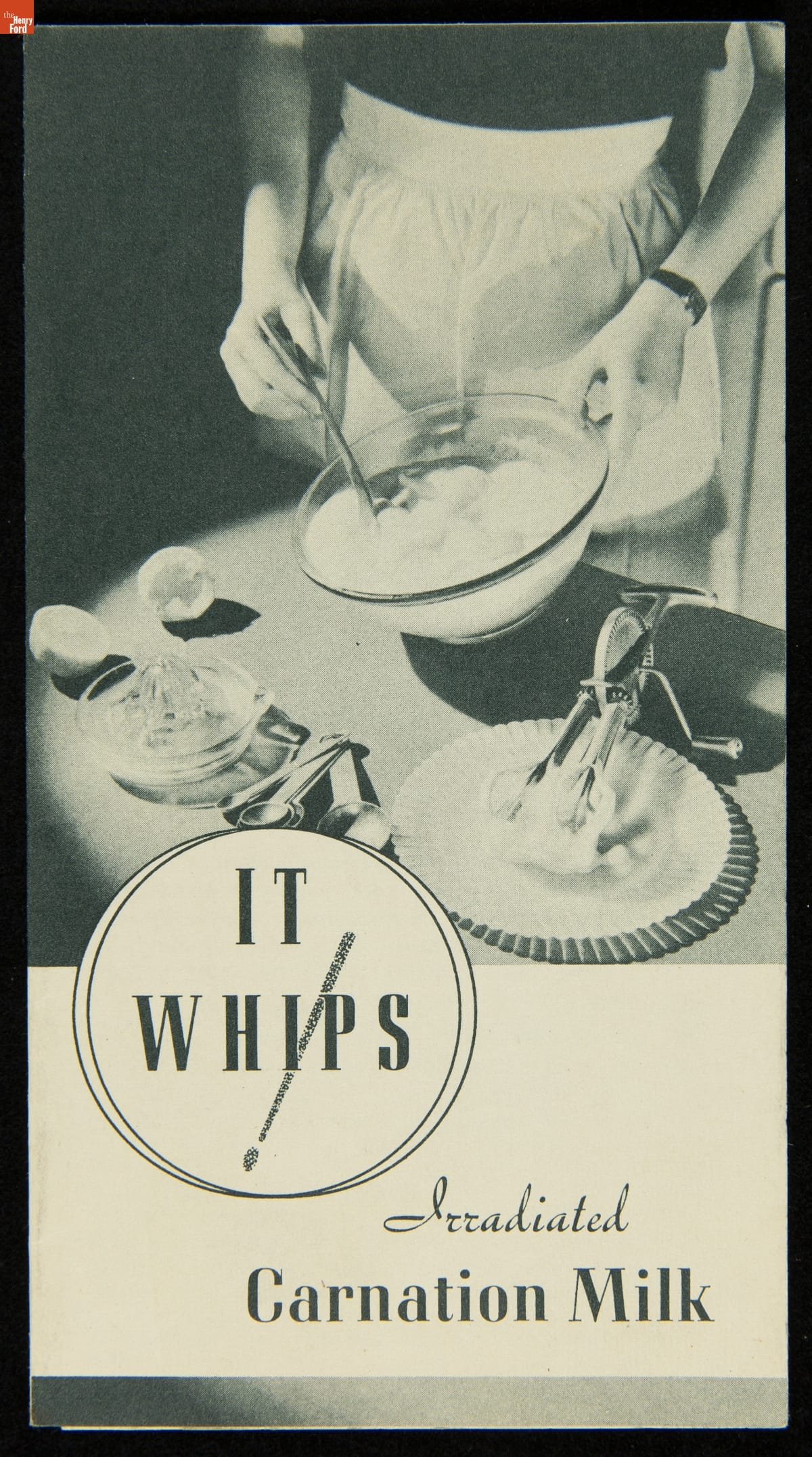
- Recipe Booklet, "Carnation Company, It Whips! Irradiated Carnation Milk," circa 1935 - In 1899, Elbridge Amos Stuart developed his evaporated milk product -- his alternative to fresh milk, which was quick to sour. He prided himself on producing the highest quality of milk, under the name Carnation Evaporated Milk Company. Although similar to condensed milk, evaporated milk does not contain sugar, allowing for a broader range of uses. This booklet provides uses for Carnation milk in desserts.
- circa 1935
- Collections - Artifact
Recipe Booklet, "Carnation Company, It Whips! Irradiated Carnation Milk," circa 1935
In 1899, Elbridge Amos Stuart developed his evaporated milk product -- his alternative to fresh milk, which was quick to sour. He prided himself on producing the highest quality of milk, under the name Carnation Evaporated Milk Company. Although similar to condensed milk, evaporated milk does not contain sugar, allowing for a broader range of uses. This booklet provides uses for Carnation milk in desserts.
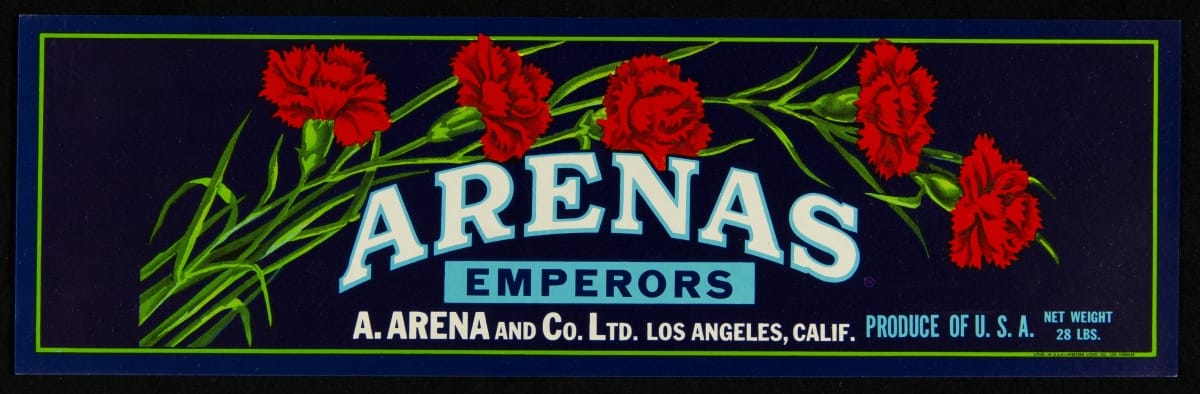
- Crate Label, "Arenas Brand Emperor Grapes," circa 1950 - In 1869, the transcontinental railroad opened eastern markets to the West Coast produce industry for the first time. As produce companies shipped crates of fruits and vegetables across the country, they needed a way to distinguish their goods from their competitors'. Colorful, eye-catching labels, like this one for Arenas Brand Emperor Grapes, were created to attract grocers purchasing goods from wholesale markets.
- circa 1950
- Collections - Artifact
Crate Label, "Arenas Brand Emperor Grapes," circa 1950
In 1869, the transcontinental railroad opened eastern markets to the West Coast produce industry for the first time. As produce companies shipped crates of fruits and vegetables across the country, they needed a way to distinguish their goods from their competitors'. Colorful, eye-catching labels, like this one for Arenas Brand Emperor Grapes, were created to attract grocers purchasing goods from wholesale markets.
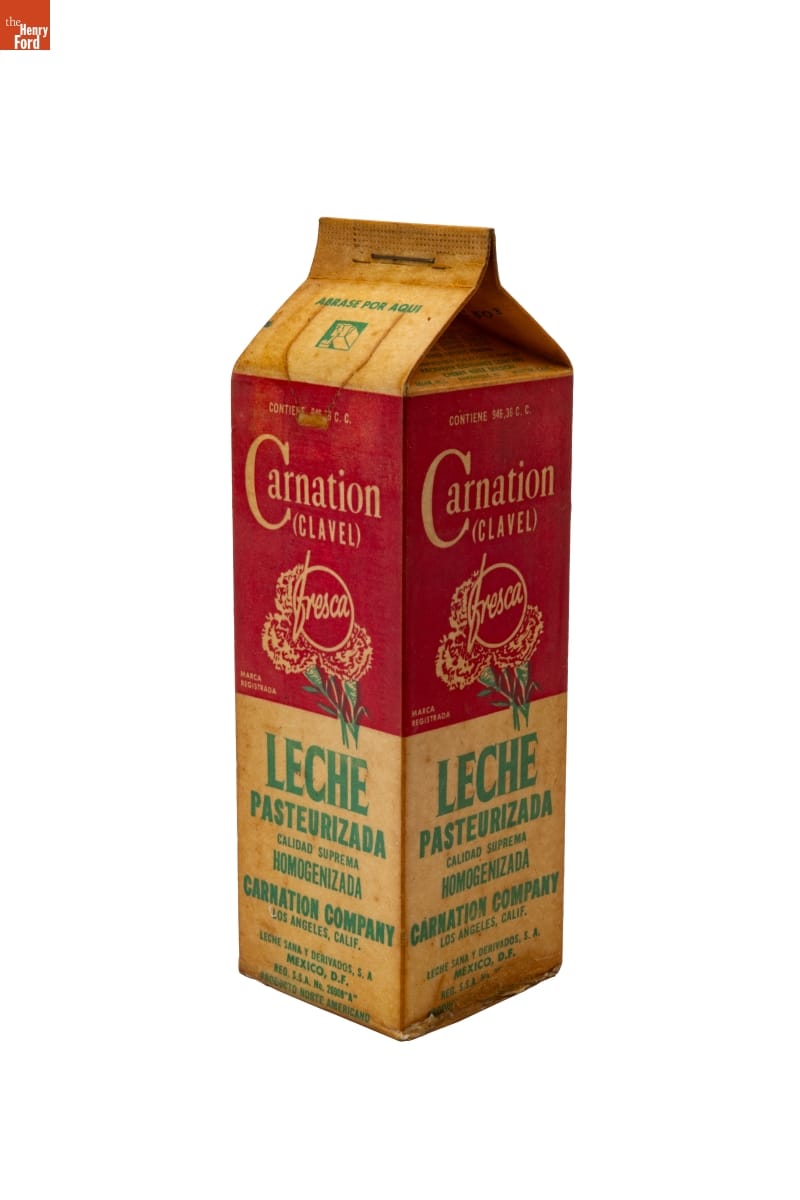
- Carnation Milk Carton Used in Mexico City - The quest for a shatter-proof milk container prompted John Van Wormer to patent a paper carton in 1915. Many processors and distributors continued to use breakable glass bottles, but, after 1937, mechanized production made the disposable, wax-coated folded cartons inexpensive and indispensable liquid containers. The iconic design, a box with a gable-end top with a pouring or drinking spout, remains the industry standard today.
- Collections - Artifact
Carnation Milk Carton Used in Mexico City
The quest for a shatter-proof milk container prompted John Van Wormer to patent a paper carton in 1915. Many processors and distributors continued to use breakable glass bottles, but, after 1937, mechanized production made the disposable, wax-coated folded cartons inexpensive and indispensable liquid containers. The iconic design, a box with a gable-end top with a pouring or drinking spout, remains the industry standard today.
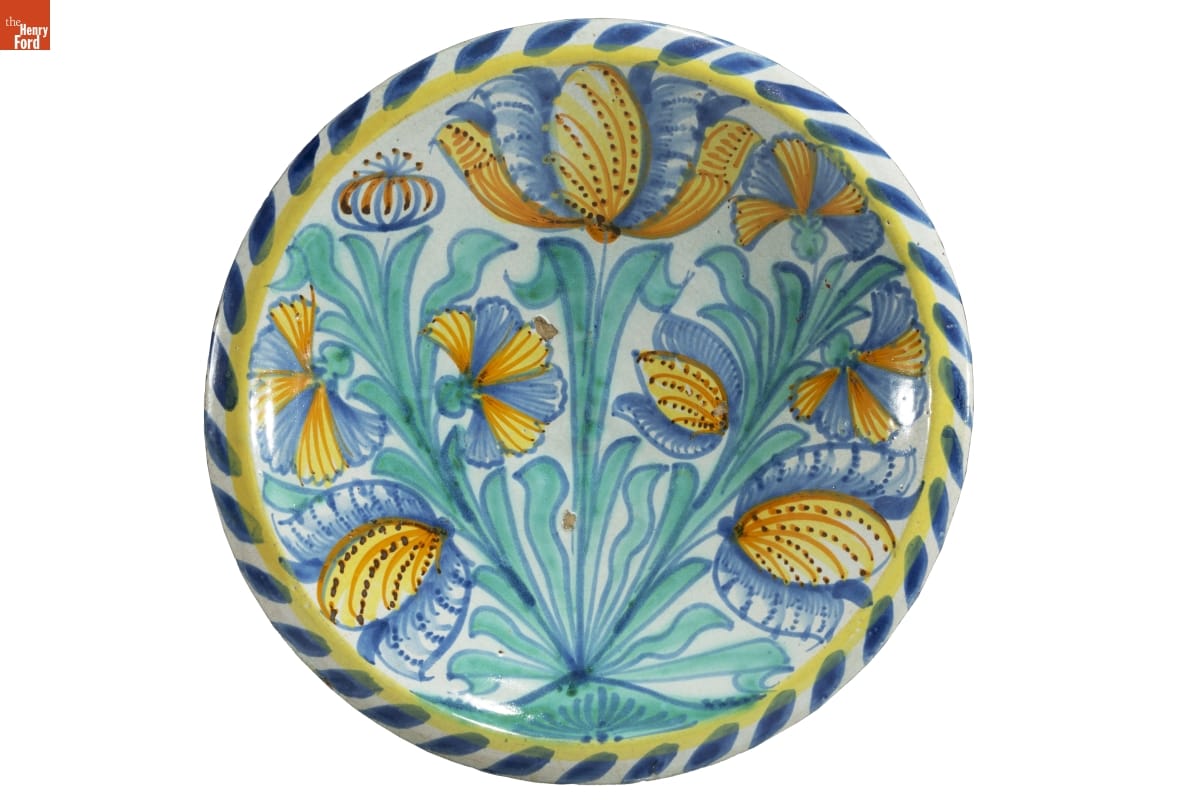
- Dish, circa 1680 - Large, decorative, late-17th century dishes, also known as chargers, were serving plates displayed on tables or in open cupboards in the households of well-to-do individuals. The chargers showed off the owner's good taste and wealth. While decorative motifs varied, popular themes included: royalty, biblical stories, and flowers.
- circa 1680
- Collections - Artifact
Dish, circa 1680
Large, decorative, late-17th century dishes, also known as chargers, were serving plates displayed on tables or in open cupboards in the households of well-to-do individuals. The chargers showed off the owner's good taste and wealth. While decorative motifs varied, popular themes included: royalty, biblical stories, and flowers.
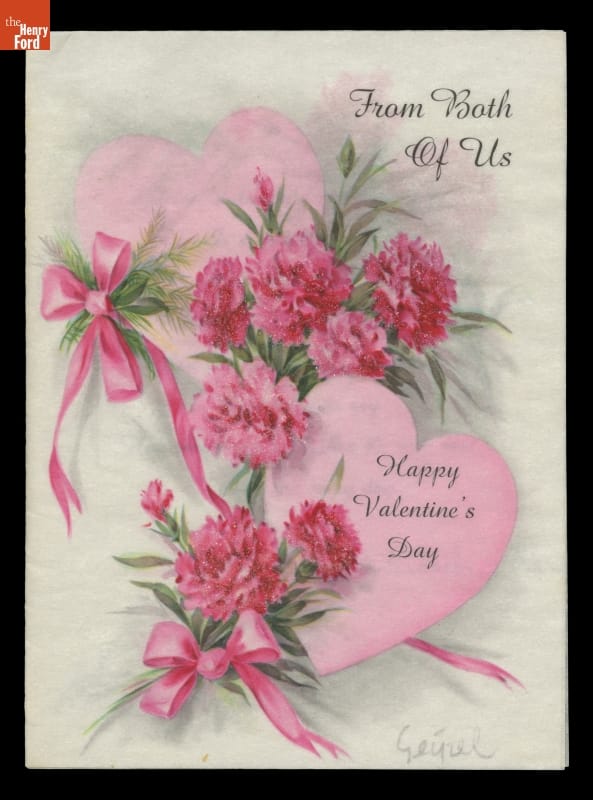
- Valentine Card, "From Both of Us, Happy Valentine's Day" circa 1950 - The custom of sending messages of affection on February 14 dates back to Roman times, when mid-February was a time to meet and court prospective mates. The earliest American valentines were labors of love, handmade by the sender. The spread of commercially produced valentines in the second half of the nineteenth century made sending and receiving Valentine's Day cards a more lighthearted activity.
- circa 1950
- Collections - Artifact
Valentine Card, "From Both of Us, Happy Valentine's Day" circa 1950
The custom of sending messages of affection on February 14 dates back to Roman times, when mid-February was a time to meet and court prospective mates. The earliest American valentines were labors of love, handmade by the sender. The spread of commercially produced valentines in the second half of the nineteenth century made sending and receiving Valentine's Day cards a more lighthearted activity.
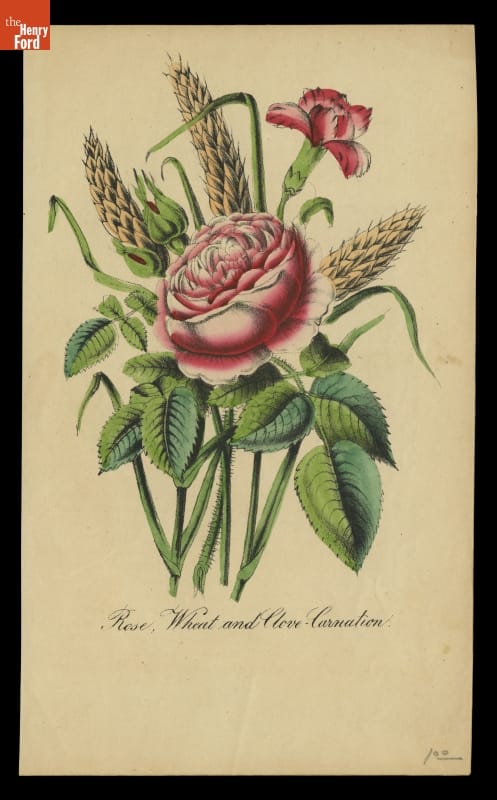
- Lithograph, "Rose, Wheat and Clove-Carnation," circa 1890 -
- circa 1890
- Collections - Artifact
Lithograph, "Rose, Wheat and Clove-Carnation," circa 1890
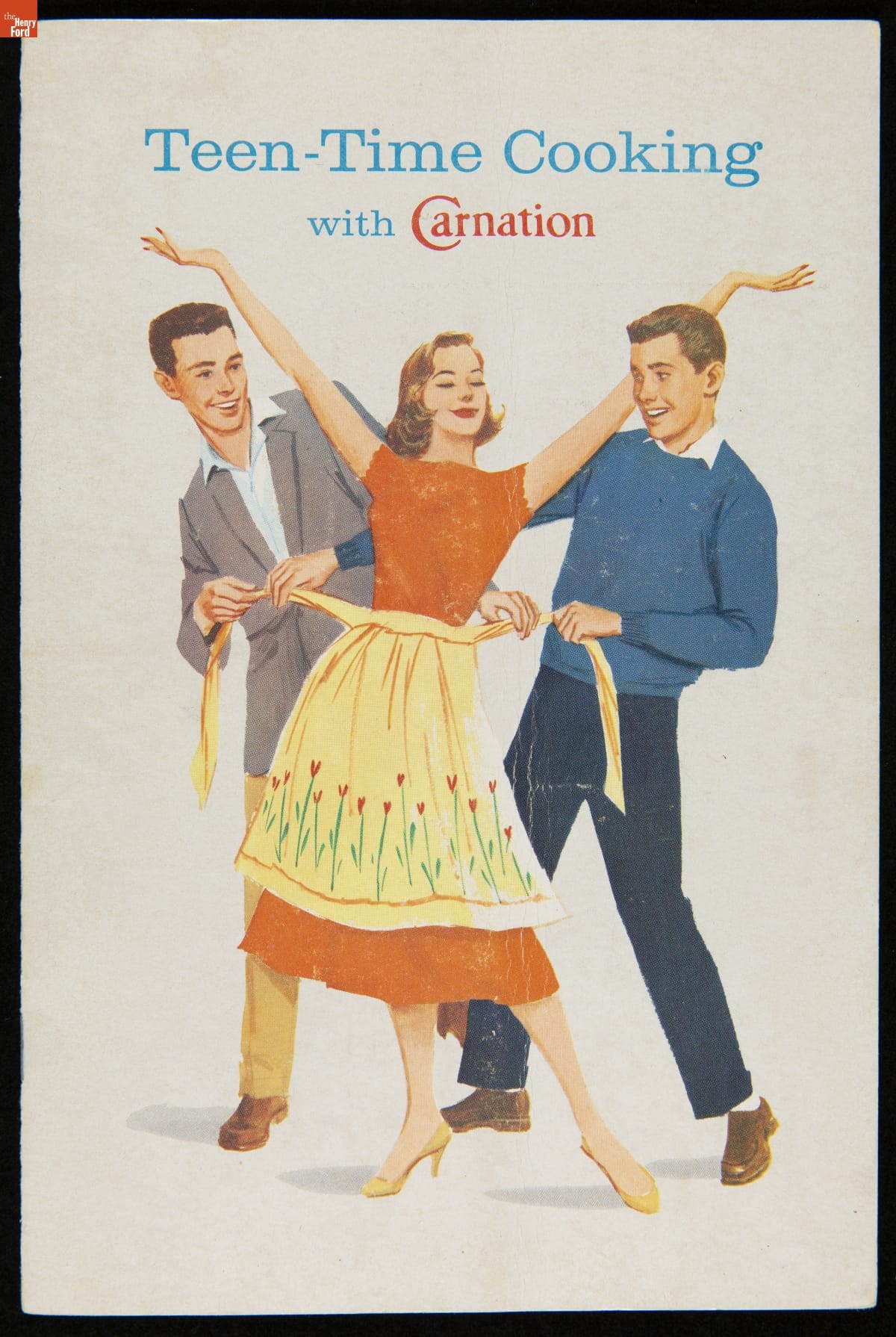
- Recipe Booklet, "Teen-Time Cooking with Carnation Evaporated Milk," 1959 - In 1899, Elbridge Amos Stuart developed his evaporated milk product -- his alternative to fresh milk, which was quick to sour -- and sold it as the Carnation Evaporated Milk Company. Although similar to condensed milk, evaporated milk does not contain sugar. This allows for a broader range of uses -- as noted in this booklet, which offers fun and simple recipes for teenagers using Carnation evaporated milk.
- 1959
- Collections - Artifact
Recipe Booklet, "Teen-Time Cooking with Carnation Evaporated Milk," 1959
In 1899, Elbridge Amos Stuart developed his evaporated milk product -- his alternative to fresh milk, which was quick to sour -- and sold it as the Carnation Evaporated Milk Company. Although similar to condensed milk, evaporated milk does not contain sugar. This allows for a broader range of uses -- as noted in this booklet, which offers fun and simple recipes for teenagers using Carnation evaporated milk.
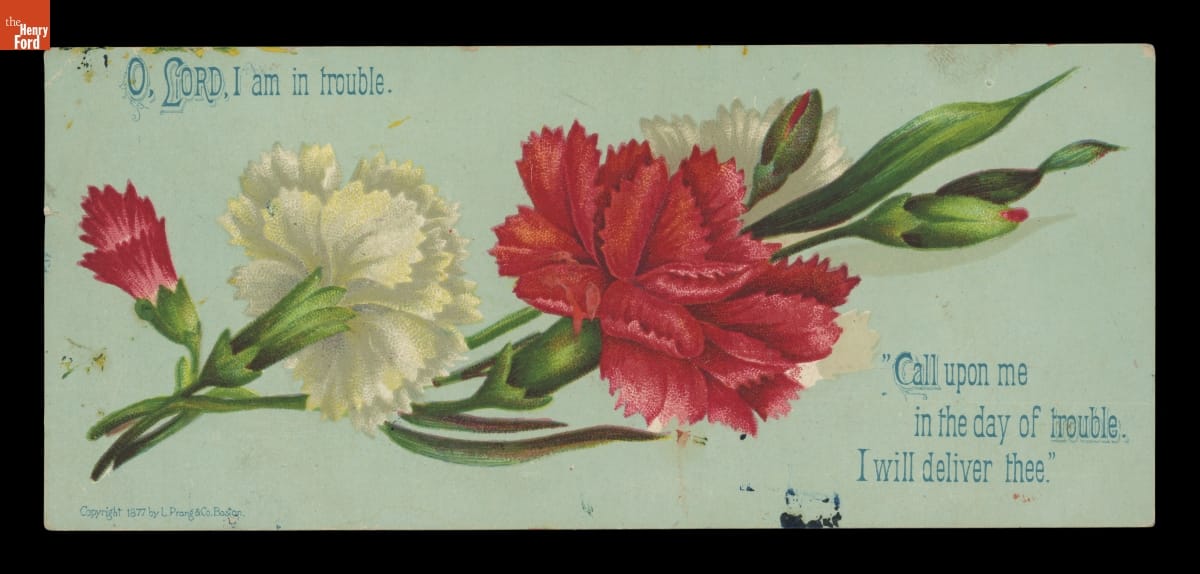
- "O, Lord, I am in trouble. 'Call upon me in the day of trouble. I will deliver thee.'" - Louis Prang, a German immigrant printer, created a variety of colorful, chromolithographed trade, album, motto, and greeting cards, as well as other prints and publications in the late 1800s. Many of these materials featured flowers, one of Prang's favorite subjects. Religious text highlights this carnation-print card from 1877. Prang also reused this flower print for a Christmas card.
- 1877
- Collections - Artifact
"O, Lord, I am in trouble. 'Call upon me in the day of trouble. I will deliver thee.'"
Louis Prang, a German immigrant printer, created a variety of colorful, chromolithographed trade, album, motto, and greeting cards, as well as other prints and publications in the late 1800s. Many of these materials featured flowers, one of Prang's favorite subjects. Religious text highlights this carnation-print card from 1877. Prang also reused this flower print for a Christmas card.
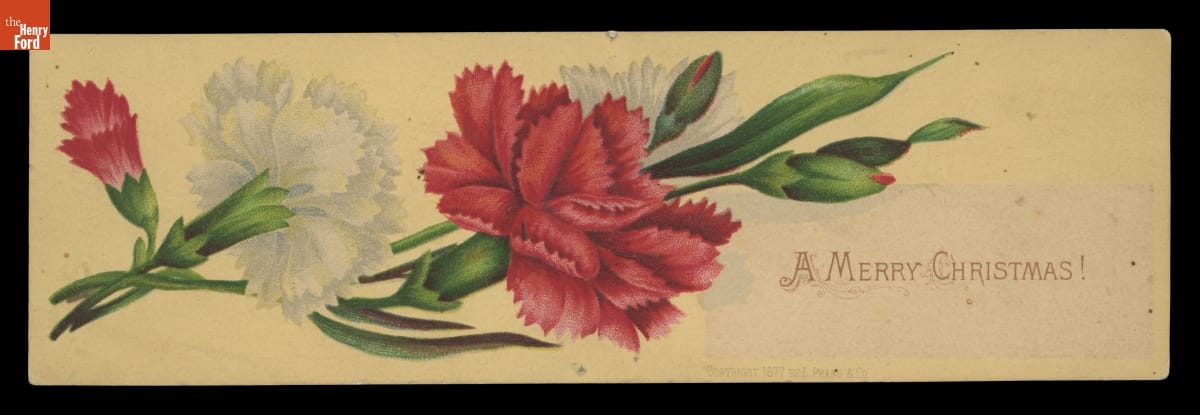
- "A Merry Christmas!" - Louis Prang, a German immigrant printer based in Boston, Massachusetts, introduced colorful chromolithographed Christmas cards in the mid-1870s, which helped spur an annual holiday card-giving tradition in America. Prang's early cards featured images of flowers with a simple holiday greeting -- but they were a big hit. Today, many consider Louis Prang the father of the American Christmas card.
- 1877
- Collections - Artifact
"A Merry Christmas!"
Louis Prang, a German immigrant printer based in Boston, Massachusetts, introduced colorful chromolithographed Christmas cards in the mid-1870s, which helped spur an annual holiday card-giving tradition in America. Prang's early cards featured images of flowers with a simple holiday greeting -- but they were a big hit. Today, many consider Louis Prang the father of the American Christmas card.