
Search
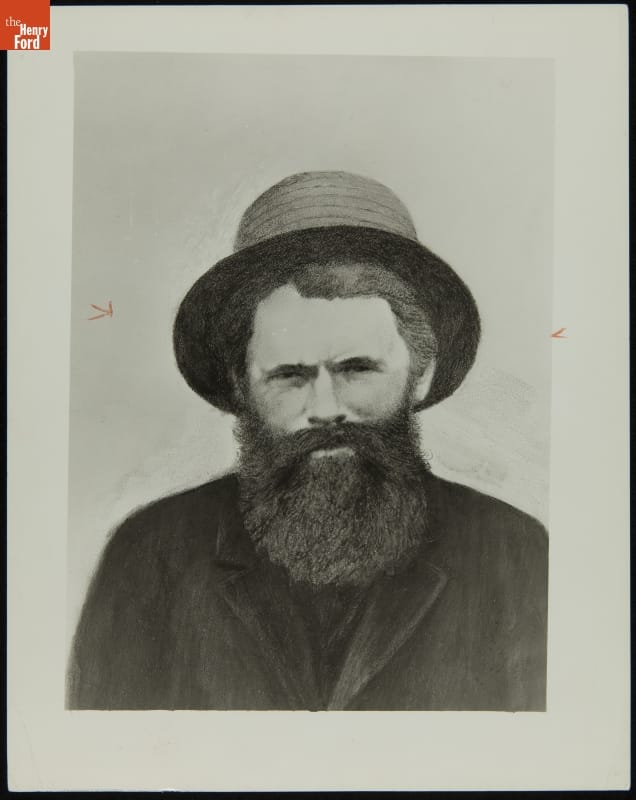
- Portrait of Milo Andrus, 1880 -
- 1880
- Collections - Artifact
Portrait of Milo Andrus, 1880
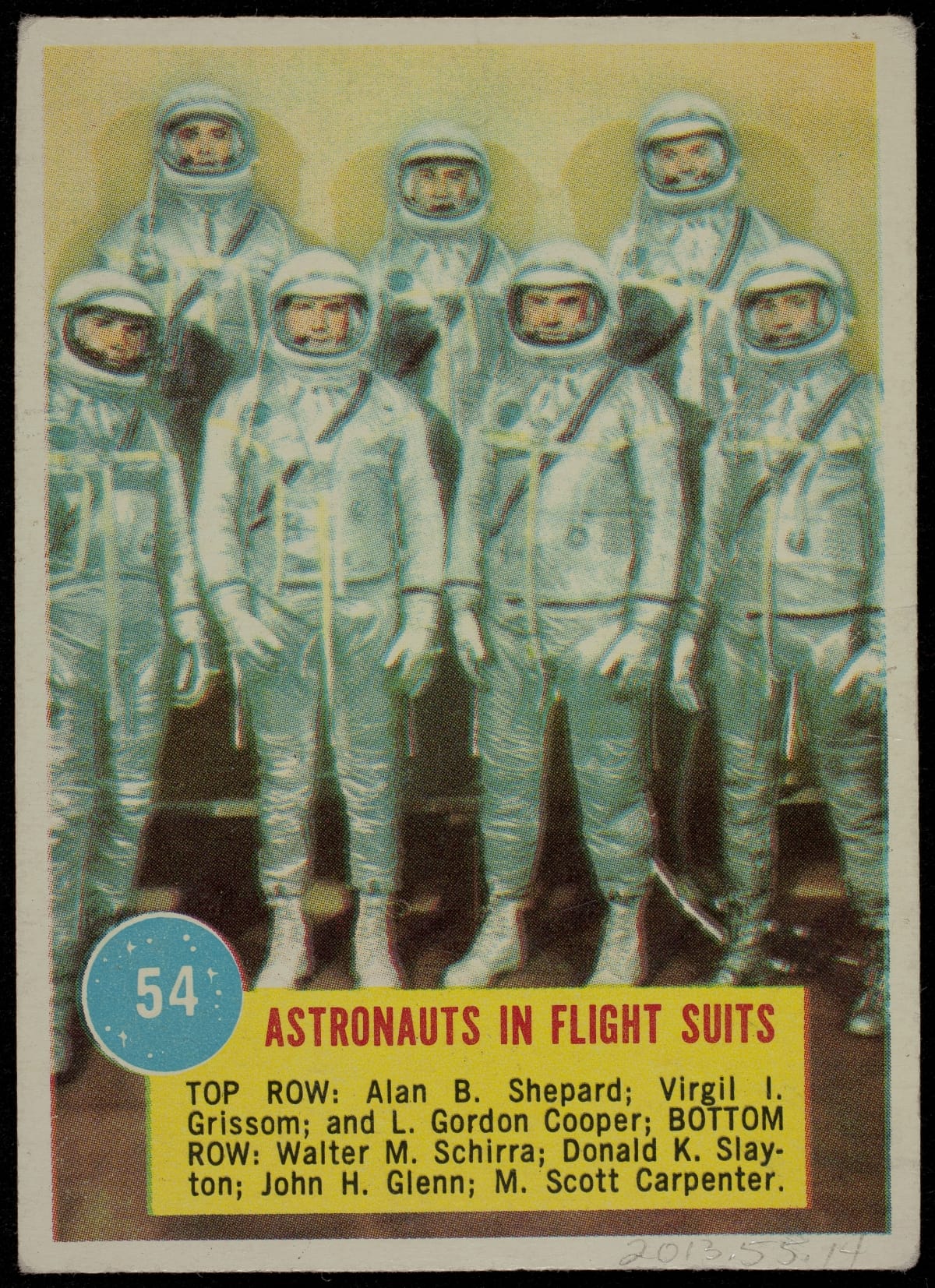
- Topps Astronaut Trading Card, "Astronauts in Flight Suits," 1963 - President John F. Kennedy's vision to explore the "new frontier" of space ignited the public's imagination. Pictorial souvenir cards like this helped generate excitement about the latest achievements in the space program. The U.S. astronauts and their accomplishments dominate the card fronts, while the backs show drawings that blend elements of science fiction and fantasy-requiring 3-D glasses to view.
- 1960-1962
- Collections - Artifact
Topps Astronaut Trading Card, "Astronauts in Flight Suits," 1963
President John F. Kennedy's vision to explore the "new frontier" of space ignited the public's imagination. Pictorial souvenir cards like this helped generate excitement about the latest achievements in the space program. The U.S. astronauts and their accomplishments dominate the card fronts, while the backs show drawings that blend elements of science fiction and fantasy-requiring 3-D glasses to view.
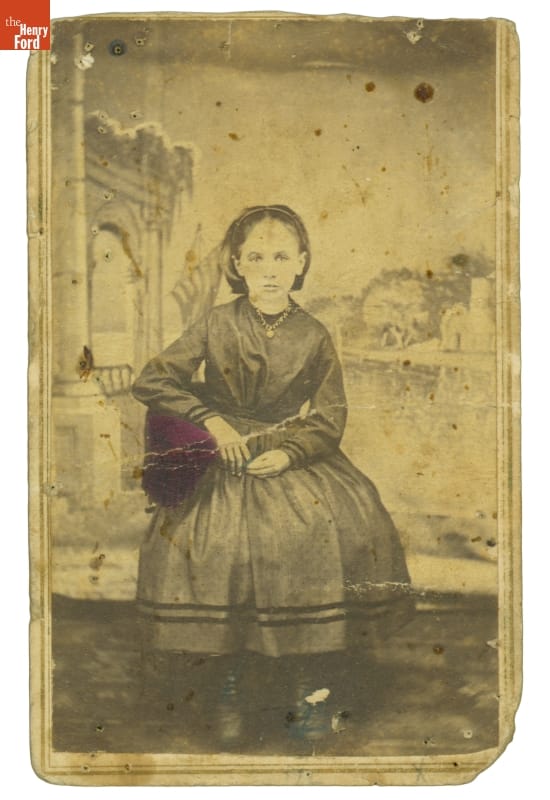
- Portrait of Matilda "Tillie" Buckner, Age 11, Kentucky, 1869 - Through much of the 19th century, having one's photo taken was a rare occurrence for most people. Matilda Buckner, an 11-year-old who grew up on Kentucky farm, appears in this 1869 photograph in her brand-new dress and prized accessories--the first ever taken of her. Matilda described her trip to the photographer's studio as a "never-to-be-forgotten day." Nowadays, we take photos of nearly everything.
- 1869
- Collections - Artifact
Portrait of Matilda "Tillie" Buckner, Age 11, Kentucky, 1869
Through much of the 19th century, having one's photo taken was a rare occurrence for most people. Matilda Buckner, an 11-year-old who grew up on Kentucky farm, appears in this 1869 photograph in her brand-new dress and prized accessories--the first ever taken of her. Matilda described her trip to the photographer's studio as a "never-to-be-forgotten day." Nowadays, we take photos of nearly everything.
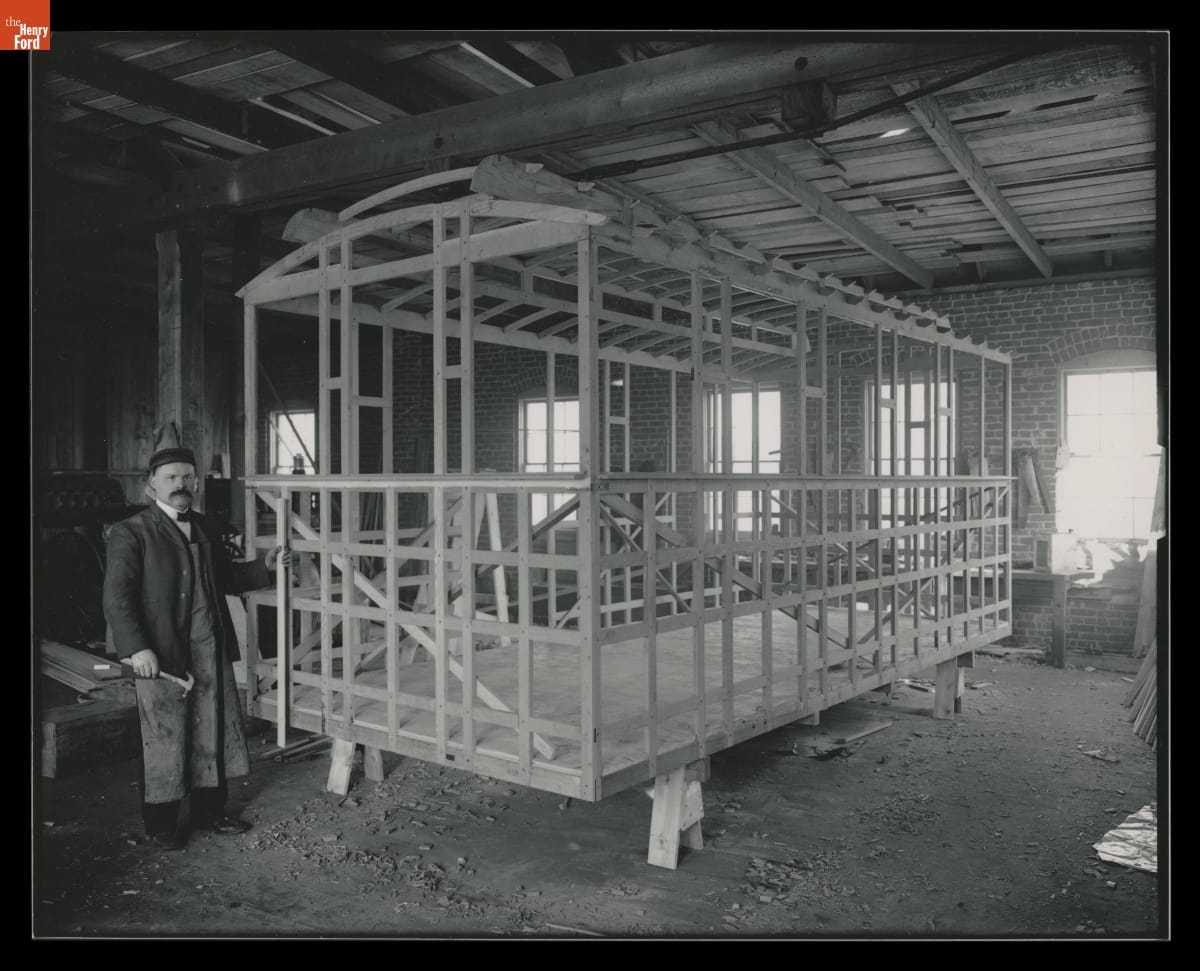
- Wilfred Barriere at Worcester Lunch Car Company, 1906 -
- 1906
- Collections - Artifact
Wilfred Barriere at Worcester Lunch Car Company, 1906
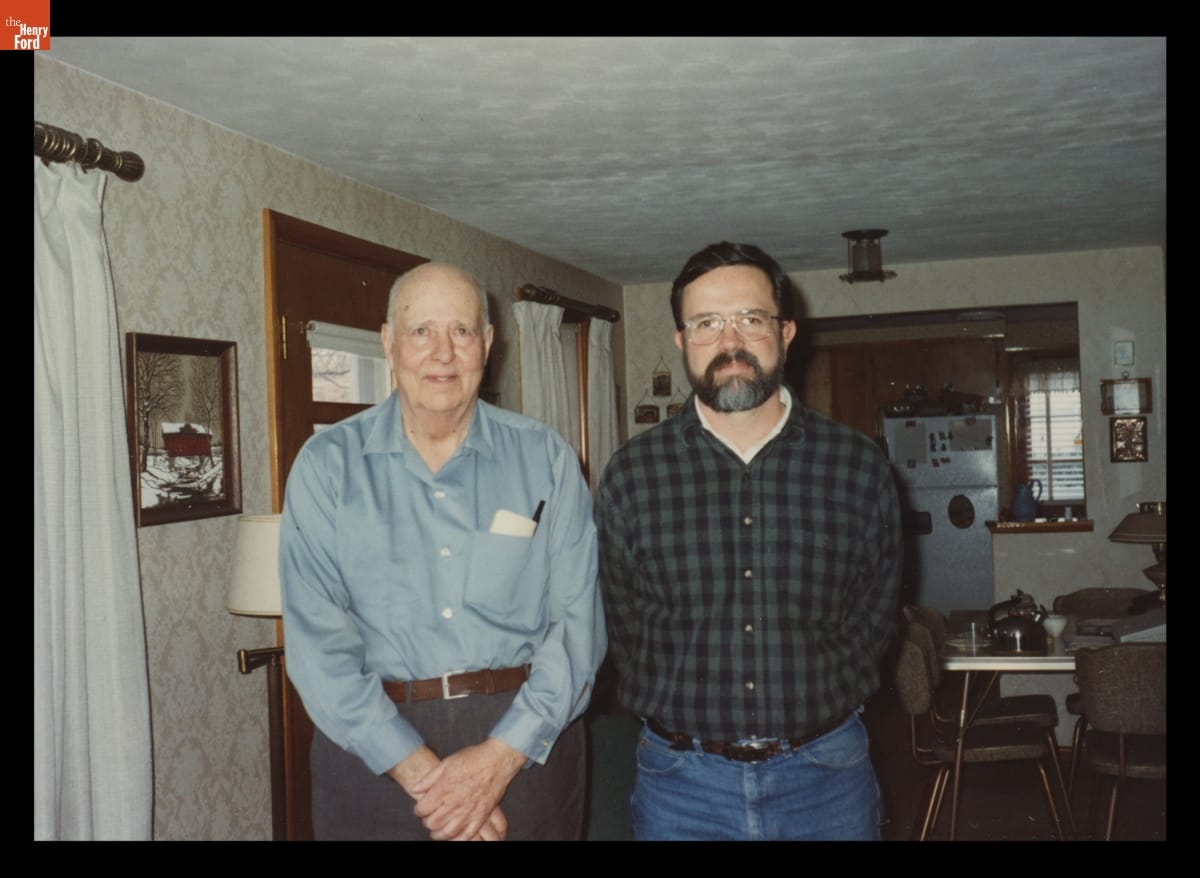
- Fred Crepeau, Former Cabinet-Maker for Worcester Lunch Car Company, and Bob Crepeau, February 1992 -
- February 01, 1992
- Collections - Artifact
Fred Crepeau, Former Cabinet-Maker for Worcester Lunch Car Company, and Bob Crepeau, February 1992
- Noah Webster Home Construction in Greenfield Village, 1936-1937 - Henry Ford admired textbook pioneer and spelling reformer Noah Webster. Ford purchased Webster's New Haven, Connecticut, home and moved it to Greenfield Village in 1936 to join a growing list of historic buildings in Ford's outdoor museum in Dearborn, Michigan. This image shows the house during reconstruction in Greenfield Village in 1936 and 1937.
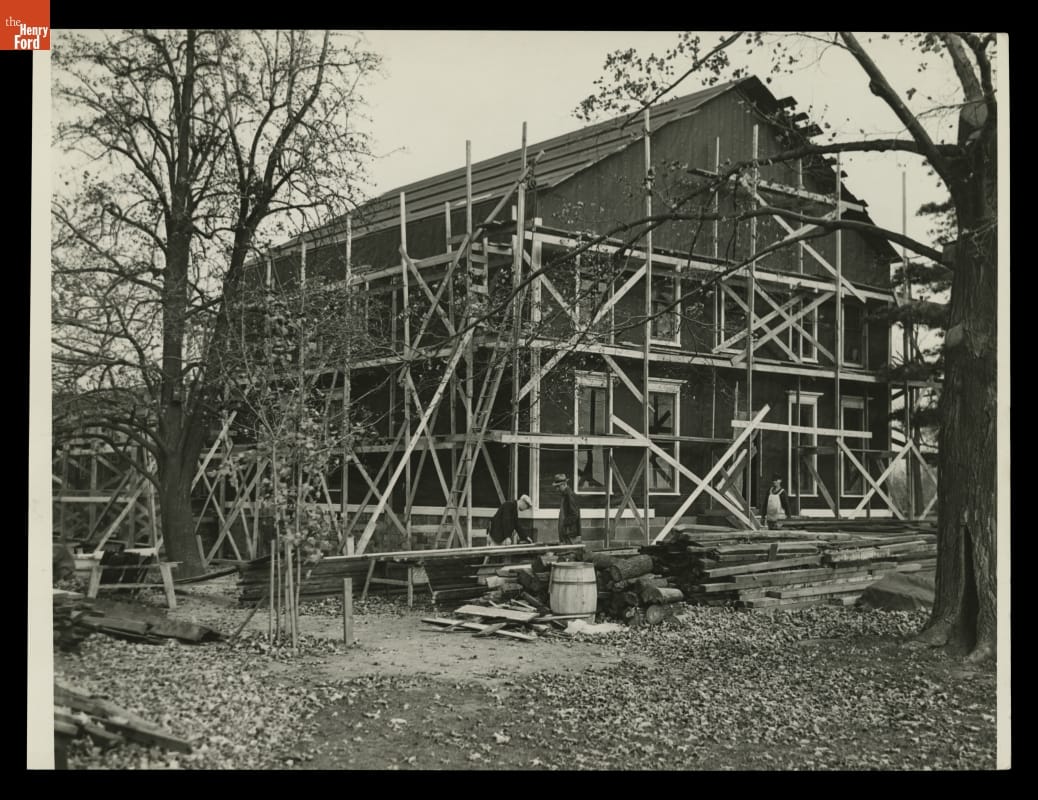
- 1936-1937
- Collections - Artifact
Noah Webster Home Construction in Greenfield Village, 1936-1937
Henry Ford admired textbook pioneer and spelling reformer Noah Webster. Ford purchased Webster's New Haven, Connecticut, home and moved it to Greenfield Village in 1936 to join a growing list of historic buildings in Ford's outdoor museum in Dearborn, Michigan. This image shows the house during reconstruction in Greenfield Village in 1936 and 1937.
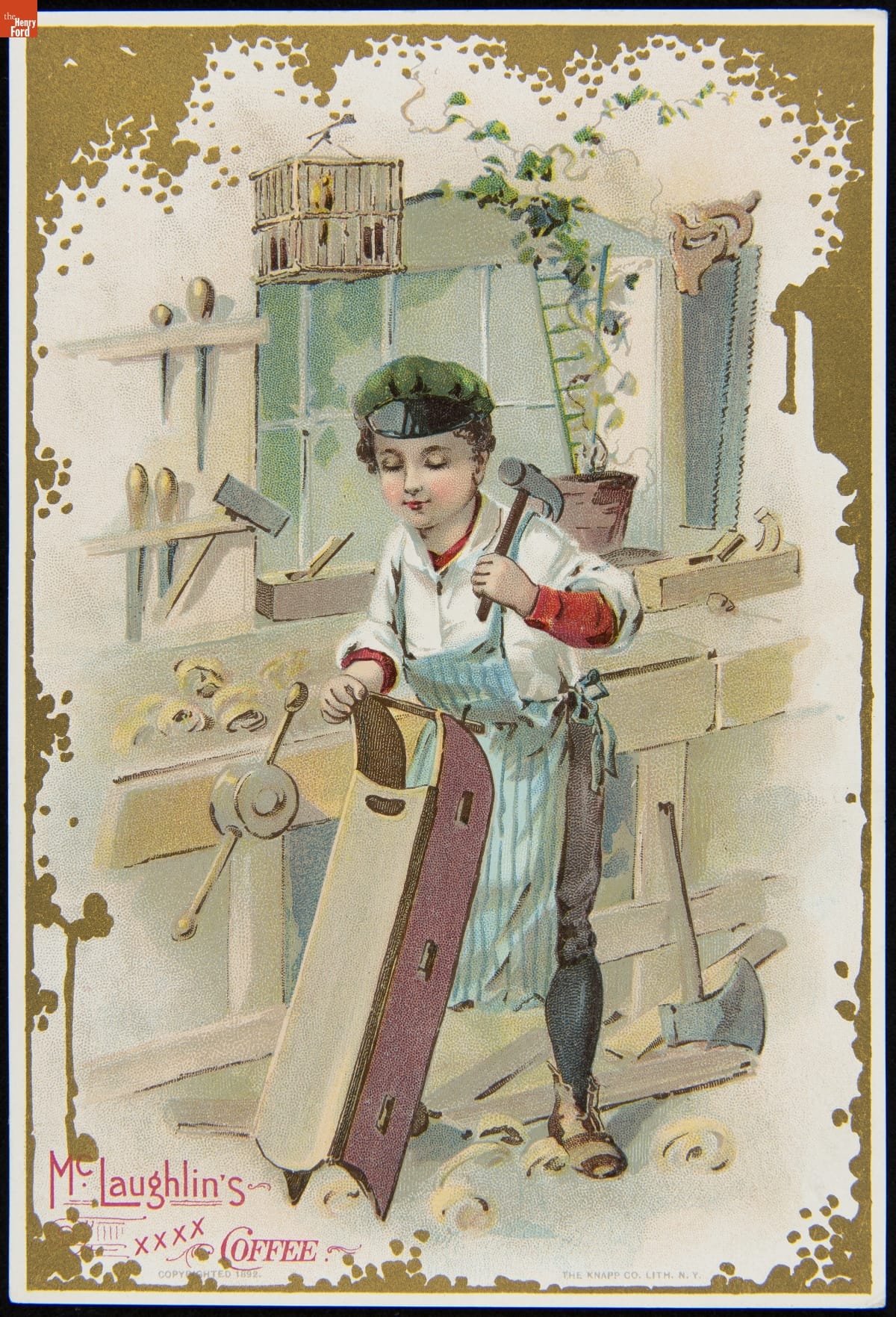
- Trade Card for McLaughlin's XXXX Coffee, W.F. McLaughlin & Co., 1892 - In the last third of the nineteenth century, an unprecedented variety of consumer goods and services flooded the American market. Advertisers, armed with new methods of color printing, bombarded potential customers with trade cards. Americans enjoyed and often saved the vibrant little advertisements found in product packages or distributed by local merchants. Many survive as historical records of commercialism in the United States.
- 1892
- Collections - Artifact
Trade Card for McLaughlin's XXXX Coffee, W.F. McLaughlin & Co., 1892
In the last third of the nineteenth century, an unprecedented variety of consumer goods and services flooded the American market. Advertisers, armed with new methods of color printing, bombarded potential customers with trade cards. Americans enjoyed and often saved the vibrant little advertisements found in product packages or distributed by local merchants. Many survive as historical records of commercialism in the United States.
- Estimate of Work from Carpenter Thomas H. Sandiford to Smith Thompson, U.S. Secretary of Navy, 1820 -
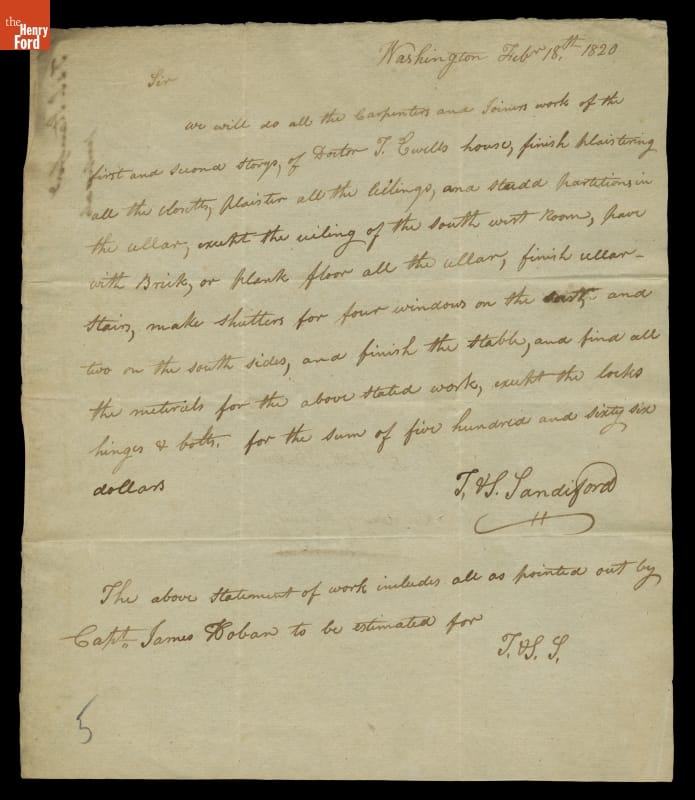
- February 18, 1820
- Collections - Artifact
Estimate of Work from Carpenter Thomas H. Sandiford to Smith Thompson, U.S. Secretary of Navy, 1820
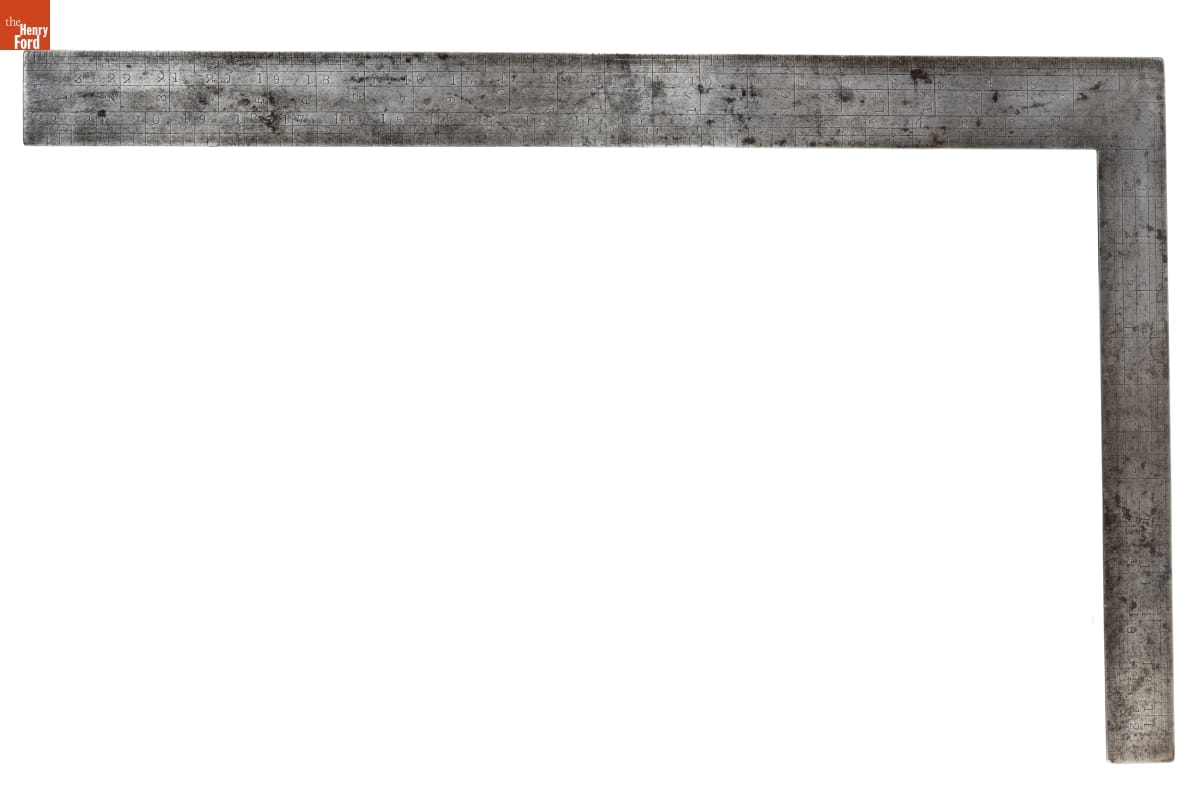
- Carpenter's Square -
- Collections - Artifact
Carpenter's Square
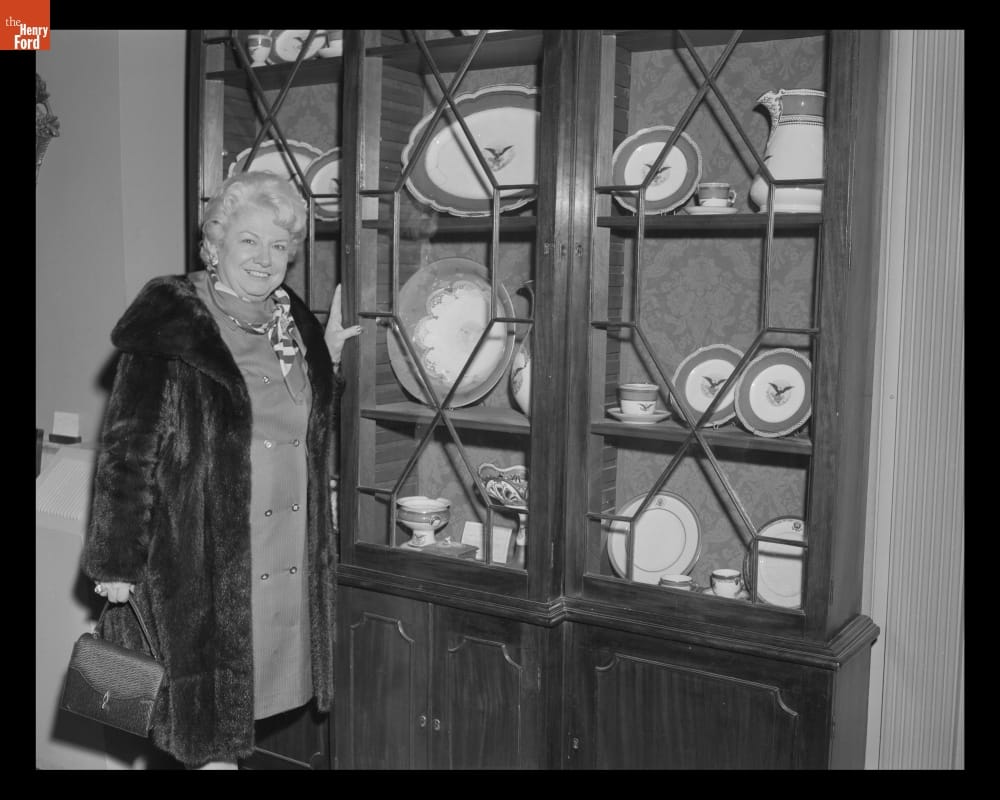
- Liz Carpenter Visiting Henry Ford Museum, March 1971 - Many famous individuals have visited Greenfield Village and Henry Ford Museum. Actors, authors, and artists have passed through the entrance gates; business leaders, royalty, politicians, and a host of others have toured the exhibits. Photographs by the institution's photographer were taken if the celebrity allowed it. Liz Carpenter, a journalist, feminist and political adviser, toured the museum in 1971.
- March 01, 1971
- Collections - Artifact
Liz Carpenter Visiting Henry Ford Museum, March 1971
Many famous individuals have visited Greenfield Village and Henry Ford Museum. Actors, authors, and artists have passed through the entrance gates; business leaders, royalty, politicians, and a host of others have toured the exhibits. Photographs by the institution's photographer were taken if the celebrity allowed it. Liz Carpenter, a journalist, feminist and political adviser, toured the museum in 1971.