
Search
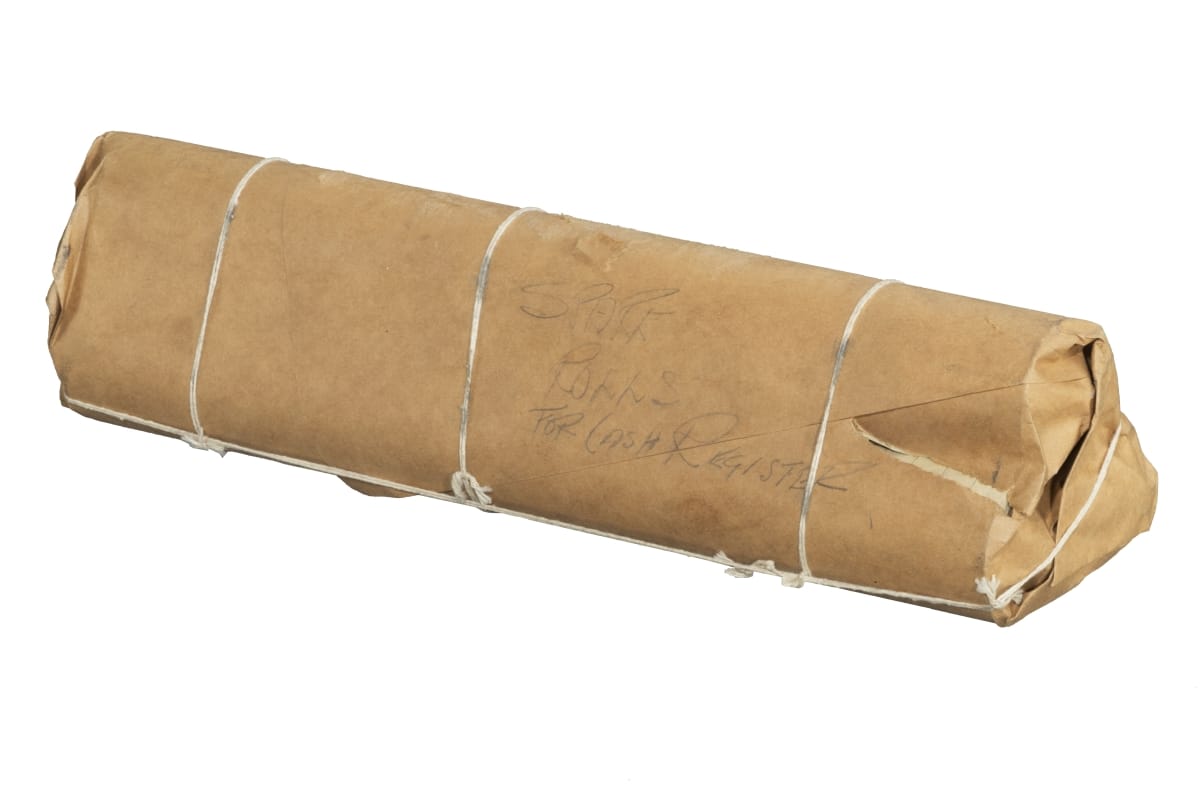
- Paper Rolls, 1914-1915 -
- 1914-1915
- Collections - Artifact
Paper Rolls, 1914-1915
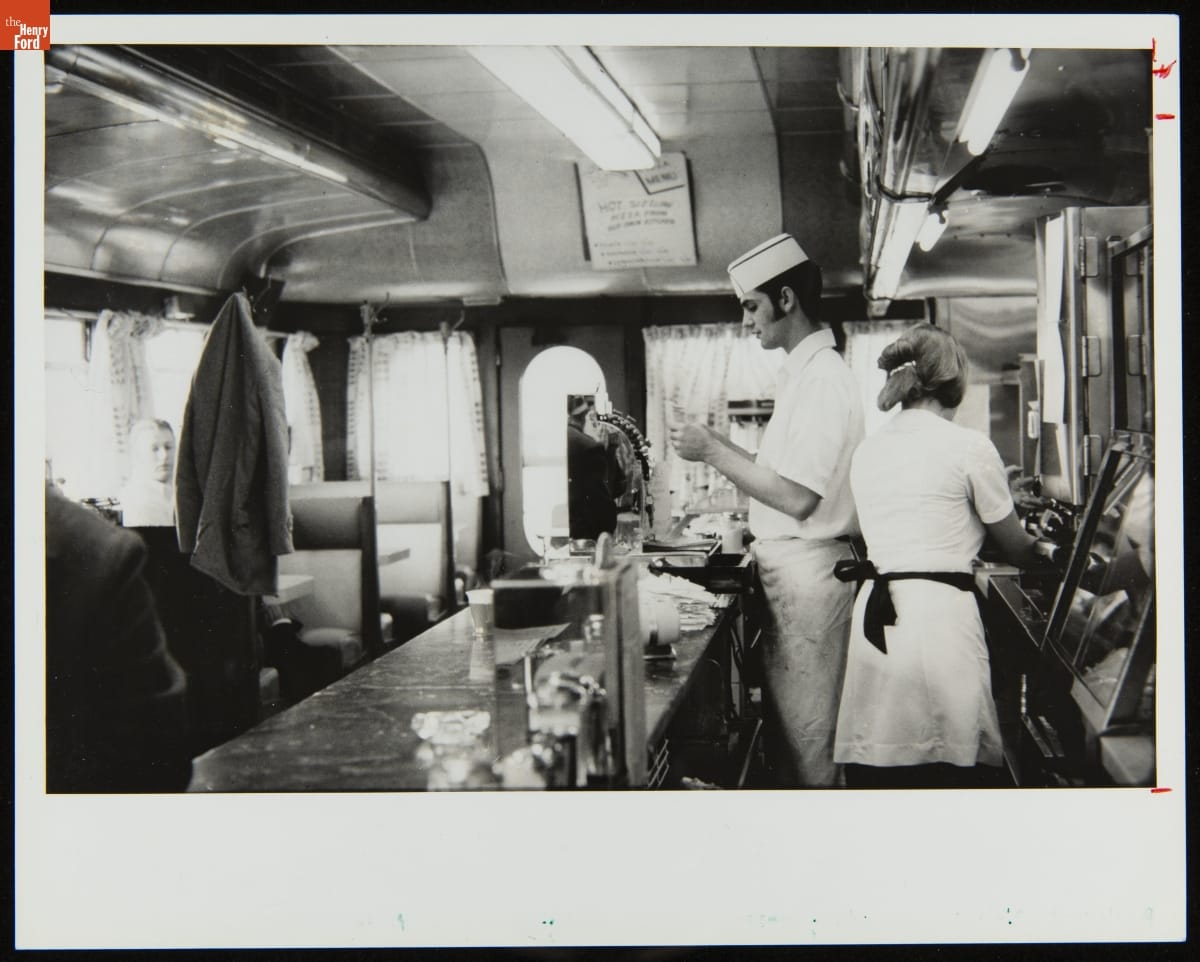
- Collin's Diner, Canaan, Connecticut, 1971 -
- 1971
- Collections - Artifact
Collin's Diner, Canaan, Connecticut, 1971
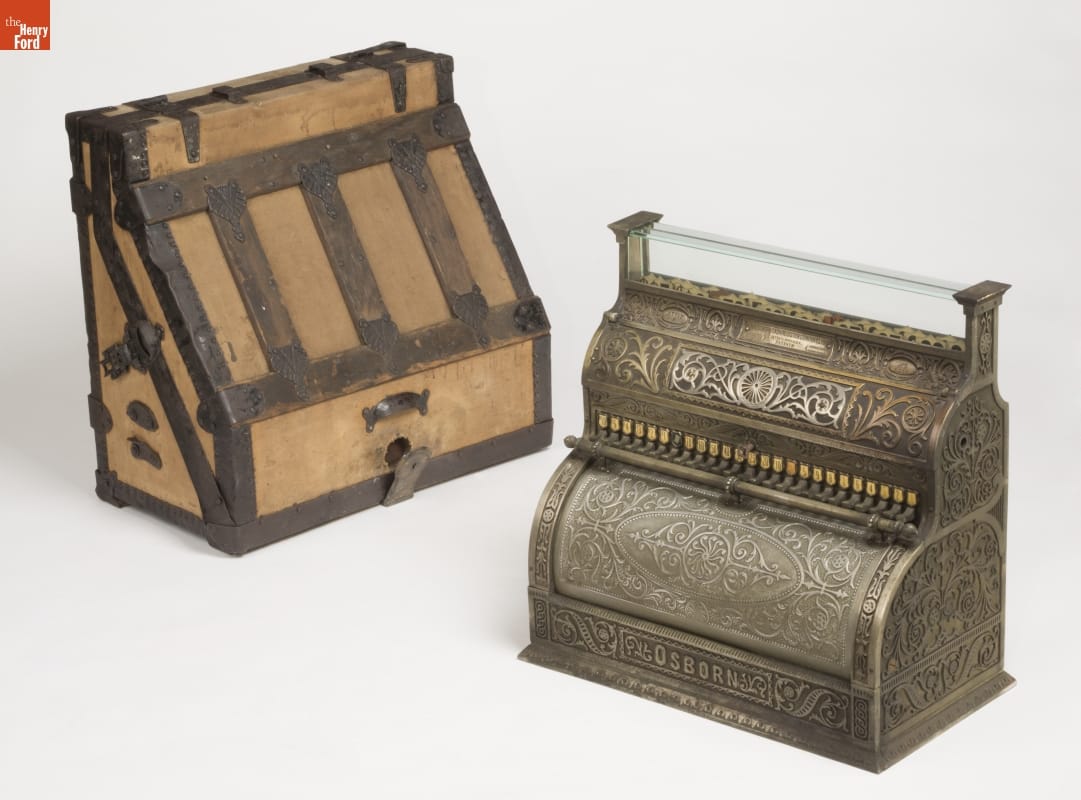
- Osborn Cash Register, Model 8,1896-1900 -
- 1896-1900
- Collections - Artifact
Osborn Cash Register, Model 8,1896-1900
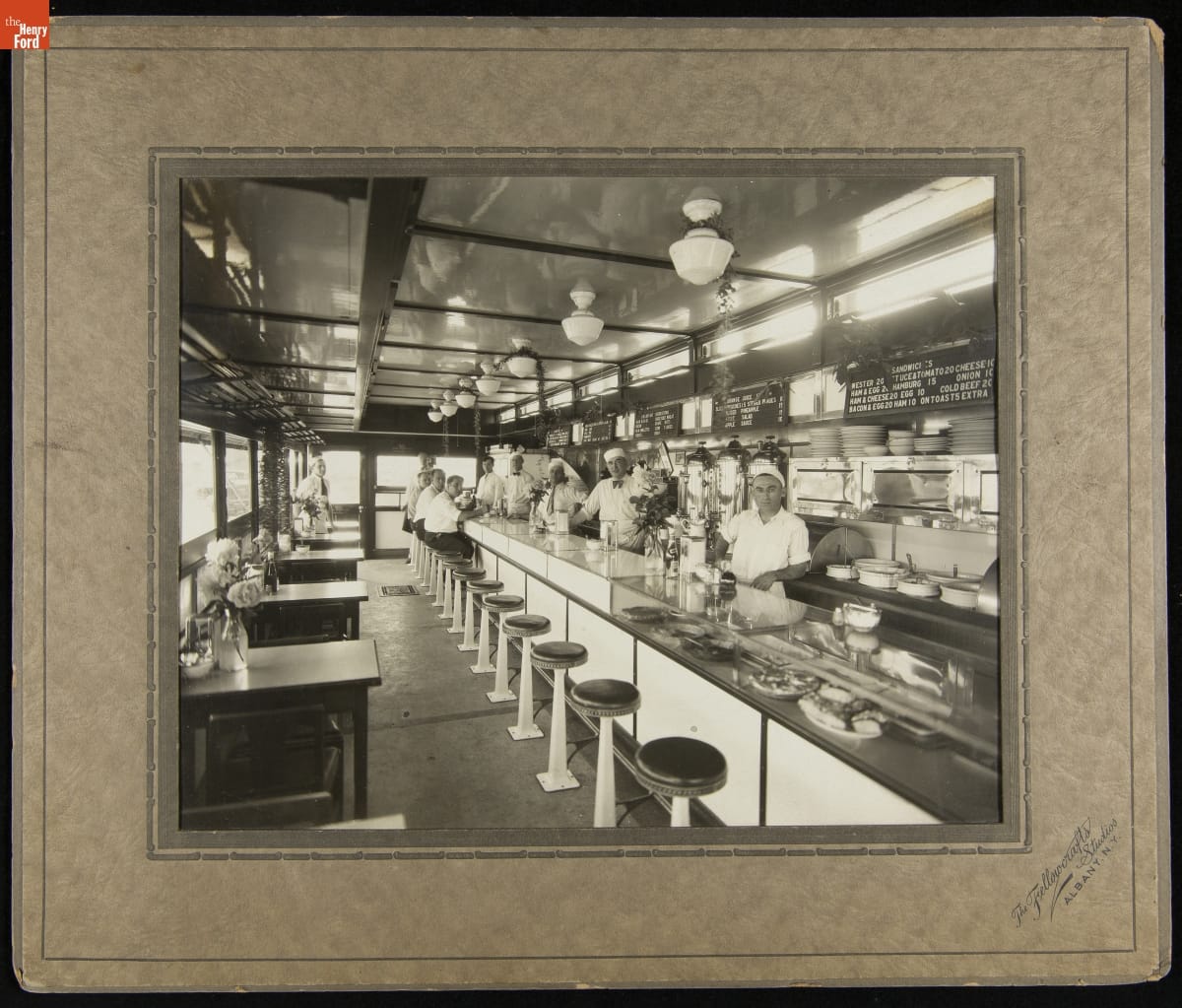
- Serving Food at an Unidentified Brill Steel Diner, 1927-1932 - Since 1868, the J. G. Brill Company had manufactured horsecars, railroad cars, and streetcars. With the increased popularity of diners in the 1920s, Brill introduced a line of all-steel diners in 1927. This photograph shows the interior of a Brill Steel Diner, possibly from Albany, New York, dating from between 1927 and 1932.
- 1927-1932
- Collections - Artifact
Serving Food at an Unidentified Brill Steel Diner, 1927-1932
Since 1868, the J. G. Brill Company had manufactured horsecars, railroad cars, and streetcars. With the increased popularity of diners in the 1920s, Brill introduced a line of all-steel diners in 1927. This photograph shows the interior of a Brill Steel Diner, possibly from Albany, New York, dating from between 1927 and 1932.
- Robot Cashier Featured in "The Diner" Magazine -
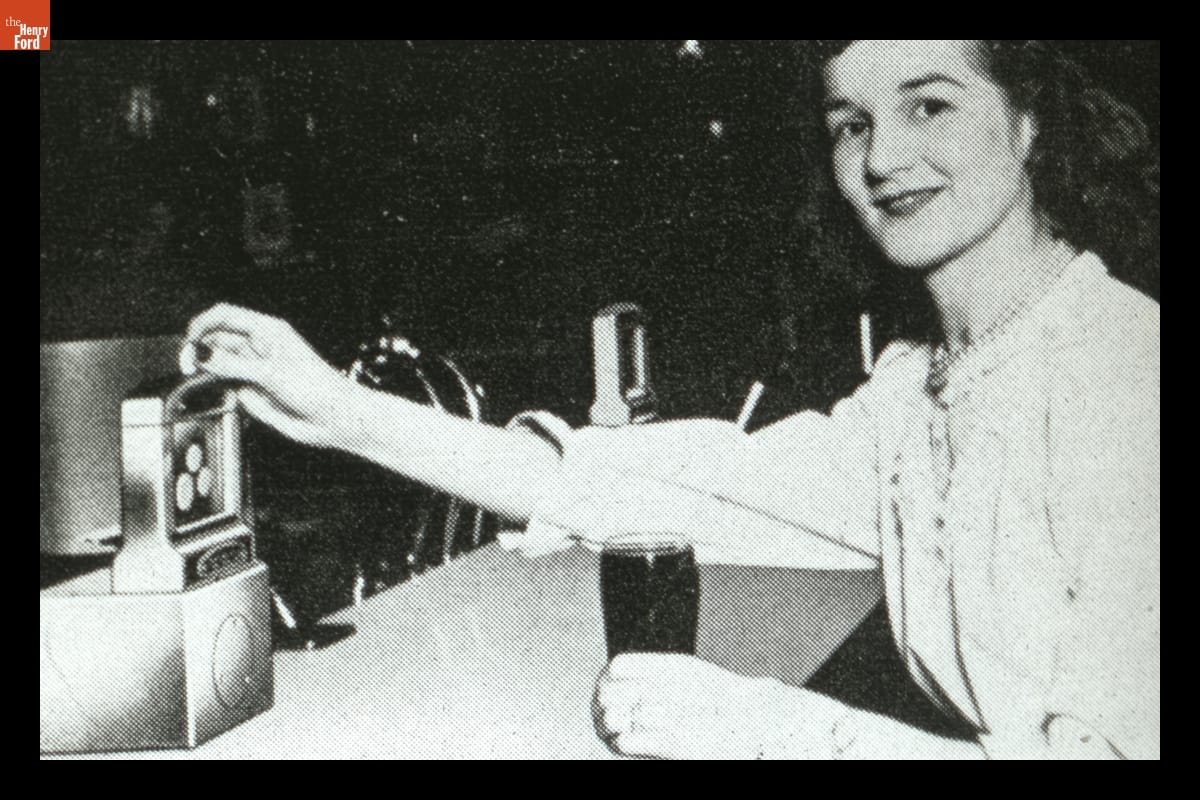
- January 01, 1953
- Collections - Artifact
Robot Cashier Featured in "The Diner" Magazine
- Employees of the Modern Diner, Pawtucket, Rhode Island, circa 1940 -
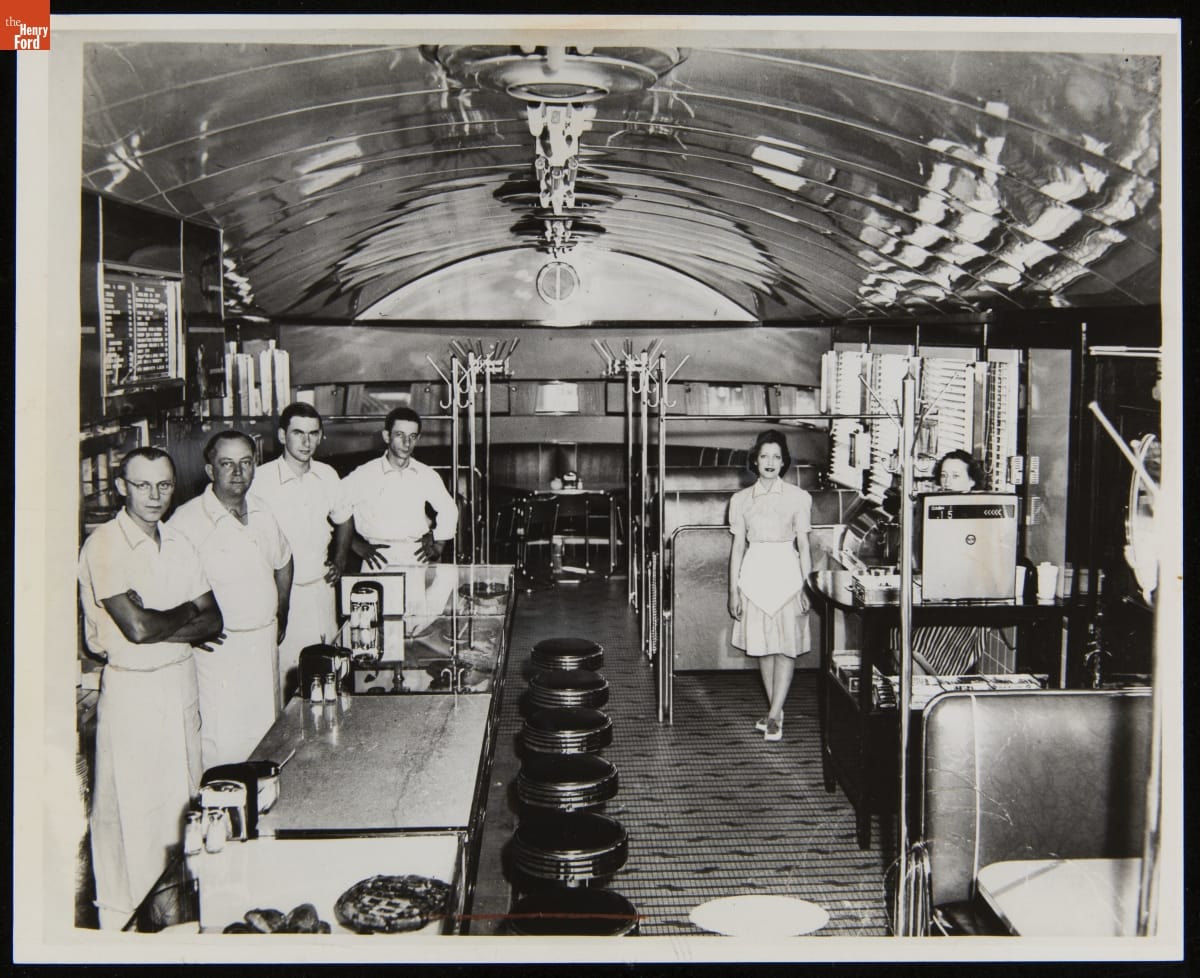
- circa 1940
- Collections - Artifact
Employees of the Modern Diner, Pawtucket, Rhode Island, circa 1940
- Workers in the Lock & Drill Department, National Cash Register, Dayton, Ohio, circa 1902 - From 1895 to 1924, the Detroit Publishing Company was one of the major image publishers in the world. The company's wide-ranging stock of original photographs documented life and landscapes from across the nation and around the globe. From the tens of thousands of negatives, the company created prints, postcards, lantern slides, panoramas, and other merchandise for sale to educators, businessmen, advertisers, homeowners and travelers.
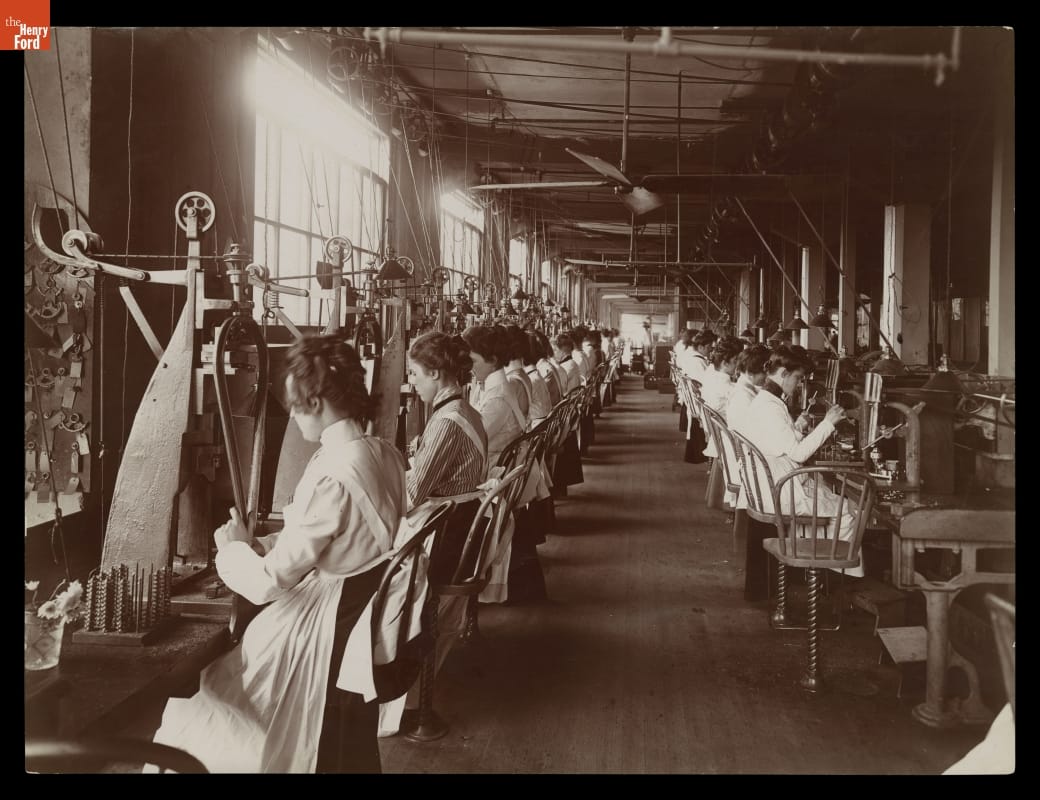
- circa 1902
- Collections - Artifact
Workers in the Lock & Drill Department, National Cash Register, Dayton, Ohio, circa 1902
From 1895 to 1924, the Detroit Publishing Company was one of the major image publishers in the world. The company's wide-ranging stock of original photographs documented life and landscapes from across the nation and around the globe. From the tens of thousands of negatives, the company created prints, postcards, lantern slides, panoramas, and other merchandise for sale to educators, businessmen, advertisers, homeowners and travelers.
- Trade Card for the National Cash Register's Use at the World's Columbian Exposition, National Cash Register Co., circa 1893 - In the last third of the nineteenth century, an unprecedented variety of consumer goods and services flooded the American market. Advertisers, armed with new methods of color printing, bombarded potential customers with trade cards. Americans enjoyed and often saved the vibrant little advertisements found in product packages or distributed by local merchants. Many survive as historical records of commercialism in the United States.
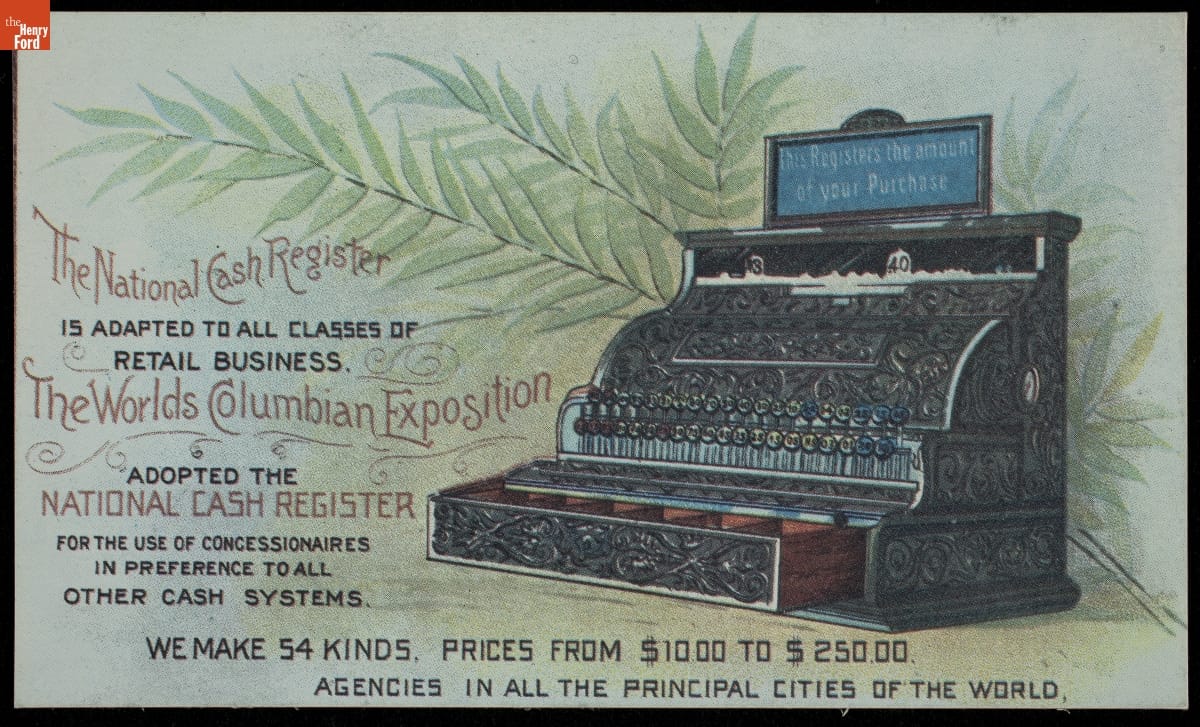
- circa 1893
- Collections - Artifact
Trade Card for the National Cash Register's Use at the World's Columbian Exposition, National Cash Register Co., circa 1893
In the last third of the nineteenth century, an unprecedented variety of consumer goods and services flooded the American market. Advertisers, armed with new methods of color printing, bombarded potential customers with trade cards. Americans enjoyed and often saved the vibrant little advertisements found in product packages or distributed by local merchants. Many survive as historical records of commercialism in the United States.
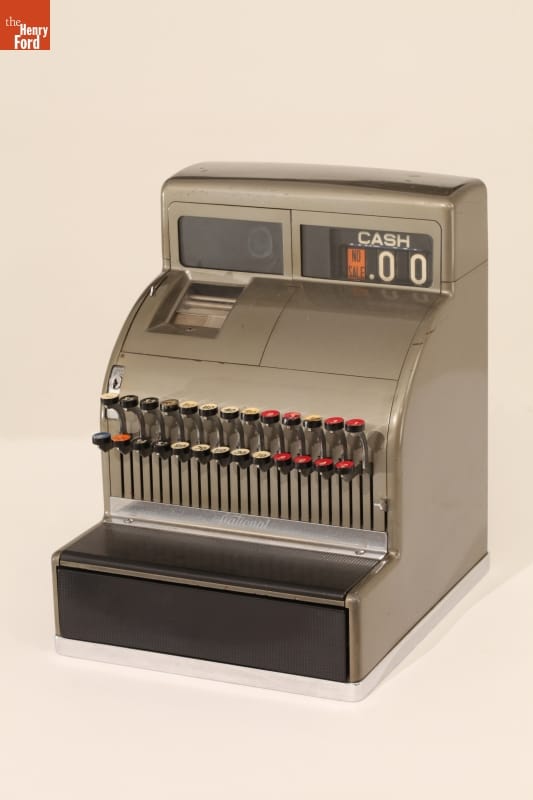
- Cash Register, circa 1950 - Cash registers were developed during the late 19th century to speed sales transactions and facilitate store accounting. By the mid-20th century, they were standard equipment in a variety of business establishments including stores, restaurants, and gas stations. This manual model from about 1950 registered up to $5.99.
- circa 1950
- Collections - Artifact
Cash Register, circa 1950
Cash registers were developed during the late 19th century to speed sales transactions and facilitate store accounting. By the mid-20th century, they were standard equipment in a variety of business establishments including stores, restaurants, and gas stations. This manual model from about 1950 registered up to $5.99.
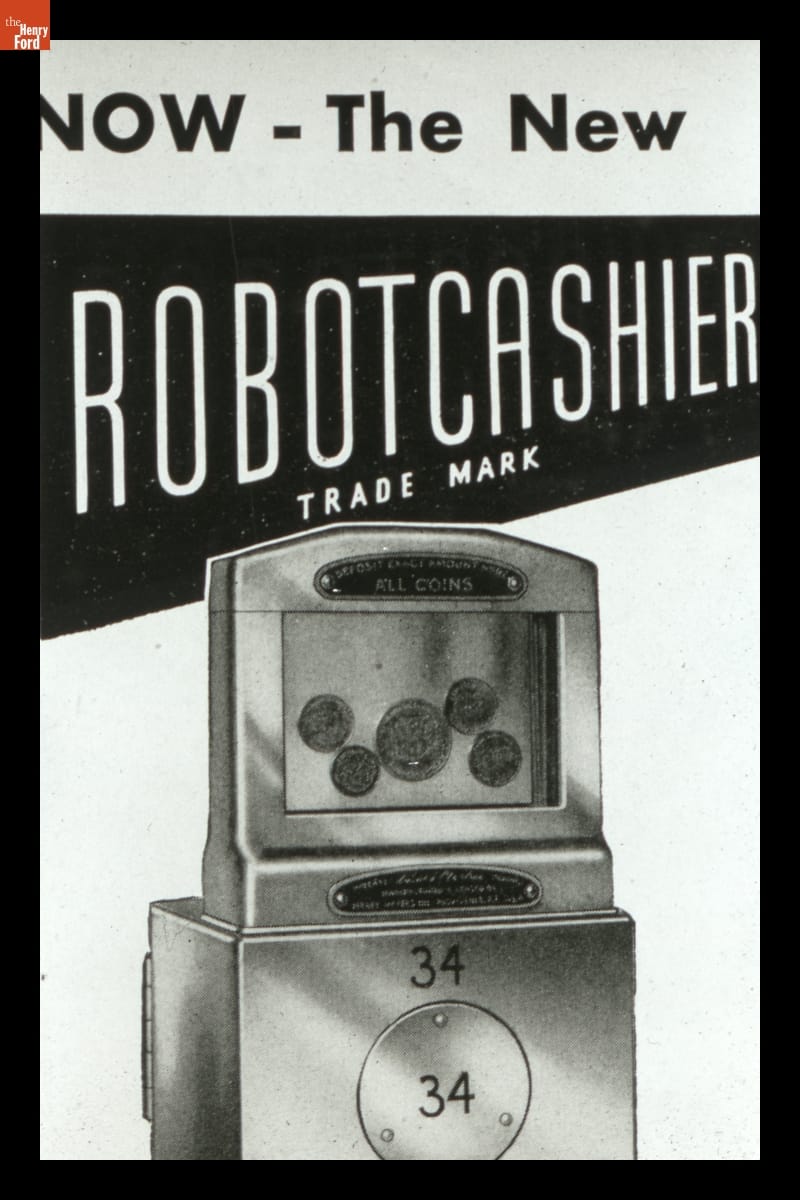
- Robot Cashier Advertisement in "The Diner" Magazine -
- January 01, 1953
- Collections - Artifact
Robot Cashier Advertisement in "The Diner" Magazine