
Search
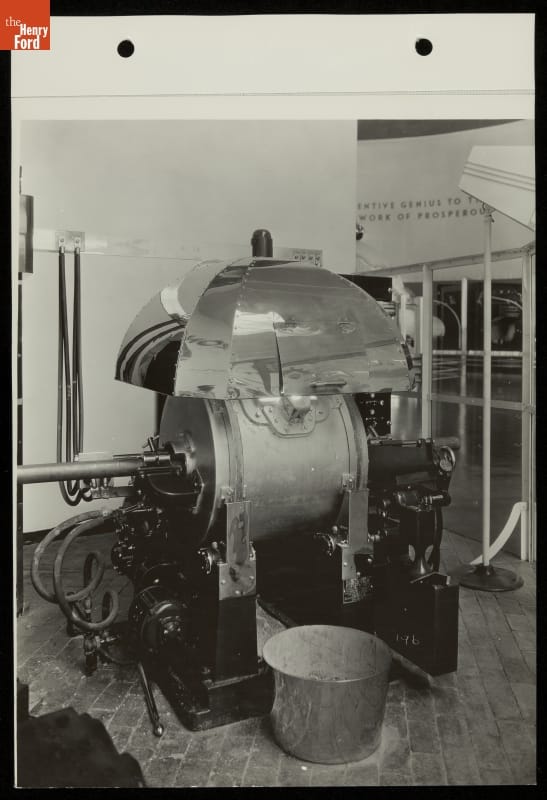
- Casting Equipment in the Ford Exhibit, Ford Building, California Pacific International Exposition, San Diego, 1935 - Through the 1930s, Ford Motor Company poured resources into exhibitions at regional and world's fairs. Henry Ford believed strongly in the educational value of such displays, and a corporate presence at the fairs benefitted public relations. Ford's popular exhibits and demonstrations -- pictured here in the 1935 California Pacific International Exposition Ford Building -- generated lots of publicity.
- 1935
- Collections - Artifact
Casting Equipment in the Ford Exhibit, Ford Building, California Pacific International Exposition, San Diego, 1935
Through the 1930s, Ford Motor Company poured resources into exhibitions at regional and world's fairs. Henry Ford believed strongly in the educational value of such displays, and a corporate presence at the fairs benefitted public relations. Ford's popular exhibits and demonstrations -- pictured here in the 1935 California Pacific International Exposition Ford Building -- generated lots of publicity.
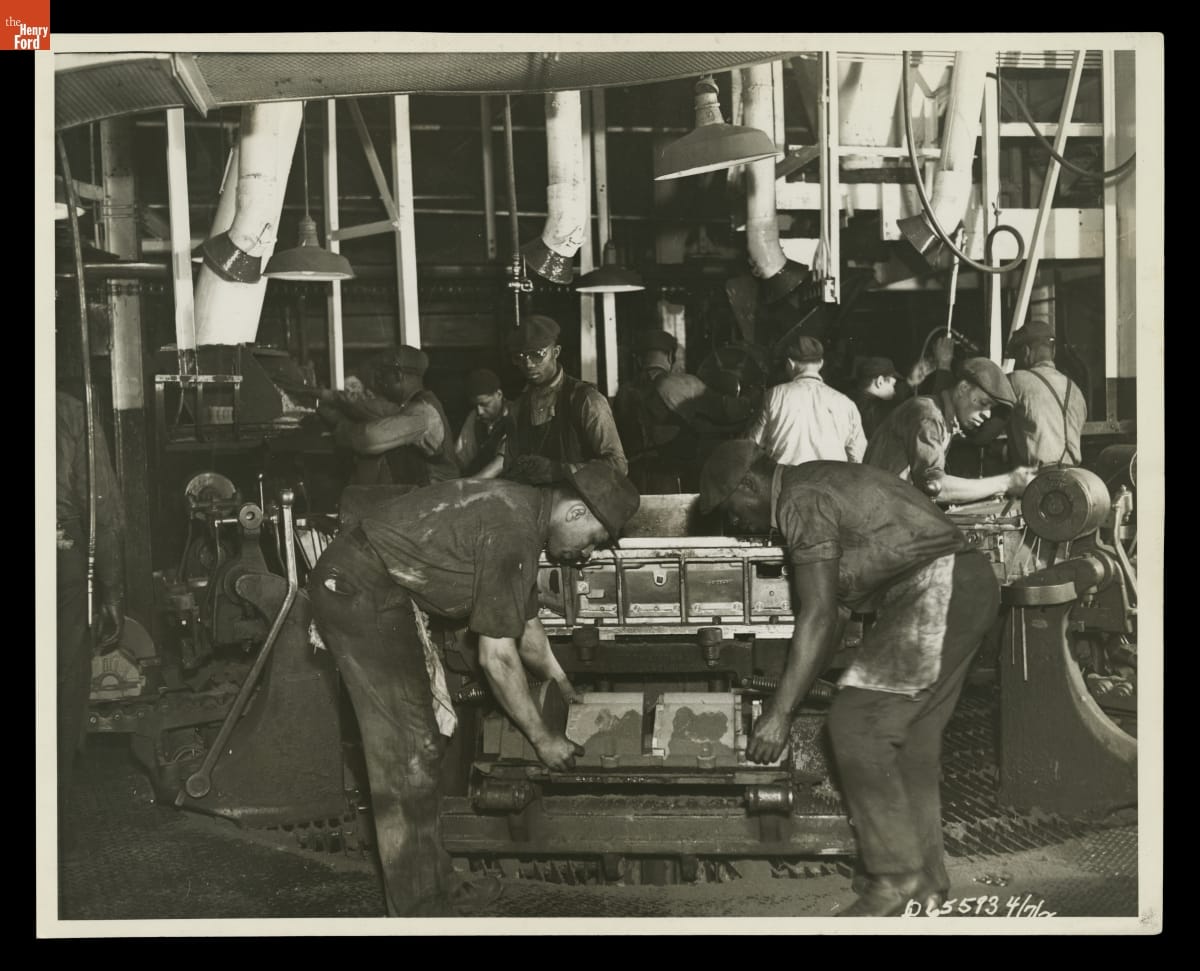
- Foundry Workers at Ford Rouge Plant, 1936 - Workers at the Ford Rouge plant's foundry poured a molten mixture of metal, coke, and limestone into molds to create cast-metal engine blocks and parts. Once "shaken out" of their molds, castings were roughly machined before heading elsewhere for finishing and assembly. The Rouge foundry set an industry benchmark in 1932 by successfully casting Ford's intricate, single-piece V-8 engine block.
- 1936
- Collections - Artifact
Foundry Workers at Ford Rouge Plant, 1936
Workers at the Ford Rouge plant's foundry poured a molten mixture of metal, coke, and limestone into molds to create cast-metal engine blocks and parts. Once "shaken out" of their molds, castings were roughly machined before heading elsewhere for finishing and assembly. The Rouge foundry set an industry benchmark in 1932 by successfully casting Ford's intricate, single-piece V-8 engine block.
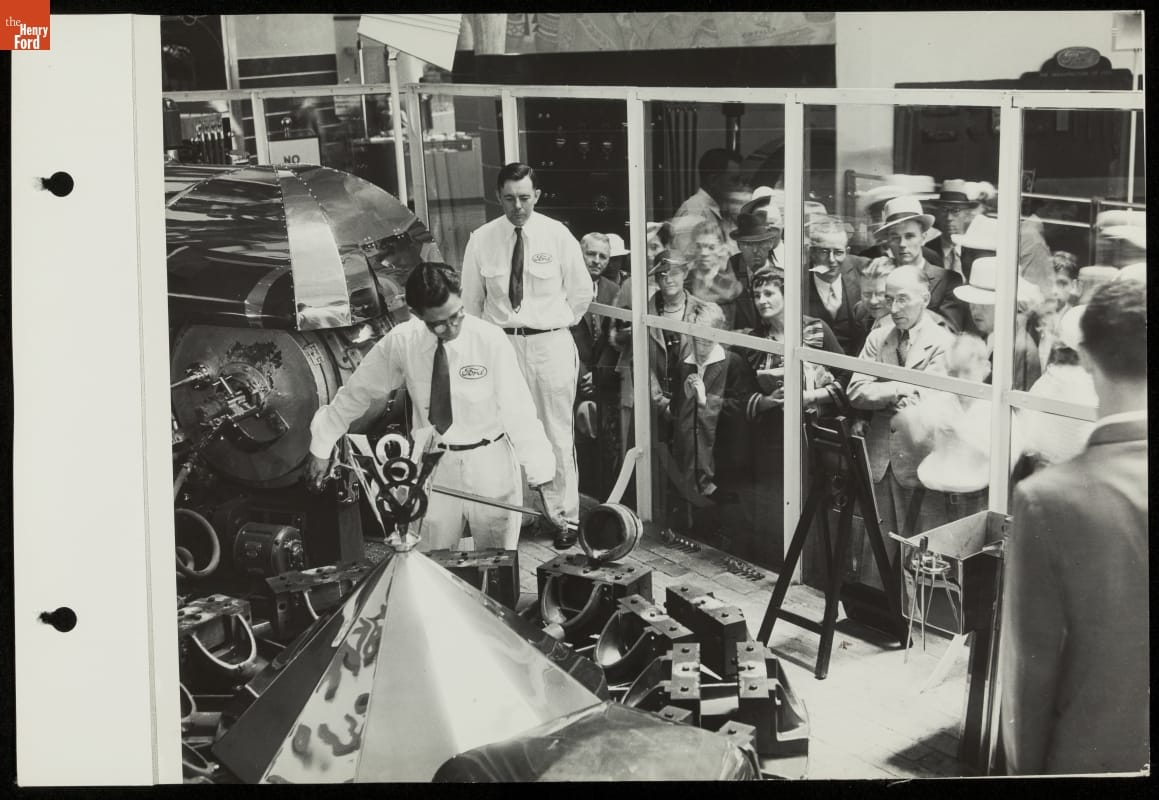
- Visitors Observing the Mold Making Process, Ford Building, California Pacific International Exposition, San Diego, 1935 - Through the 1930s, Ford Motor Company poured resources into exhibitions at regional and world's fairs. Henry Ford believed strongly in the educational value of such displays, and a corporate presence at the fairs benefitted public relations. Ford's popular exhibits and demonstrations -- pictured here in the 1935 California Pacific International Exposition Ford Building -- generated lots of publicity.
- 1935
- Collections - Artifact
Visitors Observing the Mold Making Process, Ford Building, California Pacific International Exposition, San Diego, 1935
Through the 1930s, Ford Motor Company poured resources into exhibitions at regional and world's fairs. Henry Ford believed strongly in the educational value of such displays, and a corporate presence at the fairs benefitted public relations. Ford's popular exhibits and demonstrations -- pictured here in the 1935 California Pacific International Exposition Ford Building -- generated lots of publicity.
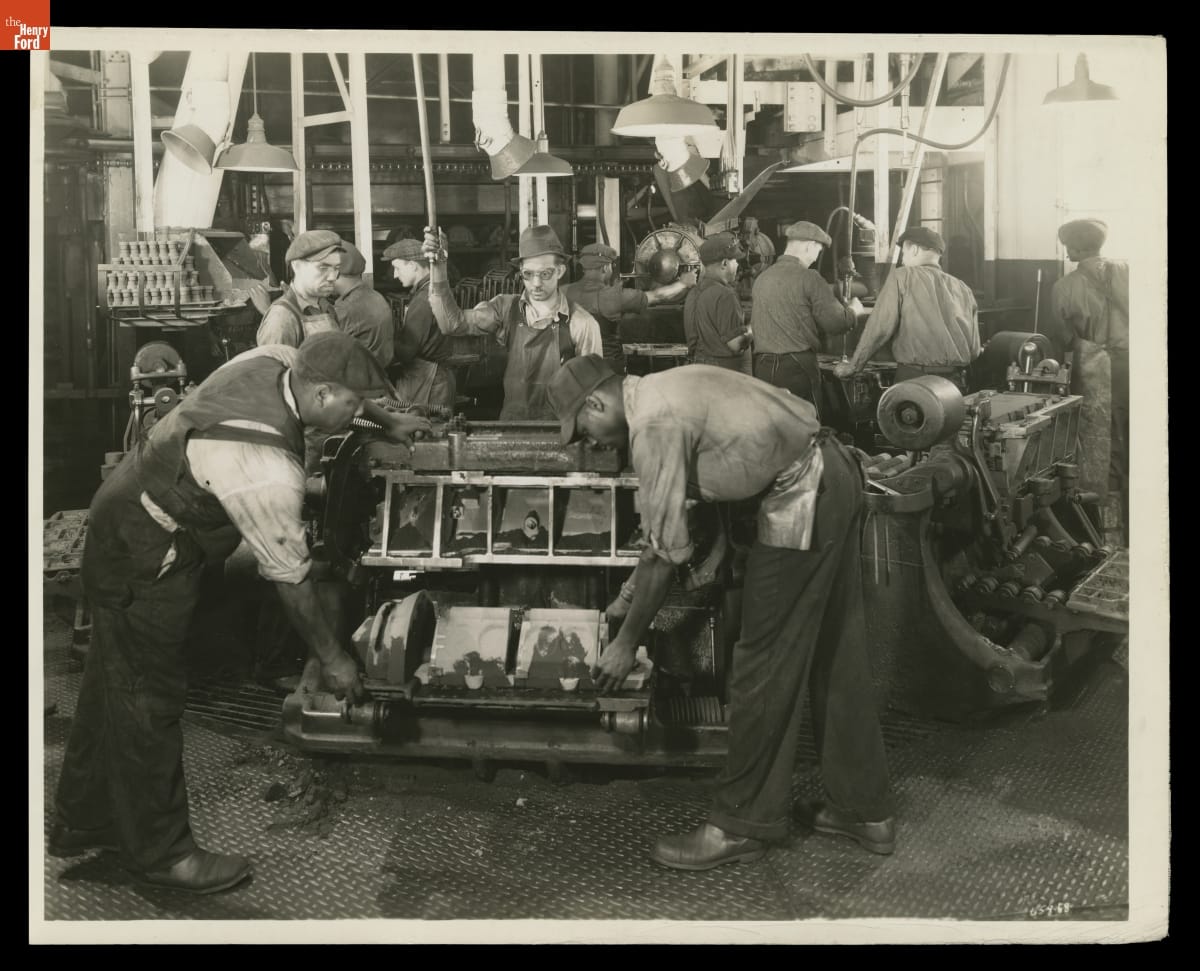
- Foundry Workers at Ford Rouge Plant, April 28, 1936 - Workers at the Ford Rouge plant's foundry poured a molten mixture of metal, coke, and limestone into molds to create cast-metal engine blocks and parts. Once "shaken out" of their molds, castings were roughly machined before heading elsewhere for finishing and assembly. The Rouge foundry set an industry benchmark in 1932 by successfully casting Ford's intricate, single-piece V-8 engine block.
- April 28, 1936
- Collections - Artifact
Foundry Workers at Ford Rouge Plant, April 28, 1936
Workers at the Ford Rouge plant's foundry poured a molten mixture of metal, coke, and limestone into molds to create cast-metal engine blocks and parts. Once "shaken out" of their molds, castings were roughly machined before heading elsewhere for finishing and assembly. The Rouge foundry set an industry benchmark in 1932 by successfully casting Ford's intricate, single-piece V-8 engine block.
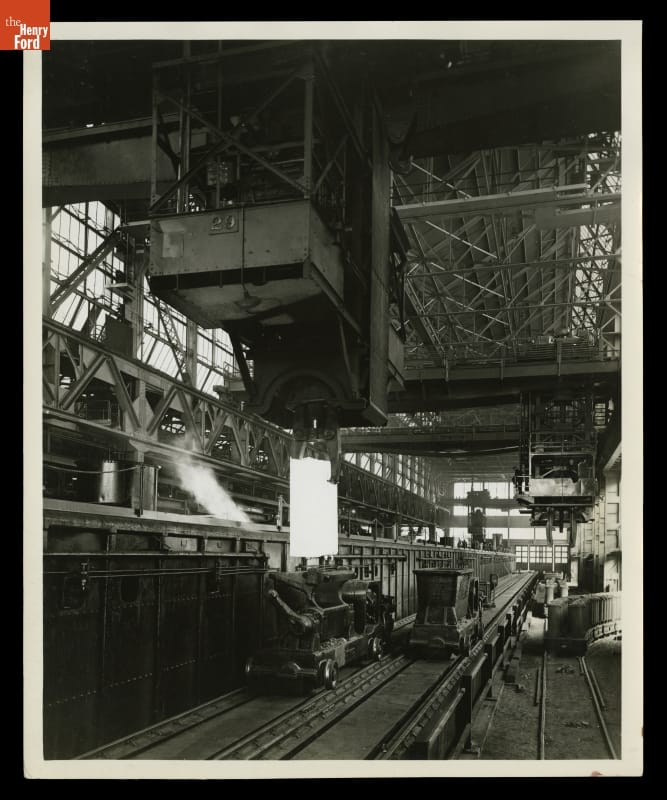
- Ten-Ton Ingot Lifted From Soaking Pit at the Ford Rouge Plant, 1936 - At its peak in the 1930s, Ford Motor Company's massive Rouge factory employed more than 100,000 workers. The complex included more than 15 million square feet of floor space and 120 miles of conveyors that turned out a new car every 49 seconds. In 1936, when this photo was taken, the people of Ford built more than 790,000 automobiles.
- 1936
- Collections - Artifact
Ten-Ton Ingot Lifted From Soaking Pit at the Ford Rouge Plant, 1936
At its peak in the 1930s, Ford Motor Company's massive Rouge factory employed more than 100,000 workers. The complex included more than 15 million square feet of floor space and 120 miles of conveyors that turned out a new car every 49 seconds. In 1936, when this photo was taken, the people of Ford built more than 790,000 automobiles.
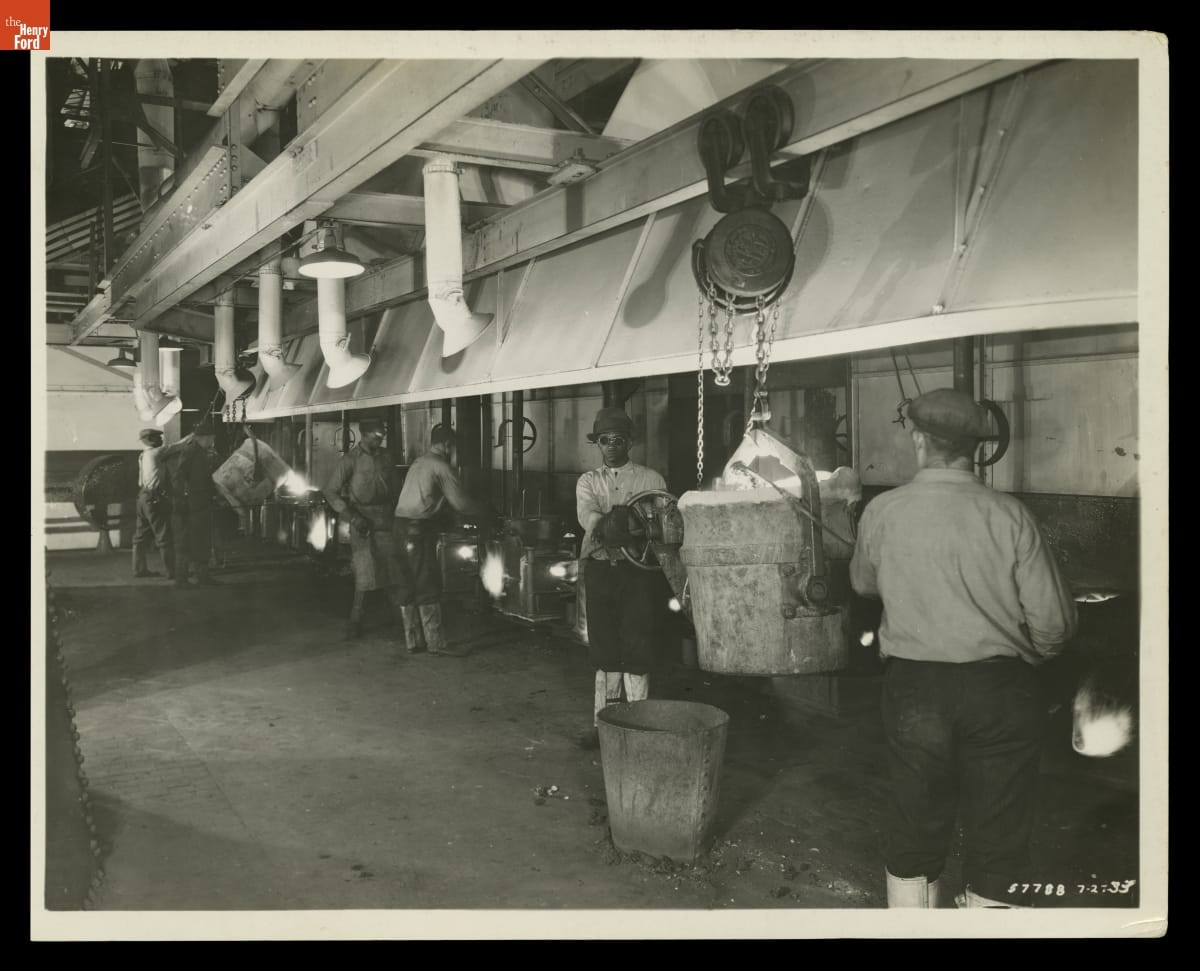
- Foundry Workers at Ford Rouge Plant, 1933 - Workers at the Ford Rouge Plant foundry poured a molten mixture of metal, coke, and limestone into molds to create engine blocks. Once "shaken out" of their molds, castings were roughly machined before heading elsewhere for finishing and assembly. The Rouge foundry set an industry benchmark in 1932 with the successful casting of Ford's intricate, single-piece V-8 engine block.
- July 22, 1933
- Collections - Artifact
Foundry Workers at Ford Rouge Plant, 1933
Workers at the Ford Rouge Plant foundry poured a molten mixture of metal, coke, and limestone into molds to create engine blocks. Once "shaken out" of their molds, castings were roughly machined before heading elsewhere for finishing and assembly. The Rouge foundry set an industry benchmark in 1932 with the successful casting of Ford's intricate, single-piece V-8 engine block.
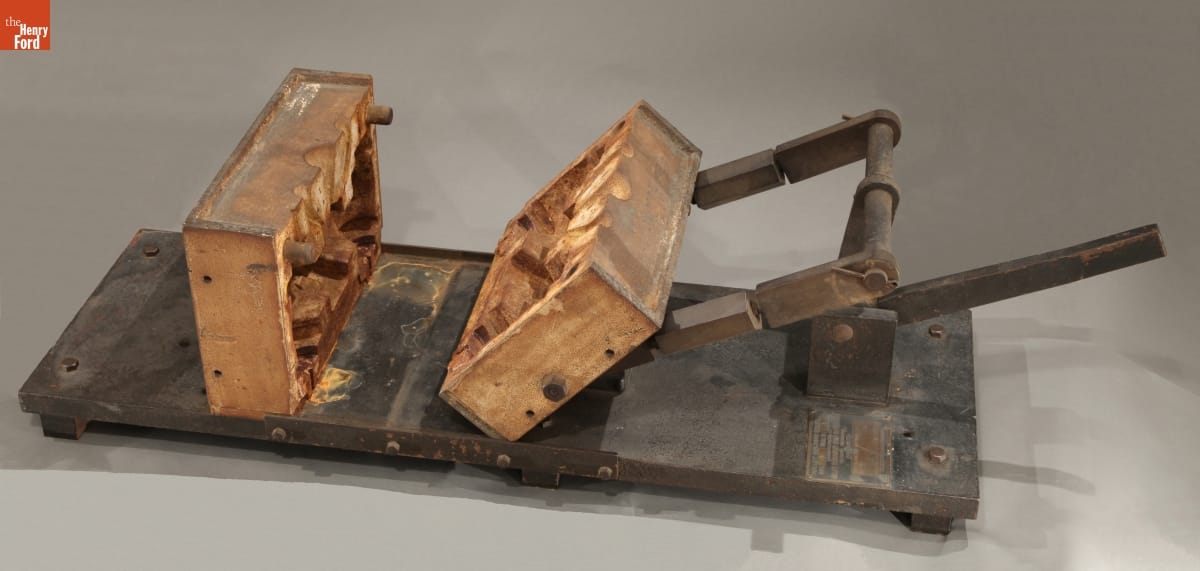
- Holley Molding Machine, Model #1, Serial #1, 1921 - Detroit-based Holley Carburetor Company supplied carburetors to nearly every major automaker in the early 1900s and later expanded its business to performance parts. This innovative molding machine improved the carburetor manufacturing process. When lined with a special coating that protected against molten iron, the mold could be used repeatedly, reducing the time and expense required for new molds.
- 1921
- Collections - Artifact
Holley Molding Machine, Model #1, Serial #1, 1921
Detroit-based Holley Carburetor Company supplied carburetors to nearly every major automaker in the early 1900s and later expanded its business to performance parts. This innovative molding machine improved the carburetor manufacturing process. When lined with a special coating that protected against molten iron, the mold could be used repeatedly, reducing the time and expense required for new molds.