
Search
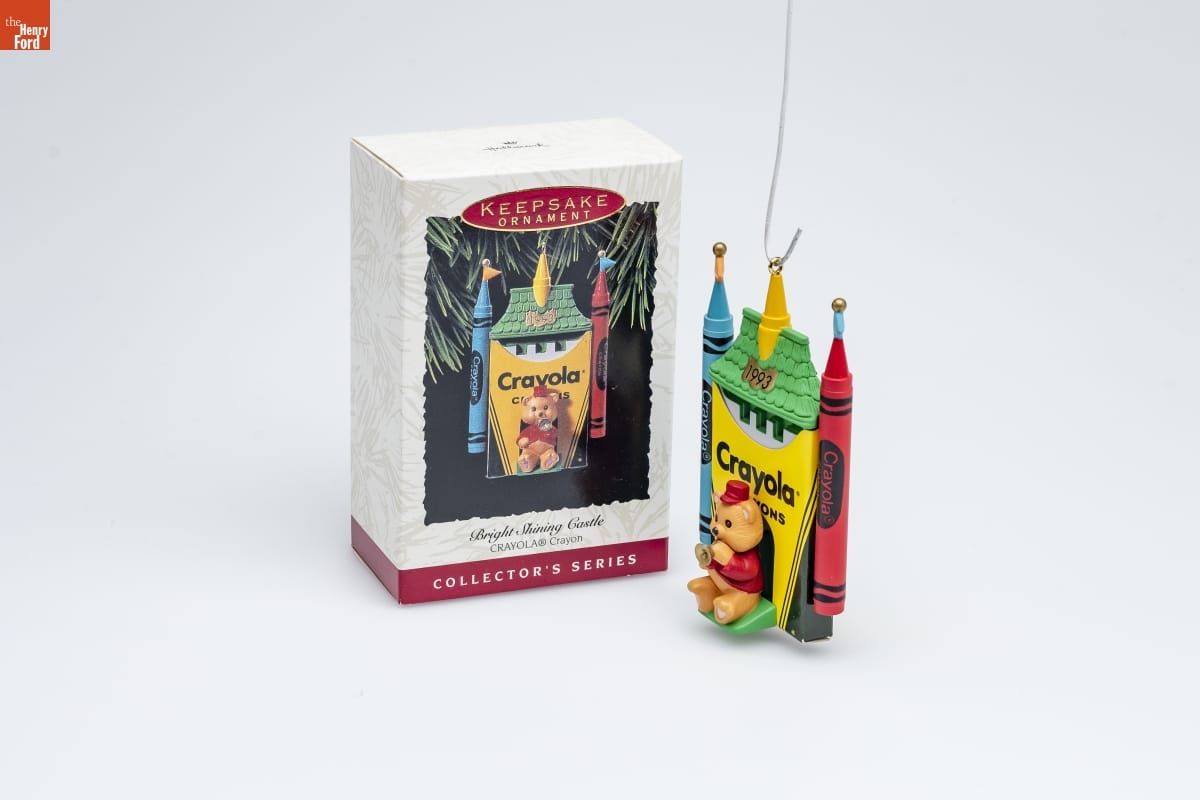
- Hallmark "CRAYOLA Crayon Series: Bright Shining Castle" Christmas Ornament, 1993 - Already known for greeting cards, Hallmark introduced a line of Christmas ornaments in 1973. The company's annual release of an increasing array of ornaments revolutionized Christmas decorating, appealing to customers' interest in marking memories and milestones as well as expressing one's personality and unique tastes.
- 1993
- Collections - Artifact
Hallmark "CRAYOLA Crayon Series: Bright Shining Castle" Christmas Ornament, 1993
Already known for greeting cards, Hallmark introduced a line of Christmas ornaments in 1973. The company's annual release of an increasing array of ornaments revolutionized Christmas decorating, appealing to customers' interest in marking memories and milestones as well as expressing one's personality and unique tastes.
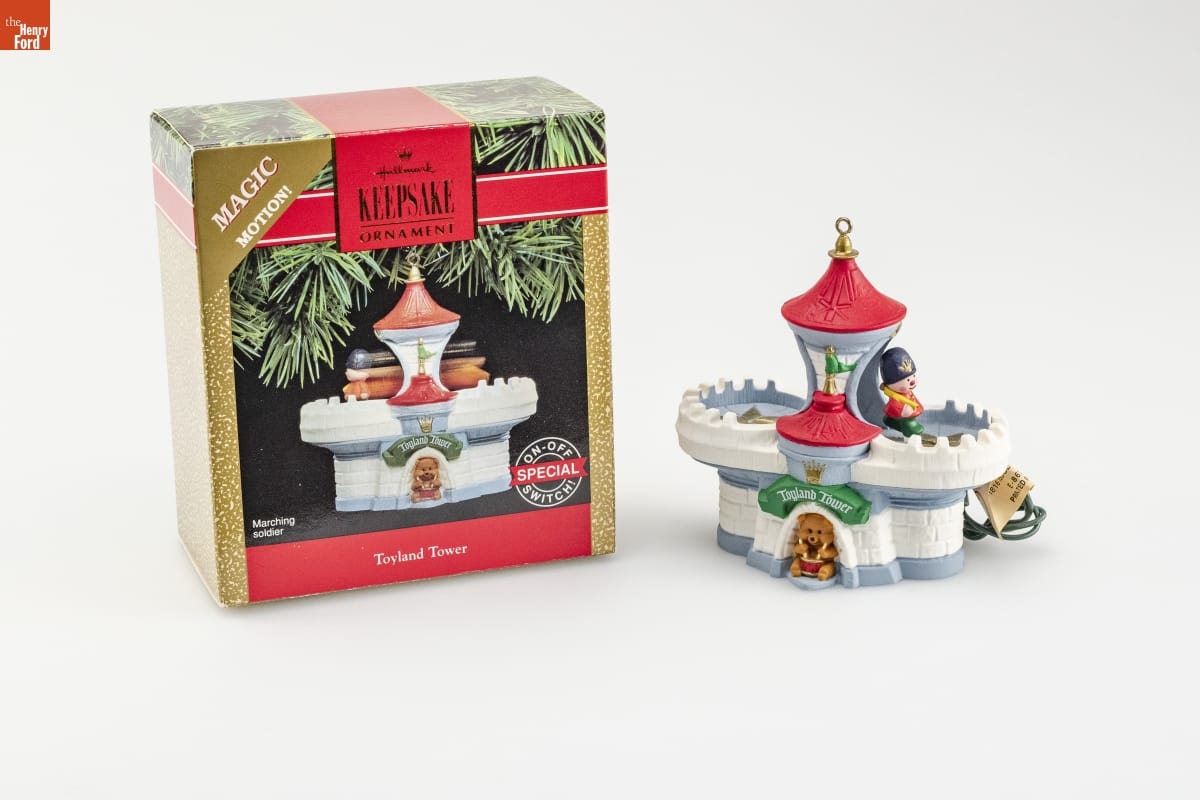
- Hallmark "Toyland Tower" Christmas Ornament, 1991 - Already known for greeting cards, Hallmark introduced a line of Christmas ornaments in 1973. The company's annual release of an increasing array of ornaments revolutionized Christmas decorating, appealing to customers' interest in marking memories and milestones as well as expressing one's personality and unique tastes.
- 1991
- Collections - Artifact
Hallmark "Toyland Tower" Christmas Ornament, 1991
Already known for greeting cards, Hallmark introduced a line of Christmas ornaments in 1973. The company's annual release of an increasing array of ornaments revolutionized Christmas decorating, appealing to customers' interest in marking memories and milestones as well as expressing one's personality and unique tastes.
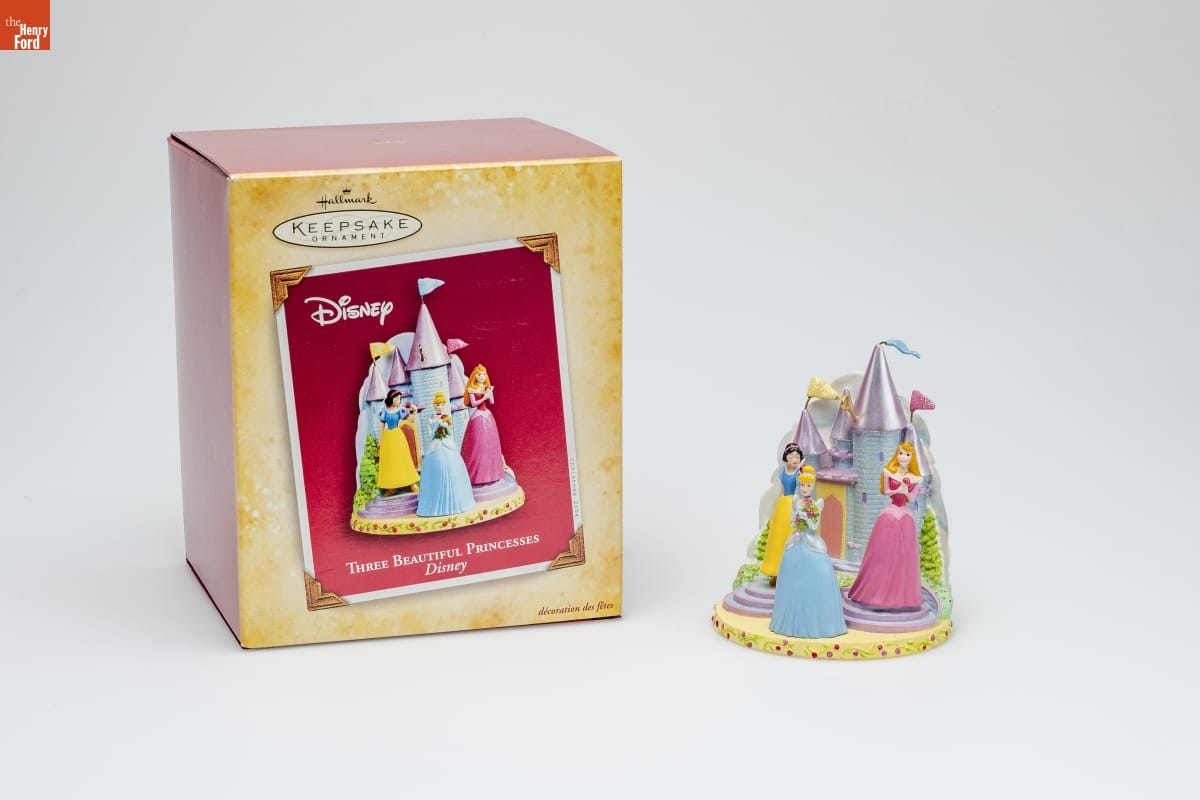
- Hallmark "Disney: Three Beautiful Princesses" Christmas Ornament, 2004 - Already known for greeting cards, Hallmark introduced a line of Christmas ornaments in 1973. The company's annual release of an increasing array of ornaments revolutionized Christmas decorating, appealing to customers' interest in marking memories and milestones as well as expressing one's personality and unique tastes.
- 2004
- Collections - Artifact
Hallmark "Disney: Three Beautiful Princesses" Christmas Ornament, 2004
Already known for greeting cards, Hallmark introduced a line of Christmas ornaments in 1973. The company's annual release of an increasing array of ornaments revolutionized Christmas decorating, appealing to customers' interest in marking memories and milestones as well as expressing one's personality and unique tastes.
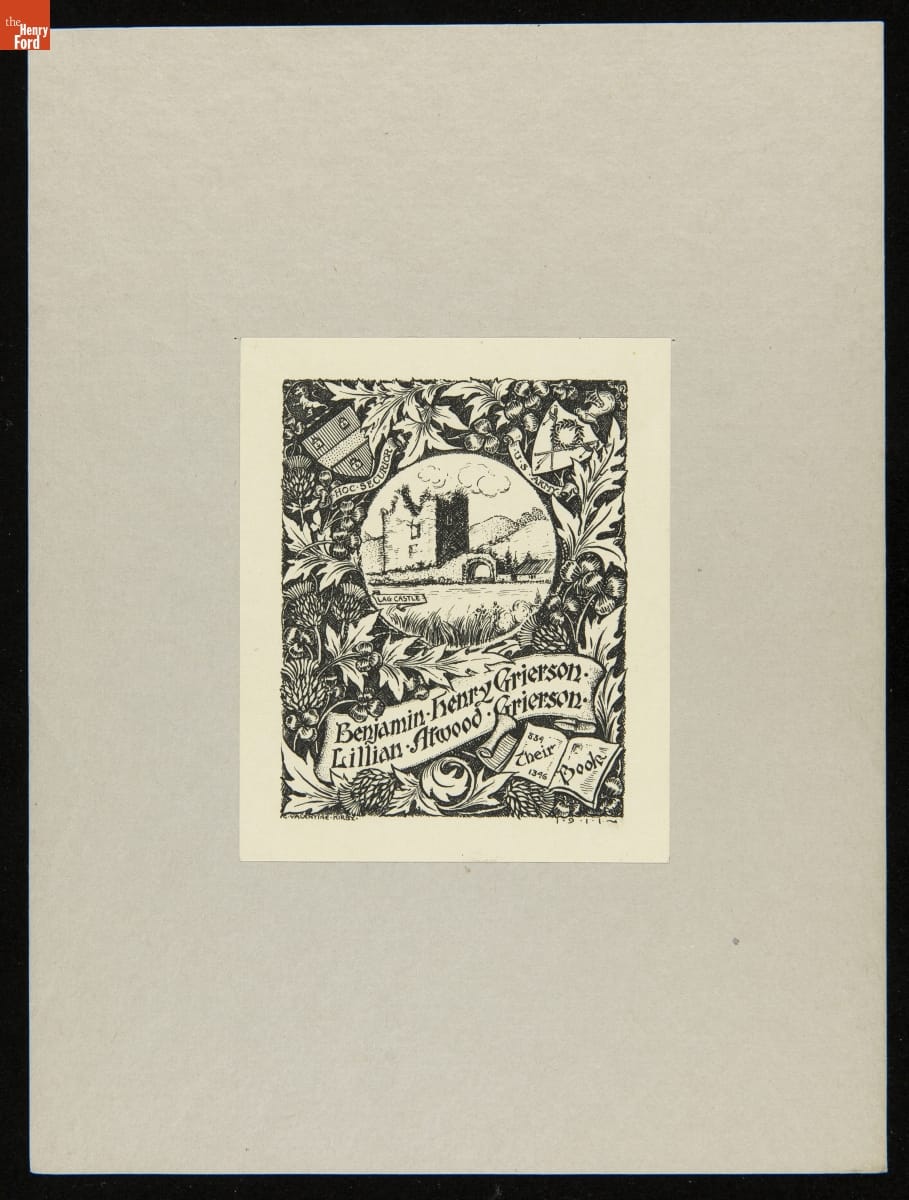
- Bookplate of Benjamin Henry Grierson and Lillian Atwood Grierson, 1911 - Bookplates show ownership, but they can also tell us more. Often pasted on the inside of a book's front cover or endpaper, these printed labels contain the owner's name and sometimes the words "ex-libris" (Latin for "from the library of"). Coats of arms, crests, other decorative images, poems, mottoes, and even font type provide insight into the beliefs, passions, and interests of the book's owner.
- 1911
- Collections - Artifact
Bookplate of Benjamin Henry Grierson and Lillian Atwood Grierson, 1911
Bookplates show ownership, but they can also tell us more. Often pasted on the inside of a book's front cover or endpaper, these printed labels contain the owner's name and sometimes the words "ex-libris" (Latin for "from the library of"). Coats of arms, crests, other decorative images, poems, mottoes, and even font type provide insight into the beliefs, passions, and interests of the book's owner.
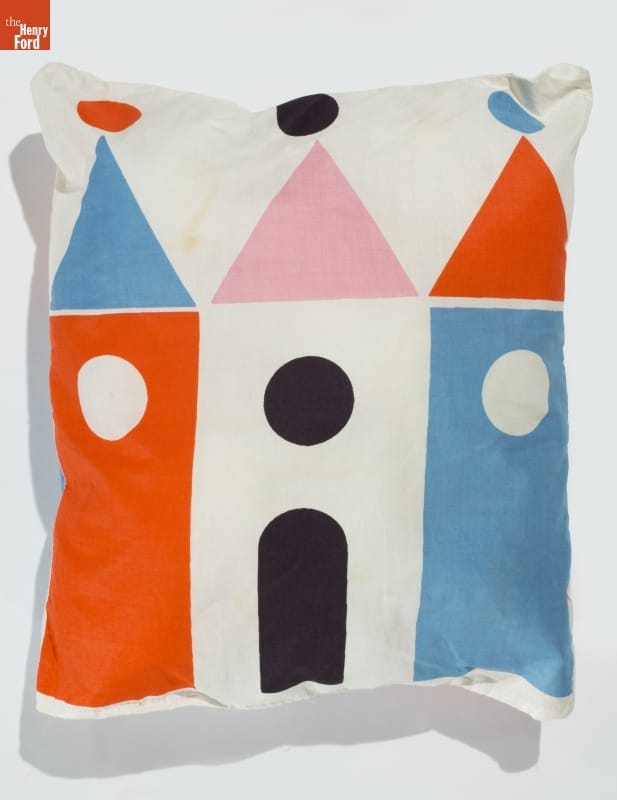
- Throw Pillow, "Castle", Designed by Alexander Girard for Herman Miller's Textiles & Objects Shop, 1960-1962 - In 1961, Herman Miller opened the avant-garde "Textiles and Objects Shop" in New York City. Designer Alexander Girard conceived of the idea, designed the shop, and stocked it with his own textiles, furniture, and objects, like this pillow. The shop also sold furniture designed by other Herman Miller designers, like Charles and Ray Eames and George Nelson, and folk art objects carefully selected by Girard.
- 1960-1962
- Collections - Artifact
Throw Pillow, "Castle", Designed by Alexander Girard for Herman Miller's Textiles & Objects Shop, 1960-1962
In 1961, Herman Miller opened the avant-garde "Textiles and Objects Shop" in New York City. Designer Alexander Girard conceived of the idea, designed the shop, and stocked it with his own textiles, furniture, and objects, like this pillow. The shop also sold furniture designed by other Herman Miller designers, like Charles and Ray Eames and George Nelson, and folk art objects carefully selected by Girard.
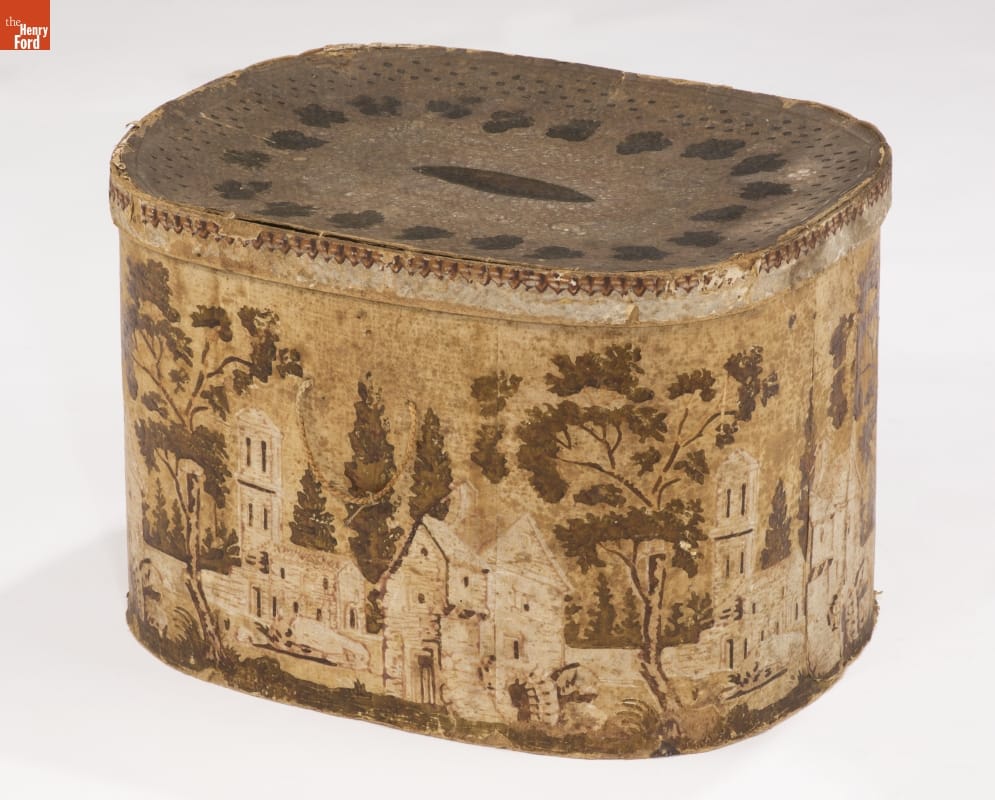
- Bandbox, circa 1835 - In the early 1800s, Americans used bandboxes to store clothing, accessories, and other small items. Bandboxes were handy containers in the home or when traveling by stage, boat, or rail. Manufacturers covered these inexpensive pasteboard or wooden boxes with colorful papers. This bandbox's paper depicts an idyllic scene with a towered home and mill.
- circa 1835
- Collections - Artifact
Bandbox, circa 1835
In the early 1800s, Americans used bandboxes to store clothing, accessories, and other small items. Bandboxes were handy containers in the home or when traveling by stage, boat, or rail. Manufacturers covered these inexpensive pasteboard or wooden boxes with colorful papers. This bandbox's paper depicts an idyllic scene with a towered home and mill.
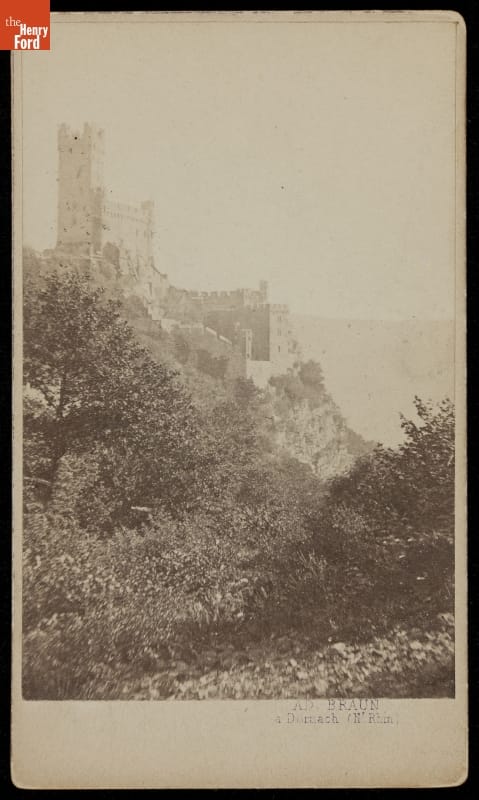
- "Quais de Bingen et Chateau d'Ehrenfels" (Embankment at Castle Ehrenfels), circa 1860 - This French carte-de-visite shows a European castle around 1860. Cartes-de-visite - small photographic prints on cardboard stock - were made in professional photographers' studios. Americans collected and exchanged cartes-de-visites, which remained popular in the United States from the Civil War in the 1860s through the 1880s.
- circa 1860
- Collections - Artifact
"Quais de Bingen et Chateau d'Ehrenfels" (Embankment at Castle Ehrenfels), circa 1860
This French carte-de-visite shows a European castle around 1860. Cartes-de-visite - small photographic prints on cardboard stock - were made in professional photographers' studios. Americans collected and exchanged cartes-de-visites, which remained popular in the United States from the Civil War in the 1860s through the 1880s.
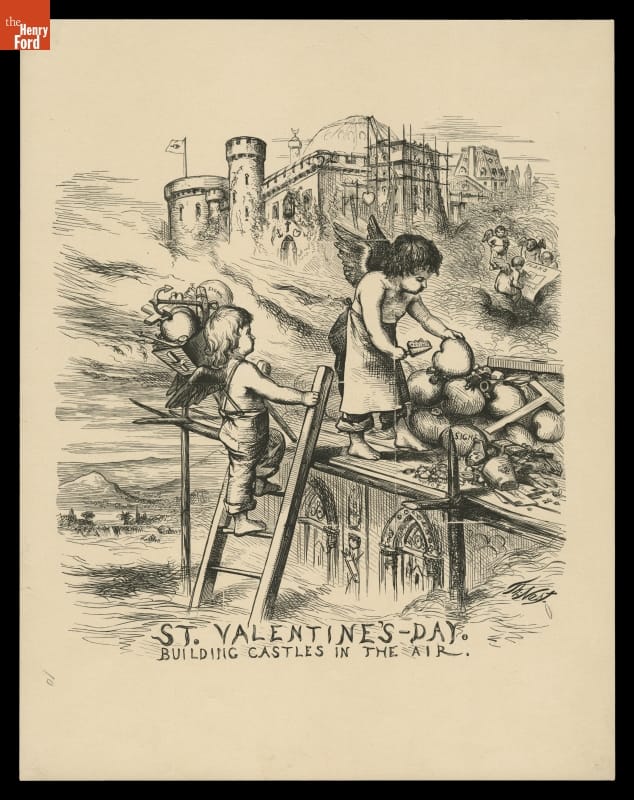
- Etching Proof from a Thomas Nast Drawing, "St. Valentine's Day, Building Castles in the Air," 1870 - Thomas Nast (1840-1902) was an influential illustrator and political cartoonist. Though he is best known for the creation of our modern image of Santa Claus, Nast created many endearing illustrations depicting other legendary characters. This image, originally published in the February 26, 1870, issue of <EM>Harper's Bazar</EM>, depicts cupid-like workers forever "building castles in the air."
- February 26, 1870
- Collections - Artifact
Etching Proof from a Thomas Nast Drawing, "St. Valentine's Day, Building Castles in the Air," 1870
Thomas Nast (1840-1902) was an influential illustrator and political cartoonist. Though he is best known for the creation of our modern image of Santa Claus, Nast created many endearing illustrations depicting other legendary characters. This image, originally published in the February 26, 1870, issue of Harper's Bazar, depicts cupid-like workers forever "building castles in the air."
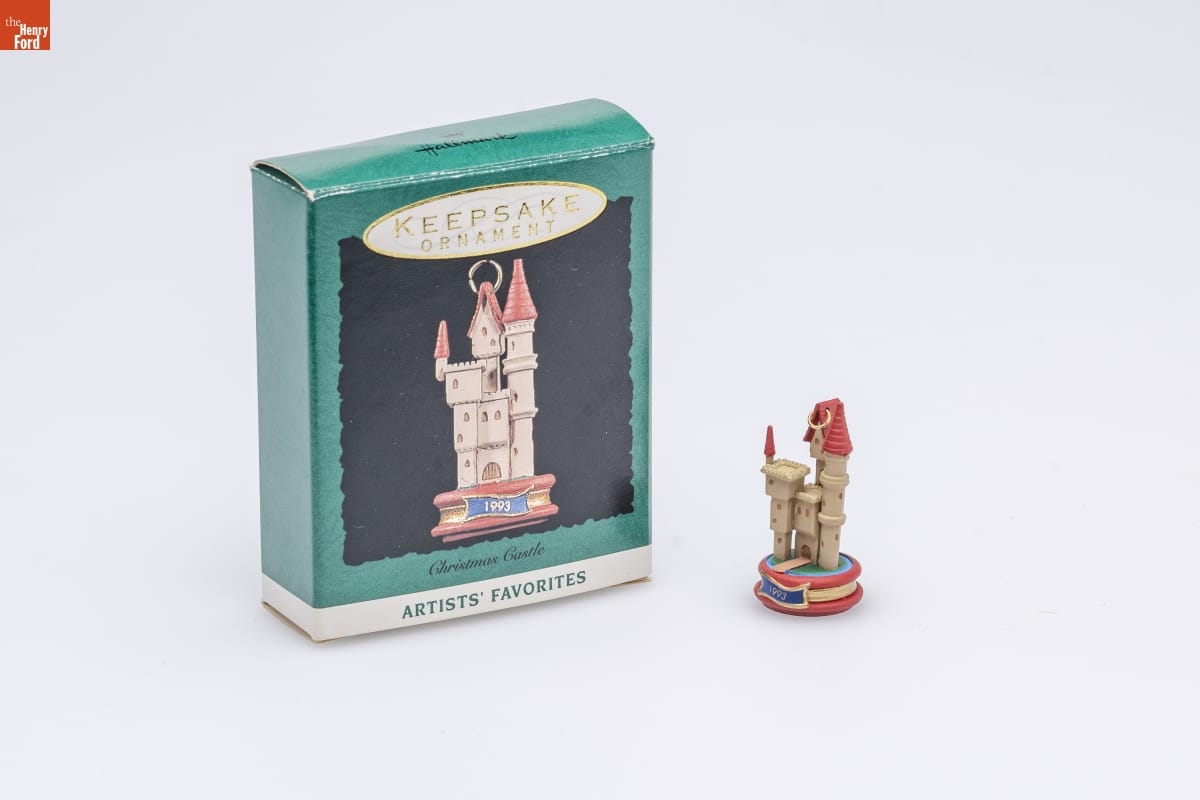
- Hallmark "Christmas Castle" Miniature Christmas Ornament, 1993 - Already known for greeting cards, Hallmark introduced a line of Christmas ornaments in 1973. The company's annual release of an increasing array of ornaments revolutionized Christmas decorating, appealing to customers' interest in marking memories and milestones as well as expressing one's personality and unique tastes.
- 1993
- Collections - Artifact
Hallmark "Christmas Castle" Miniature Christmas Ornament, 1993
Already known for greeting cards, Hallmark introduced a line of Christmas ornaments in 1973. The company's annual release of an increasing array of ornaments revolutionized Christmas decorating, appealing to customers' interest in marking memories and milestones as well as expressing one's personality and unique tastes.
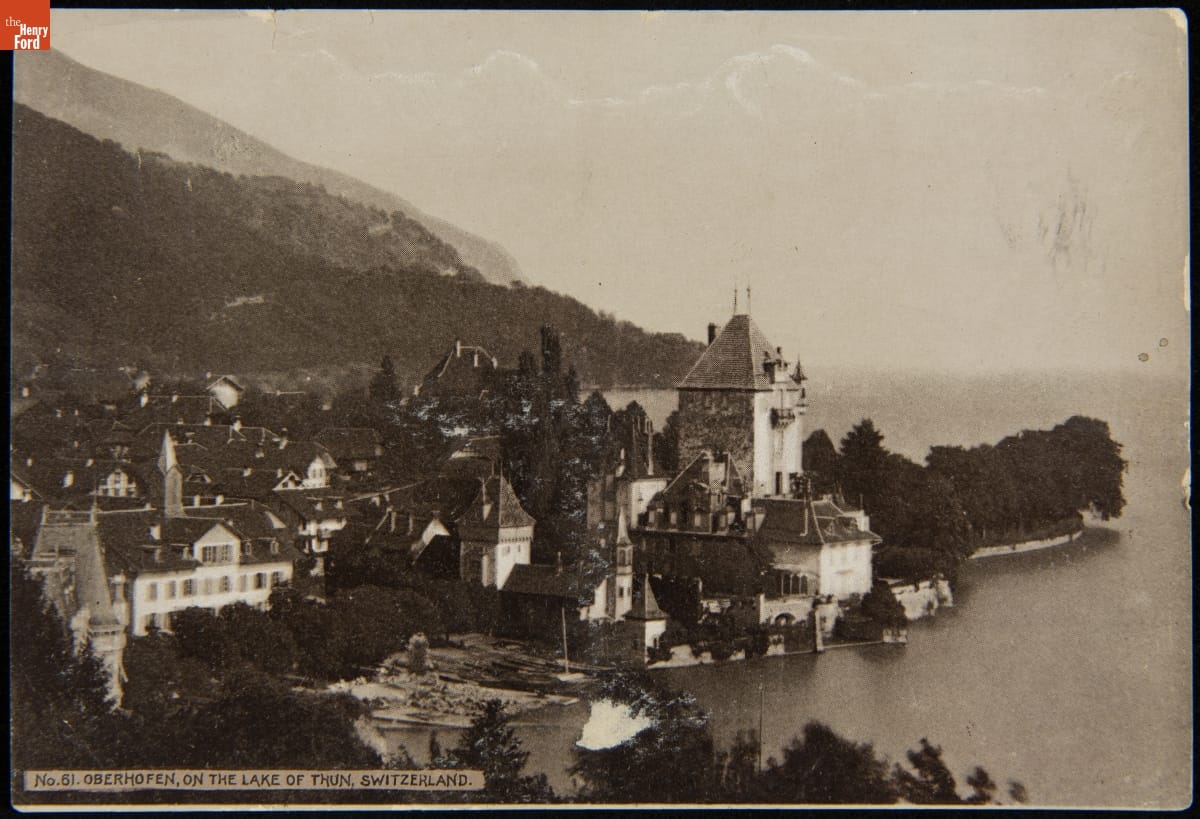
- Trade Card for C.I. Hood & Co. with Hood's Photos of the World, "Oberhofen, On the Lake of Thun, Switzerland," 1890-1910 - In the late 19th century, trade cards were a major means of advertising goods and services. Patent medicine producer, C.I. Hood & Co., had its own advertising department, creating cookbooks, calendars, and, most abundantly, trade cards. The trade card series, "Hood's Photos of the World," became popular among consumers, as it offered views of far-away places, providing a window to the broader world.
- 1890-1910
- Collections - Artifact
Trade Card for C.I. Hood & Co. with Hood's Photos of the World, "Oberhofen, On the Lake of Thun, Switzerland," 1890-1910
In the late 19th century, trade cards were a major means of advertising goods and services. Patent medicine producer, C.I. Hood & Co., had its own advertising department, creating cookbooks, calendars, and, most abundantly, trade cards. The trade card series, "Hood's Photos of the World," became popular among consumers, as it offered views of far-away places, providing a window to the broader world.