
Search
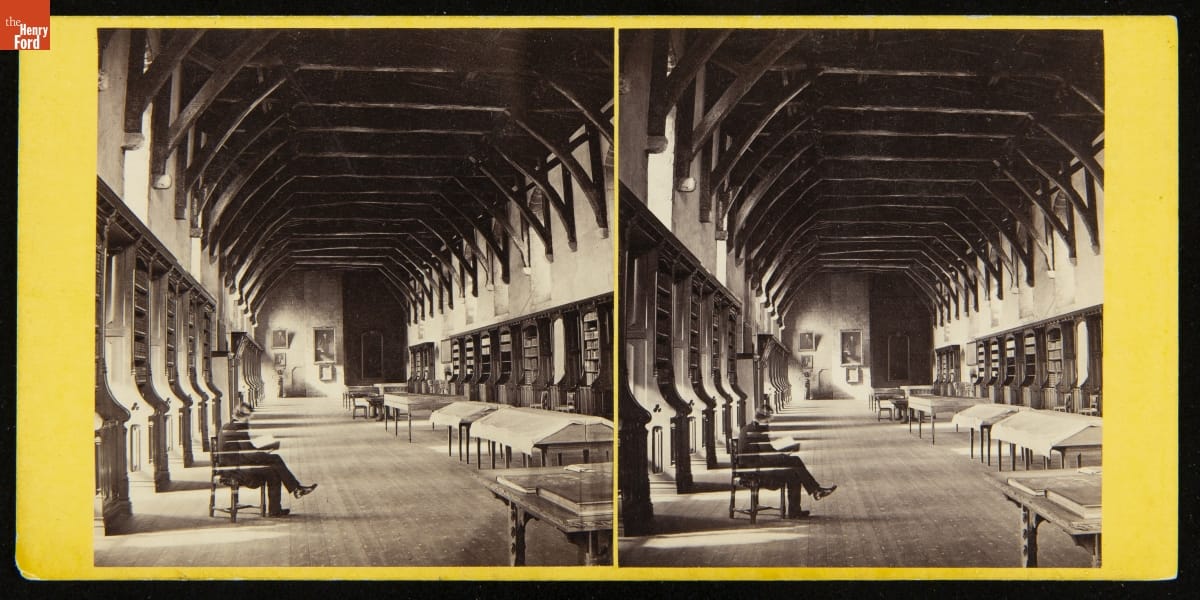
- Stereograph, "Durham Cathedral--The Library," 1870-1873 - The Durham Cathedral in northern England has housed a collection of religious texts, manuscripts, and secular works since its early founding. Dedicated areas throughout the Cathedral served as a library space over time. The library pictured in this stereograph opened in the mid-1800s to accommodate the Cathedral's growing collection.
- 1870-1873
- Collections - Artifact
Stereograph, "Durham Cathedral--The Library," 1870-1873
The Durham Cathedral in northern England has housed a collection of religious texts, manuscripts, and secular works since its early founding. Dedicated areas throughout the Cathedral served as a library space over time. The library pictured in this stereograph opened in the mid-1800s to accommodate the Cathedral's growing collection.
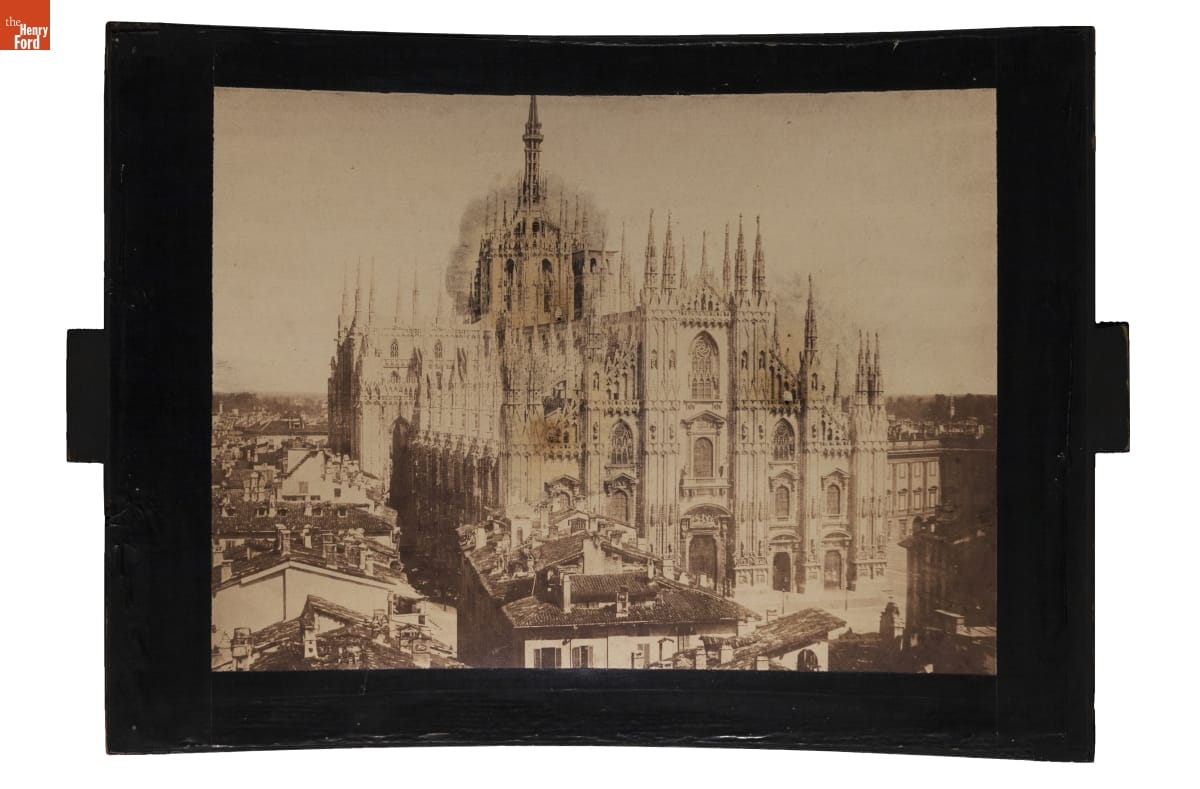
- Megalethoscope Slide, "Milano Cathedral" - Invented by Carlo Ponti in the early 1860s, a megalethoscope is a device used to view a translucent, multilayered photograph. By opening or closing various panels, a person saw the image change. When lit from behind, pinpricks and paint or colored tissue applied to the back or a secondary layer of the photograph transform the scene to reveal hidden images and create an illusion of nighttime.
- Collections - Artifact
Megalethoscope Slide, "Milano Cathedral"
Invented by Carlo Ponti in the early 1860s, a megalethoscope is a device used to view a translucent, multilayered photograph. By opening or closing various panels, a person saw the image change. When lit from behind, pinpricks and paint or colored tissue applied to the back or a secondary layer of the photograph transform the scene to reveal hidden images and create an illusion of nighttime.
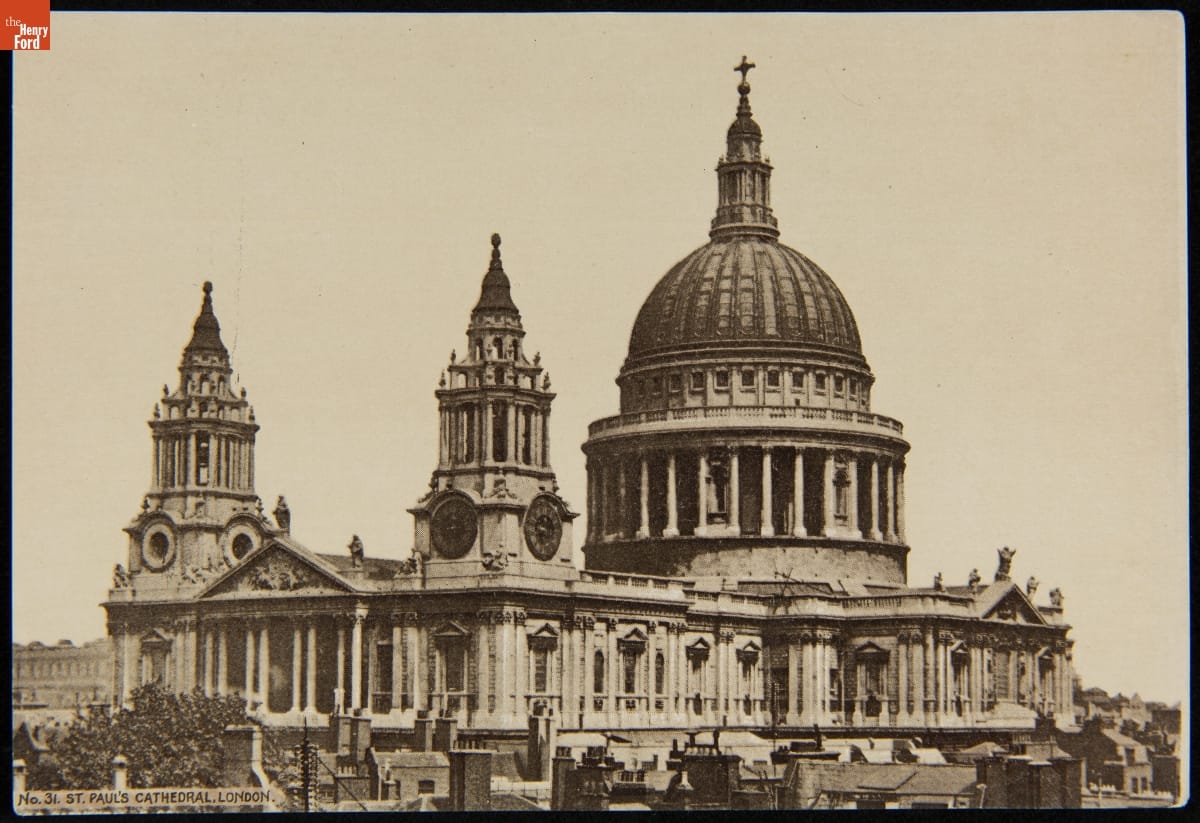
- Trade Card for C.I. Hood & Co. with Hood's Photos of the World, "St. Paul's Cathedral, London, England," 1890-1910 - In the late 19th century, trade cards were a major means of advertising goods and services. Patent medicine producer, C.I. Hood & Co., had its own advertising department, creating cookbooks, calendars, and, most abundantly, trade cards. The trade card series, "Hood's Photos of the World," became popular among consumers, as it offered views of far-away places, providing a window to the broader world.
- 1890-1910
- Collections - Artifact
Trade Card for C.I. Hood & Co. with Hood's Photos of the World, "St. Paul's Cathedral, London, England," 1890-1910
In the late 19th century, trade cards were a major means of advertising goods and services. Patent medicine producer, C.I. Hood & Co., had its own advertising department, creating cookbooks, calendars, and, most abundantly, trade cards. The trade card series, "Hood's Photos of the World," became popular among consumers, as it offered views of far-away places, providing a window to the broader world.
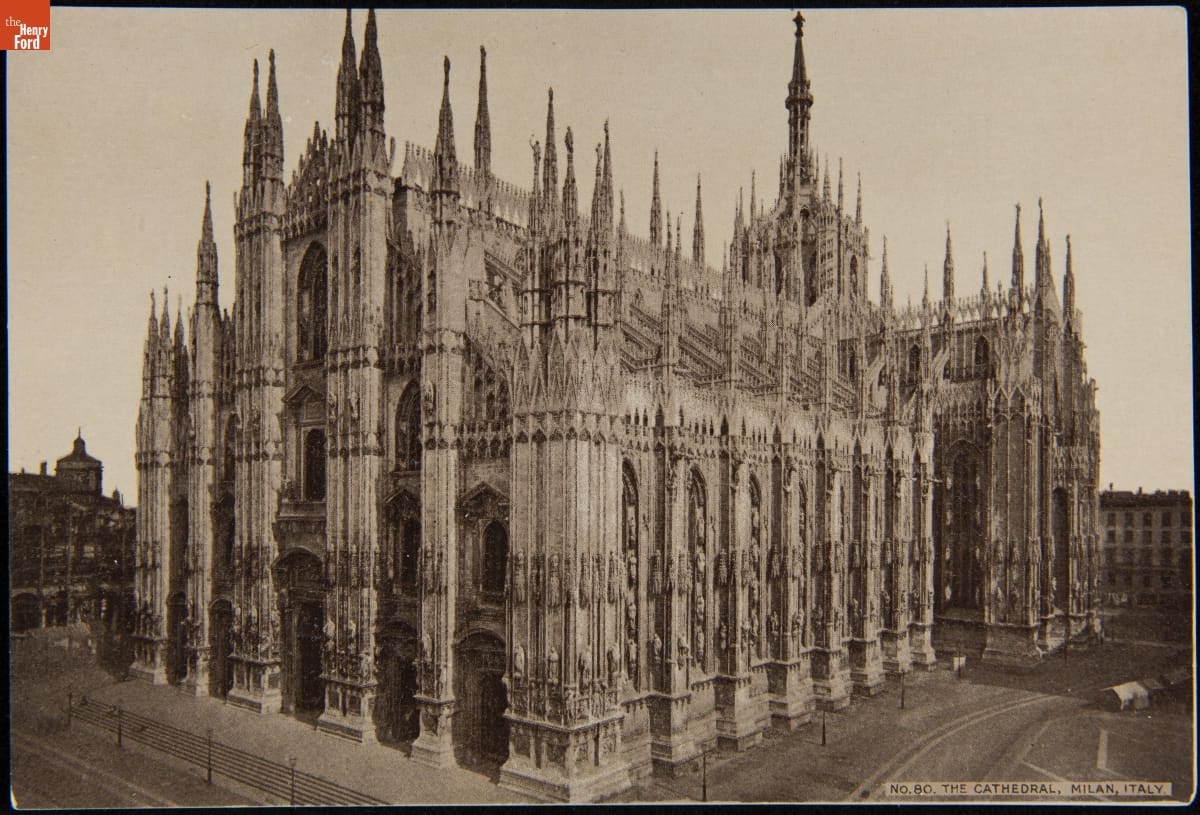
- Trade Card for C.I. Hood & Co. with Hood's Photos of the World, "The Cathedral, Milan, Italy," 1890-1910 - In the late 19th century, trade cards were a major means of advertising goods and services. Patent medicine producer, C.I. Hood & Co., had its own advertising department, creating cookbooks, calendars, and, most abundantly, trade cards. The trade card series, "Hood's Photos of the World," became popular among consumers, as it offered views of far-away places, providing a window to the broader world.
- 1890-1910
- Collections - Artifact
Trade Card for C.I. Hood & Co. with Hood's Photos of the World, "The Cathedral, Milan, Italy," 1890-1910
In the late 19th century, trade cards were a major means of advertising goods and services. Patent medicine producer, C.I. Hood & Co., had its own advertising department, creating cookbooks, calendars, and, most abundantly, trade cards. The trade card series, "Hood's Photos of the World," became popular among consumers, as it offered views of far-away places, providing a window to the broader world.
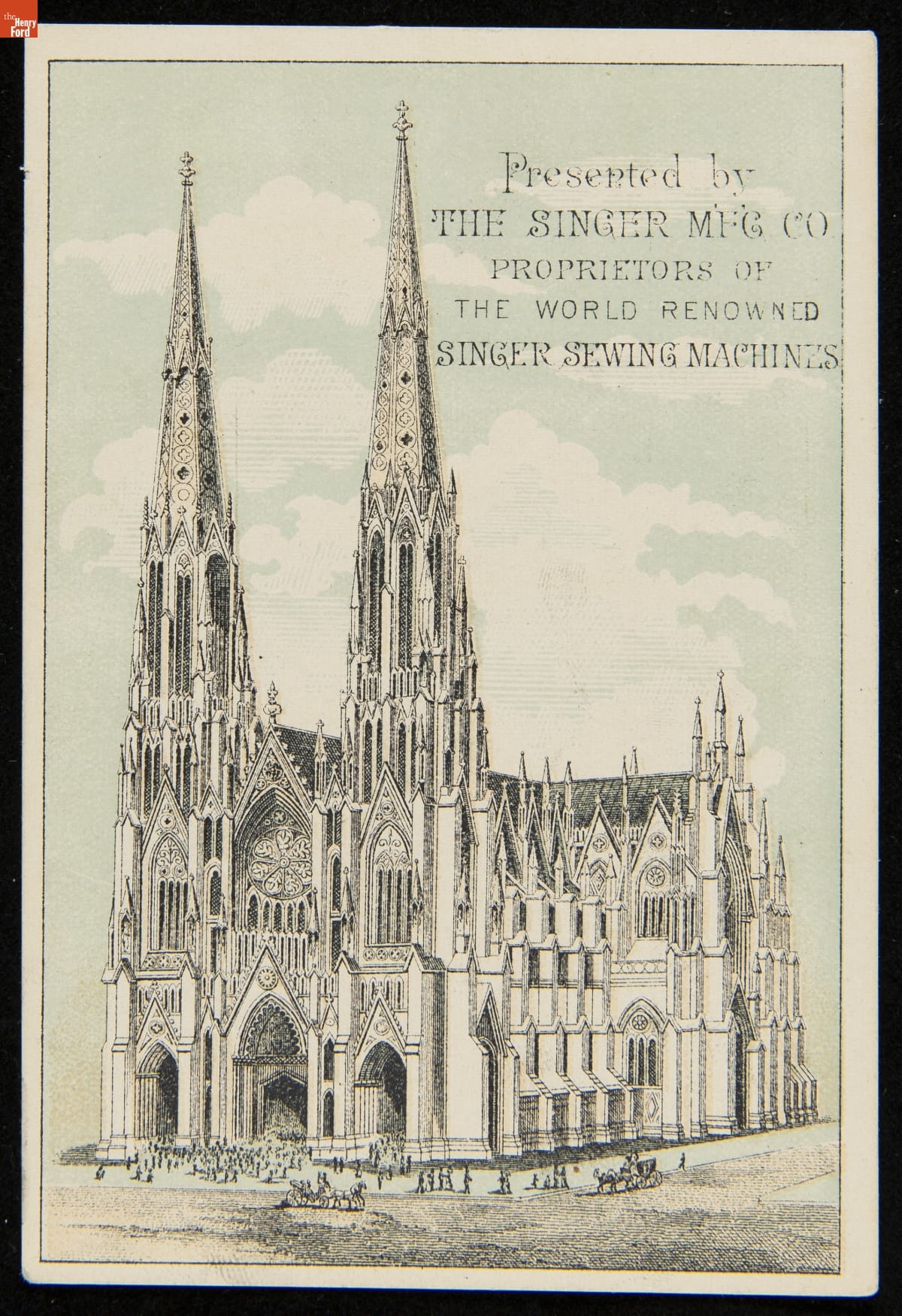
- Trade Card for Singer Sewing Machines, 1872-1880 - As color printing gained momentum in the late 19th century, trade cards became a major means of advertising goods and services. The Singer Sewing Machine Company -- founded when Isaac Singer introduced the first practical sewing machine for home use in 1851 -- embraced this method of advertising. The Singer Company produced colorful trade cards, like this one, which informed customers about popular sewing machine.
- 1872-1880
- Collections - Artifact
Trade Card for Singer Sewing Machines, 1872-1880
As color printing gained momentum in the late 19th century, trade cards became a major means of advertising goods and services. The Singer Sewing Machine Company -- founded when Isaac Singer introduced the first practical sewing machine for home use in 1851 -- embraced this method of advertising. The Singer Company produced colorful trade cards, like this one, which informed customers about popular sewing machine.
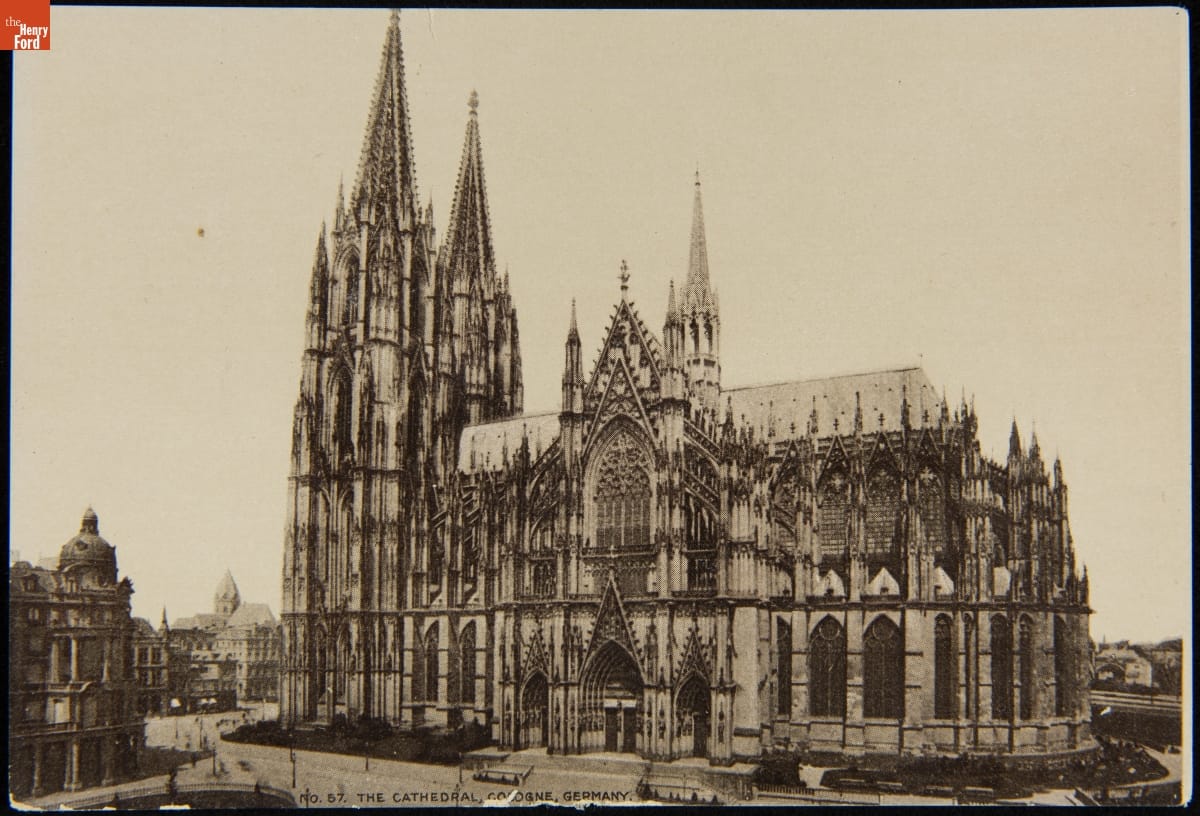
- Trade Card for C.I. Hood & Co. with Hood's Photos of the World, "Cathedral of Cologne, Germany," 1890-1910 - In the late 19th century, trade cards were a major means of advertising goods and services. Patent medicine producer, C.I. Hood & Co., had its own advertising department, creating cookbooks, calendars, and, most abundantly, trade cards. The trade card series, "Hood's Photos of the World," became popular among consumers, as it offered views of far-away places, providing a window to the broader world.
- 1890-1910
- Collections - Artifact
Trade Card for C.I. Hood & Co. with Hood's Photos of the World, "Cathedral of Cologne, Germany," 1890-1910
In the late 19th century, trade cards were a major means of advertising goods and services. Patent medicine producer, C.I. Hood & Co., had its own advertising department, creating cookbooks, calendars, and, most abundantly, trade cards. The trade card series, "Hood's Photos of the World," became popular among consumers, as it offered views of far-away places, providing a window to the broader world.
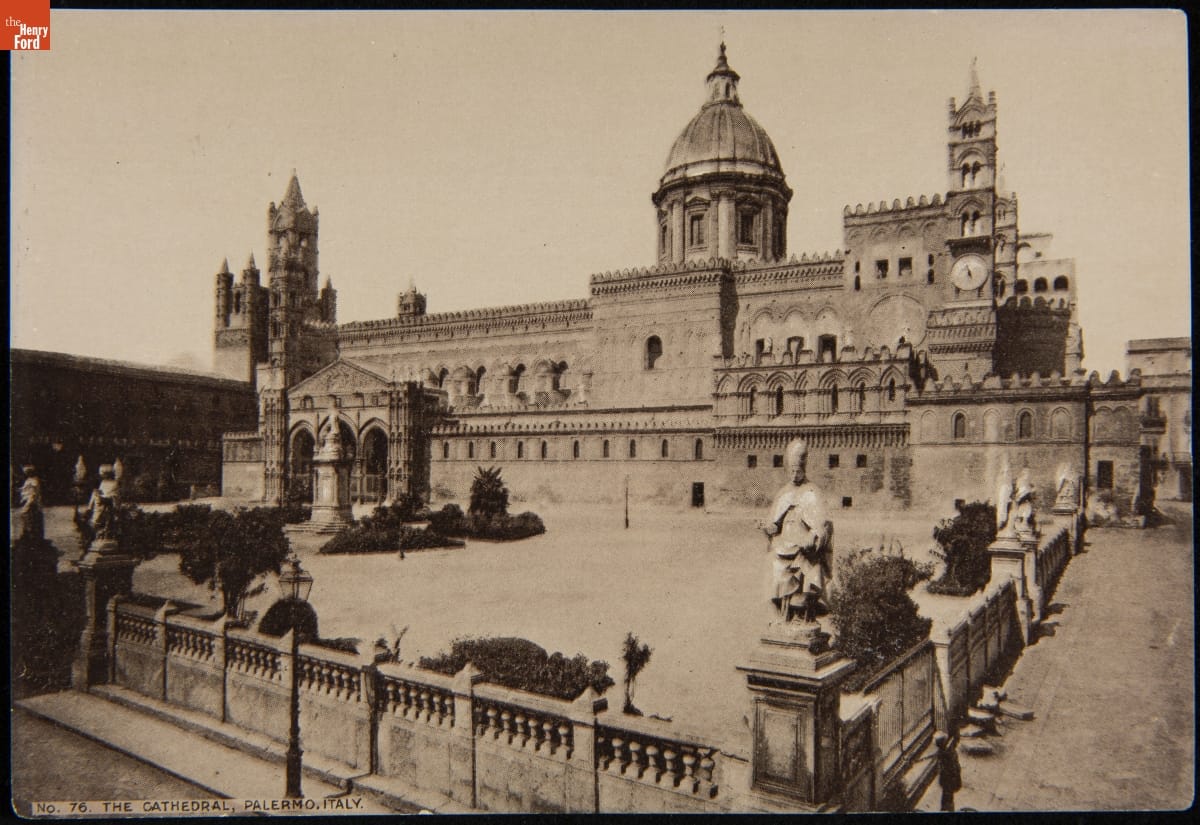
- Trade Card for C.I. Hood & Co. with Hood's Photos of the World, "Cathedral, Palermo, Italy," 1890-1910 - In the late 19th century, trade cards were a major means of advertising goods and services. Patent medicine producer, C.I. Hood & Co., had its own advertising department, creating cookbooks, calendars, and, most abundantly, trade cards. The trade card series, "Hood's Photos of the World," became popular among consumers, as it offered views of far-away places, providing a window to the broader world.
- 1890-1910
- Collections - Artifact
Trade Card for C.I. Hood & Co. with Hood's Photos of the World, "Cathedral, Palermo, Italy," 1890-1910
In the late 19th century, trade cards were a major means of advertising goods and services. Patent medicine producer, C.I. Hood & Co., had its own advertising department, creating cookbooks, calendars, and, most abundantly, trade cards. The trade card series, "Hood's Photos of the World," became popular among consumers, as it offered views of far-away places, providing a window to the broader world.
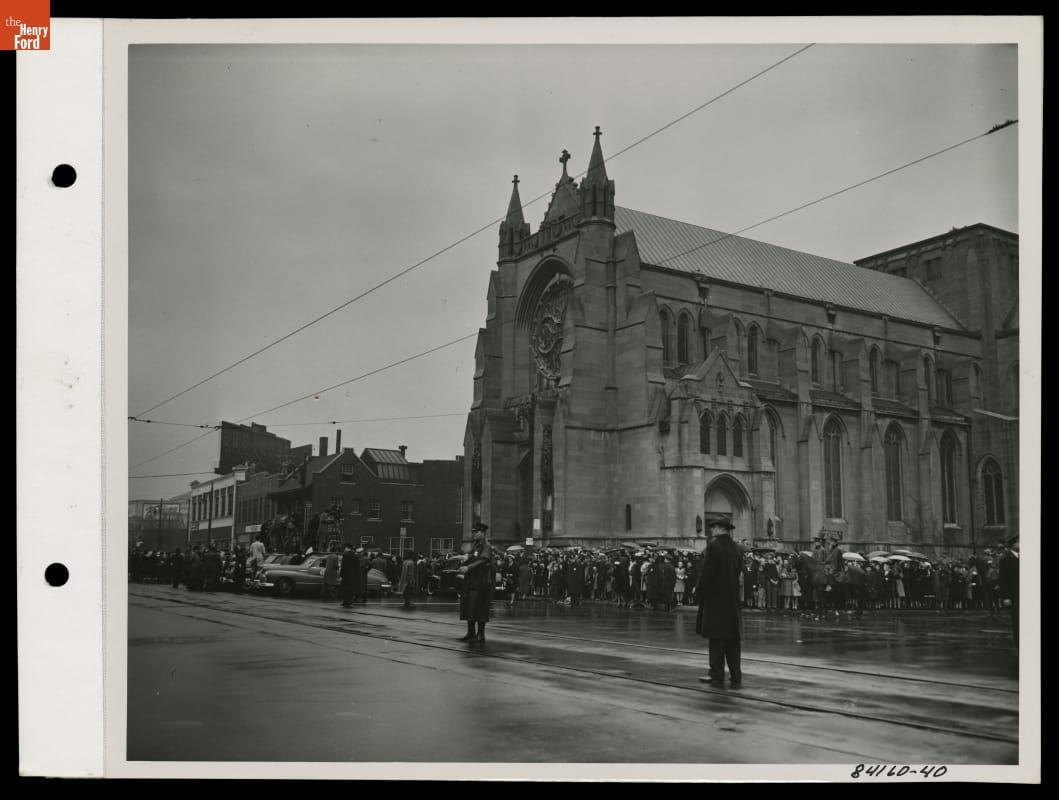
- St. Paul's Episcopal Cathedral during Henry Ford's Funeral, Detroit, Michigan, 1947 - Henry Ford died on April 7, 1947, at his Fair Lane estate in Dearborn, Michigan. Thousands mourned his death. Many waited in a mile-long line to pay their respects when Ford lay in repose at Greenfield Village. This photograph shows the crowd of mourners outside St. Paul's Cathedral on the day of his funeral.
- April 10, 1947
- Collections - Artifact
St. Paul's Episcopal Cathedral during Henry Ford's Funeral, Detroit, Michigan, 1947
Henry Ford died on April 7, 1947, at his Fair Lane estate in Dearborn, Michigan. Thousands mourned his death. Many waited in a mile-long line to pay their respects when Ford lay in repose at Greenfield Village. This photograph shows the crowd of mourners outside St. Paul's Cathedral on the day of his funeral.
- Reims Catherdral, circa 1925 -
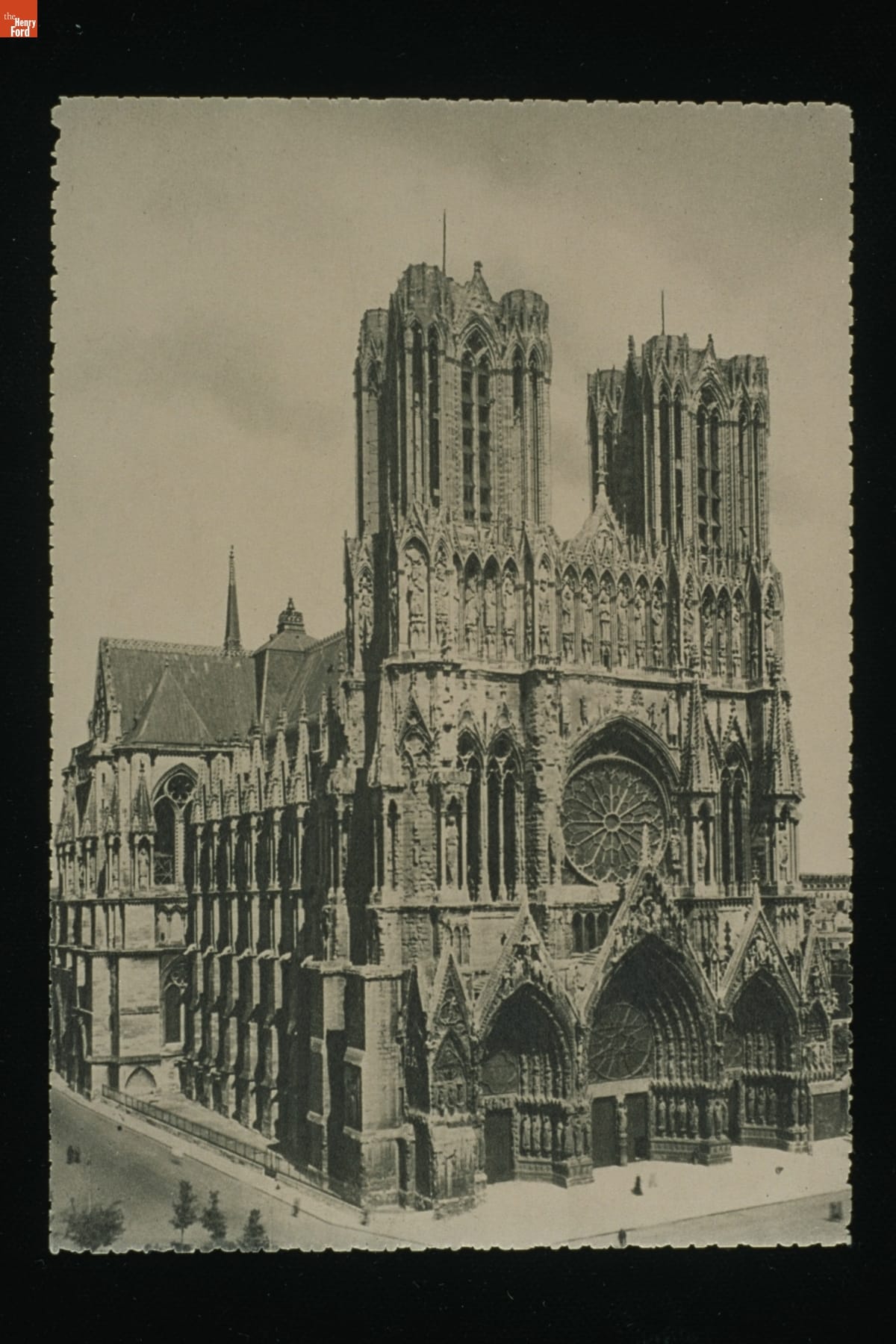
- circa 1925
- Collections - Artifact
Reims Catherdral, circa 1925
- Jackson Square in New Orleans, Louisiana, 1866-1895 -
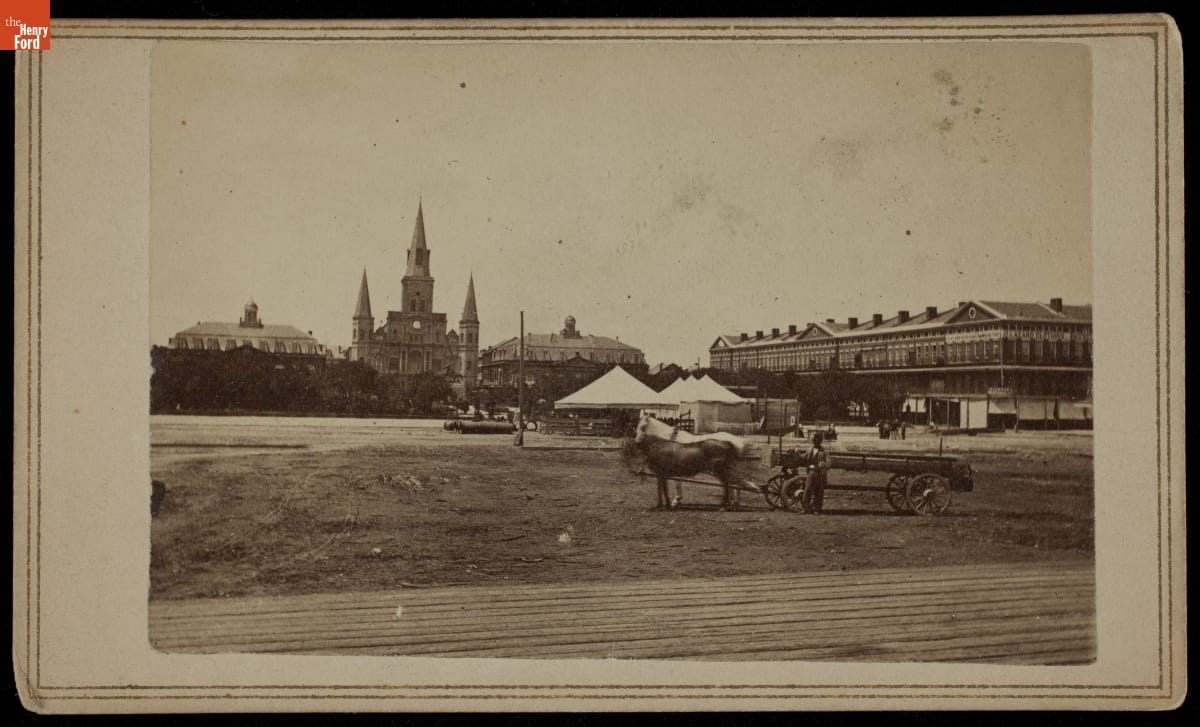
- 1866-1895
- Collections - Artifact
Jackson Square in New Orleans, Louisiana, 1866-1895