
Search
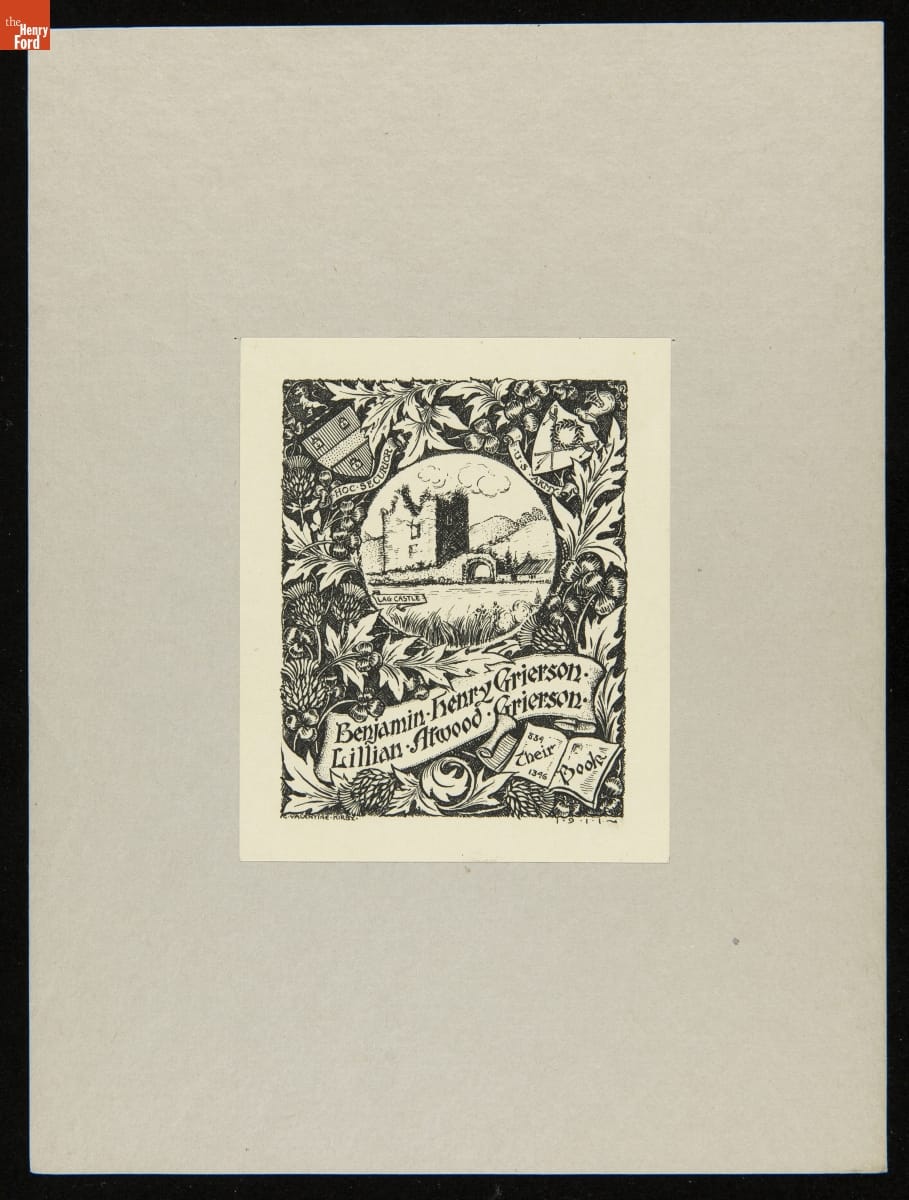
- Bookplate of Benjamin Henry Grierson and Lillian Atwood Grierson, 1911 - Bookplates show ownership, but they can also tell us more. Often pasted on the inside of a book's front cover or endpaper, these printed labels contain the owner's name and sometimes the words "ex-libris" (Latin for "from the library of"). Coats of arms, crests, other decorative images, poems, mottoes, and even font type provide insight into the beliefs, passions, and interests of the book's owner.
- 1911
- Collections - Artifact
Bookplate of Benjamin Henry Grierson and Lillian Atwood Grierson, 1911
Bookplates show ownership, but they can also tell us more. Often pasted on the inside of a book's front cover or endpaper, these printed labels contain the owner's name and sometimes the words "ex-libris" (Latin for "from the library of"). Coats of arms, crests, other decorative images, poems, mottoes, and even font type provide insight into the beliefs, passions, and interests of the book's owner.
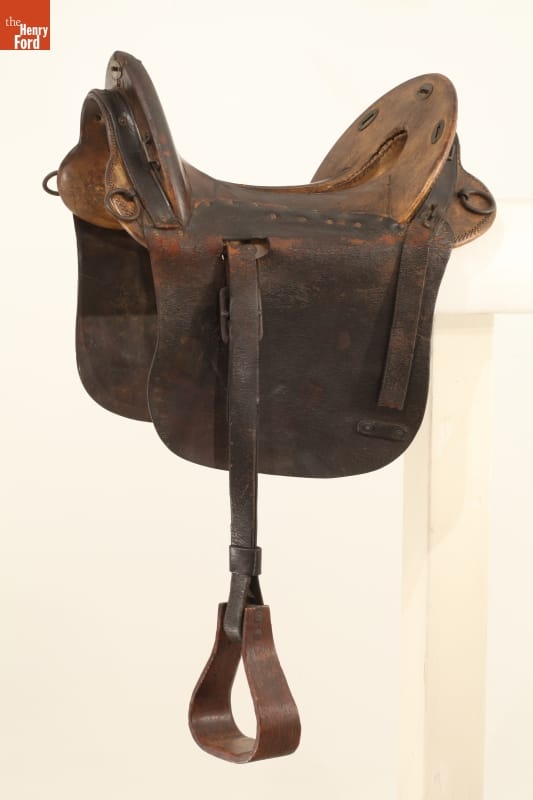
- Mcclellan Saddle, 1857-1872 - U.S. Army Captain George McClellan designed the McClellan saddle based on his study of European cavalry forces. The saddle was simple and lightweight, but sturdy enough to properly support a rider and gear. The U.S. Army adopted the design in 1859, and it remained in use through the 1940s when American horse-mounted cavalry operations ended.
- 1857-1872
- Collections - Artifact
Mcclellan Saddle, 1857-1872
U.S. Army Captain George McClellan designed the McClellan saddle based on his study of European cavalry forces. The saddle was simple and lightweight, but sturdy enough to properly support a rider and gear. The U.S. Army adopted the design in 1859, and it remained in use through the 1940s when American horse-mounted cavalry operations ended.
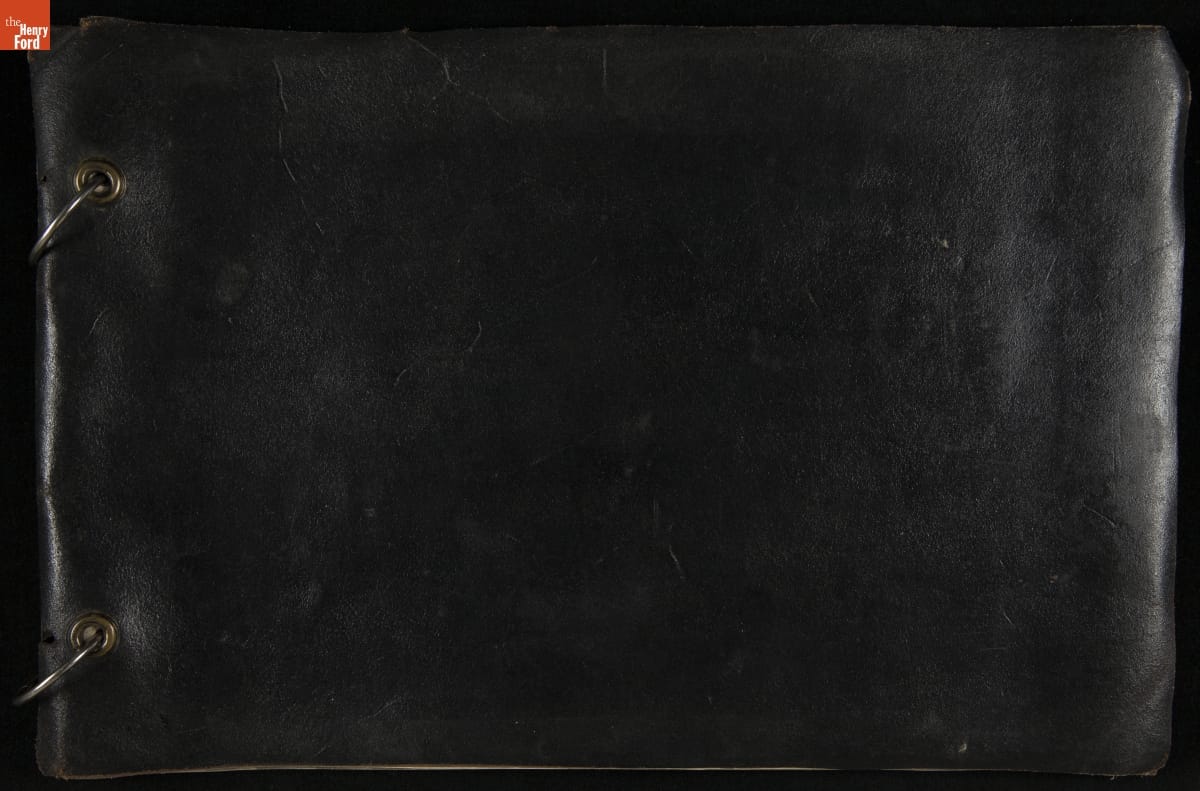
- Tattoo Flash Portfolio, circa 1918 - Tattoos communicate stories. Their content ranges from deeply personal and traditional--to regrettable and frivolous. In the early 1900s, "Professor" Waters apprenticed as a tattoo artist in carnivals and New York's Bowery District. He ran a successful supply shop in Detroit (1918-1939), patenting the standard "two-coil" tattoo machine in 1929. Designs from his flash sheets continue to inspire tattooists today.
- circa 1918
- Collections - Artifact
Tattoo Flash Portfolio, circa 1918
Tattoos communicate stories. Their content ranges from deeply personal and traditional--to regrettable and frivolous. In the early 1900s, "Professor" Waters apprenticed as a tattoo artist in carnivals and New York's Bowery District. He ran a successful supply shop in Detroit (1918-1939), patenting the standard "two-coil" tattoo machine in 1929. Designs from his flash sheets continue to inspire tattooists today.
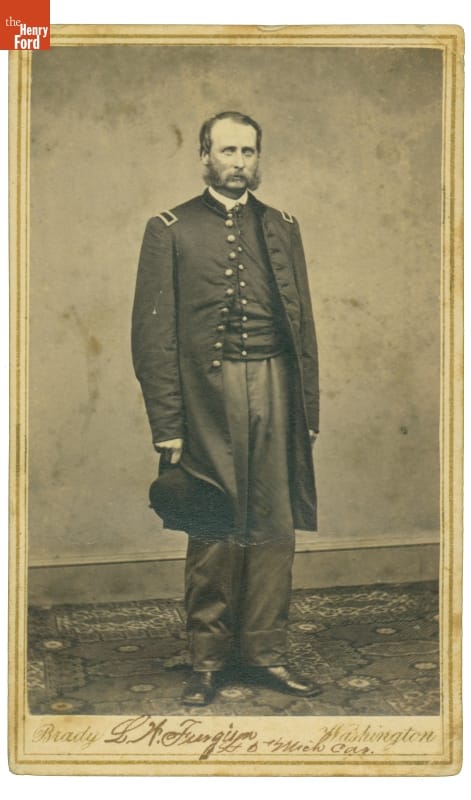
- Portrait of 2nd Lieutenant Leander W. Ferguson, 5th Michigan Cavalry, Company D, 1864 - Leander W. Ferguson, a Wyandotte saloonkeeper, enlisted in the 5th Michigan Cavalry during the Civil War. Ferguson's regiment served in the defense of Washington, D.C., fought at the Battle of Gettysburg in 1863, and saw action at the Appomattox campaign in 1865, which ended in the surrender of the Confederate Army. After the war, Ferguson worked in a Wyandotte foundry.
- 1864
- Collections - Artifact
Portrait of 2nd Lieutenant Leander W. Ferguson, 5th Michigan Cavalry, Company D, 1864
Leander W. Ferguson, a Wyandotte saloonkeeper, enlisted in the 5th Michigan Cavalry during the Civil War. Ferguson's regiment served in the defense of Washington, D.C., fought at the Battle of Gettysburg in 1863, and saw action at the Appomattox campaign in 1865, which ended in the surrender of the Confederate Army. After the war, Ferguson worked in a Wyandotte foundry.
- Tattoo Flash, circa 1920 - Tattoos communicate stories. Their content ranges from deeply personal and traditional--to regrettable and frivolous. In the early 1900s, "Professor" Waters apprenticed as a tattoo artist in carnivals and New York's Bowery District. He ran a successful supply shop in Detroit (1918-1939), patenting the standard "two-coil" tattoo machine in 1929. Designs from his flash sheets continue to inspire tattooists today.
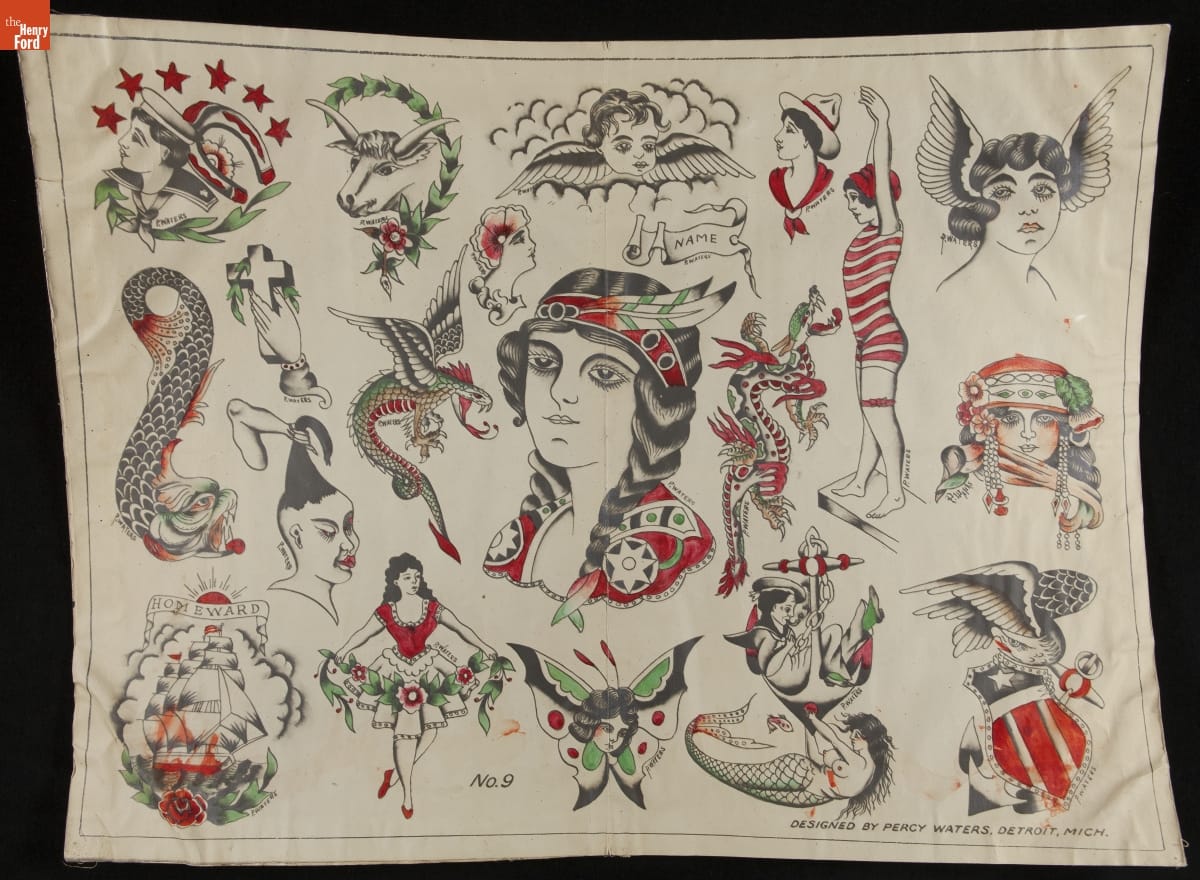
- circa 1920
- Collections - Artifact
Tattoo Flash, circa 1920
Tattoos communicate stories. Their content ranges from deeply personal and traditional--to regrettable and frivolous. In the early 1900s, "Professor" Waters apprenticed as a tattoo artist in carnivals and New York's Bowery District. He ran a successful supply shop in Detroit (1918-1939), patenting the standard "two-coil" tattoo machine in 1929. Designs from his flash sheets continue to inspire tattooists today.
- Portrait of Stout P. Wallace, 1st Ohio Cavalry, Company B, 1862-1864 - This carte-de-visite shows Stout P. Wallace, a Union Army soldier from Ohio. Carte-de-visite was a small photographic print on cardboard stock made by professional photographers. Popular in the United States during the Civil War, soldiers often sent these inexpensive images back home as a reminder to friends and family of their loved ones in service.
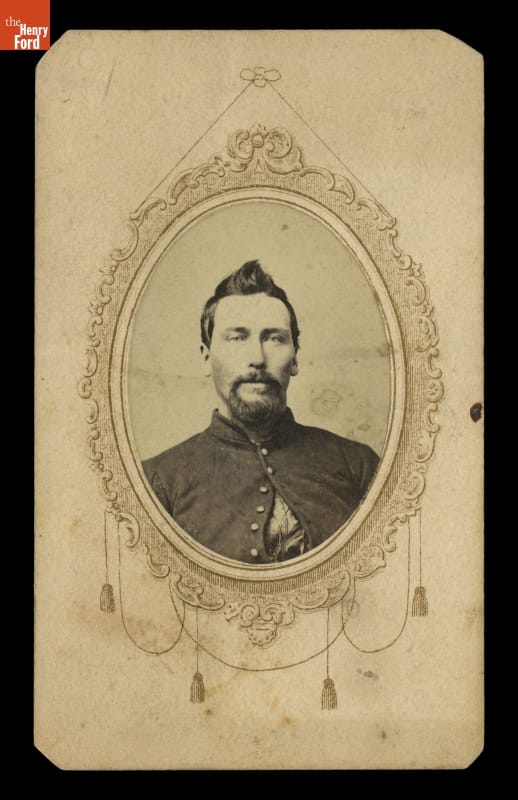
- 1862-1864
- Collections - Artifact
Portrait of Stout P. Wallace, 1st Ohio Cavalry, Company B, 1862-1864
This carte-de-visite shows Stout P. Wallace, a Union Army soldier from Ohio. Carte-de-visite was a small photographic print on cardboard stock made by professional photographers. Popular in the United States during the Civil War, soldiers often sent these inexpensive images back home as a reminder to friends and family of their loved ones in service.
- McClellan Saddle, 1860-1870 - U.S. Army Captain George McClellan designed the McClellan saddle based on his study of European cavalry forces. The saddle was simple and lightweight, but sturdy enough to properly support a rider and gear. The U.S. Army adopted the design in 1859, and it remained in use through the 1940s when American horse-mounted cavalry operations ended.
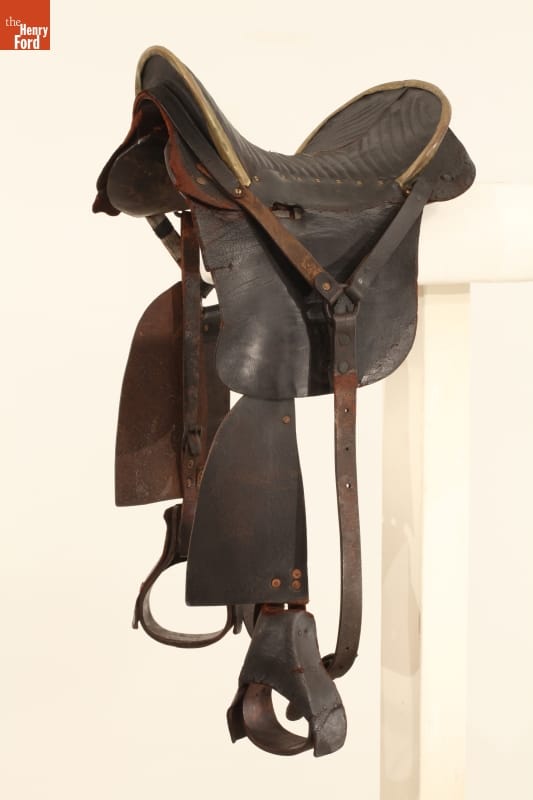
- 1860-1870
- Collections - Artifact
McClellan Saddle, 1860-1870
U.S. Army Captain George McClellan designed the McClellan saddle based on his study of European cavalry forces. The saddle was simple and lightweight, but sturdy enough to properly support a rider and gear. The U.S. Army adopted the design in 1859, and it remained in use through the 1940s when American horse-mounted cavalry operations ended.
- John McKinney of the 10th U.S. Cavalry, Posing with Bugle and Mandolin, 1899-1902 - John McKinney was born in Texas around 1880. He enlisted in the U.S. 10th Cavalry, a segregated all-black unit, in 1899 and served three years. His unit served in the Philippine Islands, where he was discharged after the completion of his enlistment. McKinney was a trumpeter and probably had photographs like this made for his friends and admirers.
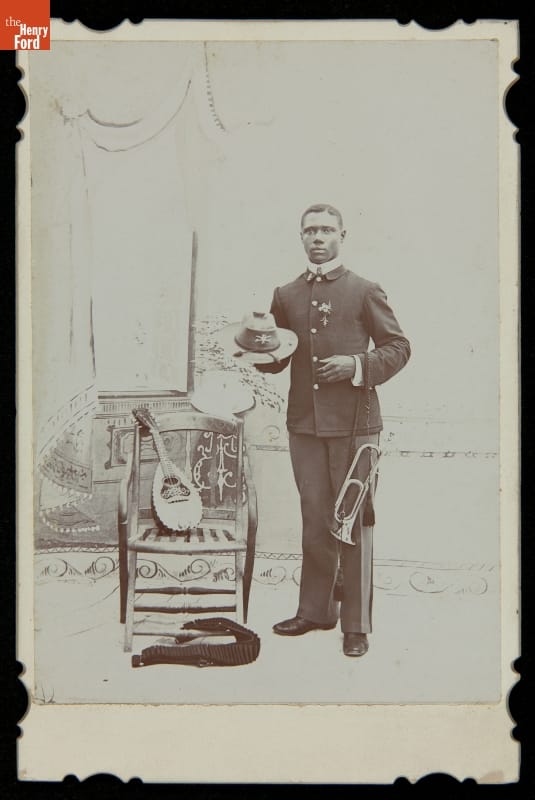
- 1899-1902
- Collections - Artifact
John McKinney of the 10th U.S. Cavalry, Posing with Bugle and Mandolin, 1899-1902
John McKinney was born in Texas around 1880. He enlisted in the U.S. 10th Cavalry, a segregated all-black unit, in 1899 and served three years. His unit served in the Philippine Islands, where he was discharged after the completion of his enlistment. McKinney was a trumpeter and probably had photographs like this made for his friends and admirers.
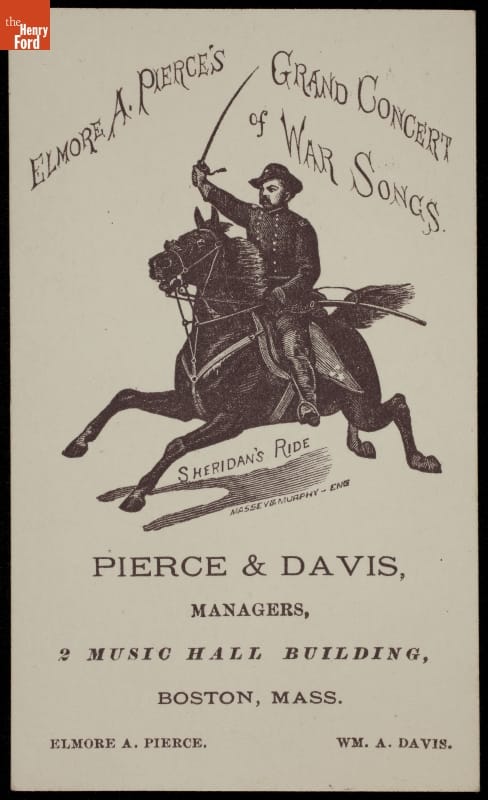
- Trade Card for War Songs Concert, Elmore A. Pierce, 1883 - In the last third of the nineteenth century, an unprecedented variety of consumer goods and services flooded the American market. Advertisers bombarded potential customers with trade cards. Americans enjoyed and saved the often illustrated little advertisements found in product packages or distributed by local merchants. Many survive as historical records of commercialism in the United States.
- October 11, 1883
- Collections - Artifact
Trade Card for War Songs Concert, Elmore A. Pierce, 1883
In the last third of the nineteenth century, an unprecedented variety of consumer goods and services flooded the American market. Advertisers bombarded potential customers with trade cards. Americans enjoyed and saved the often illustrated little advertisements found in product packages or distributed by local merchants. Many survive as historical records of commercialism in the United States.
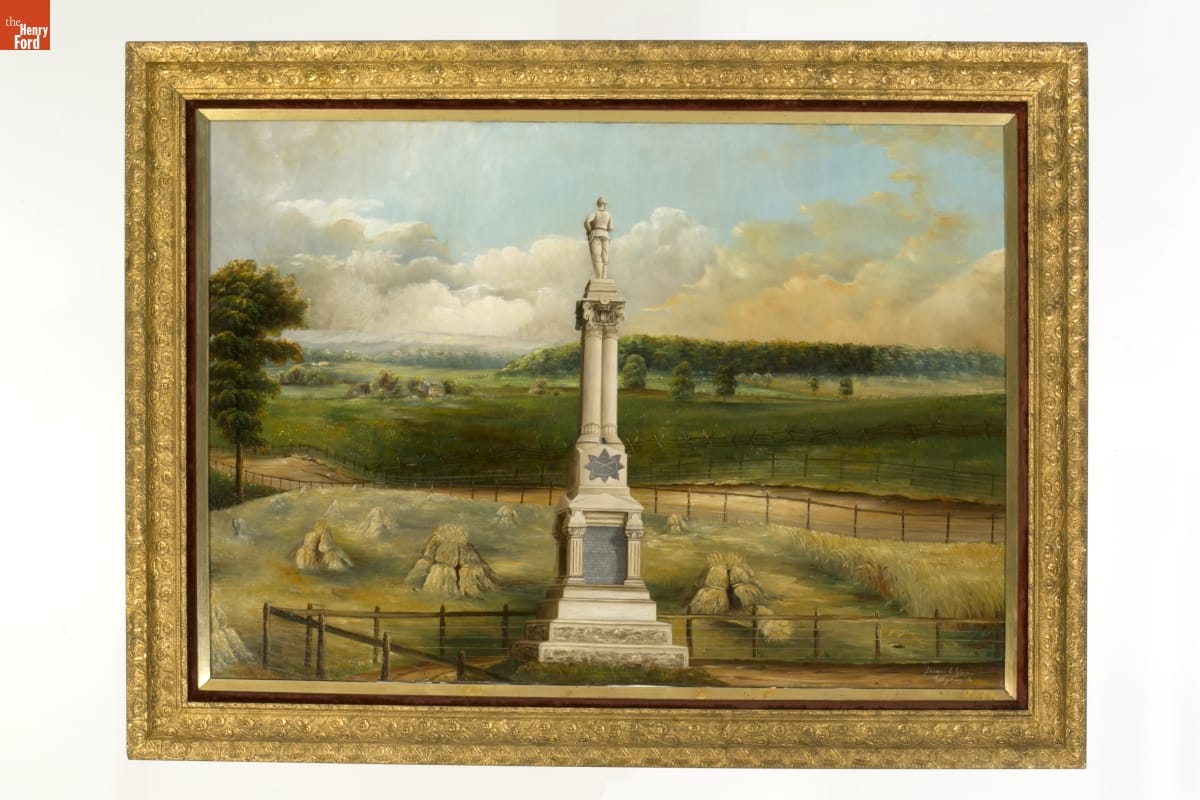
- Gettysburg Memorial to the Michigan Cavalry Brigade, by Jessie C. Zinn, circa 1890 - The soldier figure on this Michigan Cavalry Brigade Monument looks out over the Gettysburg battlefield where this brigade fought fiercely on July 3, 1863, helping assure Union victory. A number of the surviving veterans attended the monument's dedication in June 1889. Did one of them ask Gettysburg artist Jessie Zinn to paint it? Coincidentally--Zinn had been born on farm outside town the day after the battle.
- circa 1890
- Collections - Artifact
Gettysburg Memorial to the Michigan Cavalry Brigade, by Jessie C. Zinn, circa 1890
The soldier figure on this Michigan Cavalry Brigade Monument looks out over the Gettysburg battlefield where this brigade fought fiercely on July 3, 1863, helping assure Union victory. A number of the surviving veterans attended the monument's dedication in June 1889. Did one of them ask Gettysburg artist Jessie Zinn to paint it? Coincidentally--Zinn had been born on farm outside town the day after the battle.