
Search
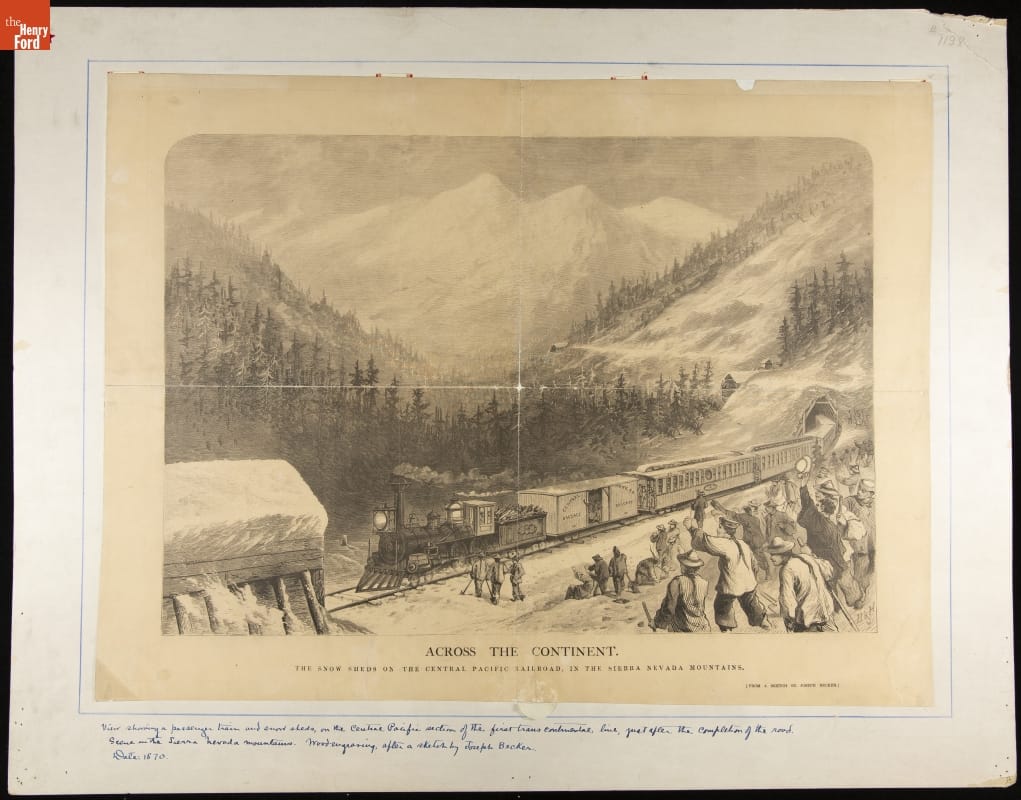
- Across the Continent. The Snow Sheds on the Central Pacific Railroad, 1870 - The Central Pacific Railroad crossed the Sierra Nevada Mountains through Donner Pass, some 7,000 feet above sea level. Winter snows -- up to 40 feet in a season -- were a menace, first to the railroad's construction and then to its operation. CP dealt with the problem by building some 40 miles of sheds to protect its track from snowfalls and snowslides.
- 1870
- Collections - Artifact
Across the Continent. The Snow Sheds on the Central Pacific Railroad, 1870
The Central Pacific Railroad crossed the Sierra Nevada Mountains through Donner Pass, some 7,000 feet above sea level. Winter snows -- up to 40 feet in a season -- were a menace, first to the railroad's construction and then to its operation. CP dealt with the problem by building some 40 miles of sheds to protect its track from snowfalls and snowslides.
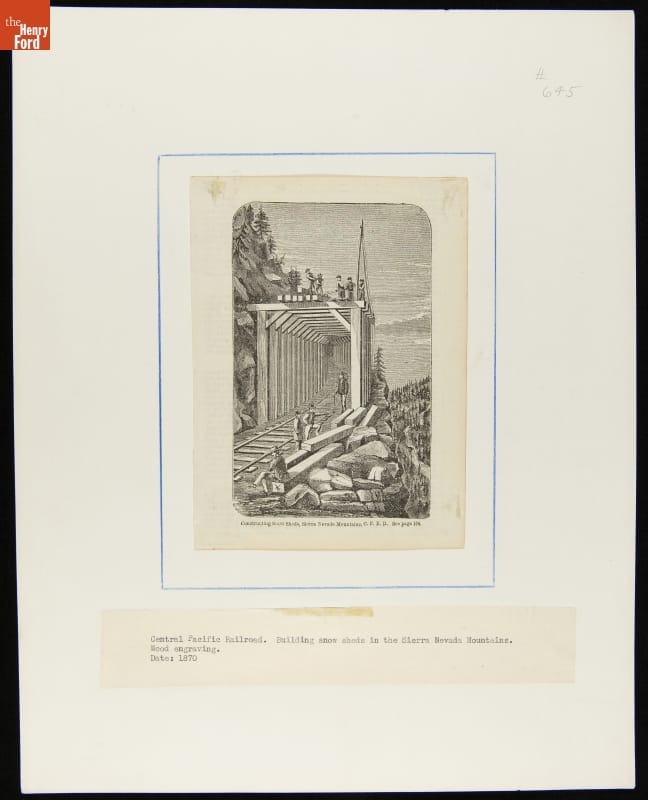
- Constructing Snow Sheds, Sierra Nevada Mountains, 1870 - The Central Pacific Railroad crossed the Sierra Nevada Mountains through Donner Pass, some 7,000 feet above sea level. Winter snows -- up to 40 feet in a season -- were a menace, first to the railroad's construction and then to its operation. CP dealt with the problem by building some 40 miles of sheds to protect its track from snowfalls and snowslides.
- 1870
- Collections - Artifact
Constructing Snow Sheds, Sierra Nevada Mountains, 1870
The Central Pacific Railroad crossed the Sierra Nevada Mountains through Donner Pass, some 7,000 feet above sea level. Winter snows -- up to 40 feet in a season -- were a menace, first to the railroad's construction and then to its operation. CP dealt with the problem by building some 40 miles of sheds to protect its track from snowfalls and snowslides.
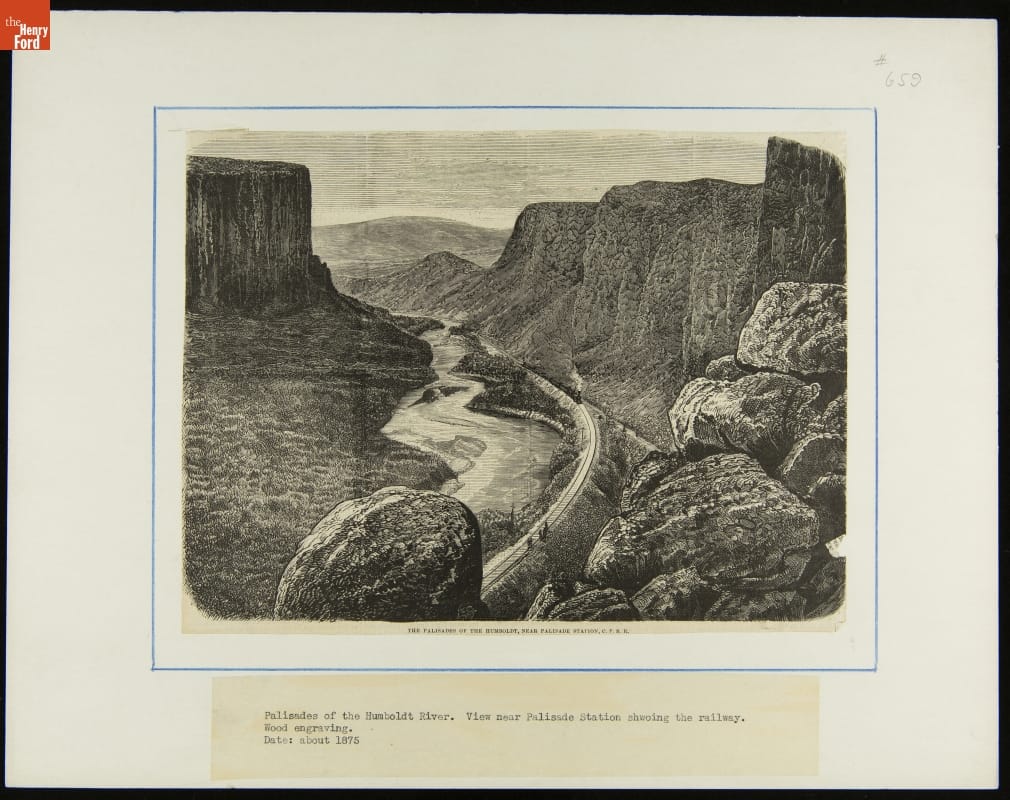
- Palisades of the Humboldt, Near Palisade Station, circa 1875 - Central Pacific Railroad construction crews reached Nevada's Palisade Canyon in 1868. The canyon, formed by the Humboldt River, provided a pathway for the railroad's eastward push to Utah. The community of Palisade, located within the canyon, became a busy transfer point between the Central Pacific and smaller railroads serving area mining camps.
- circa 1875
- Collections - Artifact
Palisades of the Humboldt, Near Palisade Station, circa 1875
Central Pacific Railroad construction crews reached Nevada's Palisade Canyon in 1868. The canyon, formed by the Humboldt River, provided a pathway for the railroad's eastward push to Utah. The community of Palisade, located within the canyon, became a busy transfer point between the Central Pacific and smaller railroads serving area mining camps.
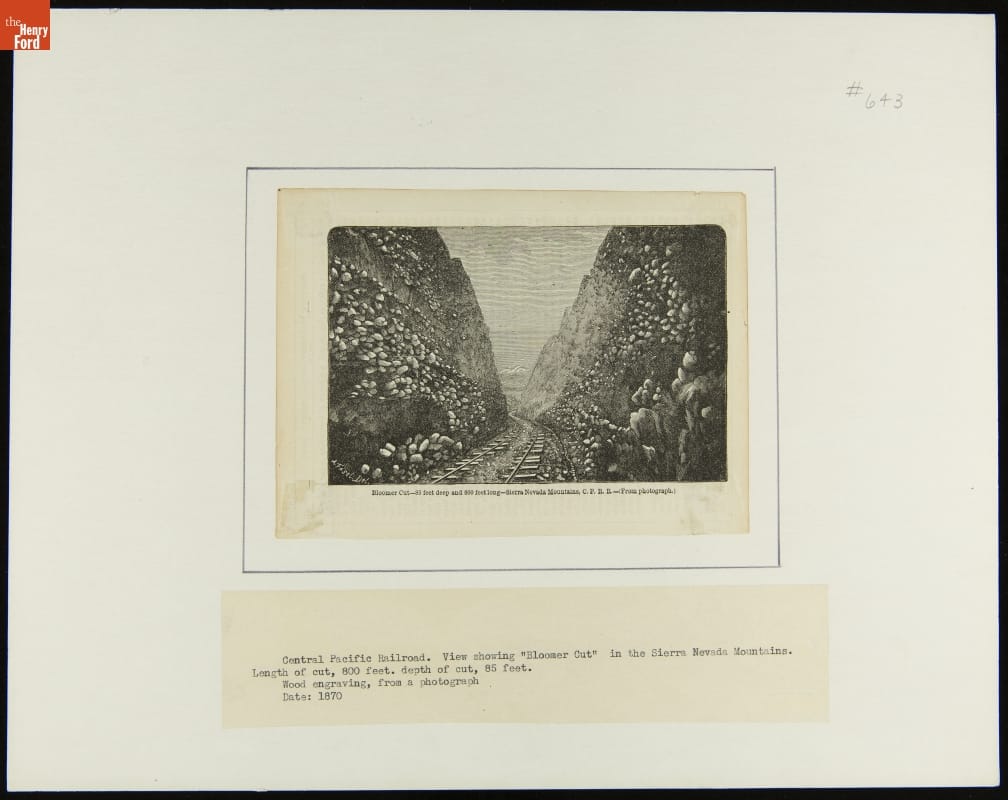
- Bloomer Cut in the Sierra Nevada Mountains, 1870 - Near Auburn, California, some 35 miles east of Sacramento, the Central Pacific Railroad faced its first major obstacle in the form of a rocky ridge. With picks, shovels, and black powder, construction crews made a cut 800 feet long and up to 63 feet deep through the ridge. Work started in February 1864, and the first train rolled through Bloomer Cut in May 1865.
- 1870
- Collections - Artifact
Bloomer Cut in the Sierra Nevada Mountains, 1870
Near Auburn, California, some 35 miles east of Sacramento, the Central Pacific Railroad faced its first major obstacle in the form of a rocky ridge. With picks, shovels, and black powder, construction crews made a cut 800 feet long and up to 63 feet deep through the ridge. Work started in February 1864, and the first train rolled through Bloomer Cut in May 1865.
- Second or Sheeprock Canon of Weber River. April 6th at 1pm. View Looking East - The Pacific Railroad Surveys, authorized by Congress in 1853, studied parts of six potential railroad routes between the Mississippi River and the Pacific Ocean. This illustration, of Utah's Weber River Canyon, was made while surveying the so-called 41st Parallel Route, which roughly followed that circle of latitude. Ultimately, this route was used by the First Transcontinental Railroad, completed in 1869.
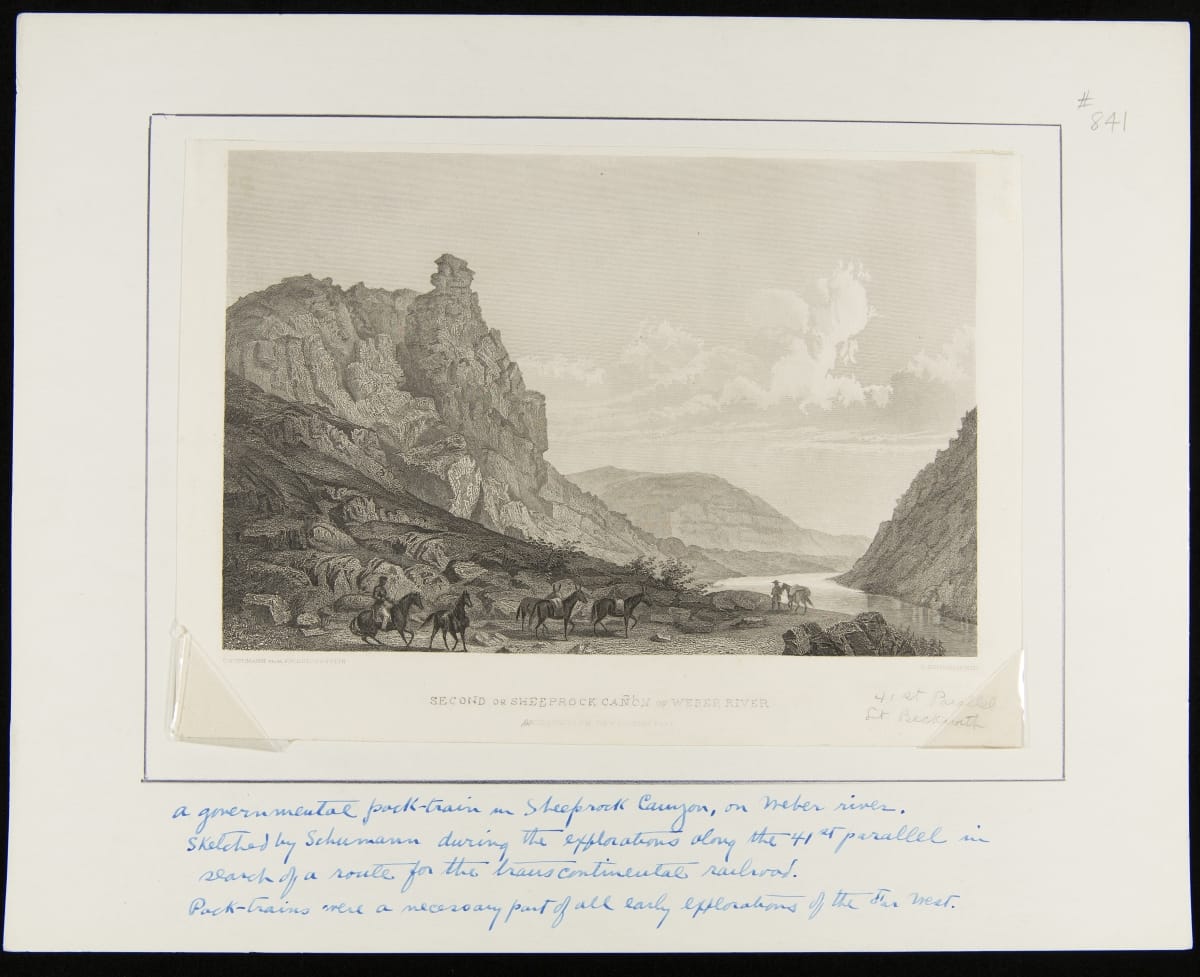
- April 06, 1854
- Collections - Artifact
Second or Sheeprock Canon of Weber River. April 6th at 1pm. View Looking East
The Pacific Railroad Surveys, authorized by Congress in 1853, studied parts of six potential railroad routes between the Mississippi River and the Pacific Ocean. This illustration, of Utah's Weber River Canyon, was made while surveying the so-called 41st Parallel Route, which roughly followed that circle of latitude. Ultimately, this route was used by the First Transcontinental Railroad, completed in 1869.
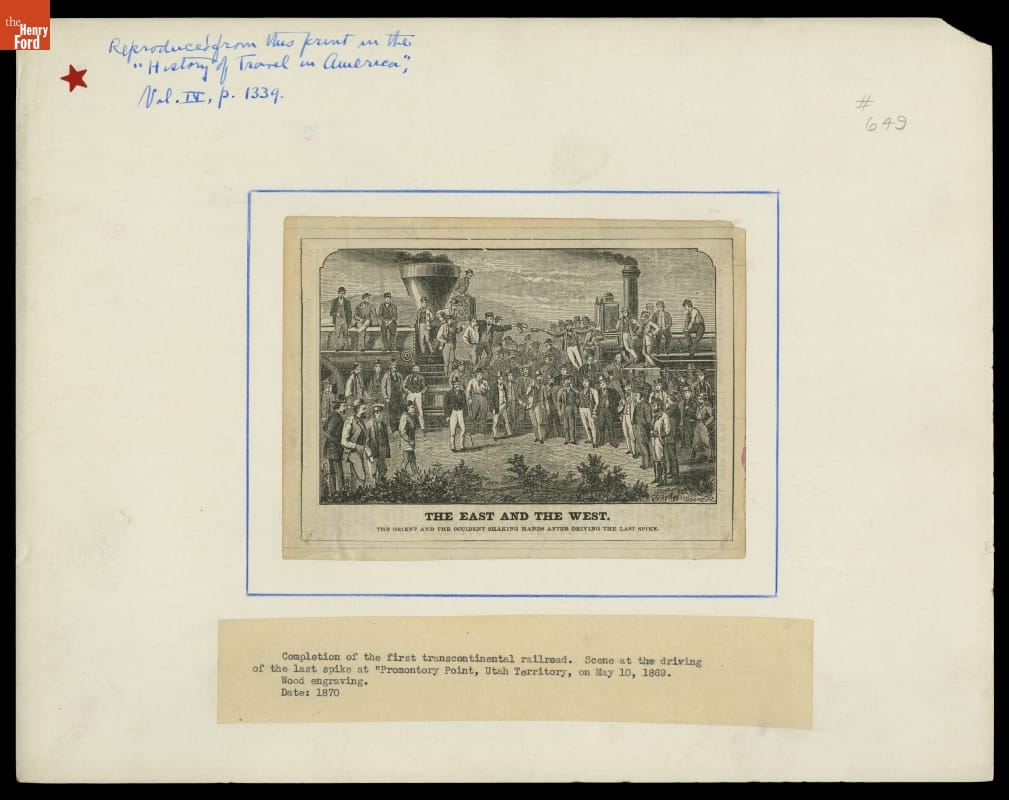
- The East and the West, Completion of Transcontinental Railroad, 1869 - This 1870 wood engraving depicts the completion of the first transcontinental railroad across North America on May 10, 1869, at Promontory Summit in the Utah Territory of the United States. The Central Pacific Railroad, which started in Sacramento, California, met the Union Pacific Railroad, which started in Council Bluffs, Iowa, and celebrated the "last spike" driven into the rail route.
- 1869
- Collections - Artifact
The East and the West, Completion of Transcontinental Railroad, 1869
This 1870 wood engraving depicts the completion of the first transcontinental railroad across North America on May 10, 1869, at Promontory Summit in the Utah Territory of the United States. The Central Pacific Railroad, which started in Sacramento, California, met the Union Pacific Railroad, which started in Council Bluffs, Iowa, and celebrated the "last spike" driven into the rail route.
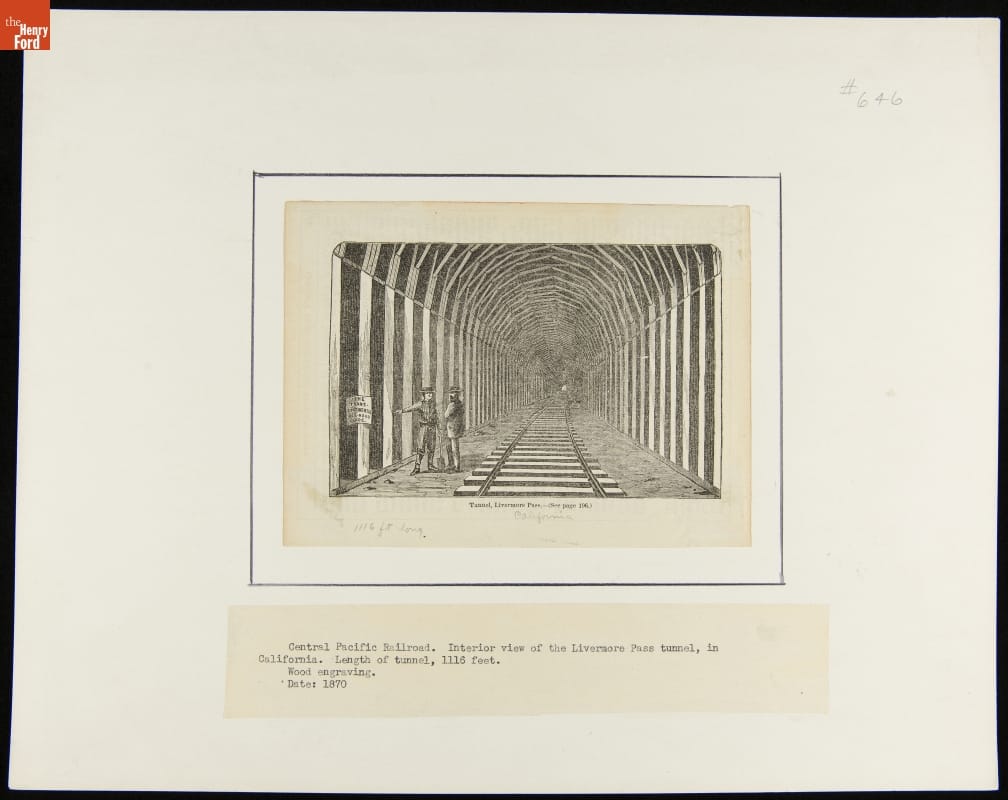
- Tunnel, Livermore Pass, 1870 - Livermore Pass, now called Altamont Pass, provided a route for the Central Pacific Railroad to reach San Francisco Bay from its original terminus at Sacramento, California. The railroad summited the Altamont Hills via a tunnel opened in 1869. It served as CP's mainline to the bay area for ten years before the company moved to a shorter route in 1879.
- 1870
- Collections - Artifact
Tunnel, Livermore Pass, 1870
Livermore Pass, now called Altamont Pass, provided a route for the Central Pacific Railroad to reach San Francisco Bay from its original terminus at Sacramento, California. The railroad summited the Altamont Hills via a tunnel opened in 1869. It served as CP's mainline to the bay area for ten years before the company moved to a shorter route in 1879.
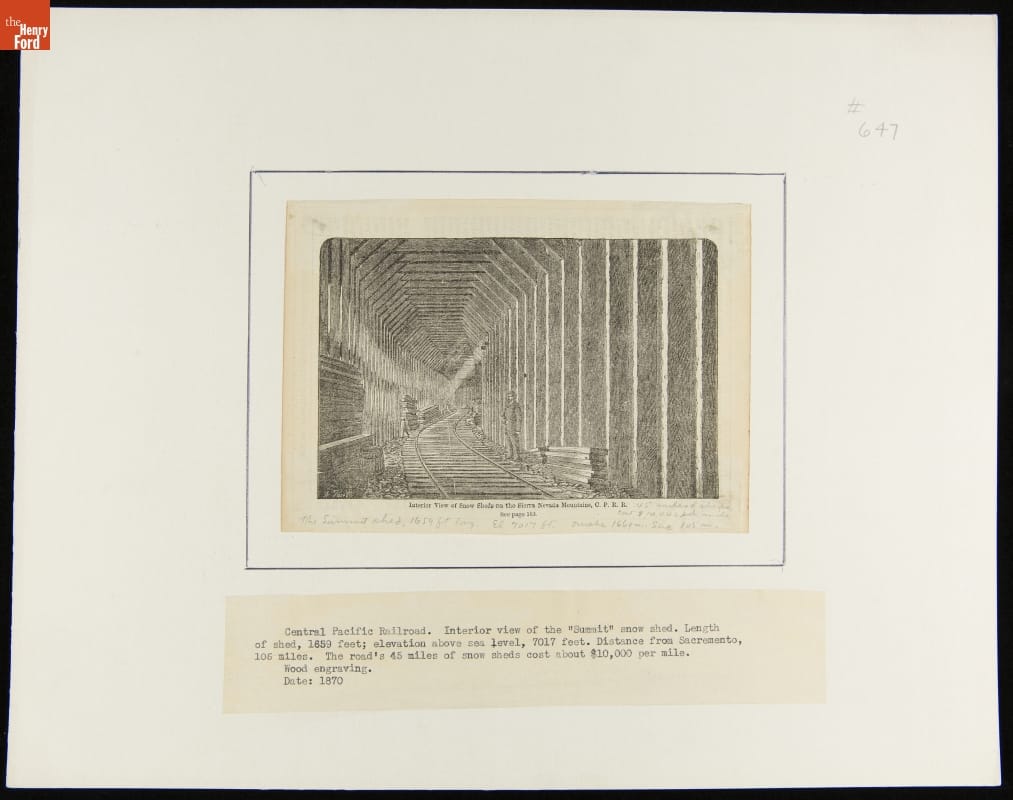
- Interior View of Snow Sheds in the Sierra Nevada Mountains, 1870 - The Central Pacific Railroad crossed the Sierra Nevada Mountains through Donner Pass, some 7,000 feet above sea level. Winter snows -- up to 40 feet in a season -- were a menace, first to the railroad's construction and then to its operation. CP dealt with the problem by building some 40 miles of sheds to protect its track from snowfalls and snowslides.
- 1870
- Collections - Artifact
Interior View of Snow Sheds in the Sierra Nevada Mountains, 1870
The Central Pacific Railroad crossed the Sierra Nevada Mountains through Donner Pass, some 7,000 feet above sea level. Winter snows -- up to 40 feet in a season -- were a menace, first to the railroad's construction and then to its operation. CP dealt with the problem by building some 40 miles of sheds to protect its track from snowfalls and snowslides.
- First Construction Train Passing the Palisades, 1870 - Central Pacific Railroad construction crews reached Nevada's Palisade Canyon in 1868. The canyon, formed by the Humboldt River, provided a pathway for the railroad's eastward push to Utah. The community of Palisade, located within the canyon, became a busy transfer point between the Central Pacific and smaller railroads serving area mining camps.
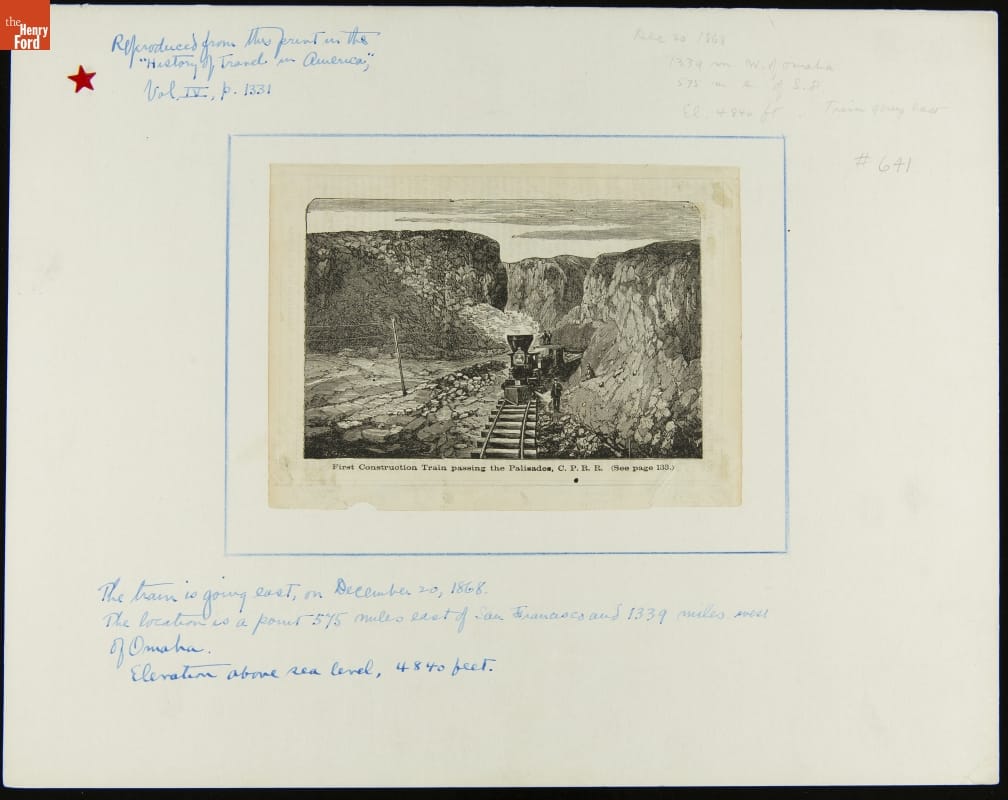
- December 20, 1868
- Collections - Artifact
First Construction Train Passing the Palisades, 1870
Central Pacific Railroad construction crews reached Nevada's Palisade Canyon in 1868. The canyon, formed by the Humboldt River, provided a pathway for the railroad's eastward push to Utah. The community of Palisade, located within the canyon, became a busy transfer point between the Central Pacific and smaller railroads serving area mining camps.
- California Scene -- 1884, Painted by Virgil M. Exner circa 1970 - Though best remembered for his design work under Harley Earl at General Motors Corporation, at Raymond Loewy's industrial design firm, at Studebaker Corporation, and in Chrysler Corporation's Advanced Styling Studio, Virgil Exner made time to practice the fine arts. Exner painted this scenic piece during "retirement" (he continued work on design projects from home until his death in late 1973).
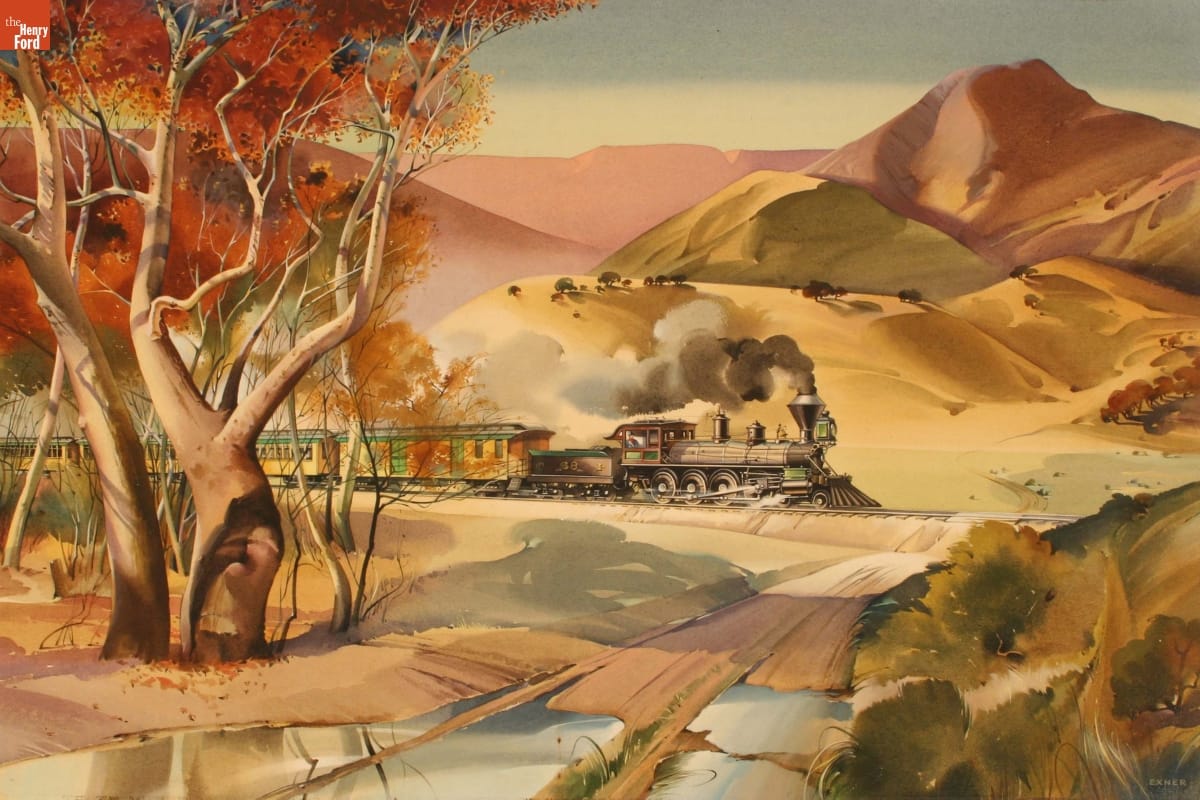
- 1884
- Collections - Artifact
California Scene -- 1884, Painted by Virgil M. Exner circa 1970
Though best remembered for his design work under Harley Earl at General Motors Corporation, at Raymond Loewy's industrial design firm, at Studebaker Corporation, and in Chrysler Corporation's Advanced Styling Studio, Virgil Exner made time to practice the fine arts. Exner painted this scenic piece during "retirement" (he continued work on design projects from home until his death in late 1973).