
Search
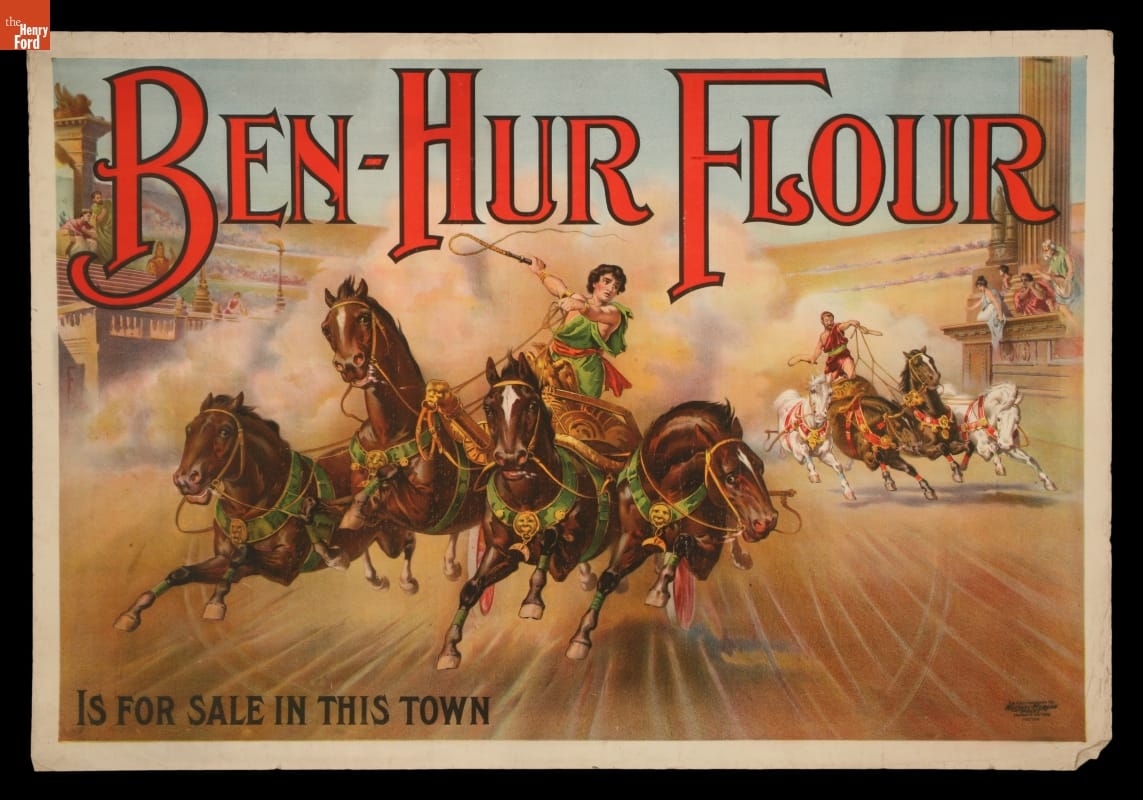
- Advertising Poster, "Ben-Hur Flour is For Sale in This Town," circa 1910 - In the late nineteenth century, printers developed a lithograph method that produced brightly colored posters. Manufacturers quickly adopted the new poster style to advertise their products. The Royal Milling Company of Minneapolis, Minnesota, and Great Falls, Montana, had this advertising poster made in the early 1900s. They chose the Ben-Hur brand name because the story was a popular theatrical drama.
- circa 1910
- Collections - Artifact
Advertising Poster, "Ben-Hur Flour is For Sale in This Town," circa 1910
In the late nineteenth century, printers developed a lithograph method that produced brightly colored posters. Manufacturers quickly adopted the new poster style to advertise their products. The Royal Milling Company of Minneapolis, Minnesota, and Great Falls, Montana, had this advertising poster made in the early 1900s. They chose the Ben-Hur brand name because the story was a popular theatrical drama.
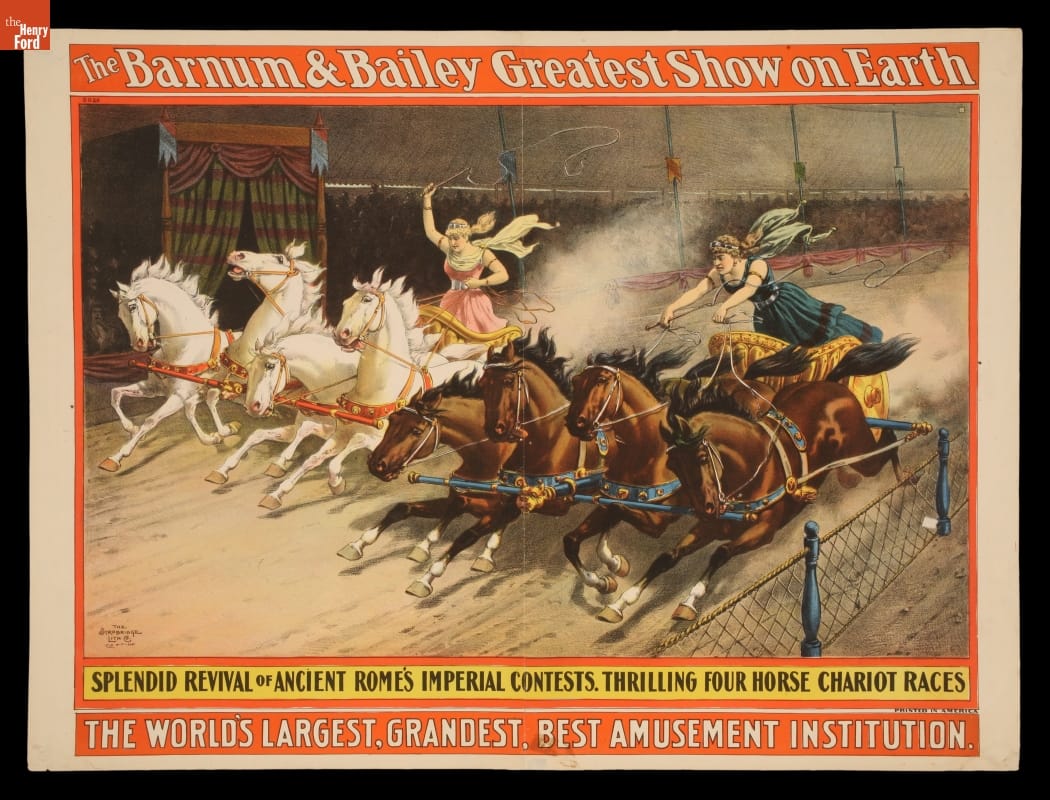
- Circus Poster, Barnum & Bailey, "Splendid Revival of Ancient Rome's Imperial Contests," circa 1896 -
- circa 1896
- Collections - Artifact
Circus Poster, Barnum & Bailey, "Splendid Revival of Ancient Rome's Imperial Contests," circa 1896
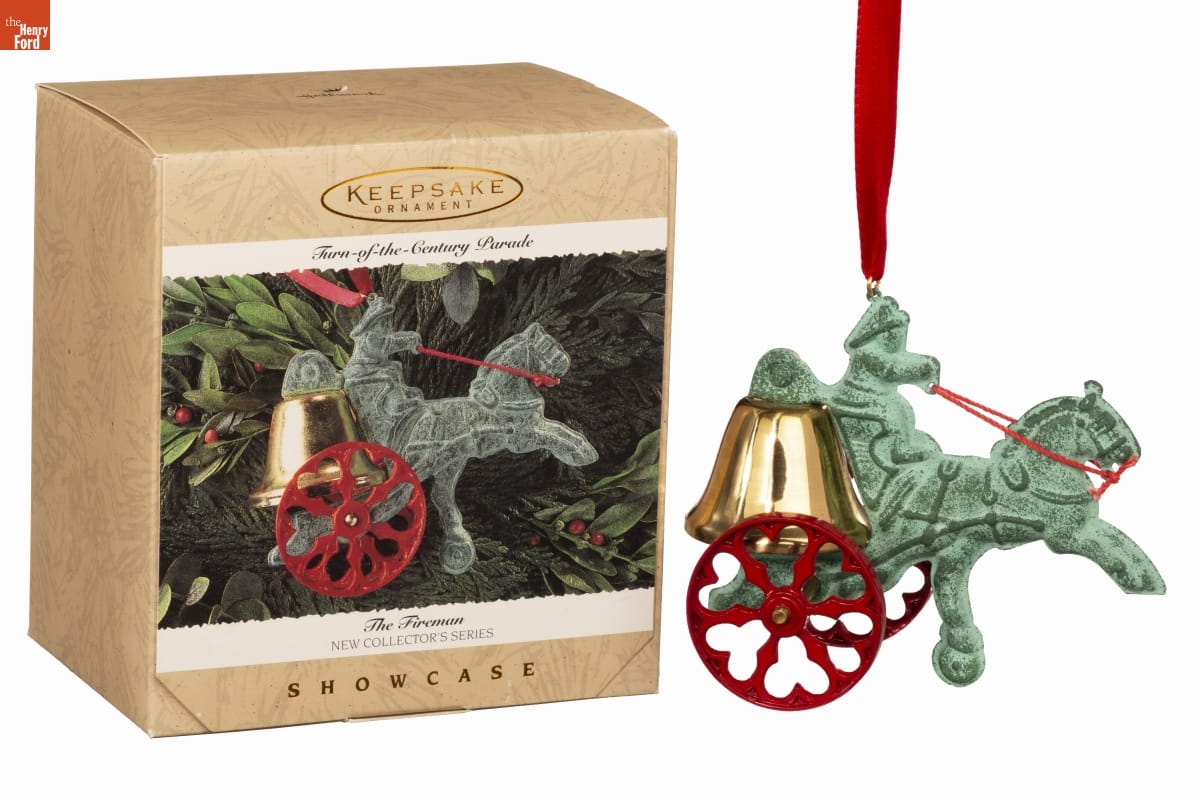
- Hallmark "Turn-of-the-Century Parade Series: The Fireman" Christmas Ornament, 1995 - Already known for greeting cards, Hallmark introduced a line of Christmas ornaments in 1973. The company's annual release of an increasing array of ornaments revolutionized Christmas decorating, appealing to customers' interest in marking memories and milestones as well as expressing one's personality and unique tastes.
- 1995
- Collections - Artifact
Hallmark "Turn-of-the-Century Parade Series: The Fireman" Christmas Ornament, 1995
Already known for greeting cards, Hallmark introduced a line of Christmas ornaments in 1973. The company's annual release of an increasing array of ornaments revolutionized Christmas decorating, appealing to customers' interest in marking memories and milestones as well as expressing one's personality and unique tastes.
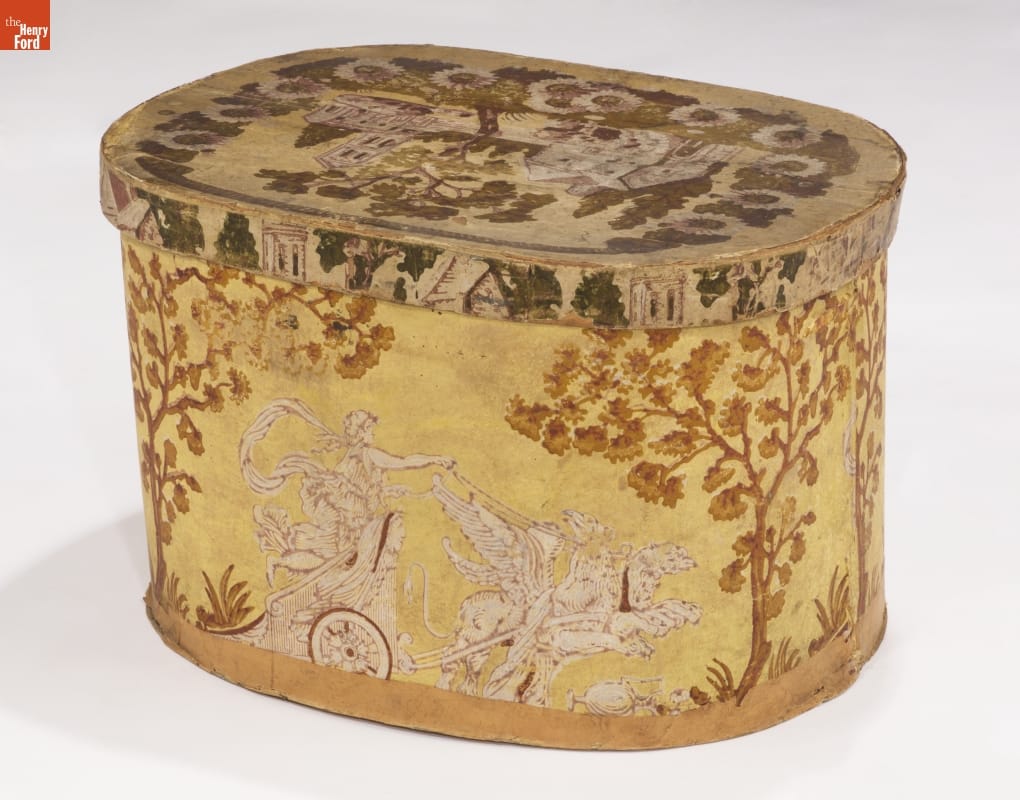
- Bandbox, circa 1835 - In the early 1800s, Americans used bandboxes to store clothing, accessories, and other small items. Bandboxes were handy containers in the home or when traveling by stage, boat, or rail. Manufacturers covered these inexpensive pasteboard or wooden boxes with colorful papers. This bandbox's paper depicts a man dressed in classical garb driving a chariot pulled by griffins -- mythical creatures, part lion part eagle.
- circa 1835
- Collections - Artifact
Bandbox, circa 1835
In the early 1800s, Americans used bandboxes to store clothing, accessories, and other small items. Bandboxes were handy containers in the home or when traveling by stage, boat, or rail. Manufacturers covered these inexpensive pasteboard or wooden boxes with colorful papers. This bandbox's paper depicts a man dressed in classical garb driving a chariot pulled by griffins -- mythical creatures, part lion part eagle.