
Search
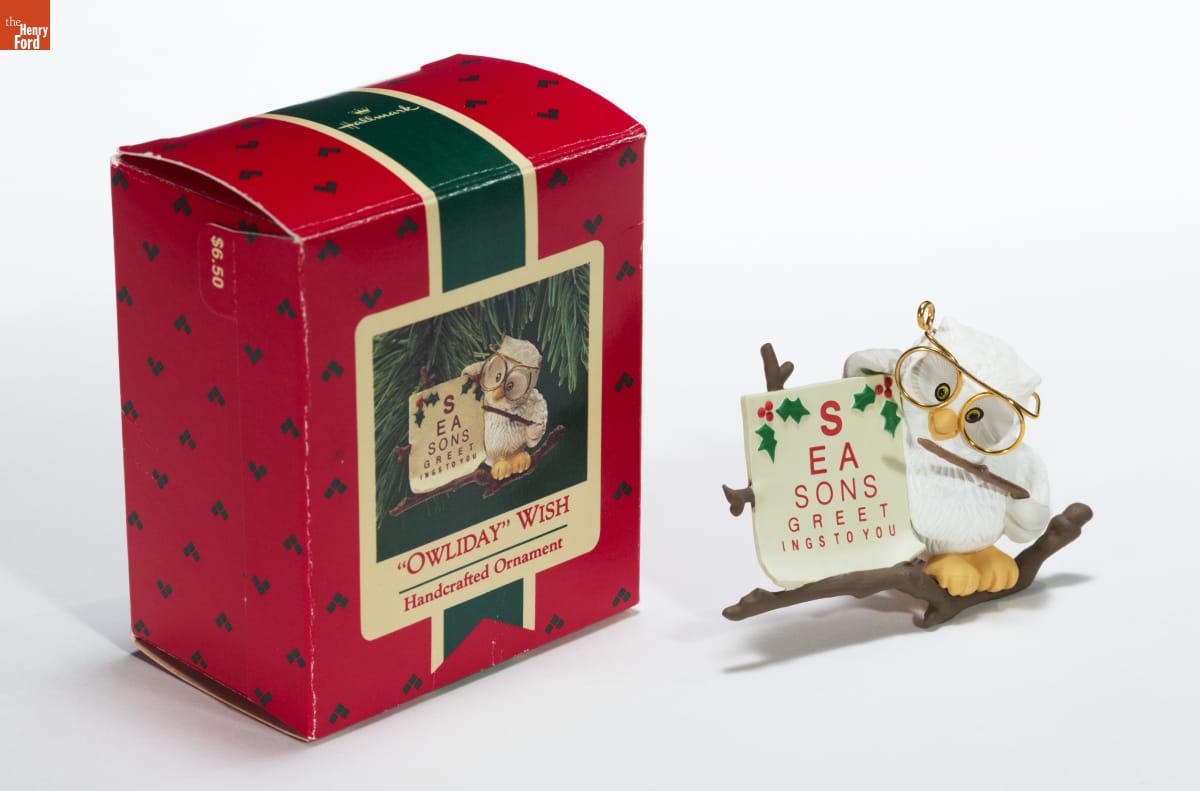
- Hallmark ""Owliday" Wish" Christmas Ornament, 1987 - Already known for greeting cards, Hallmark introduced a line of Christmas ornaments in 1973. The company's annual release of an increasing array of ornaments revolutionized Christmas decorating, appealing to customers' interest in marking memories and milestones as well as expressing one's personality and unique tastes.
- 1987
- Collections - Artifact
Hallmark ""Owliday" Wish" Christmas Ornament, 1987
Already known for greeting cards, Hallmark introduced a line of Christmas ornaments in 1973. The company's annual release of an increasing array of ornaments revolutionized Christmas decorating, appealing to customers' interest in marking memories and milestones as well as expressing one's personality and unique tastes.
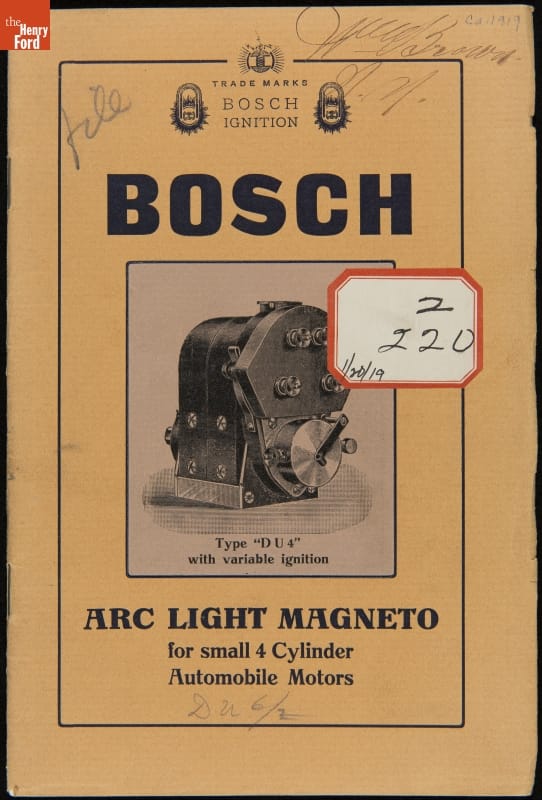
- "Bosch Arc Light Magneto for Small 4 Cylinder Automobile Motors," circa 1919 - Magnetos served as simple, reliable ignition systems for internal combustion engines in early automobiles, motorcycles, and airplanes. Modern ignition magnetos are still found in lawn mowers and chainsaws, and aircraft use magnetos as an independent electrical system. Auto manufacturers, however, found other methods to keep engines turning.
- circa 1919
- Collections - Artifact
"Bosch Arc Light Magneto for Small 4 Cylinder Automobile Motors," circa 1919
Magnetos served as simple, reliable ignition systems for internal combustion engines in early automobiles, motorcycles, and airplanes. Modern ignition magnetos are still found in lawn mowers and chainsaws, and aircraft use magnetos as an independent electrical system. Auto manufacturers, however, found other methods to keep engines turning.
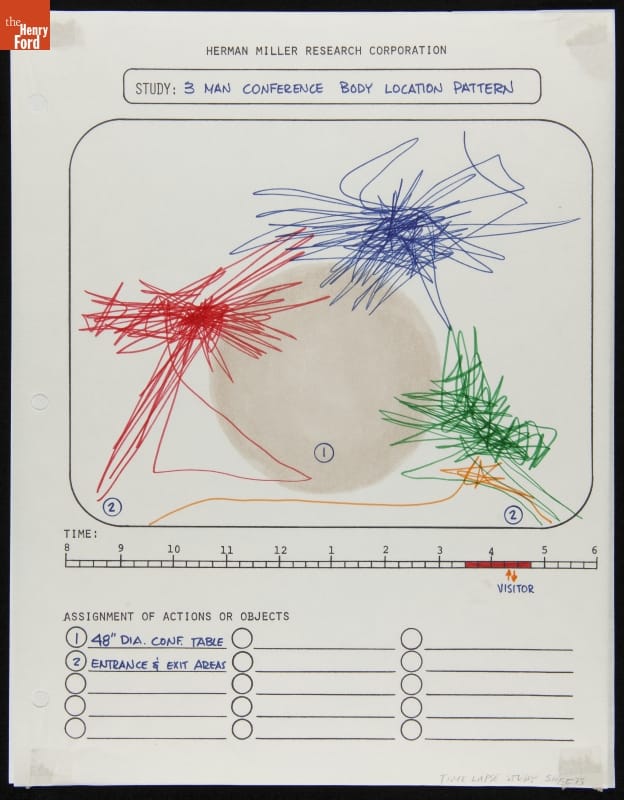
- Time Lapse Study Sheet for Action Office System, "3-Man Conference Body Location Pattern" -
- Collections - Artifact
Time Lapse Study Sheet for Action Office System, "3-Man Conference Body Location Pattern"
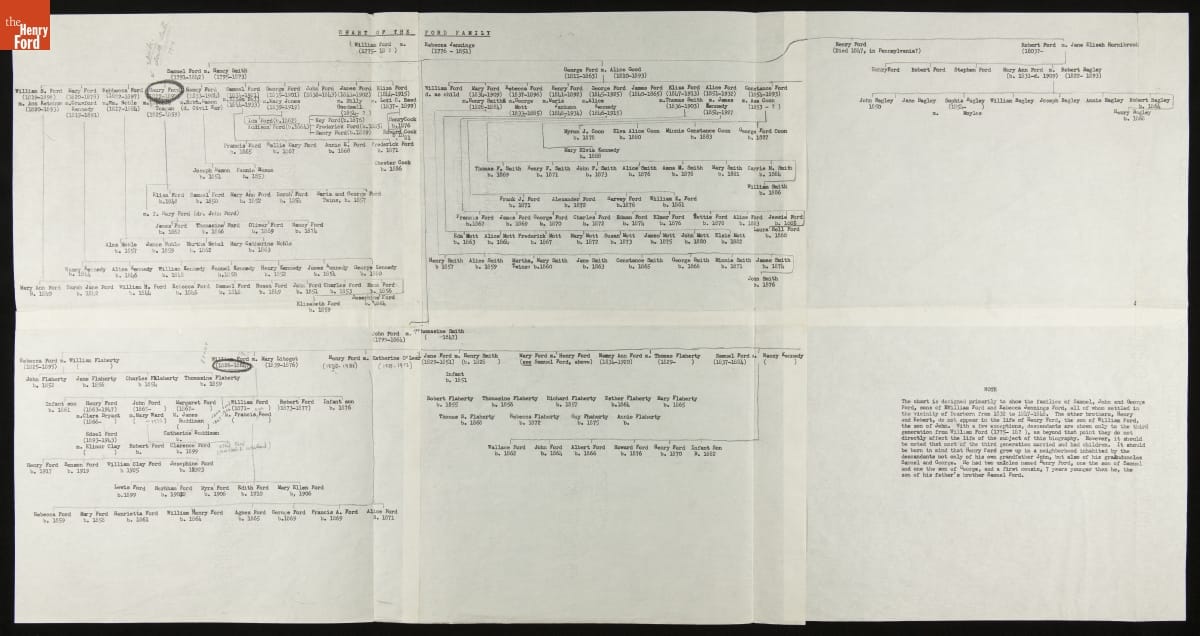
- Ford Family Tree, "Chart of the Ford Family," 1947-1950 - Automobile magnate Henry Ford could trace his paternal ancestors back to William Ford (1775-1818). Henry's great-grandfather lived in County Cork, Ireland, and was married to Rebecca Jennings. Three of their sons immigrated to Dearborn, Michigan, in the 1830s and 1840s. These sons form the branches on this genealogy chart. Other siblings were not included.
- 1775-1947
- Collections - Artifact
Ford Family Tree, "Chart of the Ford Family," 1947-1950
Automobile magnate Henry Ford could trace his paternal ancestors back to William Ford (1775-1818). Henry's great-grandfather lived in County Cork, Ireland, and was married to Rebecca Jennings. Three of their sons immigrated to Dearborn, Michigan, in the 1830s and 1840s. These sons form the branches on this genealogy chart. Other siblings were not included.
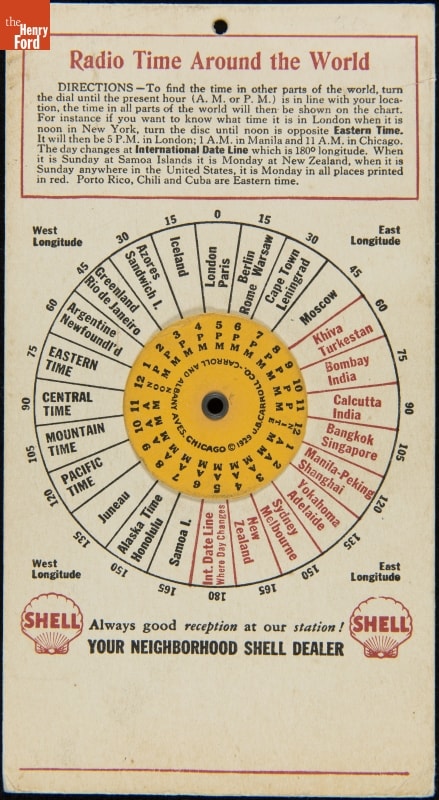
- "Radio Time Around the World" Wheel Chart Promotional Giveaway, 1929 - Gas station operators and mechanics advertised their services with promotional giveaways. This circa 1929 chart capitalized on the growing popularity of amateur or ham radio. By adjusting the wheel accordingly, a radio operator could determine the current time anywhere in the world. Broadcast AM radios were just making their way into cars at the time too.
- 1929
- Collections - Artifact
"Radio Time Around the World" Wheel Chart Promotional Giveaway, 1929
Gas station operators and mechanics advertised their services with promotional giveaways. This circa 1929 chart capitalized on the growing popularity of amateur or ham radio. By adjusting the wheel accordingly, a radio operator could determine the current time anywhere in the world. Broadcast AM radios were just making their way into cars at the time too.
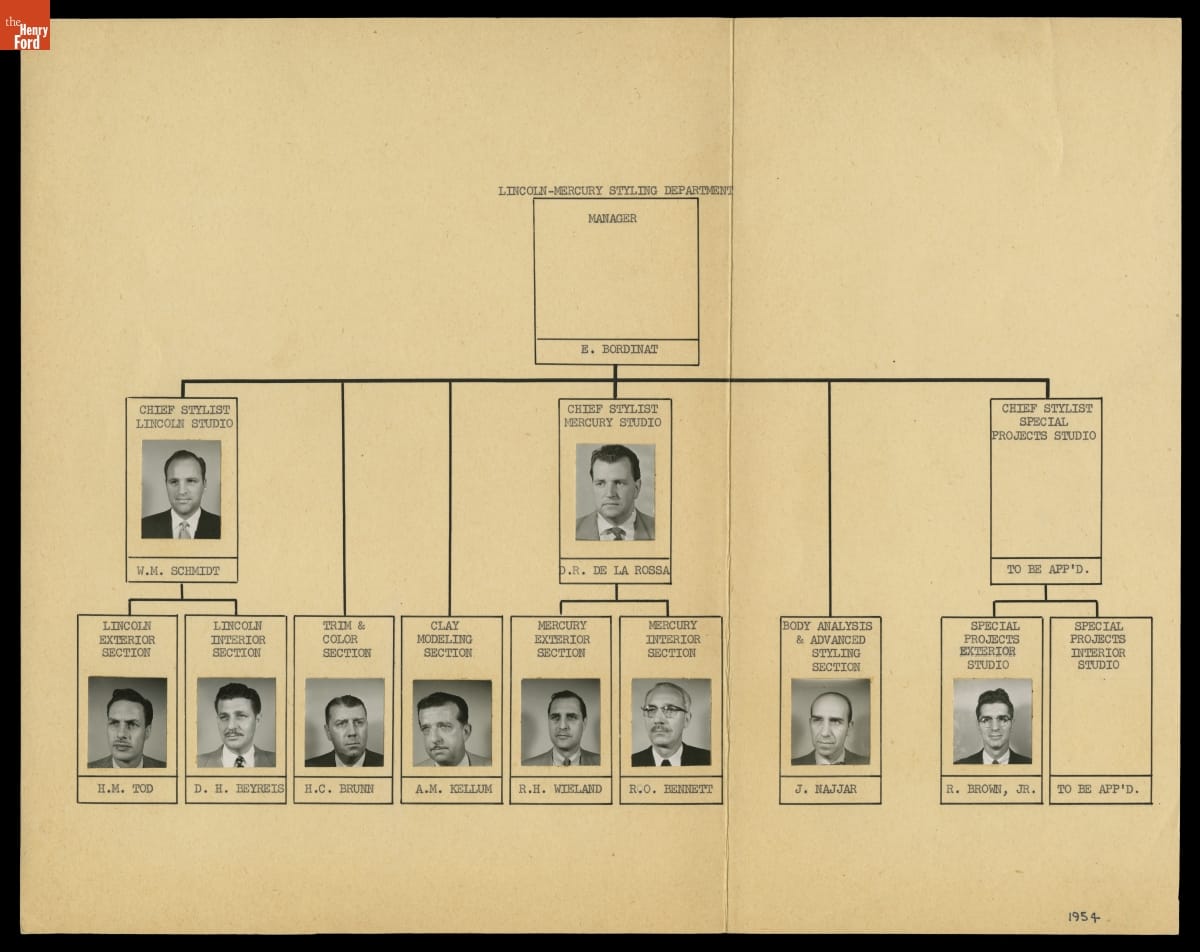
- Organizational Chart, Lincoln-Mercury Styling Department, 1954 - This organizational chart illustrated the hierarchy at Ford Motor Company's Lincoln-Mercury Styling Department in 1954. Eugene Bordinat directed the department from 1954-1961. William Schmidt served as Lincoln's chief designer from 1947-1954. Don DeLaRossa headed Mercury's design efforts from 1952-1955. The chart is from the papers of designer John Najjar, who spent more than 40 years at Ford Motor Company.
- 1954
- Collections - Artifact
Organizational Chart, Lincoln-Mercury Styling Department, 1954
This organizational chart illustrated the hierarchy at Ford Motor Company's Lincoln-Mercury Styling Department in 1954. Eugene Bordinat directed the department from 1954-1961. William Schmidt served as Lincoln's chief designer from 1947-1954. Don DeLaRossa headed Mercury's design efforts from 1952-1955. The chart is from the papers of designer John Najjar, who spent more than 40 years at Ford Motor Company.
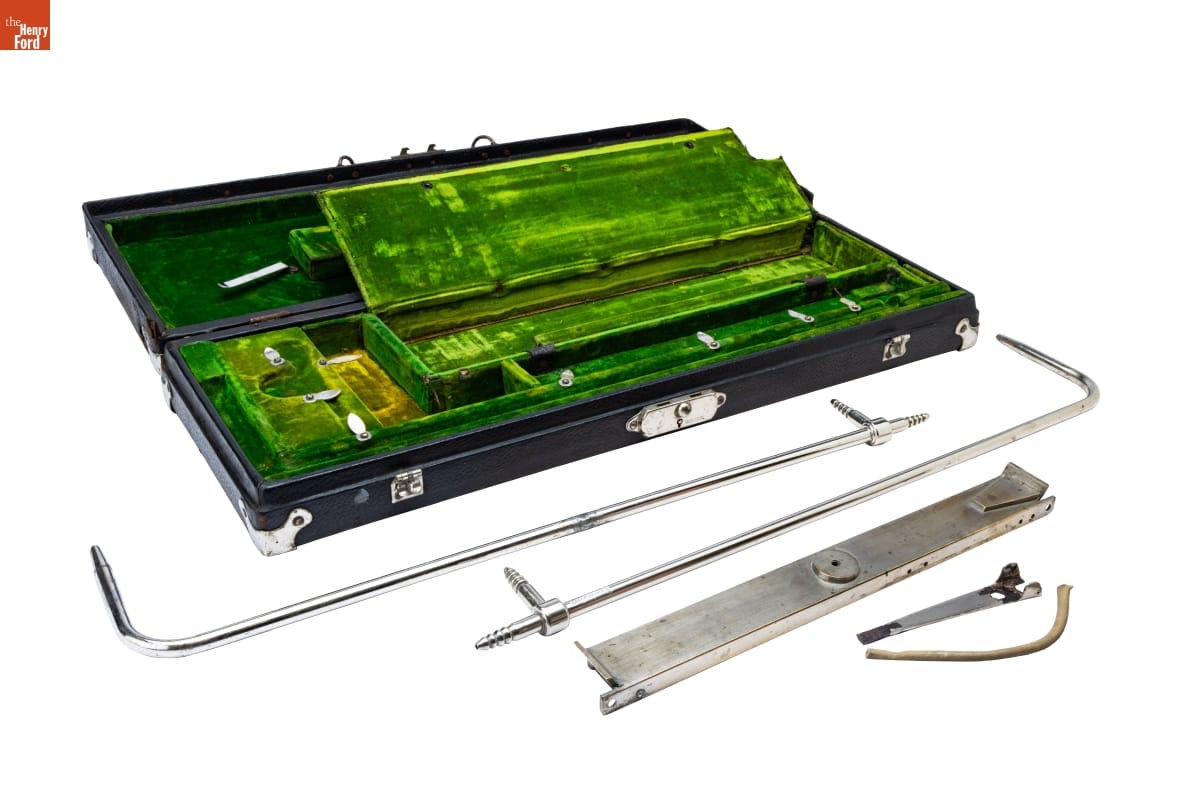
- Testing Instrument and Case -
- Collections - Artifact
Testing Instrument and Case
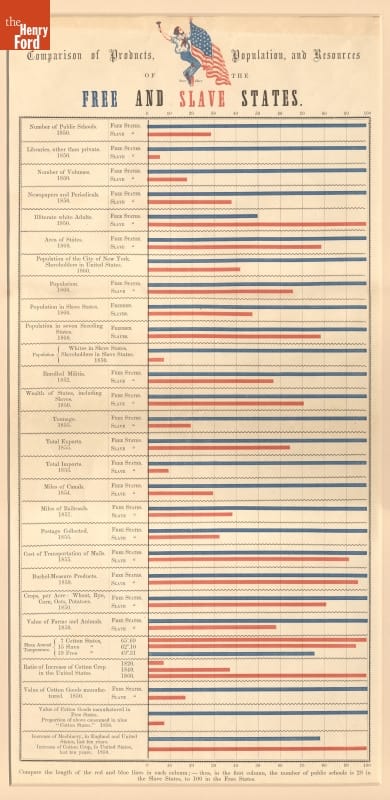
- "Comparison of Products, Population, and Resources of the Free and Slave States," 1861 - This bar-chart represented the growing divide between Free and Slave states prior to the Civil War. The chart used 1850 census data and compared "products, population and resources" of the two warring sections. Produced soon after the start of the war, Americans could see the outcomes for the nation if free labor prevailed or if slavery continued.
- 1861
- Collections - Artifact
"Comparison of Products, Population, and Resources of the Free and Slave States," 1861
This bar-chart represented the growing divide between Free and Slave states prior to the Civil War. The chart used 1850 census data and compared "products, population and resources" of the two warring sections. Produced soon after the start of the war, Americans could see the outcomes for the nation if free labor prevailed or if slavery continued.
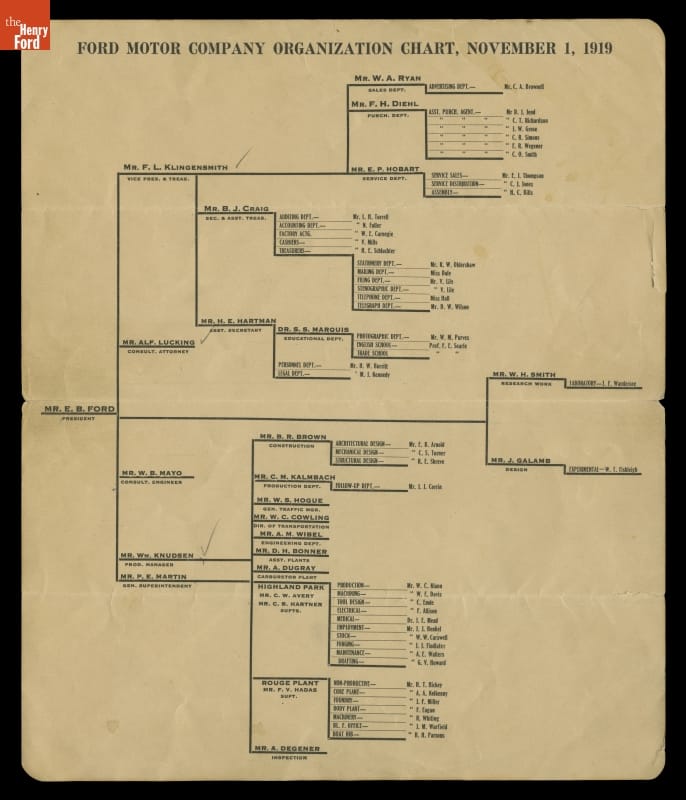
- Ford Motor Company Organization Chart, November 1, 1919 - Organizational charts and corporate hierarchies weren't strictly followed or enforced in Ford Motor Company's first decades -- largely because of founder Henry Ford's indifference to them. But this chart, issued in November 1919, illustrates a formal chain of command from president Edsel Ford down through company officers, superintendents, managers, and department heads.
- November 01, 1919
- Collections - Artifact
Ford Motor Company Organization Chart, November 1, 1919
Organizational charts and corporate hierarchies weren't strictly followed or enforced in Ford Motor Company's first decades -- largely because of founder Henry Ford's indifference to them. But this chart, issued in November 1919, illustrates a formal chain of command from president Edsel Ford down through company officers, superintendents, managers, and department heads.
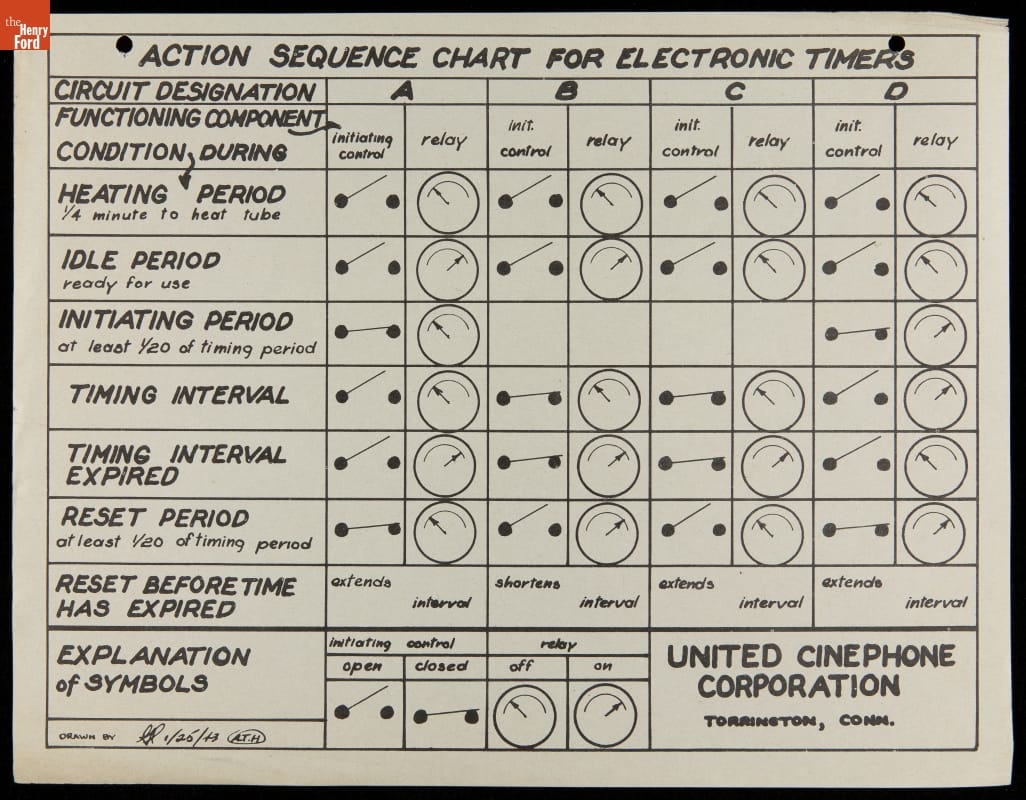
- Action Sequence Chart for Electronic Timers, 1943 - George Devol was a problem solver and prolific inventor -- particularly in the area of automation. In the 1930s, he formed United Cinephone Corporation. The company made electric and photoelectric controls, switches and timers used to speed up and improve manufacturing. His most important work led to his patent for the first industrial robot.
- January 25, 1943
- Collections - Artifact
Action Sequence Chart for Electronic Timers, 1943
George Devol was a problem solver and prolific inventor -- particularly in the area of automation. In the 1930s, he formed United Cinephone Corporation. The company made electric and photoelectric controls, switches and timers used to speed up and improve manufacturing. His most important work led to his patent for the first industrial robot.