
Search
- Cheese Knife, circa 1895 - Milk spoils, but turning it into cheese preserves its nutritional value. Cheesemakers encourage milk proteins to clump together to form curd -- ideal for making cheese -- and remove the whey (a milky, watery leftover). As the curd solidifies, cutting the curds drains off additional whey. Cheese knives provide the needed curd size and moisture for making cheese while encouraging further whey separation.
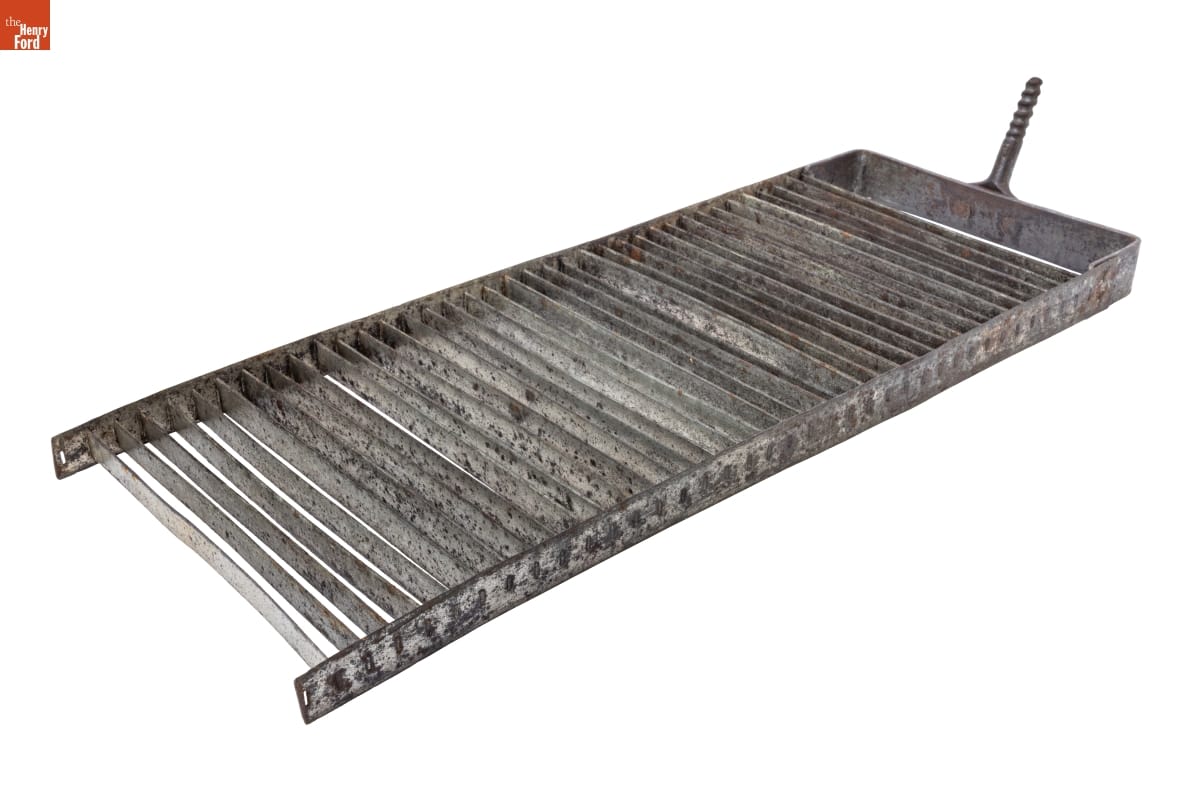
- circa 1895
- Collections - Artifact
Cheese Knife, circa 1895
Milk spoils, but turning it into cheese preserves its nutritional value. Cheesemakers encourage milk proteins to clump together to form curd -- ideal for making cheese -- and remove the whey (a milky, watery leftover). As the curd solidifies, cutting the curds drains off additional whey. Cheese knives provide the needed curd size and moisture for making cheese while encouraging further whey separation.
- Cheese Knife, circa 1895 - Milk spoils, but turning it into cheese preserves its nutritional value. Cheesemakers encourage milk proteins to clump together to form curd -- ideal for making cheese -- and remove the whey (a milky, watery leftover). As the curd solidifies, cutting the curds drains off additional whey. Cheese knives provide the needed curd size and moisture for making cheese while encouraging further whey separation.
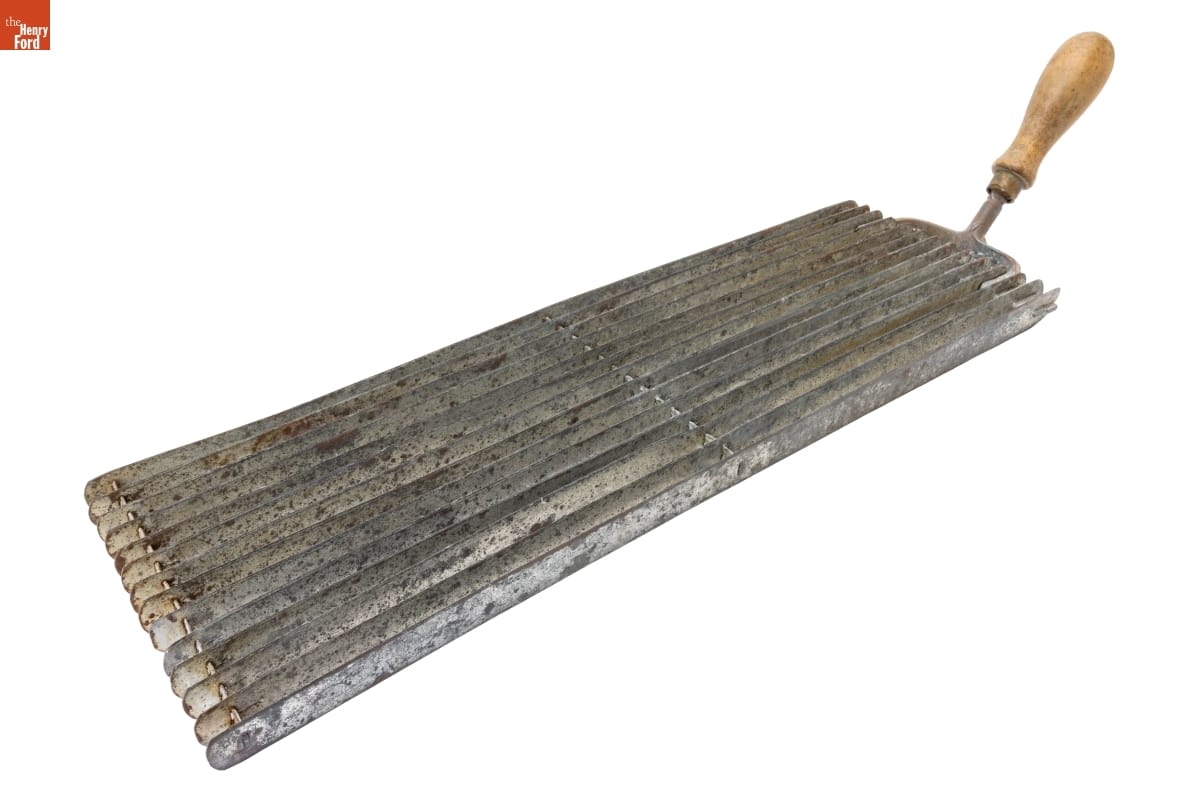
- circa 1895
- Collections - Artifact
Cheese Knife, circa 1895
Milk spoils, but turning it into cheese preserves its nutritional value. Cheesemakers encourage milk proteins to clump together to form curd -- ideal for making cheese -- and remove the whey (a milky, watery leftover). As the curd solidifies, cutting the curds drains off additional whey. Cheese knives provide the needed curd size and moisture for making cheese while encouraging further whey separation.
- Grinder - By the mid-1800s, Americans could use grinders instead of mincing knives to cut, chop, and prepare meat for cooking. Grinders like this one saved time and made food processing more efficient.
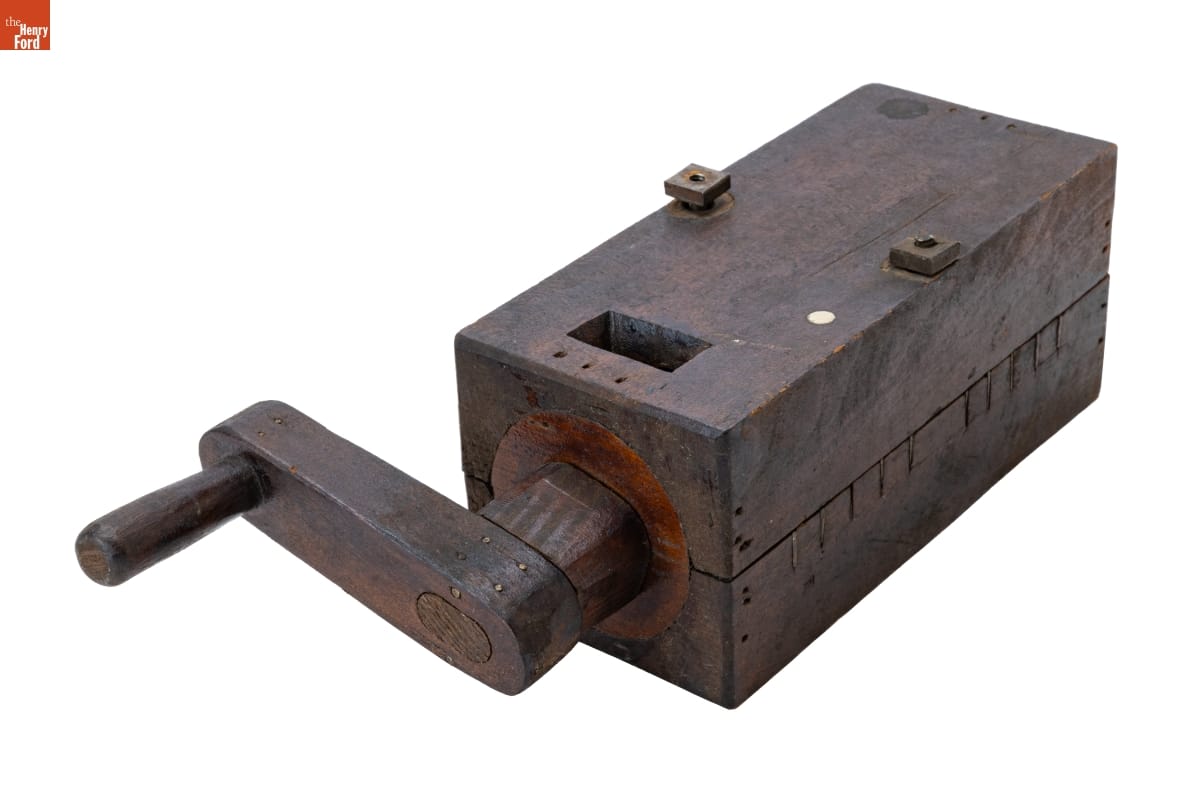
- Collections - Artifact
Grinder
By the mid-1800s, Americans could use grinders instead of mincing knives to cut, chop, and prepare meat for cooking. Grinders like this one saved time and made food processing more efficient.