
Search
- Drug Jar, 1720-1740 - Eighteenth-century druggists displayed jars, like this one, in their apothecaries. These drug jars held various substances thought to promote health and well-being. The labels provided quick identification of ingredients, while the decorative containers conveyed the druggist's worldliness and professionalism to those in need of health services.
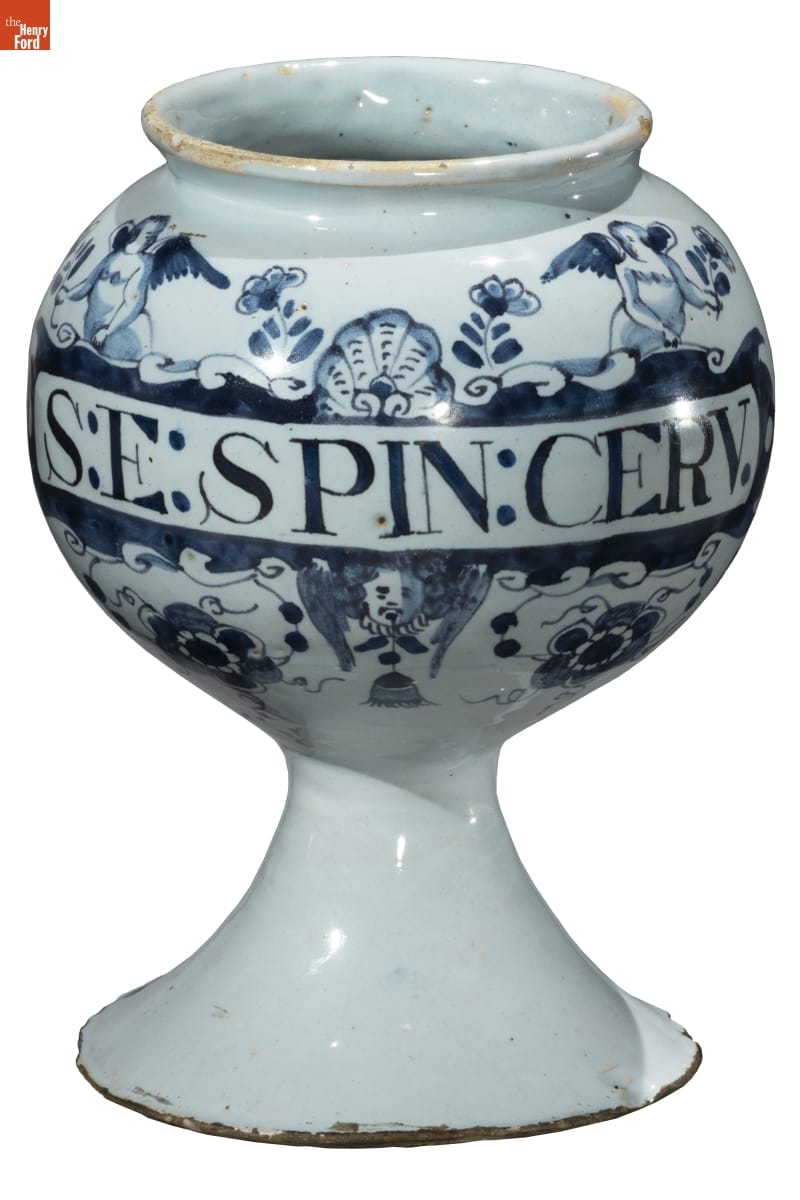
- circa 1720
- Collections - Artifact
Drug Jar, 1720-1740
Eighteenth-century druggists displayed jars, like this one, in their apothecaries. These drug jars held various substances thought to promote health and well-being. The labels provided quick identification of ingredients, while the decorative containers conveyed the druggist's worldliness and professionalism to those in need of health services.
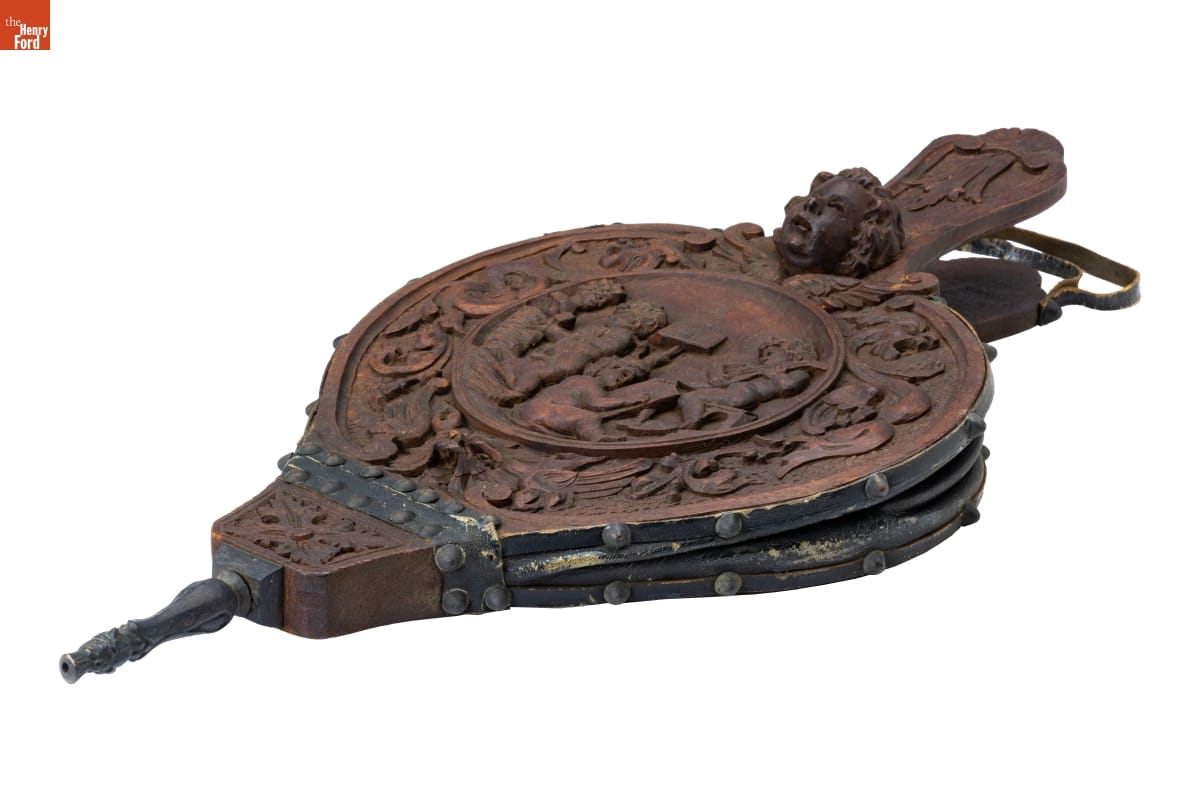
- Bellows - Have you ever fanned a fire? Historically, people used bellows to create updrafts of air to help ignite or sustain a fire in a hearth or stove. Moving the handled wood panels back and forth captured air in a leather chamber and expelled it out a metal nozzle. Some bellows were simple and undecorated; others were elaborately painted or carved; all were utilitarian.
- Collections - Artifact
Bellows
Have you ever fanned a fire? Historically, people used bellows to create updrafts of air to help ignite or sustain a fire in a hearth or stove. Moving the handled wood panels back and forth captured air in a leather chamber and expelled it out a metal nozzle. Some bellows were simple and undecorated; others were elaborately painted or carved; all were utilitarian.
- Drug Jar, 1720-1740 - Eighteenth-century druggists displayed jars, like this one, in their apothecaries. These drug jars held various substances thought to promote health and well-being. The labels provided quick identification of ingredients, while the decorative containers conveyed the druggist's worldliness and professionalism to those in need of health services.
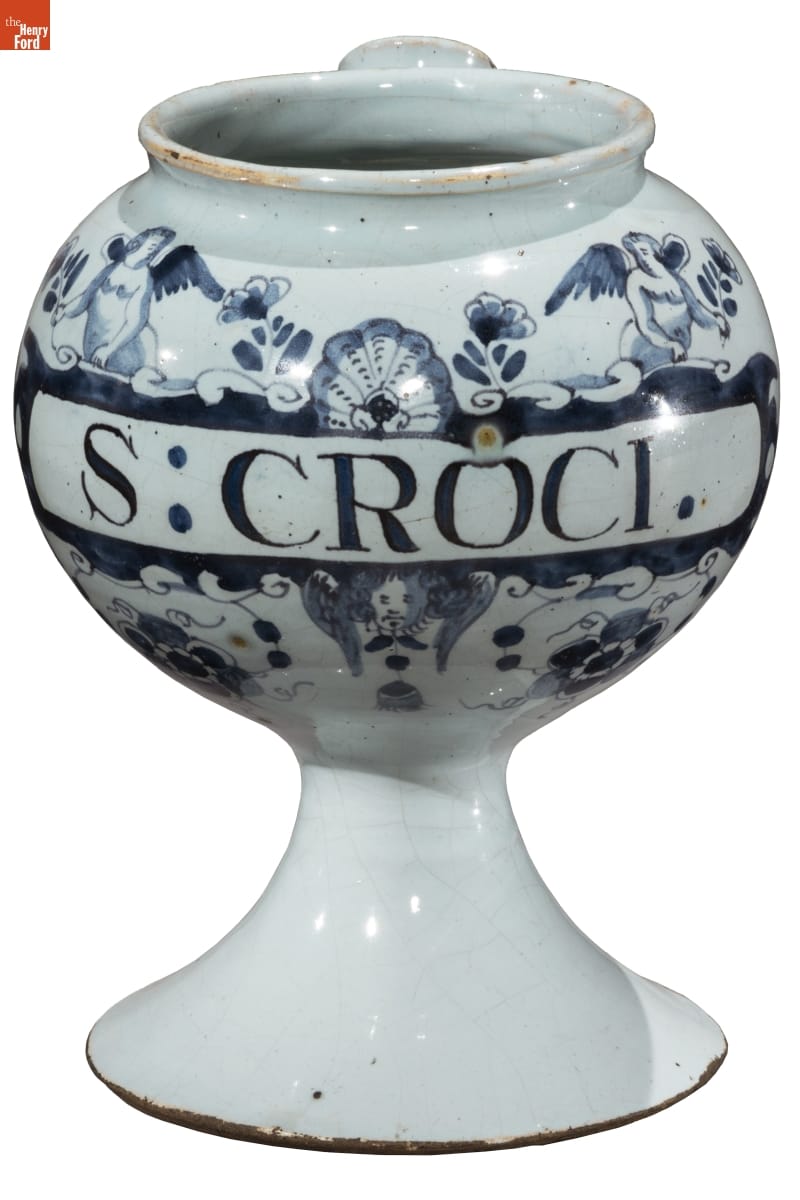
- circa 1720
- Collections - Artifact
Drug Jar, 1720-1740
Eighteenth-century druggists displayed jars, like this one, in their apothecaries. These drug jars held various substances thought to promote health and well-being. The labels provided quick identification of ingredients, while the decorative containers conveyed the druggist's worldliness and professionalism to those in need of health services.
- Plate, 1687 - A well-to-do family in the late-17th century displayed decorated plates like this one on a table or in an open cupboard. The dishes, not used as common serving items, showed the owner's wealth and good taste. The plate's decorative motifs varied, but popular themes included: images of royalty, biblical stories, flowers, and may also have the owner's initials and a date.
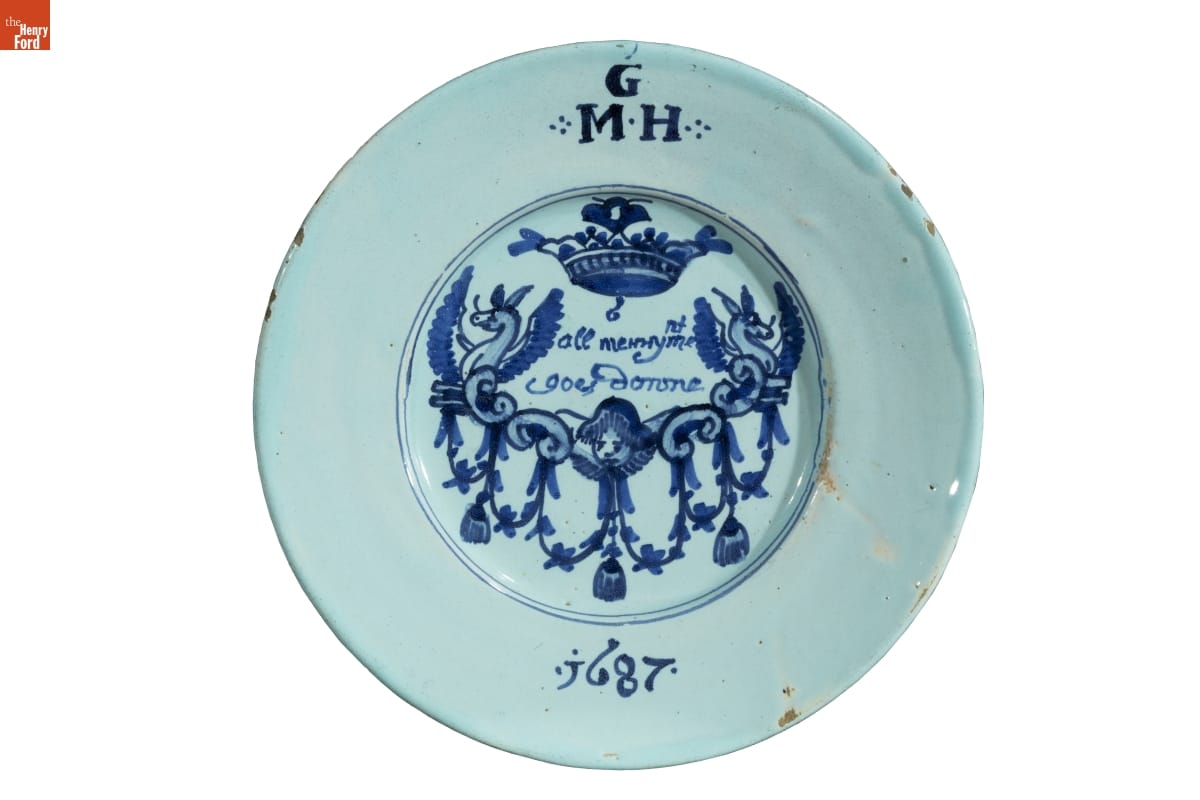
- 1687
- Collections - Artifact
Plate, 1687
A well-to-do family in the late-17th century displayed decorated plates like this one on a table or in an open cupboard. The dishes, not used as common serving items, showed the owner's wealth and good taste. The plate's decorative motifs varied, but popular themes included: images of royalty, biblical stories, flowers, and may also have the owner's initials and a date.
- Rose Bowl, 1897 -
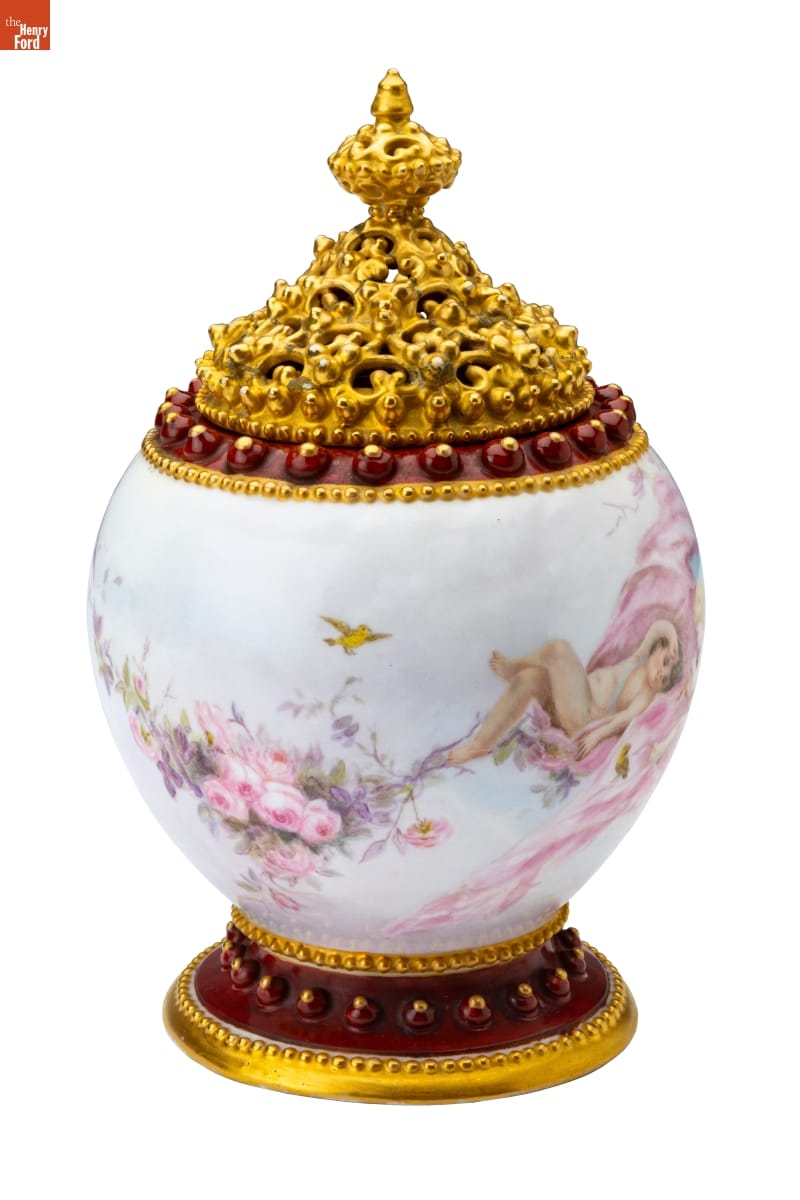
- 1897
- Collections - Artifact
Rose Bowl, 1897
- Plate, 1687 - A well-to-do family in the late-17th century displayed decorated plates like this one on a table or in an open cupboard. The dishes, not used as common serving items, showed the owner's wealth and good taste. The plate's decorative motifs varied, but popular themes included: images of royalty, biblical stories, flowers, and may also have the owner's initials and a date.
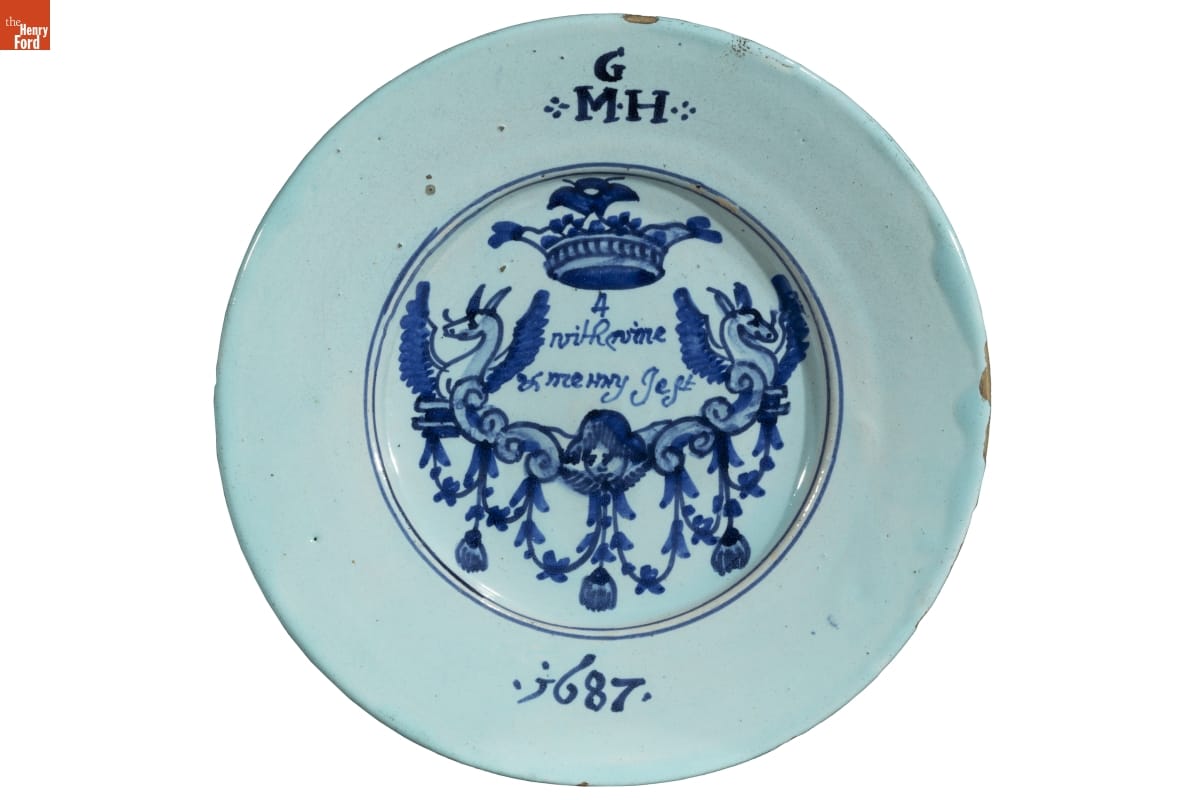
- 1687
- Collections - Artifact
Plate, 1687
A well-to-do family in the late-17th century displayed decorated plates like this one on a table or in an open cupboard. The dishes, not used as common serving items, showed the owner's wealth and good taste. The plate's decorative motifs varied, but popular themes included: images of royalty, biblical stories, flowers, and may also have the owner's initials and a date.
- "Health and Joy and All Good Cheer! Young Christmas Comes but Once a Year!," 1882 - Louis Prang, a German immigrant printer based in Boston, Massachusetts, introduced colorful chromolithographed Christmas cards in the mid-1870s, which helped spur an annual holiday card-giving tradition in America. In the early 1880s, Prang initiated card contests and produced more elaborate cards, some which included silk fringe, tassels, or hangars. Today, many consider Louis Prang the father of the American Christmas card.
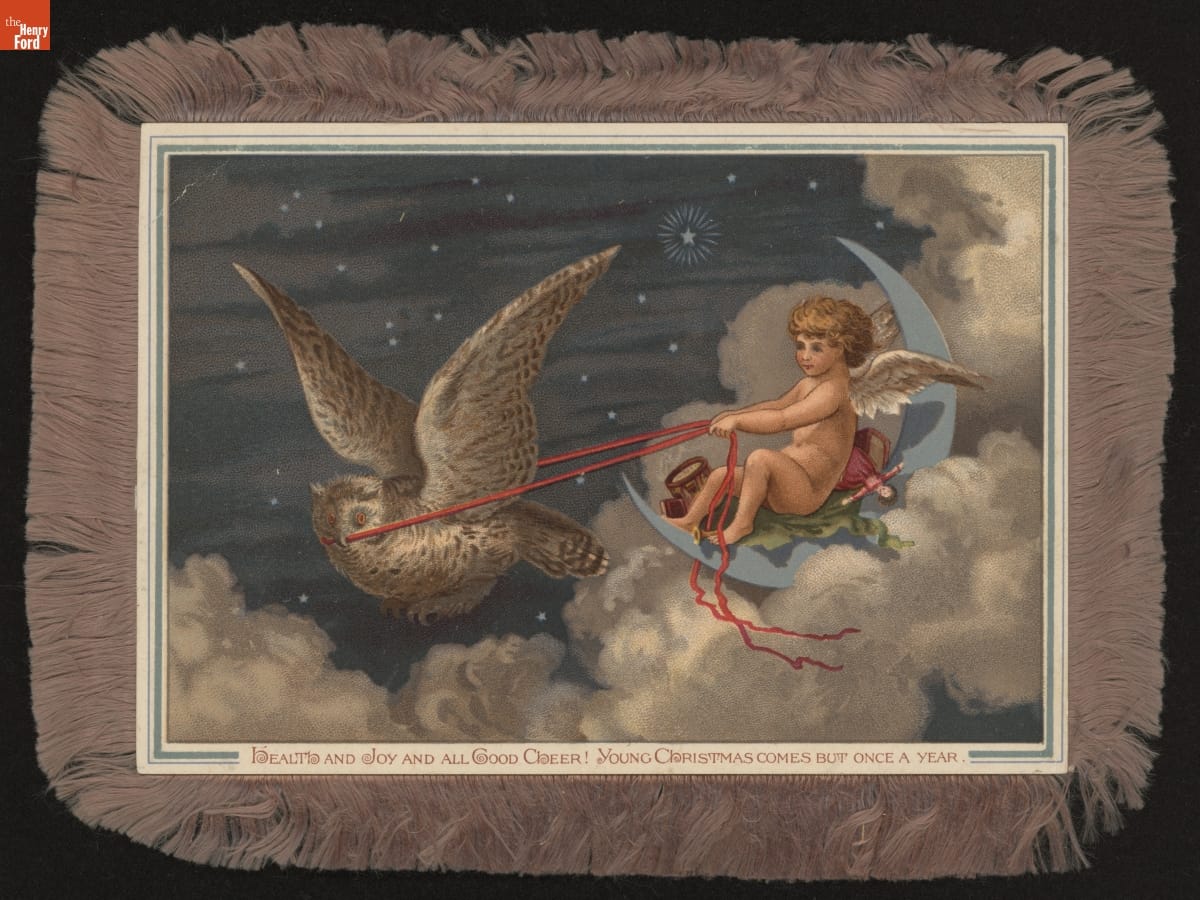
- 1882
- Collections - Artifact
"Health and Joy and All Good Cheer! Young Christmas Comes but Once a Year!," 1882
Louis Prang, a German immigrant printer based in Boston, Massachusetts, introduced colorful chromolithographed Christmas cards in the mid-1870s, which helped spur an annual holiday card-giving tradition in America. In the early 1880s, Prang initiated card contests and produced more elaborate cards, some which included silk fringe, tassels, or hangars. Today, many consider Louis Prang the father of the American Christmas card.