
Search
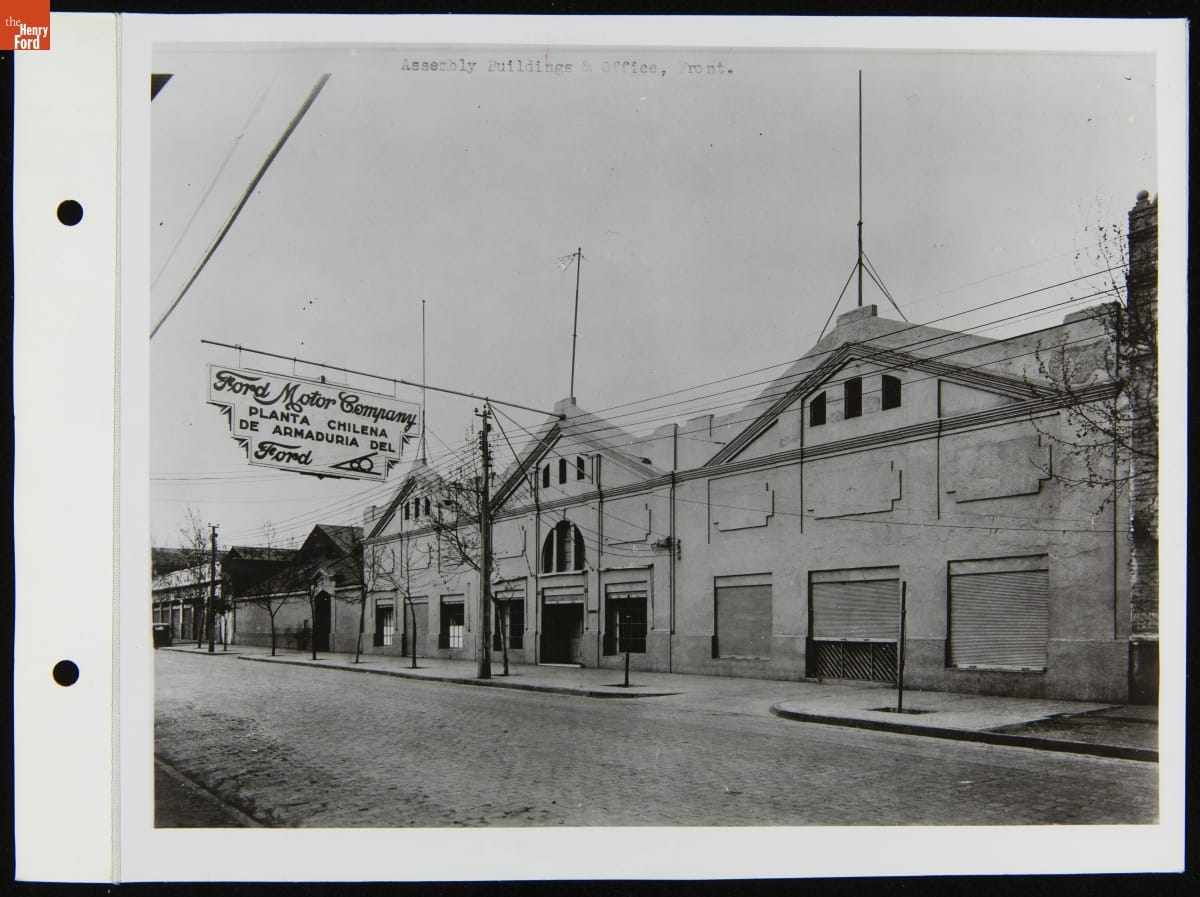
- Ford Motor Company Branch in Santiago, Chile, December 15, 1947 - Ford Motor Company operated sales and service branches, as well as assembly plants, in cities around the world. This photograph shows the company's branch in Santiago, Chile. Ford had South American subsidiary companies based in Argentina, Brazil, and Venezuela.
- December 15, 1947
- Collections - Artifact
Ford Motor Company Branch in Santiago, Chile, December 15, 1947
Ford Motor Company operated sales and service branches, as well as assembly plants, in cities around the world. This photograph shows the company's branch in Santiago, Chile. Ford had South American subsidiary companies based in Argentina, Brazil, and Venezuela.
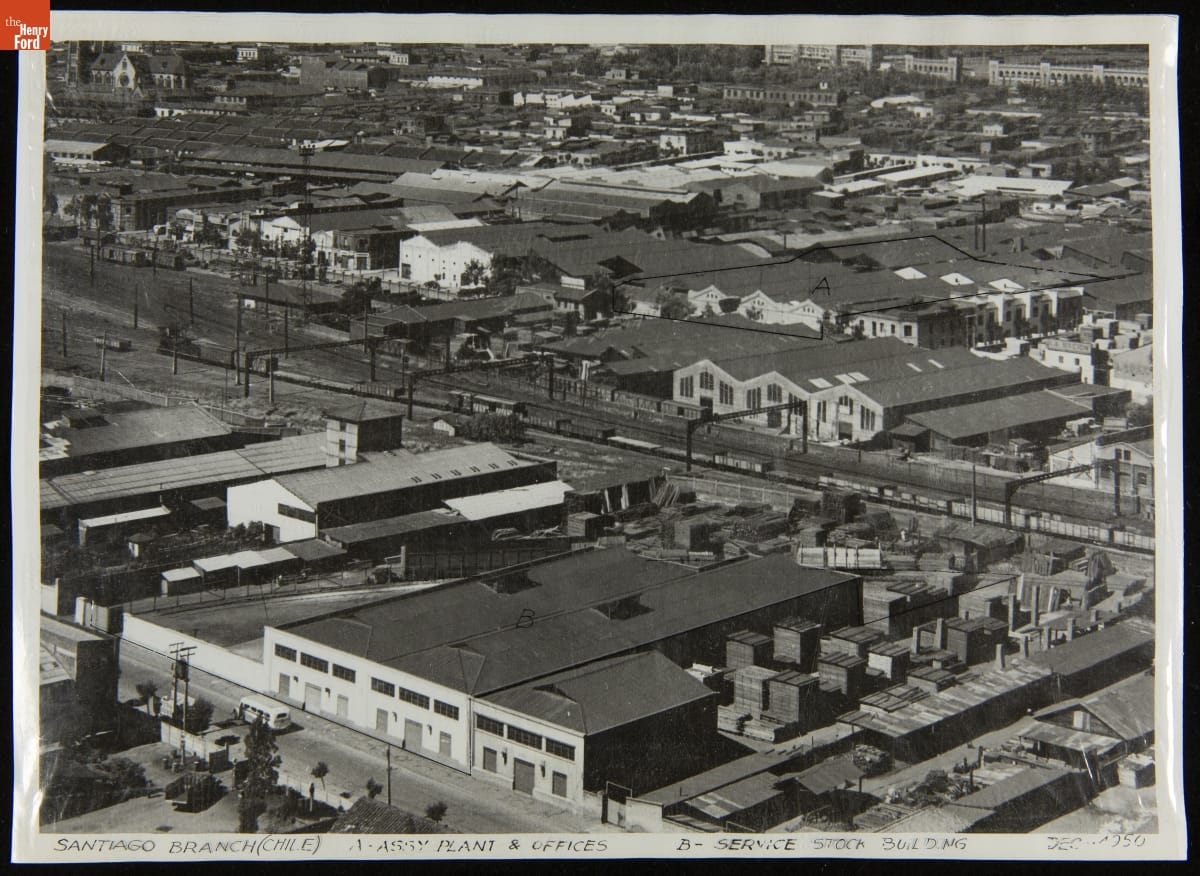
- Aerial View of Ford Motor Company Branch in Santiago, Chile, November 30, 1950 - Ford Motor Company operated sales and service branches, as well as assembly plants, in cities around the world. This photograph shows the company's branch in Santiago, Chile. Ford had South American subsidiary companies based in Argentina, Brazil, and Venezuela.
- November 30, 1950
- Collections - Artifact
Aerial View of Ford Motor Company Branch in Santiago, Chile, November 30, 1950
Ford Motor Company operated sales and service branches, as well as assembly plants, in cities around the world. This photograph shows the company's branch in Santiago, Chile. Ford had South American subsidiary companies based in Argentina, Brazil, and Venezuela.
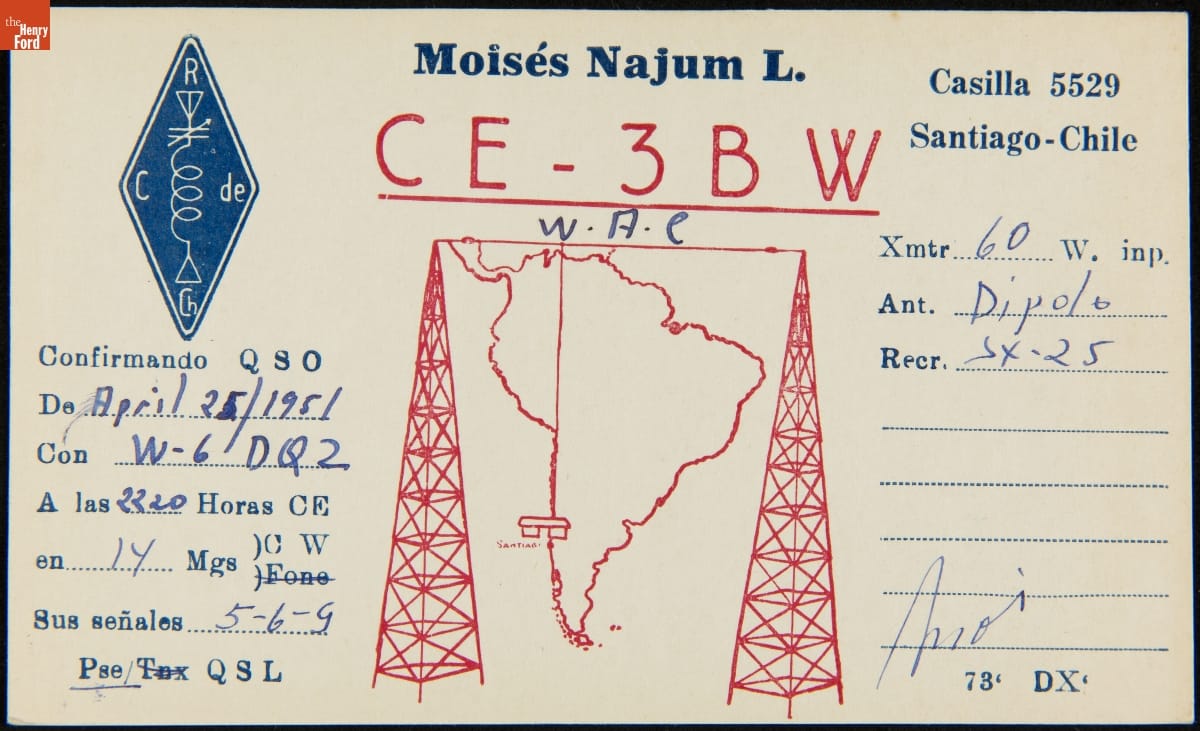
- QSL Card from CE-3BW (Santiago, Chile) to W6DQZ (Hamid Durmisevich, Los Angeles, California), April 25, 1951 - It was customary for ham radio operators (hams) to exchange these "QSL cards" with one another through the mail after their first conversation. Long-time hams amassed collections of thousands of cards, some from far-flung places. There is a story embedded in each example: the ham's call sign dominates the design, with additional details about location, reception reports, and weather conditions.
- April 25, 1951
- Collections - Artifact
QSL Card from CE-3BW (Santiago, Chile) to W6DQZ (Hamid Durmisevich, Los Angeles, California), April 25, 1951
It was customary for ham radio operators (hams) to exchange these "QSL cards" with one another through the mail after their first conversation. Long-time hams amassed collections of thousands of cards, some from far-flung places. There is a story embedded in each example: the ham's call sign dominates the design, with additional details about location, reception reports, and weather conditions.