
Search
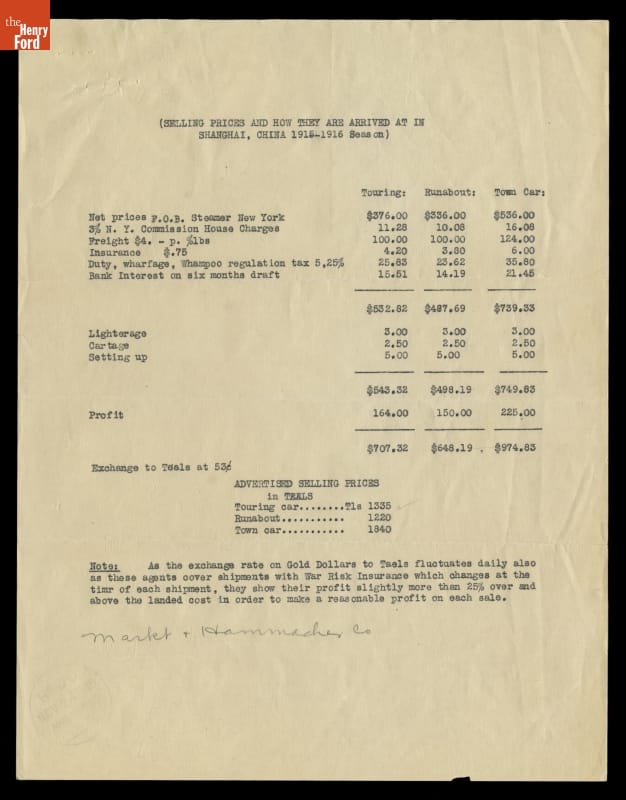
- Selling Prices for Ford Model T Cars and How They Are Arrived at in Shanghai, China, 1915-1916 Season - Though it operated some direct-sales offices in major cities, Ford Motor Company sold most of its Model T cars through franchise agreements with independent dealers. Each franchisee received the right to sell Ford cars within a specific territory. Ford encouraged dealers by offering discounts and rebates to high sellers. But low-selling dealers risked losing their territories.
- 1915-1916
- Collections - Artifact
Selling Prices for Ford Model T Cars and How They Are Arrived at in Shanghai, China, 1915-1916 Season
Though it operated some direct-sales offices in major cities, Ford Motor Company sold most of its Model T cars through franchise agreements with independent dealers. Each franchisee received the right to sell Ford cars within a specific territory. Ford encouraged dealers by offering discounts and rebates to high sellers. But low-selling dealers risked losing their territories.
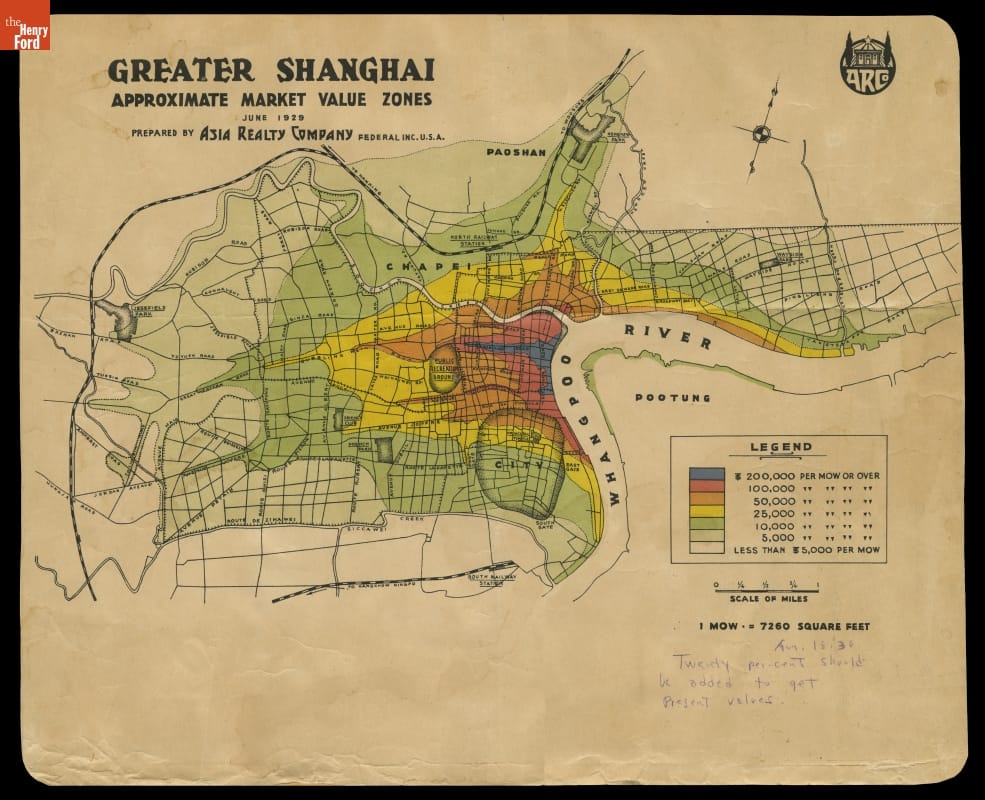
- Map, "Greater Shanghai Approximate Market Value Zones," June 1929 - Ford Motor Company operated sales and service branches in cities around the world. The company considered building an assembly plant in Shanghai, China. This map was collected during the study. Ford decided against the idea when it learned that Chinese law required the property to be owned by a citizen of China.
- June 01, 1929
- Collections - Artifact
Map, "Greater Shanghai Approximate Market Value Zones," June 1929
Ford Motor Company operated sales and service branches in cities around the world. The company considered building an assembly plant in Shanghai, China. This map was collected during the study. Ford decided against the idea when it learned that Chinese law required the property to be owned by a citizen of China.
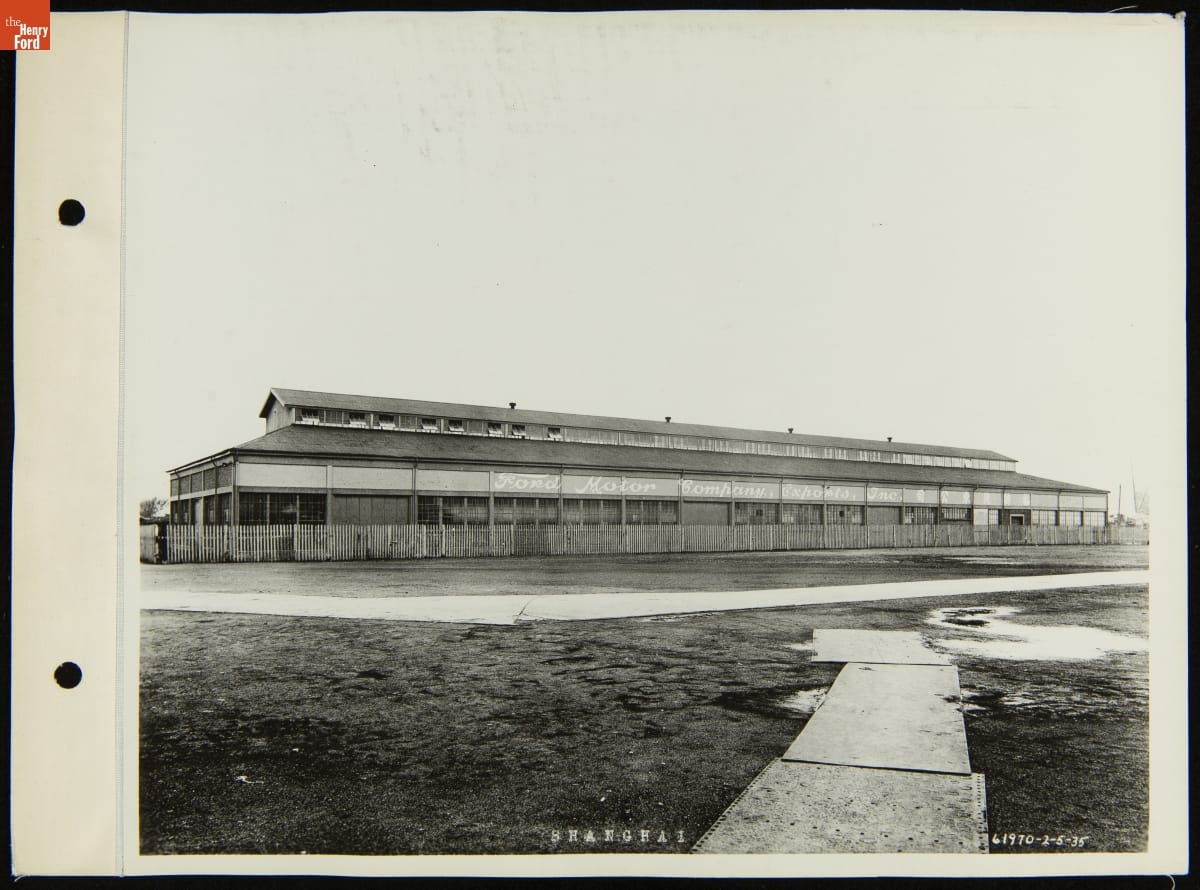
- Ford Motor Company Branch in Shanghai, China, February 5, 1935 - Ford Motor Company operated sales and service branches in cities around the world. These facilities allowed the company to better serve its global customers. Ford considered building an assembly plant in Shanghai, China, in 1930, but decided against it. Instead, Ford vehicles were imported into China through sales agents at Dodge & Seymour, Ltd.
- February 05, 1935
- Collections - Artifact
Ford Motor Company Branch in Shanghai, China, February 5, 1935
Ford Motor Company operated sales and service branches in cities around the world. These facilities allowed the company to better serve its global customers. Ford considered building an assembly plant in Shanghai, China, in 1930, but decided against it. Instead, Ford vehicles were imported into China through sales agents at Dodge & Seymour, Ltd.
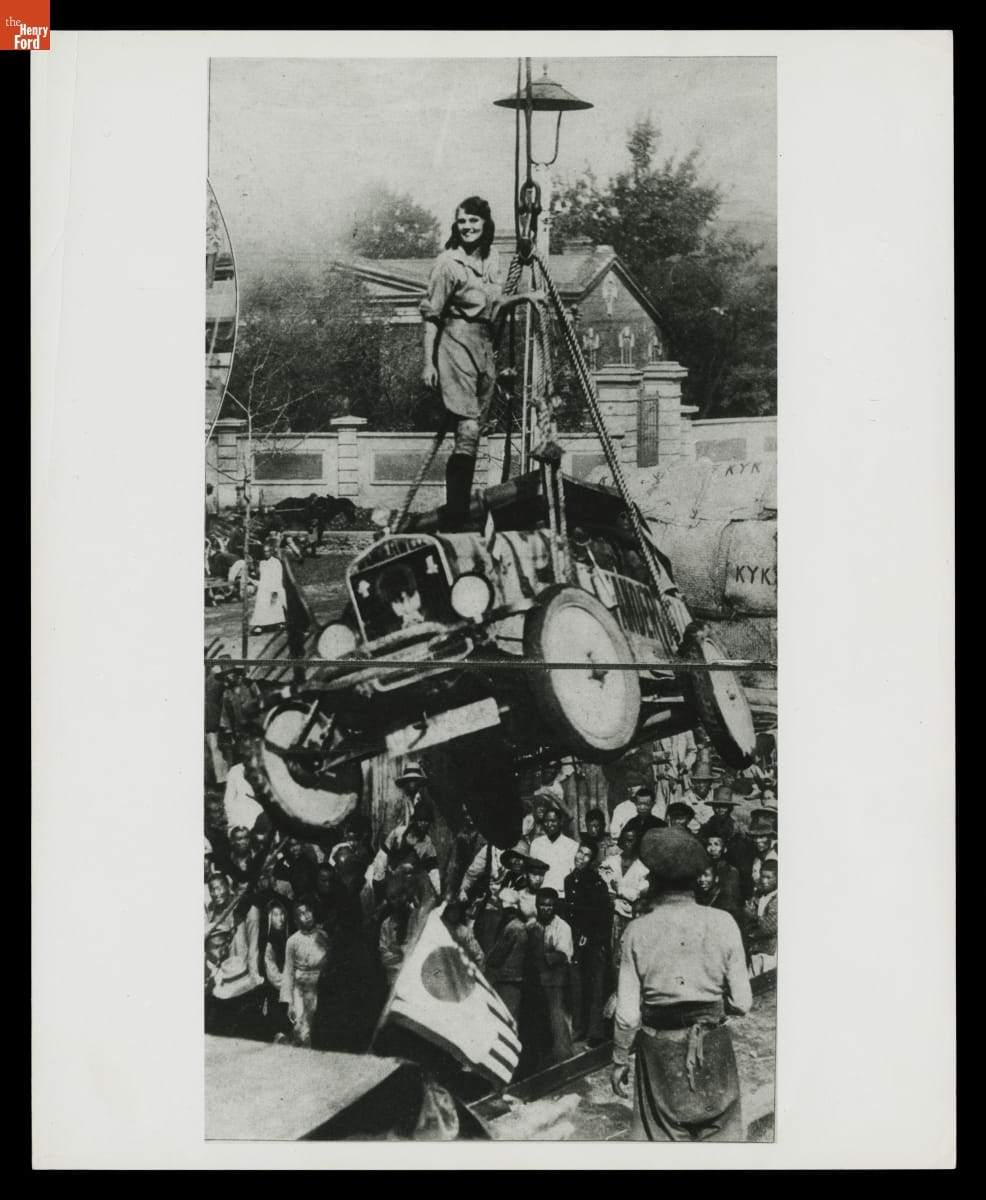
- Driver Aloha Wanderwell on the Hoist Lifting Her Ford Model T from aboard Ship, Shanghai, China, 1924 - Aloha Wanderwell Baker, born Idris Galcia Hall, was adventurous. In 1922, at the age of 16, she answered an ad to join the globe-trekking Captain Walter Wanderwell on his travels. Aloha crisscrossed Europe, journeyed across Africa and Asia, and then sailed for America and more adventures. Along the way, she became known as "the world's most traveled girl."
- 1924
- Collections - Artifact
Driver Aloha Wanderwell on the Hoist Lifting Her Ford Model T from aboard Ship, Shanghai, China, 1924
Aloha Wanderwell Baker, born Idris Galcia Hall, was adventurous. In 1922, at the age of 16, she answered an ad to join the globe-trekking Captain Walter Wanderwell on his travels. Aloha crisscrossed Europe, journeyed across Africa and Asia, and then sailed for America and more adventures. Along the way, she became known as "the world's most traveled girl."
- Scrapbook by W.C. Cowling for Charles Sorensen, regarding Establishing a Ford Motor Company Plant in Shanghai, China, 1930-1932 - Ford Motor Company operated sales and service branches in cities around the world. The company considered building an assembly plant in Shanghai, China. This scrapbook was put together during the study. Ford decided against the idea when it learned that Chinese law required the property to be owned by a citizen of China.
- 1930-1932
- Collections - Artifact
Scrapbook by W.C. Cowling for Charles Sorensen, regarding Establishing a Ford Motor Company Plant in Shanghai, China, 1930-1932
Ford Motor Company operated sales and service branches in cities around the world. The company considered building an assembly plant in Shanghai, China. This scrapbook was put together during the study. Ford decided against the idea when it learned that Chinese law required the property to be owned by a citizen of China.
- Bound Volume, "Ford News," Volume 8, 1928 - Ford Motor Company published <em>Ford News</em> from 1920 to 1942. The magazine kept employees and dealers informed on the automaker's products and activities. Each issue contained general-interest stories as well. Editors described the publication as "holding at heart the interests of the Company and employee, a digest of events in the Ford world."

- 1928
- Collections - Artifact
Bound Volume, "Ford News," Volume 8, 1928
Ford Motor Company published Ford News from 1920 to 1942. The magazine kept employees and dealers informed on the automaker's products and activities. Each issue contained general-interest stories as well. Editors described the publication as "holding at heart the interests of the Company and employee, a digest of events in the Ford world."
- QSL Card from C1DK (Gil D.C. Kung, Shanghai, China) to W6DQZ (Hamid Durmisevich, Los Angeles, California), March 11, 1948 - It was customary for ham radio operators (hams) to exchange these "QSL cards" with one another through the mail after their first conversation. Long-time hams amassed collections of thousands of cards, some from far-flung places. There is a story embedded in each example: the ham's call sign dominates the design, with additional details about location, reception reports, and weather conditions.
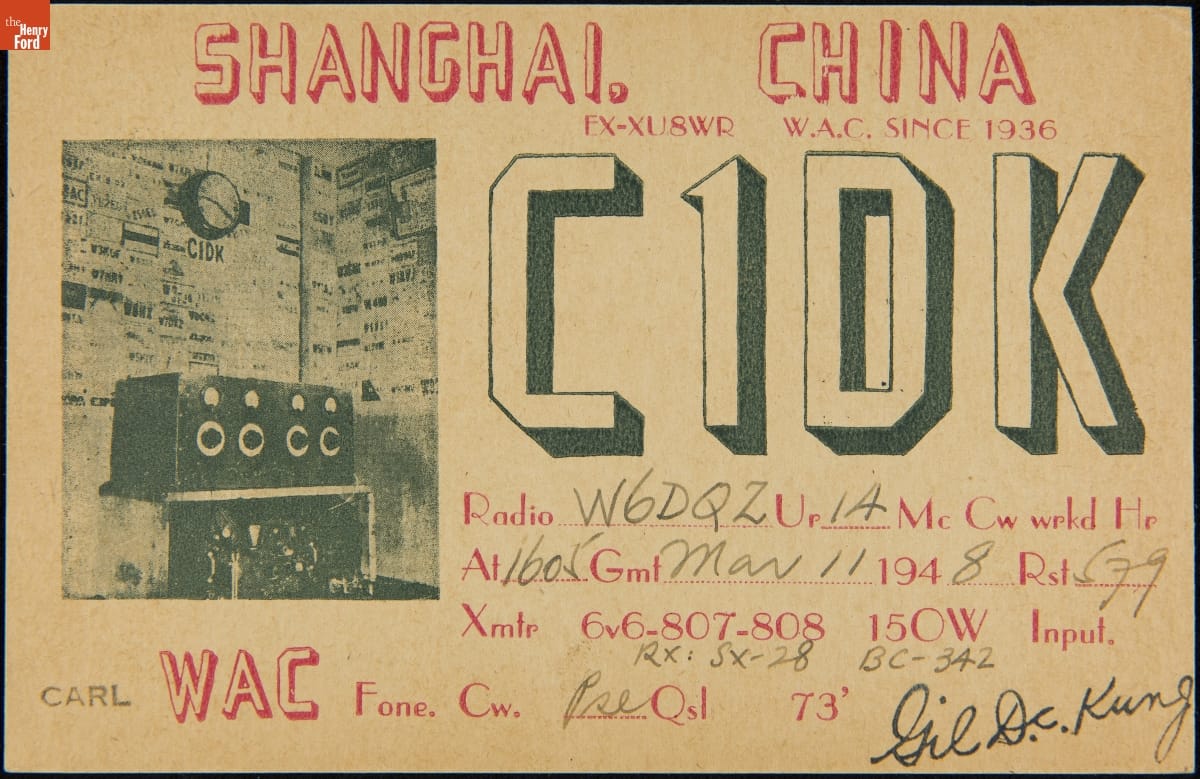
- March 11, 1948
- Collections - Artifact
QSL Card from C1DK (Gil D.C. Kung, Shanghai, China) to W6DQZ (Hamid Durmisevich, Los Angeles, California), March 11, 1948
It was customary for ham radio operators (hams) to exchange these "QSL cards" with one another through the mail after their first conversation. Long-time hams amassed collections of thousands of cards, some from far-flung places. There is a story embedded in each example: the ham's call sign dominates the design, with additional details about location, reception reports, and weather conditions.
- Map, "Plan of Shanghai," 1930-1932 - Ford Motor Company operated sales and service branches in cities around the world. The company considered building an assembly plant in Shanghai, China. This map was collected during the study. Ford decided against the idea when it learned that Chinese law required the property to be owned by a citizen of China.
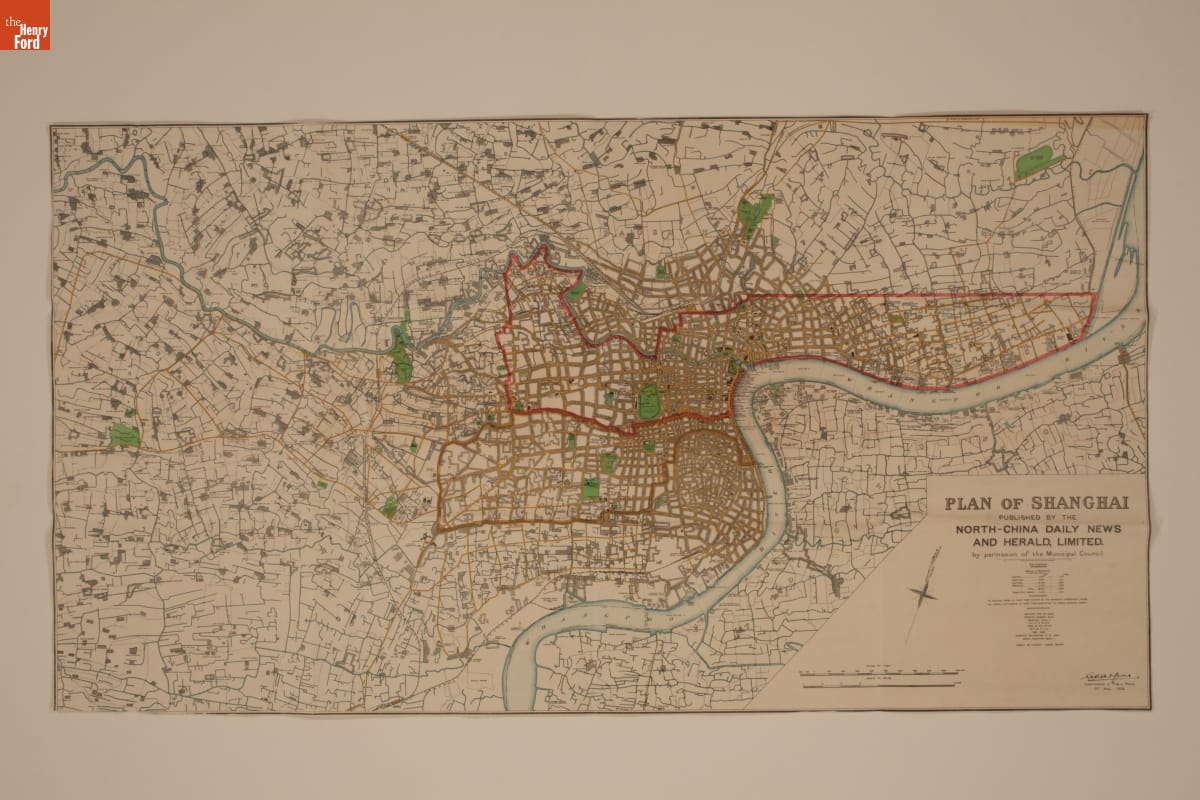
- 1930-1932
- Collections - Artifact
Map, "Plan of Shanghai," 1930-1932
Ford Motor Company operated sales and service branches in cities around the world. The company considered building an assembly plant in Shanghai, China. This map was collected during the study. Ford decided against the idea when it learned that Chinese law required the property to be owned by a citizen of China.
- Letter from Ford Motor Company Exports, Inc. to Ford Sales Department regarding Supplies of Promotional Literature, 1939 -
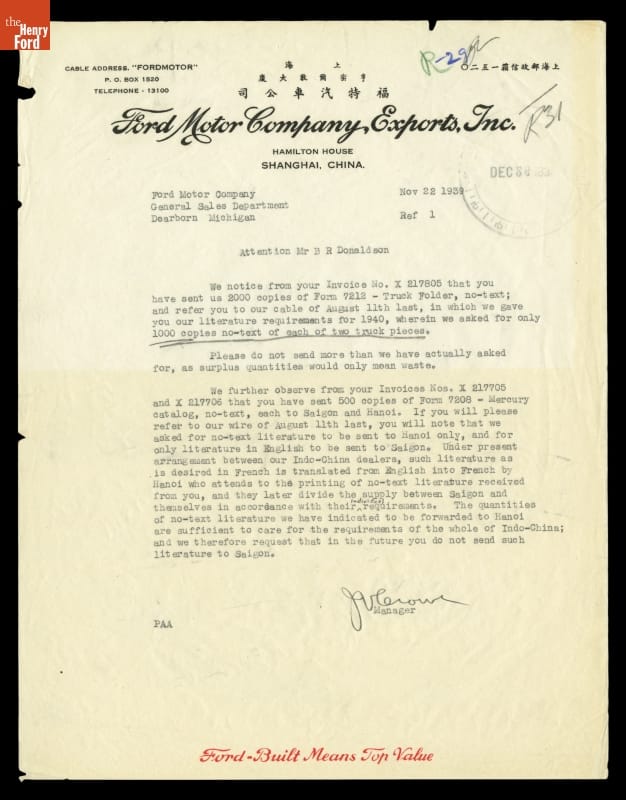
- November 22, 1939
- Collections - Artifact
Letter from Ford Motor Company Exports, Inc. to Ford Sales Department regarding Supplies of Promotional Literature, 1939
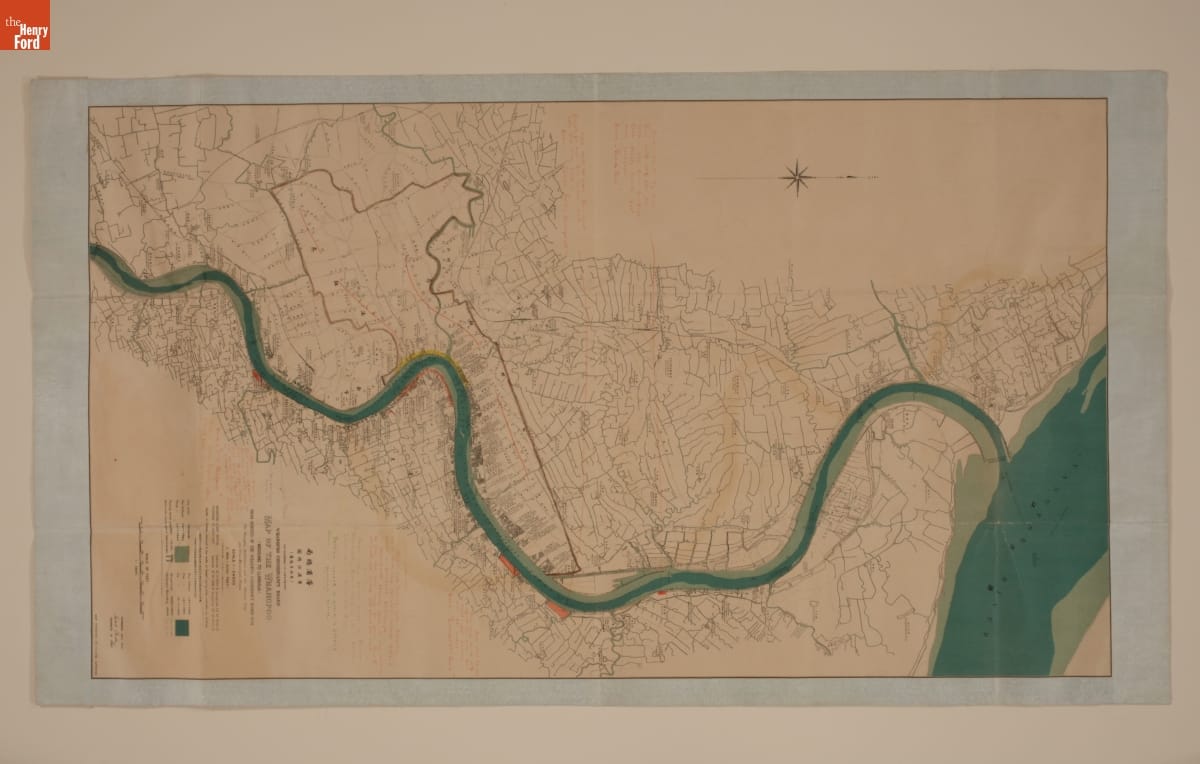
- "Map of the Whangpoo," 1930-1932 - Ford Motor Company operated sales and service branches in cities around the world. The company considered building an assembly plant in Shanghai, China. This map was collected during the study. Ford decided against the idea when it learned that Chinese law required the property to be owned by a citizen of China.
- 1930-1932
- Collections - Artifact
"Map of the Whangpoo," 1930-1932
Ford Motor Company operated sales and service branches in cities around the world. The company considered building an assembly plant in Shanghai, China. This map was collected during the study. Ford decided against the idea when it learned that Chinese law required the property to be owned by a citizen of China.