
Search
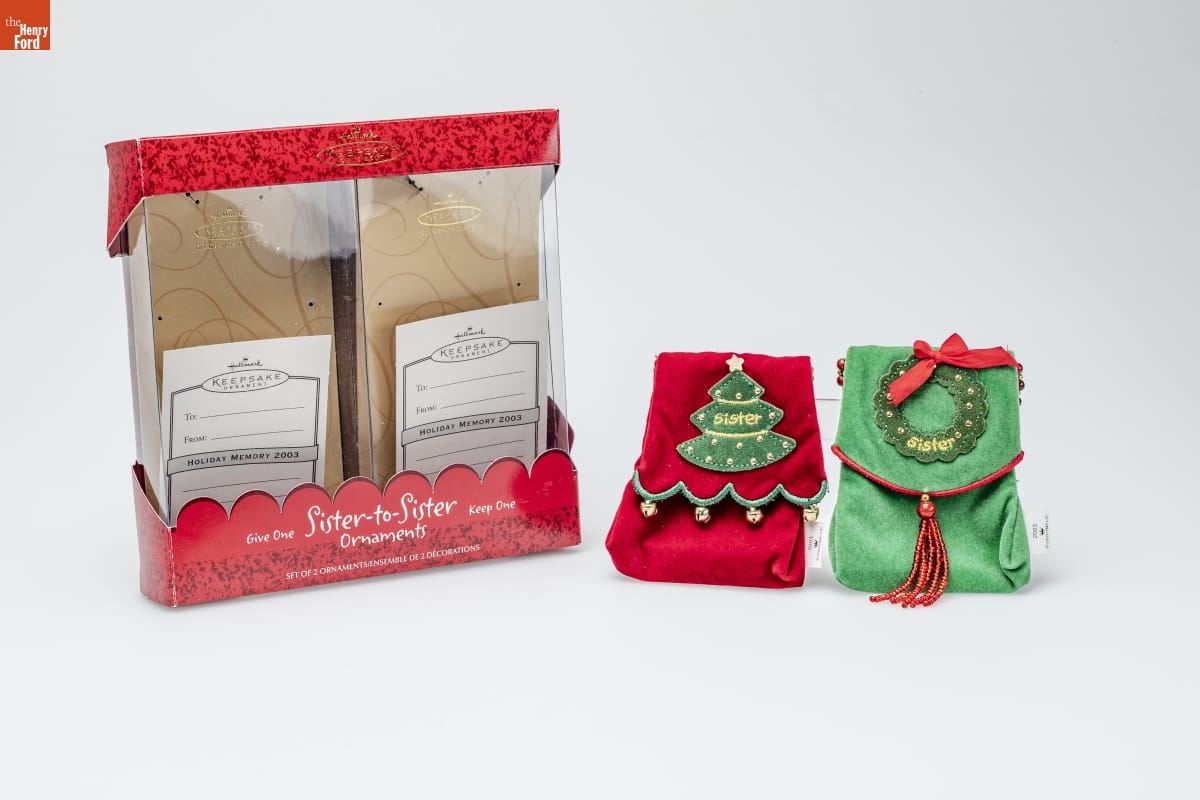
- Hallmark "Sister to Sister" Christmas Ornaments, 2003 - Already known for greeting cards, Hallmark introduced a line of Christmas ornaments in 1973. The company's annual release of an increasing array of ornaments revolutionized Christmas decorating, appealing to customers' interest in marking memories and milestones as well as expressing one's personality and unique tastes.
- 2003
- Collections - Artifact
Hallmark "Sister to Sister" Christmas Ornaments, 2003
Already known for greeting cards, Hallmark introduced a line of Christmas ornaments in 1973. The company's annual release of an increasing array of ornaments revolutionized Christmas decorating, appealing to customers' interest in marking memories and milestones as well as expressing one's personality and unique tastes.
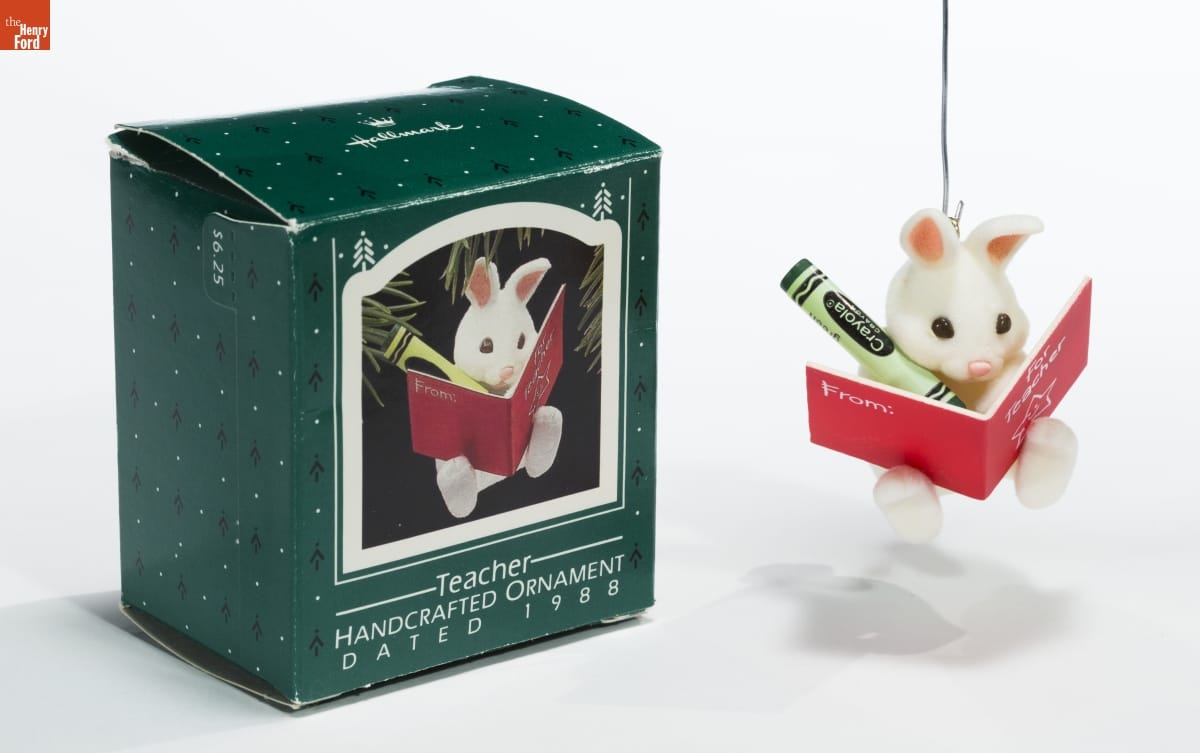
- Hallmark "Teacher" Christmas Ornament, 1988 - Already known for greeting cards, Hallmark introduced a line of Christmas ornaments in 1973. The company's annual release of an increasing array of ornaments revolutionized Christmas decorating, appealing to customers' interest in marking memories and milestones as well as expressing one's personality and unique tastes.
- 1988
- Collections - Artifact
Hallmark "Teacher" Christmas Ornament, 1988
Already known for greeting cards, Hallmark introduced a line of Christmas ornaments in 1973. The company's annual release of an increasing array of ornaments revolutionized Christmas decorating, appealing to customers' interest in marking memories and milestones as well as expressing one's personality and unique tastes.
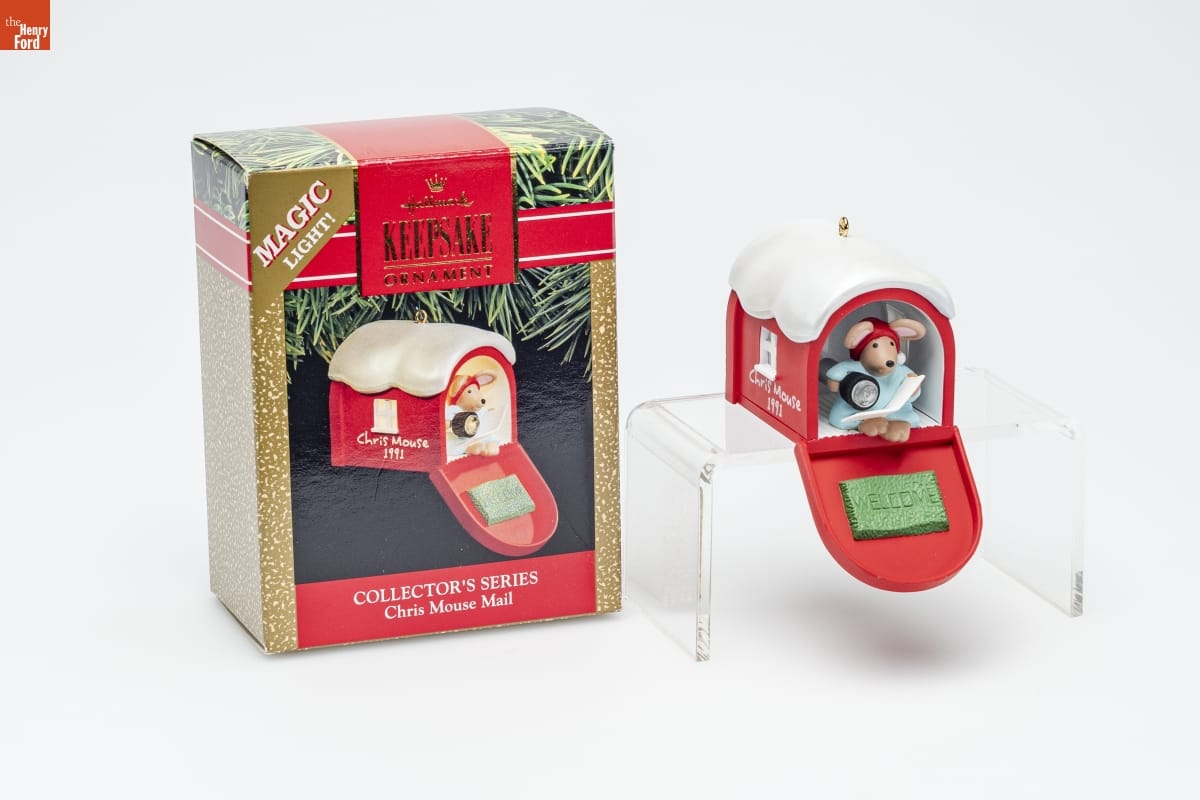
- Hallmark "Chris Mouse Series: Mail" Christmas Ornament, 1991 - Already known for greeting cards, Hallmark introduced a line of Christmas ornaments in 1973. The company's annual release of an increasing array of ornaments revolutionized Christmas decorating, appealing to customers' interest in marking memories and milestones as well as expressing one's personality and unique tastes.
- 1991
- Collections - Artifact
Hallmark "Chris Mouse Series: Mail" Christmas Ornament, 1991
Already known for greeting cards, Hallmark introduced a line of Christmas ornaments in 1973. The company's annual release of an increasing array of ornaments revolutionized Christmas decorating, appealing to customers' interest in marking memories and milestones as well as expressing one's personality and unique tastes.
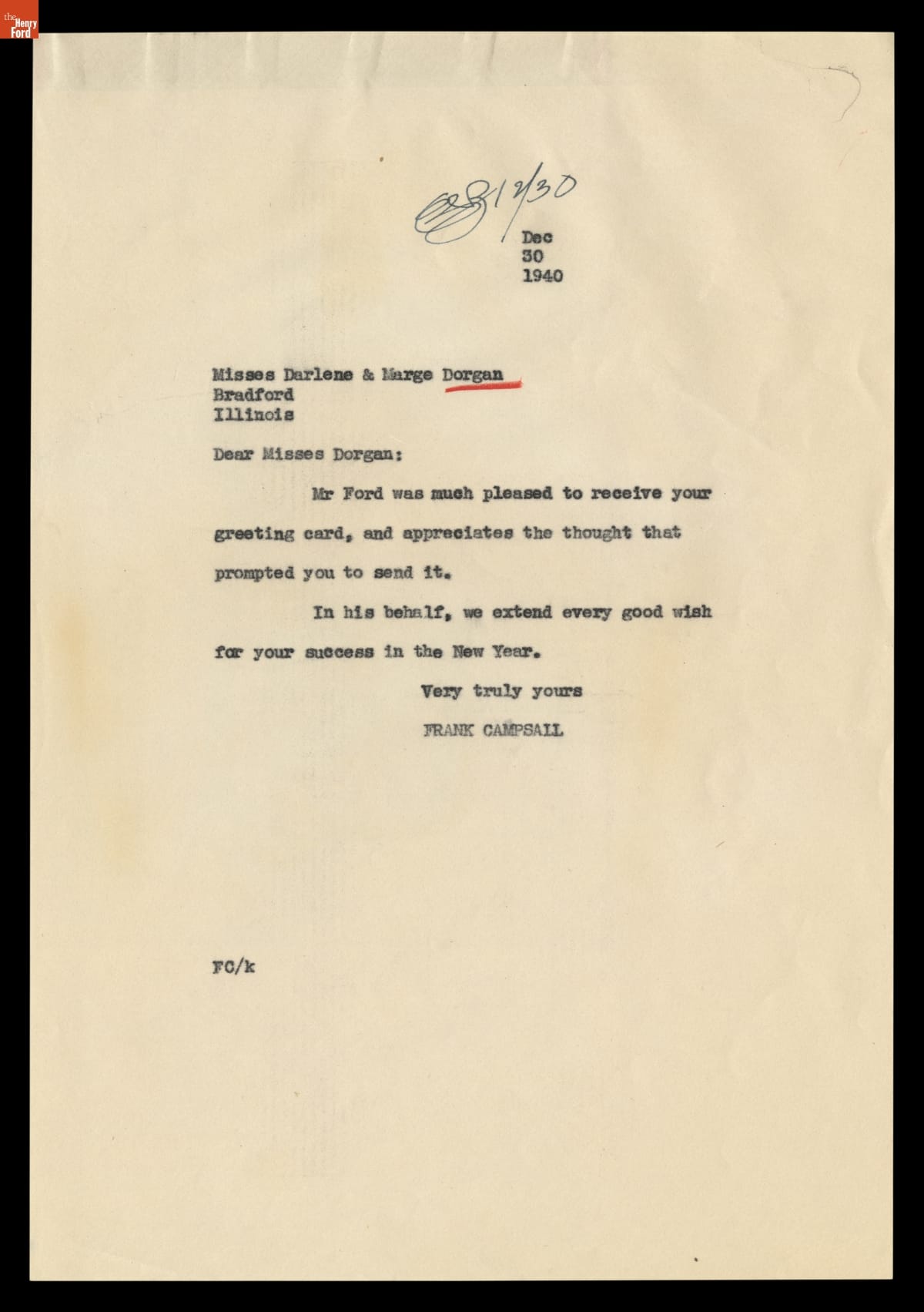
- Correspondence between Darlene and Marge Dorgan and the Office of Henry Ford, December 1940 - Darlene Dorgan, accompanied by four or five young women, spent summer vacations during the 1930s and early 1940s traveling in her 1926 Model T. The carefree troupes from Bradford, Illinois, roamed the United States and Canada in the self-painted silver "T". After driving to Dearborn, Michigan, to wish Henry Ford a happy birthday in 1938, the group kept in touch with the famed automaker.
- December 01, 1940
- Collections - Artifact
Correspondence between Darlene and Marge Dorgan and the Office of Henry Ford, December 1940
Darlene Dorgan, accompanied by four or five young women, spent summer vacations during the 1930s and early 1940s traveling in her 1926 Model T. The carefree troupes from Bradford, Illinois, roamed the United States and Canada in the self-painted silver "T". After driving to Dearborn, Michigan, to wish Henry Ford a happy birthday in 1938, the group kept in touch with the famed automaker.
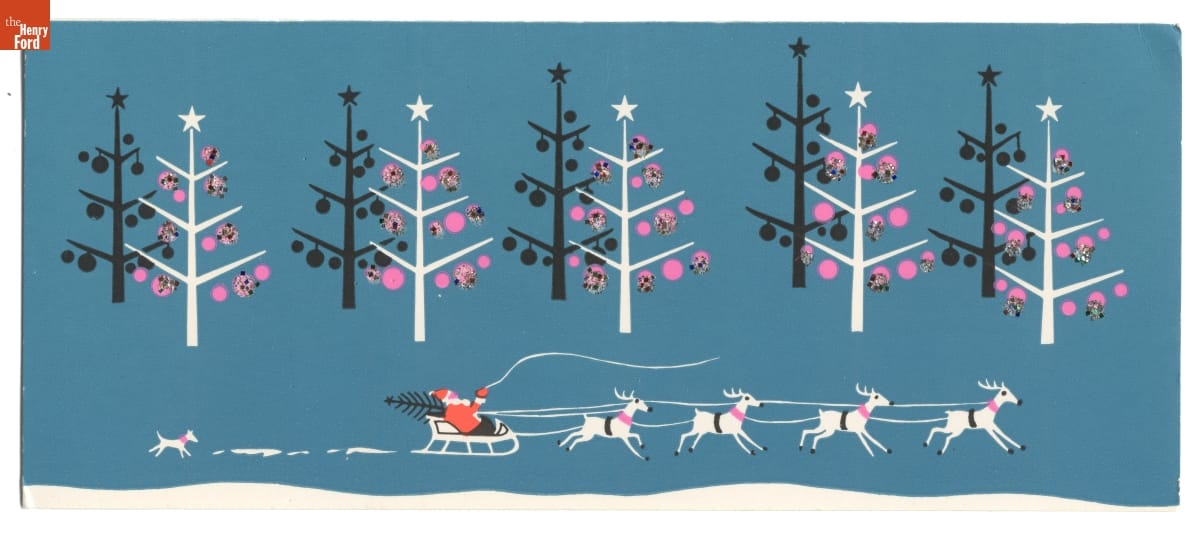
- Christmas Card, 1956 - Mailing colorful, commercially designed greeting cards was a 20th-century American tradition. During the holidays, friends and neighbors commonly exchanged cards wishing one another a Merry Christmas or Happy New Year. The use of pink - a non-traditional holiday color - in this 1950s example reflects popular tastes of the time.
- 1956
- Collections - Artifact
Christmas Card, 1956
Mailing colorful, commercially designed greeting cards was a 20th-century American tradition. During the holidays, friends and neighbors commonly exchanged cards wishing one another a Merry Christmas or Happy New Year. The use of pink - a non-traditional holiday color - in this 1950s example reflects popular tastes of the time.
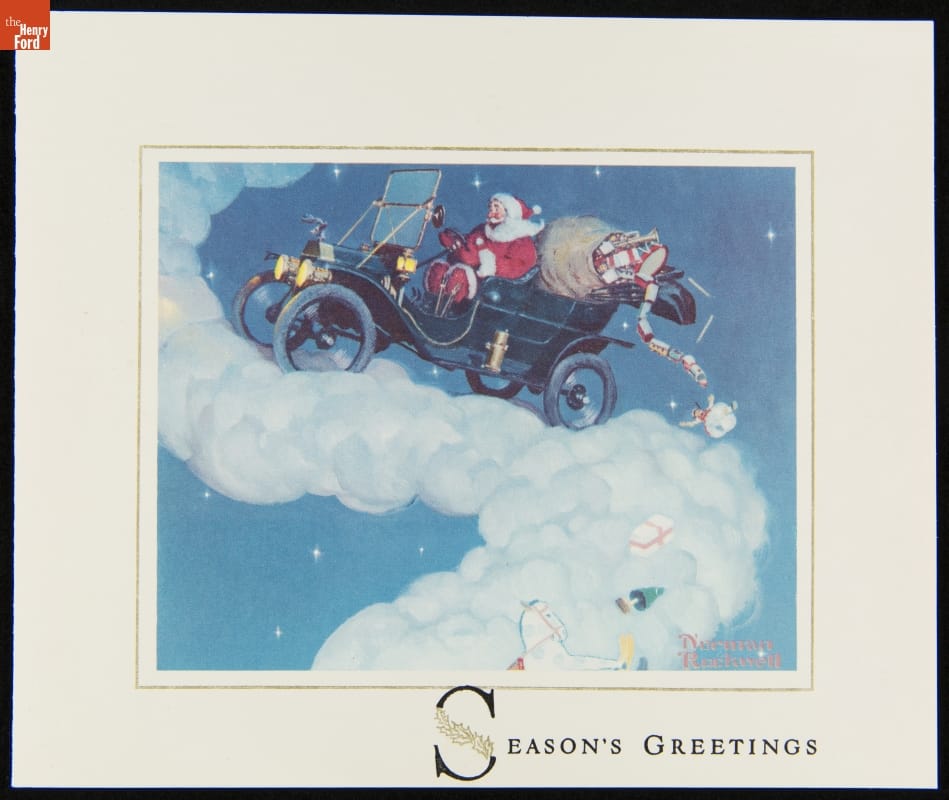
- 1952 Ford Corporate Christmas Card, with an Illustration by Norman Rockwell -
- 1952
- Collections - Artifact
1952 Ford Corporate Christmas Card, with an Illustration by Norman Rockwell
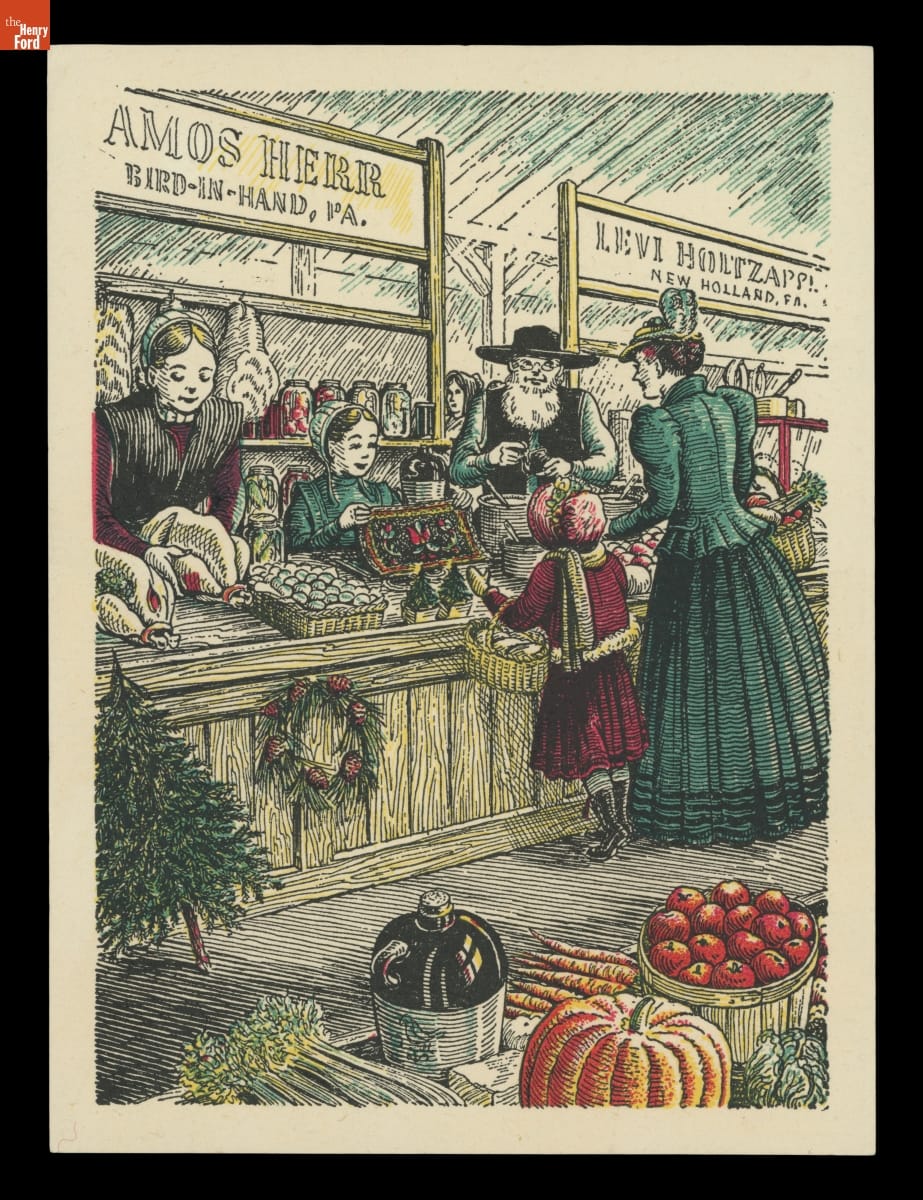
- Christmas Shopping at a General Store, Christmas Card, circa 1950 -
- circa 1950
- Collections - Artifact
Christmas Shopping at a General Store, Christmas Card, circa 1950
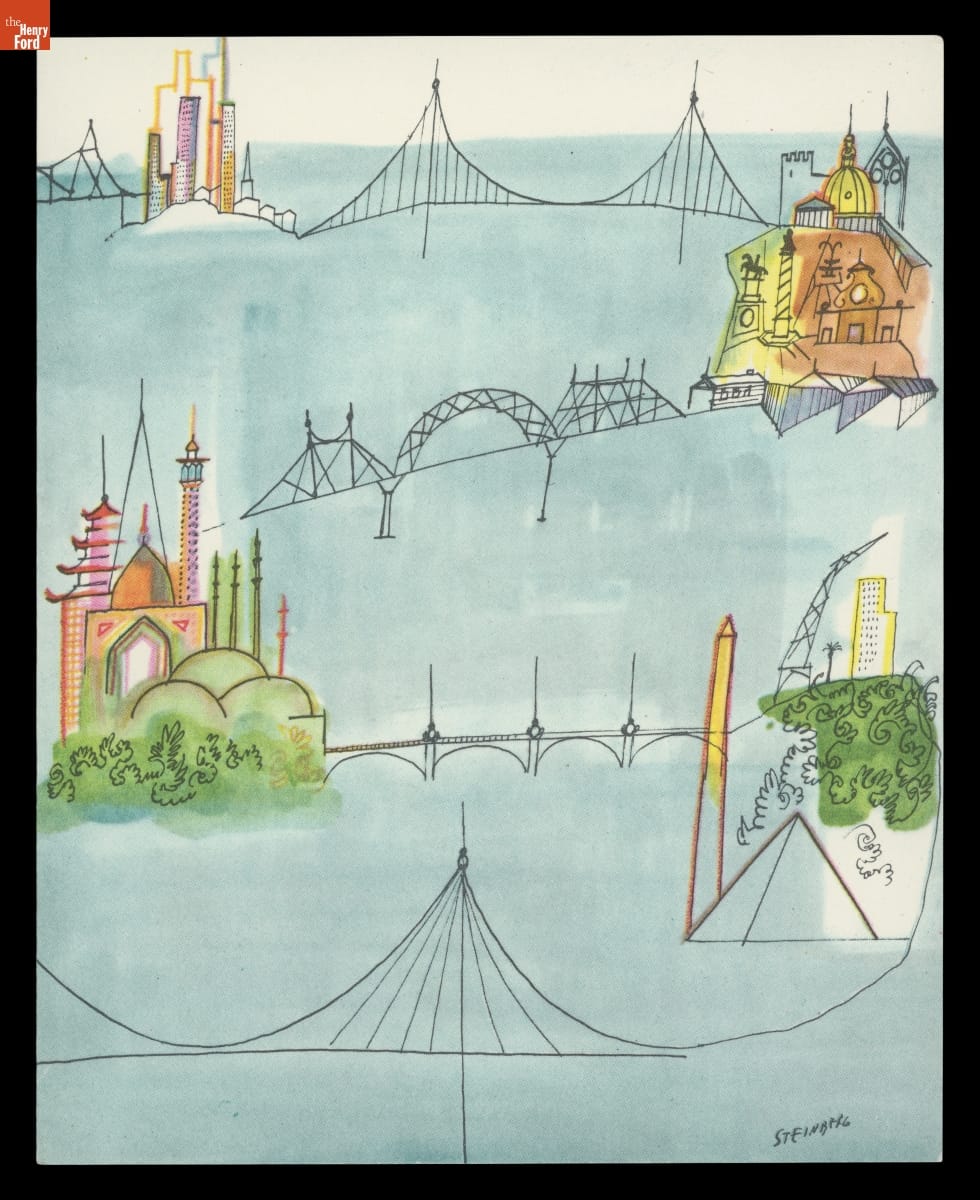
- The United Nations "Bridge to Peace" Christmas Card, 1956 - Saul Steinberg (1914-1999), a Romanian-born US immigrant, had a multifaceted artistic career, exhibiting his works in museums and galleries nationally and internationally. He is best remembered for his humorous, whimsical line drawings created for the New Yorker magazine over more than six decades beginning in the 1940s. Steinberg was equally adept at design, producing advertisements and designing textiles and Christmas cards.
- 1956
- Collections - Artifact
The United Nations "Bridge to Peace" Christmas Card, 1956
Saul Steinberg (1914-1999), a Romanian-born US immigrant, had a multifaceted artistic career, exhibiting his works in museums and galleries nationally and internationally. He is best remembered for his humorous, whimsical line drawings created for the New Yorker magazine over more than six decades beginning in the 1940s. Steinberg was equally adept at design, producing advertisements and designing textiles and Christmas cards.
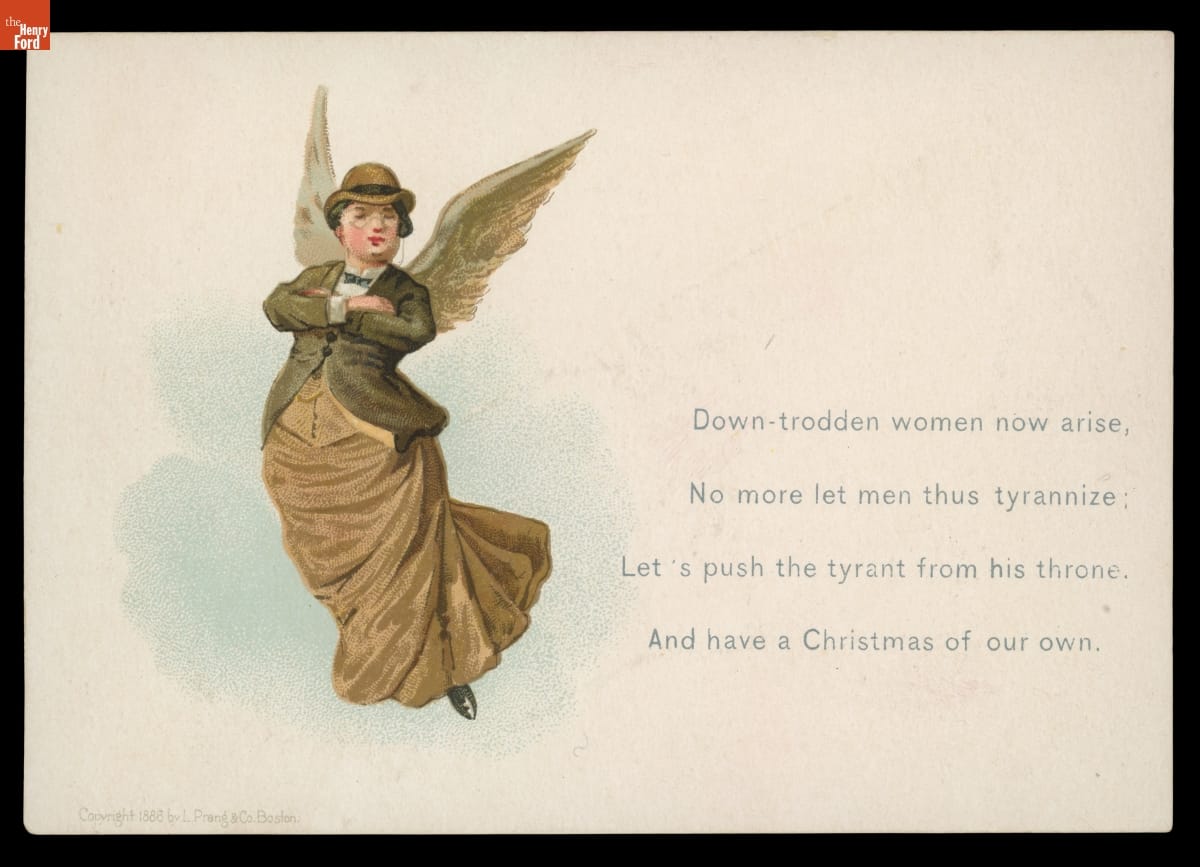
- "...Have a Christmas of Our Own," 1886 - In the mid-1800s, Americans began mailing commercially designed European greeting cards wishing friends, family, or neighbors a merry Christmas. Domestically published holiday cards became available after 1874, when German immigrant Louis Prang - through the L. Prang and Company in Boston - began printing and selling Christmas cards in the United States. This is one of his designs from 1886.
- 1886
- Collections - Artifact
"...Have a Christmas of Our Own," 1886
In the mid-1800s, Americans began mailing commercially designed European greeting cards wishing friends, family, or neighbors a merry Christmas. Domestically published holiday cards became available after 1874, when German immigrant Louis Prang - through the L. Prang and Company in Boston - began printing and selling Christmas cards in the United States. This is one of his designs from 1886.
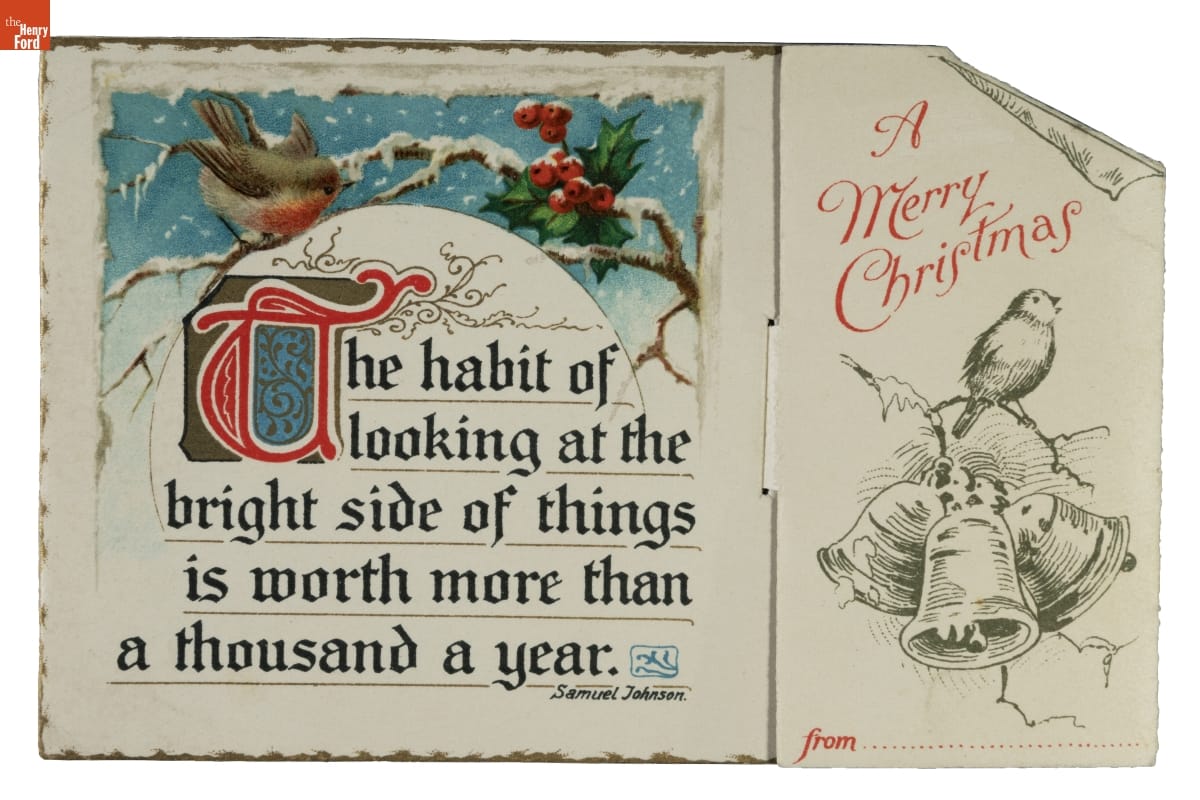
- A Merry Christmas, circa 1910 - Ernest Nister was a German printer and publisher in the late 19th and early 20th centuries. He produced colorfully printed calendars, postcards, and holiday greeting cards--but he is best known for his moveable books for children. Nister created this Christmas card with a simple pop-up element; when opened, a pair of bells with festival holiday greenery rise above the bellringers.
- circa 1910
- Collections - Artifact
A Merry Christmas, circa 1910
Ernest Nister was a German printer and publisher in the late 19th and early 20th centuries. He produced colorfully printed calendars, postcards, and holiday greeting cards--but he is best known for his moveable books for children. Nister created this Christmas card with a simple pop-up element; when opened, a pair of bells with festival holiday greenery rise above the bellringers.