
Search
- Cigar Mold - In the late 19th and early 20th centuries, some cigar manufacturers began to use wooden molds to help reduce labor costs and increase production. Cigars made exclusively by hand took time and needed skilled -- and highly paid -- workers. Lower-paid workers with fewer skills could place tobacco leaves into a mold to quickly shape cigars before a skilled worker applied the final wrapper. This process made cigars less expensive.
- Collections - Artifact
Cigar Mold
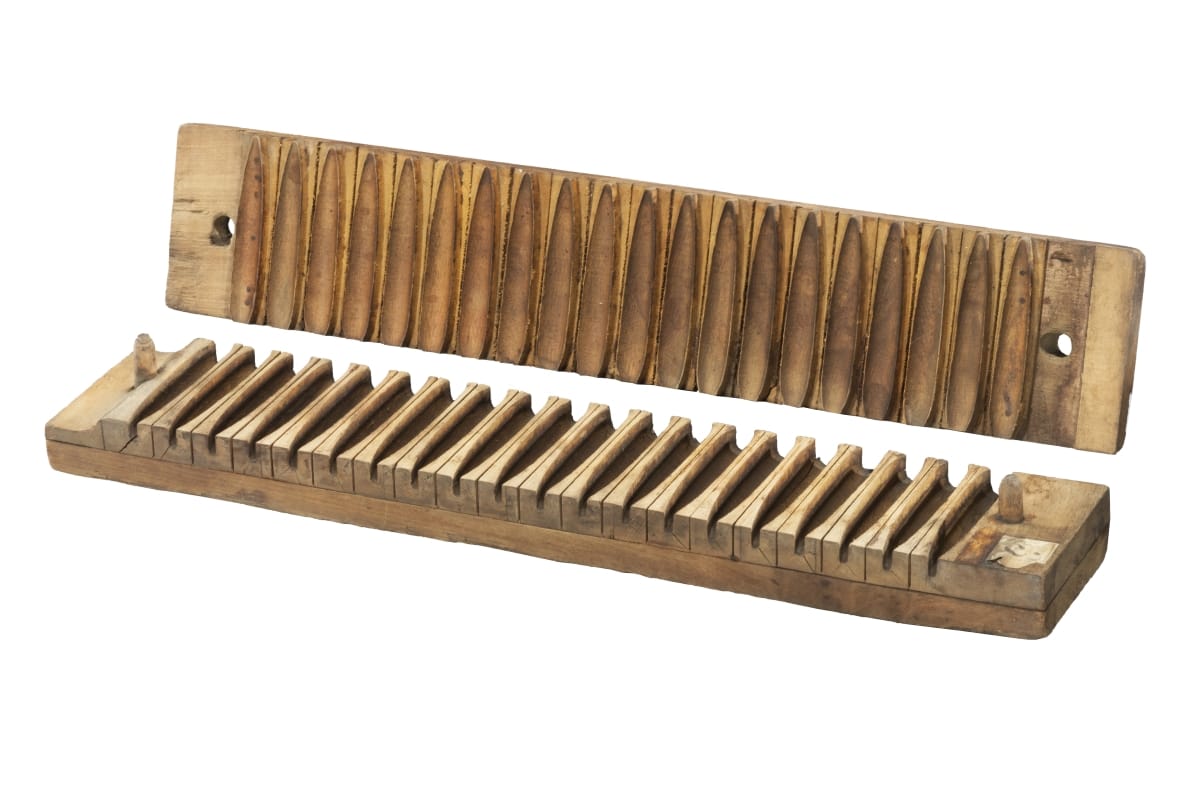
In the late 19th and early 20th centuries, some cigar manufacturers began to use wooden molds to help reduce labor costs and increase production. Cigars made exclusively by hand took time and needed skilled -- and highly paid -- workers. Lower-paid workers with fewer skills could place tobacco leaves into a mold to quickly shape cigars before a skilled worker applied the final wrapper. This process made cigars less expensive.
- Miller, DuBrul & Peters Manufacturing Company Cigar Mold, 1897-1920 - In the late 19th and early 20th centuries, some cigar manufacturers began to use wooden molds to help reduce labor costs and increase production. Cigars made exclusively by hand took time and needed skilled -- and highly paid -- workers. Lower-paid workers with fewer skills could place tobacco leaves into a mold to quickly shape cigars before a skilled worker applied the final wrapper. This process made cigars less expensive.
- 1897-1920
- Collections - Artifact
Miller, DuBrul & Peters Manufacturing Company Cigar Mold, 1897-1920
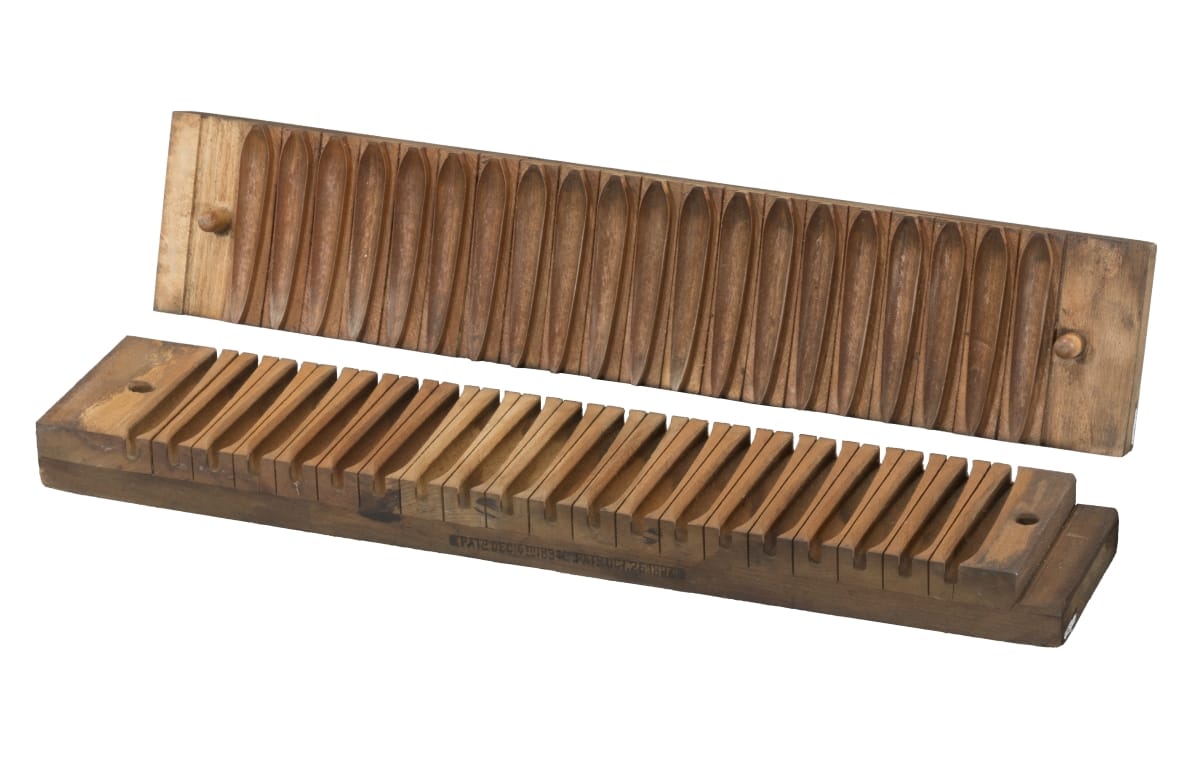
In the late 19th and early 20th centuries, some cigar manufacturers began to use wooden molds to help reduce labor costs and increase production. Cigars made exclusively by hand took time and needed skilled -- and highly paid -- workers. Lower-paid workers with fewer skills could place tobacco leaves into a mold to quickly shape cigars before a skilled worker applied the final wrapper. This process made cigars less expensive.
- Trade Card for Emblem Cigars, 1880-1900 - In the last third of the nineteenth century, an unprecedented variety of consumer goods and services flooded the American market. Advertisers, armed with new methods of color printing, bombarded potential customers with trade cards. Americans enjoyed and often saved the vibrant little advertisements found in product packages or distributed by local merchants. Many survive as historical records of commercialism in the United States.
- 1880-1900
- Collections - Artifact
Trade Card for Emblem Cigars, 1880-1900
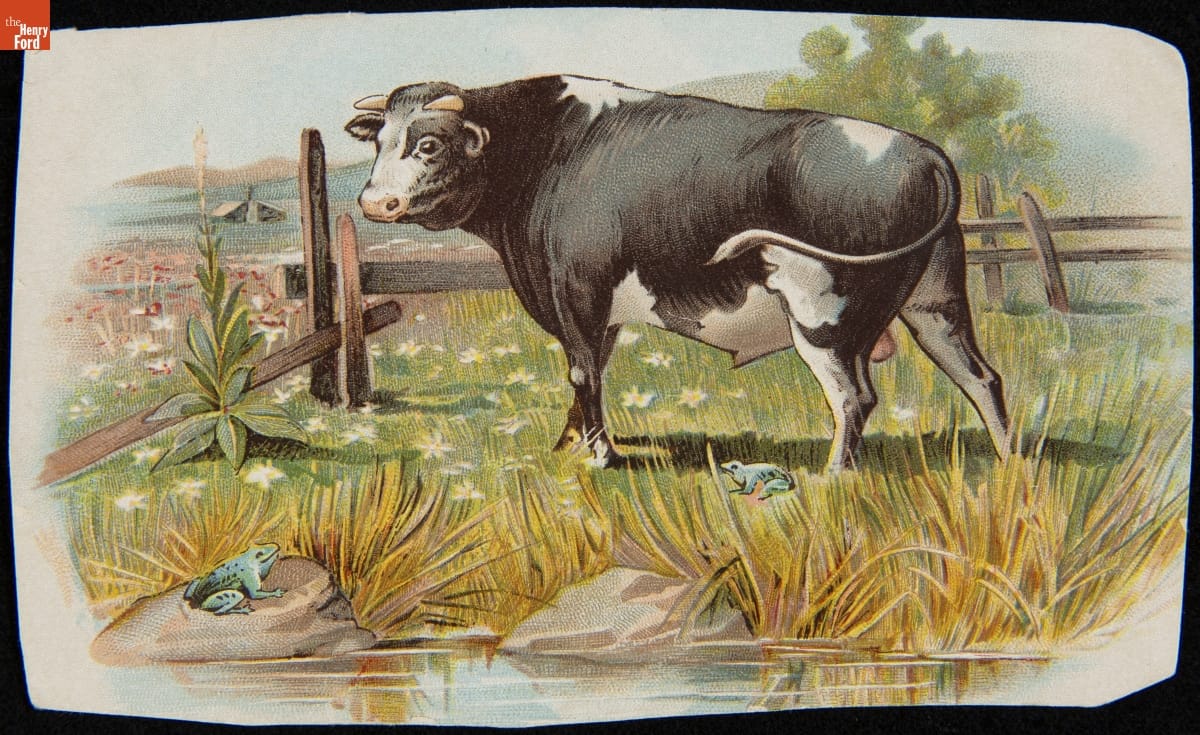
In the last third of the nineteenth century, an unprecedented variety of consumer goods and services flooded the American market. Advertisers, armed with new methods of color printing, bombarded potential customers with trade cards. Americans enjoyed and often saved the vibrant little advertisements found in product packages or distributed by local merchants. Many survive as historical records of commercialism in the United States.
- Trade Card for Emblem Cigars, 1880-1900 - In the last third of the nineteenth century, an unprecedented variety of consumer goods and services flooded the American market. Advertisers, armed with new methods of color printing, bombarded potential customers with trade cards. Americans enjoyed and often saved the vibrant little advertisements found in product packages or distributed by local merchants. Many survive as historical records of commercialism in the United States.
- 1880-1900
- Collections - Artifact
Trade Card for Emblem Cigars, 1880-1900
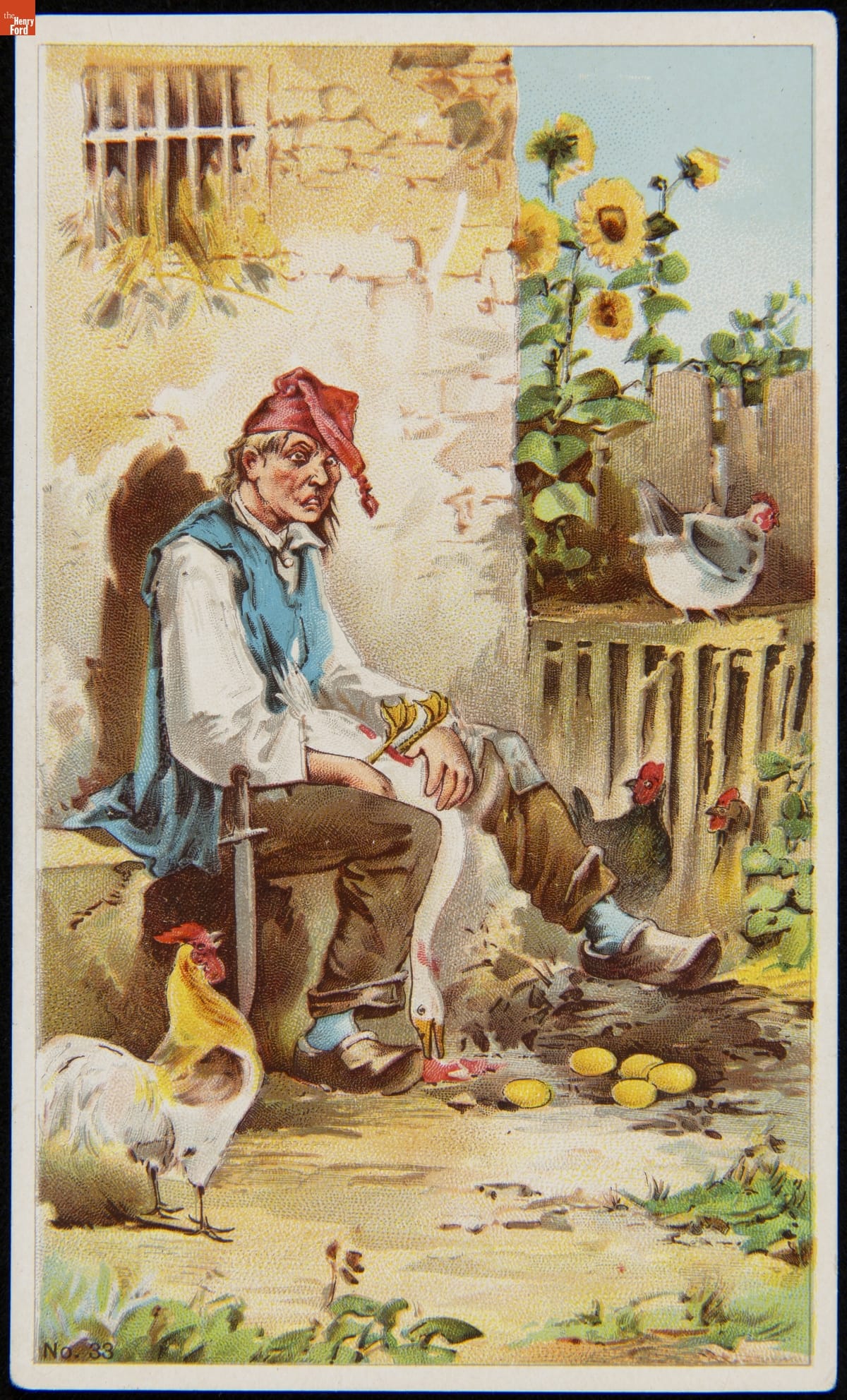
In the last third of the nineteenth century, an unprecedented variety of consumer goods and services flooded the American market. Advertisers, armed with new methods of color printing, bombarded potential customers with trade cards. Americans enjoyed and often saved the vibrant little advertisements found in product packages or distributed by local merchants. Many survive as historical records of commercialism in the United States.
- Cigar Mold - In the late 19th and early 20th centuries, some cigar manufacturers began to use wooden molds to help reduce labor costs and increase production. Cigars made exclusively by hand took time and needed skilled -- and highly paid -- workers. Lower-paid workers with fewer skills could place tobacco leaves into a mold to quickly shape cigars before a skilled worker applied the final wrapper. This process made cigars less expensive.
- Collections - Artifact
Cigar Mold
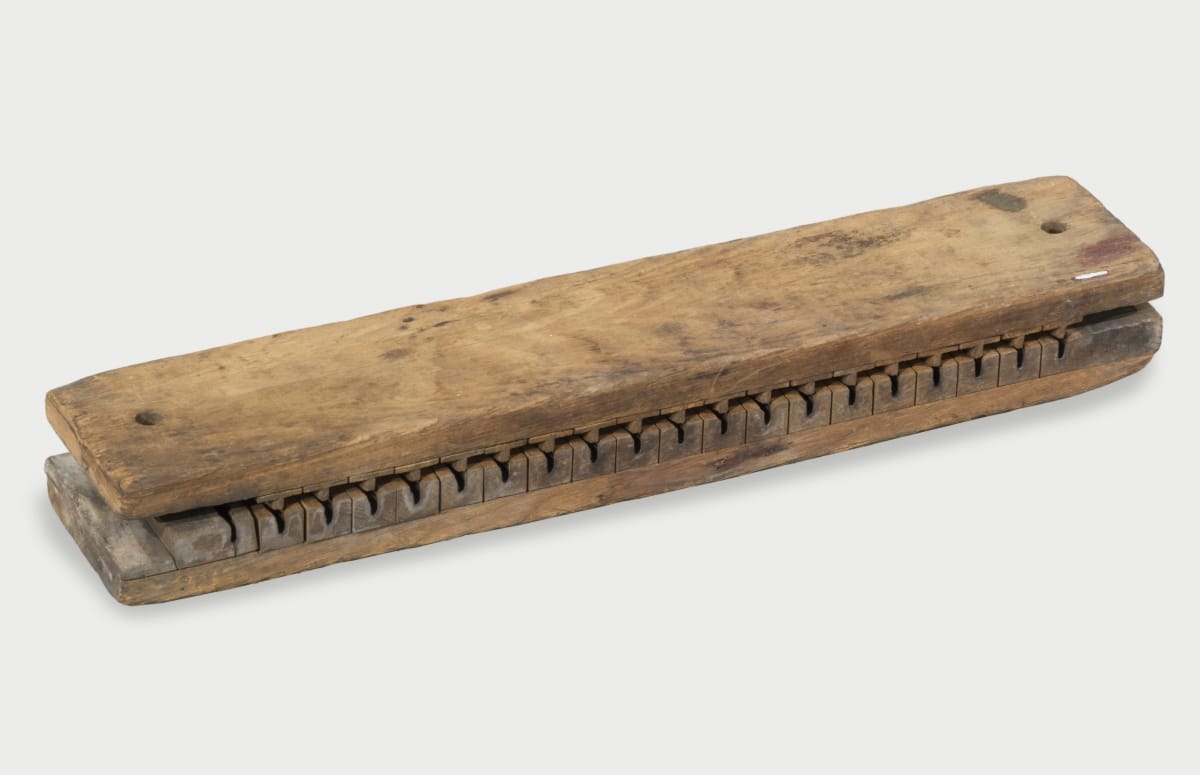
In the late 19th and early 20th centuries, some cigar manufacturers began to use wooden molds to help reduce labor costs and increase production. Cigars made exclusively by hand took time and needed skilled -- and highly paid -- workers. Lower-paid workers with fewer skills could place tobacco leaves into a mold to quickly shape cigars before a skilled worker applied the final wrapper. This process made cigars less expensive.
- Miller, DuBrul & Peters Manufacturing Company Cigar Mold, 1882-1897 - In the late 19th and early 20th centuries, some cigar manufacturers began to use wooden molds to help reduce labor costs and increase production. Cigars made exclusively by hand took time and needed skilled -- and highly paid -- workers. Lower-paid workers with fewer skills could place tobacco leaves into a mold to quickly shape cigars before a skilled worker applied the final wrapper. This process made cigars less expensive.
- 1882-1897
- Collections - Artifact
Miller, DuBrul & Peters Manufacturing Company Cigar Mold, 1882-1897
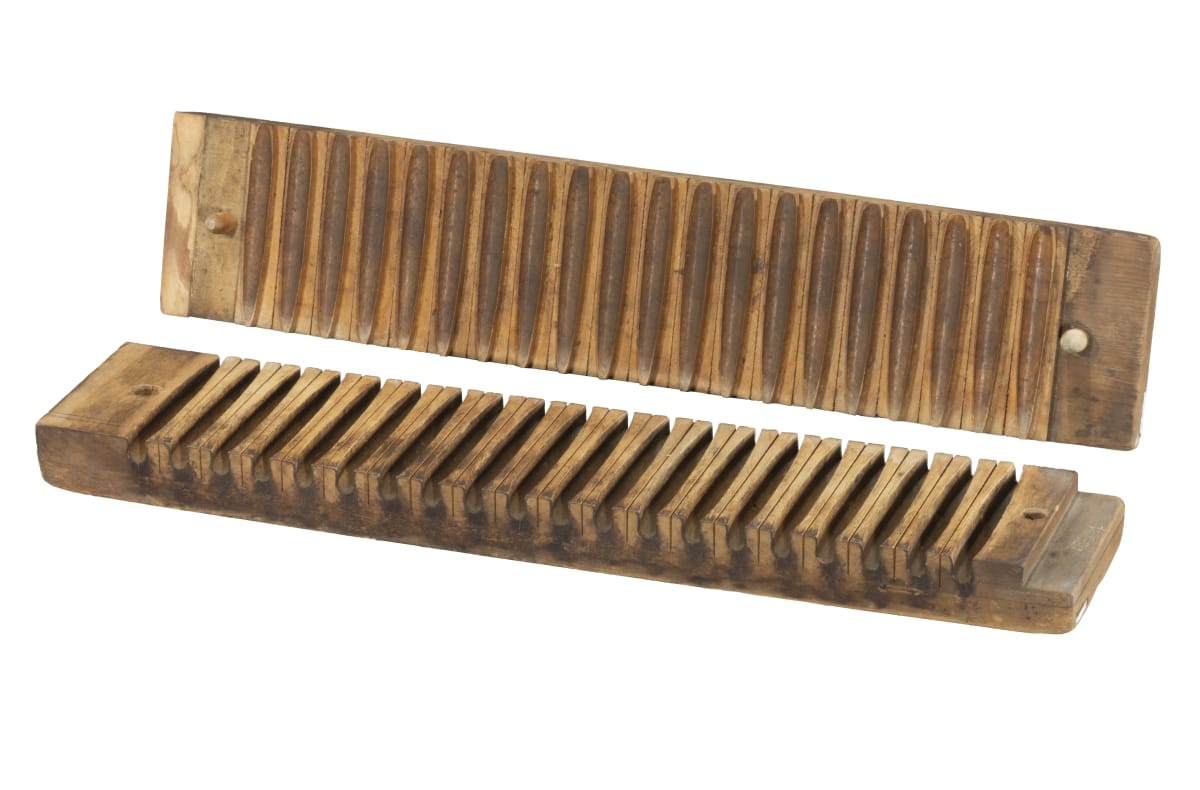
In the late 19th and early 20th centuries, some cigar manufacturers began to use wooden molds to help reduce labor costs and increase production. Cigars made exclusively by hand took time and needed skilled -- and highly paid -- workers. Lower-paid workers with fewer skills could place tobacco leaves into a mold to quickly shape cigars before a skilled worker applied the final wrapper. This process made cigars less expensive.
- Miller, DuBrul & Peters Manufacturing Company Cigar Mold, 1882-1897 - In the late 19th and early 20th centuries, some cigar manufacturers began to use wooden molds to help reduce labor costs and increase production. Cigars made exclusively by hand took time and needed skilled -- and highly paid -- workers. Lower-paid workers with fewer skills could place tobacco leaves into a mold to quickly shape cigars before a skilled worker applied the final wrapper. This process made cigars less expensive.
- 1882-1897
- Collections - Artifact
Miller, DuBrul & Peters Manufacturing Company Cigar Mold, 1882-1897
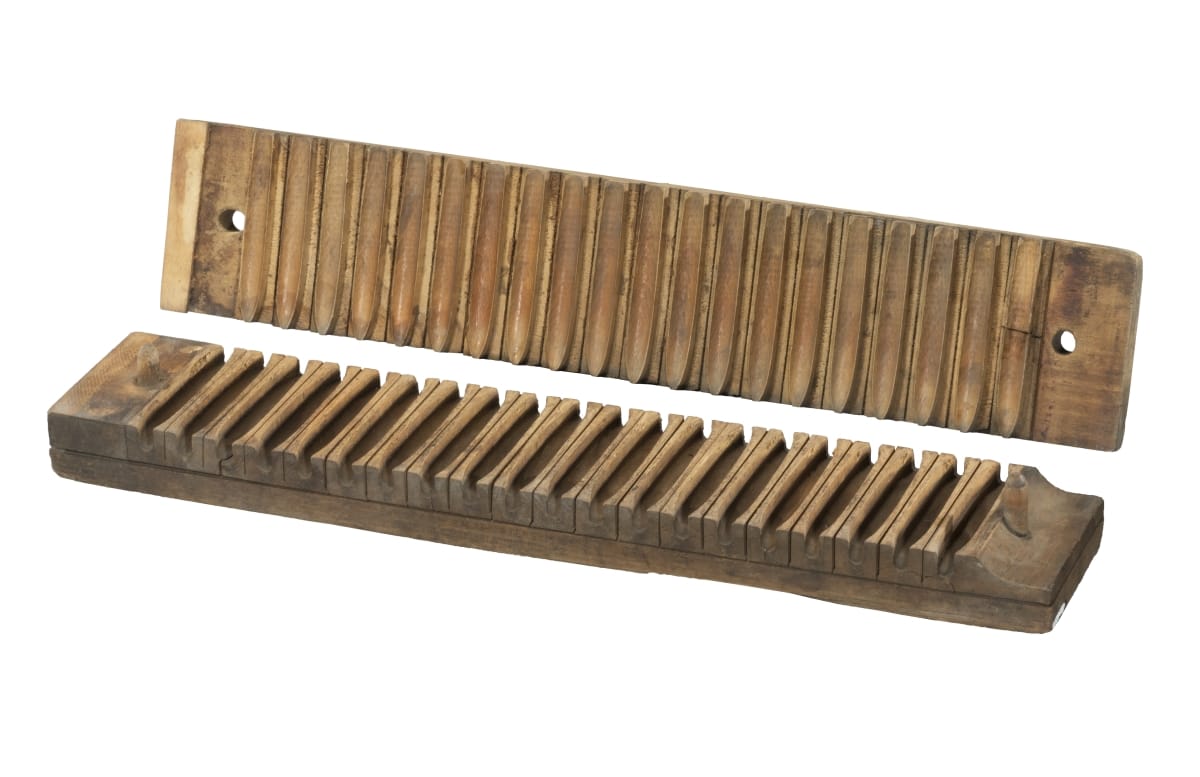
In the late 19th and early 20th centuries, some cigar manufacturers began to use wooden molds to help reduce labor costs and increase production. Cigars made exclusively by hand took time and needed skilled -- and highly paid -- workers. Lower-paid workers with fewer skills could place tobacco leaves into a mold to quickly shape cigars before a skilled worker applied the final wrapper. This process made cigars less expensive.
- Miller, DuBrul & Peters Manufacturing Company Cigar Mold, 1882-1897 - In the late 19th and early 20th centuries, some cigar manufacturers began to use wooden molds to help reduce labor costs and increase production. Cigars made exclusively by hand took time and needed skilled -- and highly paid -- workers. Lower-paid workers with fewer skills could place tobacco leaves into a mold to quickly shape cigars before a skilled worker applied the final wrapper. This process made cigars less expensive.
- 1882-1900
- Collections - Artifact
Miller, DuBrul & Peters Manufacturing Company Cigar Mold, 1882-1897
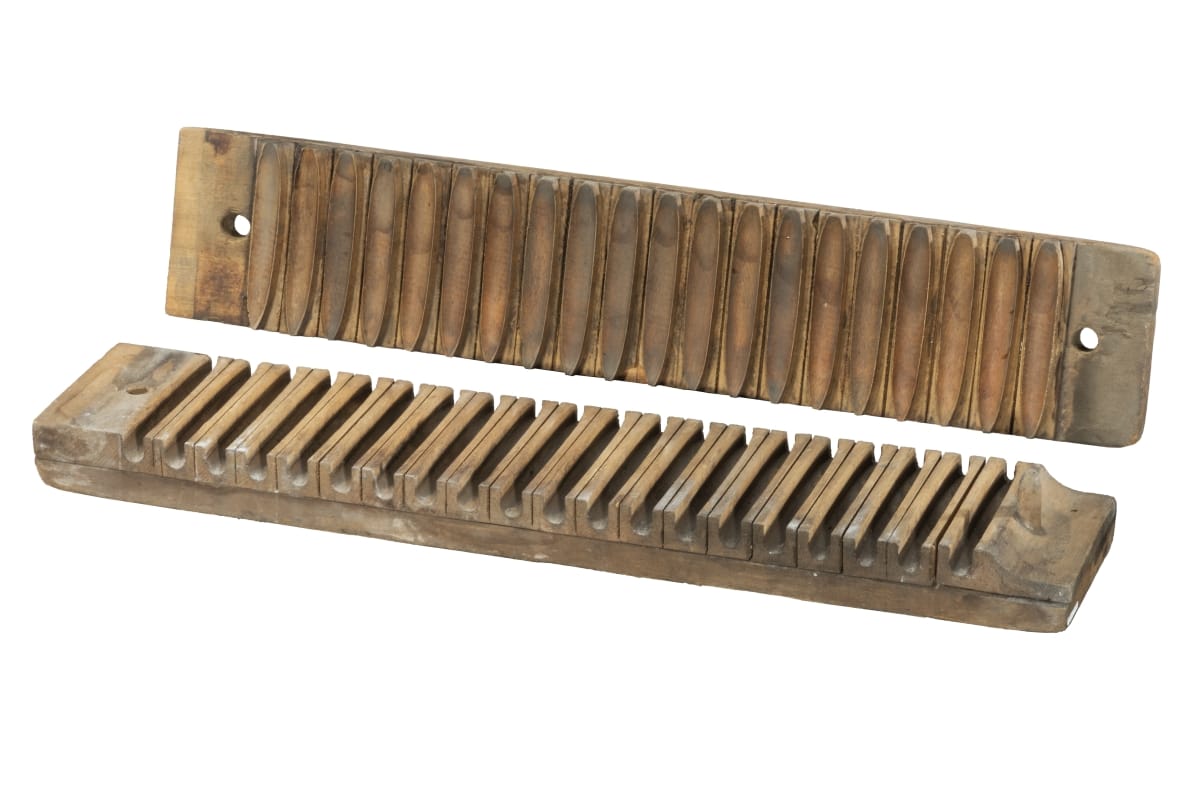
In the late 19th and early 20th centuries, some cigar manufacturers began to use wooden molds to help reduce labor costs and increase production. Cigars made exclusively by hand took time and needed skilled -- and highly paid -- workers. Lower-paid workers with fewer skills could place tobacco leaves into a mold to quickly shape cigars before a skilled worker applied the final wrapper. This process made cigars less expensive.
- Trade Card for Emblem Cigars, 1880-1900 - In the last third of the nineteenth century, an unprecedented variety of consumer goods and services flooded the American market. Advertisers, armed with new methods of color printing, bombarded potential customers with trade cards. Americans enjoyed and often saved the vibrant little advertisements found in product packages or distributed by local merchants. Many survive as historical records of commercialism in the United States.
- 1880-1900
- Collections - Artifact
Trade Card for Emblem Cigars, 1880-1900
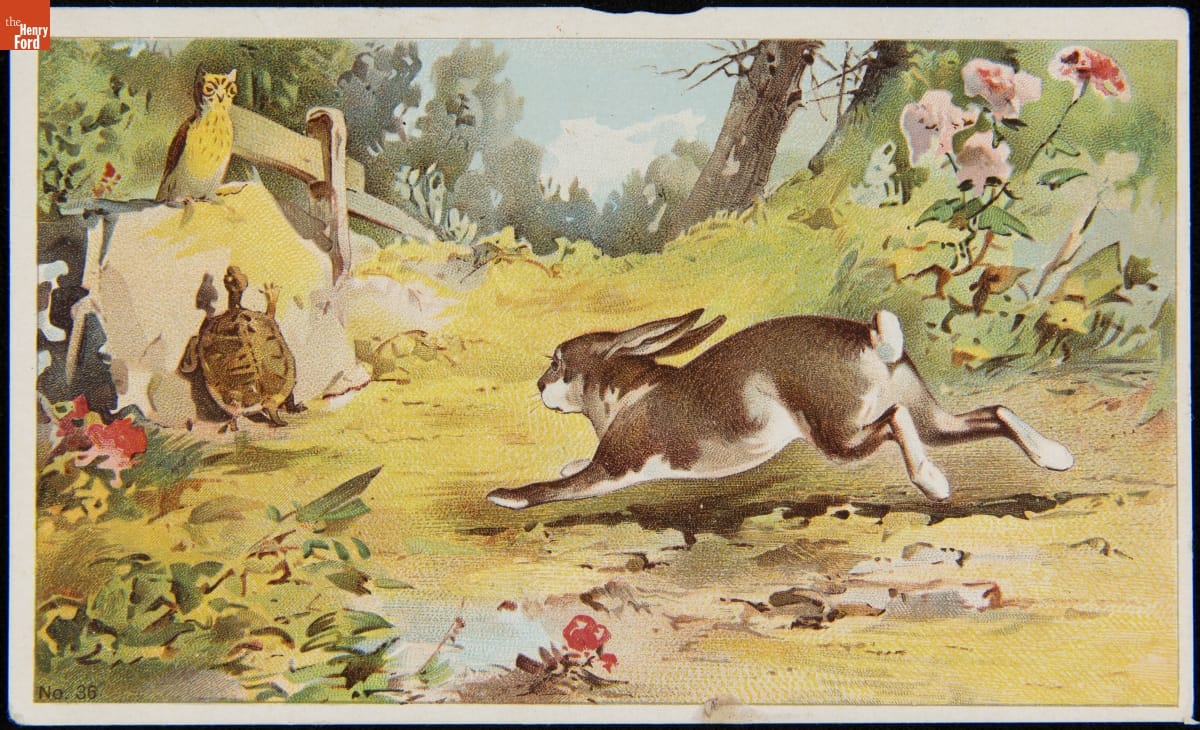
In the last third of the nineteenth century, an unprecedented variety of consumer goods and services flooded the American market. Advertisers, armed with new methods of color printing, bombarded potential customers with trade cards. Americans enjoyed and often saved the vibrant little advertisements found in product packages or distributed by local merchants. Many survive as historical records of commercialism in the United States.
- Miller, DuBrul & Peters Manufacturing Company Cigar Mold, 1882-1894 - In the late 19th and early 20th centuries, some cigar manufacturers began to use wooden molds to help reduce labor costs and increase production. Cigars made exclusively by hand took time and needed skilled -- and highly paid -- workers. Lower-paid workers with fewer skills could place tobacco leaves into a mold to quickly shape cigars before a skilled worker applied the final wrapper. This process made cigars less expensive.
- 1882-1894
- Collections - Artifact
Miller, DuBrul & Peters Manufacturing Company Cigar Mold, 1882-1894
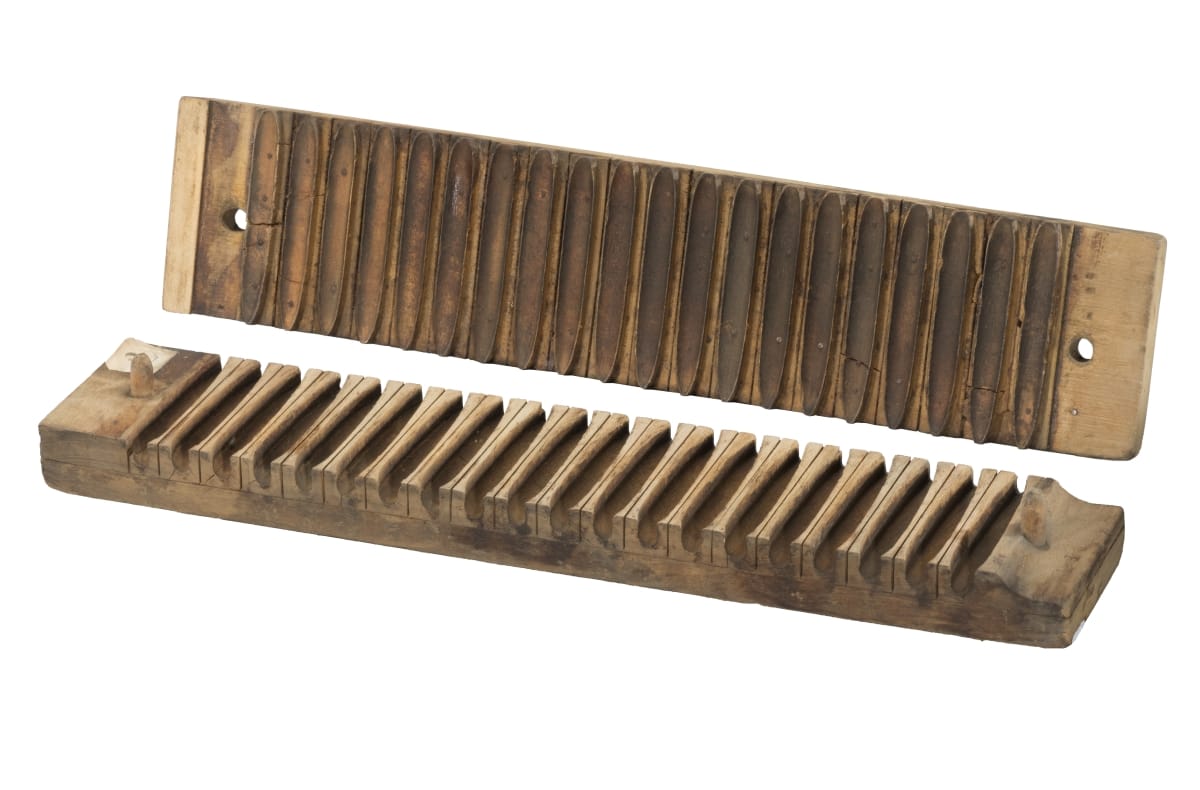
In the late 19th and early 20th centuries, some cigar manufacturers began to use wooden molds to help reduce labor costs and increase production. Cigars made exclusively by hand took time and needed skilled -- and highly paid -- workers. Lower-paid workers with fewer skills could place tobacco leaves into a mold to quickly shape cigars before a skilled worker applied the final wrapper. This process made cigars less expensive.