
Search
- Lantern Slide, Cinderella, 1870-1920 - Magic lanterns use a concave mirror and light source to project images on glass slides with painted or photographic scenes. Developed in the 17th century, magic lanterns predate slide projectors and motion pictures. In the hands of magicians, they became "lanterns of fright," projecting wondrous images and apparitions. Slide themes ranged widely: exotic travel, folklore, advertising, history, science, and art.
- 1870-1920
- Collections - Artifact
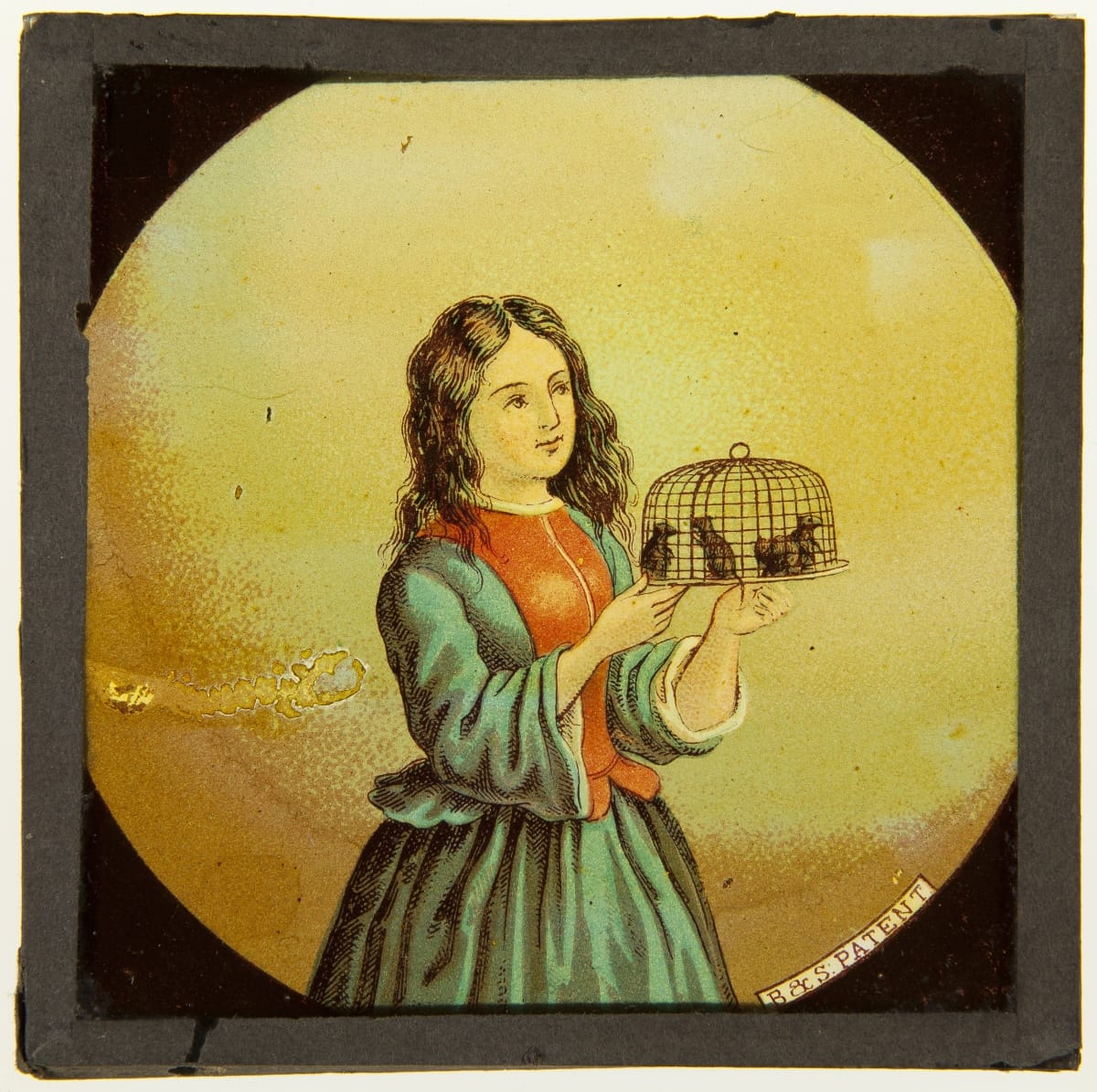
Lantern Slide, Cinderella, 1870-1920
Magic lanterns use a concave mirror and light source to project images on glass slides with painted or photographic scenes. Developed in the 17th century, magic lanterns predate slide projectors and motion pictures. In the hands of magicians, they became "lanterns of fright," projecting wondrous images and apparitions. Slide themes ranged widely: exotic travel, folklore, advertising, history, science, and art.
- Lantern Slide, Cinderella, 1870-1920 - Magic lanterns use a concave mirror and light source to project images on glass slides with painted or photographic scenes. Developed in the 17th century, magic lanterns predate slide projectors and motion pictures. In the hands of magicians, they became "lanterns of fright," projecting wondrous images and apparitions. Slide themes ranged widely: exotic travel, folklore, advertising, history, science, and art.
- 1870-1920
- Collections - Artifact
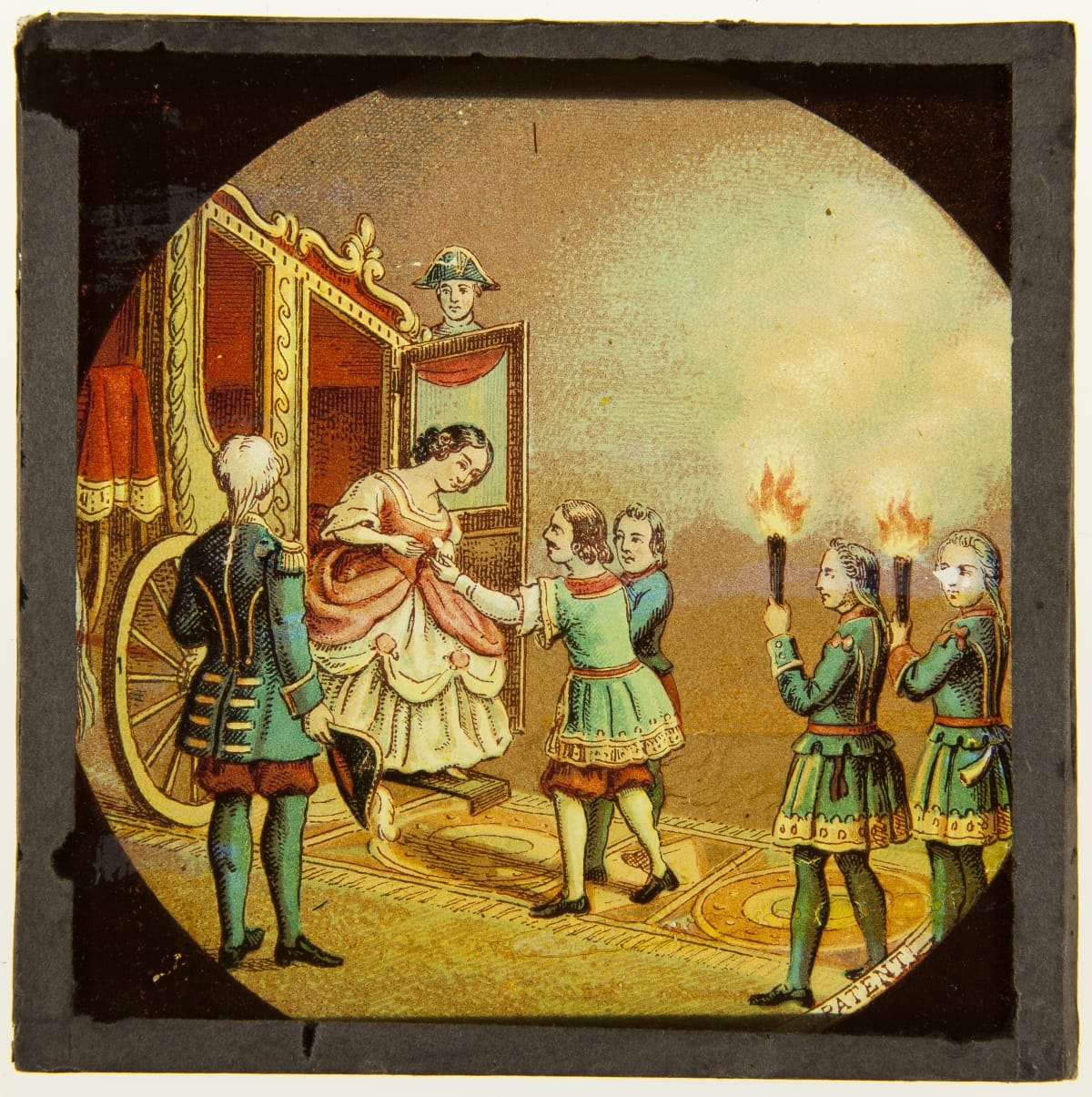
Lantern Slide, Cinderella, 1870-1920
Magic lanterns use a concave mirror and light source to project images on glass slides with painted or photographic scenes. Developed in the 17th century, magic lanterns predate slide projectors and motion pictures. In the hands of magicians, they became "lanterns of fright," projecting wondrous images and apparitions. Slide themes ranged widely: exotic travel, folklore, advertising, history, science, and art.
- Hallmark "Children's Collector BARBIE Ornament Series: Barbie as Cinderella" Spring Ornament, 1999 - Hallmark introduced a line of Christmas ornaments in 1973. These ornaments appealed to customers' interest in marking memories, commemorating milestones, and expressing one's personality and unique tastes. This success led the company to produce ornaments for other holidays. Hallmark marketed and sold Easter and springtime ornaments in several series dating back to the 1990s.
- 1999
- Collections - Artifact
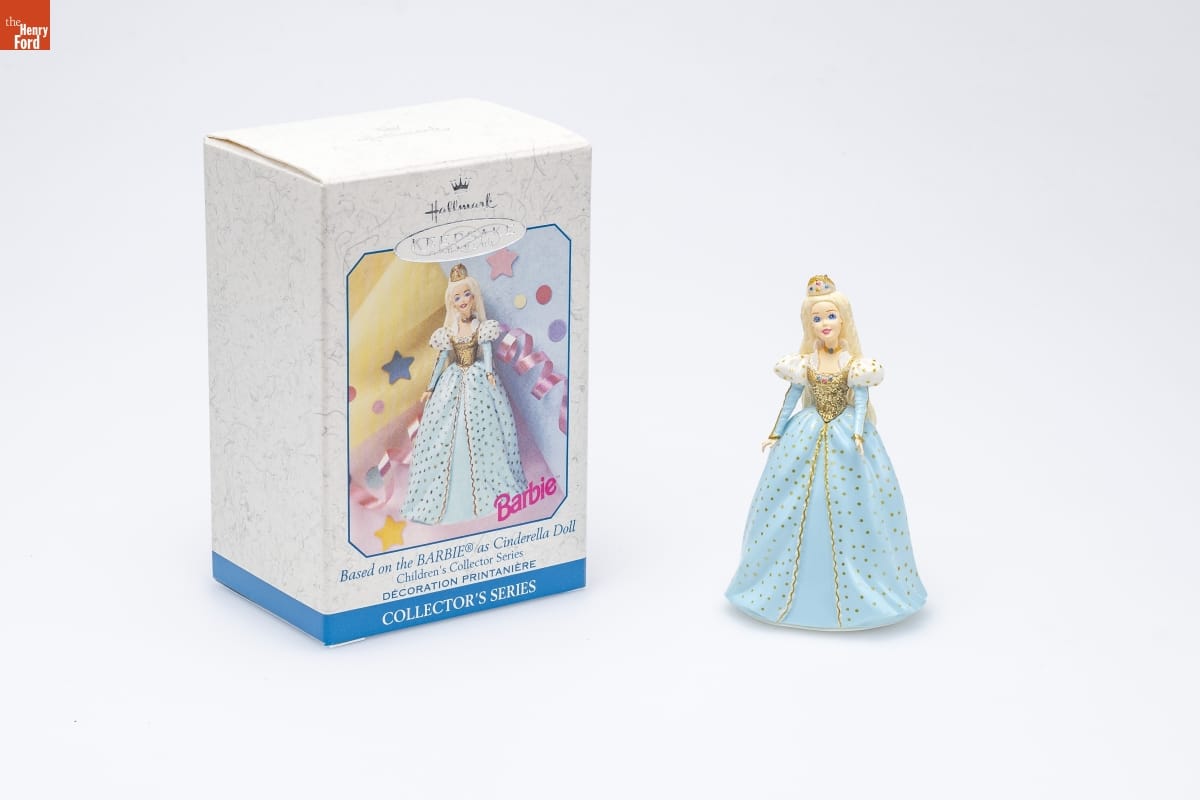
Hallmark "Children's Collector BARBIE Ornament Series: Barbie as Cinderella" Spring Ornament, 1999
Hallmark introduced a line of Christmas ornaments in 1973. These ornaments appealed to customers' interest in marking memories, commemorating milestones, and expressing one's personality and unique tastes. This success led the company to produce ornaments for other holidays. Hallmark marketed and sold Easter and springtime ornaments in several series dating back to the 1990s.
- Fold-out Book, "Cinderella," 1891 - In 1891, the McLoughlin Bros. publishing firm patented this arch-shaped variant of the rectangular "pantomime" books available at the time. Pantomime books depicted a theater during a live stage show. Readers turned the pages to reveal each new scene as a family of theatergoers -- printed behind the cover flaps -- watched the "play" unfold.
- 1891
- Collections - Artifact
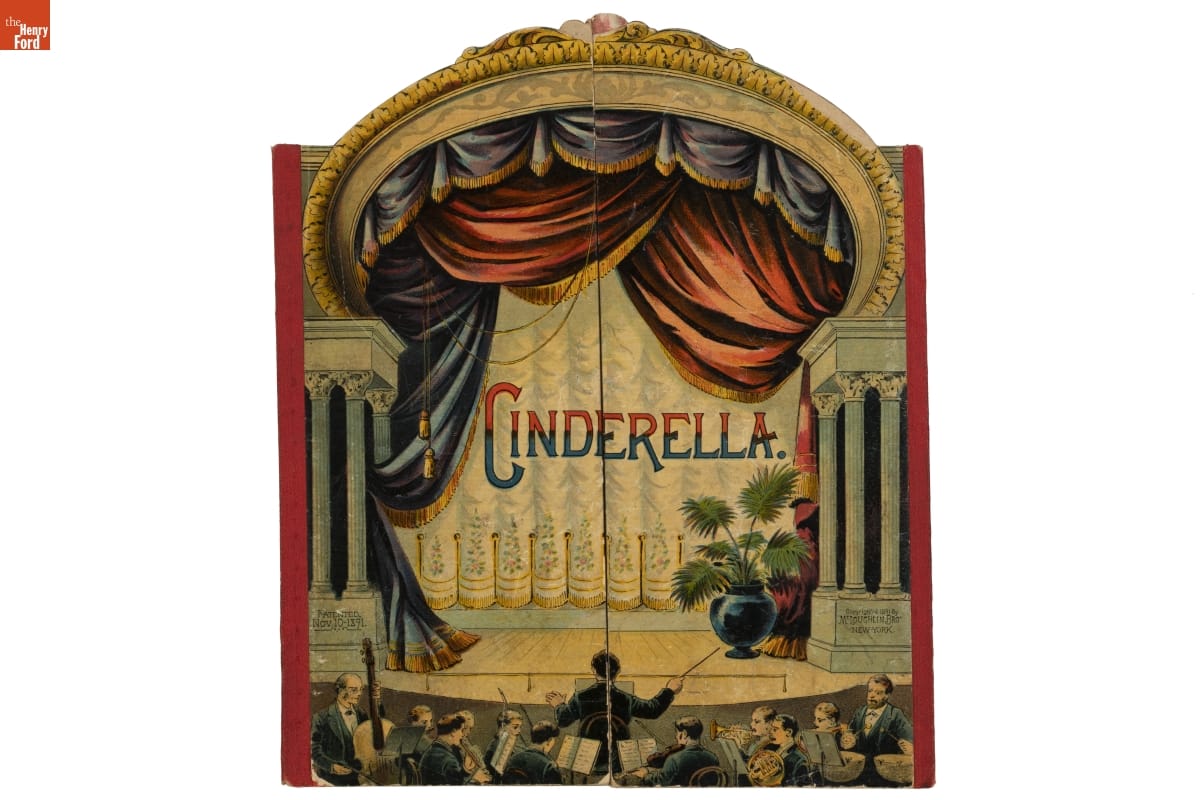
Fold-out Book, "Cinderella," 1891
In 1891, the McLoughlin Bros. publishing firm patented this arch-shaped variant of the rectangular "pantomime" books available at the time. Pantomime books depicted a theater during a live stage show. Readers turned the pages to reveal each new scene as a family of theatergoers -- printed behind the cover flaps -- watched the "play" unfold.
- Lantern Slide, Cinderella, 1880-1889 - Magic lanterns use a concave mirror and light source to project images on glass slides with painted or photographic scenes. Developed in the 17th century, magic lanterns predate slide projectors and motion pictures. In the hands of magicians, they became "lanterns of fright," projecting wondrous images and apparitions. Slide themes ranged widely: exotic travel, folklore, advertising, history, science, and art.
- 1880-1889
- Collections - Artifact
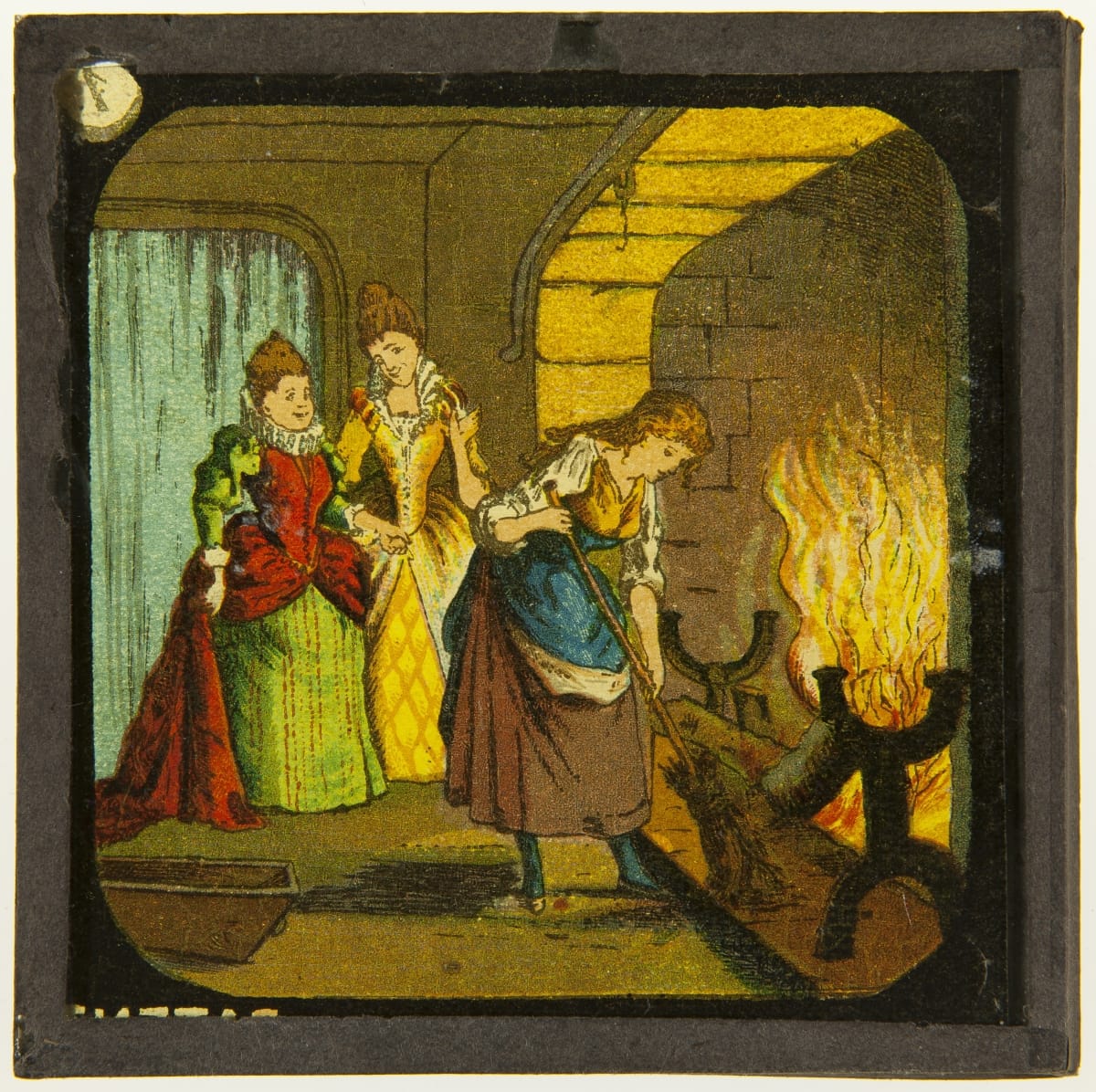
Lantern Slide, Cinderella, 1880-1889
Magic lanterns use a concave mirror and light source to project images on glass slides with painted or photographic scenes. Developed in the 17th century, magic lanterns predate slide projectors and motion pictures. In the hands of magicians, they became "lanterns of fright," projecting wondrous images and apparitions. Slide themes ranged widely: exotic travel, folklore, advertising, history, science, and art.
- Lantern Slide, Cinderella, 1880-1889 - Magic lanterns use a concave mirror and light source to project images on glass slides with painted or photographic scenes. Developed in the 17th century, magic lanterns predate slide projectors and motion pictures. In the hands of magicians, they became "lanterns of fright," projecting wondrous images and apparitions. Slide themes ranged widely: exotic travel, folklore, advertising, history, science, and art.
- 1880-1889
- Collections - Artifact
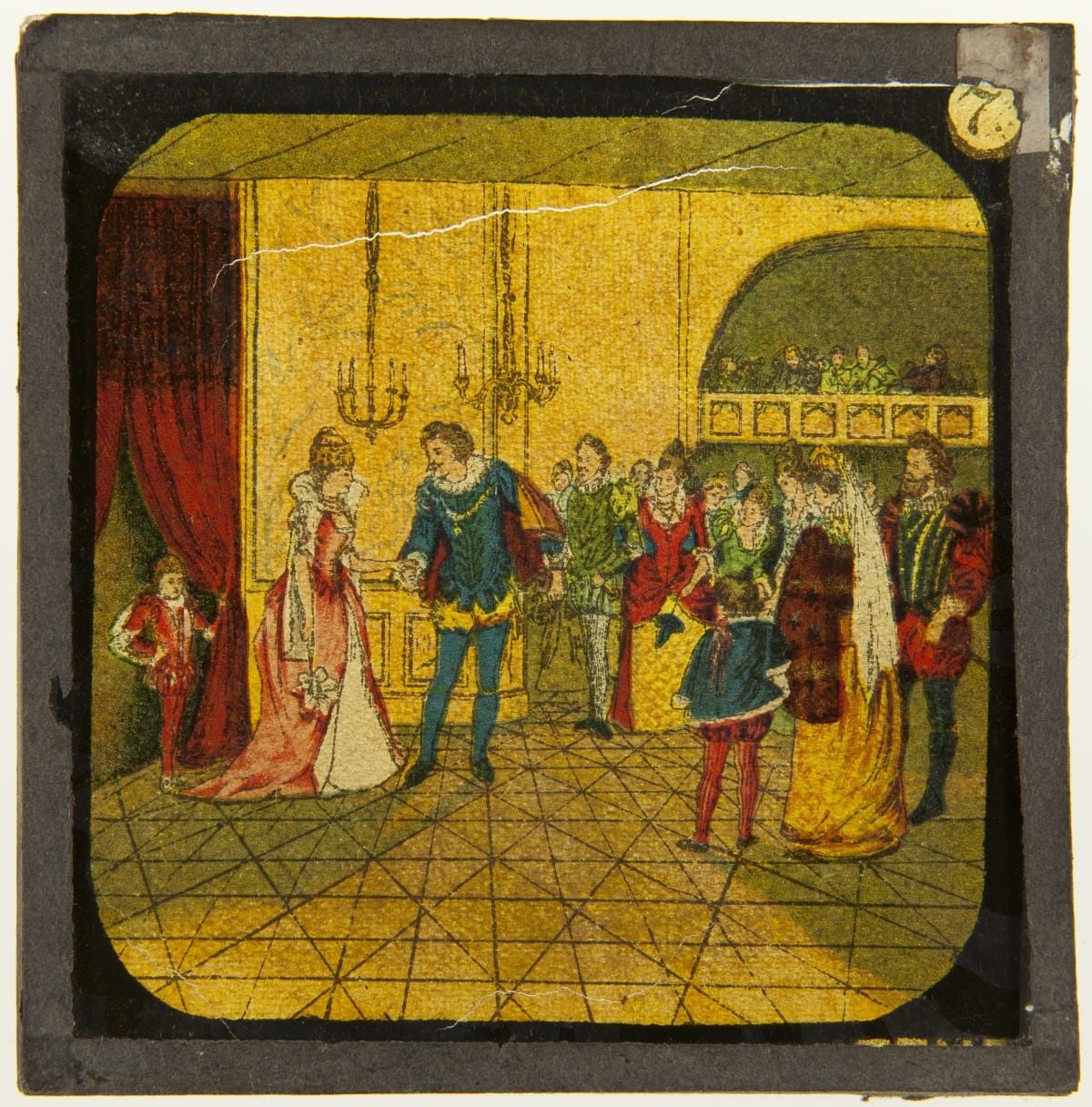
Lantern Slide, Cinderella, 1880-1889
Magic lanterns use a concave mirror and light source to project images on glass slides with painted or photographic scenes. Developed in the 17th century, magic lanterns predate slide projectors and motion pictures. In the hands of magicians, they became "lanterns of fright," projecting wondrous images and apparitions. Slide themes ranged widely: exotic travel, folklore, advertising, history, science, and art.
- Grand Panorama of Cinderella, circa 1890 - This toy theater, from around 1890, let children re-enact the story of Cinderella. The theater has a chromolithographed orchestra pit (complete with a conductor and orchestra), a proscenium arch, box seats with patrons, and a stage. The panorama background changes scenes with a turn of a metal crank and helps tell the story.
- circa 1890
- Collections - Artifact
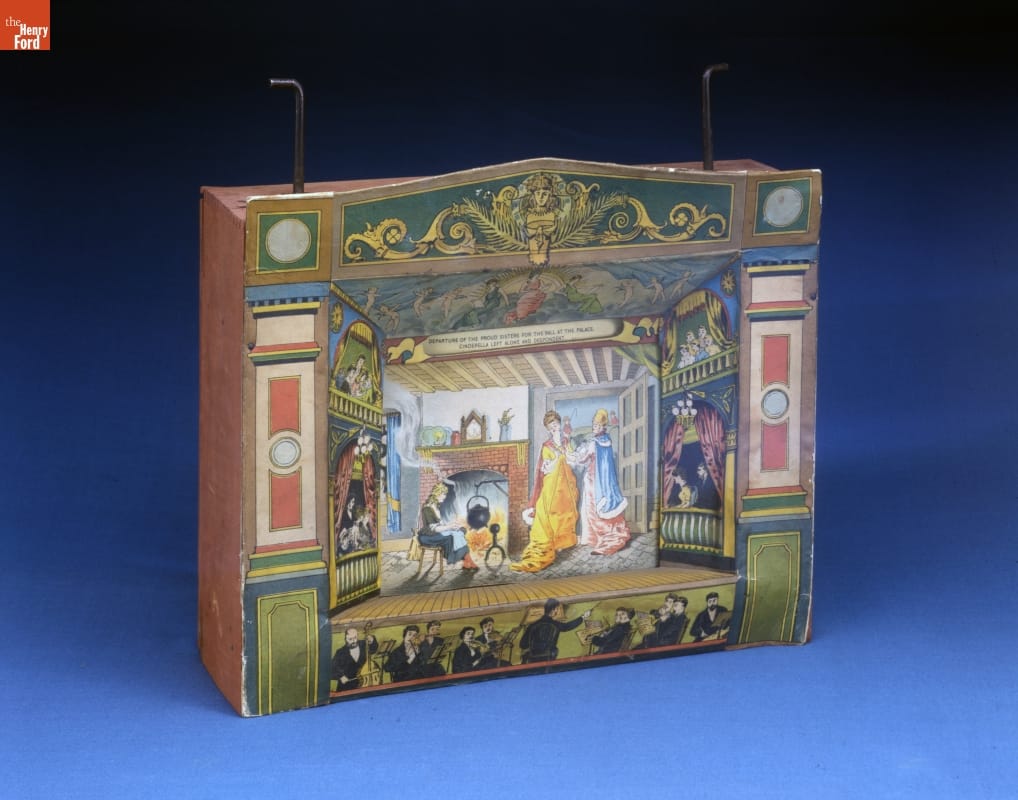
Grand Panorama of Cinderella, circa 1890
This toy theater, from around 1890, let children re-enact the story of Cinderella. The theater has a chromolithographed orchestra pit (complete with a conductor and orchestra), a proscenium arch, box seats with patrons, and a stage. The panorama background changes scenes with a turn of a metal crank and helps tell the story.
- Lantern Slide, Cinderella, 1870-1920 - Magic lanterns use a concave mirror and light source to project images on glass slides with painted or photographic scenes. Developed in the 17th century, magic lanterns predate slide projectors and motion pictures. In the hands of magicians, they became "lanterns of fright," projecting wondrous images and apparitions. Slide themes ranged widely: exotic travel, folklore, advertising, history, science, and art.
- 1870-1920
- Collections - Artifact
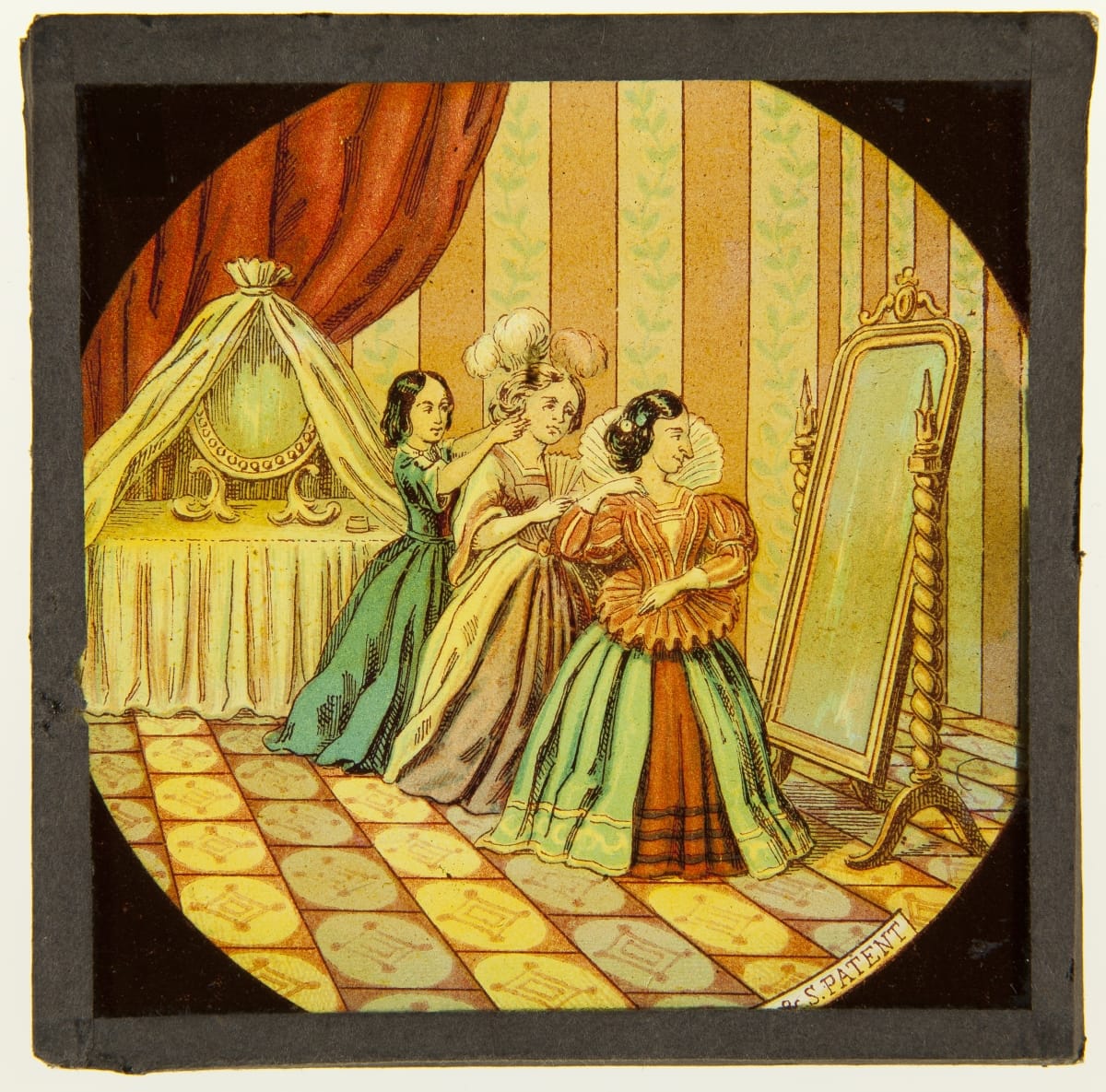
Lantern Slide, Cinderella, 1870-1920
Magic lanterns use a concave mirror and light source to project images on glass slides with painted or photographic scenes. Developed in the 17th century, magic lanterns predate slide projectors and motion pictures. In the hands of magicians, they became "lanterns of fright," projecting wondrous images and apparitions. Slide themes ranged widely: exotic travel, folklore, advertising, history, science, and art.
- Lantern Slide, Cinderella, 1880-1889 - Magic lanterns use a concave mirror and light source to project images on glass slides with painted or photographic scenes. Developed in the 17th century, magic lanterns predate slide projectors and motion pictures. In the hands of magicians, they became "lanterns of fright," projecting wondrous images and apparitions. Slide themes ranged widely: exotic travel, folklore, advertising, history, science, and art.
- 1880-1889
- Collections - Artifact
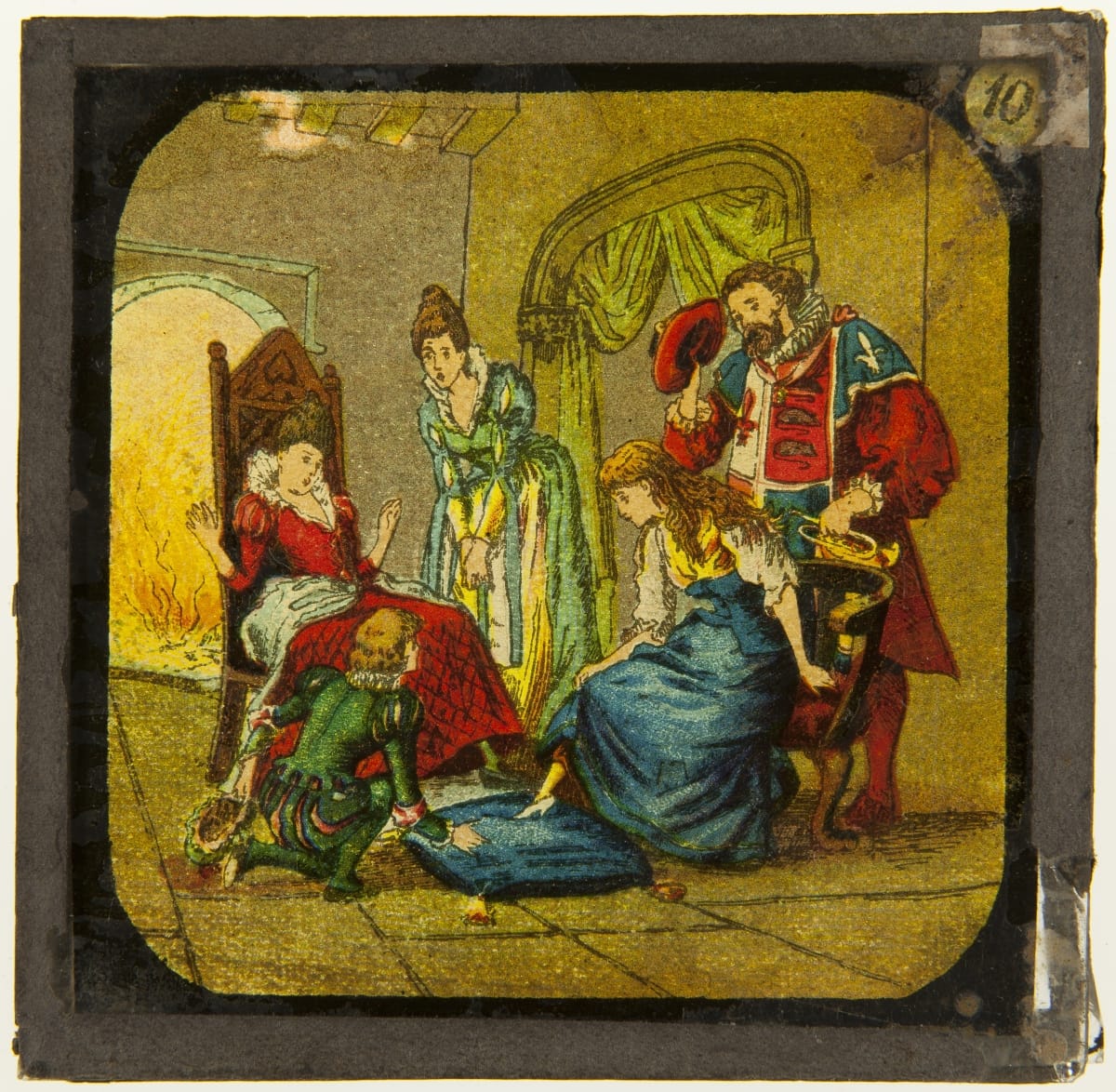
Lantern Slide, Cinderella, 1880-1889
Magic lanterns use a concave mirror and light source to project images on glass slides with painted or photographic scenes. Developed in the 17th century, magic lanterns predate slide projectors and motion pictures. In the hands of magicians, they became "lanterns of fright," projecting wondrous images and apparitions. Slide themes ranged widely: exotic travel, folklore, advertising, history, science, and art.
- Lantern Slide, Cinderella, 1870-1920 - Magic lanterns use a concave mirror and light source to project images on glass slides with painted or photographic scenes. Developed in the 17th century, magic lanterns predate slide projectors and motion pictures. In the hands of magicians, they became "lanterns of fright," projecting wondrous images and apparitions. Slide themes ranged widely: exotic travel, folklore, advertising, history, science, and art.
- 1870-1920
- Collections - Artifact
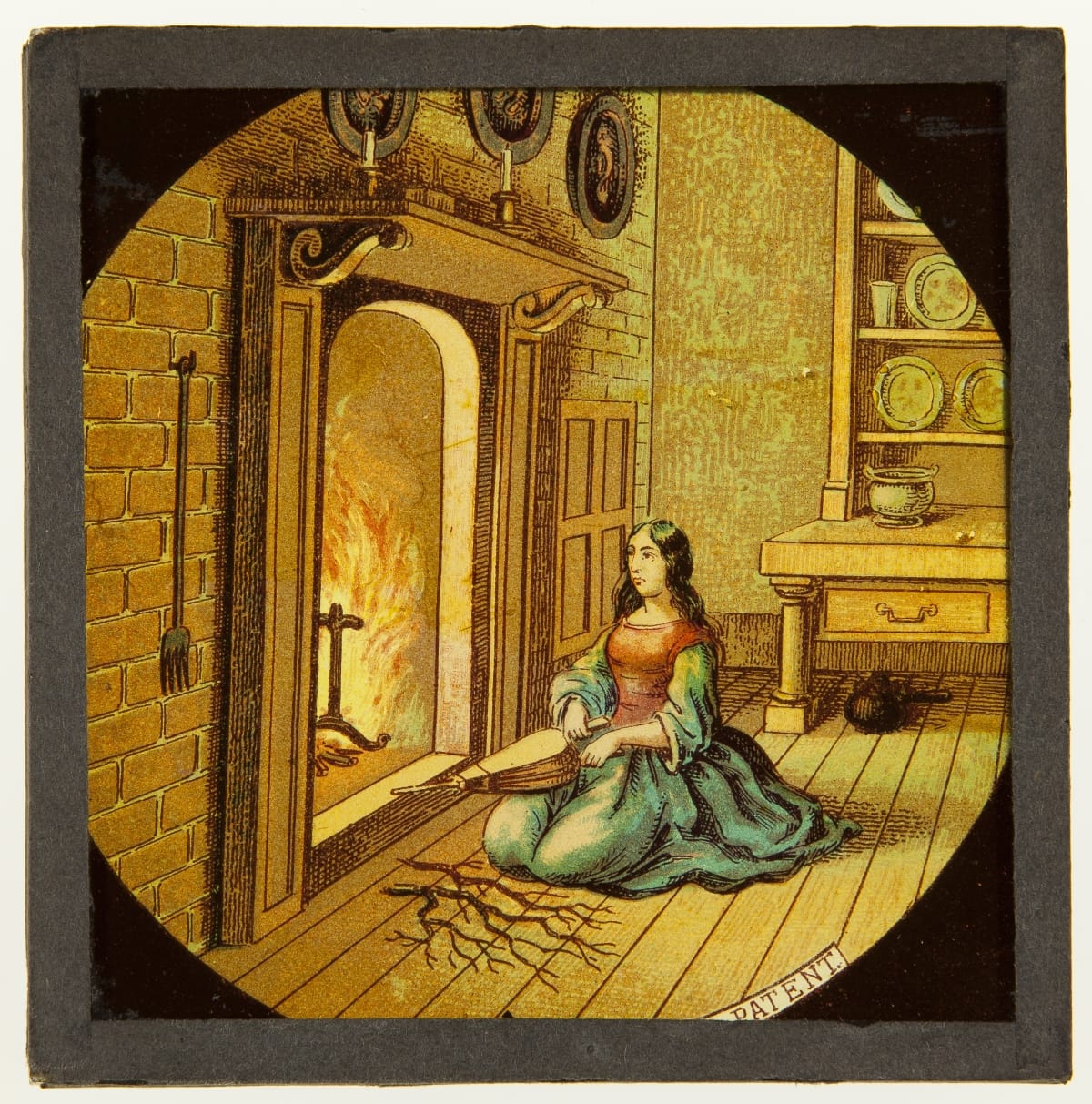
Lantern Slide, Cinderella, 1870-1920
Magic lanterns use a concave mirror and light source to project images on glass slides with painted or photographic scenes. Developed in the 17th century, magic lanterns predate slide projectors and motion pictures. In the hands of magicians, they became "lanterns of fright," projecting wondrous images and apparitions. Slide themes ranged widely: exotic travel, folklore, advertising, history, science, and art.