
Search
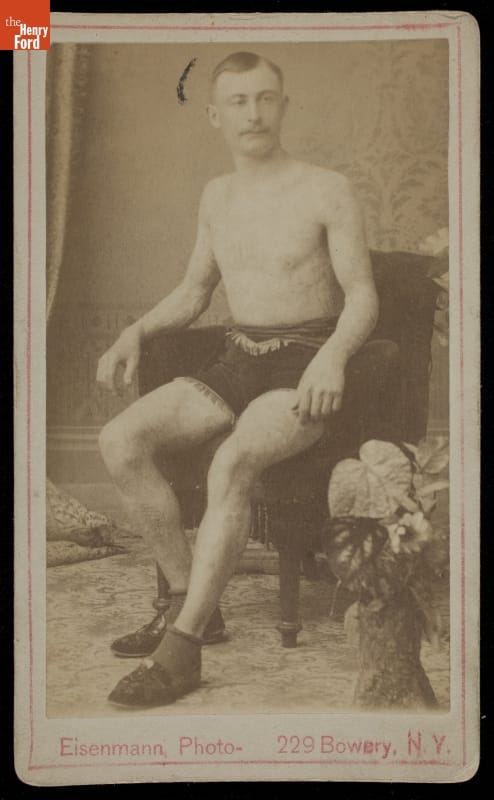
- Portrait of an Athlete, circa 1885 - This unidentified "tattooed man" with patriotic tattoos was photographed by Charles Eisenmann in his Bowery district studio. Eisenmann captured the eclectic mix of people who frequented the Bowery, including circus performers like this -- a likely client of the area's infamous tattoo parlors. Eisenmann's images were reproduced for sale in the form of cabinet cards, popular among the middle class.
- circa 1885
- Collections - Artifact
Portrait of an Athlete, circa 1885
This unidentified "tattooed man" with patriotic tattoos was photographed by Charles Eisenmann in his Bowery district studio. Eisenmann captured the eclectic mix of people who frequented the Bowery, including circus performers like this -- a likely client of the area's infamous tattoo parlors. Eisenmann's images were reproduced for sale in the form of cabinet cards, popular among the middle class.
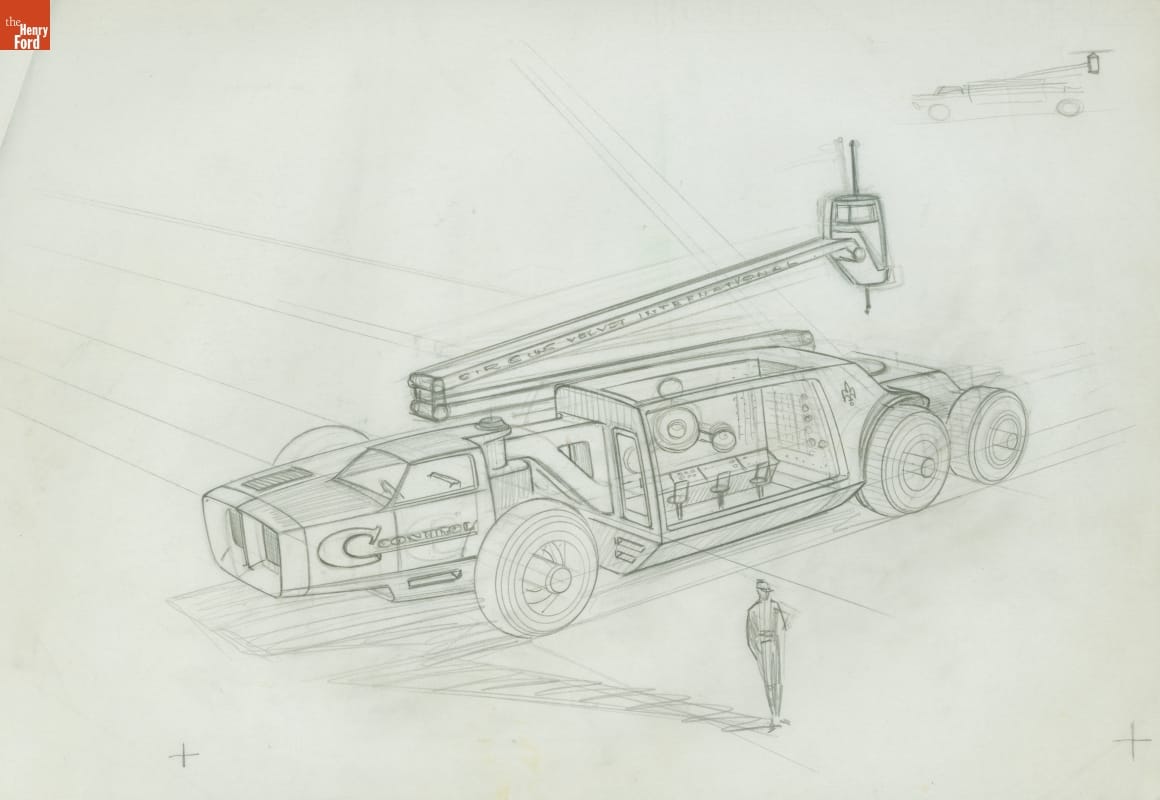
- Circus Performance Control Vehicle, 1967 - In 1966, automobile designer Virgil Exner was approached by a wealthy man with an unusual dream: to build a motorized circus with vehicles for transporting performers and constructing the big top. Exner was eager to begin the novel - though soon abandoned - project and created several concepts, including this control vehicle designed to erect the big top.
- 1967
- Collections - Artifact
Circus Performance Control Vehicle, 1967
In 1966, automobile designer Virgil Exner was approached by a wealthy man with an unusual dream: to build a motorized circus with vehicles for transporting performers and constructing the big top. Exner was eager to begin the novel - though soon abandoned - project and created several concepts, including this control vehicle designed to erect the big top.
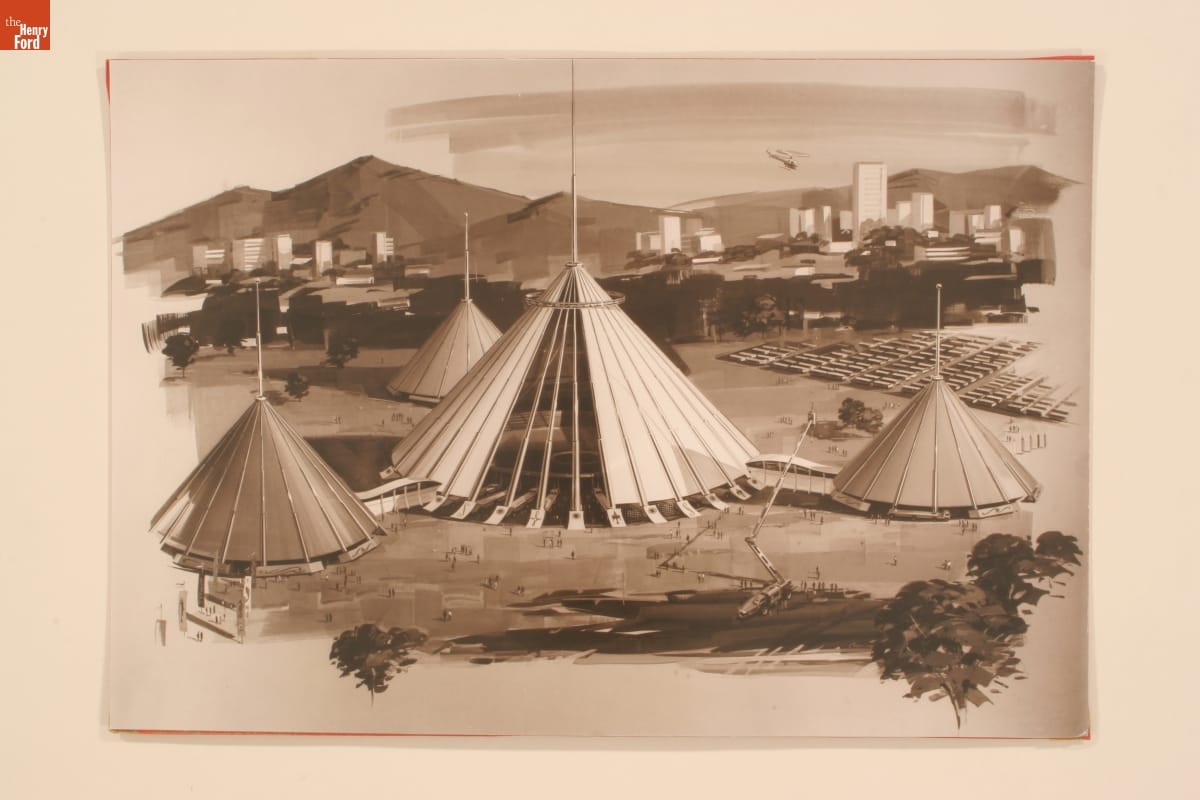
- "Circus Velvet," circa 1967 - In 1966, automobile designer Virgil Exner was approached by a wealthy man with an unusual dream: to build a motorized circus with vehicles for transporting performers and constructing the big top. Exner was eager to begin the novel, though soon abandoned, project. He created several concept vehicles and structures for the spectacle, known as Circus Velvet.
- circa 1967
- Collections - Artifact
"Circus Velvet," circa 1967
In 1966, automobile designer Virgil Exner was approached by a wealthy man with an unusual dream: to build a motorized circus with vehicles for transporting performers and constructing the big top. Exner was eager to begin the novel, though soon abandoned, project. He created several concept vehicles and structures for the spectacle, known as Circus Velvet.
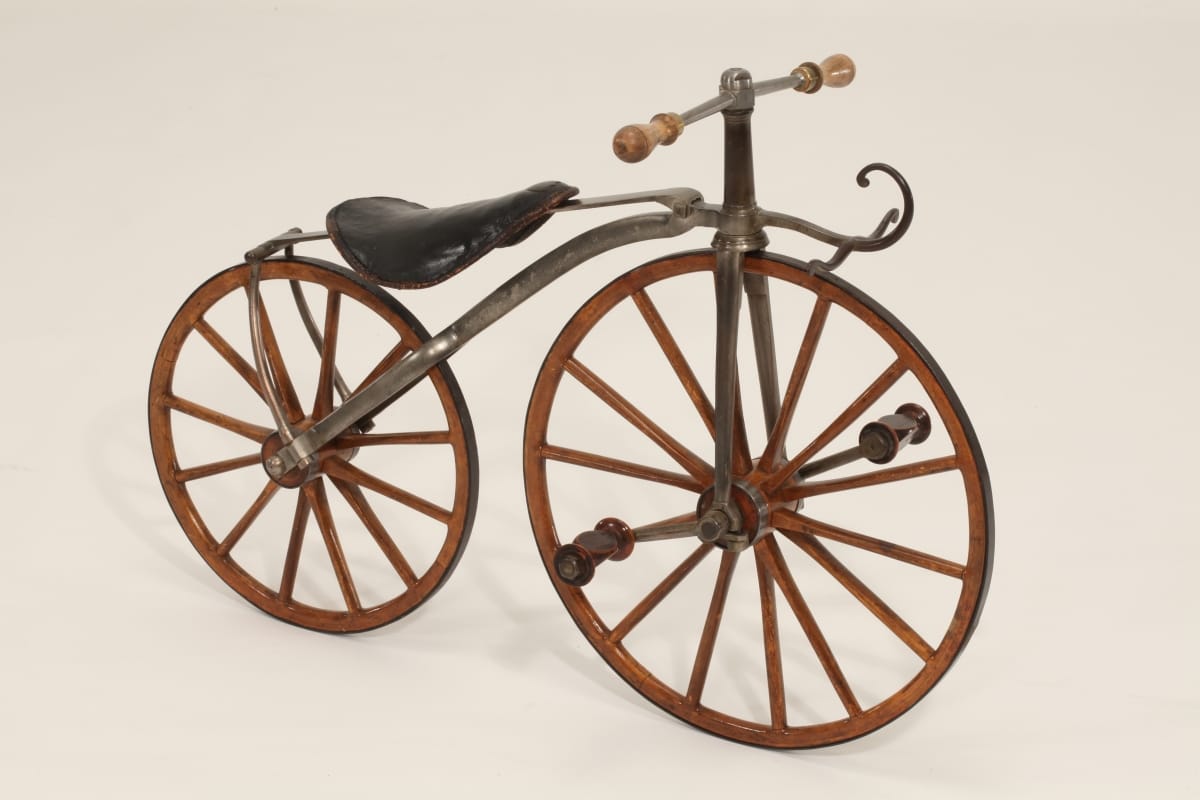
- 1869 Miniature Bicycle Used by Tom Thumb - Topliff and Ely, an Ohio company, presented this reduced-size velocipede to General Tom Thumb, the stage name of Charles Sherwood Stratton. This diminutive performer, who only reached a height of 40 inches, got his start with P. T. Barnum. Stratton turned his small stature into a profitable career entertaining both royalty and the common man.
- 1869
- Collections - Artifact
1869 Miniature Bicycle Used by Tom Thumb
Topliff and Ely, an Ohio company, presented this reduced-size velocipede to General Tom Thumb, the stage name of Charles Sherwood Stratton. This diminutive performer, who only reached a height of 40 inches, got his start with P. T. Barnum. Stratton turned his small stature into a profitable career entertaining both royalty and the common man.
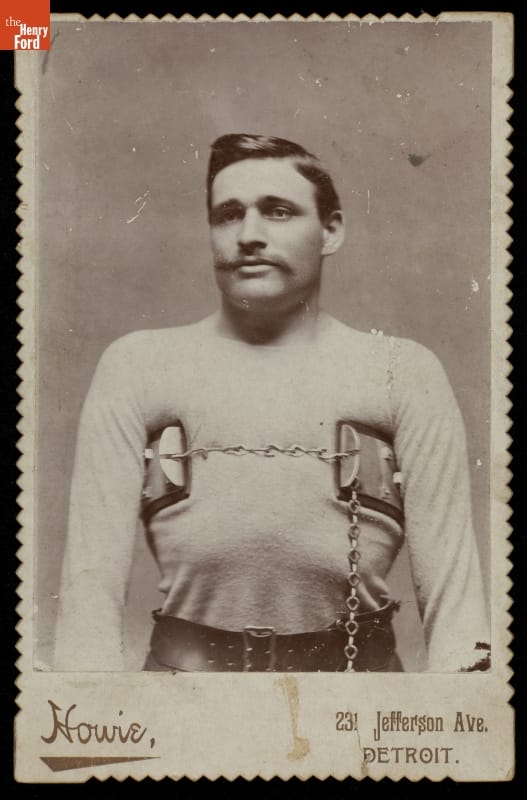
- Thomas Rowe, Expansionist Circus Performer, circa 1895 - Professional photographers began producing cabinet cards in 1867. Consumers quickly preferred them over earlier cartes-de-visite, which were mounted on smaller cardboard stock. Through the early 1900s, Americans commonly exchanged and collected cabinet photographs of family, friends and celebrities. This example, made in Detroit, Michigan, around 1895, depicts Thomas Rowe, a sideshow performer in the Walter L. Main Circus.
- circa 1895
- Collections - Artifact
Thomas Rowe, Expansionist Circus Performer, circa 1895
Professional photographers began producing cabinet cards in 1867. Consumers quickly preferred them over earlier cartes-de-visite, which were mounted on smaller cardboard stock. Through the early 1900s, Americans commonly exchanged and collected cabinet photographs of family, friends and celebrities. This example, made in Detroit, Michigan, around 1895, depicts Thomas Rowe, a sideshow performer in the Walter L. Main Circus.
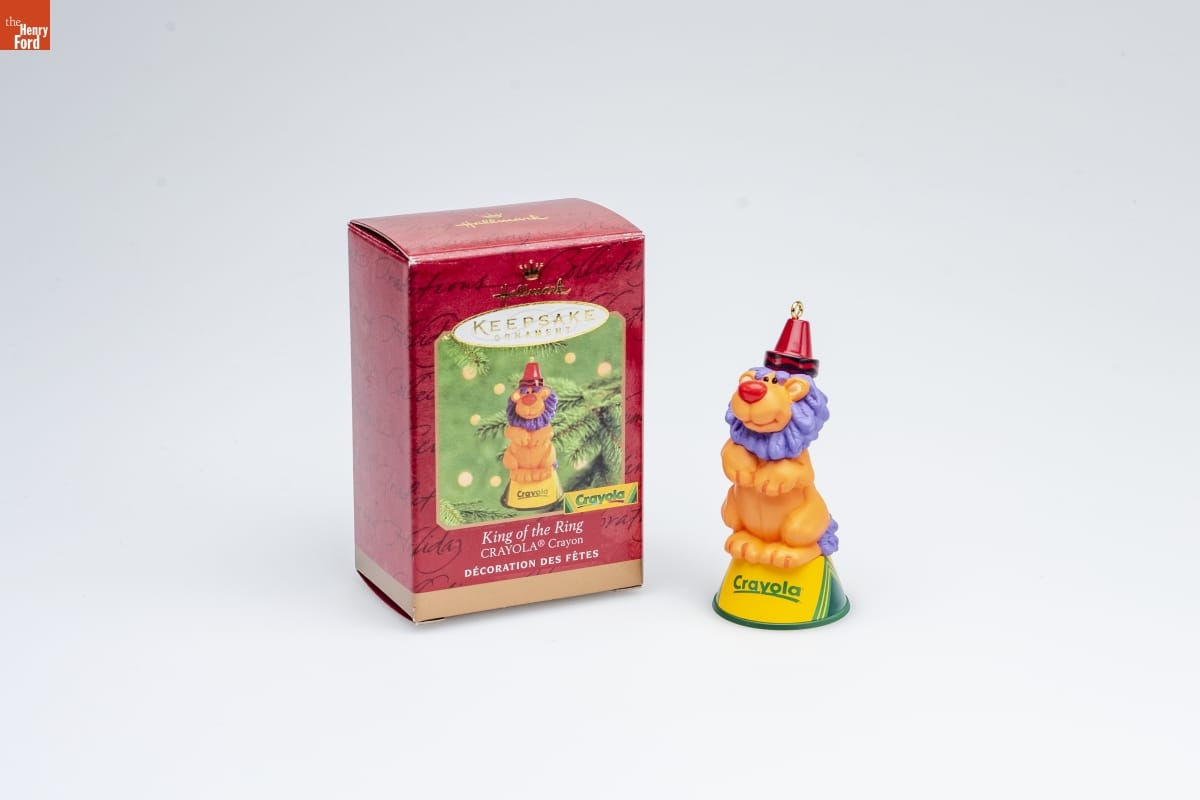
- Hallmark "Crayola Crayon: King of the Ring" Christmas Ornament, 2000 - Already known for greeting cards, Hallmark introduced a line of Christmas ornaments in 1973. The company's annual release of an increasing array of ornaments revolutionized Christmas decorating, appealing to customers' interest in marking memories and milestones as well as expressing one's personality and unique tastes.
- 2000
- Collections - Artifact
Hallmark "Crayola Crayon: King of the Ring" Christmas Ornament, 2000
Already known for greeting cards, Hallmark introduced a line of Christmas ornaments in 1973. The company's annual release of an increasing array of ornaments revolutionized Christmas decorating, appealing to customers' interest in marking memories and milestones as well as expressing one's personality and unique tastes.
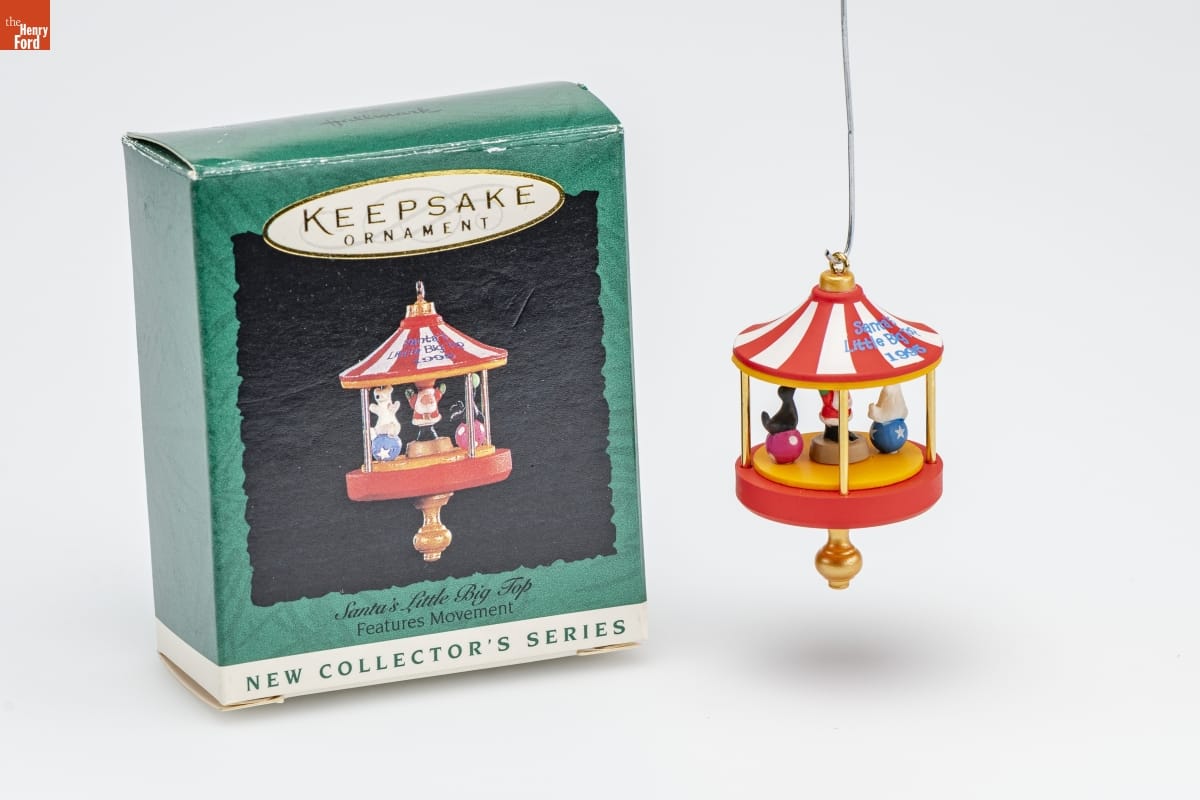
- Hallmark "Santa's Little Big Top Series" Miniature Christmas Ornament, 1995 - Already known for greeting cards, Hallmark introduced a line of Christmas ornaments in 1973. The company's annual release of an increasing array of ornaments revolutionized Christmas decorating, appealing to customers' interest in marking memories and milestones as well as expressing one's personality and unique tastes.
- 1995
- Collections - Artifact
Hallmark "Santa's Little Big Top Series" Miniature Christmas Ornament, 1995
Already known for greeting cards, Hallmark introduced a line of Christmas ornaments in 1973. The company's annual release of an increasing array of ornaments revolutionized Christmas decorating, appealing to customers' interest in marking memories and milestones as well as expressing one's personality and unique tastes.
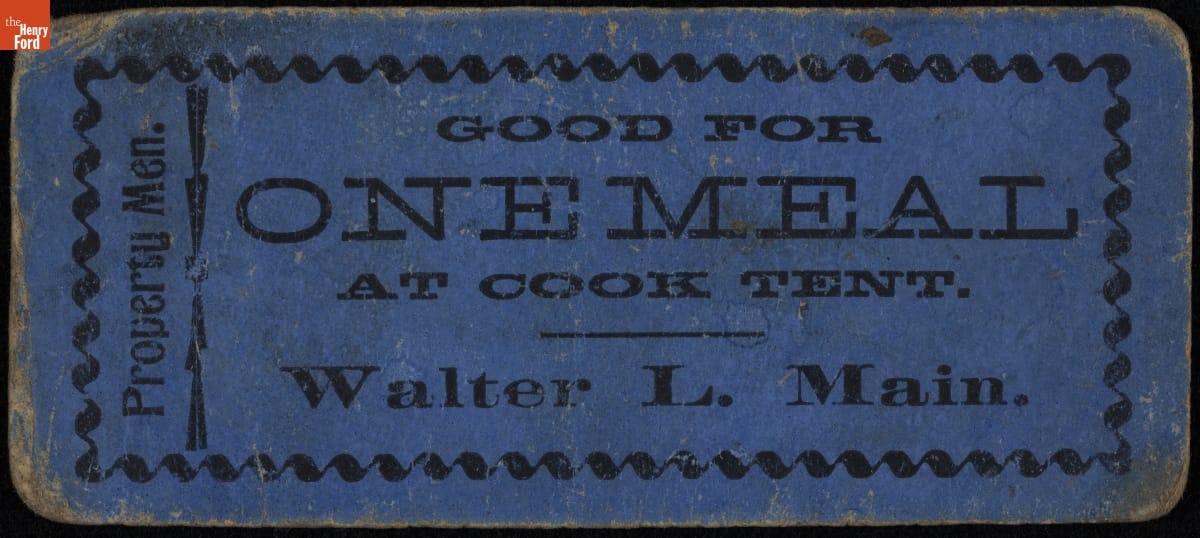
- Meal Ticket for Walter L. Main Circus Property Men, circa 1895 - Owners of circuses and traveling shows in late 19th and early 20th centuries provided meals for all their employees. Tickets were issued to workers in different departments and were redeemable at the tent where the meals were cooked and served. This ticket was issued to a member of the "Property Men" department. This crew stored, maintained, and setup the props used during performances.
- circa 1895
- Collections - Artifact
Meal Ticket for Walter L. Main Circus Property Men, circa 1895
Owners of circuses and traveling shows in late 19th and early 20th centuries provided meals for all their employees. Tickets were issued to workers in different departments and were redeemable at the tent where the meals were cooked and served. This ticket was issued to a member of the "Property Men" department. This crew stored, maintained, and setup the props used during performances.
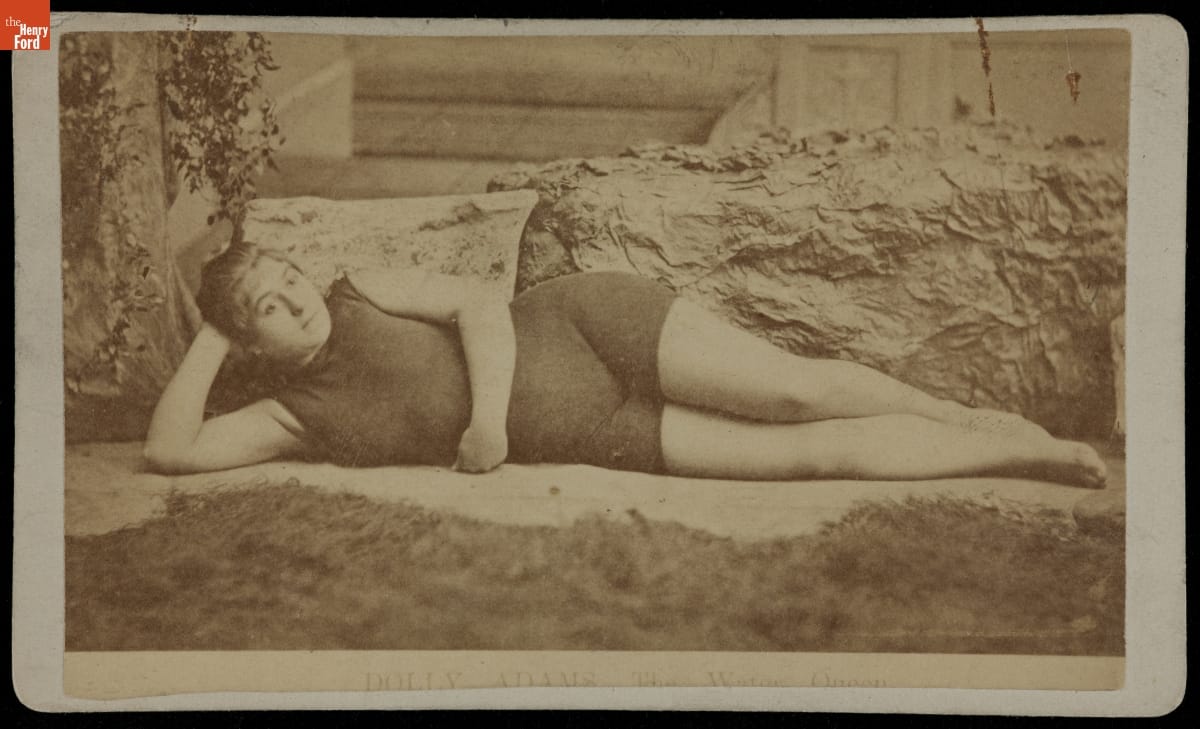
- Circus Performer Dolly Adams, "The Water Queen," circa 1880 - Circus performer Dolly Adams, nicknamed "The Water Queen," posed in her bathing suit for this carte-de-visite around 1880. The carte-de-visite was a small photographic print on cardboard stock made by professional photographers. People exchanged and collected cartes-de-visite, popular in the United States from the Civil War in the 1860s through the 1880s, to help them remember family and celebrities.
- circa 1880
- Collections - Artifact
Circus Performer Dolly Adams, "The Water Queen," circa 1880
Circus performer Dolly Adams, nicknamed "The Water Queen," posed in her bathing suit for this carte-de-visite around 1880. The carte-de-visite was a small photographic print on cardboard stock made by professional photographers. People exchanged and collected cartes-de-visite, popular in the United States from the Civil War in the 1860s through the 1880s, to help them remember family and celebrities.
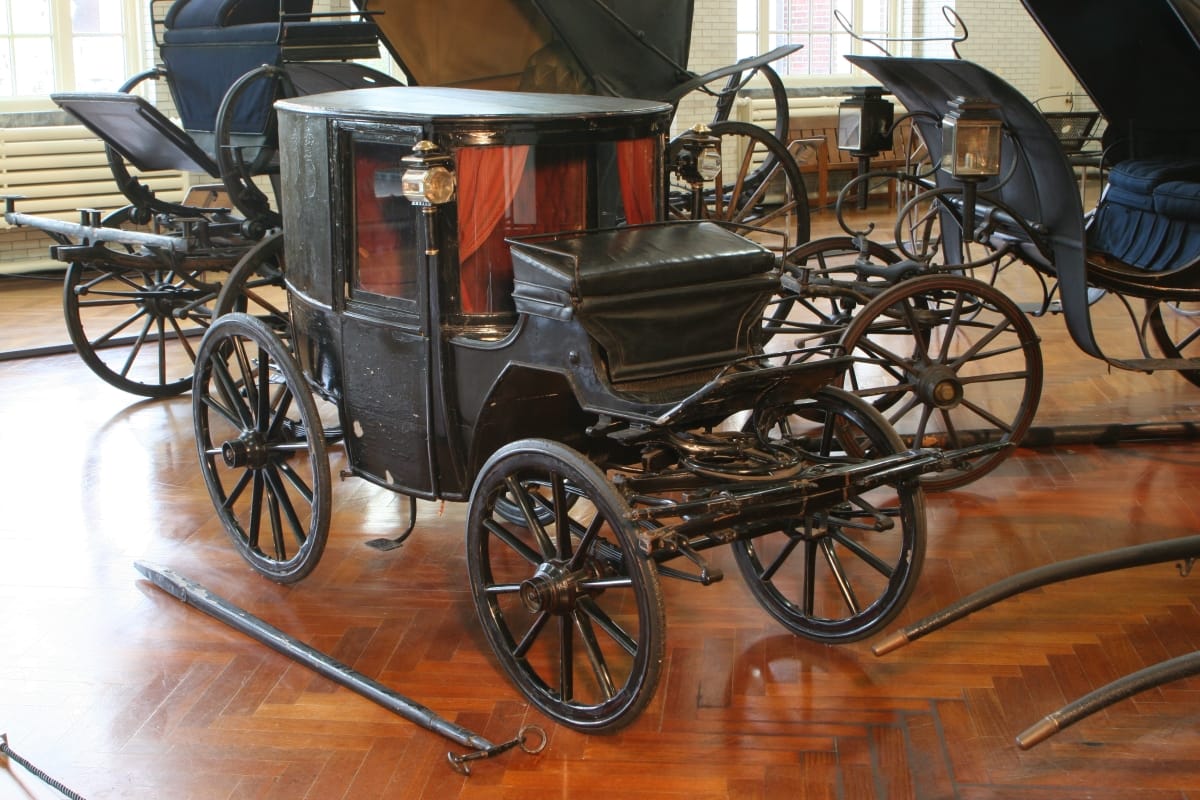
- Tom Thumb's Carriage, circa 1875 - This miniature carriage was custom built for entertainer Charles Stratton, better known by his stage name Tom Thumb. Discovered by P.T. Barnum, the diminutive Thumb (3 feet, 4 inches tall when fully grown) sang and danced to the delight of 19th-century audiences. Thumb advertised his show by riding in this carriage, behind a team of ponies, through cities where he performed.
- circa 1875
- Collections - Artifact
Tom Thumb's Carriage, circa 1875
This miniature carriage was custom built for entertainer Charles Stratton, better known by his stage name Tom Thumb. Discovered by P.T. Barnum, the diminutive Thumb (3 feet, 4 inches tall when fully grown) sang and danced to the delight of 19th-century audiences. Thumb advertised his show by riding in this carriage, behind a team of ponies, through cities where he performed.