
Search
- Letter from Marquis de Lafayette to James Fenimore Cooper, 1831 -
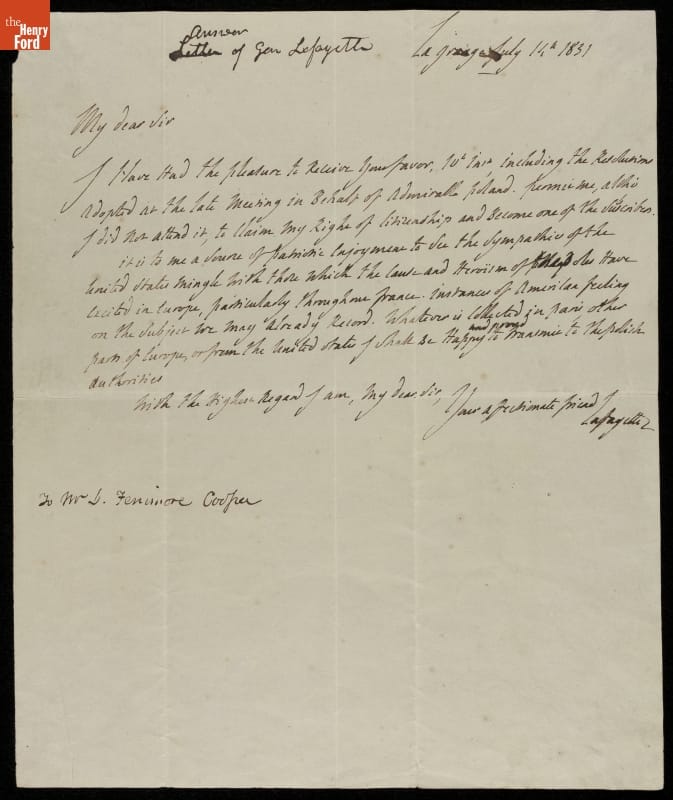
- July 14, 1831
- Collections - Artifact
Letter from Marquis de Lafayette to James Fenimore Cooper, 1831
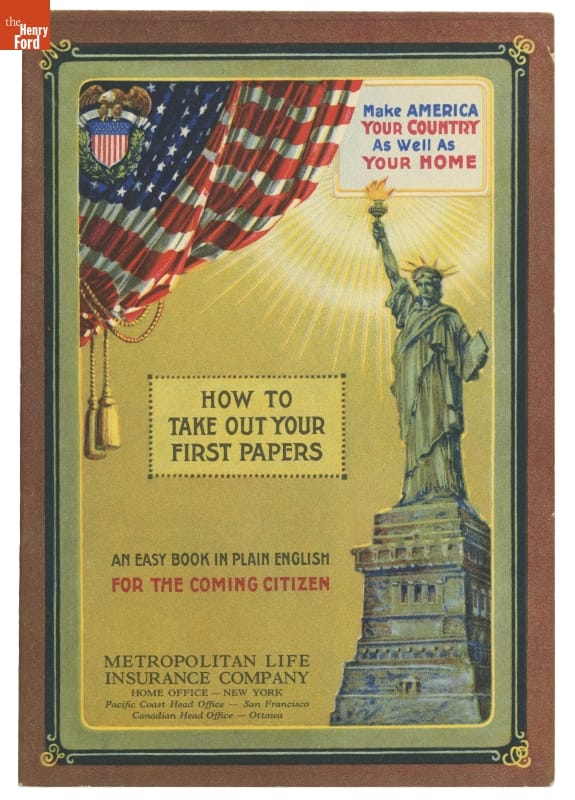
- "How to Take Out Your First Papers: An Easy Book in Plain English for the Coming Citizen," circa 1923 - In the early 20th century, mass immigration posed the challenge of integrating, or assimilating, immigrants into American society. Anglo-Americans believed that Americanization was the first step towards assimilation into a greater nation. This pamphlet is an example of a private agency that established an Americanization program to help immigrants learn American values and ultimately gain United States citizenship.
- circa 1923
- Collections - Artifact
"How to Take Out Your First Papers: An Easy Book in Plain English for the Coming Citizen," circa 1923
In the early 20th century, mass immigration posed the challenge of integrating, or assimilating, immigrants into American society. Anglo-Americans believed that Americanization was the first step towards assimilation into a greater nation. This pamphlet is an example of a private agency that established an Americanization program to help immigrants learn American values and ultimately gain United States citizenship.
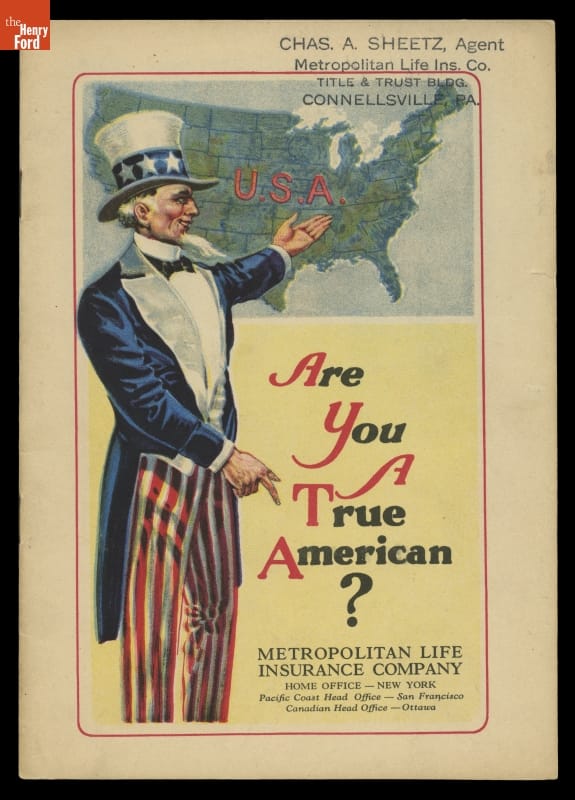
- "Are You a True American?," circa 1923 - Metropolitan Life Insurance Company was a private agency that set up Americanization programs. Anglo-Americans utilized these programs to assimilate immigrants into "true Americans" preserving the integrity of their perceived concept of America. Pamphlets like the one pictured here, were passed out to immigrants and provided information on citizenship and American values.
- circa 1923
- Collections - Artifact
"Are You a True American?," circa 1923
Metropolitan Life Insurance Company was a private agency that set up Americanization programs. Anglo-Americans utilized these programs to assimilate immigrants into "true Americans" preserving the integrity of their perceived concept of America. Pamphlets like the one pictured here, were passed out to immigrants and provided information on citizenship and American values.
- Letter Thanking Edsel Ford for Donation to the Playground and Recreation Association of America, 1929 - Early 20th-century reformers created the Playground and Recreation Association of America to establish clean, safe, supervised play spaces for children living in crowded cities. Reformers hoped these playgrounds would promote a sense of physical, social, and moral well-being among America's children and youth. Edsel Ford donated to this worthwhile cause throughout the 1920s and 30s.
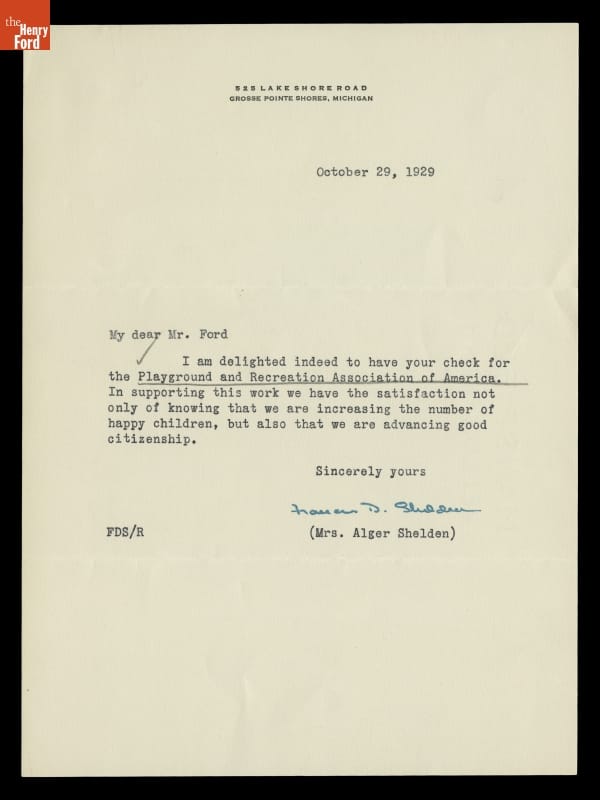
- October 29, 1929
- Collections - Artifact
Letter Thanking Edsel Ford for Donation to the Playground and Recreation Association of America, 1929
Early 20th-century reformers created the Playground and Recreation Association of America to establish clean, safe, supervised play spaces for children living in crowded cities. Reformers hoped these playgrounds would promote a sense of physical, social, and moral well-being among America's children and youth. Edsel Ford donated to this worthwhile cause throughout the 1920s and 30s.
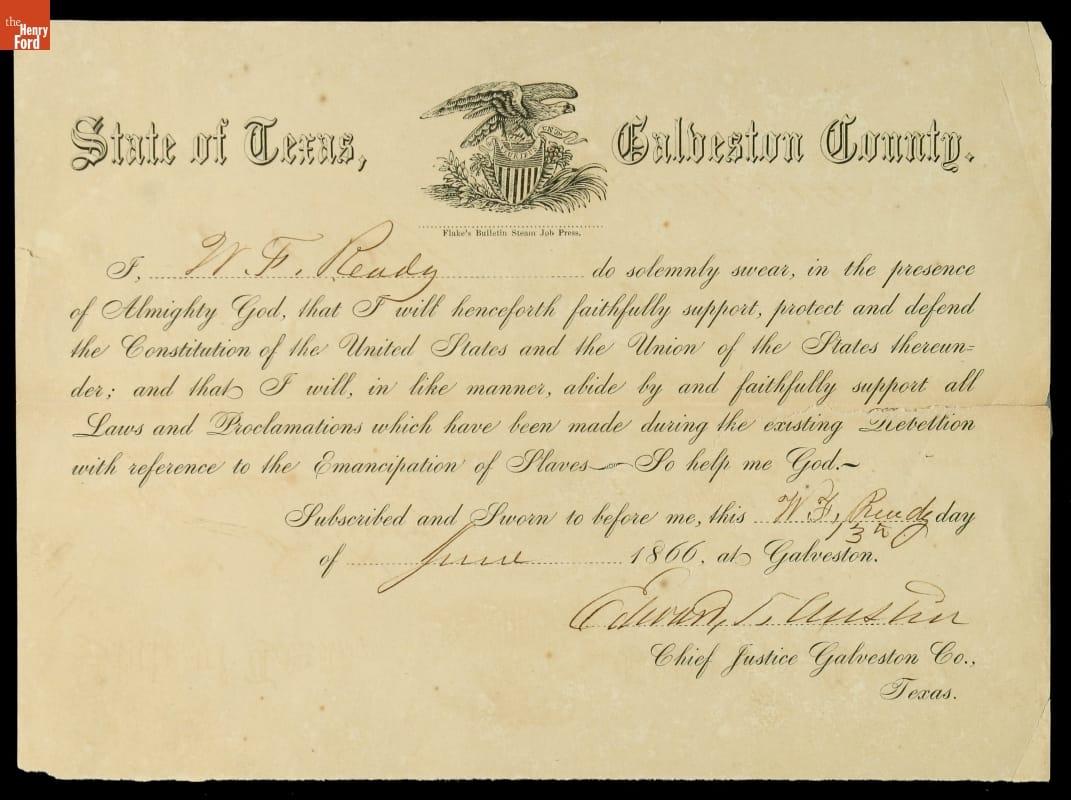
- Loyalty Oath to the United States of America, Issued for W. F. Ready, June 13, 1866 - To be re-admitted into the Union after the Civil War, a majority of citizens in each Confederate state had to formally renounce secession and show support of the Constitution. The signer of this loyalty oath proclaimed his allegiance to the Constitution of the United States, the union of those states, and laws regarding the emancipation of slaves.
- June 13, 1866
- Collections - Artifact
Loyalty Oath to the United States of America, Issued for W. F. Ready, June 13, 1866
To be re-admitted into the Union after the Civil War, a majority of citizens in each Confederate state had to formally renounce secession and show support of the Constitution. The signer of this loyalty oath proclaimed his allegiance to the Constitution of the United States, the union of those states, and laws regarding the emancipation of slaves.
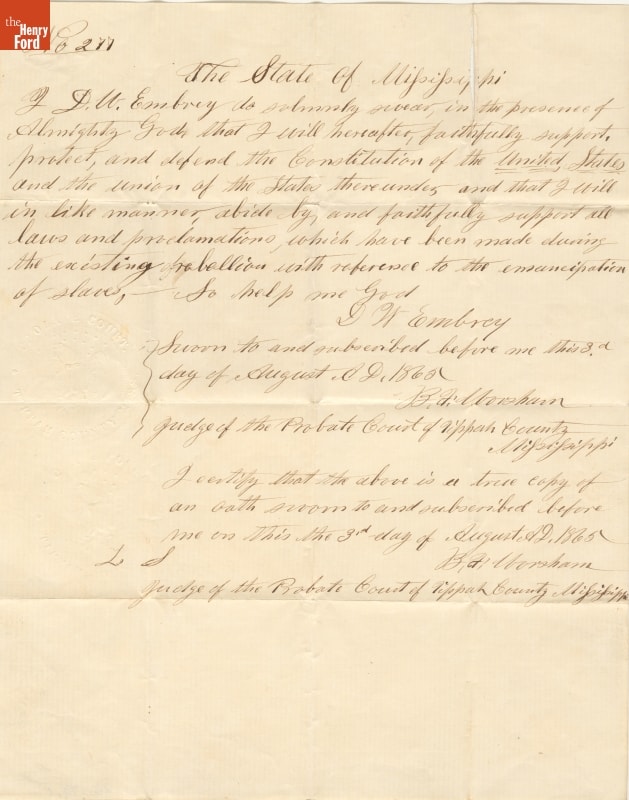
- Loyalty Oath to the United States of America, August 3, 1865 - To be re-admitted into the Union after the Civil War, a majority of citizens in each Confederate state had to formally renounce secession and show support of the Constitution. The signer of this loyalty oath proclaimed his allegiance to the Constitution of the United States, the union of those states, and laws regarding the emancipation of slaves.
- August 03, 1865
- Collections - Artifact
Loyalty Oath to the United States of America, August 3, 1865
To be re-admitted into the Union after the Civil War, a majority of citizens in each Confederate state had to formally renounce secession and show support of the Constitution. The signer of this loyalty oath proclaimed his allegiance to the Constitution of the United States, the union of those states, and laws regarding the emancipation of slaves.