
Search
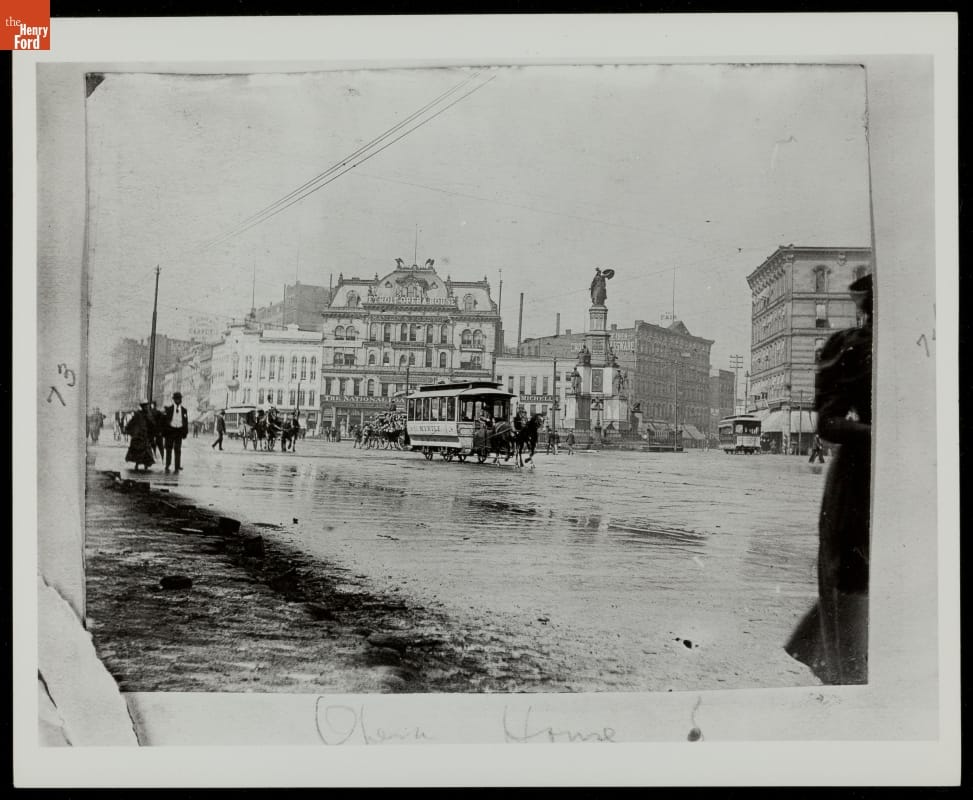
- Detroit Opera House, Detroit, Michigan, circa 1890 - The first Detroit Opera House stands behind a horse-drawn streetcar at Campus Martius, a former military training ground that became the "point of origin" of Detroit's coordinate street system and site of the Michigan Soldiers' and Sailors' Monument. Electric streetcar lines (note the wires strung above the streets) coexisted with horsecars in turn-of-the-ninteenth-century Detroit.
- circa 1890
- Collections - Artifact
Detroit Opera House, Detroit, Michigan, circa 1890
The first Detroit Opera House stands behind a horse-drawn streetcar at Campus Martius, a former military training ground that became the "point of origin" of Detroit's coordinate street system and site of the Michigan Soldiers' and Sailors' Monument. Electric streetcar lines (note the wires strung above the streets) coexisted with horsecars in turn-of-the-ninteenth-century Detroit.
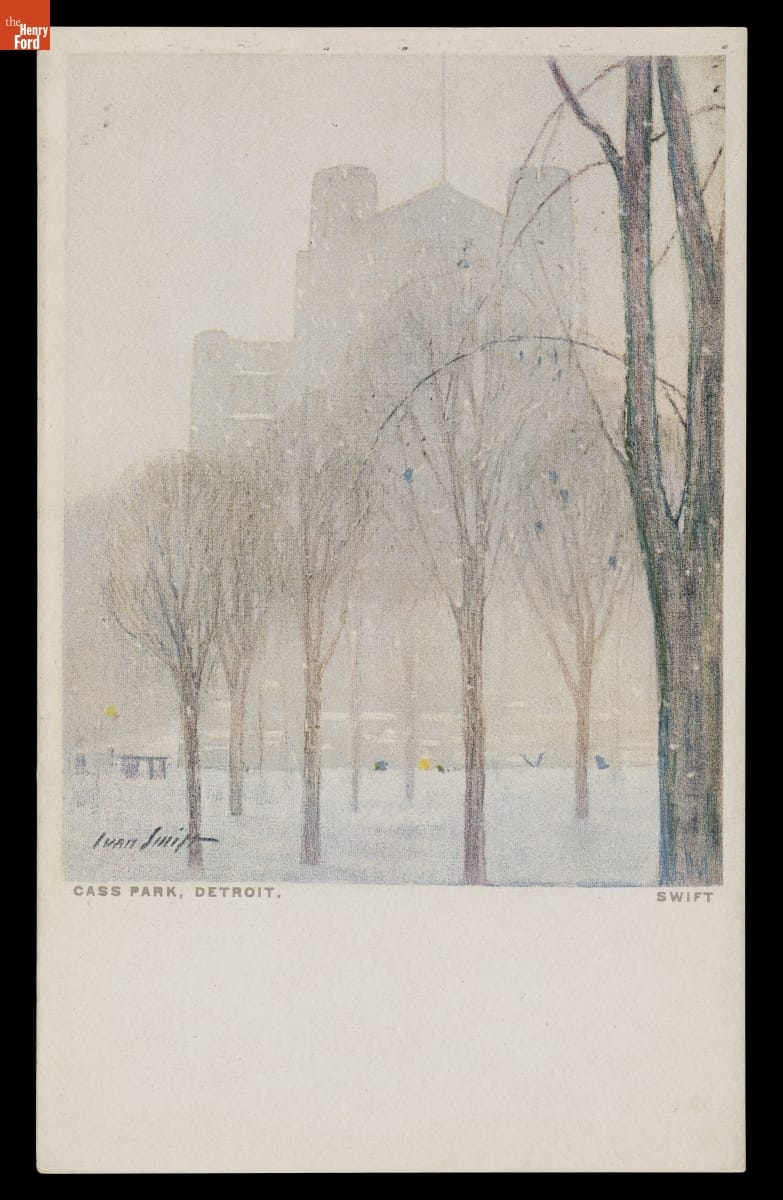
- Cass Park, Detroit, Michigan, Artwork by Ivan Swift -
- Collections - Artifact
Cass Park, Detroit, Michigan, Artwork by Ivan Swift
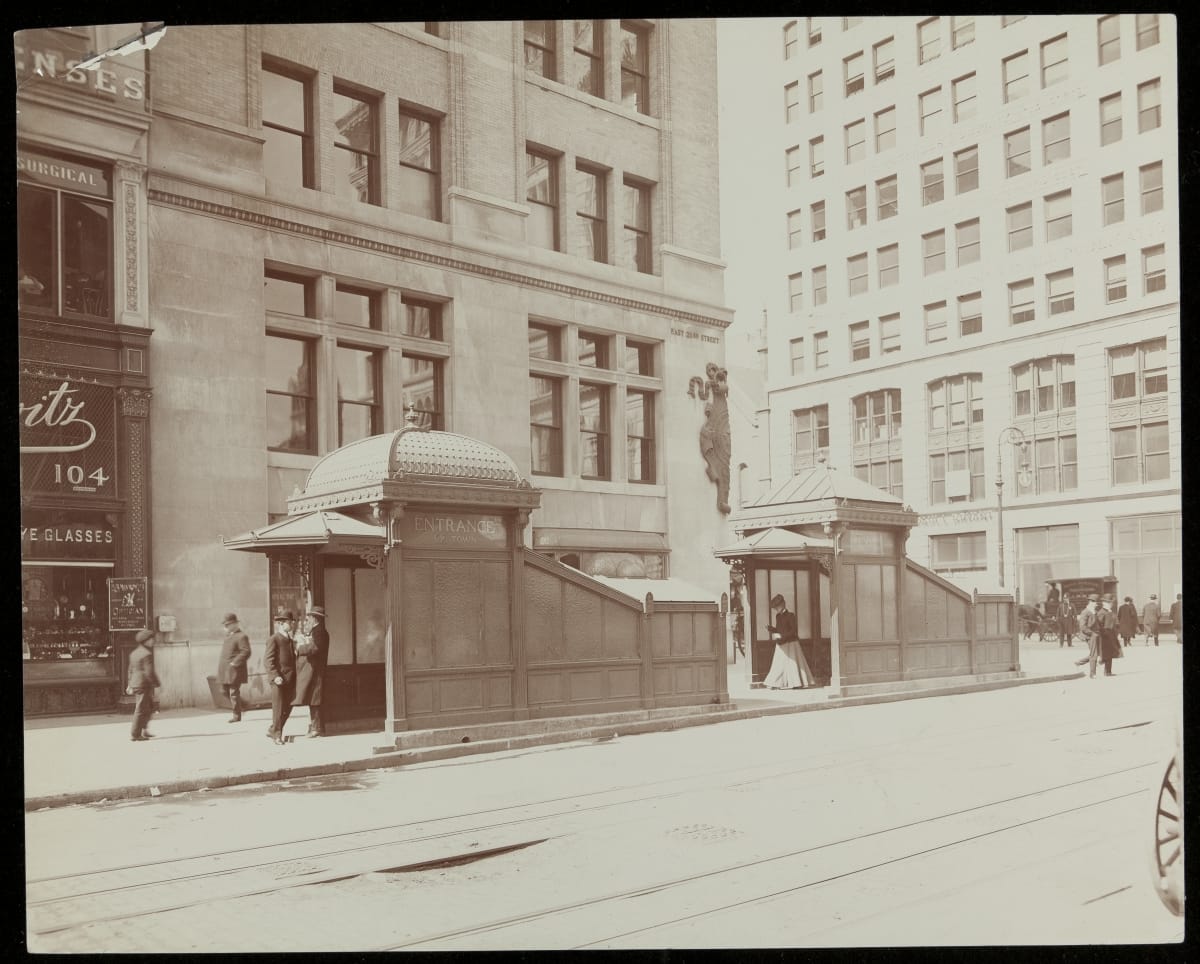
- Subway Entrance and Exit Kiosks, 23rd and 4th Avenues, New York City, circa 1905 - As one of the world's major image publishers from 1895 to 1924, the Detroit Publishing Company had a wide-ranging stock of original photographs. Here, people enter and exit a New York City subway station operated by the Interborough Rapid Transit Company. The city's Board of Transportation acquired the company in 1940.
- circa 1905
- Collections - Artifact
Subway Entrance and Exit Kiosks, 23rd and 4th Avenues, New York City, circa 1905
As one of the world's major image publishers from 1895 to 1924, the Detroit Publishing Company had a wide-ranging stock of original photographs. Here, people enter and exit a New York City subway station operated by the Interborough Rapid Transit Company. The city's Board of Transportation acquired the company in 1940.
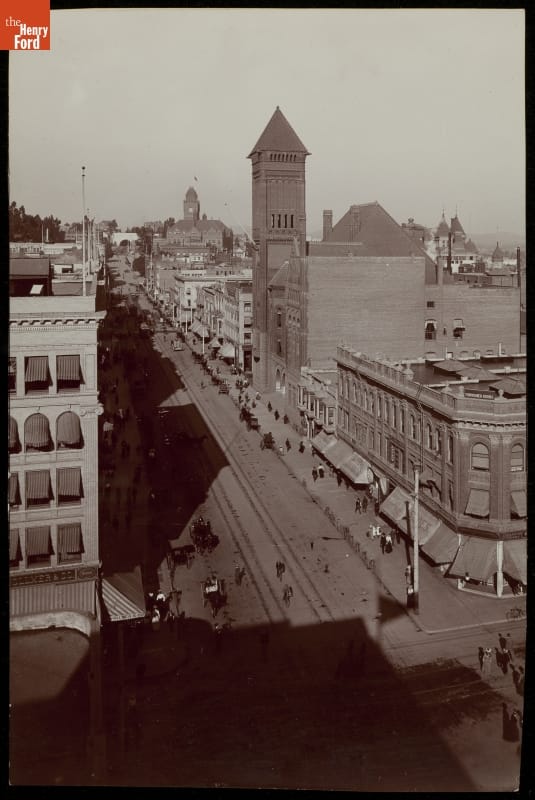
- Up Broadway, Los Angeles, California, circa 1900 - For nearly thirty years, 1895 to 1924, the Detroit Publishing Company was one of the major image publishers in the world. The company had a wide-ranging stock of original photographs, including many scenes from across North America. In this image, people walk, bicycle, and use horse-drawn vehicles to move along a commercial Los Angeles street.
- circa 1900
- Collections - Artifact
Up Broadway, Los Angeles, California, circa 1900
For nearly thirty years, 1895 to 1924, the Detroit Publishing Company was one of the major image publishers in the world. The company had a wide-ranging stock of original photographs, including many scenes from across North America. In this image, people walk, bicycle, and use horse-drawn vehicles to move along a commercial Los Angeles street.
- Belle Isle from Dime Bank Building, Detroit, Michigan -
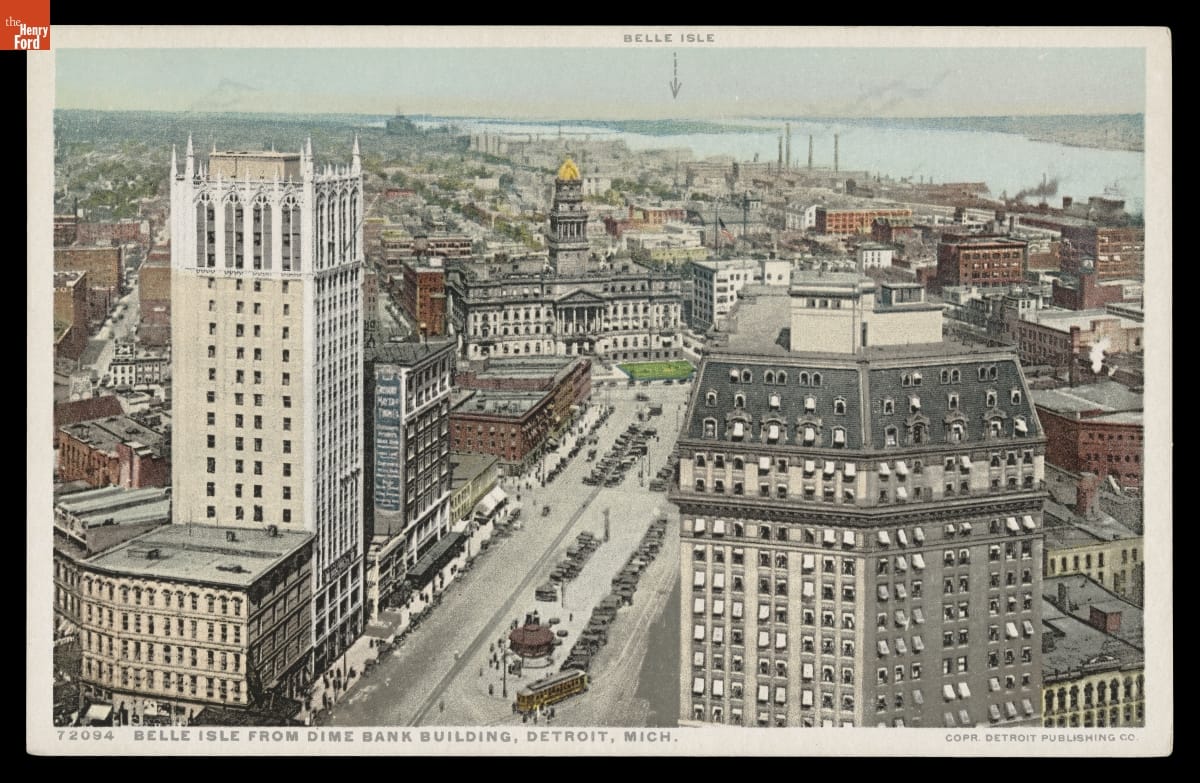
- 1912-1920
- Collections - Artifact
Belle Isle from Dime Bank Building, Detroit, Michigan
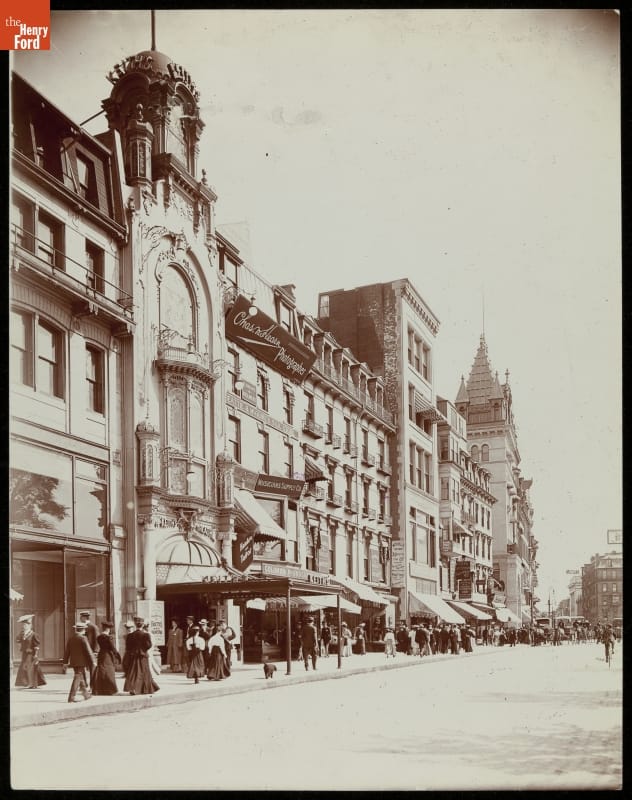
- "Tremont Street, Looking South," Boston, Massachusetts, circa 1905 - From 1895 to 1924, the Detroit Publishing Company was one of the major image publishers in the world. The company had a wide-ranging stock of original photographs, including many North American scenes. Keith's Theatre, the narrow, ornate building in this street view, was an elegant vaudeville playhouse. It also projected Boston's first film using Thomas Edison's Vistascope in 1896.
- circa 1905
- Collections - Artifact
"Tremont Street, Looking South," Boston, Massachusetts, circa 1905
From 1895 to 1924, the Detroit Publishing Company was one of the major image publishers in the world. The company had a wide-ranging stock of original photographs, including many North American scenes. Keith's Theatre, the narrow, ornate building in this street view, was an elegant vaudeville playhouse. It also projected Boston's first film using Thomas Edison's Vistascope in 1896.
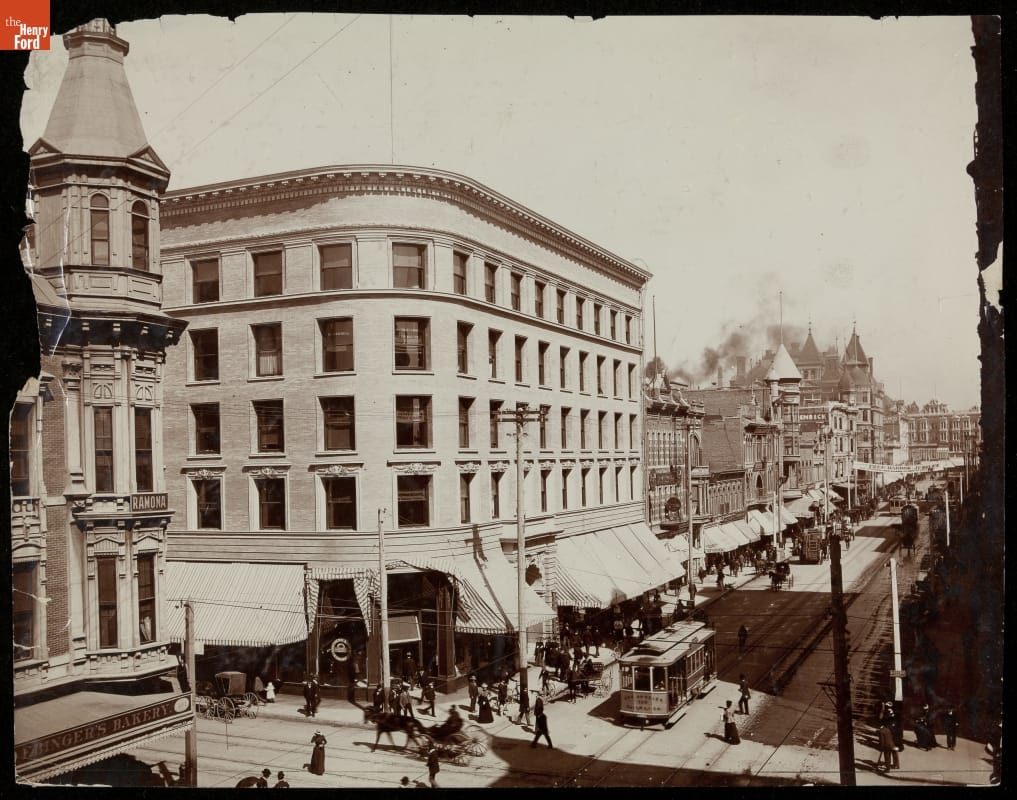
- Downtown Los Angeles, California, circa 1900 - At the turn of the 20th century, the streets of downtown Los Angeles, such as the intersection of Spring and Third Streets, shown here, were busy and densely developed. Streetcars, pedestrians, bicycles, and horse-drawn passenger and commercial vehicles shared the road.
- circa 1900
- Collections - Artifact
Downtown Los Angeles, California, circa 1900
At the turn of the 20th century, the streets of downtown Los Angeles, such as the intersection of Spring and Third Streets, shown here, were busy and densely developed. Streetcars, pedestrians, bicycles, and horse-drawn passenger and commercial vehicles shared the road.
- Platter, 1820-1850 -
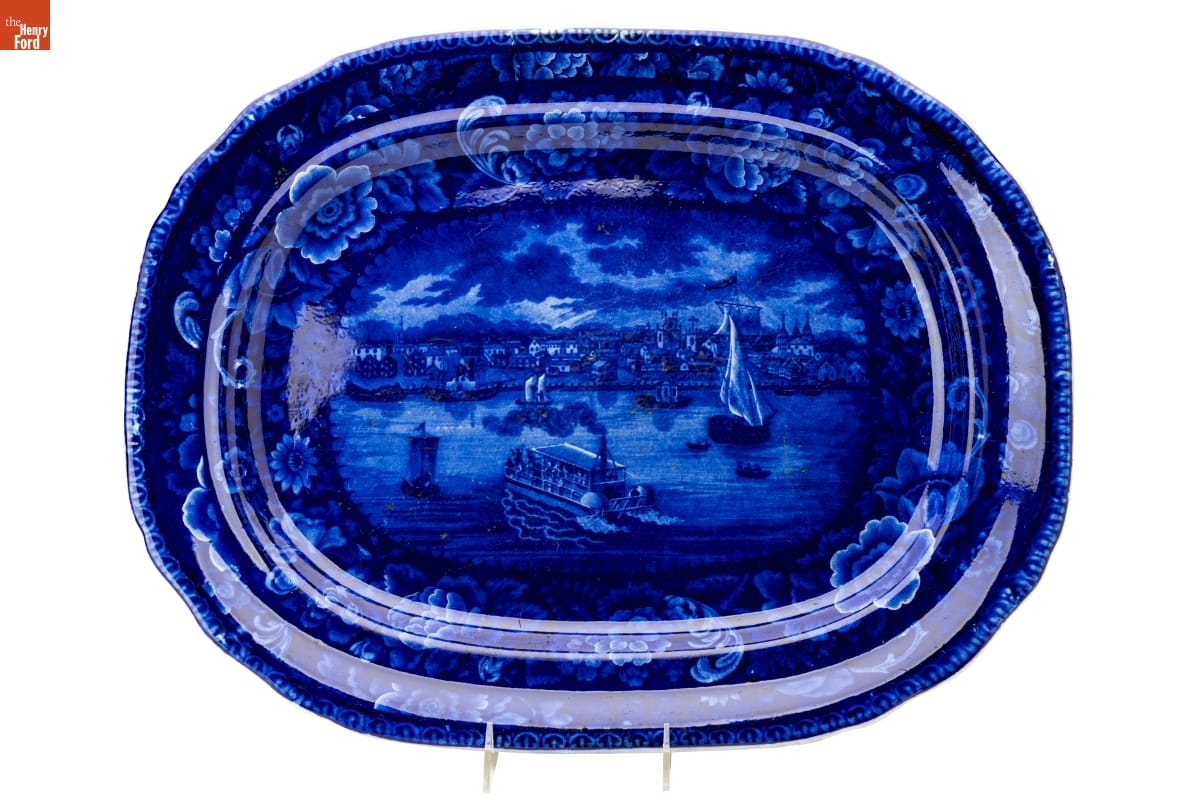
- 1820-1850
- Collections - Artifact
Platter, 1820-1850
- Platter, 1815-1830 -
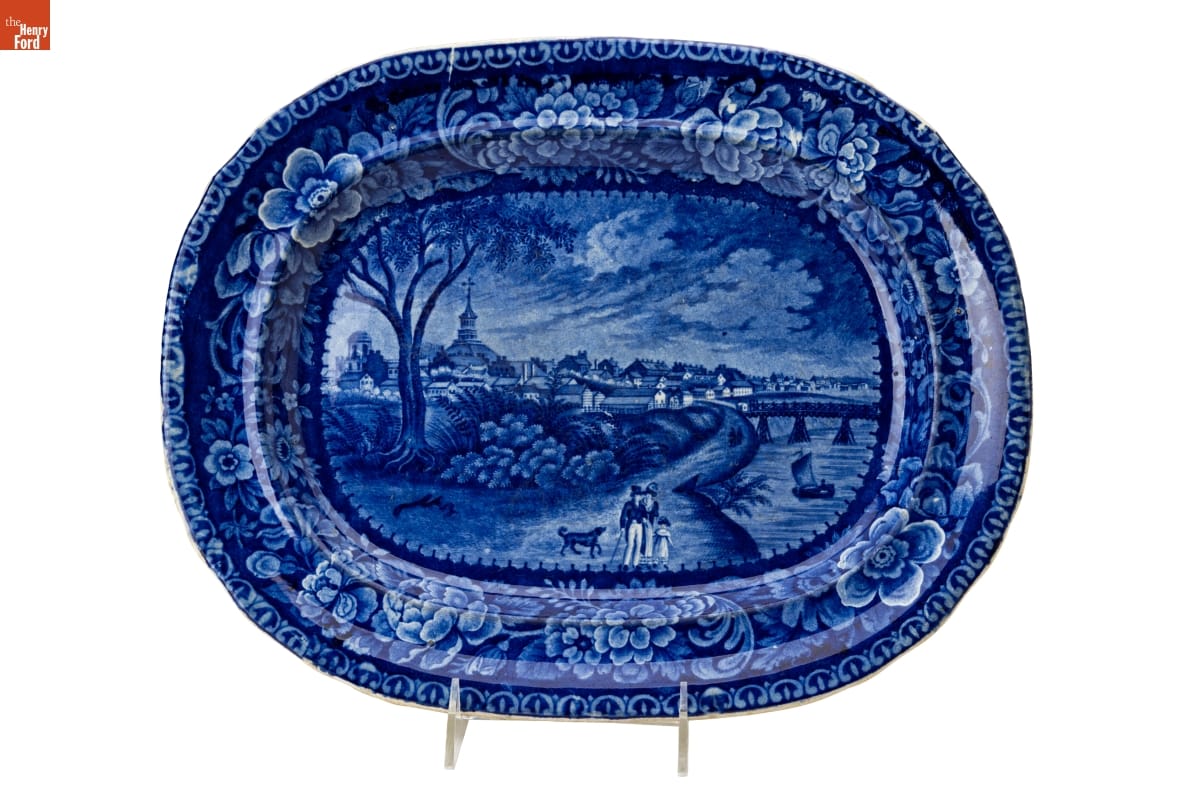
- 1815-1830
- Collections - Artifact
Platter, 1815-1830
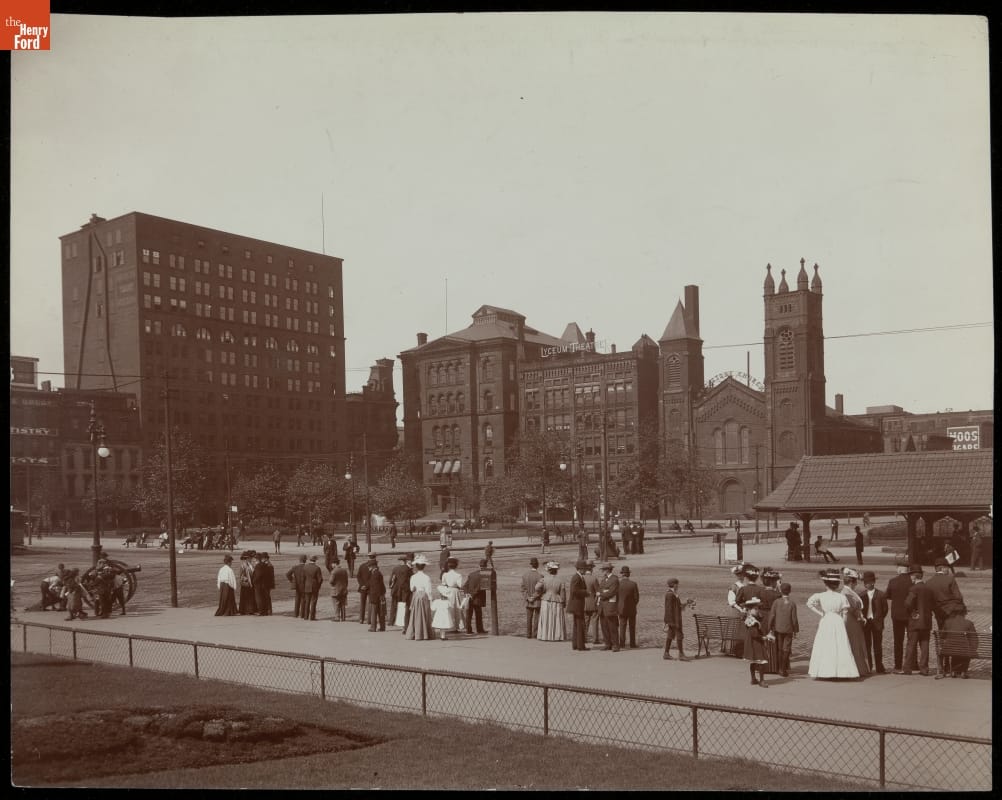
- "Public Square, Cleveland, Ohio," circa 1905 - Children play near a cannon in the corner of this Detroit Publishing Company photograph. Public Square is Cleveland's central plaza and home to a monument honoring Civil War soldiers and sailors.
- circa 1905
- Collections - Artifact
"Public Square, Cleveland, Ohio," circa 1905
Children play near a cannon in the corner of this Detroit Publishing Company photograph. Public Square is Cleveland's central plaza and home to a monument honoring Civil War soldiers and sailors.