
Search
- Program for the First "Ford Sunday Evening Hour" Radio Broadcast, October 7, 1934 -
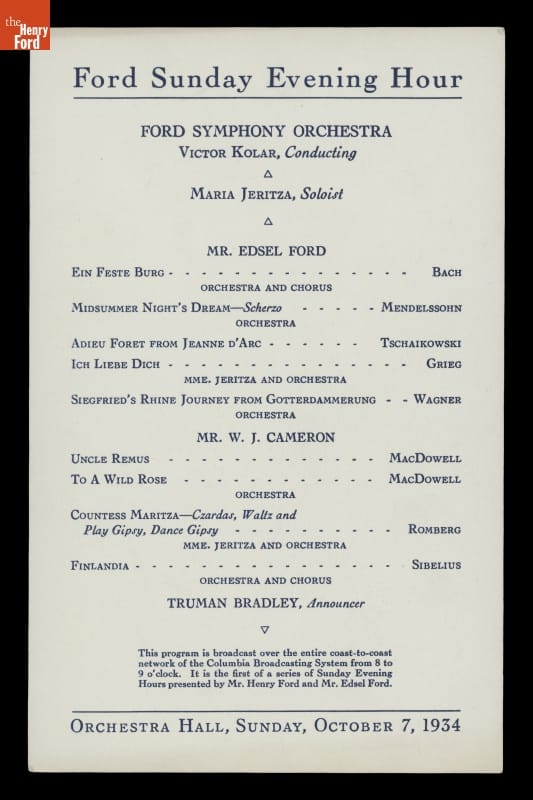
- October 07, 1934
- Collections - Artifact
Program for the First "Ford Sunday Evening Hour" Radio Broadcast, October 7, 1934
- Soloist Rose Bampton Performing on the "Ford Sunday Evening Hour" Program, December 16, 1945 -
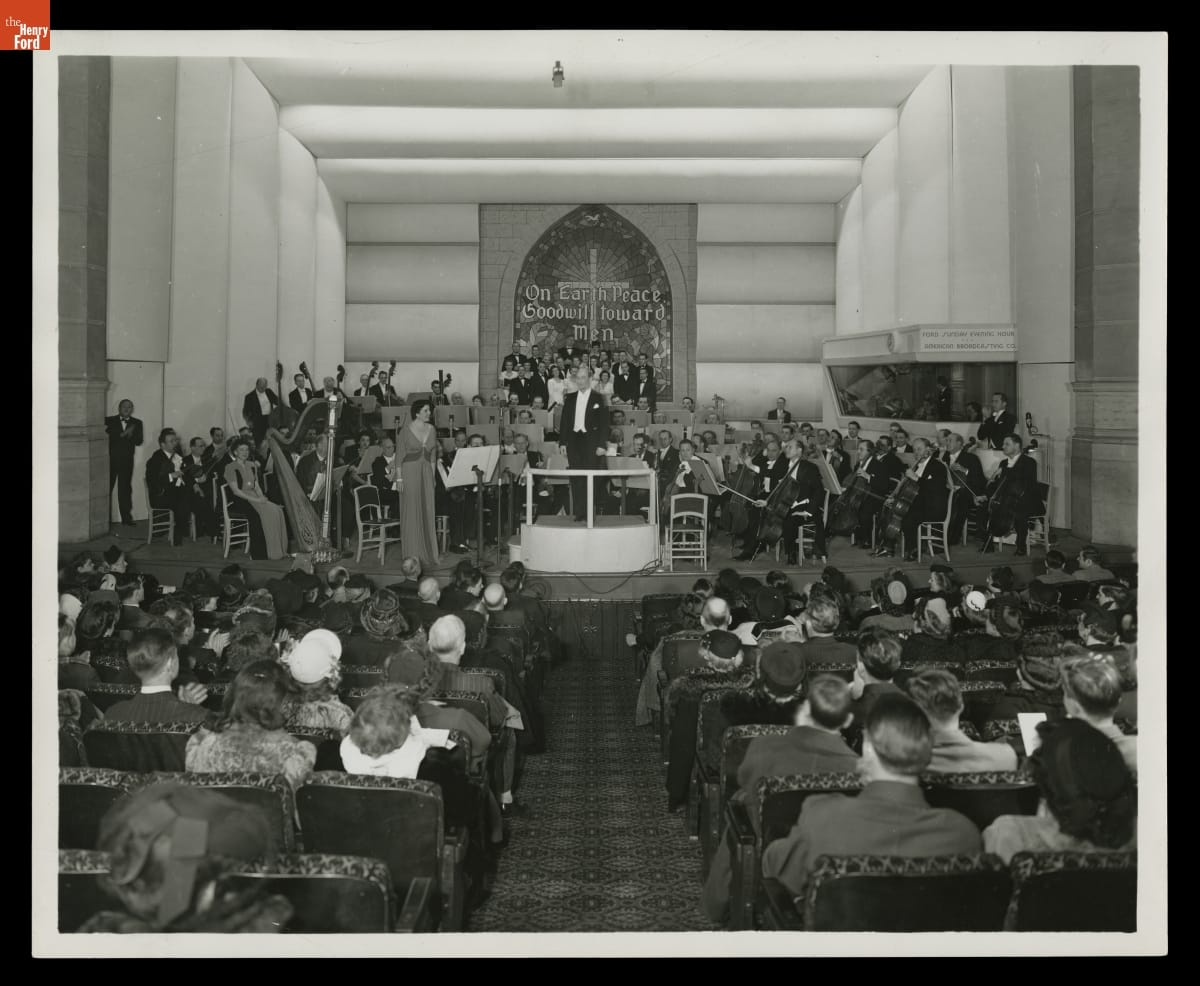
- December 16, 1945
- Collections - Artifact
Soloist Rose Bampton Performing on the "Ford Sunday Evening Hour" Program, December 16, 1945
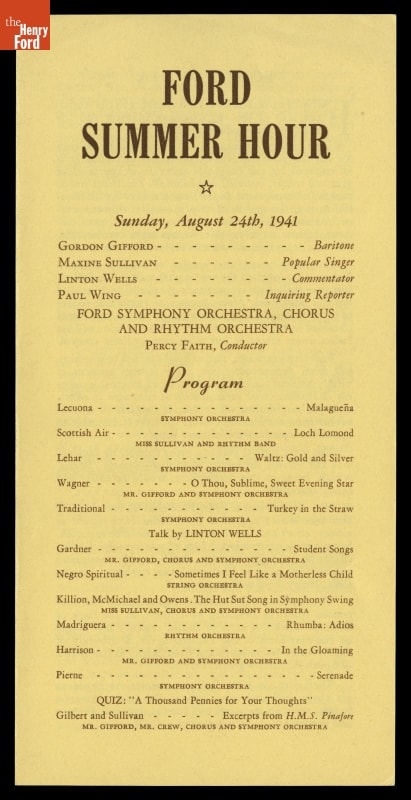
- "Ford Summer Hour," Program for Sunday, August 24, 1941 - The <EM>Ford Summer Hour</EM> was a radio program produced from 1939 to 1941 by Ford Motor Company as a summer replacement for their regular <EM>Ford Sunday Evening Hour</EM>. The broadcast featured popular songs and tunes from musical comedies and operettas. Ford's sponsorship did not allow for commercials, but an intermission included talks on Ford-related subjects, such as the company's rubber plantation in Brazil.
- August 24, 1941
- Collections - Artifact
"Ford Summer Hour," Program for Sunday, August 24, 1941
The Ford Summer Hour was a radio program produced from 1939 to 1941 by Ford Motor Company as a summer replacement for their regular Ford Sunday Evening Hour. The broadcast featured popular songs and tunes from musical comedies and operettas. Ford's sponsorship did not allow for commercials, but an intermission included talks on Ford-related subjects, such as the company's rubber plantation in Brazil.
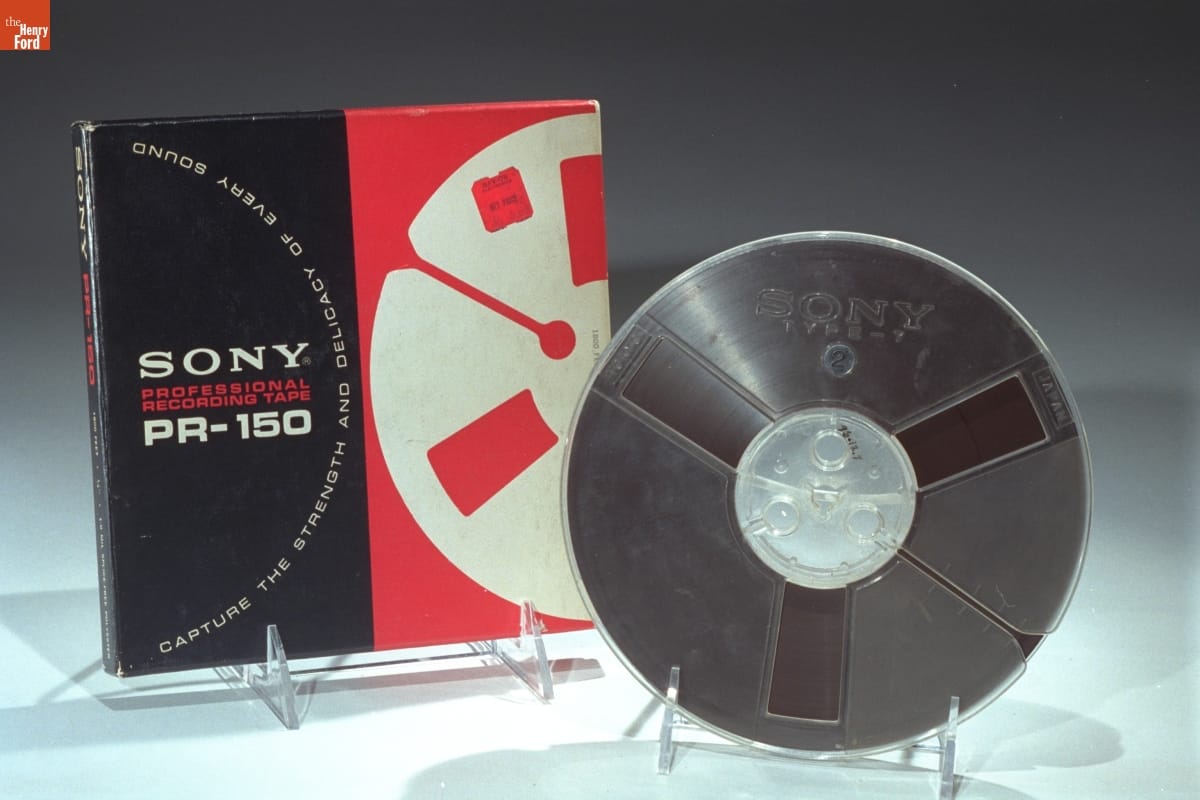
- Tape Recording Featuring "Switched on Bach" and "Beethoven's Symphony No. 4," 1977-1982 - The transformative effects of magnetic tape upon sound, broadcast, and computing history cannot be overstated. In 1930, German companies AEG and BASF revised wire recording technology by using a new material: plastic tape coated with magnetic iron pigment. Its proposed applications were varied, idealistic and practical: recording music and radio, factory automation, data storage, media lending libraries, and many others.
- 1977-1982
- Collections - Artifact
Tape Recording Featuring "Switched on Bach" and "Beethoven's Symphony No. 4," 1977-1982
The transformative effects of magnetic tape upon sound, broadcast, and computing history cannot be overstated. In 1930, German companies AEG and BASF revised wire recording technology by using a new material: plastic tape coated with magnetic iron pigment. Its proposed applications were varied, idealistic and practical: recording music and radio, factory automation, data storage, media lending libraries, and many others.
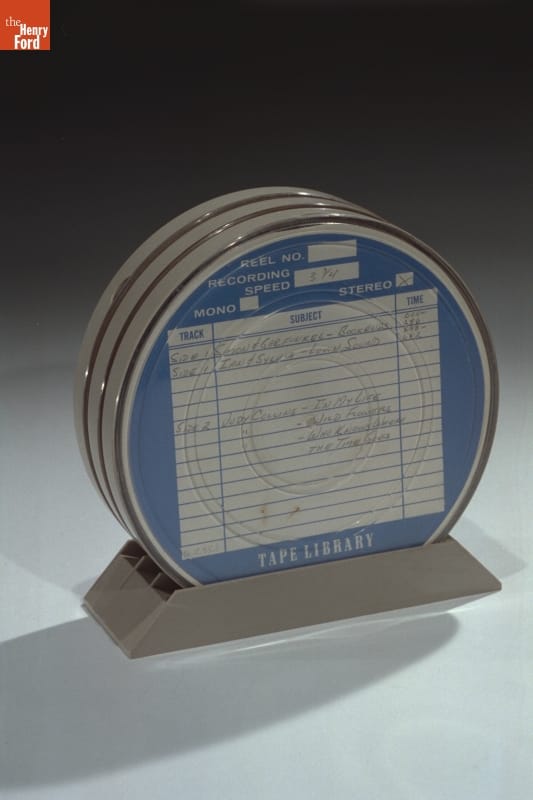
- Radio Shack Reel-to-Reel Audio Tape Library, Recordings of Various Artists, 1970-1980 - The transformative effects of magnetic tape upon sound, broadcast, and computing history cannot be overstated. In 1930, German companies AEG and BASF revised wire recording technology by using a new material: plastic tape coated with magnetic iron pigment. Its proposed applications were varied, idealistic and practical: recording music and radio, factory automation, data storage, media lending libraries, and many others.
- 1970-1980
- Collections - Artifact
Radio Shack Reel-to-Reel Audio Tape Library, Recordings of Various Artists, 1970-1980
The transformative effects of magnetic tape upon sound, broadcast, and computing history cannot be overstated. In 1930, German companies AEG and BASF revised wire recording technology by using a new material: plastic tape coated with magnetic iron pigment. Its proposed applications were varied, idealistic and practical: recording music and radio, factory automation, data storage, media lending libraries, and many others.