
Search
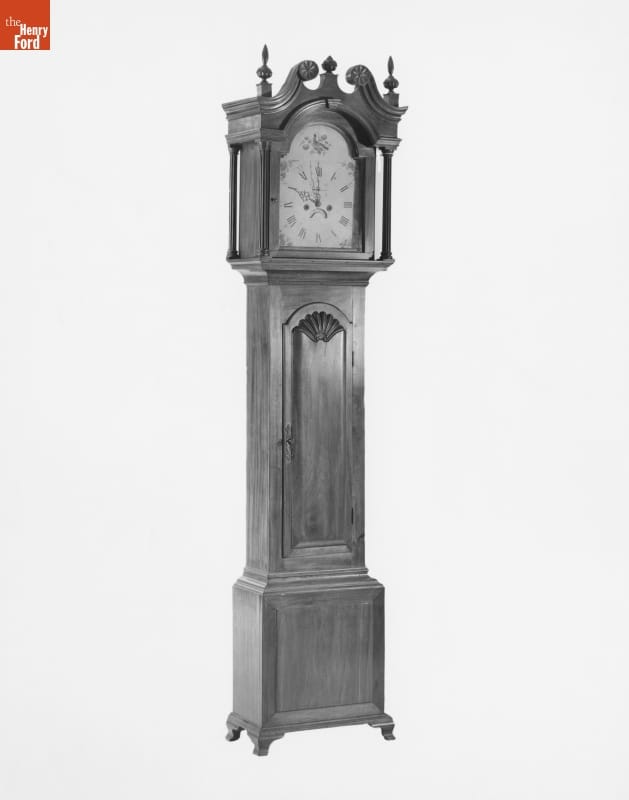
- Tall Case Clock, Made by John Goddard, 1770-1785 - This 18th-century, tall case clock was made by John Goddard, a renowned Newport, Rhode Island, cabinetmaker. Goddard used a cherry-stained mahogany case to house the English-made clockworks. Its shell motif, seen adorning the case's door front, was a favorite ornament in Goddard's furniture and points to its Newport origins. This piece probably graced a wealthy Rhode Island merchant's residence.
- 1770-1785
- Collections - Artifact
Tall Case Clock, Made by John Goddard, 1770-1785
This 18th-century, tall case clock was made by John Goddard, a renowned Newport, Rhode Island, cabinetmaker. Goddard used a cherry-stained mahogany case to house the English-made clockworks. Its shell motif, seen adorning the case's door front, was a favorite ornament in Goddard's furniture and points to its Newport origins. This piece probably graced a wealthy Rhode Island merchant's residence.
- Advertising Poster for McDonald's Restaurants, "Time to Eat," 1989 -
- 1989
- Collections - Artifact
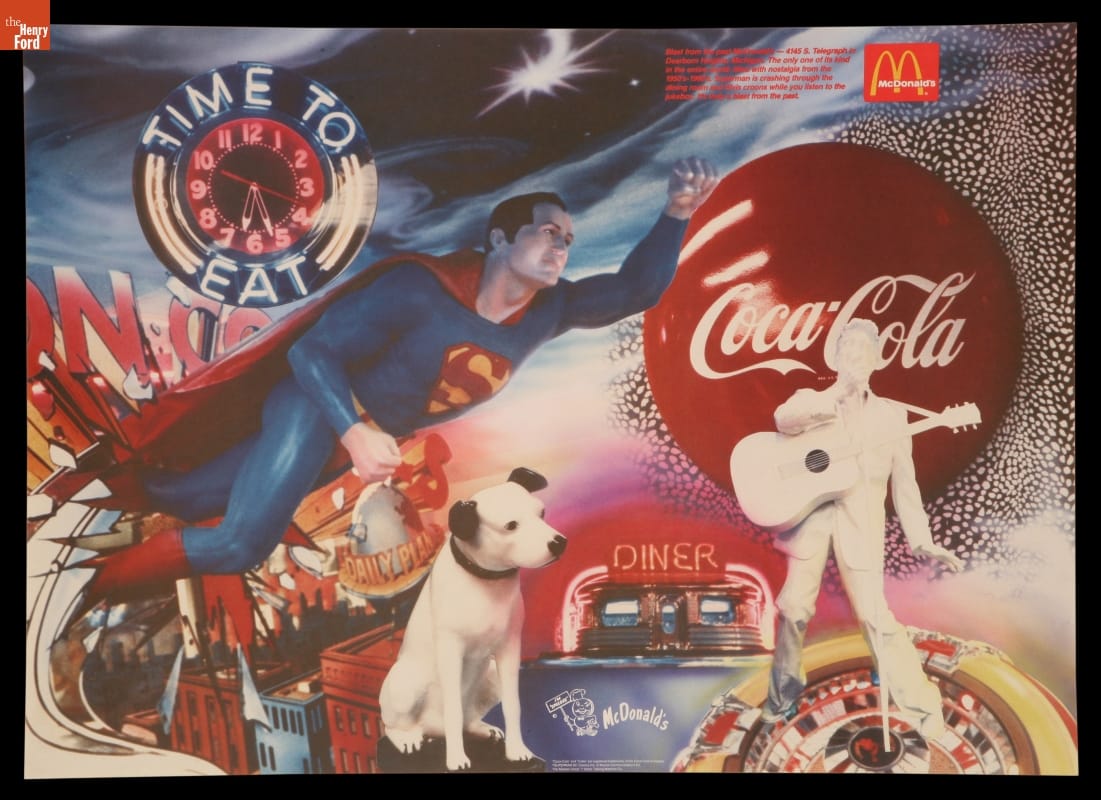
Advertising Poster for McDonald's Restaurants, "Time to Eat," 1989
- Fog City Diner Sign and "Don't Worry" Clock, San Francisco, California, February 1986 -
- February 01, 1986
- Collections - Artifact
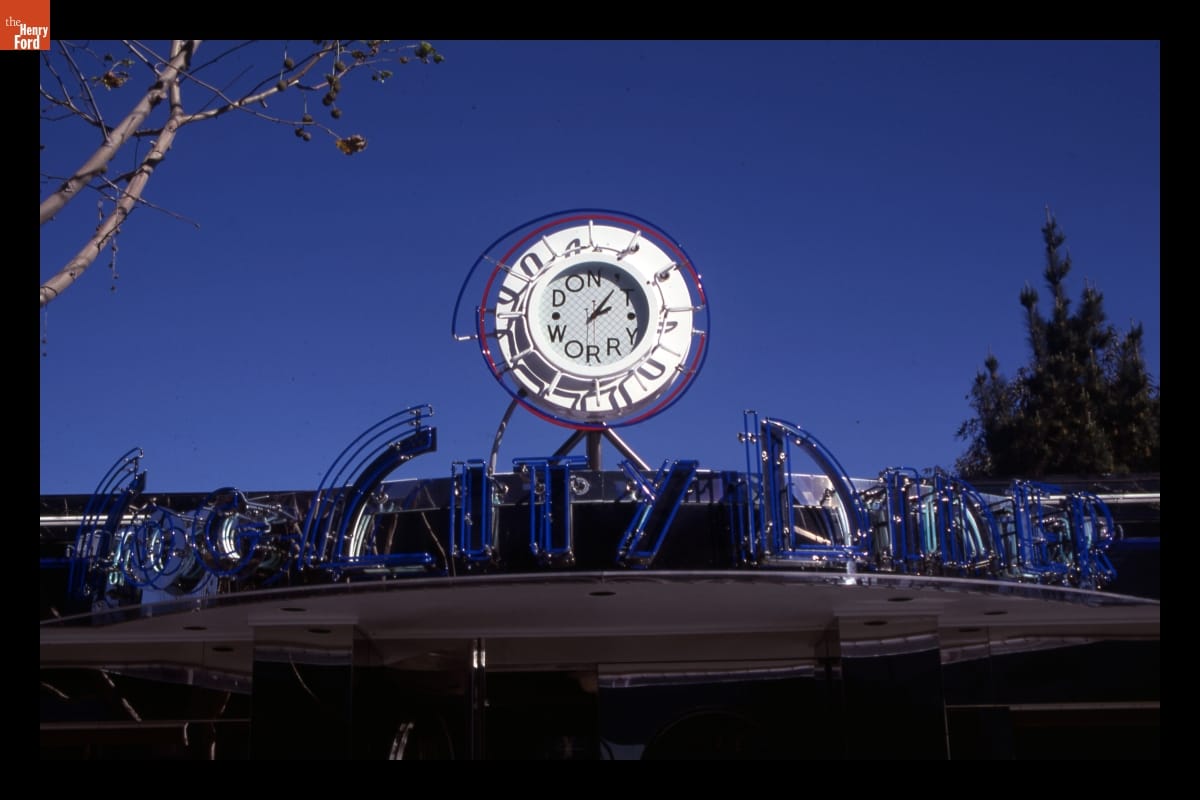
Fog City Diner Sign and "Don't Worry" Clock, San Francisco, California, February 1986
- Tall Clock, Used by the Wharton Family, 1780-1794 -
- 1780-1794
- Collections - Artifact
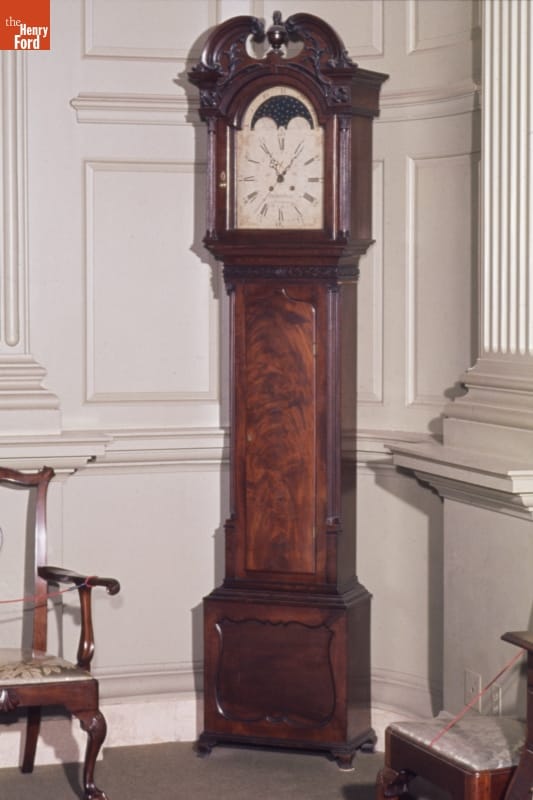
Tall Clock, Used by the Wharton Family, 1780-1794
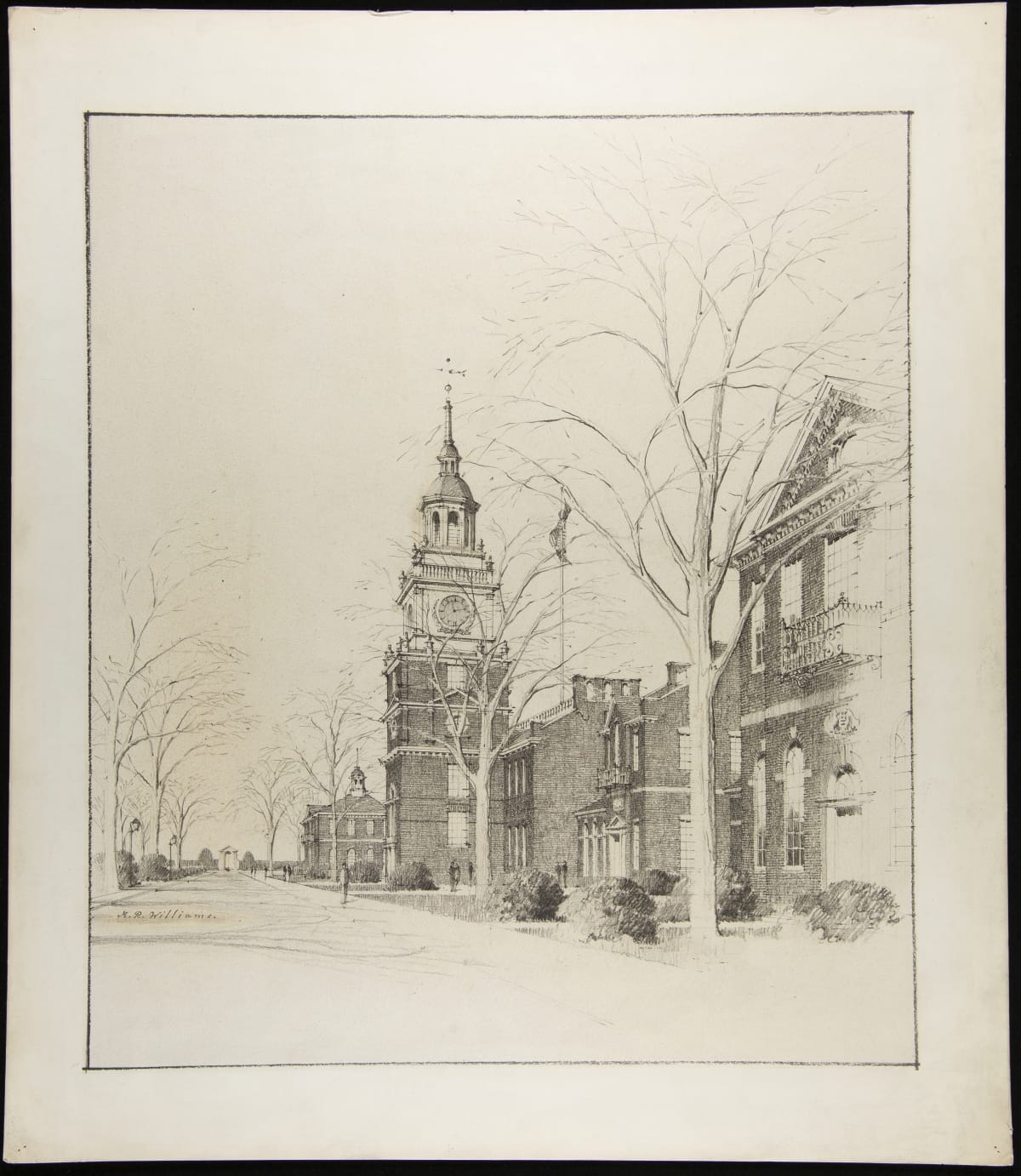
- Henry Ford Museum, East Facade, Clock Tower, 1928 - One of a series of views of the Museum as built, this black and white drawing shows the front façade of the Museum. A reproduction of Independence Hall is at the center, but the entire building was reproduced in reverse, with the clock tower as the focal point. This concession to history serves to provide balance to the extended series of buildings which comprise the front of the Museum.
- 1928
- Collections - Artifact
Henry Ford Museum, East Facade, Clock Tower, 1928
One of a series of views of the Museum as built, this black and white drawing shows the front façade of the Museum. A reproduction of Independence Hall is at the center, but the entire building was reproduced in reverse, with the clock tower as the focal point. This concession to history serves to provide balance to the extended series of buildings which comprise the front of the Museum.
- Logo for Henry Ford Museum & Greenfield Village, 1988 -
- 1988
- Collections - Artifact
Logo for Henry Ford Museum & Greenfield Village, 1988
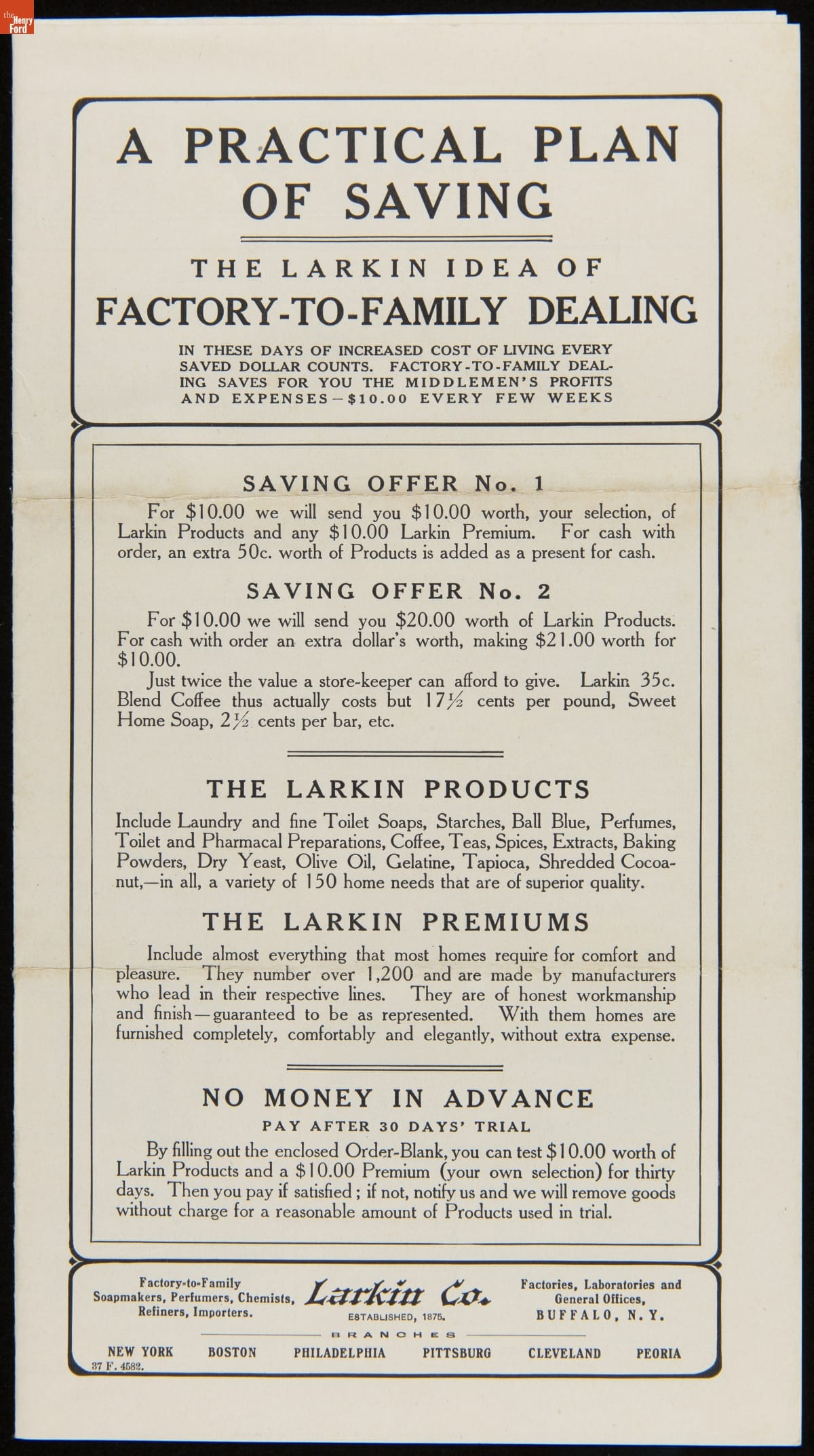
- Larkin Company Trade Catalog, "A Practical Plan of Saving: The Larkin Idea of Factory-To-Family Dealing," circa 1906 - John D. Larkin established a soap manufacturing company in 1875. He hired his brother-in-law, Elbert Hubbard, as a salesman. Hubbard developed "The Larkin Idea," a plan that sold goods directly to consumers through mail-order catalogs and offered incentivizing giveaways. It was a success. By the early 1900s, Larkin's catalogs contained pages of products and even more pages of premiums from which customers could choose.
- circa 1906
- Collections - Artifact
Larkin Company Trade Catalog, "A Practical Plan of Saving: The Larkin Idea of Factory-To-Family Dealing," circa 1906
John D. Larkin established a soap manufacturing company in 1875. He hired his brother-in-law, Elbert Hubbard, as a salesman. Hubbard developed "The Larkin Idea," a plan that sold goods directly to consumers through mail-order catalogs and offered incentivizing giveaways. It was a success. By the early 1900s, Larkin's catalogs contained pages of products and even more pages of premiums from which customers could choose.
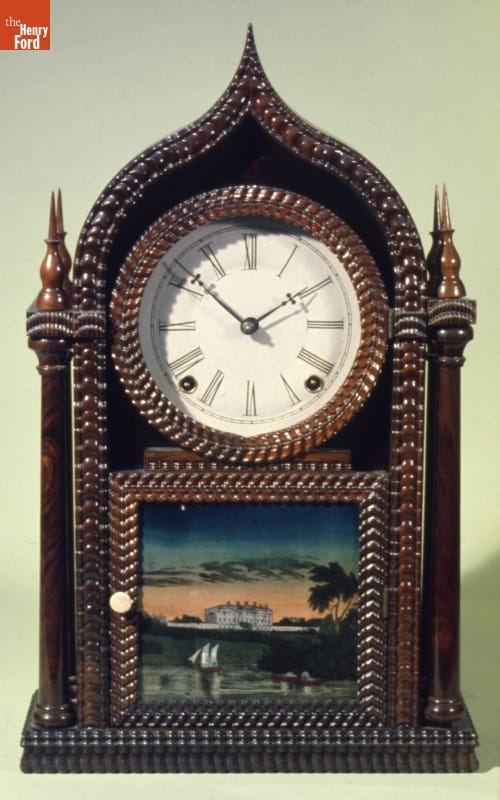
- Shelf Clock, 1849-1853 -
- 1849-1853
- Collections - Artifact
Shelf Clock, 1849-1853
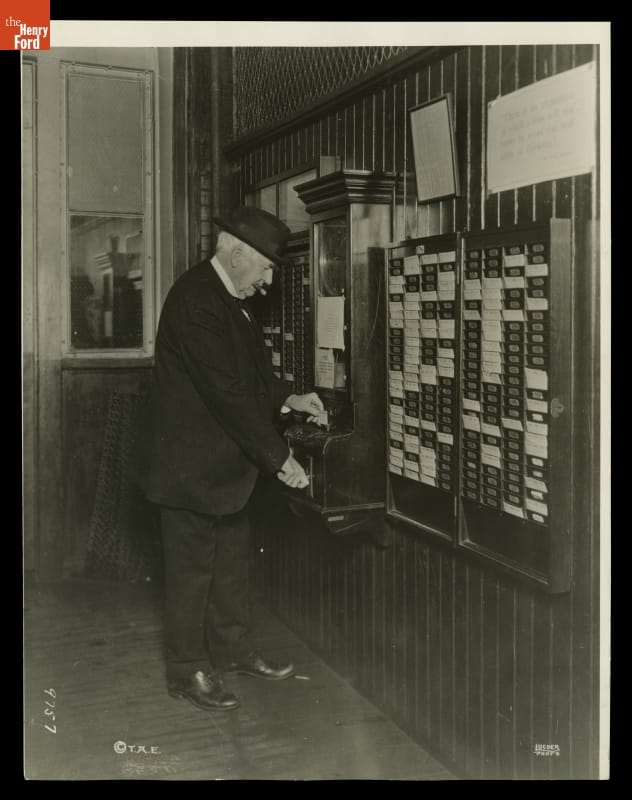
- Thomas Edison Punching the Time Clock on His 74th Birthday, February 11, 1921 -
- February 11, 1921
- Collections - Artifact
Thomas Edison Punching the Time Clock on His 74th Birthday, February 11, 1921
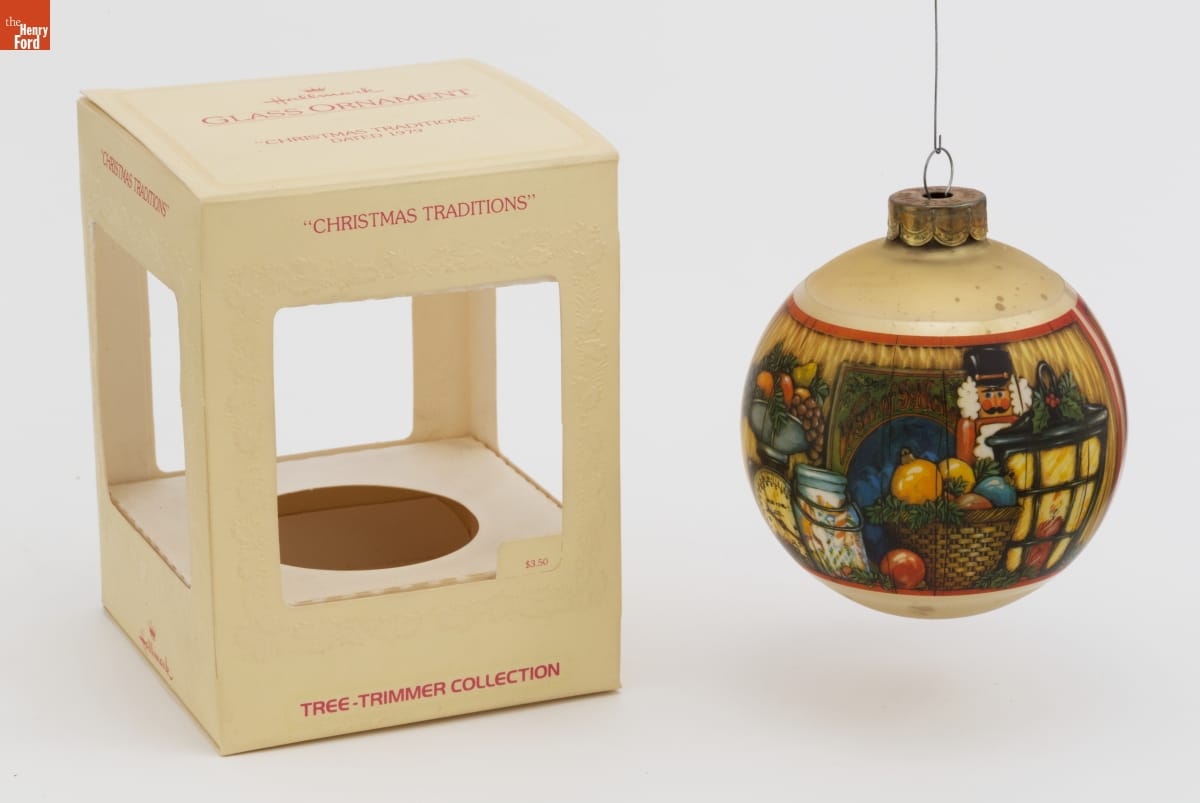
- Hallmark "Christmas Traditions" Christmas Ornament, 1979 - Already known for greeting cards, Hallmark introduced a line of Christmas ornaments in 1973. The company's annual release of an increasing array of ornaments revolutionized Christmas decorating, appealing to customers' interest in marking memories and milestones as well as expressing one's personality and unique tastes.
- 1979
- Collections - Artifact
Hallmark "Christmas Traditions" Christmas Ornament, 1979
Already known for greeting cards, Hallmark introduced a line of Christmas ornaments in 1973. The company's annual release of an increasing array of ornaments revolutionized Christmas decorating, appealing to customers' interest in marking memories and milestones as well as expressing one's personality and unique tastes.