
Search
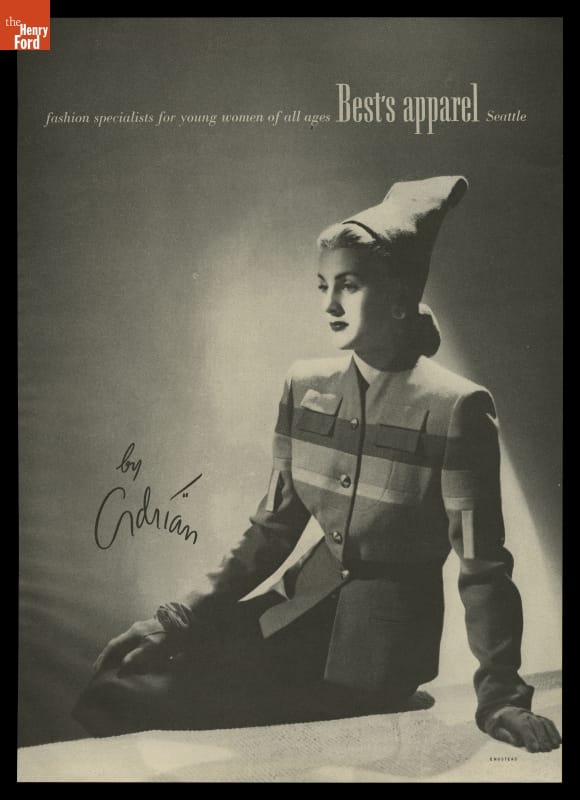
- Advertisement for Best's Apparel, "Fashion Specialists for Young Women of All Ages/Best's Apparel/Seattle," 1945 -
- 1945
- Collections - Artifact
Advertisement for Best's Apparel, "Fashion Specialists for Young Women of All Ages/Best's Apparel/Seattle," 1945
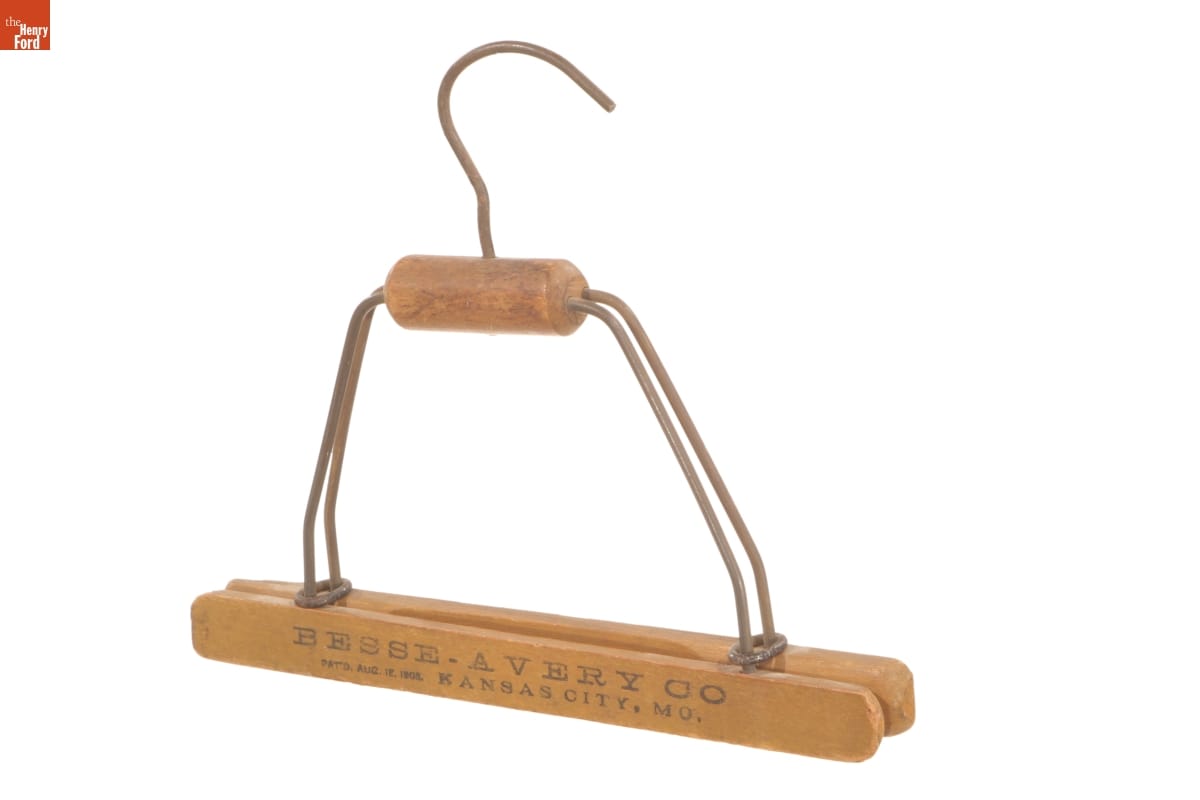
- Clothes Hanger, 1910-1920 -
- 1910-1920
- Collections - Artifact
Clothes Hanger, 1910-1920
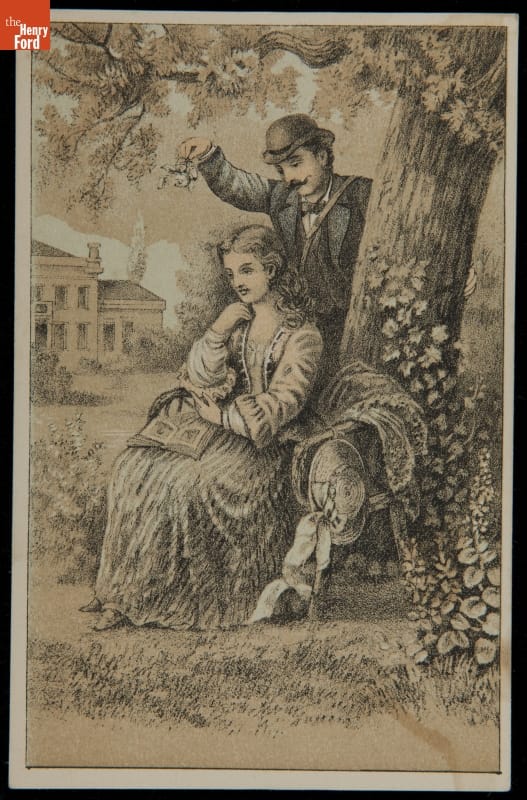
- Trade Card for G.H. Gates & Co., "Remember the Cold and Chilly November" 1873-1885 - In the last third of the nineteenth century, an unprecedented variety of consumer goods and services flooded the American market. Advertisers bombarded potential customers with trade cards. Americans enjoyed and saved the often illustrated little advertisements found in product packages or distributed by local merchants. Many survive as historical records of commercialism in the United States.
- 1873-1885
- Collections - Artifact
Trade Card for G.H. Gates & Co., "Remember the Cold and Chilly November" 1873-1885
In the last third of the nineteenth century, an unprecedented variety of consumer goods and services flooded the American market. Advertisers bombarded potential customers with trade cards. Americans enjoyed and saved the often illustrated little advertisements found in product packages or distributed by local merchants. Many survive as historical records of commercialism in the United States.
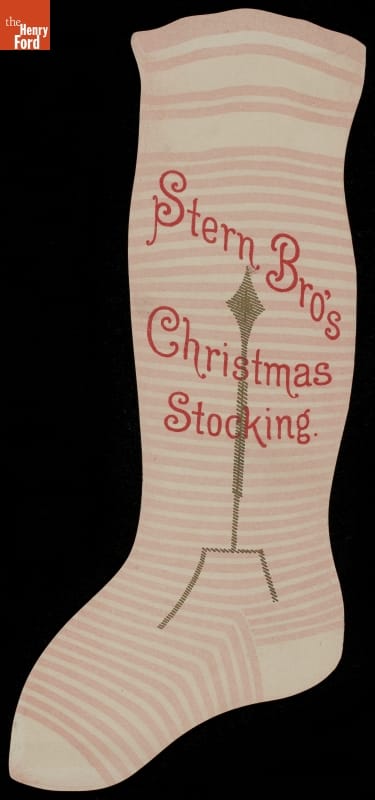
- Trade Card for Ladies' Goods, Stern Brothers, 1870-1900 - In the last third of the nineteenth century, an unprecedented variety of consumer goods and services flooded the American market. Advertisers bombarded potential customers with trade cards. Americans enjoyed and saved the often illustrated little advertisements found in product packages or distributed by local merchants. Many survive as historical records of commercialism in the United States.
- 1870-1900
- Collections - Artifact
Trade Card for Ladies' Goods, Stern Brothers, 1870-1900
In the last third of the nineteenth century, an unprecedented variety of consumer goods and services flooded the American market. Advertisers bombarded potential customers with trade cards. Americans enjoyed and saved the often illustrated little advertisements found in product packages or distributed by local merchants. Many survive as historical records of commercialism in the United States.
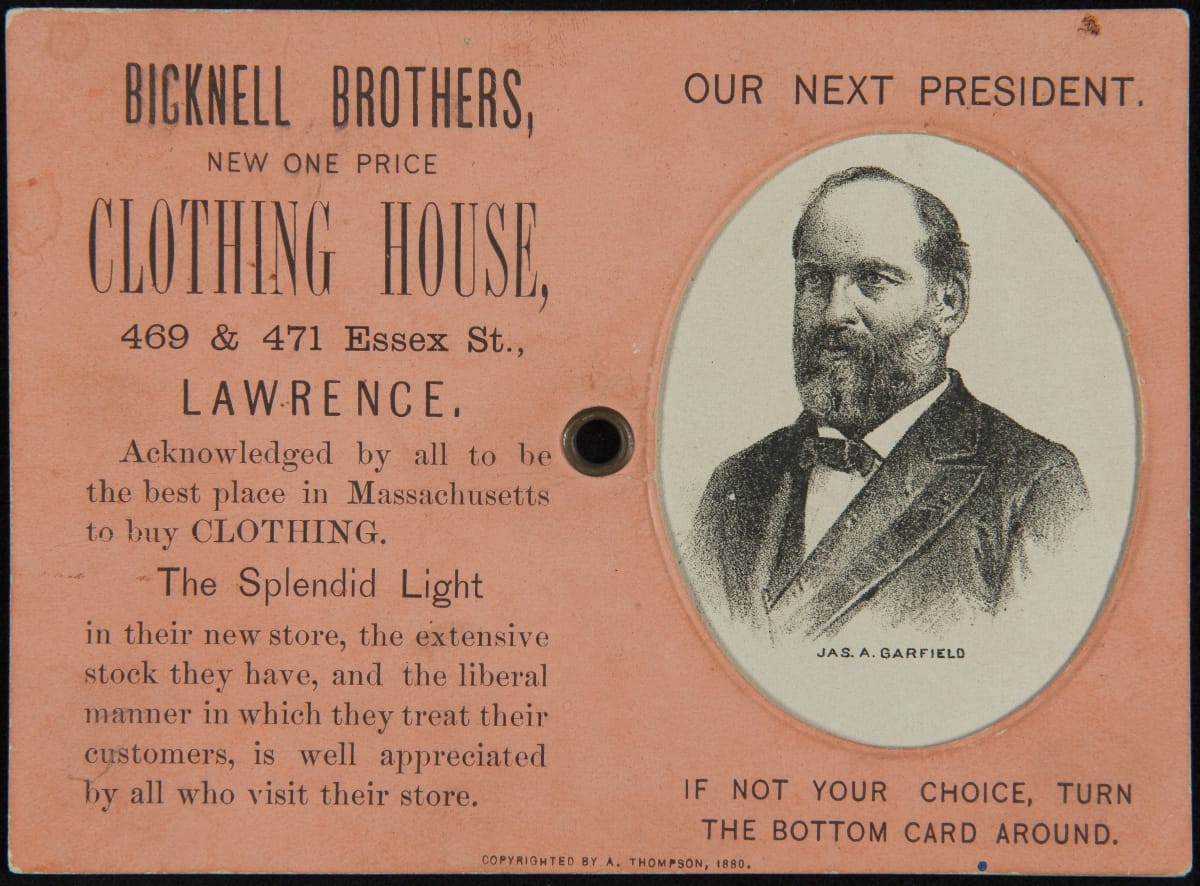
- Trade Card for Bicknell Brothers Clothing House, "Our Next President," 1880 - The 1880 U.S. Presidential election pitted Republican James Garfield against Democrat Winfield Scott Hancock. More than nine million Americans--a high turnout among eligible voters--cast ballots in the November election. In the end, fewer than 8,000 votes separated the two candidates. And while both Garfield and Hancock each captured 19 states, the electoral count--like the popular vote--favored Garfield.
- 1880
- Collections - Artifact
Trade Card for Bicknell Brothers Clothing House, "Our Next President," 1880
The 1880 U.S. Presidential election pitted Republican James Garfield against Democrat Winfield Scott Hancock. More than nine million Americans--a high turnout among eligible voters--cast ballots in the November election. In the end, fewer than 8,000 votes separated the two candidates. And while both Garfield and Hancock each captured 19 states, the electoral count--like the popular vote--favored Garfield.
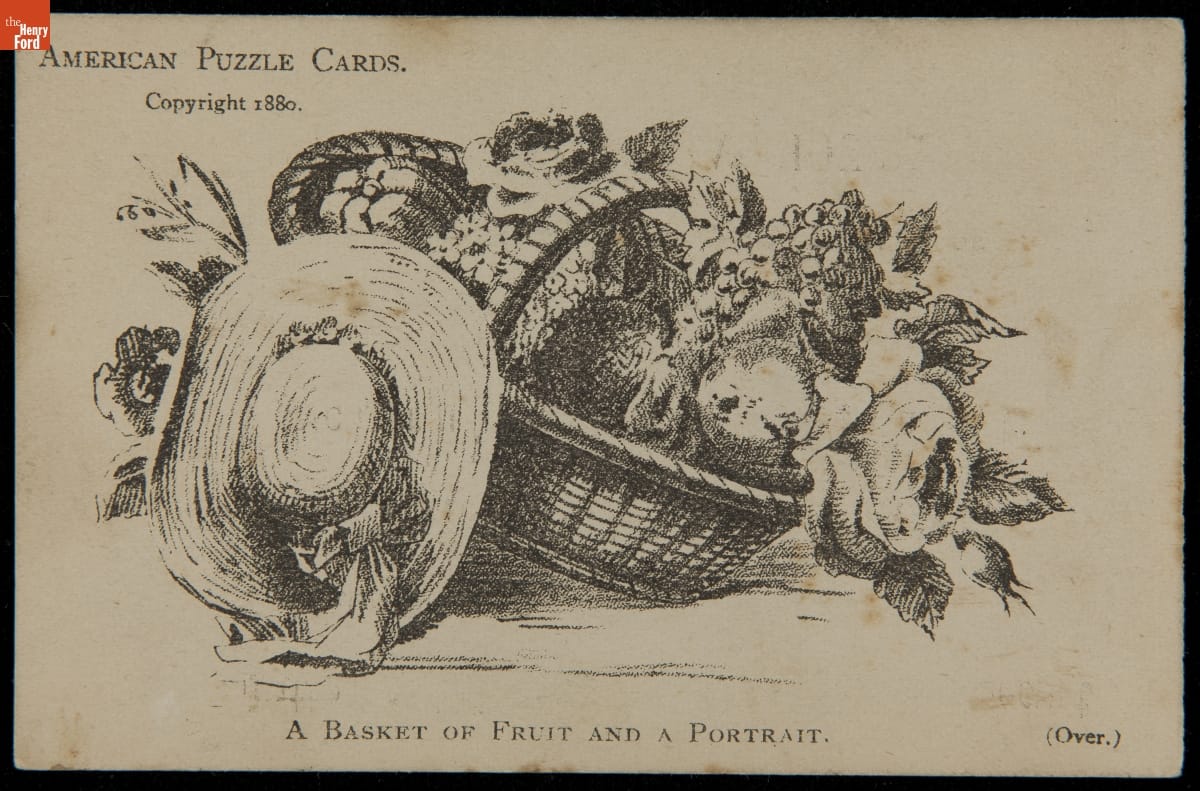
- Trade Card for H. C. Tennant, The Leading Clothier of Westfield, Massachusetts, 1880 - In the last third of the nineteenth century, an unprecedented variety of consumer goods flooded the American market. Some enterprising advertisers sought to distinguish their products from the competition, distributing trade cards that incorporated a puzzle or game. Americans enjoyed and often saved the popular little advertisements, which survive as historical records of consumerism in the United States.
- 1880
- Collections - Artifact
Trade Card for H. C. Tennant, The Leading Clothier of Westfield, Massachusetts, 1880
In the last third of the nineteenth century, an unprecedented variety of consumer goods flooded the American market. Some enterprising advertisers sought to distinguish their products from the competition, distributing trade cards that incorporated a puzzle or game. Americans enjoyed and often saved the popular little advertisements, which survive as historical records of consumerism in the United States.
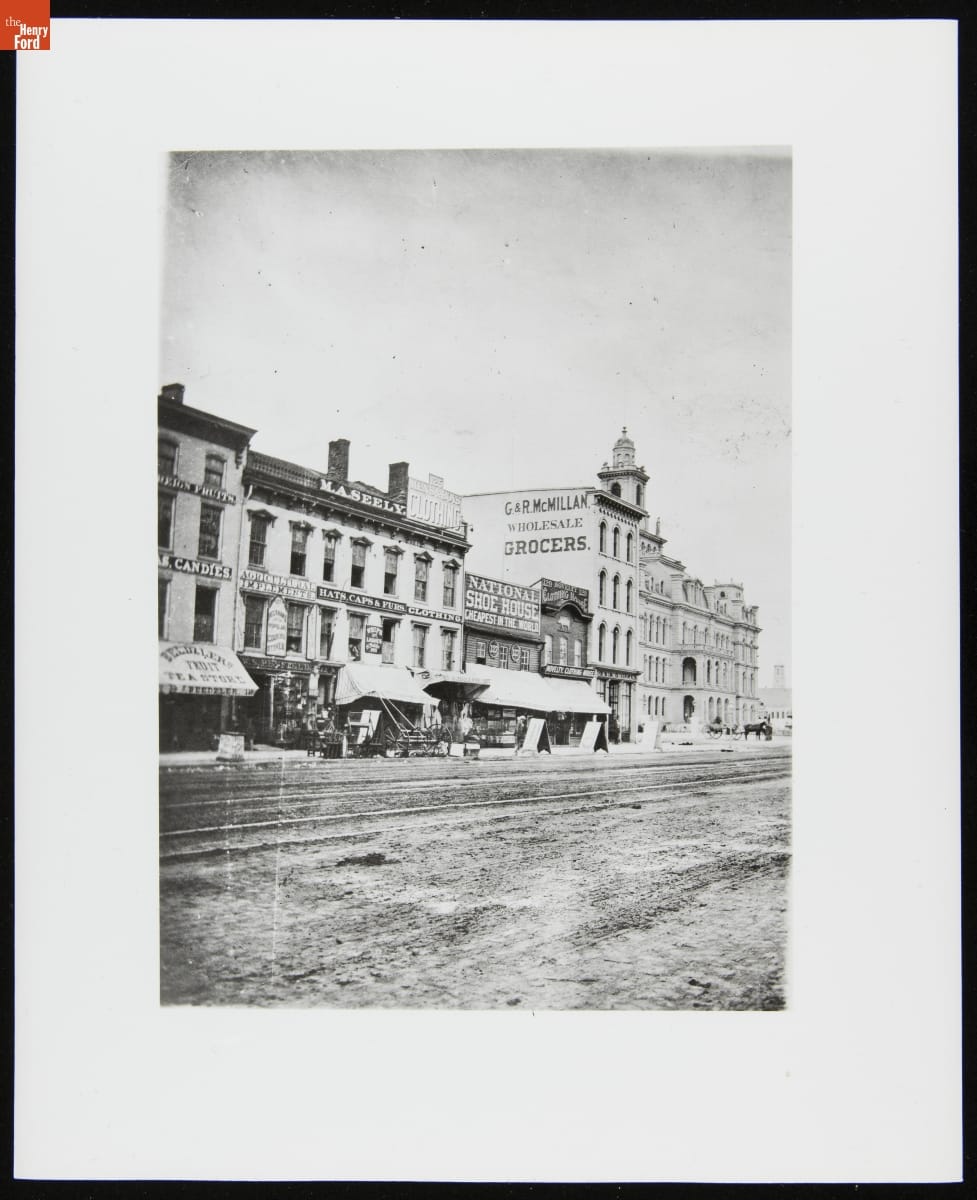
- Businesses along Woodward Avenue, Detroit, Michigan, 1871 -
- 1871
- Collections - Artifact
Businesses along Woodward Avenue, Detroit, Michigan, 1871
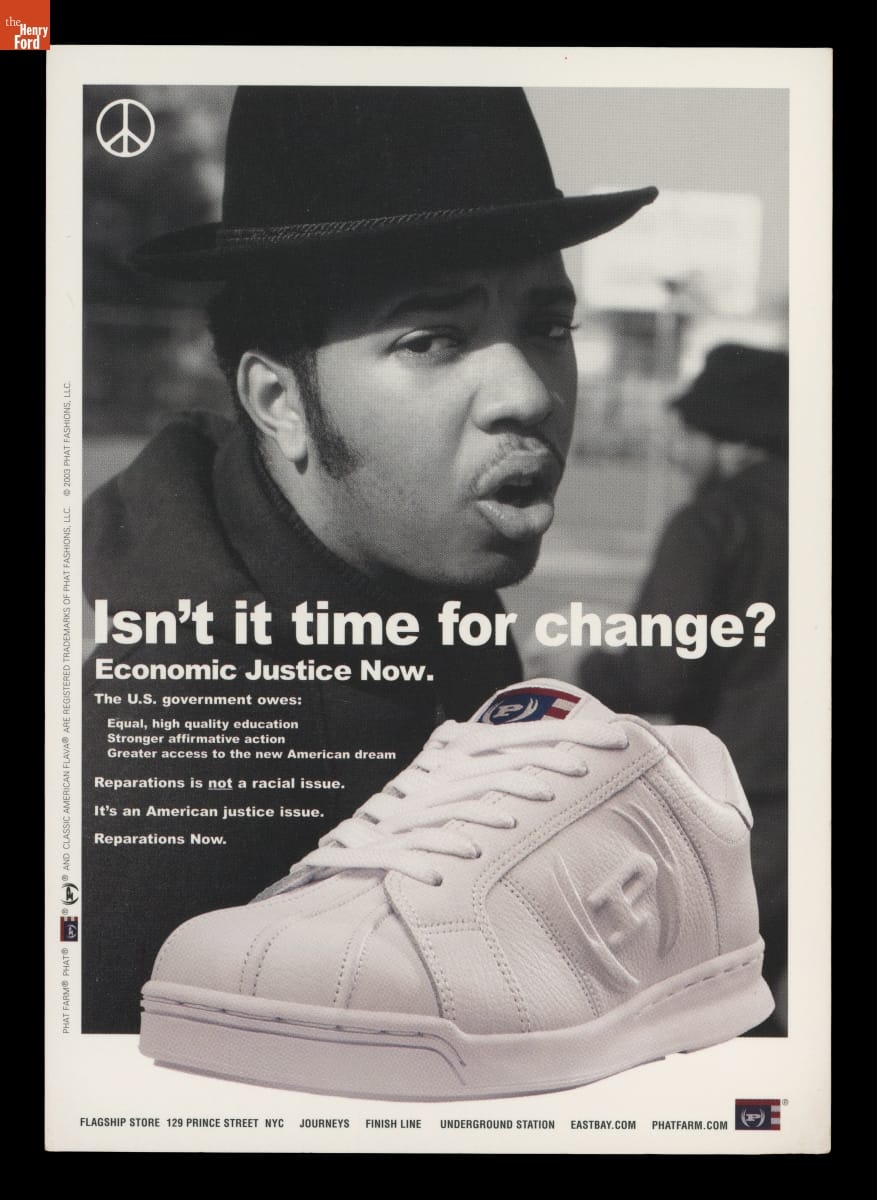
- "Isn't it Time for Change?," circa 1993 -
- circa 1993
- Collections - Artifact
"Isn't it Time for Change?," circa 1993
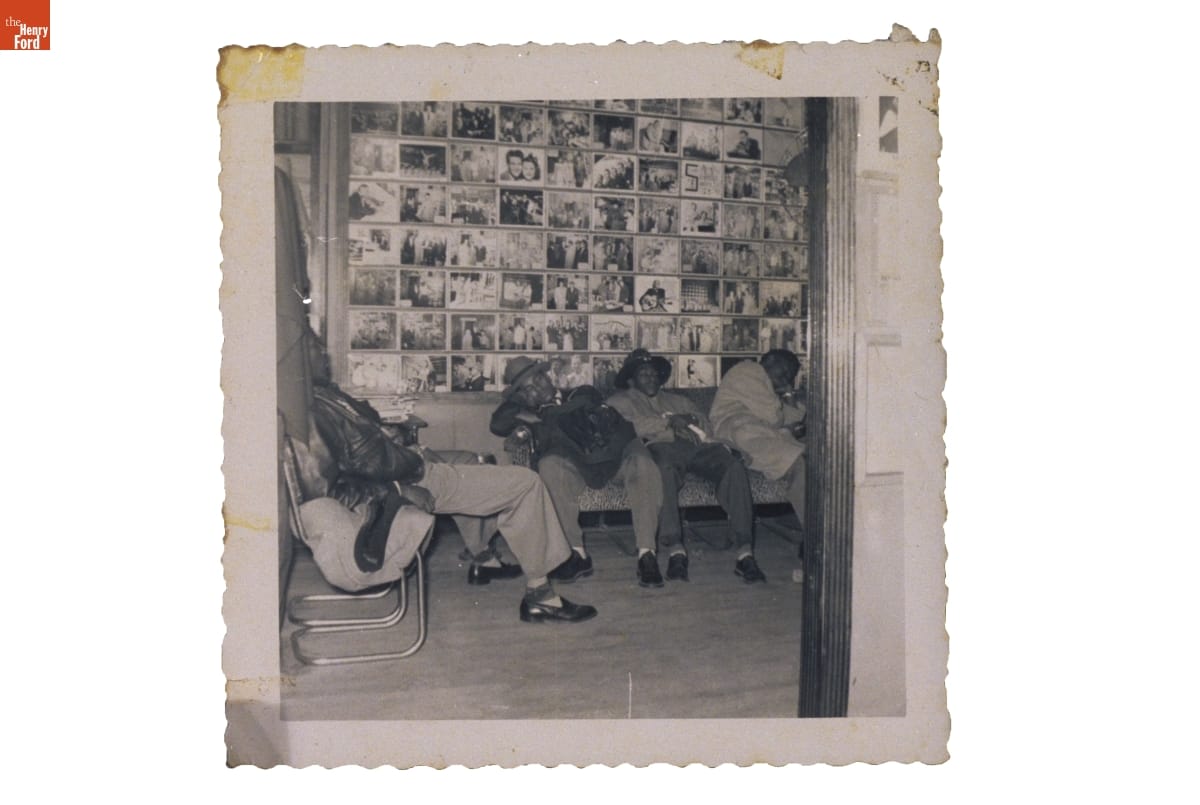
- The Orioles Music Group inside Fox Brothers Clothier, Chicago, Illinois, 1942 - Fox Brothers Clothier in Chicago outfitted many Black American entertainers. Shop owner Harold Fox (1910-1996) had previously worked as an itinerant musician. He used his connections to attract a high-profile clientele, which included artists such as Cab Calloway, Louis Armstrong, and Bill "Bojangles" Robison. This photograph shows The Orioles, a pioneering Rhythm and Blues vocal group, at his shop.
- 1942
- Collections - Artifact
The Orioles Music Group inside Fox Brothers Clothier, Chicago, Illinois, 1942
Fox Brothers Clothier in Chicago outfitted many Black American entertainers. Shop owner Harold Fox (1910-1996) had previously worked as an itinerant musician. He used his connections to attract a high-profile clientele, which included artists such as Cab Calloway, Louis Armstrong, and Bill "Bojangles" Robison. This photograph shows The Orioles, a pioneering Rhythm and Blues vocal group, at his shop.
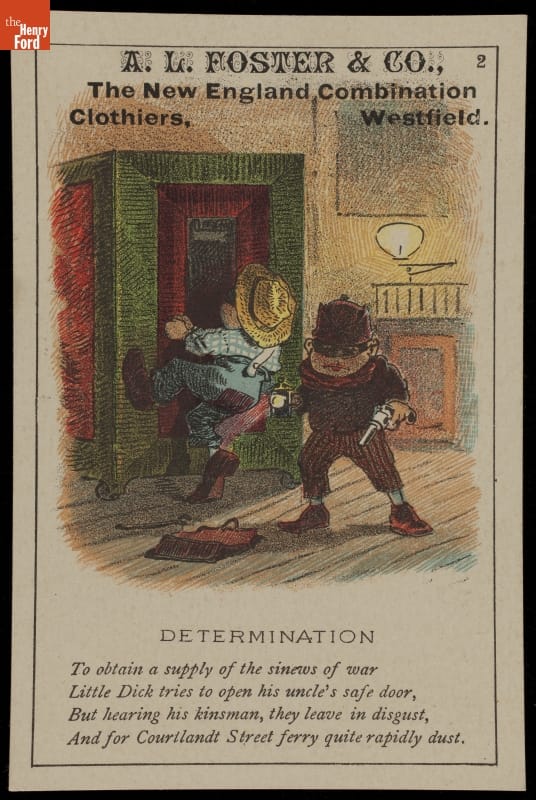
- Trade Card for Men's and Children's Suits, A. L. Foster & Co., 1880-1900 - In the last third of the nineteenth century, an unprecedented variety of consumer goods and services flooded the American market. Advertisers, armed with new methods of color printing, bombarded potential customers with trade cards. Americans enjoyed and often saved the vibrant little advertisements found in product packages or distributed by local merchants. Many survive as historical records of commercialism in the United States.
- 1880-1900
- Collections - Artifact
Trade Card for Men's and Children's Suits, A. L. Foster & Co., 1880-1900
In the last third of the nineteenth century, an unprecedented variety of consumer goods and services flooded the American market. Advertisers, armed with new methods of color printing, bombarded potential customers with trade cards. Americans enjoyed and often saved the vibrant little advertisements found in product packages or distributed by local merchants. Many survive as historical records of commercialism in the United States.