
Search
- Waybill for Stroudsburg-New York Line Stagecoach, 1850 - Waybills helped nineteenth-century stage lines keep track of fares and passengers. For each journey, company agents would fill out passenger names, destinations, number of seats and collected fares. Additional notes sometimes listed types of baggage or other special instructions. This waybill documents a trip from Stroudsburg to New York in March 1850.
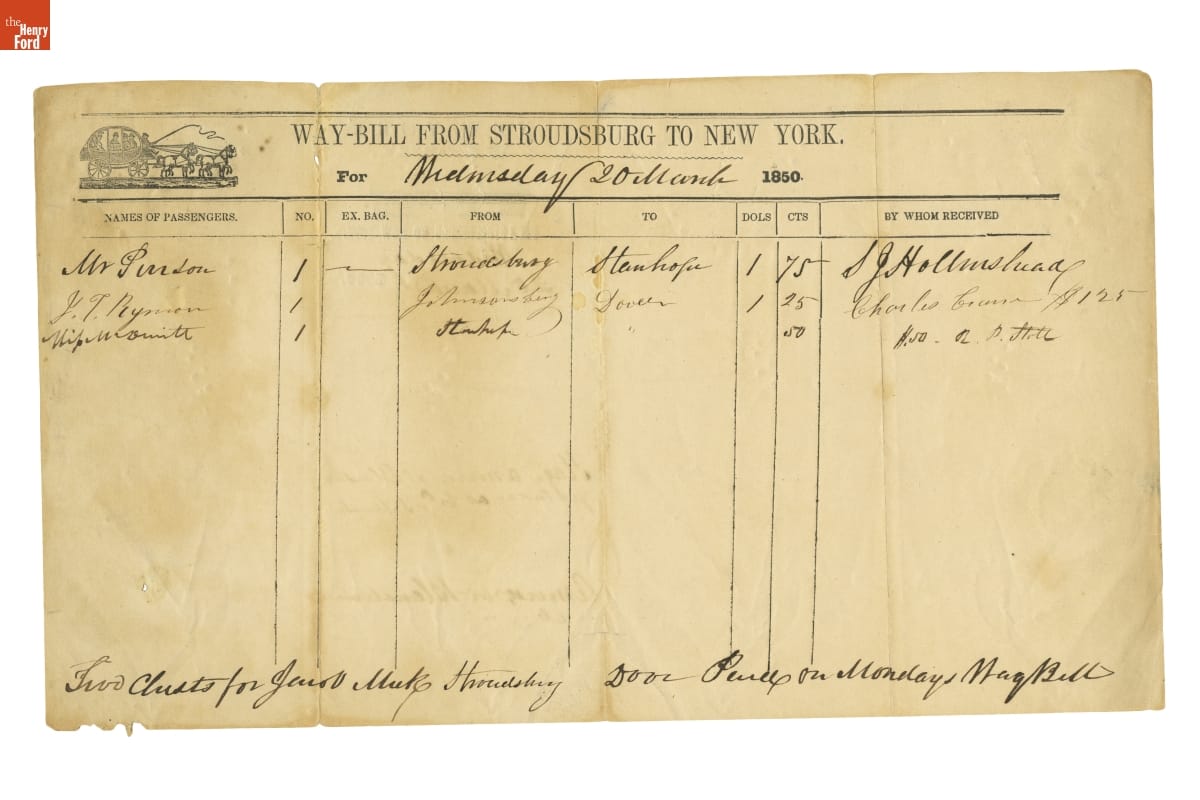
- March 20, 1850
- Collections - Artifact
Waybill for Stroudsburg-New York Line Stagecoach, 1850
Waybills helped nineteenth-century stage lines keep track of fares and passengers. For each journey, company agents would fill out passenger names, destinations, number of seats and collected fares. Additional notes sometimes listed types of baggage or other special instructions. This waybill documents a trip from Stroudsburg to New York in March 1850.
- "Union Line Waybill, from Cleaveland to Erie," Ohio, 1826 - Waybills helped nineteenth-century stage lines keep track of fares and passengers. For each journey, company agents would fill out passenger names, destinations, number of seats and collected fares. Additional notes sometimes listed types of baggage or other special instructions. This waybill documents the trip from "Cleaveland to Erie" on July 18, 1826.
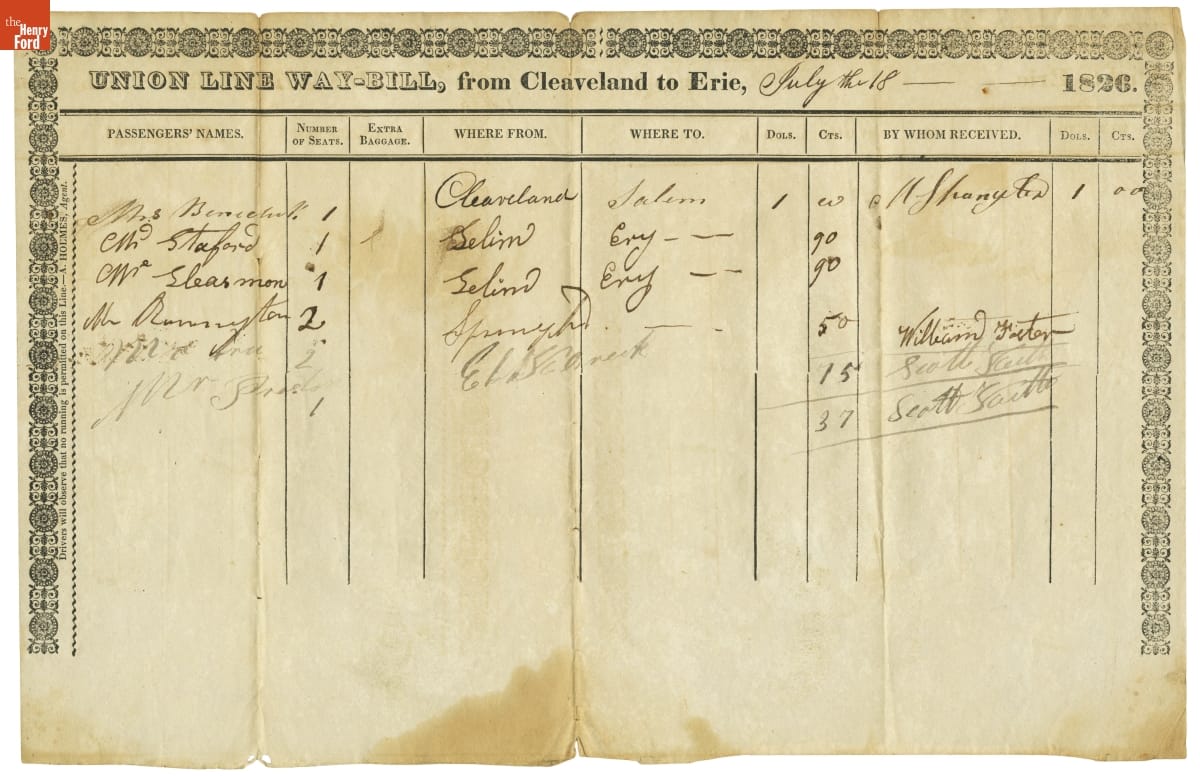
- July 18, 1826
- Collections - Artifact
"Union Line Waybill, from Cleaveland to Erie," Ohio, 1826
Waybills helped nineteenth-century stage lines keep track of fares and passengers. For each journey, company agents would fill out passenger names, destinations, number of seats and collected fares. Additional notes sometimes listed types of baggage or other special instructions. This waybill documents the trip from "Cleaveland to Erie" on July 18, 1826.
- "Quicksilver Mail," English Stagecoach, Wood Engraving, circa 1840 - Before railroads, long-distance travelers often purchased a ticket and climbed aboard a public coach. They would jostle along rough country roads with mail, freight, and other passengers "in stages," stopping every few hours to change horses.
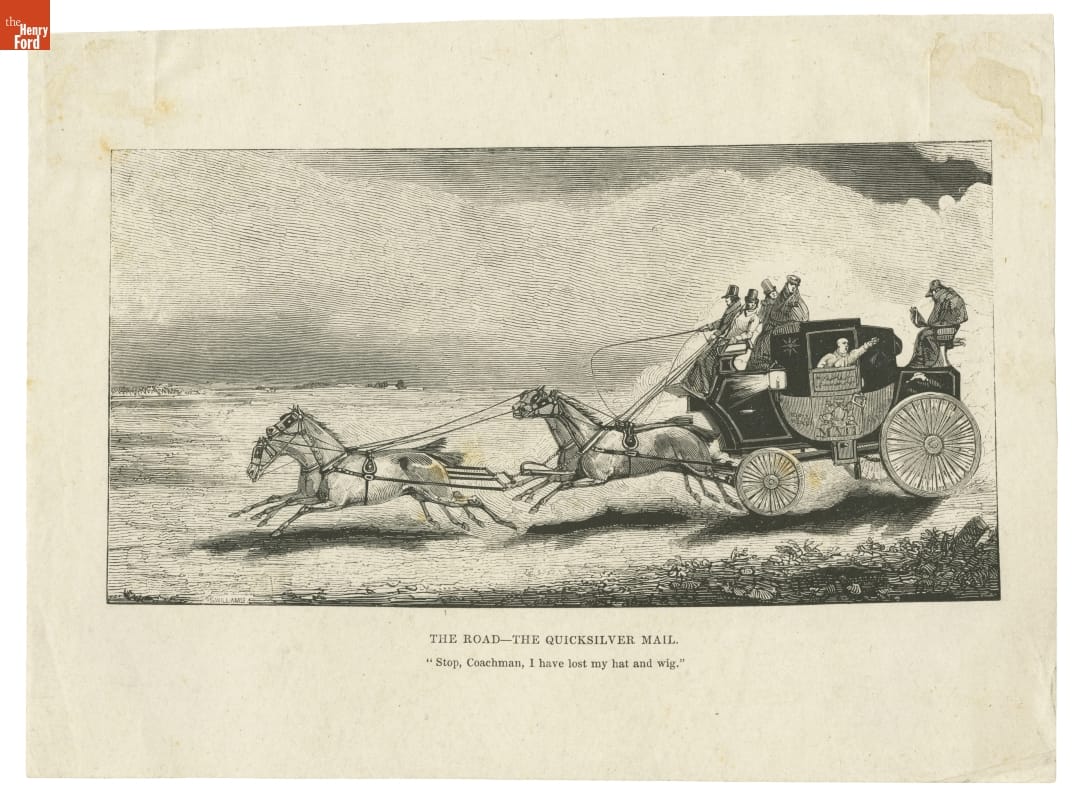
- circa 1840
- Collections - Artifact
"Quicksilver Mail," English Stagecoach, Wood Engraving, circa 1840
Before railroads, long-distance travelers often purchased a ticket and climbed aboard a public coach. They would jostle along rough country roads with mail, freight, and other passengers "in stages," stopping every few hours to change horses.
- View of an Early Flat-Topped Coach, 1832-1835 - This wood engraving, probably completed by artist Tudor Horton, depicts a very early flat-topped coach traveling along a road. Stagecoach companies commonly used the flat-topped coach to transport passengers between "stages" or stations before the development of the vehicle known as the "Concord Coach" took precedence.
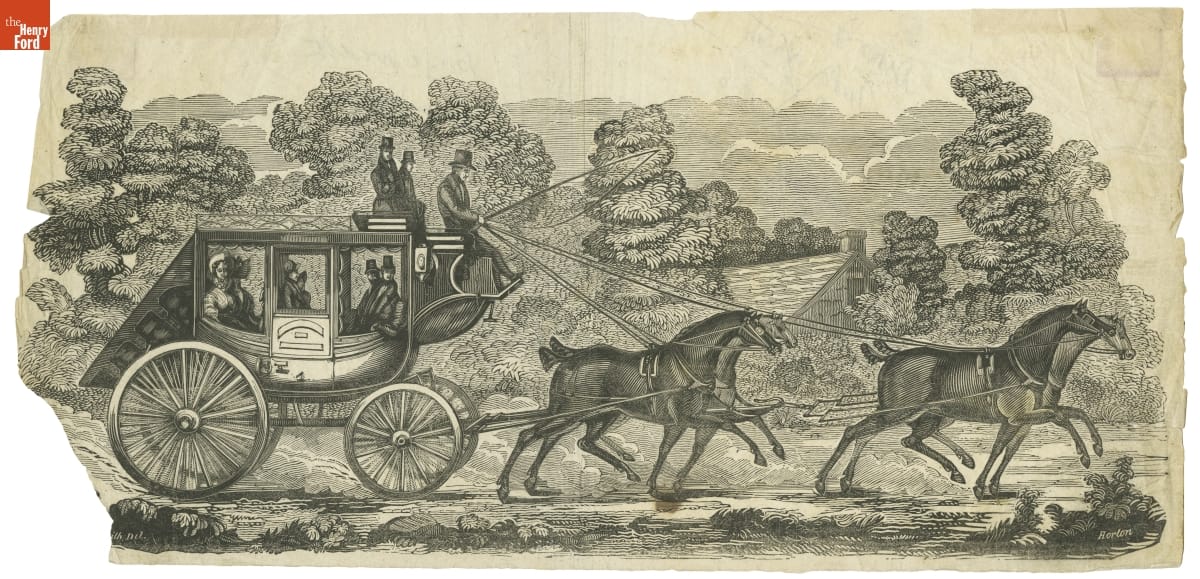
- 1832-1835
- Collections - Artifact
View of an Early Flat-Topped Coach, 1832-1835
This wood engraving, probably completed by artist Tudor Horton, depicts a very early flat-topped coach traveling along a road. Stagecoach companies commonly used the flat-topped coach to transport passengers between "stages" or stations before the development of the vehicle known as the "Concord Coach" took precedence.
- Waybill for Stagecoach Travel from Columbus to Portland, Ohio, 1824 - Waybills helped nineteenth-century stage lines keep track of fares and passengers. For each journey, company agents would fill out passenger names, destinations, number of seats and collected fares. An image of a stagecoach -- perhaps similar to the one used on this line -- decorates the top of this waybill.
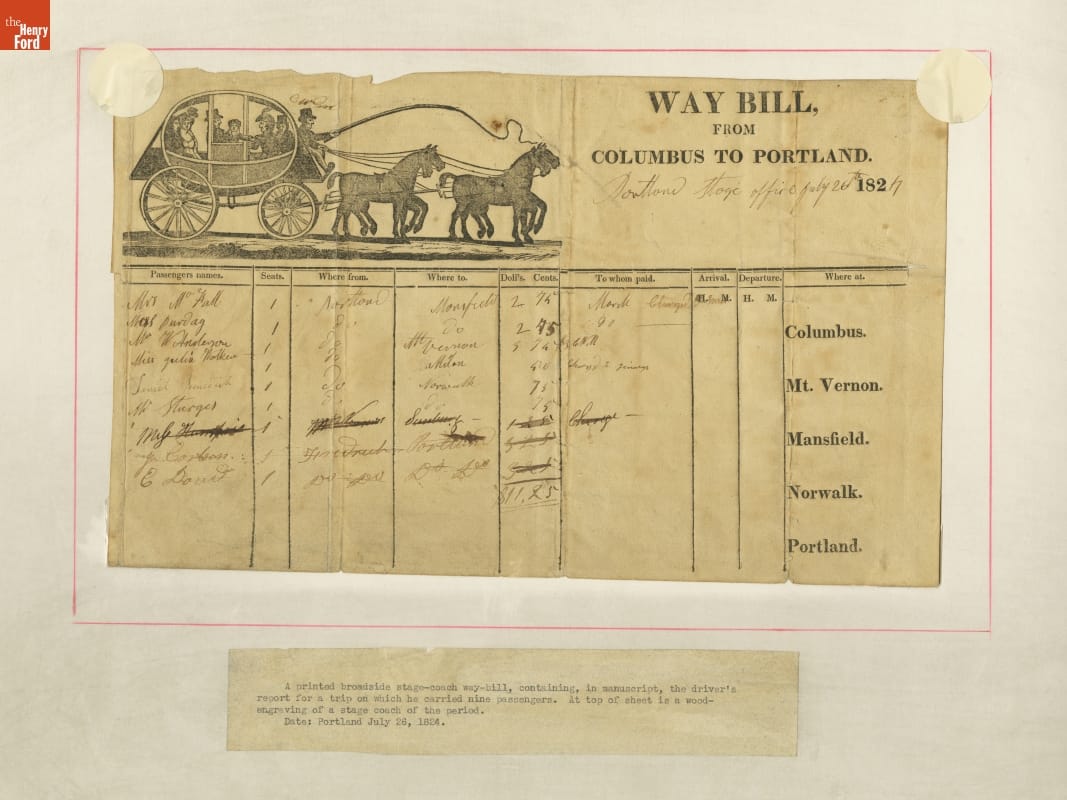
- July 26, 1824
- Collections - Artifact
Waybill for Stagecoach Travel from Columbus to Portland, Ohio, 1824
Waybills helped nineteenth-century stage lines keep track of fares and passengers. For each journey, company agents would fill out passenger names, destinations, number of seats and collected fares. An image of a stagecoach -- perhaps similar to the one used on this line -- decorates the top of this waybill.
- Waybill for Stagecoach Travel from Fairport to Warren, Ohio, 1829 - Waybills helped nineteenth-century stage lines keep track of fares and passengers. For each journey, company agents would fill out passenger names, destinations, number of seats, and collected fares. Additional notes sometimes listed types of baggage or other special instructions. This waybill documents a trip from Fairport to Warren, Ohio, in September 1829.
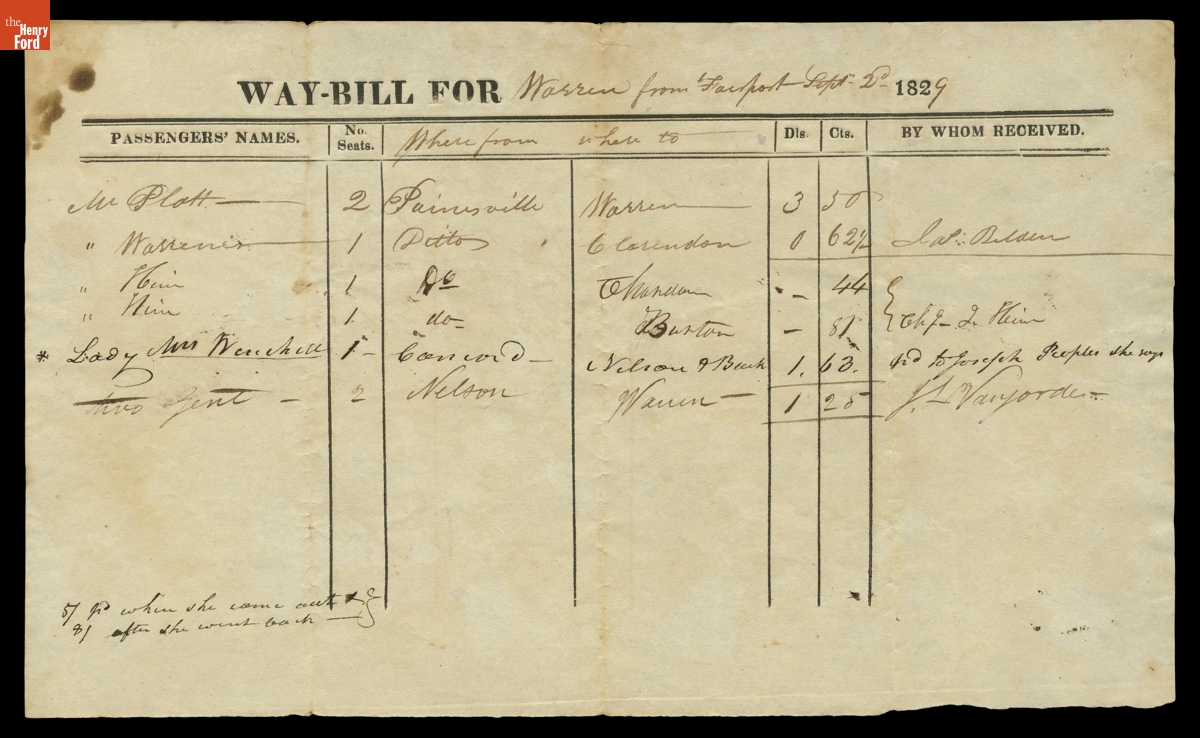
- September 02, 1829
- Collections - Artifact
Waybill for Stagecoach Travel from Fairport to Warren, Ohio, 1829
Waybills helped nineteenth-century stage lines keep track of fares and passengers. For each journey, company agents would fill out passenger names, destinations, number of seats, and collected fares. Additional notes sometimes listed types of baggage or other special instructions. This waybill documents a trip from Fairport to Warren, Ohio, in September 1829.
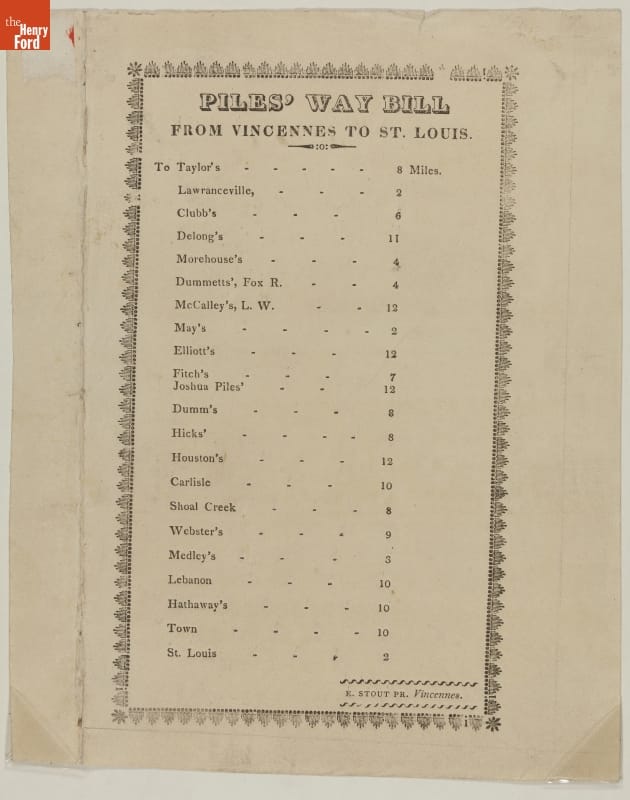
- Waybill for Piles Stagecoach Line from Vincennes, Indiana to St. Louis, Missouri, circa 1825 - This circa 1825 waybill lists the distances in miles between taverns along Piles' stage coach line between Vincennes, Indiana, and St. Louis, Missouri.
- circa 1825
- Collections - Artifact
Waybill for Piles Stagecoach Line from Vincennes, Indiana to St. Louis, Missouri, circa 1825
This circa 1825 waybill lists the distances in miles between taverns along Piles' stage coach line between Vincennes, Indiana, and St. Louis, Missouri.
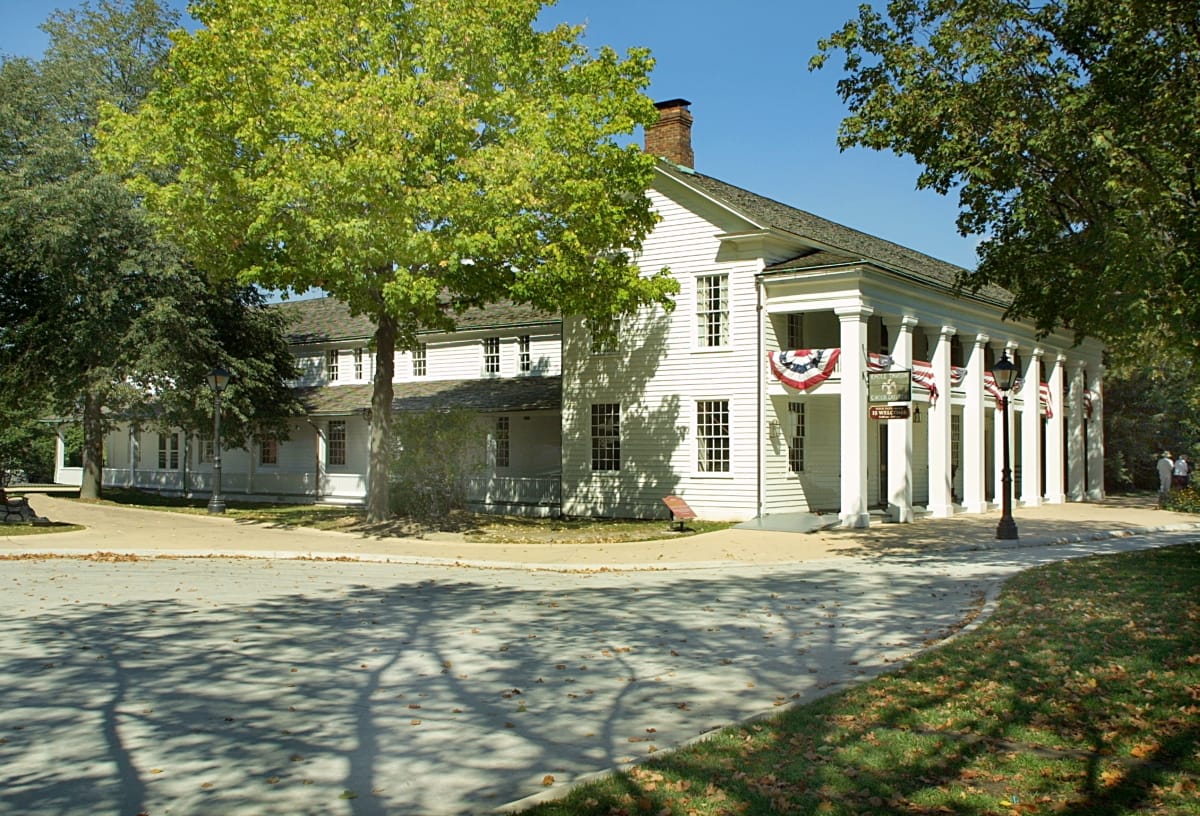
- Eagle Tavern - This stagecoach tavern was built in 1831 in Clinton, Michigan, 50 miles west of Detroit. Taverns dotted the American countryside during the first half of the 1800s, a period of massive migration, new settlement, and rapid change in a young America. From 1849-1854, farmer Calvin Wood operated this tavern, offering food, drink, and accommodations to travelers who passed through his village.
- circa 1850
- Collections - Artifact
Eagle Tavern
This stagecoach tavern was built in 1831 in Clinton, Michigan, 50 miles west of Detroit. Taverns dotted the American countryside during the first half of the 1800s, a period of massive migration, new settlement, and rapid change in a young America. From 1849-1854, farmer Calvin Wood operated this tavern, offering food, drink, and accommodations to travelers who passed through his village.
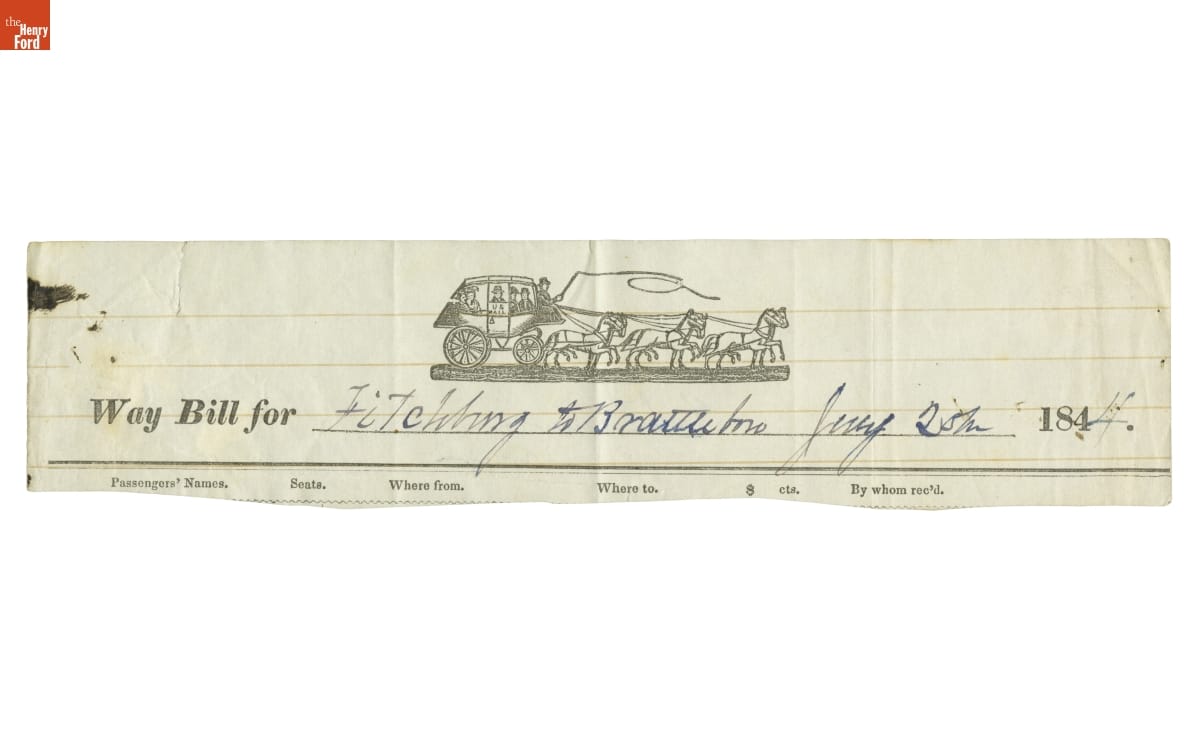
- Waybill for Stagecoach Travel between Fitchburg, Massachusetts and Brattleboro, Vermont, 1844 - Waybills helped nineteenth-century stage lines keep track of fares and passengers. For each journey, company agents would fill out passenger names, destinations, number of seats and collected fares. Additional notes sometimes listed types of baggage or other special instructions. This clipped waybill documents a trip between Massachusetts and Vermont in July 1844.
- July 20, 1844
- Collections - Artifact
Waybill for Stagecoach Travel between Fitchburg, Massachusetts and Brattleboro, Vermont, 1844
Waybills helped nineteenth-century stage lines keep track of fares and passengers. For each journey, company agents would fill out passenger names, destinations, number of seats and collected fares. Additional notes sometimes listed types of baggage or other special instructions. This clipped waybill documents a trip between Massachusetts and Vermont in July 1844.
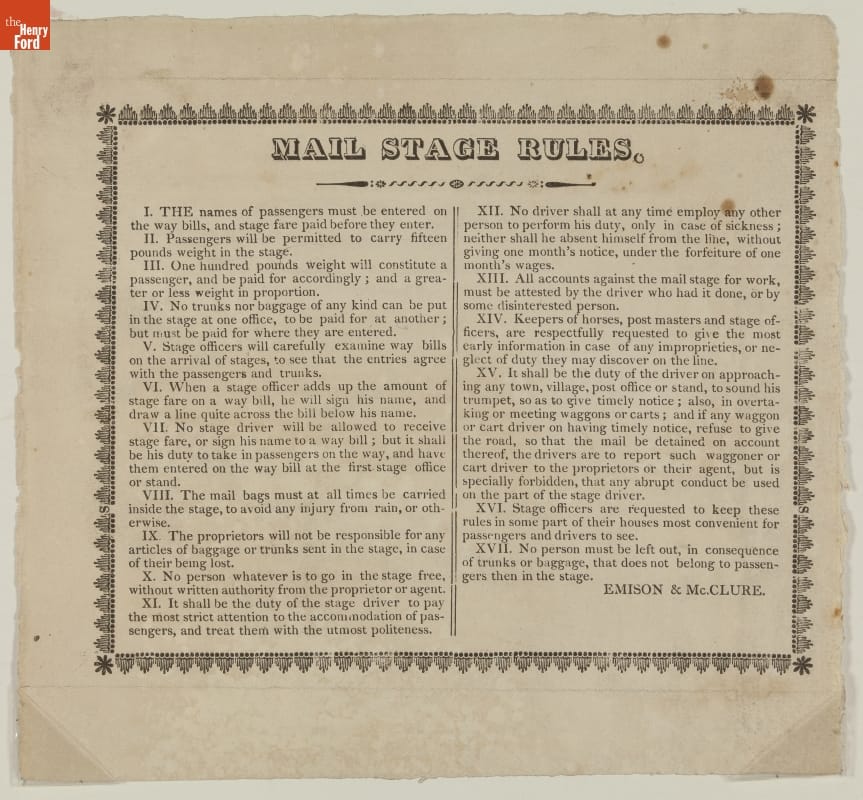
- Mail Stage Rules, circa 1826 - The Emison & McClure Company issued this small broadside informing the public of the rules and regulations they had established in conducting their mail stage line between Louisville, Kentucky, and St. Louis, Missouri. Copies of the broadside would have been posted in the company's offices and given to passengers.
- circa 1826
- Collections - Artifact
Mail Stage Rules, circa 1826
The Emison & McClure Company issued this small broadside informing the public of the rules and regulations they had established in conducting their mail stage line between Louisville, Kentucky, and St. Louis, Missouri. Copies of the broadside would have been posted in the company's offices and given to passengers.