
Search
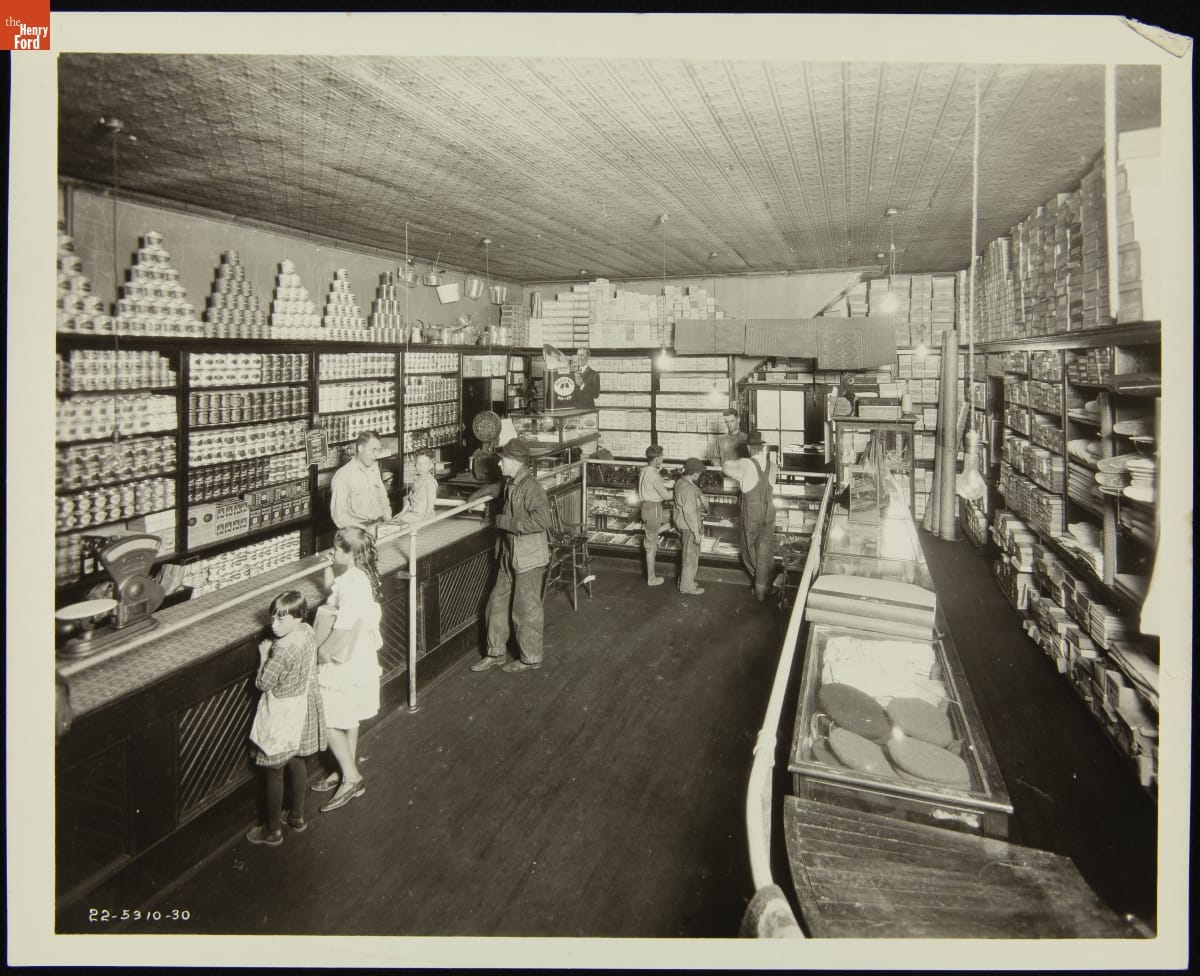
- General Store at the Fordson Coal Mine, Kentucky, 1922 - Beginning in 1920, Henry Ford purchased several coal mines in Kentucky and West Virginia. Two years later, he formed Fordson Coal Company to manage the mines. Ford-owned mines protected Ford Motor Company's coal supply in the event of labor unrest or government interference. Fordson sold its coal mining operations in the mid-1930s.
- 1922
- Collections - Artifact
General Store at the Fordson Coal Mine, Kentucky, 1922
Beginning in 1920, Henry Ford purchased several coal mines in Kentucky and West Virginia. Two years later, he formed Fordson Coal Company to manage the mines. Ford-owned mines protected Ford Motor Company's coal supply in the event of labor unrest or government interference. Fordson sold its coal mining operations in the mid-1930s.
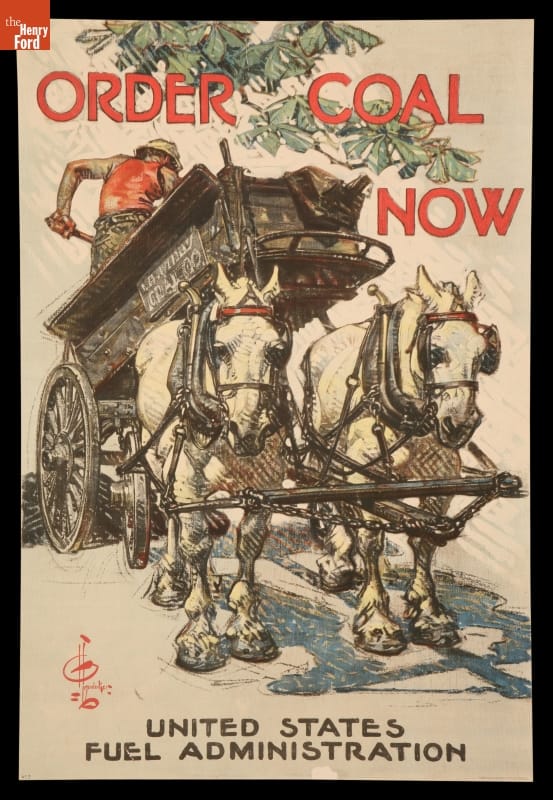
- World War I Poster, "Order Coal Now," circa 1917 - During the First World War, governments of all the warring nations used poster campaigns to encourage civilian and military support of the war effort. Artists widely used an innovative advertising technique for these posters that moved away from a factual depiction of a product's material or event's subject to an emphasis on appealing to the viewer's emotions.
- circa 1917
- Collections - Artifact
World War I Poster, "Order Coal Now," circa 1917
During the First World War, governments of all the warring nations used poster campaigns to encourage civilian and military support of the war effort. Artists widely used an innovative advertising technique for these posters that moved away from a factual depiction of a product's material or event's subject to an emphasis on appealing to the viewer's emotions.
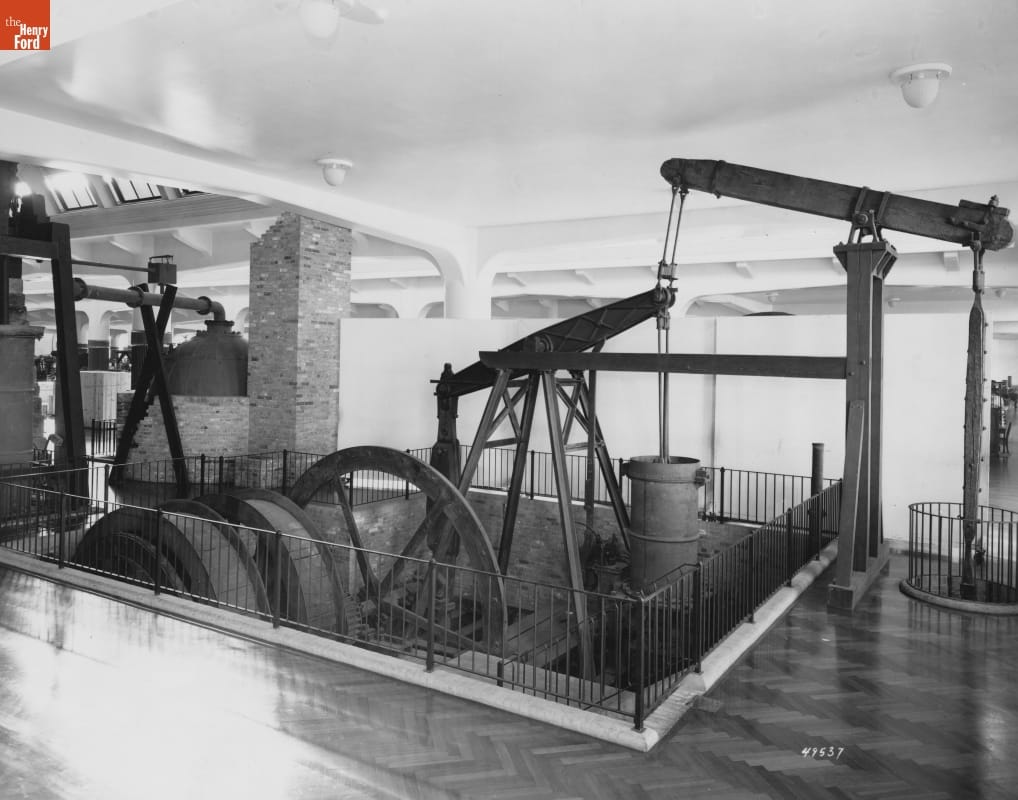
- Moira Engine, 1821 -
- 1821
- Collections - Artifact
Moira Engine, 1821
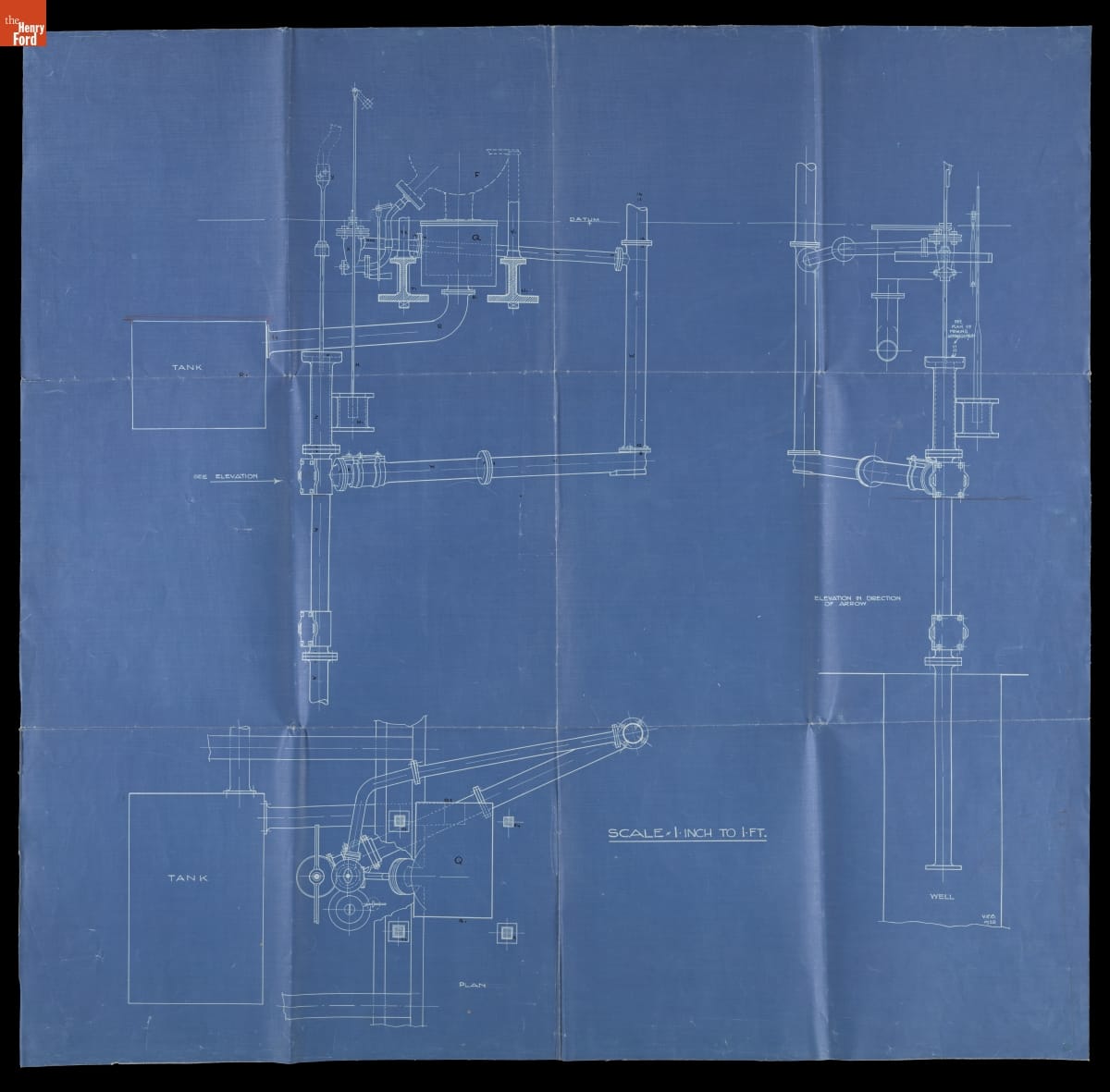
- Blueprint Drawing of the 1821 Moira Engine, 1928 -
- 1928
- Collections - Artifact
Blueprint Drawing of the 1821 Moira Engine, 1928
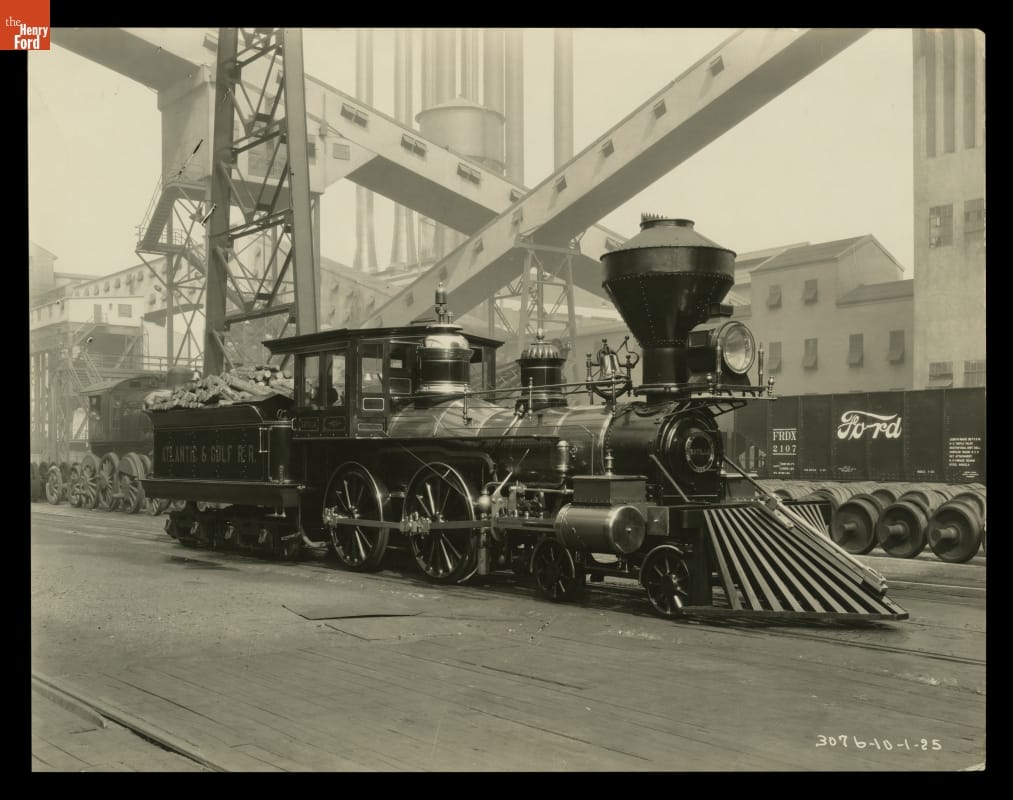
- "Satilla" Locomotive at the Ford Rouge Plant, 1925 - Henry Ford acquired the 4-4-0 steam locomotive <EM>Satilla</EM>, built in 1858 by Rogers Locomotive Works for Georgia's Atlantic & Gulf Railroad, in 1924. Ford had the locomotive restored at Ford Motor Company's Rouge factory. The refurbished locomotive pulled Ford, Thomas Edison, and President Herbert Hoover from Detroit to Dearborn for The Henry Ford's dedication ceremonies in 1929.
- October 01, 1925
- Collections - Artifact
"Satilla" Locomotive at the Ford Rouge Plant, 1925
Henry Ford acquired the 4-4-0 steam locomotive Satilla, built in 1858 by Rogers Locomotive Works for Georgia's Atlantic & Gulf Railroad, in 1924. Ford had the locomotive restored at Ford Motor Company's Rouge factory. The refurbished locomotive pulled Ford, Thomas Edison, and President Herbert Hoover from Detroit to Dearborn for The Henry Ford's dedication ceremonies in 1929.
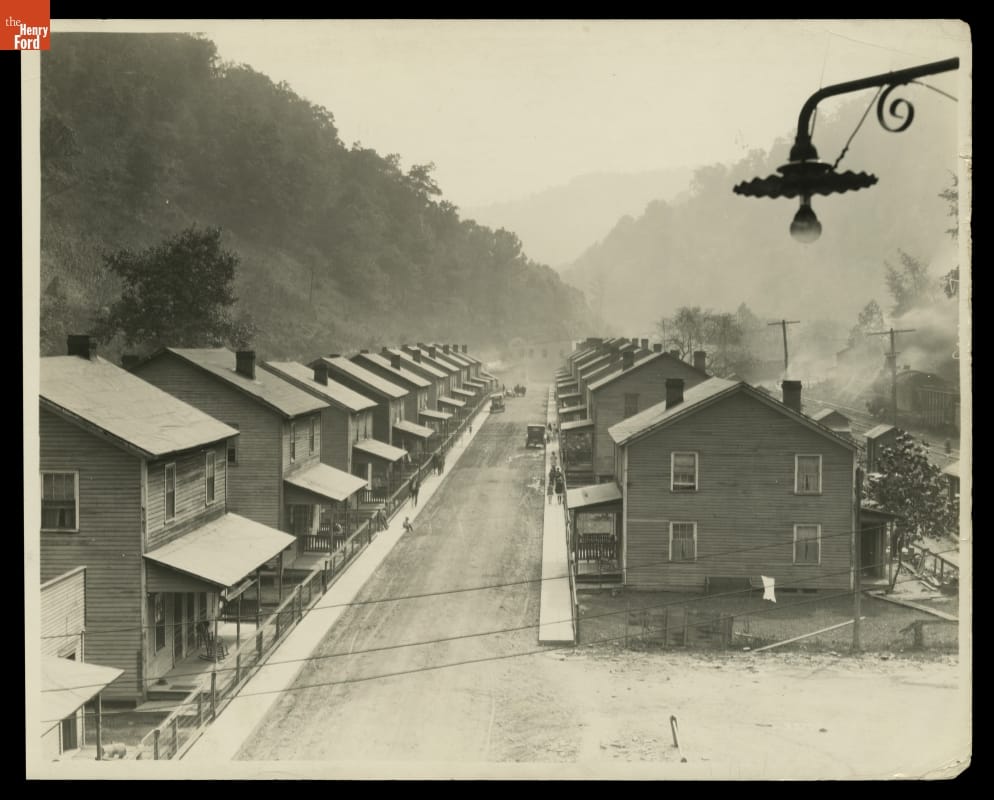
- Hardy Coal Mine Camp, October 1923 - The Pond Creek Coal Company established the company town of Hardy, Kentucky -- located five miles southeast of Williamson, West Virginia -- in 1914. Henry Ford's Fordson Coal Company purchased the Pond Creek firm in 1922 to supply coal to Ford Motor Company. Fordson sold its Pond Creek properties to Eastern Coal Corporation in 1936.
- October 24, 1923
- Collections - Artifact
Hardy Coal Mine Camp, October 1923
The Pond Creek Coal Company established the company town of Hardy, Kentucky -- located five miles southeast of Williamson, West Virginia -- in 1914. Henry Ford's Fordson Coal Company purchased the Pond Creek firm in 1922 to supply coal to Ford Motor Company. Fordson sold its Pond Creek properties to Eastern Coal Corporation in 1936.
- Westinghouse Style 4638A Voltmeter, 1900-1910 -
- 1900-1910
- Collections - Artifact
Westinghouse Style 4638A Voltmeter, 1900-1910
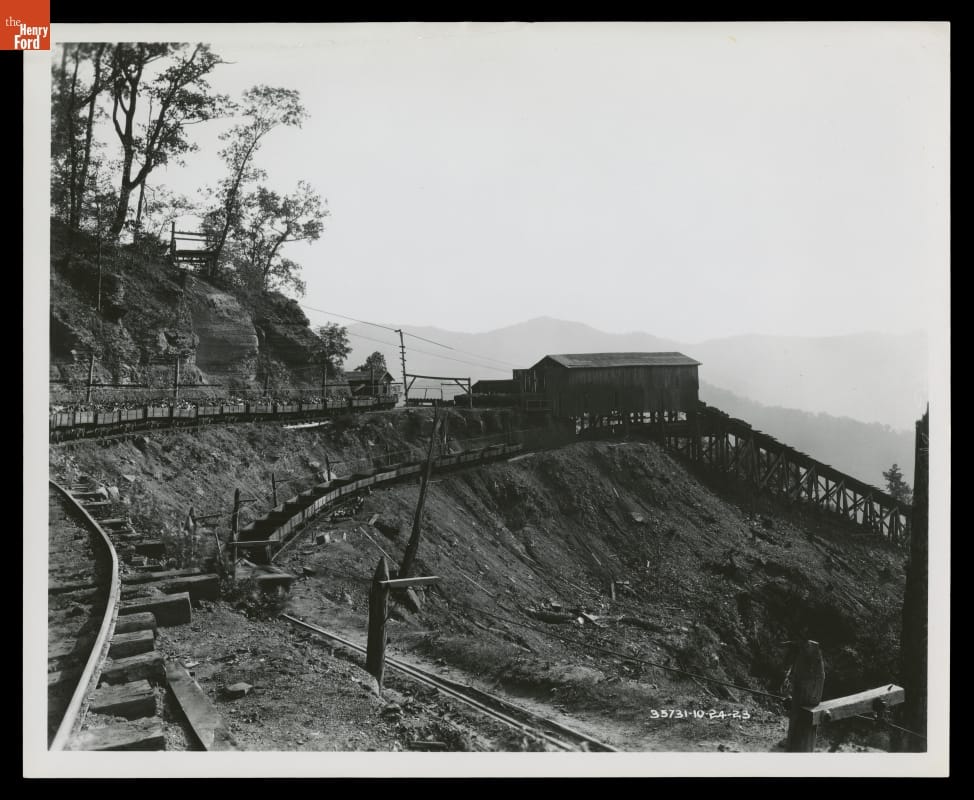
- Banner Fork Coal Mine, Wallins Creek, Kentucky, 1923 - Henry Ford purchased the Banner Fork mine, located near Wallins Creek, Kentucky, in 1920. Some 400 miners produced 3,000 tons of coal there each day. Banner Fork and other Ford-owned mines -- managed by Mr. Ford's Fordson Coal Company -- protected Ford Motor Company's coal supply from labor unrest and government interference. Fordson sold its coal mining operations in the mid-1930s.
- October 24, 1923
- Collections - Artifact
Banner Fork Coal Mine, Wallins Creek, Kentucky, 1923
Henry Ford purchased the Banner Fork mine, located near Wallins Creek, Kentucky, in 1920. Some 400 miners produced 3,000 tons of coal there each day. Banner Fork and other Ford-owned mines -- managed by Mr. Ford's Fordson Coal Company -- protected Ford Motor Company's coal supply from labor unrest and government interference. Fordson sold its coal mining operations in the mid-1930s.
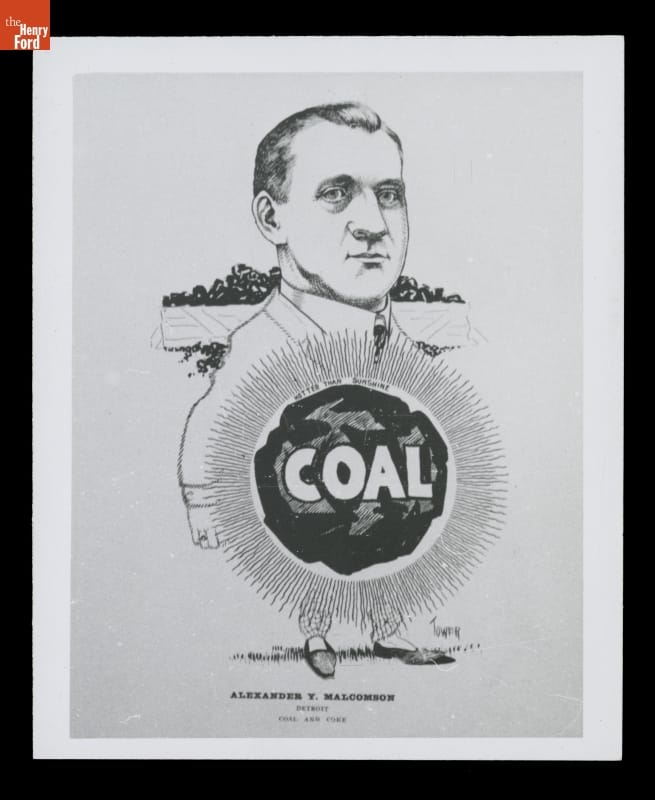
- Drawing of Alexander Y. Malcomson and his Coal Company's Logo, circa 1905 - Eager to invest in Detroit's growing automotive industry, coal dealer Alexander Malcomson became a founding director of Ford Motor Company in 1903. But he soon butted heads with Henry Ford. Malcomson favored building luxury cars for well-to-do customers, while Ford envisioned affordable cars for the mass market. Unable to resolve their differences, Malcomson parted ways with Ford in 1906.
- circa 1905
- Collections - Artifact
Drawing of Alexander Y. Malcomson and his Coal Company's Logo, circa 1905
Eager to invest in Detroit's growing automotive industry, coal dealer Alexander Malcomson became a founding director of Ford Motor Company in 1903. But he soon butted heads with Henry Ford. Malcomson favored building luxury cars for well-to-do customers, while Ford envisioned affordable cars for the mass market. Unable to resolve their differences, Malcomson parted ways with Ford in 1906.
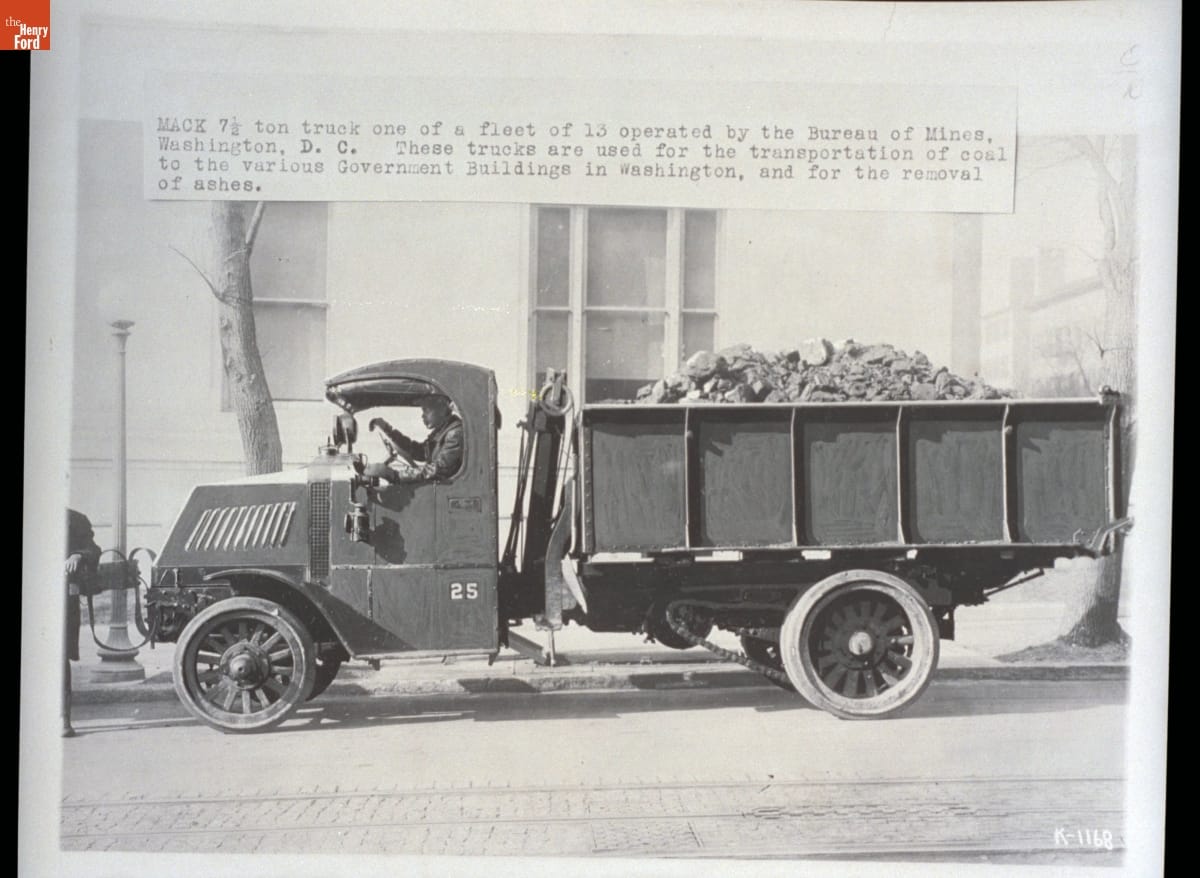
- Mack Model AC Dump Truck Used to Transport Coal to Government Buildings, Washington, DC, 1911-1916 - Founded in Brooklyn, New York, in 1900, Mack Brothers Company relocated to Allentown, Pennsylvania, in 1905 and adopted the name Mack Trucks in 1922. The company introduced its heavy-duty Model AC truck in 1916. The model remained in production until 1938, and Mack built more than 40,000 units. The Model AC's distinctive hood set it apart from other trucks.
- 1911-1916
- Collections - Artifact
Mack Model AC Dump Truck Used to Transport Coal to Government Buildings, Washington, DC, 1911-1916
Founded in Brooklyn, New York, in 1900, Mack Brothers Company relocated to Allentown, Pennsylvania, in 1905 and adopted the name Mack Trucks in 1922. The company introduced its heavy-duty Model AC truck in 1916. The model remained in production until 1938, and Mack built more than 40,000 units. The Model AC's distinctive hood set it apart from other trucks.