
Search
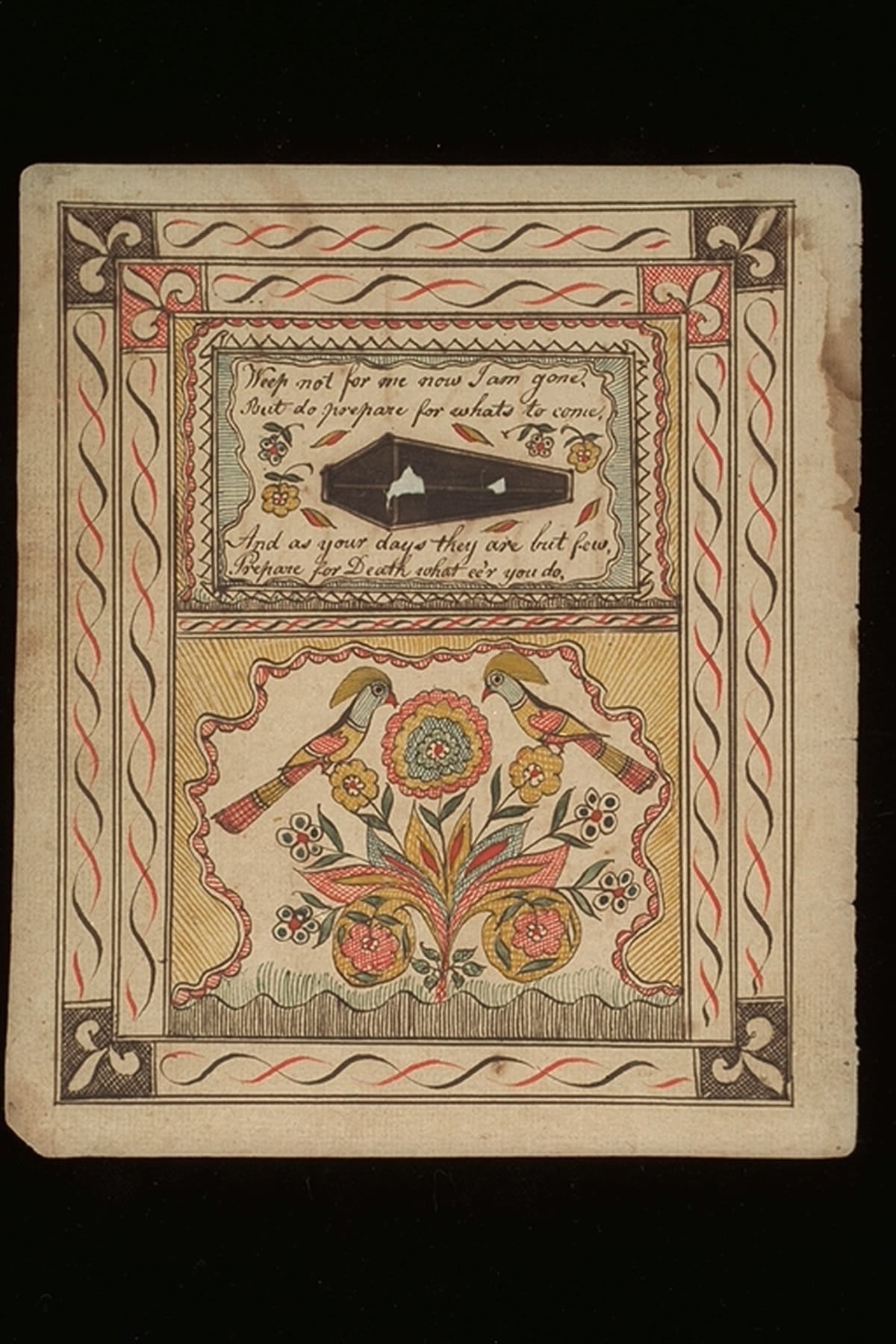
- Mourning Drawing, circa 1820 - Early European inhabitants in the Valley of Virginia created decorative documents to commemorate important family events. Most of these keepsakes, known as Fraktur, were created by and for German immigrants. Others show influences from the English, Irish or Scot-Irish settlers. This design suggests similarities with German Fraktur, but differs in format, language and imagery -- a blending of art and traditions between the Valley's ethnic populations.
- circa 1820
- Collections - Artifact
Mourning Drawing, circa 1820
Early European inhabitants in the Valley of Virginia created decorative documents to commemorate important family events. Most of these keepsakes, known as Fraktur, were created by and for German immigrants. Others show influences from the English, Irish or Scot-Irish settlers. This design suggests similarities with German Fraktur, but differs in format, language and imagery -- a blending of art and traditions between the Valley's ethnic populations.
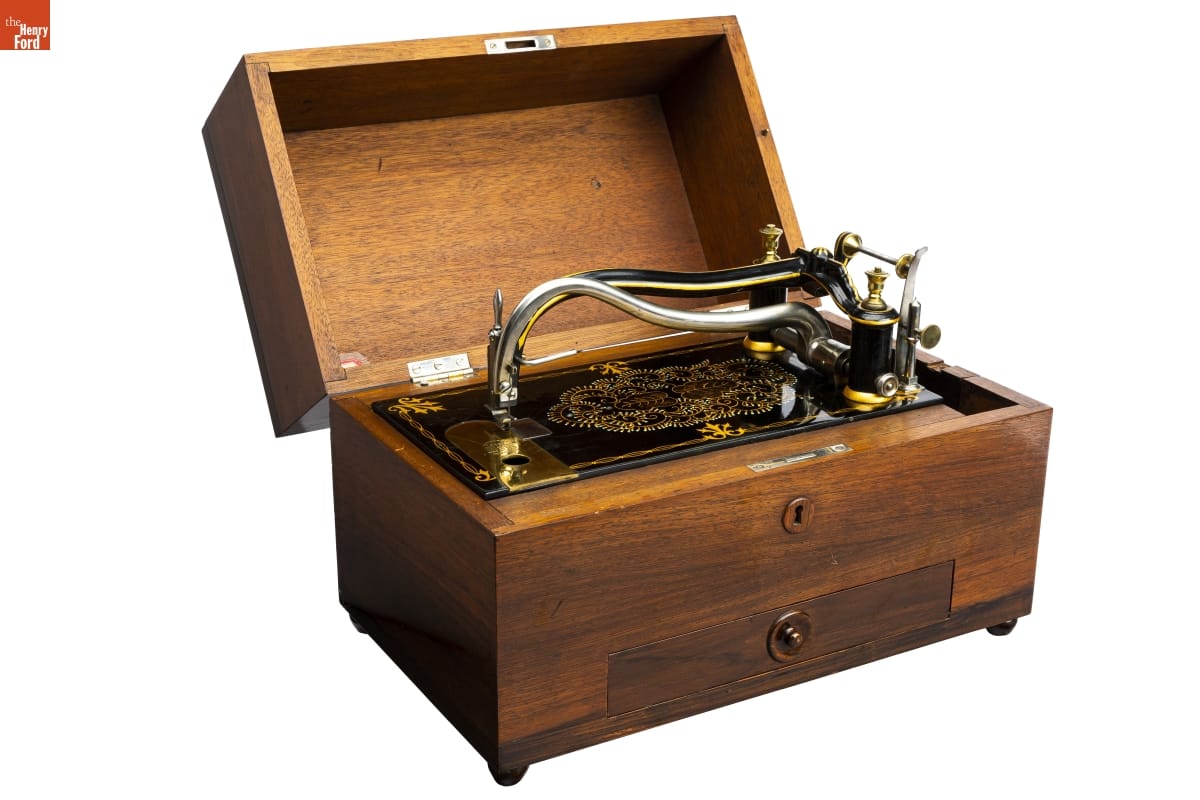
- Grover & Baker Portable Sewing Machine, Purchased by Judge Nathan Crosby of Lowell, Massachusetts, 1858 - Seamstresses used this sewing machine to sew cotton cloth (a Southern agricultural commodity woven in Northern factories). The cast-iron mechanism in a rosewood case confirms connections between Amazonian forests and New England factories. Patented in 1856, this portable machine hit the American market while the fate of slavery divided the nation. Advertising in the American Farmer (1860) described it “for farm and plantation use,” implying that enslaved and free seamstresses may have used it.
- 1858
- Collections - Artifact
Grover & Baker Portable Sewing Machine, Purchased by Judge Nathan Crosby of Lowell, Massachusetts, 1858
Seamstresses used this sewing machine to sew cotton cloth (a Southern agricultural commodity woven in Northern factories). The cast-iron mechanism in a rosewood case confirms connections between Amazonian forests and New England factories. Patented in 1856, this portable machine hit the American market while the fate of slavery divided the nation. Advertising in the American Farmer (1860) described it “for farm and plantation use,” implying that enslaved and free seamstresses may have used it.
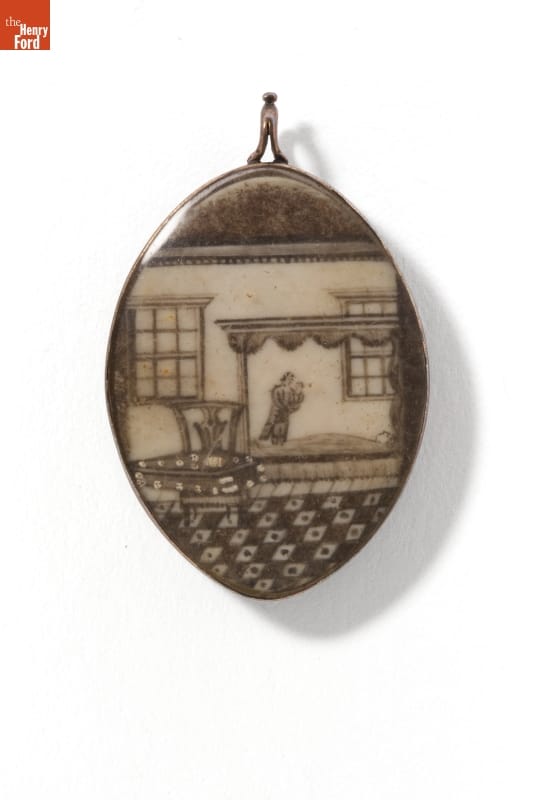
- Mourning Pendant, 1783 - Before the 20th century, death came early and often. One way people coped was to wear jewelry as memorials to their loved ones. Over the centuries, mourning jewelry followed the prevailing fashions. Shortly after independence, Americans favored illuminated, miniature brooches and pendants painted on ivory. These featured shapes derived from classical design, symbols such as urns and weeping women dressed as ancient Romans.
- 1783
- Collections - Artifact
Mourning Pendant, 1783
Before the 20th century, death came early and often. One way people coped was to wear jewelry as memorials to their loved ones. Over the centuries, mourning jewelry followed the prevailing fashions. Shortly after independence, Americans favored illuminated, miniature brooches and pendants painted on ivory. These featured shapes derived from classical design, symbols such as urns and weeping women dressed as ancient Romans.
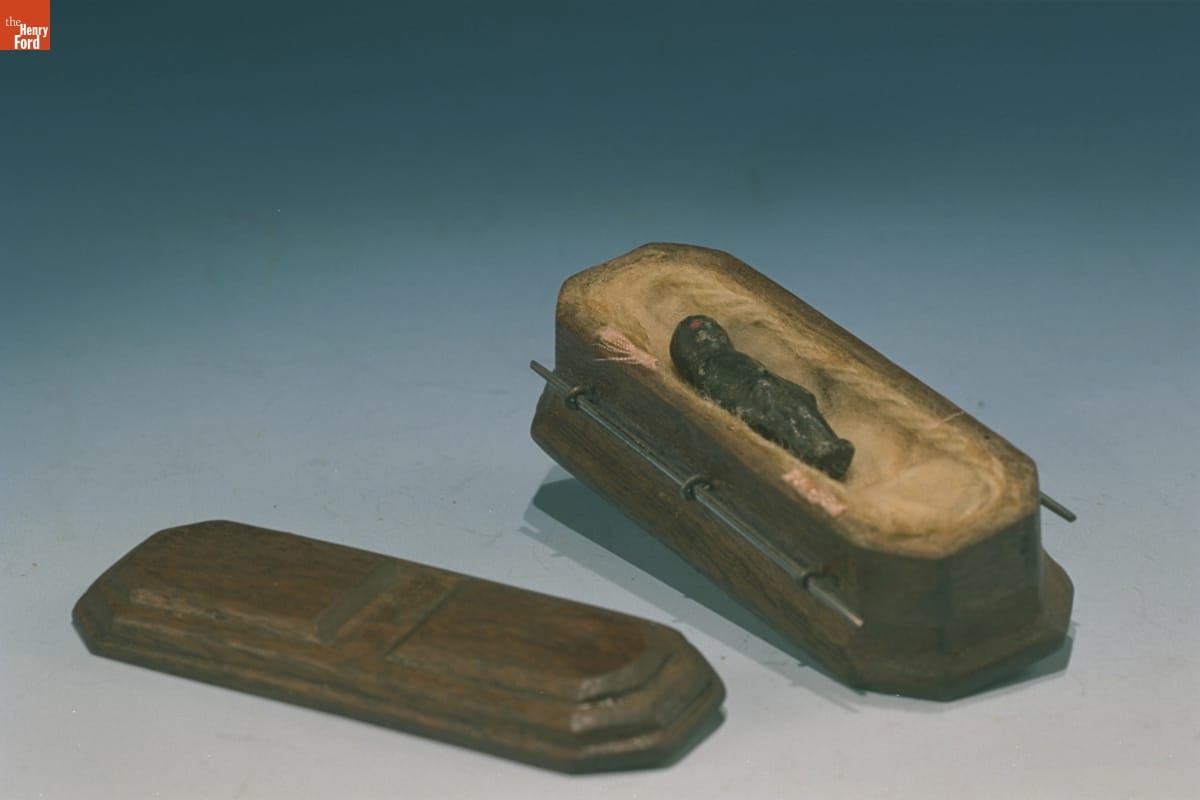
- Toy Coffin with Doll, 1870-1900 - In the late 1800s, children were given toys to help them learn gender-specific roles and the skills they would need as adults. Mourning and funeral practices at this time were elaborate, essential things to learn since the death of a loved one was a relatively common experience. Some parents let their children conduct pretend funerals with dolls and doll-sized coffins.
- 1870-1900
- Collections - Artifact
Toy Coffin with Doll, 1870-1900
In the late 1800s, children were given toys to help them learn gender-specific roles and the skills they would need as adults. Mourning and funeral practices at this time were elaborate, essential things to learn since the death of a loved one was a relatively common experience. Some parents let their children conduct pretend funerals with dolls and doll-sized coffins.
- Postmortem Portrait of a Child, circa 1870 - American attitudes towards death and mourning have changed throughout our history. In the mid-to-late-1800s, mourners turned to photographers to capture one last (or perhaps the only) portrait of their loved ones. Postmortem images usually depicted the deceased either asleep -- in a peaceful state, or "alive" in a somewhat natural pose usually with eyes open. These personal reminders helped mourners move through the grieving process.

- circa 1870
- Collections - Artifact
Postmortem Portrait of a Child, circa 1870
American attitudes towards death and mourning have changed throughout our history. In the mid-to-late-1800s, mourners turned to photographers to capture one last (or perhaps the only) portrait of their loved ones. Postmortem images usually depicted the deceased either asleep -- in a peaceful state, or "alive" in a somewhat natural pose usually with eyes open. These personal reminders helped mourners move through the grieving process.
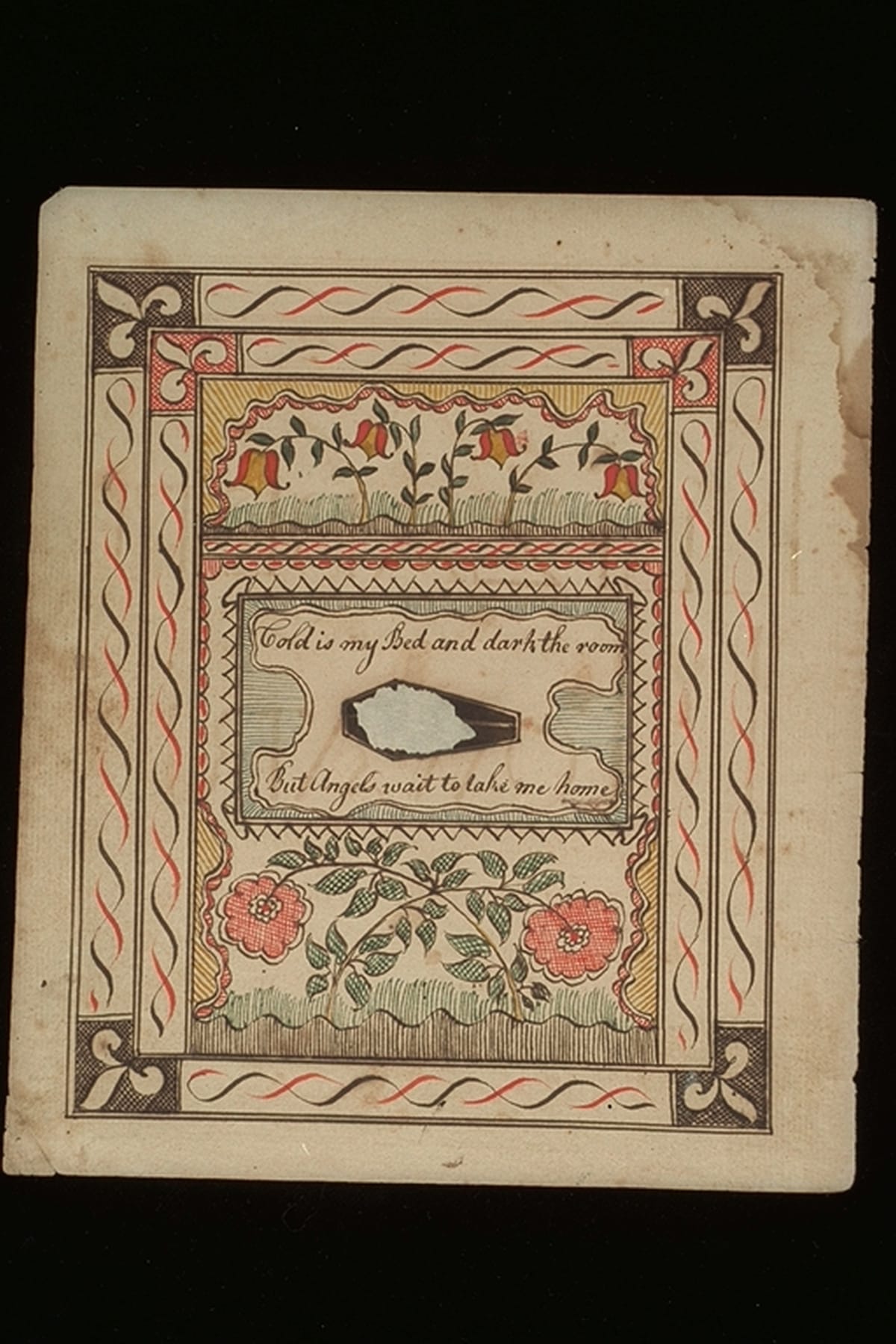
- Mourning Drawing, circa 1820 - Early European inhabitants in the Valley of Virginia created decorative documents to commemorate important family events. Most of these keepsakes, known as Fraktur, were created by and for German immigrants. Others show influences from the English, Irish or Scot-Irish settlers. This design suggests similarities with German Fraktur, but differs in format, language and imagery -- a blending of art and traditions between the Valley's ethnic populations.
- circa 1820
- Collections - Artifact
Mourning Drawing, circa 1820
Early European inhabitants in the Valley of Virginia created decorative documents to commemorate important family events. Most of these keepsakes, known as Fraktur, were created by and for German immigrants. Others show influences from the English, Irish or Scot-Irish settlers. This design suggests similarities with German Fraktur, but differs in format, language and imagery -- a blending of art and traditions between the Valley's ethnic populations.
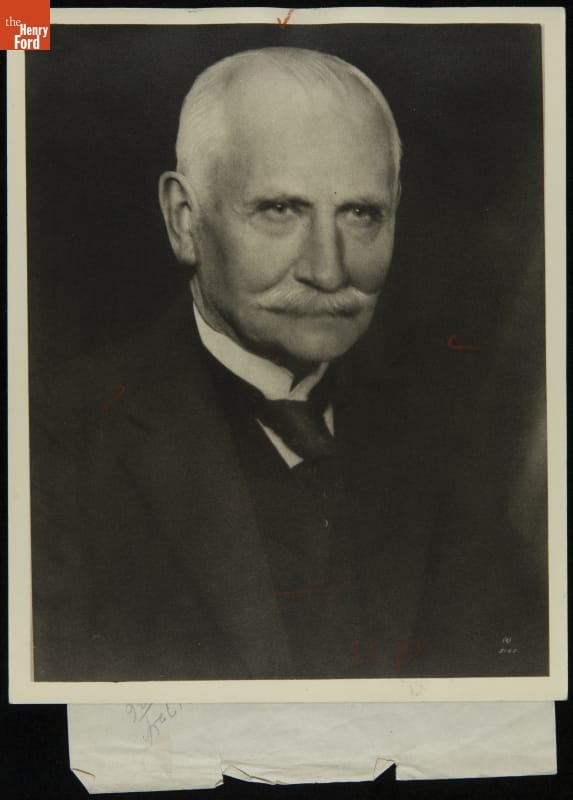
- Portrait of Charles A. Coffin, February 24, 1925 -
- February 24, 1925
- Collections - Artifact
Portrait of Charles A. Coffin, February 24, 1925
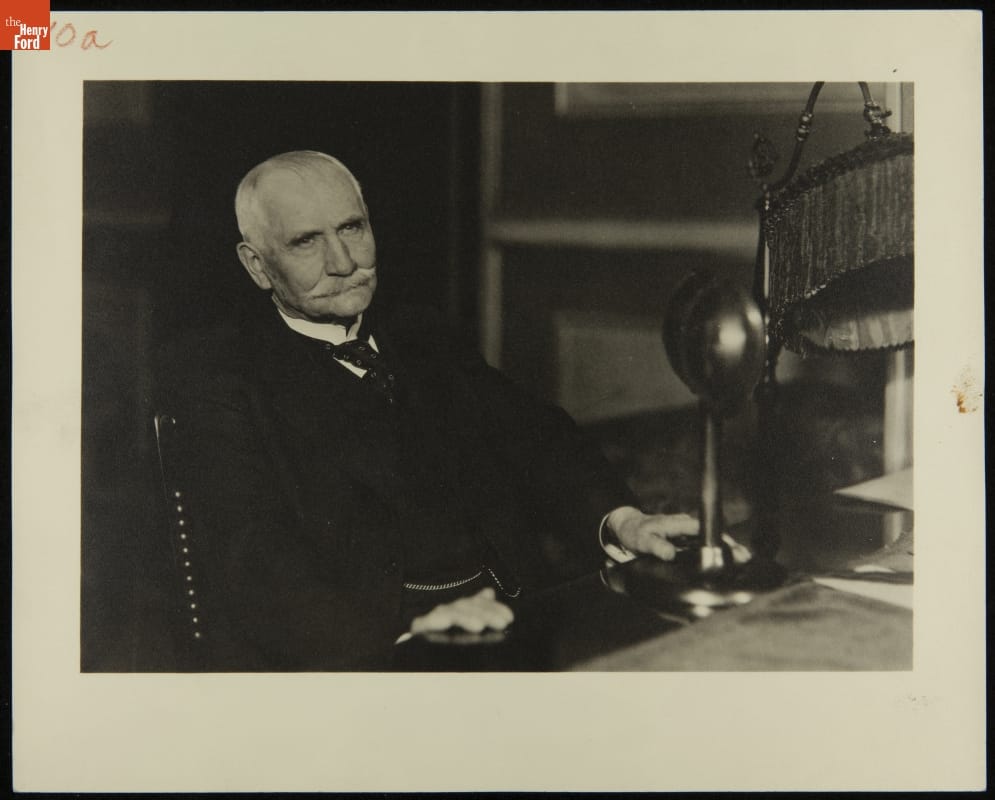
- Portrait of Charles A. Coffin, December 15, 1924 -
- December 15, 1924
- Collections - Artifact
Portrait of Charles A. Coffin, December 15, 1924
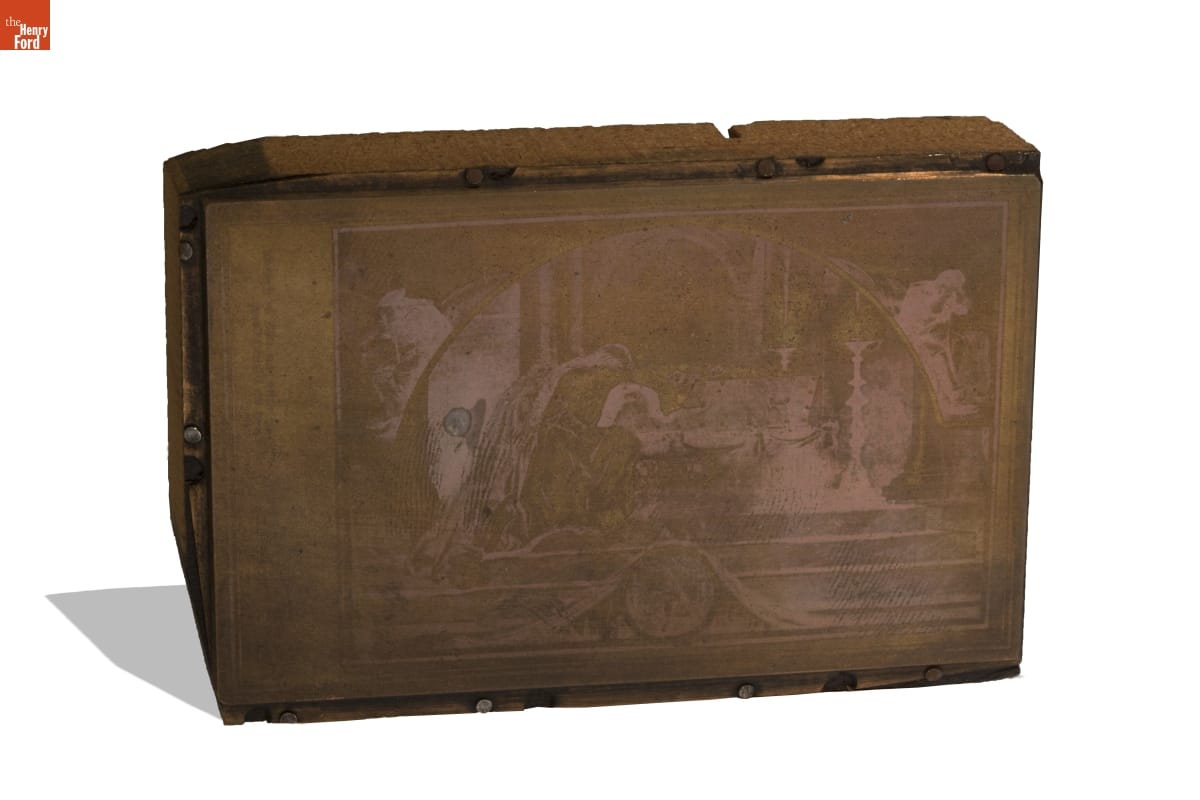
- Printing Block of Columbia Mourning President Lincoln's Death, 1865 - Thomas Irwin Starr (1903-1965) had a lifelong interest in President Abraham Lincoln. He began collecting Lincoln-related materials at an auction in 1929. Starr, editorial director for publications at Michigan Bell Telephone Company, amassed a collection of Lincolniana and wrote several books and articles about our 16th President. This printing block reproduces the Thomas Nast engraving portraying the nation's grief at the loss of the President.
- 1865
- Collections - Artifact
Printing Block of Columbia Mourning President Lincoln's Death, 1865
Thomas Irwin Starr (1903-1965) had a lifelong interest in President Abraham Lincoln. He began collecting Lincoln-related materials at an auction in 1929. Starr, editorial director for publications at Michigan Bell Telephone Company, amassed a collection of Lincolniana and wrote several books and articles about our 16th President. This printing block reproduces the Thomas Nast engraving portraying the nation's grief at the loss of the President.
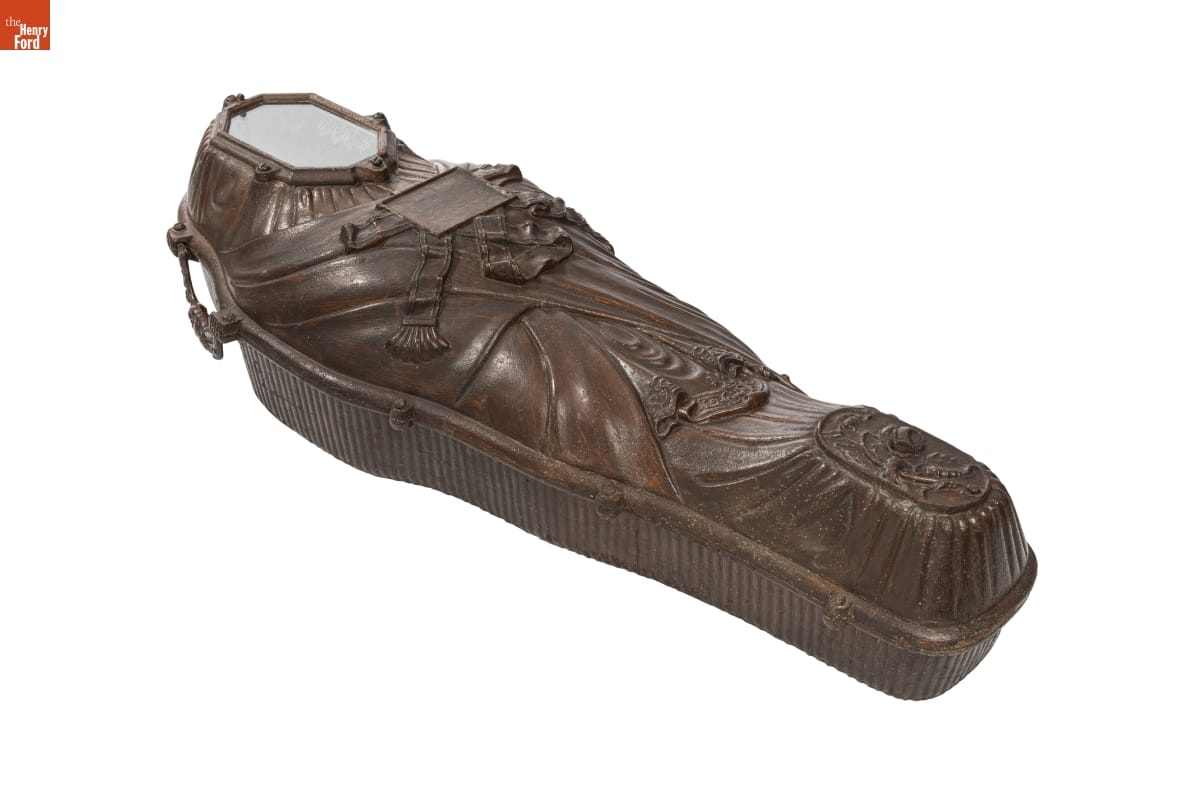
- Child-Sized Mummiform Iron Coffin, 1854-1858 - In the early- to mid-1800s, transportation improvements allowed Americans to travel great distances. It also meant that they could die far from home. Before modern embalming procedures, returning the deceased for proper internment was difficult. Airtight metal coffins preserved the body for transport, providing families an opportunity to mourn and bury their loved ones at home.
- 1854-1858
- Collections - Artifact
Child-Sized Mummiform Iron Coffin, 1854-1858
In the early- to mid-1800s, transportation improvements allowed Americans to travel great distances. It also meant that they could die far from home. Before modern embalming procedures, returning the deceased for proper internment was difficult. Airtight metal coffins preserved the body for transport, providing families an opportunity to mourn and bury their loved ones at home.