
Search
- Ford Motor Company Rouge Plant Coke Ovens, 1927 - Coke ovens at Ford Motor Company's Rouge plant converted coal into high-carbon coke, used in the factory's blast furnaces to produce iron. In 1921, the Rouge's ovens could produce up to 3,600 tons of coke daily. New, more efficient coke ovens opened in 1937. The coking process also produced gas used to heat some of the factory's other furnaces.
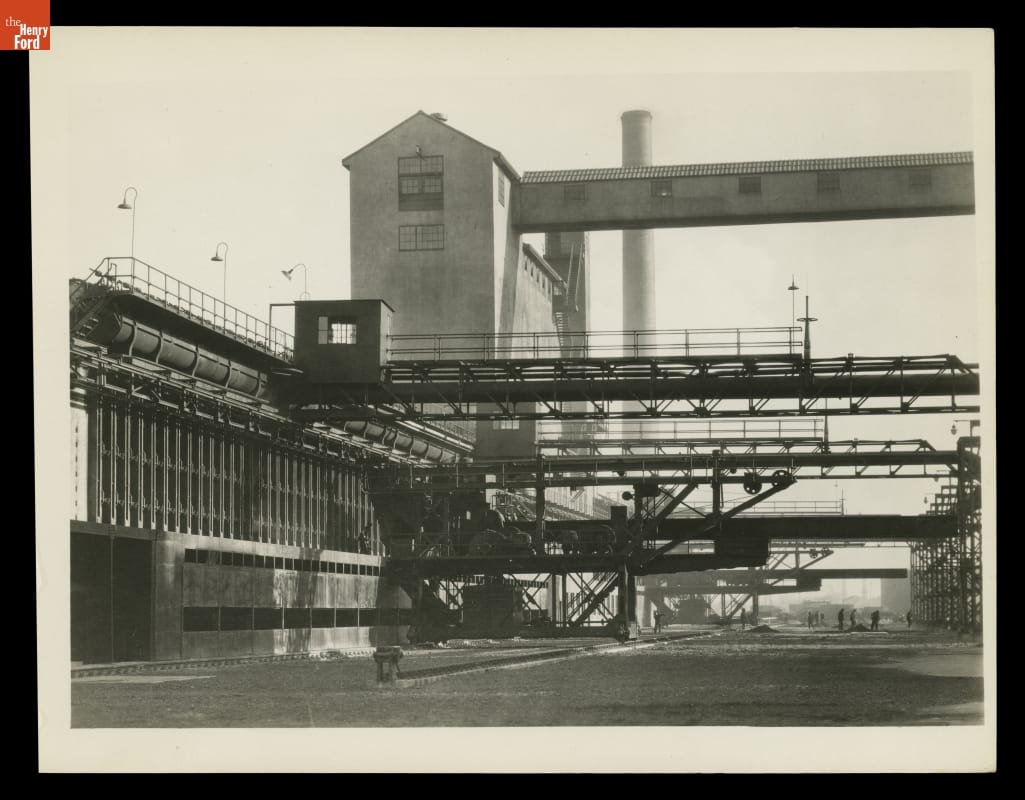
- 1927
- Collections - Artifact
Ford Motor Company Rouge Plant Coke Ovens, 1927
Coke ovens at Ford Motor Company's Rouge plant converted coal into high-carbon coke, used in the factory's blast furnaces to produce iron. In 1921, the Rouge's ovens could produce up to 3,600 tons of coke daily. New, more efficient coke ovens opened in 1937. The coking process also produced gas used to heat some of the factory's other furnaces.
- Ford Motor Company Rouge Plant Coke Ovens from Southwest Corner, August 1923 - Coke ovens at Ford Motor Company's Rouge plant converted coal into high-carbon coke, used in the factory's blast furnaces to produce iron. In 1921, the Rouge's ovens could produce up to 3,600 tons of coke daily. New, more efficient coke ovens opened in 1937. The coking process also produced gas used to heat some of the factory's other furnaces.
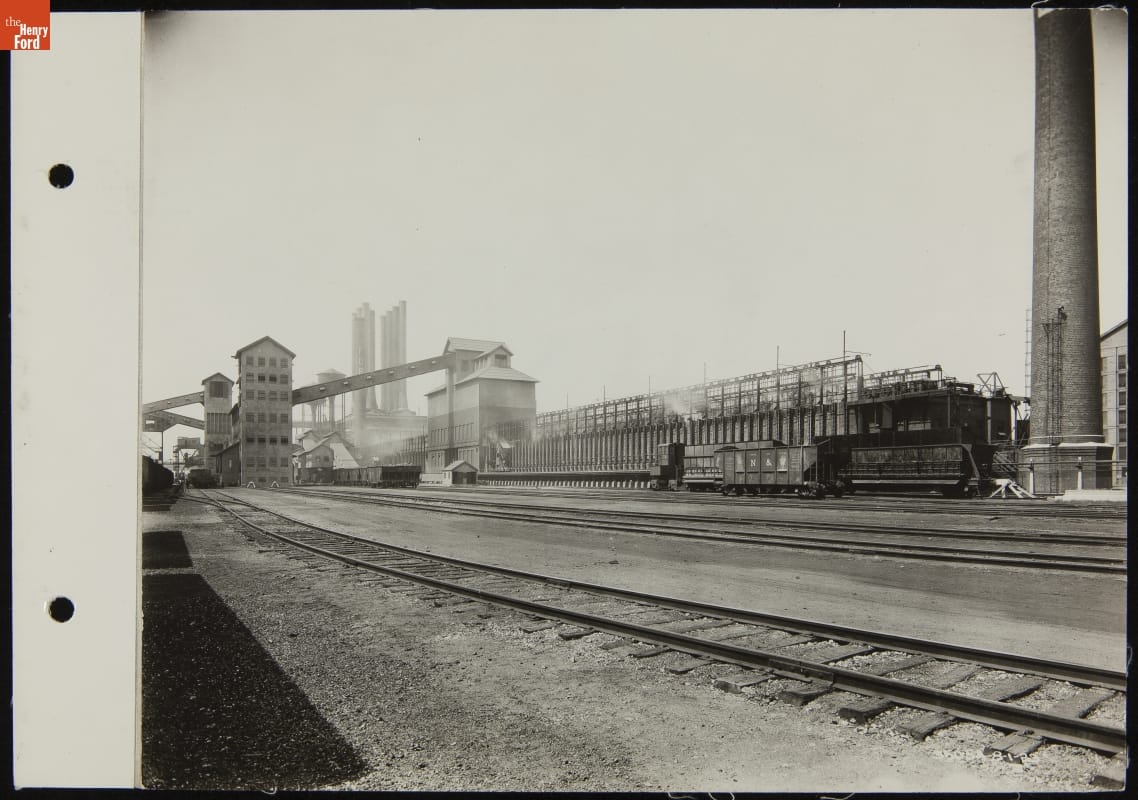
- August 01, 1923
- Collections - Artifact
Ford Motor Company Rouge Plant Coke Ovens from Southwest Corner, August 1923
Coke ovens at Ford Motor Company's Rouge plant converted coal into high-carbon coke, used in the factory's blast furnaces to produce iron. In 1921, the Rouge's ovens could produce up to 3,600 tons of coke daily. New, more efficient coke ovens opened in 1937. The coking process also produced gas used to heat some of the factory's other furnaces.
- Coke Ovens at Ford Rouge Plant, September 16, 1937 - Coke ovens at Ford Motor Company's Rouge plant converted coal into high-carbon coke, used in the factory's blast furnaces to produce iron. In 1921, the Rouge's ovens could produce up to 3,600 tons of coke daily. New, more efficient coke ovens opened in 1937. The coking process also produced gas used to heat some of the factory's other furnaces.
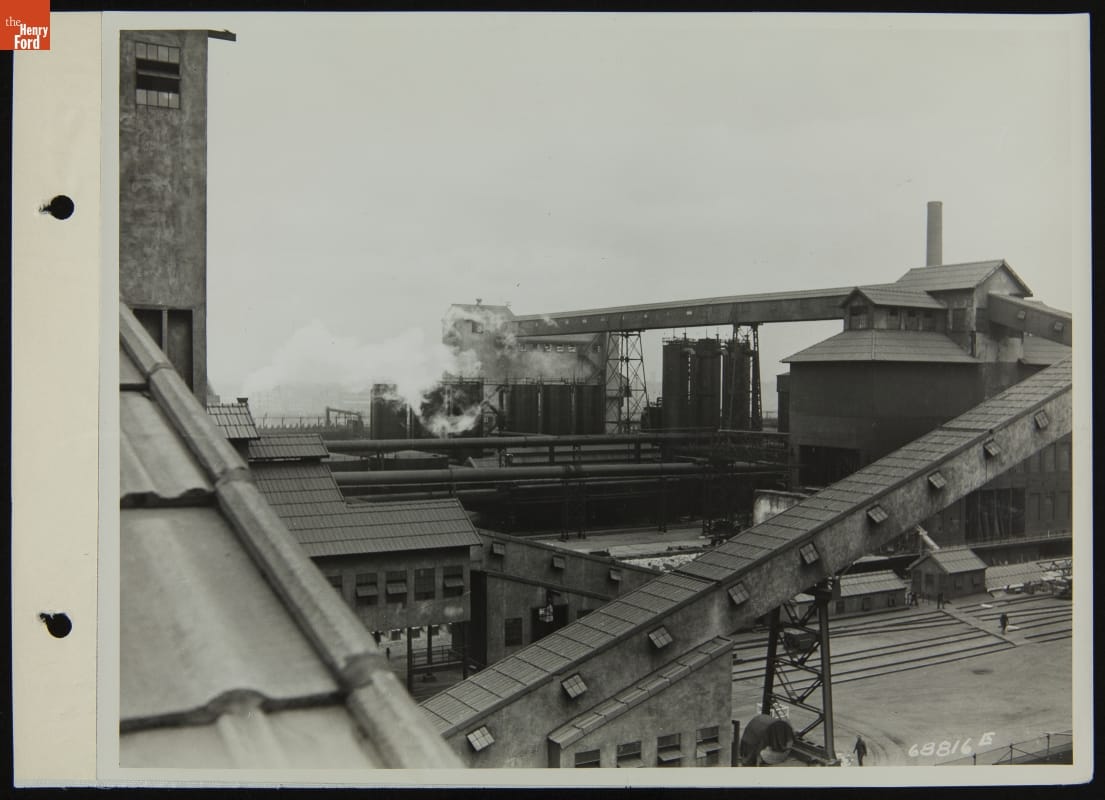
- September 16, 1937
- Collections - Artifact
Coke Ovens at Ford Rouge Plant, September 16, 1937
Coke ovens at Ford Motor Company's Rouge plant converted coal into high-carbon coke, used in the factory's blast furnaces to produce iron. In 1921, the Rouge's ovens could produce up to 3,600 tons of coke daily. New, more efficient coke ovens opened in 1937. The coking process also produced gas used to heat some of the factory's other furnaces.
- Coke By-Products Plant at Ford Rouge Plant, September 16, 1937 - Coke ovens at Ford Motor Company's Rouge plant converted coal into high-carbon coke, used in the factory's blast furnaces to make iron. The coking process also produced gas used to heat some of the factory's other furnaces. Additional by-products included ammonium sulfate fertilizer, and a light oil that Ford blended with gasoline to create its own Benzol brand of fuel.
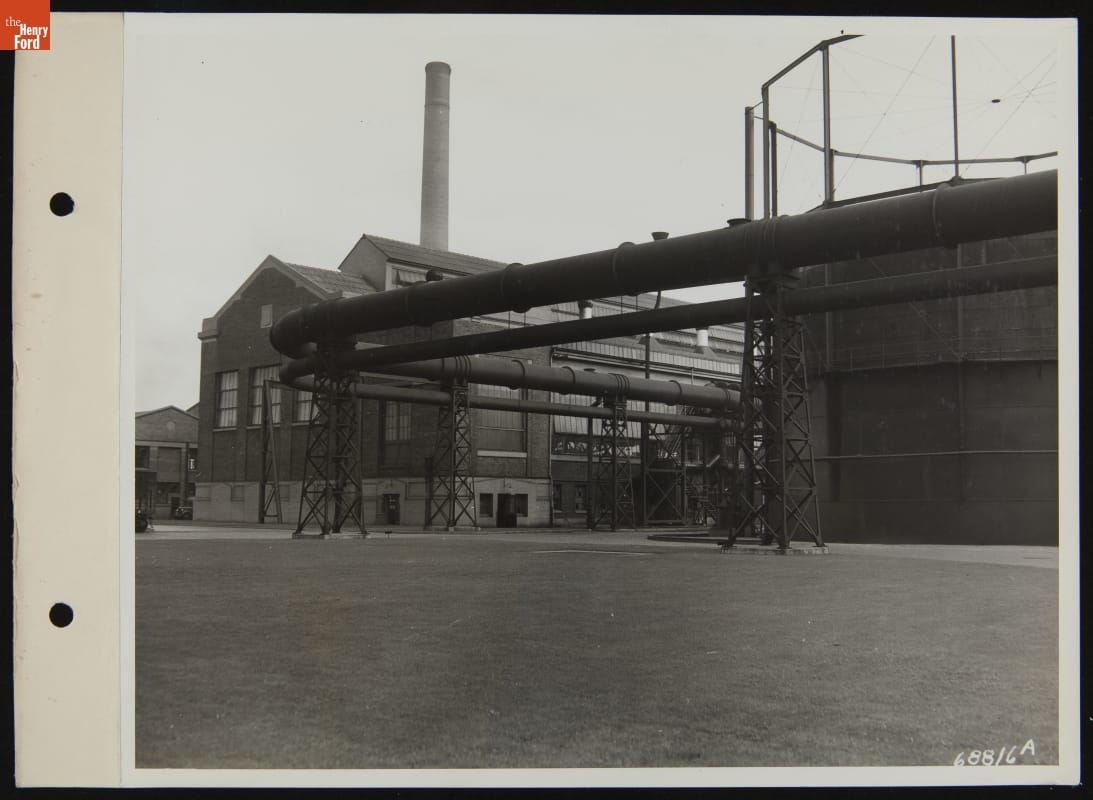
- September 15, 1937
- Collections - Artifact
Coke By-Products Plant at Ford Rouge Plant, September 16, 1937
Coke ovens at Ford Motor Company's Rouge plant converted coal into high-carbon coke, used in the factory's blast furnaces to make iron. The coking process also produced gas used to heat some of the factory's other furnaces. Additional by-products included ammonium sulfate fertilizer, and a light oil that Ford blended with gasoline to create its own Benzol brand of fuel.
- New Coke Ovens in Operation, Ford Rouge Plant, February 17, 1937 - Coke ovens at Ford Motor Company's Rouge plant converted coal into high-carbon coke, used in the factory's blast furnaces to produce iron. In 1921, the Rouge's ovens could produce up to 3,600 tons of coke daily. New, more efficient coke ovens opened in 1937. The coking process also produced gas used to heat some of the factory's other furnaces.
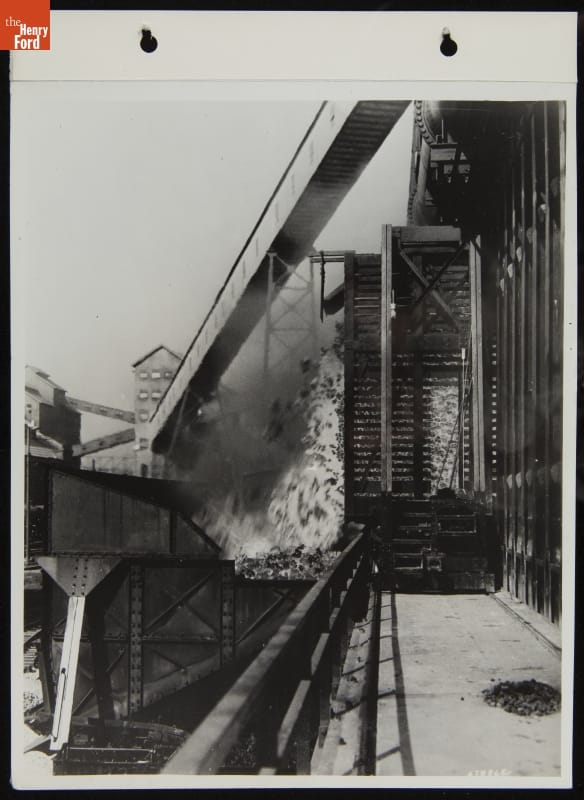
- February 17, 1937
- Collections - Artifact
New Coke Ovens in Operation, Ford Rouge Plant, February 17, 1937
Coke ovens at Ford Motor Company's Rouge plant converted coal into high-carbon coke, used in the factory's blast furnaces to produce iron. In 1921, the Rouge's ovens could produce up to 3,600 tons of coke daily. New, more efficient coke ovens opened in 1937. The coking process also produced gas used to heat some of the factory's other furnaces.
- Coke Ovens at Ford Rouge Plant Quenching Tower, November 27, 1939 - Enormous coke ovens at Ford Motor Company's Rouge plant converted coal into high-carbon coke, which was then used in the factory's blast furnaces to produce iron. After the red-hot coke was pushed from the ovens, a specialized railroad car carried it to the quenching tower, where the coke was doused with thousands of gallons of water.
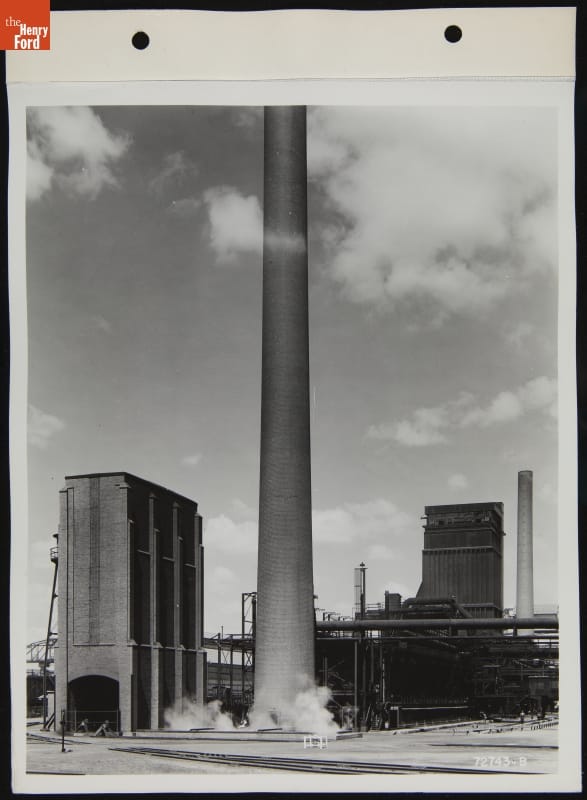
- November 27, 1939
- Collections - Artifact
Coke Ovens at Ford Rouge Plant Quenching Tower, November 27, 1939
Enormous coke ovens at Ford Motor Company's Rouge plant converted coal into high-carbon coke, which was then used in the factory's blast furnaces to produce iron. After the red-hot coke was pushed from the ovens, a specialized railroad car carried it to the quenching tower, where the coke was doused with thousands of gallons of water.
- New Coke Ovens at Ford Rouge Plant, September 19, 1938 - Coke ovens at Ford Motor Company's Rouge plant converted coal into high-carbon coke, used in the factory's blast furnaces to produce iron. In 1921, the Rouge's ovens could produce up to 3,600 tons of coke daily. New, more efficient coke ovens opened in 1937. The coking process also produced gas used to heat some of the factory's other furnaces.
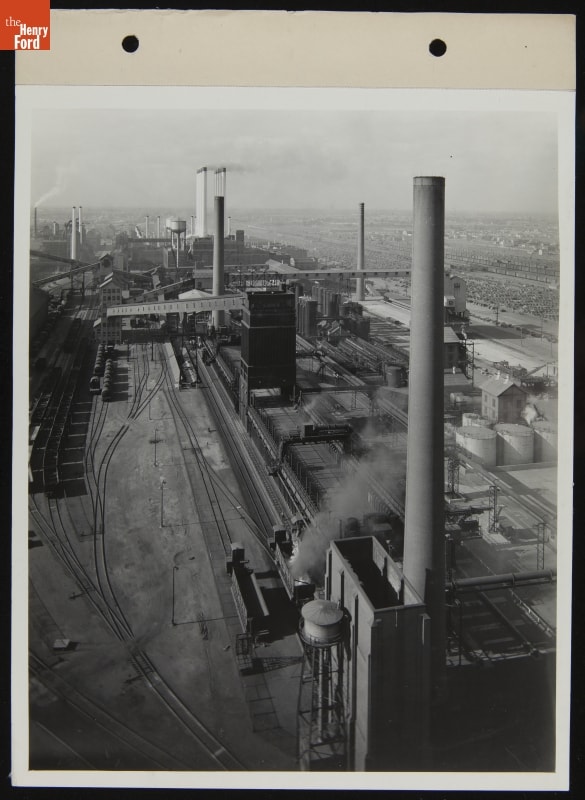
- September 19, 1938
- Collections - Artifact
New Coke Ovens at Ford Rouge Plant, September 19, 1938
Coke ovens at Ford Motor Company's Rouge plant converted coal into high-carbon coke, used in the factory's blast furnaces to produce iron. In 1921, the Rouge's ovens could produce up to 3,600 tons of coke daily. New, more efficient coke ovens opened in 1937. The coking process also produced gas used to heat some of the factory's other furnaces.
- Coke Ovens at Ford Rouge Plant, 1934 - Coke ovens at Ford Motor Company's Rouge plant converted coal into high-carbon coke, used in the factory's blast furnaces to produce iron. In 1921, the Rouge's ovens could produce up to 3,600 tons of coke daily. New, more efficient coke ovens opened in 1937. The coking process also produced gas used to heat some of the factory's other furnaces.
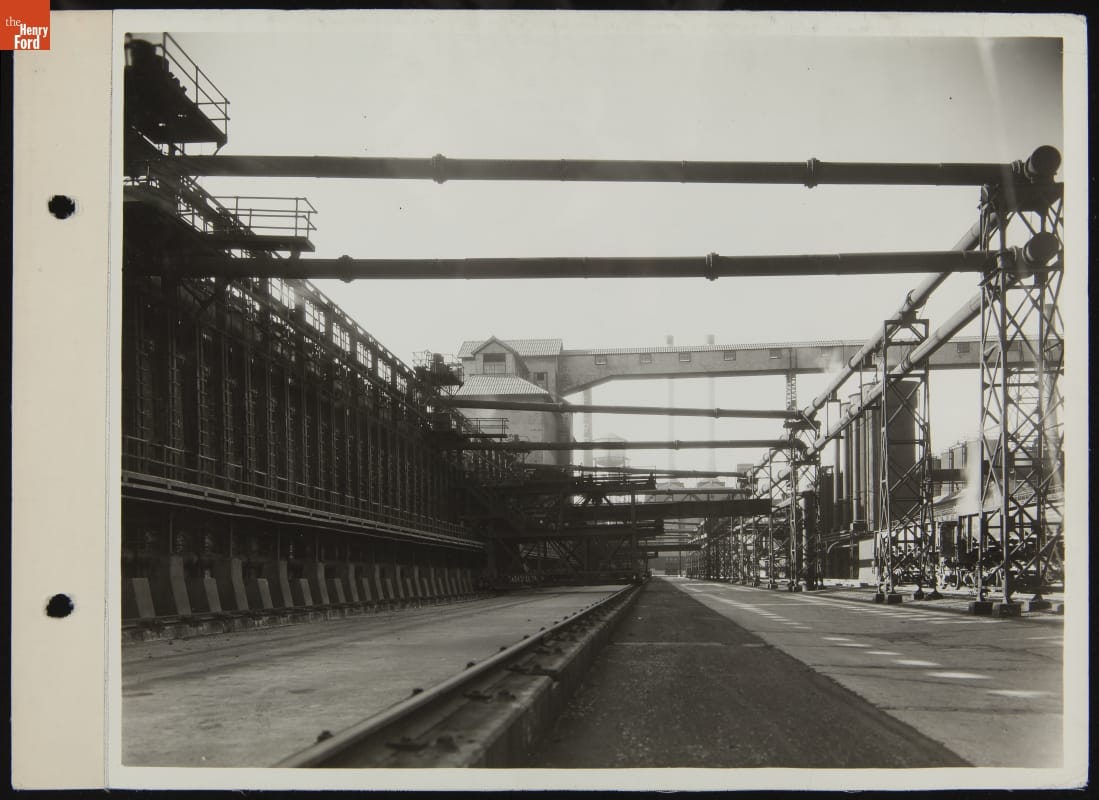
- 1934
- Collections - Artifact
Coke Ovens at Ford Rouge Plant, 1934
Coke ovens at Ford Motor Company's Rouge plant converted coal into high-carbon coke, used in the factory's blast furnaces to produce iron. In 1921, the Rouge's ovens could produce up to 3,600 tons of coke daily. New, more efficient coke ovens opened in 1937. The coking process also produced gas used to heat some of the factory's other furnaces.
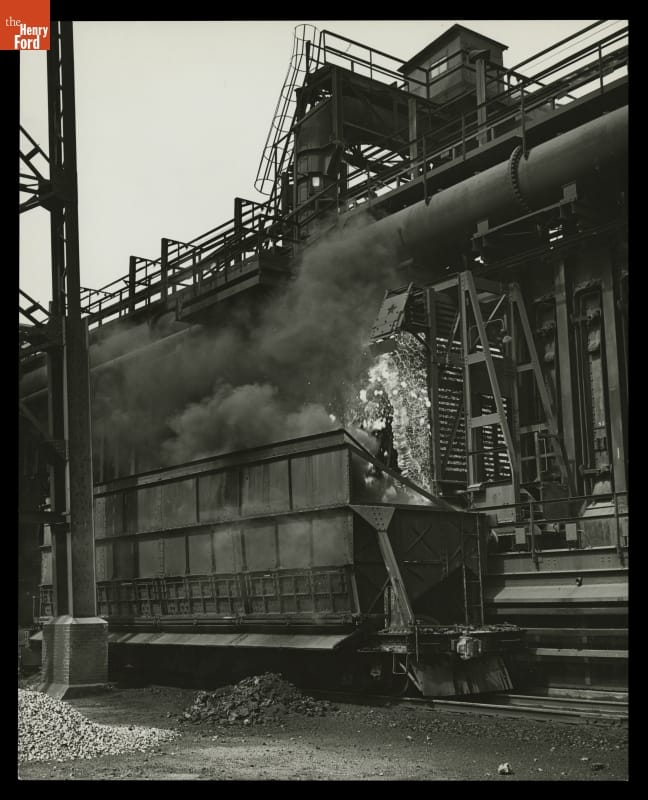
- Production from Coke Ovens for Use in Blast Furnaces and Foundry, Ford Rouge Plant, circa 1950 - To fuel the Rouge Plant's blast furnaces, Ford purchased several bituminous coal mines. Because bituminous coal was relatively impure, coking ovens were constructed at the Rouge complex within reach of dockside coal bins. The ovens coked the coal, releasing gases and removing impurities. Products of the process included coke for the furnaces, gas, and a number of other useful by-products.
- circa 1950
- Collections - Artifact
Production from Coke Ovens for Use in Blast Furnaces and Foundry, Ford Rouge Plant, circa 1950
To fuel the Rouge Plant's blast furnaces, Ford purchased several bituminous coal mines. Because bituminous coal was relatively impure, coking ovens were constructed at the Rouge complex within reach of dockside coal bins. The ovens coked the coal, releasing gases and removing impurities. Products of the process included coke for the furnaces, gas, and a number of other useful by-products.
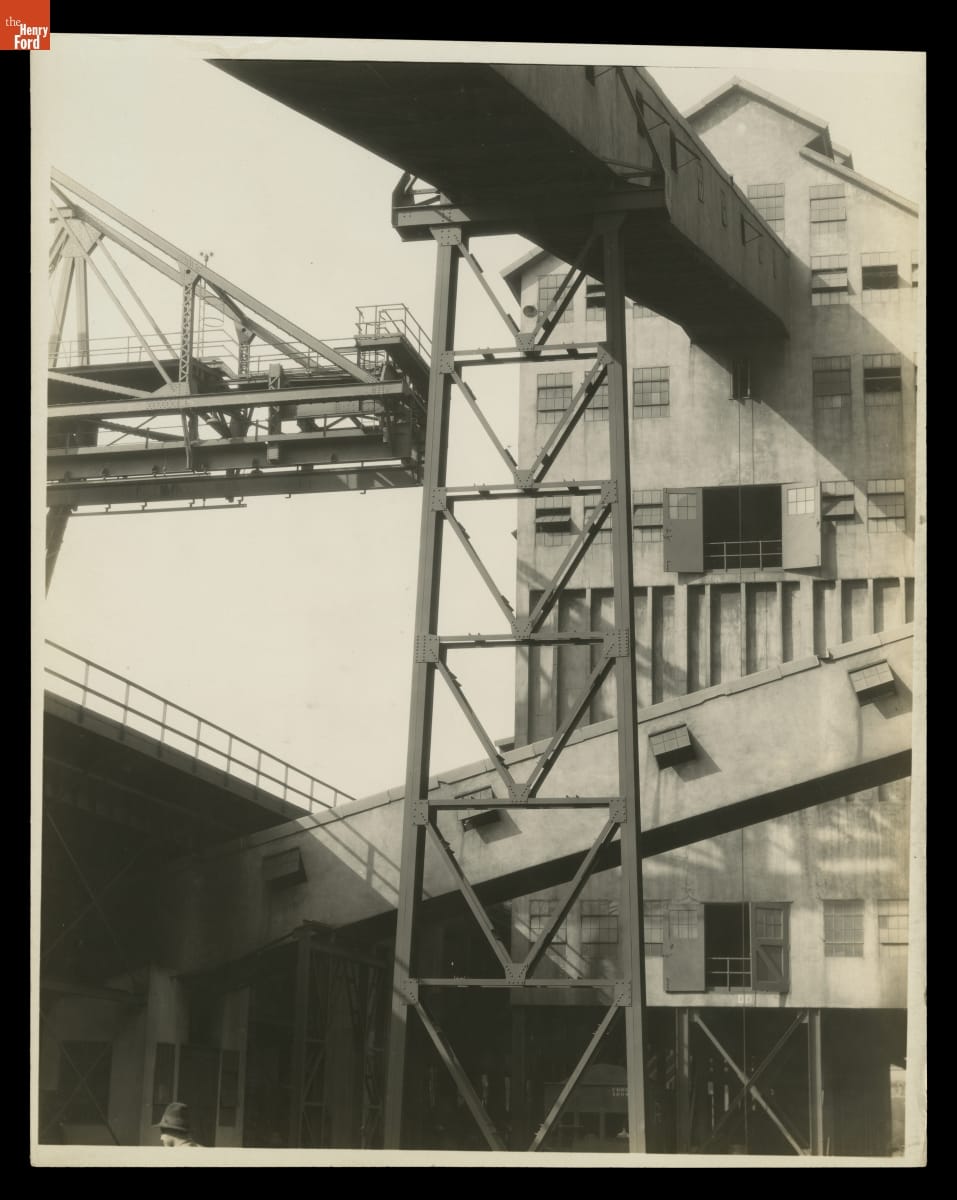
- Pulverizer Building, Coke Ovens at Ford Rouge Plant, 1927 - In 1927, Ford Motor Company commissioned Charles Sheeler to make a series of documentary photographs of its Rouge plant near Dearborn, Michigan. This photo shows the building where coal was pulverized into an appropriate consistency for the plant's coke ovens. High-carbon coke, made from the pulverized coal, was used in making iron in Ford's blast furnaces.
- 1927
- Collections - Artifact
Pulverizer Building, Coke Ovens at Ford Rouge Plant, 1927
In 1927, Ford Motor Company commissioned Charles Sheeler to make a series of documentary photographs of its Rouge plant near Dearborn, Michigan. This photo shows the building where coal was pulverized into an appropriate consistency for the plant's coke ovens. High-carbon coke, made from the pulverized coal, was used in making iron in Ford's blast furnaces.