
Search
- Coke Ovens at Ford Rouge Plant Quenching Tower, November 27, 1939 - Enormous coke ovens at Ford Motor Company's Rouge plant converted coal into high-carbon coke, which was then used in the factory's blast furnaces to produce iron. After the red-hot coke was pushed from the ovens, a specialized railroad car carried it to the quenching tower, where the coke was doused with thousands of gallons of water.
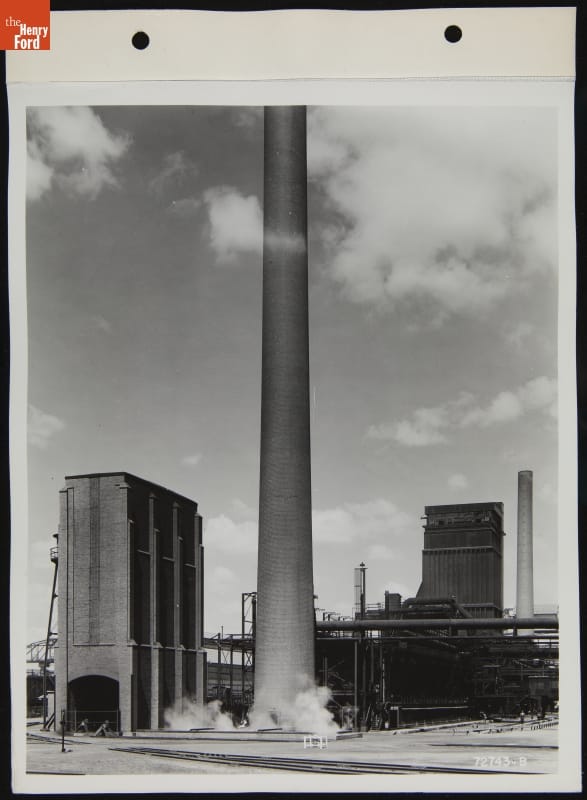
- November 27, 1939
- Collections - Artifact
Coke Ovens at Ford Rouge Plant Quenching Tower, November 27, 1939
Enormous coke ovens at Ford Motor Company's Rouge plant converted coal into high-carbon coke, which was then used in the factory's blast furnaces to produce iron. After the red-hot coke was pushed from the ovens, a specialized railroad car carried it to the quenching tower, where the coke was doused with thousands of gallons of water.
- Cleoda Davis (right) and Another Man at Semet-Solvay Plant, Detroit, Michigan, 1940-1949 - Cleoda Davis (1899-1964) was born in North Carolina in 1899. He came north during World War I and found work at the Great Lakes Engineering Works, a large shipbuilding company in River Rouge, Michigan, south of Detroit. Later, Davis worked as a pipe fitter for Semet-Solvay, a Detroit chemical company. This image shows him [right] and an unidentified co-worker at Semet-Solvay.
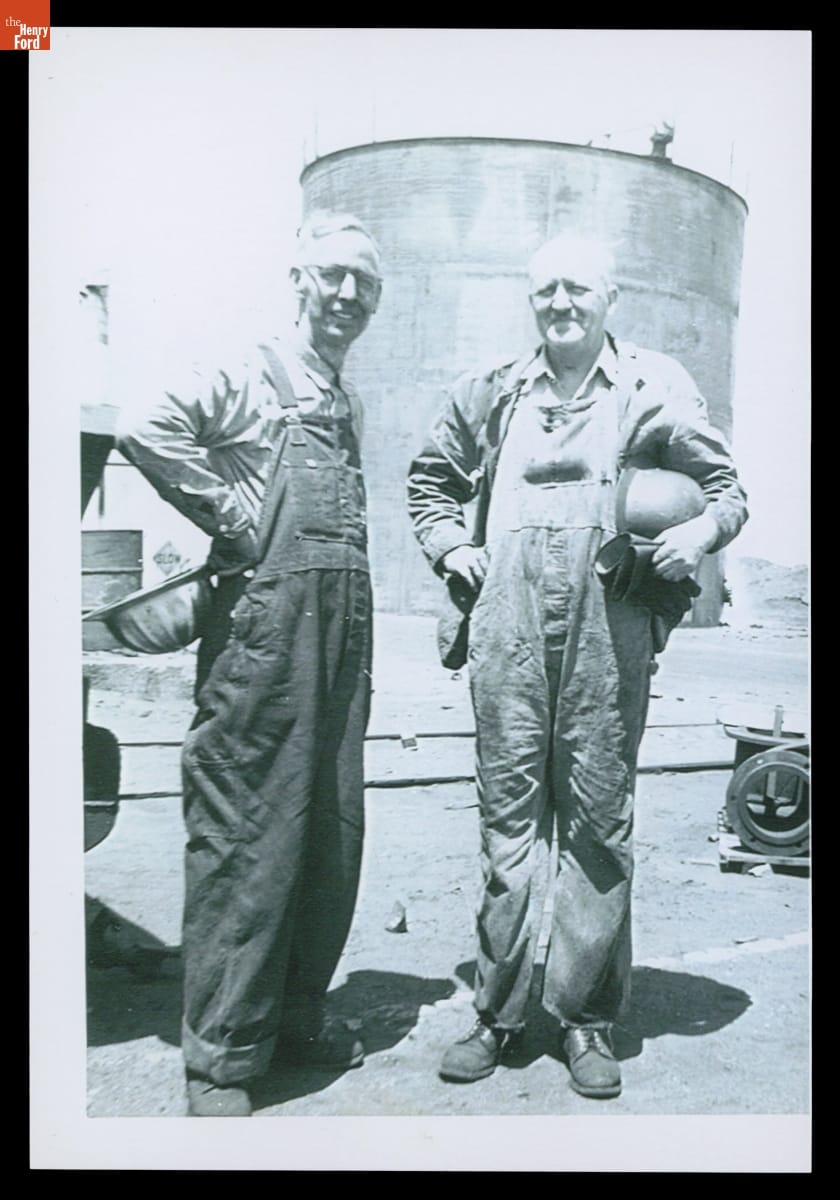
- 1940-1949
- Collections - Artifact
Cleoda Davis (right) and Another Man at Semet-Solvay Plant, Detroit, Michigan, 1940-1949
Cleoda Davis (1899-1964) was born in North Carolina in 1899. He came north during World War I and found work at the Great Lakes Engineering Works, a large shipbuilding company in River Rouge, Michigan, south of Detroit. Later, Davis worked as a pipe fitter for Semet-Solvay, a Detroit chemical company. This image shows him [right] and an unidentified co-worker at Semet-Solvay.
- View of Rouge Plant Coke Ovens from Quenching Tower, 1934 - Enormous coke ovens at Ford Motor Company's Rouge plant converted coal into high-carbon coke, which was then used in the factory's blast furnaces to produce iron. This view looks back toward the coke ovens from inside the quenching tower, where a specialized railcar carrying red-hot coke was doused with thousands of gallons of water.
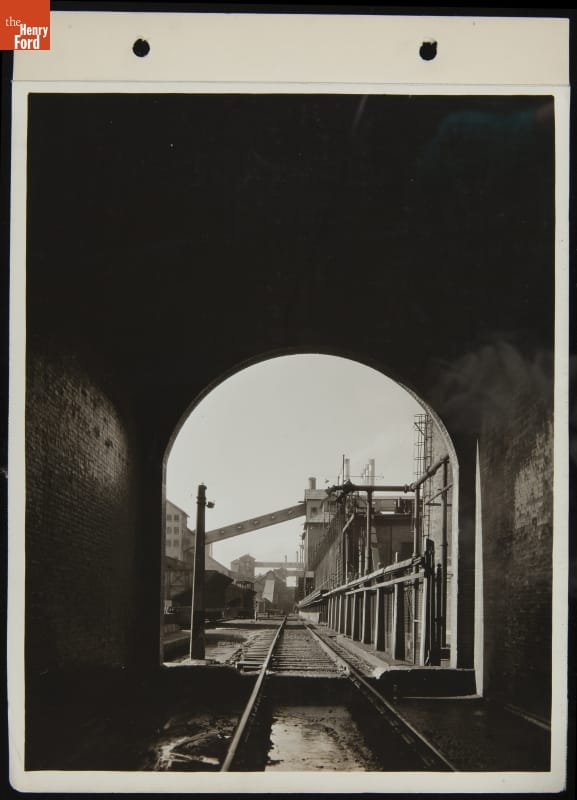
- 1934
- Collections - Artifact
View of Rouge Plant Coke Ovens from Quenching Tower, 1934
Enormous coke ovens at Ford Motor Company's Rouge plant converted coal into high-carbon coke, which was then used in the factory's blast furnaces to produce iron. This view looks back toward the coke ovens from inside the quenching tower, where a specialized railcar carrying red-hot coke was doused with thousands of gallons of water.
- Coke Quenching Tower at Ford Rouge Plant, 1944 - Coke ovens at Ford Motor Company's Rouge plant converted coal into high-carbon coke, used in the factory's blast furnaces to produce iron. In 1921, the Rouge's ovens could produce up to 3,600 tons of coke daily. New, more efficient coke ovens opened in 1937. The coking process also produced gas used to heat some of the factory's other furnaces.
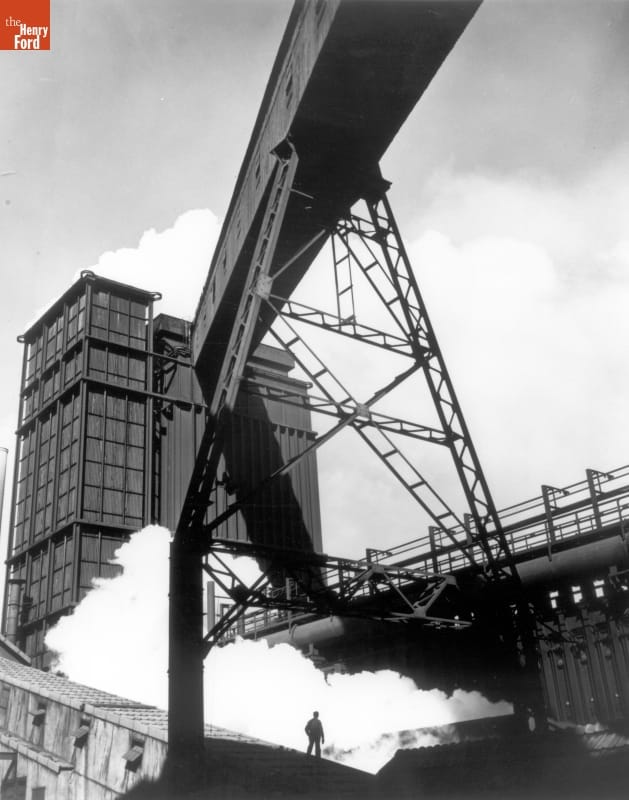
- February 01, 1944
- Collections - Artifact
Coke Quenching Tower at Ford Rouge Plant, 1944
Coke ovens at Ford Motor Company's Rouge plant converted coal into high-carbon coke, used in the factory's blast furnaces to produce iron. In 1921, the Rouge's ovens could produce up to 3,600 tons of coke daily. New, more efficient coke ovens opened in 1937. The coking process also produced gas used to heat some of the factory's other furnaces.