
Search
- Horse Collar, 1880-1930 - Fitted with a padded collar and other tack or harness equipment, a horse can move heavy loads or pull carriages, wagons, plows and other machinery. The collar distributes the weight around the horse's neck and shoulders, while avoiding pressure on the animal's windpipe. With this age-old invention, horses became and remain a valuable engine in non-motorized environments.
- 1880-1930
- Collections - Artifact
Horse Collar, 1880-1930
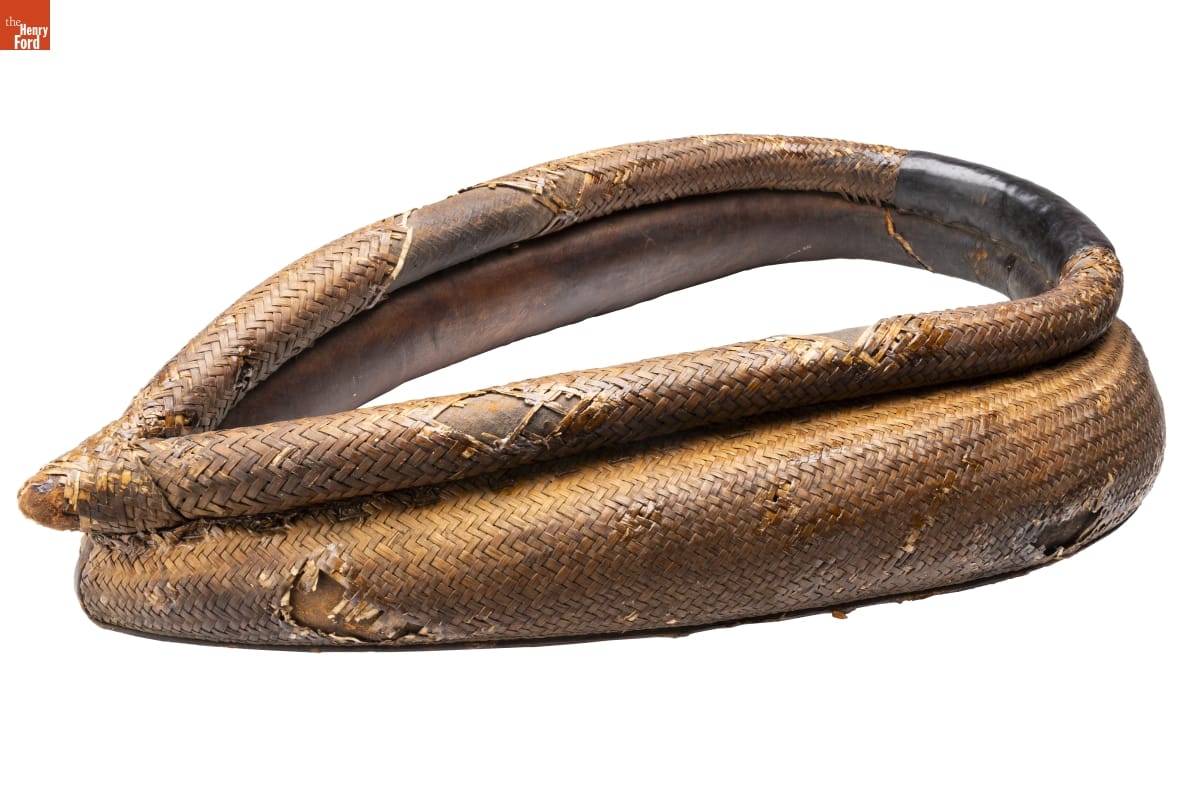
Fitted with a padded collar and other tack or harness equipment, a horse can move heavy loads or pull carriages, wagons, plows and other machinery. The collar distributes the weight around the horse's neck and shoulders, while avoiding pressure on the animal's windpipe. With this age-old invention, horses became and remain a valuable engine in non-motorized environments.
- Horse Collar, 1880-1930 - Fitted with a padded collar and other tack or harness equipment, a horse can move heavy loads or pull carriages, wagons, plows and other machinery. The collar distributes the weight around the horse's neck and shoulders, while avoiding pressure on the animal's windpipe. With this age-old invention, horses became and remain a valuable engine in non-motorized environments.
- 1880-1930
- Collections - Artifact
Horse Collar, 1880-1930
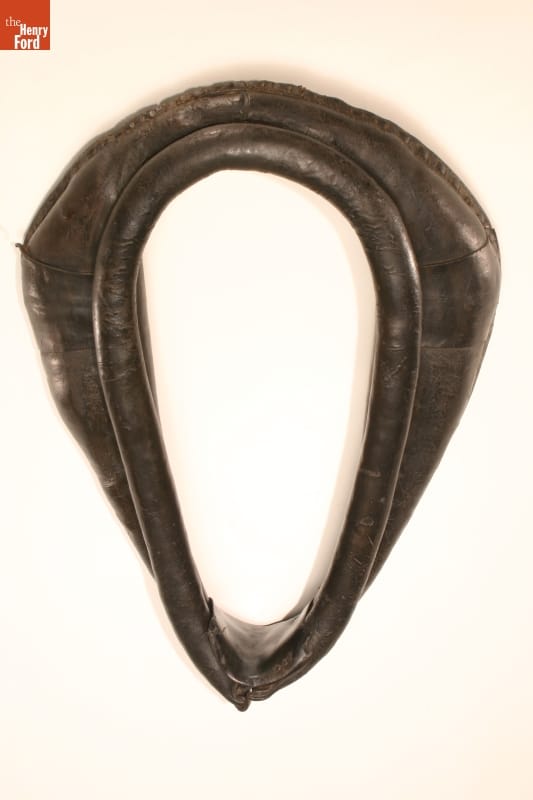
Fitted with a padded collar and other tack or harness equipment, a horse can move heavy loads or pull carriages, wagons, plows and other machinery. The collar distributes the weight around the horse's neck and shoulders, while avoiding pressure on the animal's windpipe. With this age-old invention, horses became and remain a valuable engine in non-motorized environments.
- Double Brougham Harness, Used by the Hewitt Family, 1870-1900 - Abram Hewitt and Edward Cooper formed the Trenton Iron Works in 1847. Hewitt married Cooper's sister, Sarah Amelia Cooper, in 1855. The Cooper and Hewitt families co-owned several subsequent businesses, and they shared a summer estate, Ringwood Manor, in northern New Jersey. Abram Hewitt served in the U.S. House of Representatives and as mayor of New York City.
- 1870-1900
- Collections - Artifact
Double Brougham Harness, Used by the Hewitt Family, 1870-1900
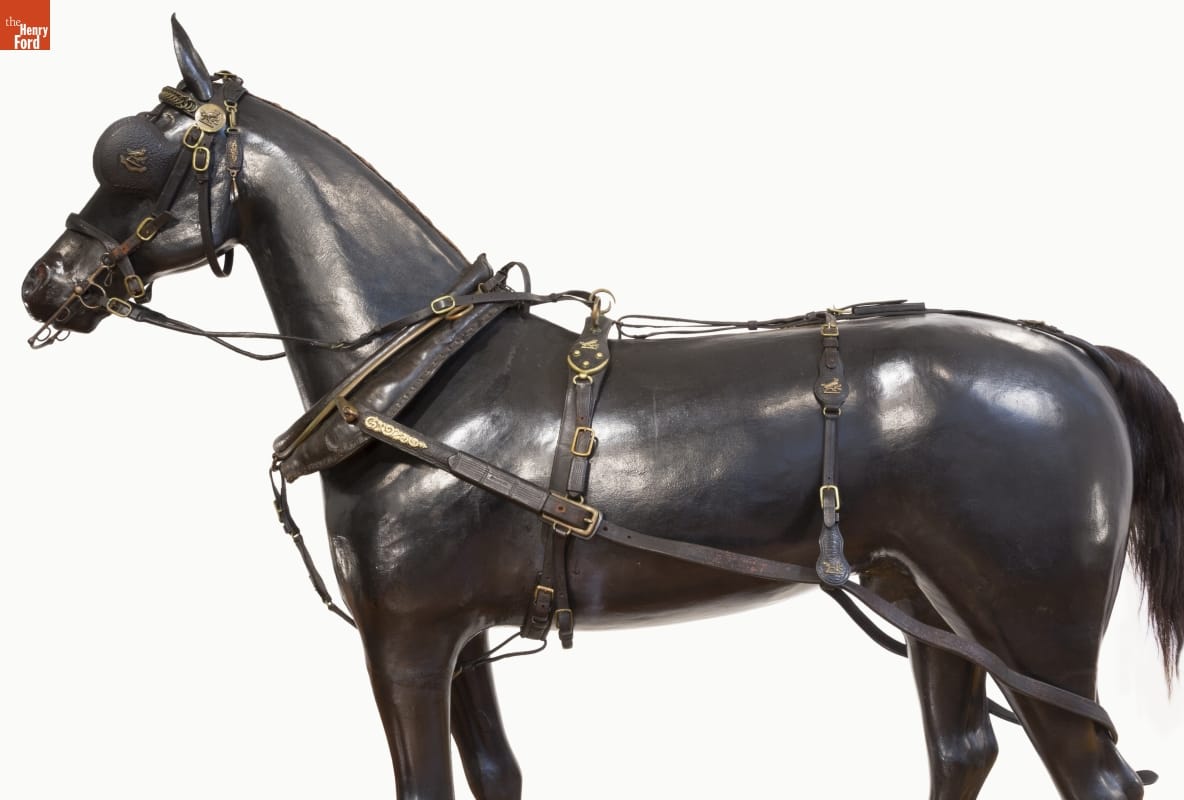
Abram Hewitt and Edward Cooper formed the Trenton Iron Works in 1847. Hewitt married Cooper's sister, Sarah Amelia Cooper, in 1855. The Cooper and Hewitt families co-owned several subsequent businesses, and they shared a summer estate, Ringwood Manor, in northern New Jersey. Abram Hewitt served in the U.S. House of Representatives and as mayor of New York City.
- Pair of Hames, 1810-1816 - Family tradition recorded that these hames -- equipment attached to horse collars to accommodate leather traces -- were made for M. Hazelip in 1817 by Thomas Lincoln, father of President Abraham Lincoln. The Hazelip family was living in Kentucky at that time; but the Lincolns left in 1816. Is the tradition untrue or just misremembered? Future research may confirm or refute the connection.
- 1810-1816
- Collections - Artifact
Pair of Hames, 1810-1816
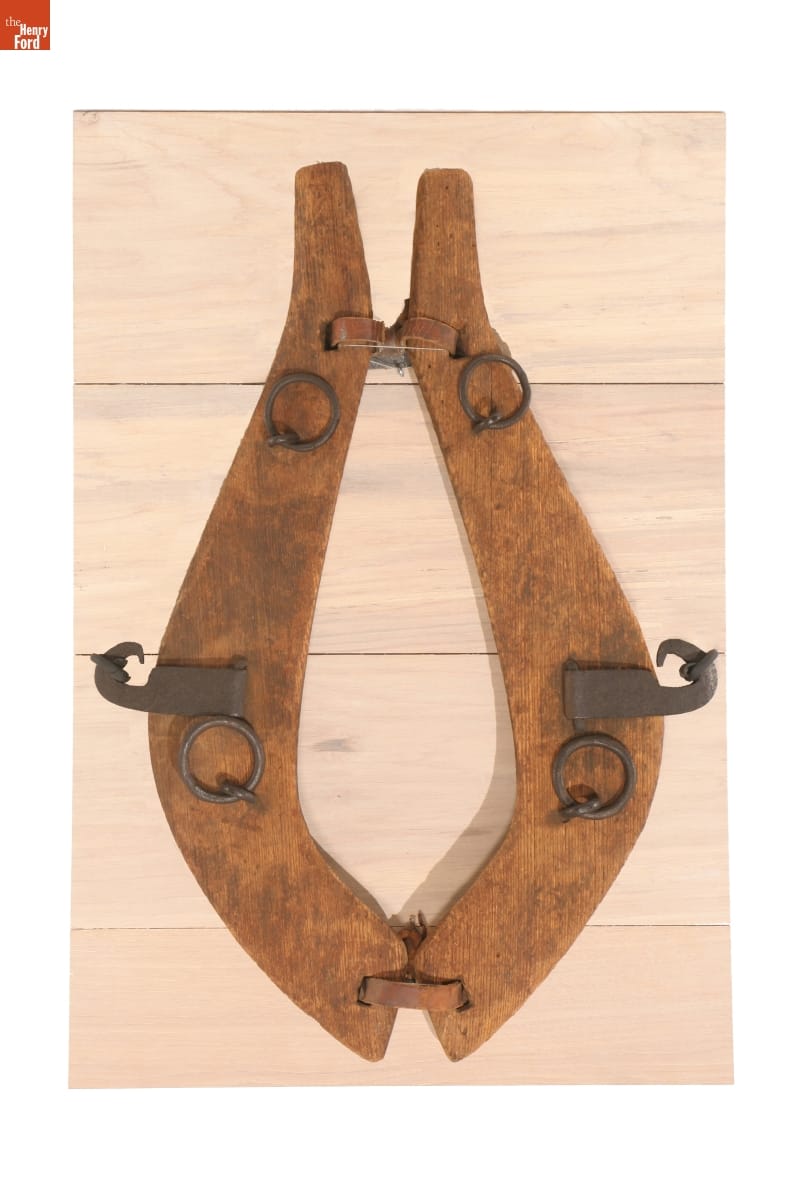
Family tradition recorded that these hames -- equipment attached to horse collars to accommodate leather traces -- were made for M. Hazelip in 1817 by Thomas Lincoln, father of President Abraham Lincoln. The Hazelip family was living in Kentucky at that time; but the Lincolns left in 1816. Is the tradition untrue or just misremembered? Future research may confirm or refute the connection.
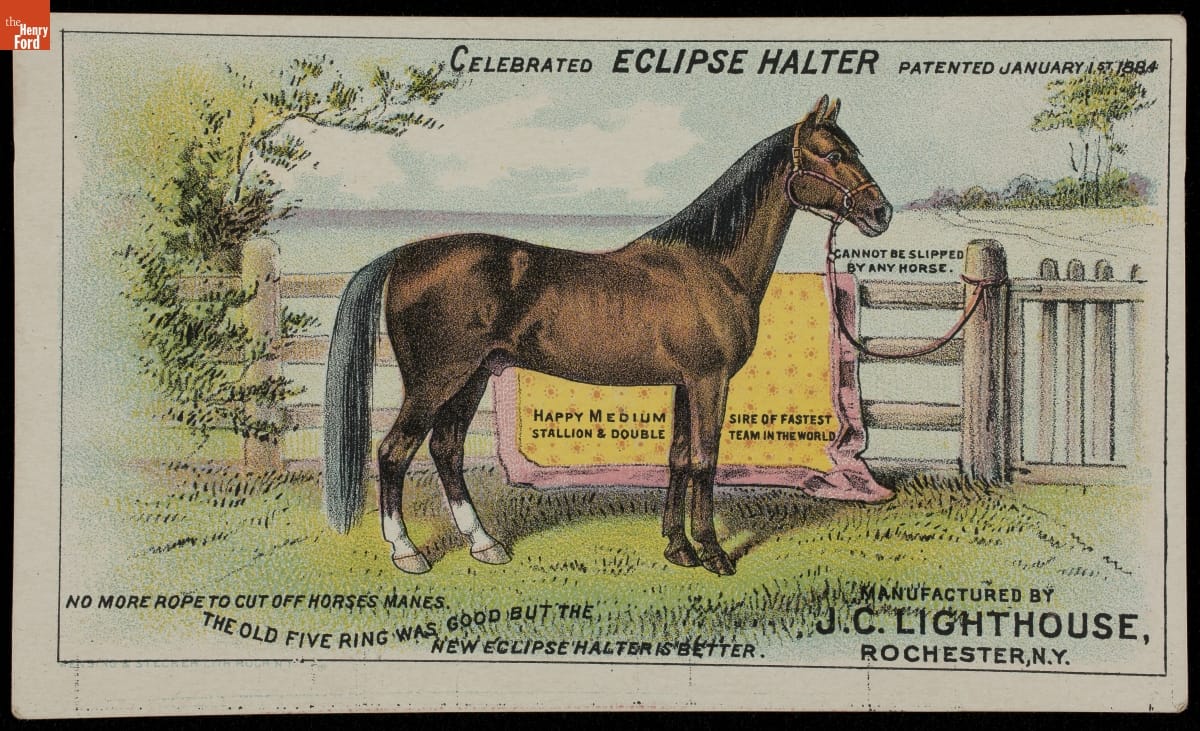
- Trade Card for Horse Collars and "Eclipse" Halters, J. C. Lighthouse, 1884-1894 - In the last third of the nineteenth century, an unprecedented variety of consumer goods and services flooded the American market. Advertisers, armed with new methods of color printing, bombarded potential customers with trade cards. Americans enjoyed and often saved the vibrant little advertisements found in product packages or distributed by local merchants. Many survive as historical records of commercialism in the United States.
- 1884-1894
- Collections - Artifact
Trade Card for Horse Collars and "Eclipse" Halters, J. C. Lighthouse, 1884-1894
In the last third of the nineteenth century, an unprecedented variety of consumer goods and services flooded the American market. Advertisers, armed with new methods of color printing, bombarded potential customers with trade cards. Americans enjoyed and often saved the vibrant little advertisements found in product packages or distributed by local merchants. Many survive as historical records of commercialism in the United States.
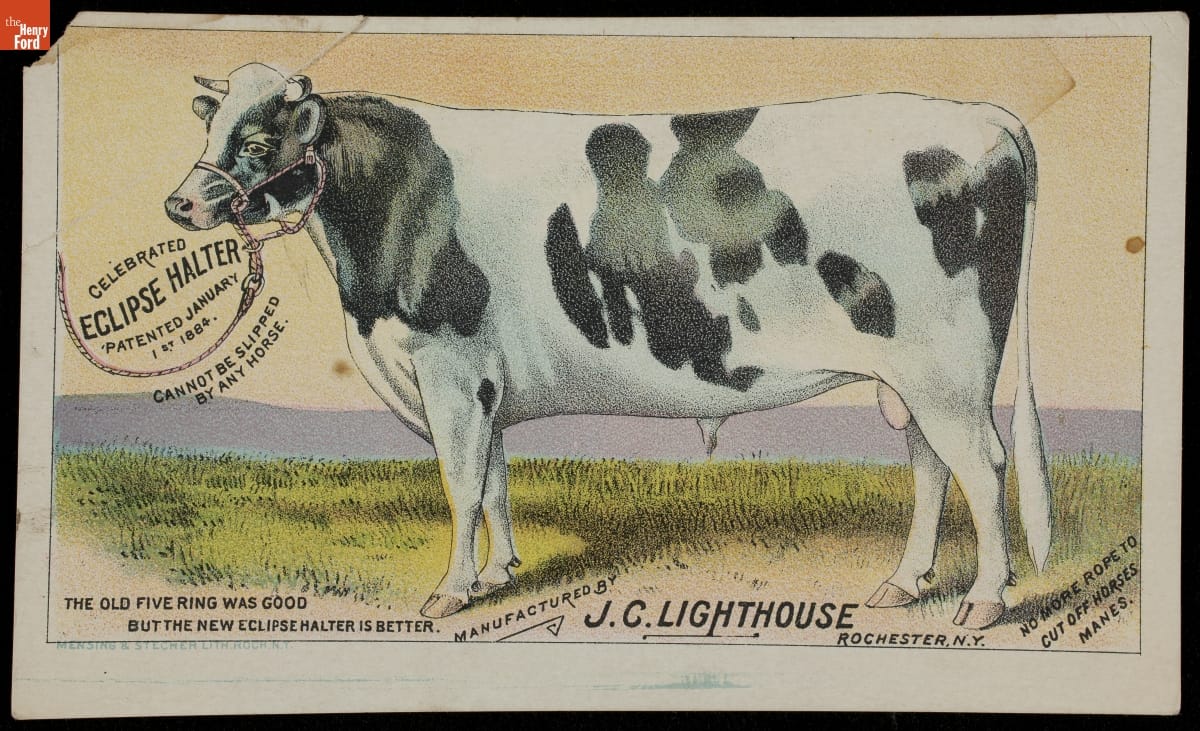
- Trade Card for Horse Collars and "Eclipse" Halters, J. C. Lighthouse, 1884-1894 - In the last third of the nineteenth century, an unprecedented variety of consumer goods and services flooded the American market. Advertisers, armed with new methods of color printing, bombarded potential customers with trade cards. Americans enjoyed and often saved the vibrant little advertisements found in product packages or distributed by local merchants. Many survive as historical records of commercialism in the United States.
- 1884-1894
- Collections - Artifact
Trade Card for Horse Collars and "Eclipse" Halters, J. C. Lighthouse, 1884-1894
In the last third of the nineteenth century, an unprecedented variety of consumer goods and services flooded the American market. Advertisers, armed with new methods of color printing, bombarded potential customers with trade cards. Americans enjoyed and often saved the vibrant little advertisements found in product packages or distributed by local merchants. Many survive as historical records of commercialism in the United States.
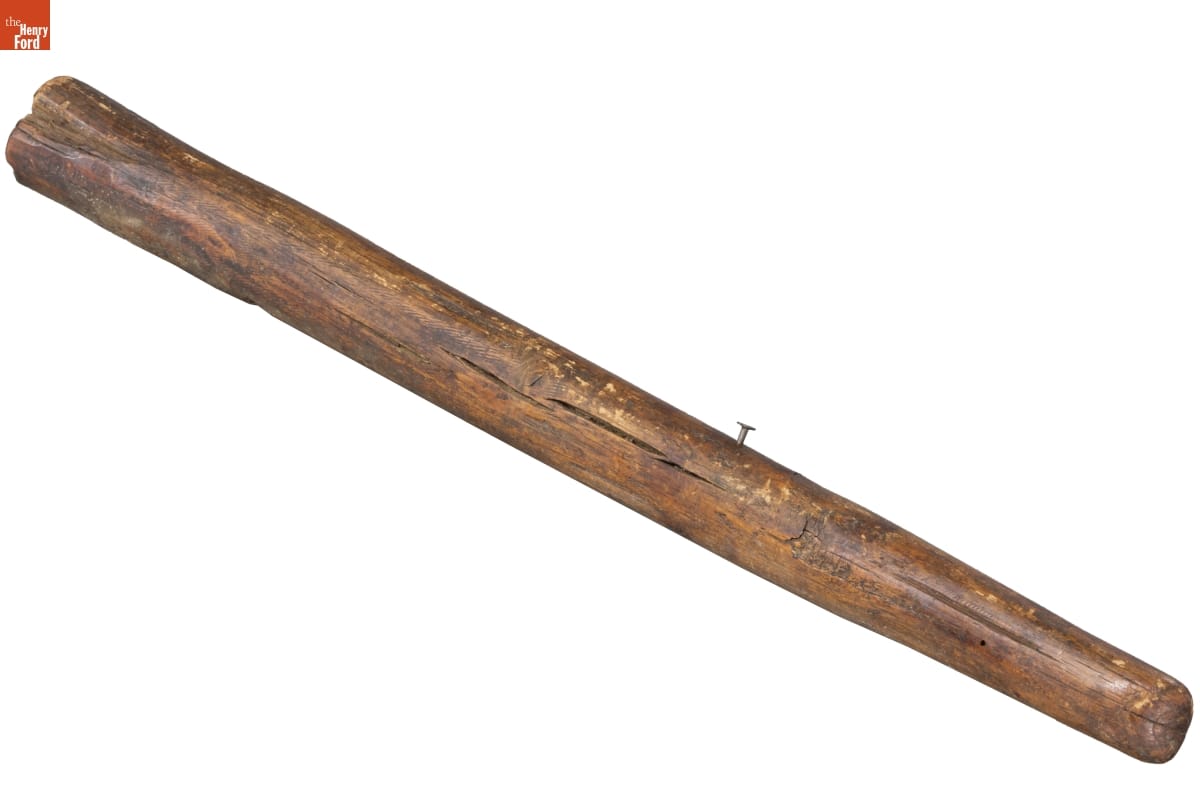
- Horse Collar Beater, circa 1850 -
- circa 1850
- Collections - Artifact
Horse Collar Beater, circa 1850
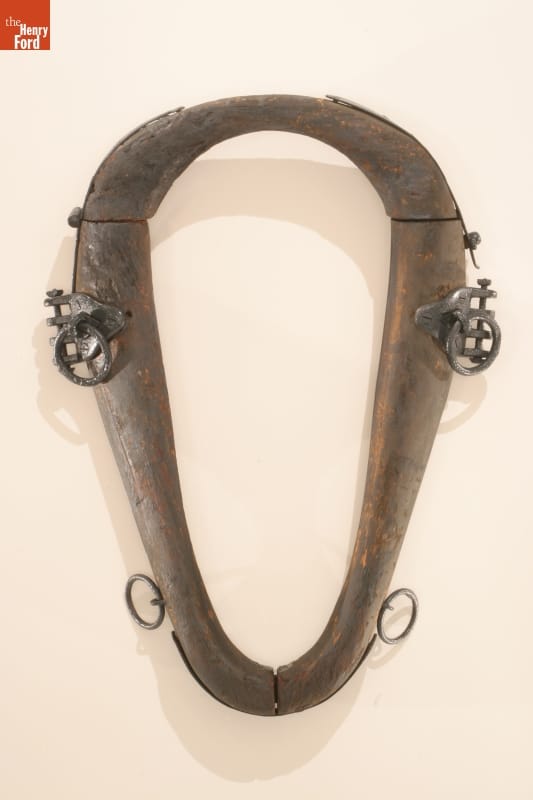
- Horse Collar, 1860-1920 - Fitted with a padded collar and other tack or harness equipment, a horse can move heavy loads or pull carriages, wagons, plows and other machinery. The collar distributes the weight around the horse's neck and shoulders, while avoiding pressure on the animal's windpipe. With this age-old invention, horses became and remain a valuable engine in non-motorized environments.
- 1860-1920
- Collections - Artifact
Horse Collar, 1860-1920
Fitted with a padded collar and other tack or harness equipment, a horse can move heavy loads or pull carriages, wagons, plows and other machinery. The collar distributes the weight around the horse's neck and shoulders, while avoiding pressure on the animal's windpipe. With this age-old invention, horses became and remain a valuable engine in non-motorized environments.
- Horse Collar, 1880-1930 - Fitted with a padded collar and other tack or harness equipment, a horse can move heavy loads or pull carriages, wagons, plows and other machinery. The collar distributes the weight around the horse's neck and shoulders, while avoiding pressure on the animal's windpipe. With this age-old invention, horses became and remain a valuable engine in non-motorized environments.
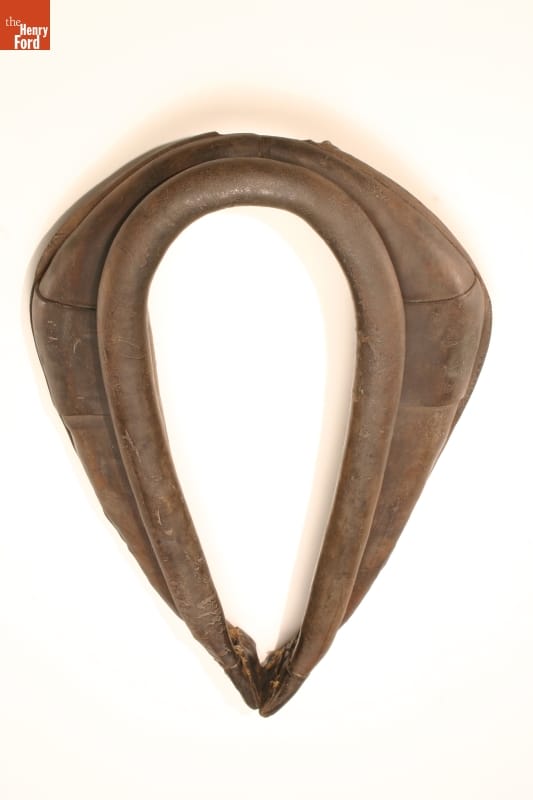
- 1880-1930
- Collections - Artifact
Horse Collar, 1880-1930
Fitted with a padded collar and other tack or harness equipment, a horse can move heavy loads or pull carriages, wagons, plows and other machinery. The collar distributes the weight around the horse's neck and shoulders, while avoiding pressure on the animal's windpipe. With this age-old invention, horses became and remain a valuable engine in non-motorized environments.
- Horse Collar, 1800-1900 - Fitted with a padded collar and other tack or harness equipment, a horse can move heavy loads or pull carriages, wagons, plows and other machinery. The collar distributes the weight around the horse's neck and shoulders, while avoiding pressure on the animal's windpipe. With this age-old invention, horses became and remain a valuable engine in non-motorized environments.
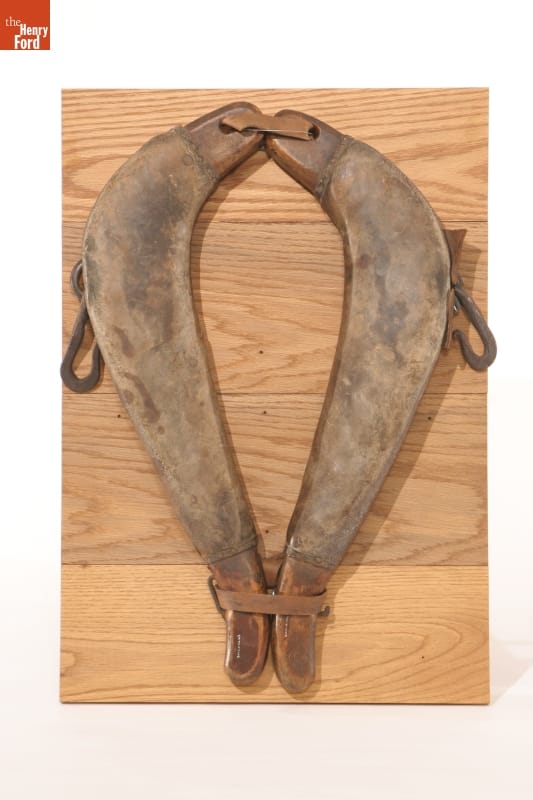
- 1800-1900
- Collections - Artifact
Horse Collar, 1800-1900
Fitted with a padded collar and other tack or harness equipment, a horse can move heavy loads or pull carriages, wagons, plows and other machinery. The collar distributes the weight around the horse's neck and shoulders, while avoiding pressure on the animal's windpipe. With this age-old invention, horses became and remain a valuable engine in non-motorized environments.