
Search
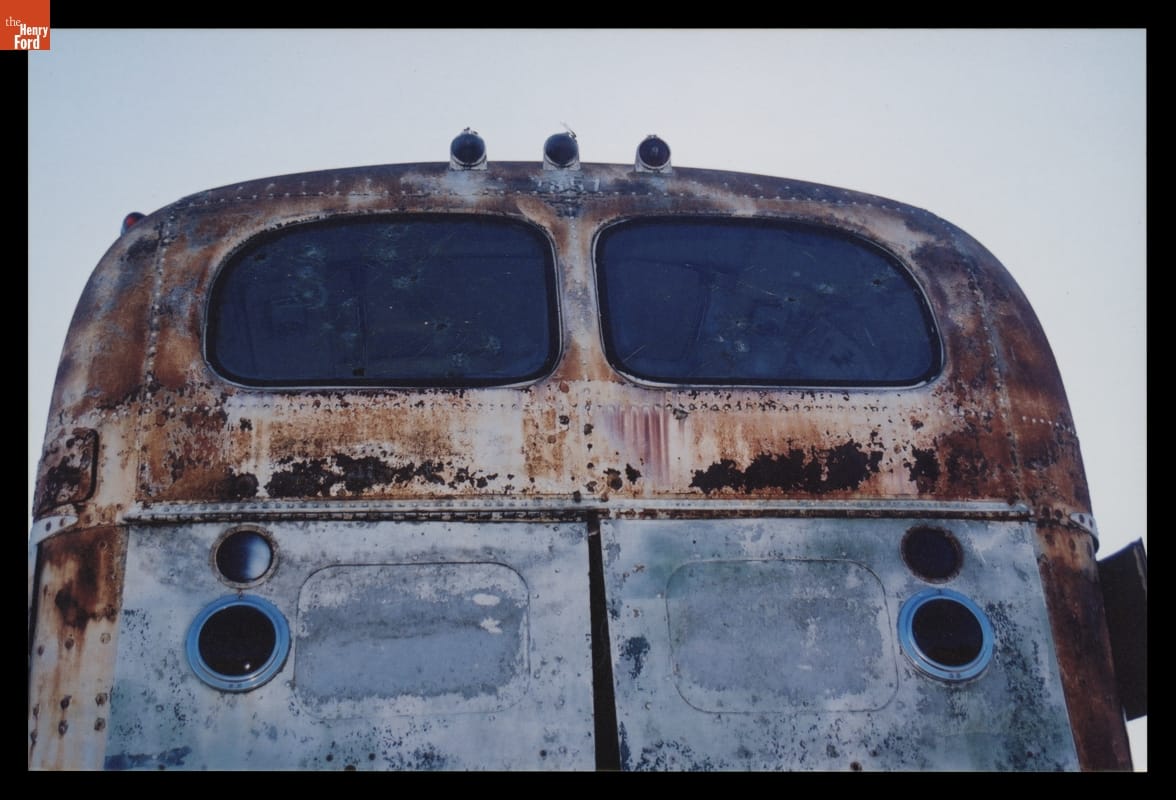
- Rosa Parks Bus before Restoration, outside Henry Ford Museum, September 12, 2002 - This bus, the site of Rosa Parks's stand against segregation laws, sat as a rusted storage shed before The Henry Ford acquired it and began a full restoration. Parks's act of defiance on December 1, 1955, sparked the Montgomery Bus Boycott, which helped to ignite the Civil Rights Movement. Today, the restored bus survives as a reminder of her courageous activism.
- September 12, 2002
- Collections - Artifact
Rosa Parks Bus before Restoration, outside Henry Ford Museum, September 12, 2002
This bus, the site of Rosa Parks's stand against segregation laws, sat as a rusted storage shed before The Henry Ford acquired it and began a full restoration. Parks's act of defiance on December 1, 1955, sparked the Montgomery Bus Boycott, which helped to ignite the Civil Rights Movement. Today, the restored bus survives as a reminder of her courageous activism.
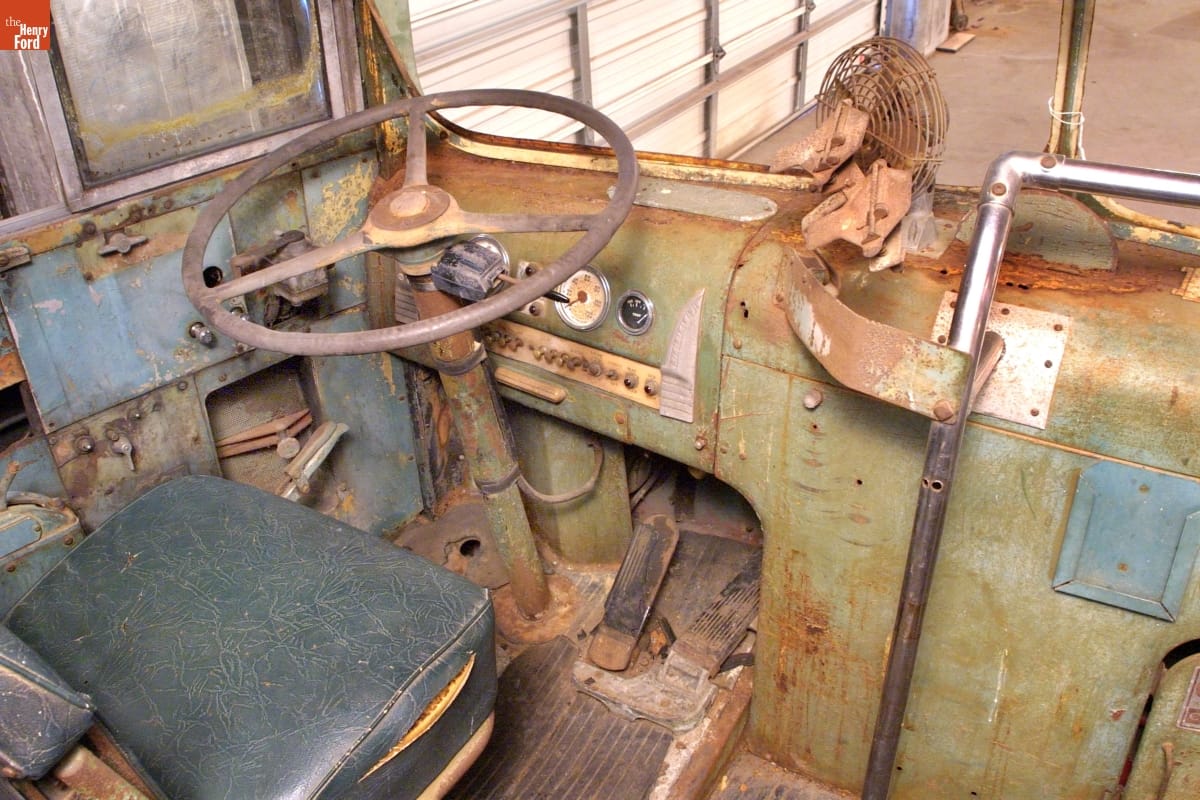
- Rosa Parks Bus before Restoration, Interior, Driver's Area, March 2002 - This bus, the site of Rosa Parks's stand against segregation laws, sat as a rusted storage shed before The Henry Ford acquired it and began a full restoration. Parks's act of defiance on December 1, 1955, sparked the Montgomery Bus Boycott, which helped to ignite the Civil Rights Movement. Today, the restored bus survives as a reminder of her courageous activism.
- March 01, 2002
- Collections - Artifact
Rosa Parks Bus before Restoration, Interior, Driver's Area, March 2002
This bus, the site of Rosa Parks's stand against segregation laws, sat as a rusted storage shed before The Henry Ford acquired it and began a full restoration. Parks's act of defiance on December 1, 1955, sparked the Montgomery Bus Boycott, which helped to ignite the Civil Rights Movement. Today, the restored bus survives as a reminder of her courageous activism.
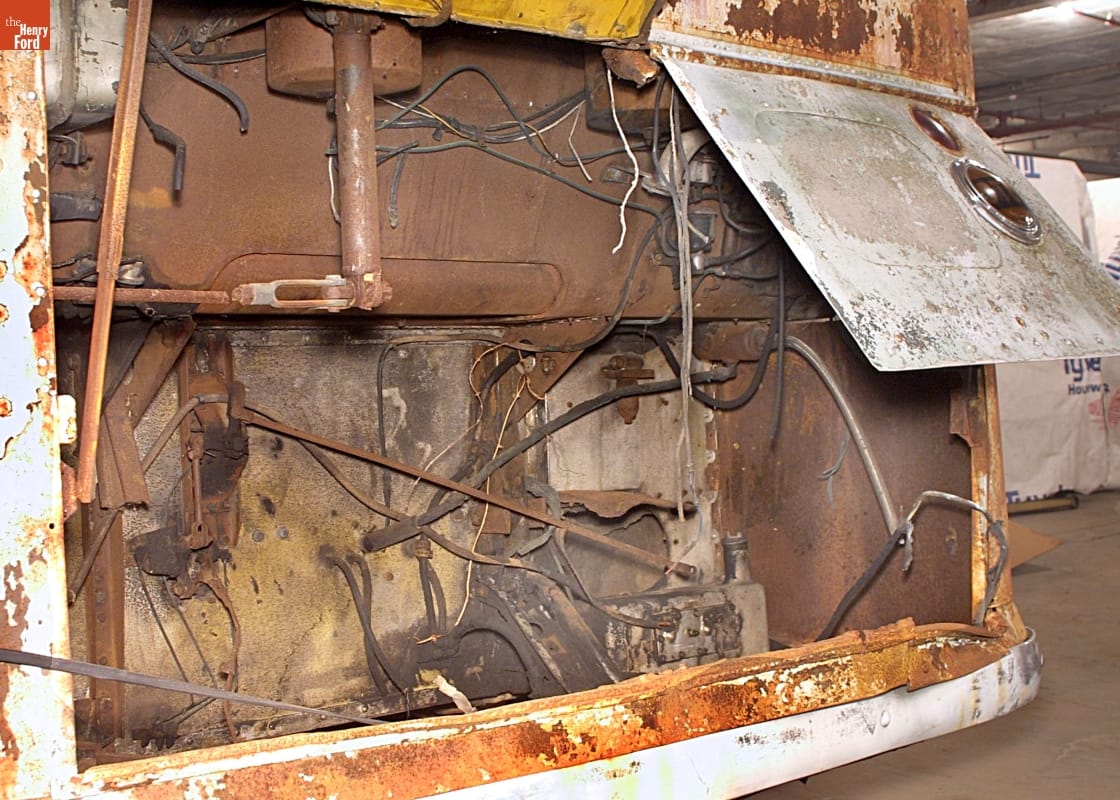
- Rosa Parks Bus before Restoration, Rear Engine Compartment, March 2002 - This bus, the site of Rosa Parks's stand against segregation laws, sat as a rusted storage shed before The Henry Ford acquired it and began a full restoration. Parks's act of defiance on December 1, 1955, sparked the Montgomery Bus Boycott, which helped to ignite the Civil Rights Movement. Today, the restored bus survives as a reminder of her courageous activism.
- March 01, 2002
- Collections - Artifact
Rosa Parks Bus before Restoration, Rear Engine Compartment, March 2002
This bus, the site of Rosa Parks's stand against segregation laws, sat as a rusted storage shed before The Henry Ford acquired it and began a full restoration. Parks's act of defiance on December 1, 1955, sparked the Montgomery Bus Boycott, which helped to ignite the Civil Rights Movement. Today, the restored bus survives as a reminder of her courageous activism.
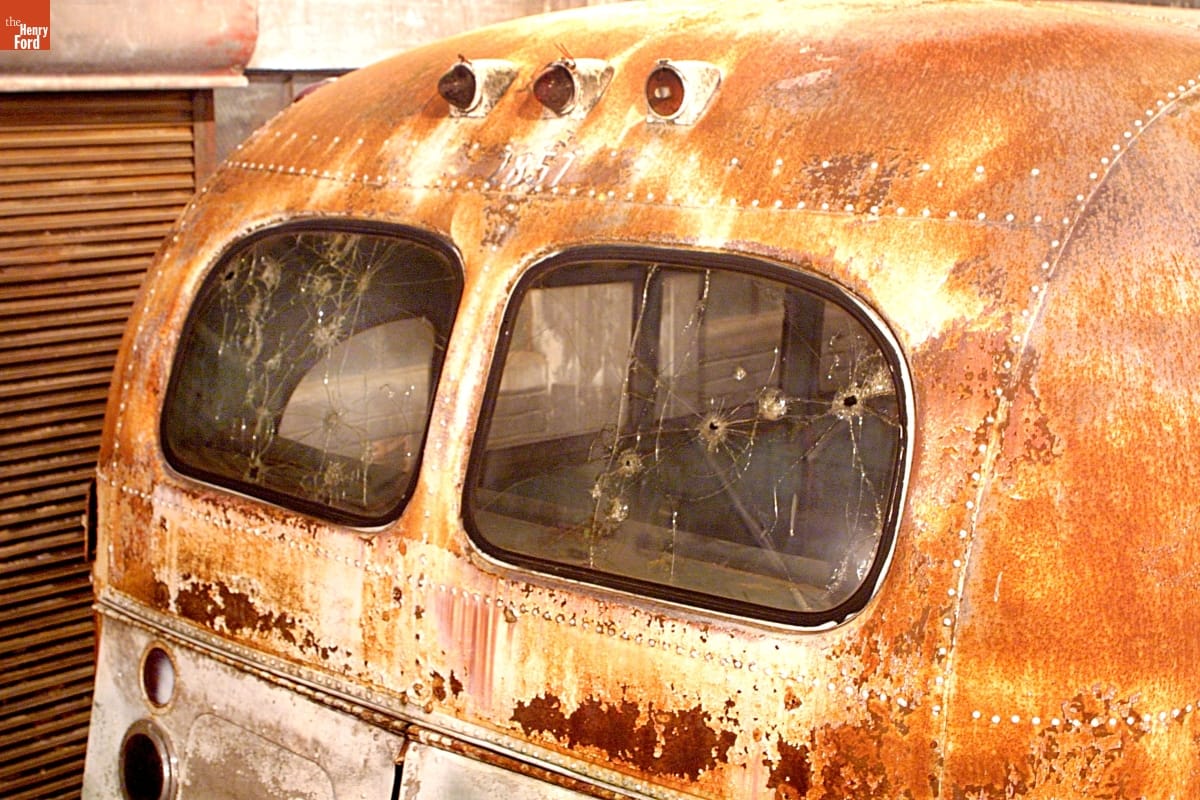
- Rosa Parks Bus before Restoration, Exterior Detail, March 2002 - This bus, the site of Rosa Parks's stand against segregation laws, sat as a rusted storage shed before The Henry Ford acquired it and began a full restoration. Parks's act of defiance on December 1, 1955, sparked the Montgomery Bus Boycott, which helped to ignite the Civil Rights Movement. Today, the restored bus survives as a reminder of her courageous activism.
- March 01, 2002
- Collections - Artifact
Rosa Parks Bus before Restoration, Exterior Detail, March 2002
This bus, the site of Rosa Parks's stand against segregation laws, sat as a rusted storage shed before The Henry Ford acquired it and began a full restoration. Parks's act of defiance on December 1, 1955, sparked the Montgomery Bus Boycott, which helped to ignite the Civil Rights Movement. Today, the restored bus survives as a reminder of her courageous activism.
- Moving the 15 Millionth Ford Model T Into "Henry Ford: A Personal History" Exhibit, February 1953 - Henry Ford himself was the focus of <em>Henry Ford: A Personal History</em>. Opened in 1953 during Ford Motor Company's 50th anniversary, the exhibit included artifacts like the fifteen millionth Ford Model T. The exhibit's second-floor location meant lifting the Model T with a crane and moving it on its side through tight doorways.
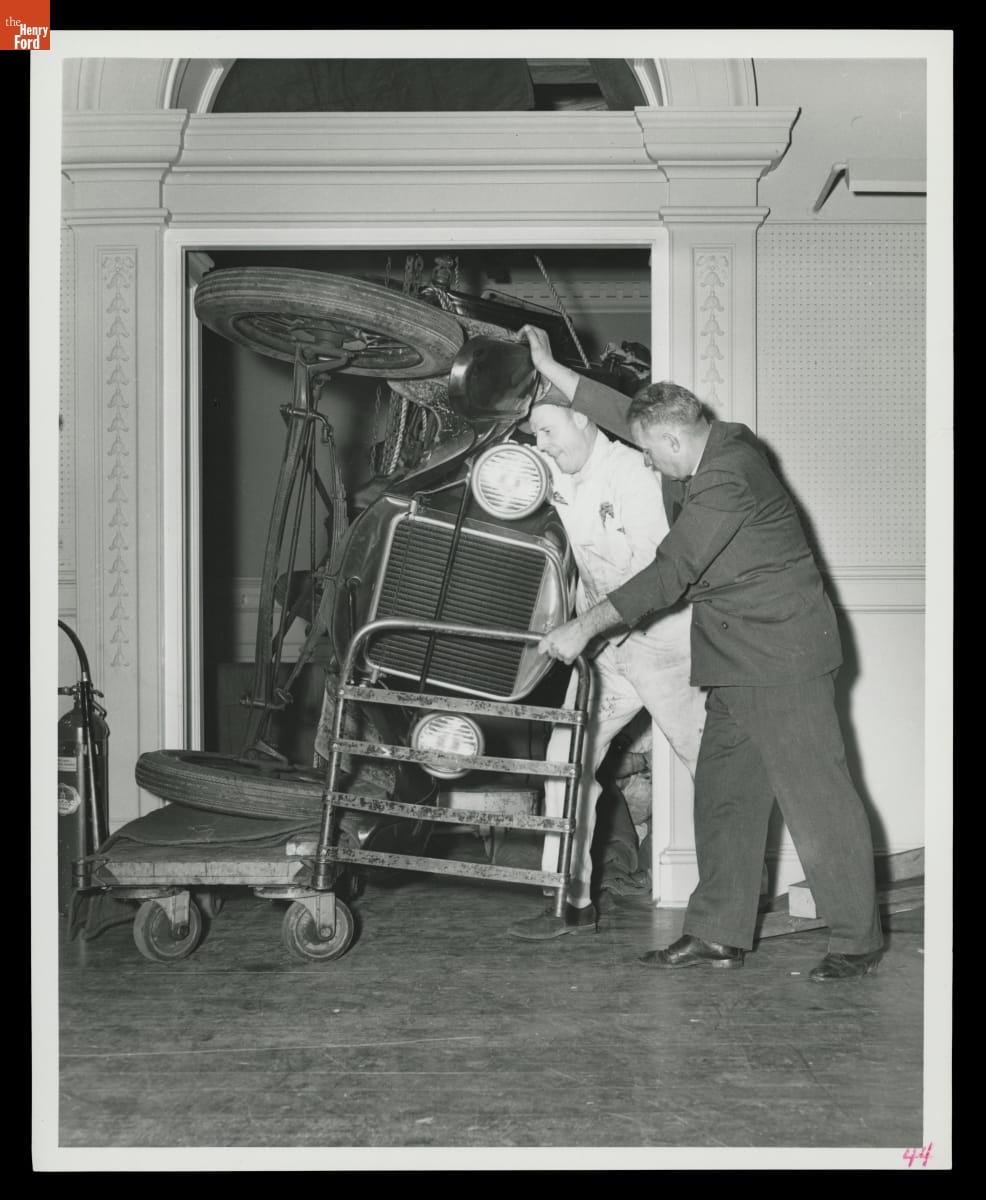
- February 01, 1953
- Collections - Artifact
Moving the 15 Millionth Ford Model T Into "Henry Ford: A Personal History" Exhibit, February 1953
Henry Ford himself was the focus of Henry Ford: A Personal History. Opened in 1953 during Ford Motor Company's 50th anniversary, the exhibit included artifacts like the fifteen millionth Ford Model T. The exhibit's second-floor location meant lifting the Model T with a crane and moving it on its side through tight doorways.
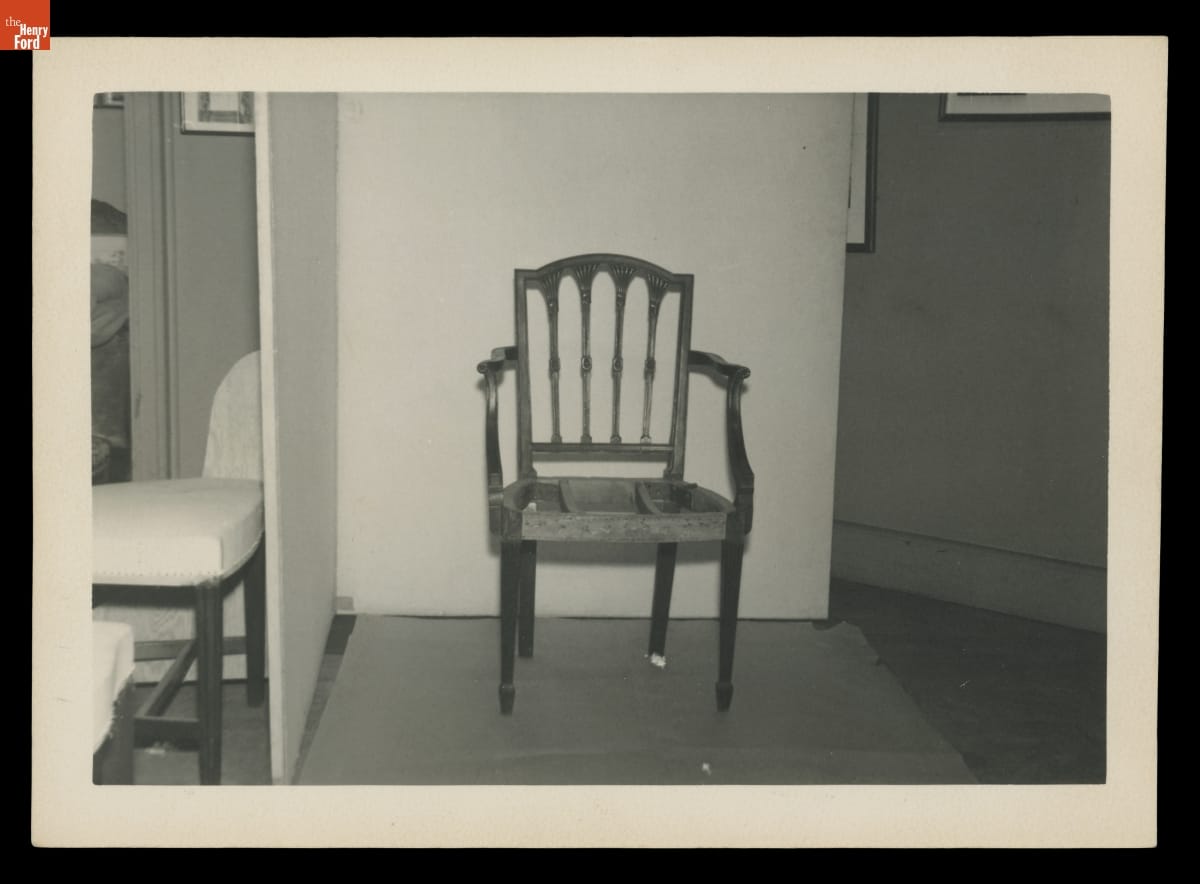
- Armchair, 1785-1805, Photographed at Ernest LoNano Interiors, New York, 1950-1953 - The firm of Ernest LoNano -- active from 1912 into the 1980s -- was known as the premier re-upholsterers of antique American furniture. Museums from coast to coast sought the advice of three generations of LoNanos for accuracy in period upholstery fabrics. The company specialized in adapting historic fabrics for reuse. This photograph documents the re-upholstery process on The Henry Ford's furniture by the firm.
- 1950-1953
- Collections - Artifact
Armchair, 1785-1805, Photographed at Ernest LoNano Interiors, New York, 1950-1953
The firm of Ernest LoNano -- active from 1912 into the 1980s -- was known as the premier re-upholsterers of antique American furniture. Museums from coast to coast sought the advice of three generations of LoNanos for accuracy in period upholstery fabrics. The company specialized in adapting historic fabrics for reuse. This photograph documents the re-upholstery process on The Henry Ford's furniture by the firm.
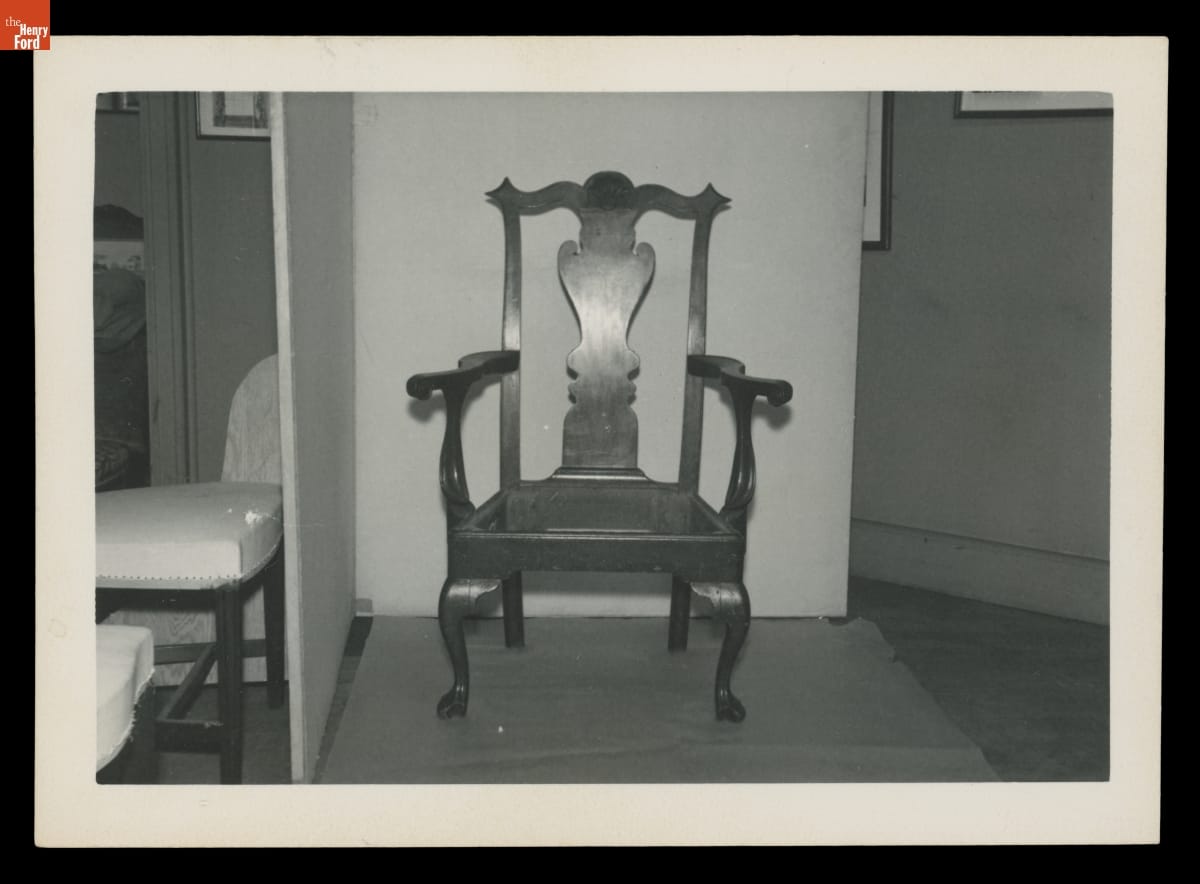
- Armchair, 1750-1770, Photographed at Ernest LoNano Interiors, New York, 1950-1953 - The firm of Ernest LoNano -- active from 1912 into the 1980s -- was known as the premier re-upholsterers of antique American furniture. Museums from coast to coast sought the advice of three generations of LoNanos for accuracy in period upholstery fabrics. The company specialized in adapting historic fabrics for reuse. This photograph documents the re-upholstery process on The Henry Ford's furniture by the firm.
- 1950-1953
- Collections - Artifact
Armchair, 1750-1770, Photographed at Ernest LoNano Interiors, New York, 1950-1953
The firm of Ernest LoNano -- active from 1912 into the 1980s -- was known as the premier re-upholsterers of antique American furniture. Museums from coast to coast sought the advice of three generations of LoNanos for accuracy in period upholstery fabrics. The company specialized in adapting historic fabrics for reuse. This photograph documents the re-upholstery process on The Henry Ford's furniture by the firm.
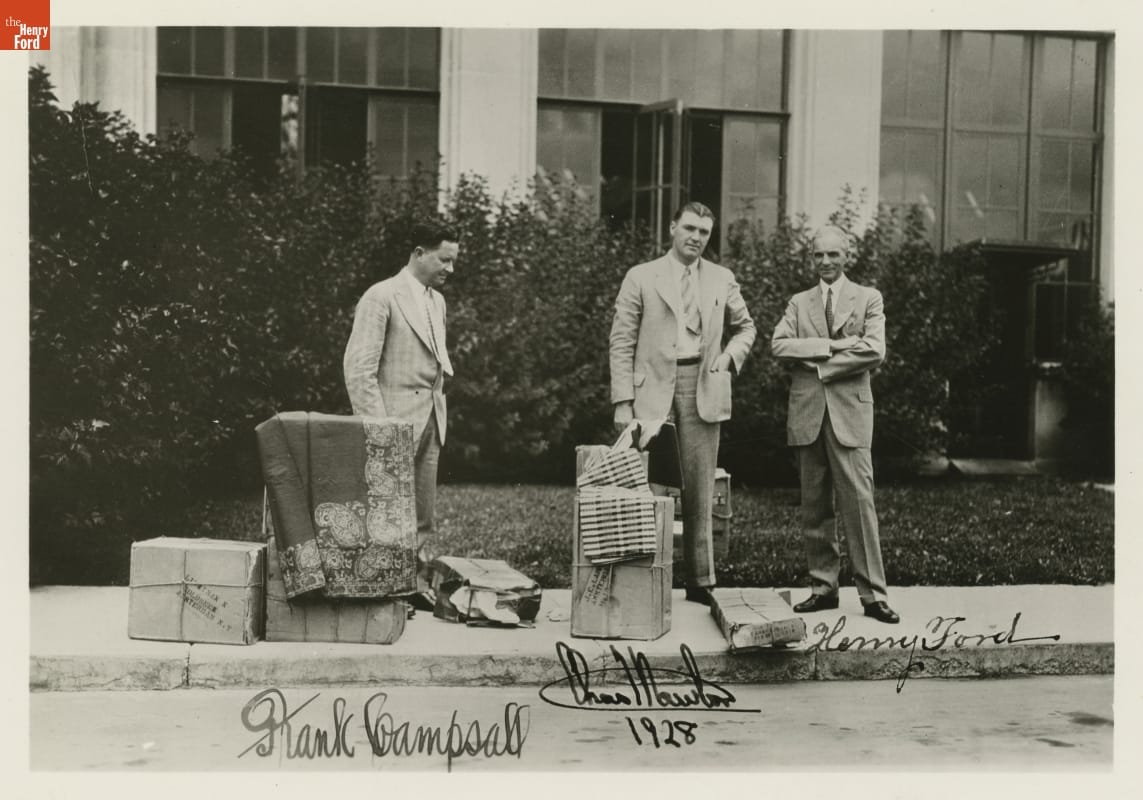
- Frank Campsall, Charles Newton, and Henry Ford at the Ford Engineering Laboratory with Donations for Henry Ford's Museum, 1928 - Henry Ford began large-scale collecting of historic items in the early 1920s. When his plans for a museum became public, offers of additional material poured into his office. Ford posed for this 1928 photo with two men who helped manage the flood: secretary Frank Campsall (left), who responded to offers, and attorney Charles Newton (center), who handled the legal transactions.
- 1928
- Collections - Artifact
Frank Campsall, Charles Newton, and Henry Ford at the Ford Engineering Laboratory with Donations for Henry Ford's Museum, 1928
Henry Ford began large-scale collecting of historic items in the early 1920s. When his plans for a museum became public, offers of additional material poured into his office. Ford posed for this 1928 photo with two men who helped manage the flood: secretary Frank Campsall (left), who responded to offers, and attorney Charles Newton (center), who handled the legal transactions.
- Side Chair, 1745-1765, Photographed in Henry Ford Museum, September 1935 -
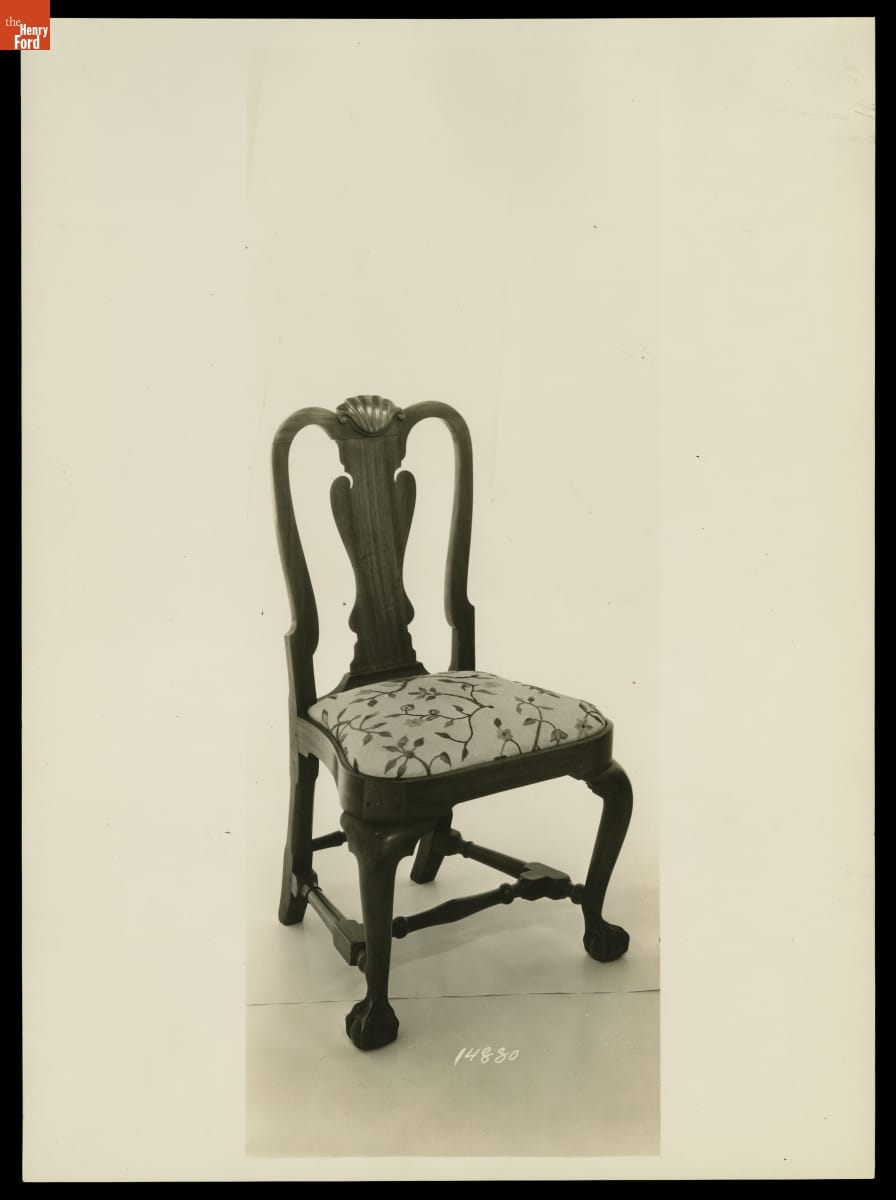
- September 01, 1935
- Collections - Artifact
Side Chair, 1745-1765, Photographed in Henry Ford Museum, September 1935
- Corner Chair, 1750-1775, Photographed in Henry Ford Museum, circa 1954 -
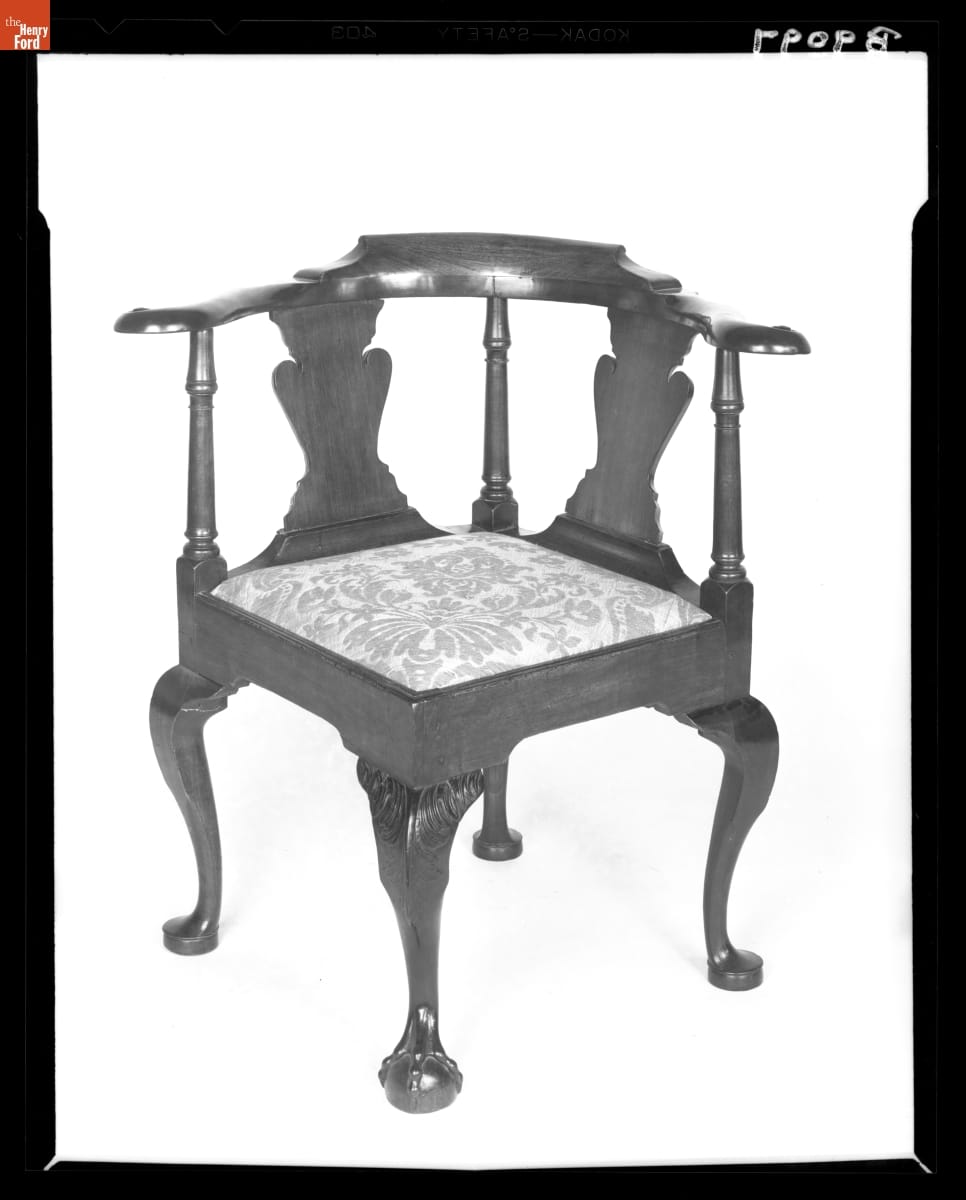
- circa 1954
- Collections - Artifact
Corner Chair, 1750-1775, Photographed in Henry Ford Museum, circa 1954