
Search
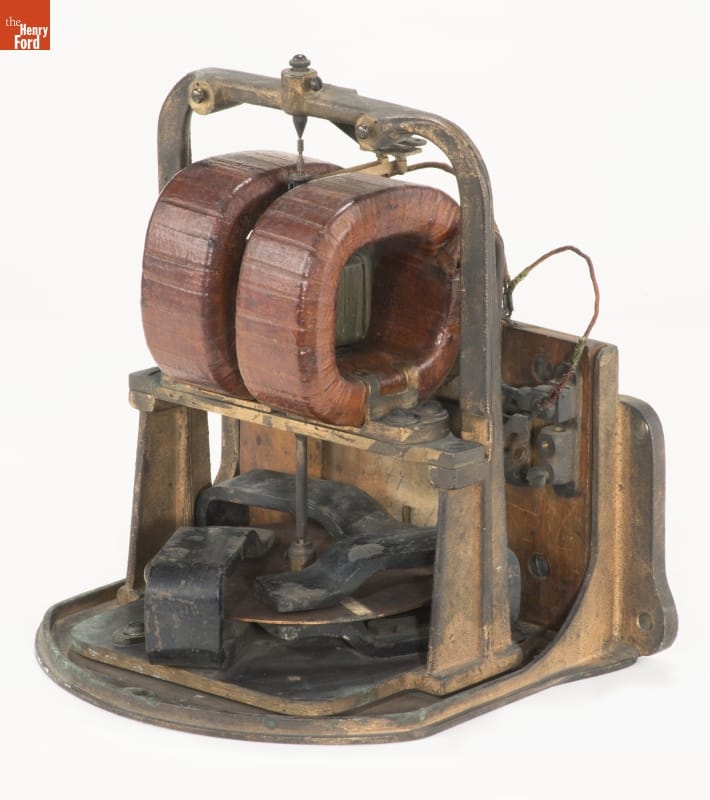
- Thomson-Houston Recording Wattmeter, 1889-1892 - Elihu Thomson, engineer, inventor and cofounder of the Thomson-Houston Electric Company, developed a commutator-type wattmeter in the late 1880s. His recording watt-hour meter helped transform the nascent electric power industry. The sturdy device provided companies that supplied electricity to consumers a way to accurately track and bill electrical power use.
- 1889-1892
- Collections - Artifact
Thomson-Houston Recording Wattmeter, 1889-1892
Elihu Thomson, engineer, inventor and cofounder of the Thomson-Houston Electric Company, developed a commutator-type wattmeter in the late 1880s. His recording watt-hour meter helped transform the nascent electric power industry. The sturdy device provided companies that supplied electricity to consumers a way to accurately track and bill electrical power use.
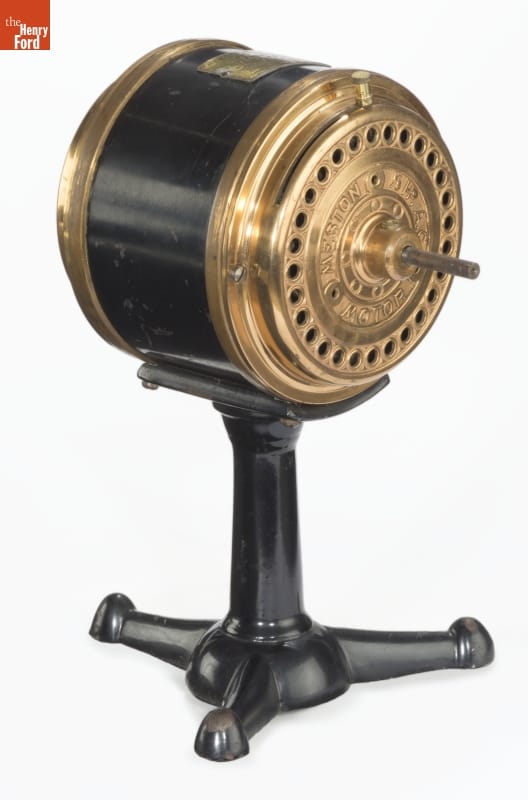
- Emerson Series HH Meston Fan Motor, circa 1893 -
- circa 1893
- Collections - Artifact
Emerson Series HH Meston Fan Motor, circa 1893
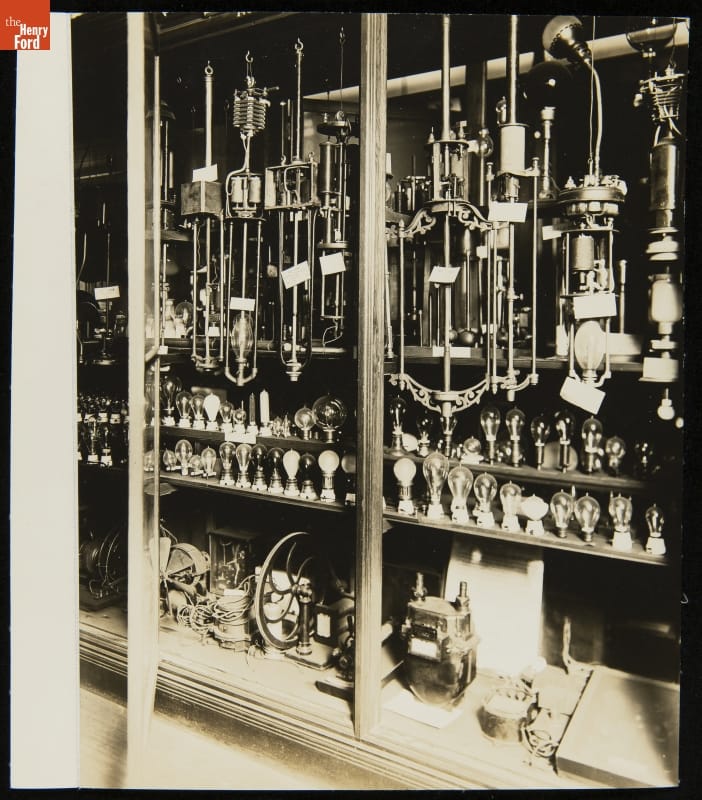
- Exhibit of Early Electrical Lighting at Columbia University, circa 1929 -
- circa 1929
- Collections - Artifact
Exhibit of Early Electrical Lighting at Columbia University, circa 1929
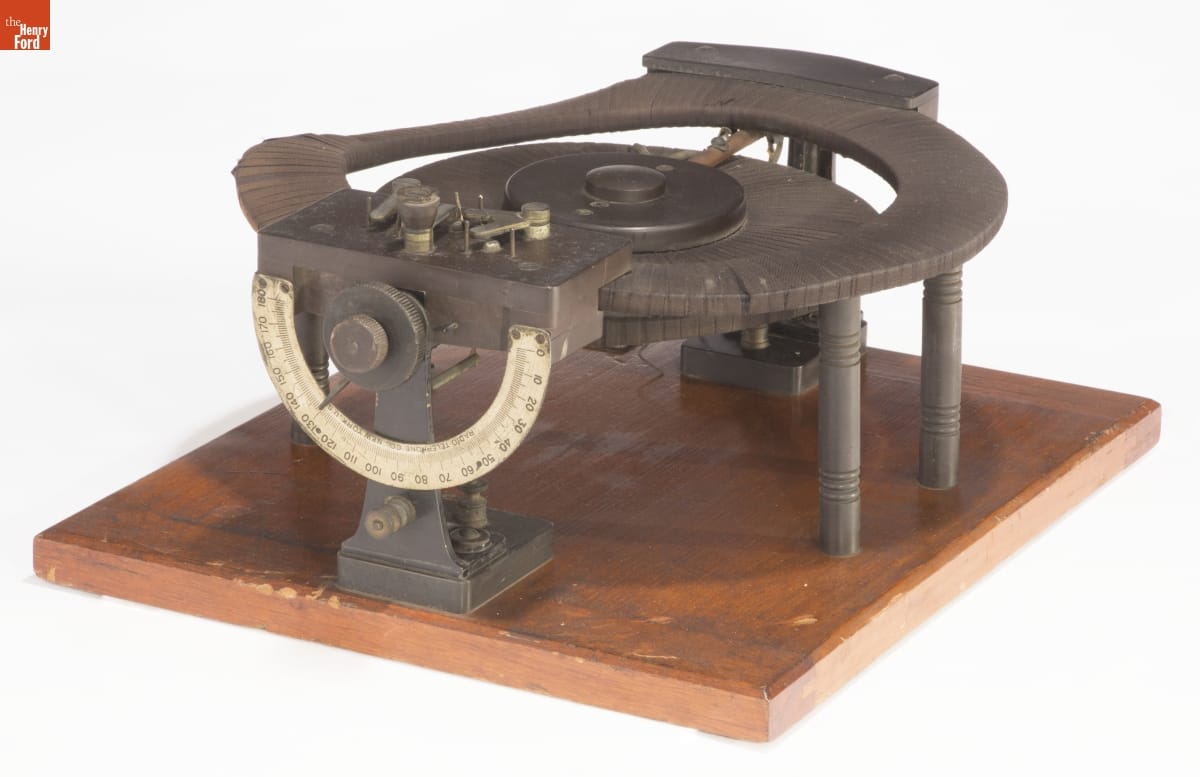
- De Forest Induction Coil, Used By Alfred N. Goldsmith, 1911-1919 - An induction coil creates a high-voltage, pulsating current which arcs across a "spark gap." The spark creates electromagnetic waves, which can then be detected by a radio receiver. Induction coils were essential to the first decades of wireless and radio. Used from the late 1880s until the 1920s, spark gap powered radios were replaced as vacuum tube transmitters became available.
- 1911-1919
- Collections - Artifact
De Forest Induction Coil, Used By Alfred N. Goldsmith, 1911-1919
An induction coil creates a high-voltage, pulsating current which arcs across a "spark gap." The spark creates electromagnetic waves, which can then be detected by a radio receiver. Induction coils were essential to the first decades of wireless and radio. Used from the late 1880s until the 1920s, spark gap powered radios were replaced as vacuum tube transmitters became available.
- D'arsonval Galvanometer, 1890-1920 -
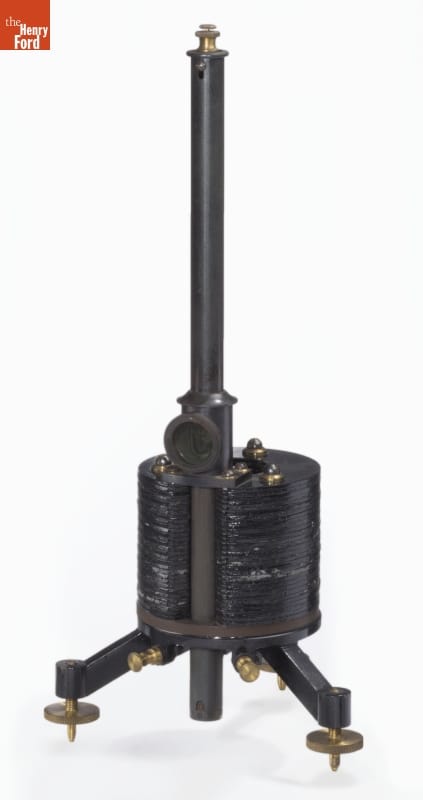
- 1890-1920
- Collections - Artifact
D'arsonval Galvanometer, 1890-1920
- Deprez et Carpentier Ammeter, 1889 - In the late 1800s and early 1900s, companies that supplied electricity to consumers needed a variety of instruments to regulate and monitor electrical output. These instruments were vital to the operation of power stations and needed to be accurate and rugged. Ammeters--used to measure the current in a circuit--could be found on switchboards or connected to motors and generators.
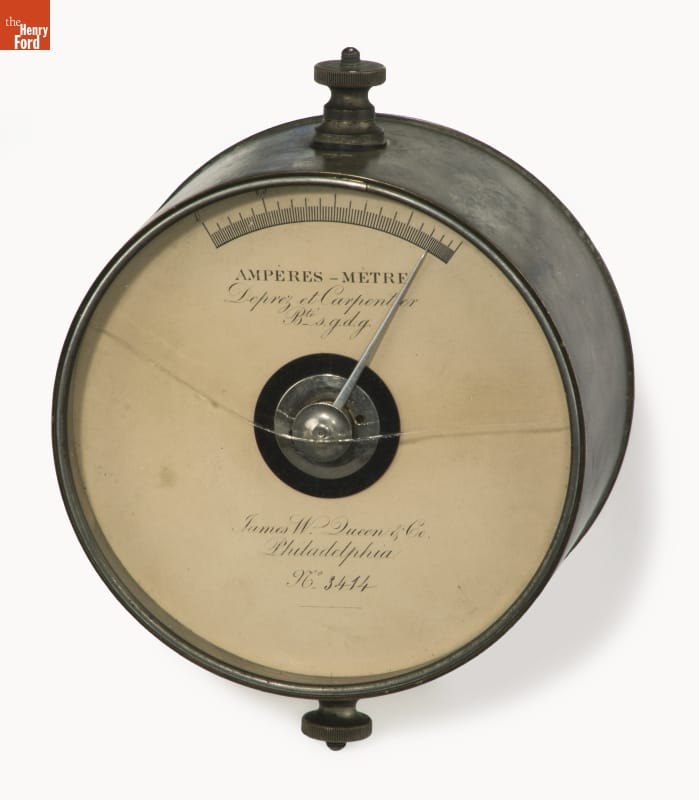
- 1889
- Collections - Artifact
Deprez et Carpentier Ammeter, 1889
In the late 1800s and early 1900s, companies that supplied electricity to consumers needed a variety of instruments to regulate and monitor electrical output. These instruments were vital to the operation of power stations and needed to be accurate and rugged. Ammeters--used to measure the current in a circuit--could be found on switchboards or connected to motors and generators.
- Slattery Induction Meter, circa 1890 -
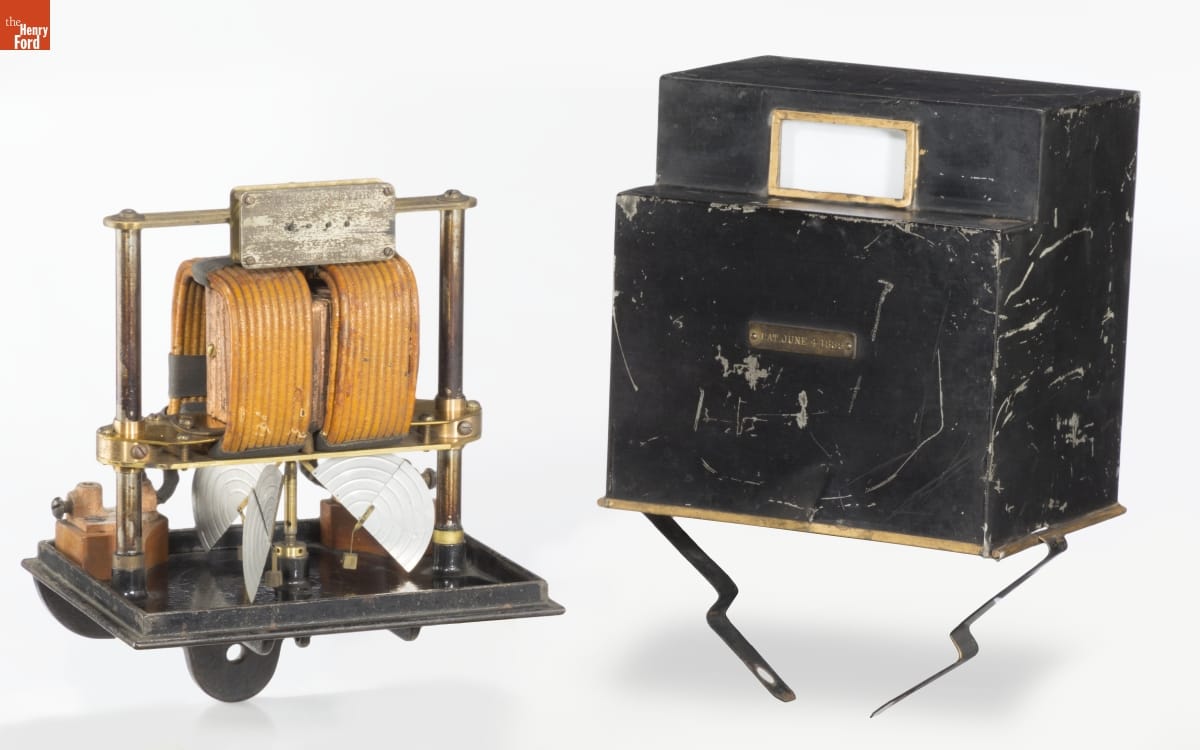
- circa 1890
- Collections - Artifact
Slattery Induction Meter, circa 1890
- Joseph A. Powers Electric Cut-Out, 1891 -
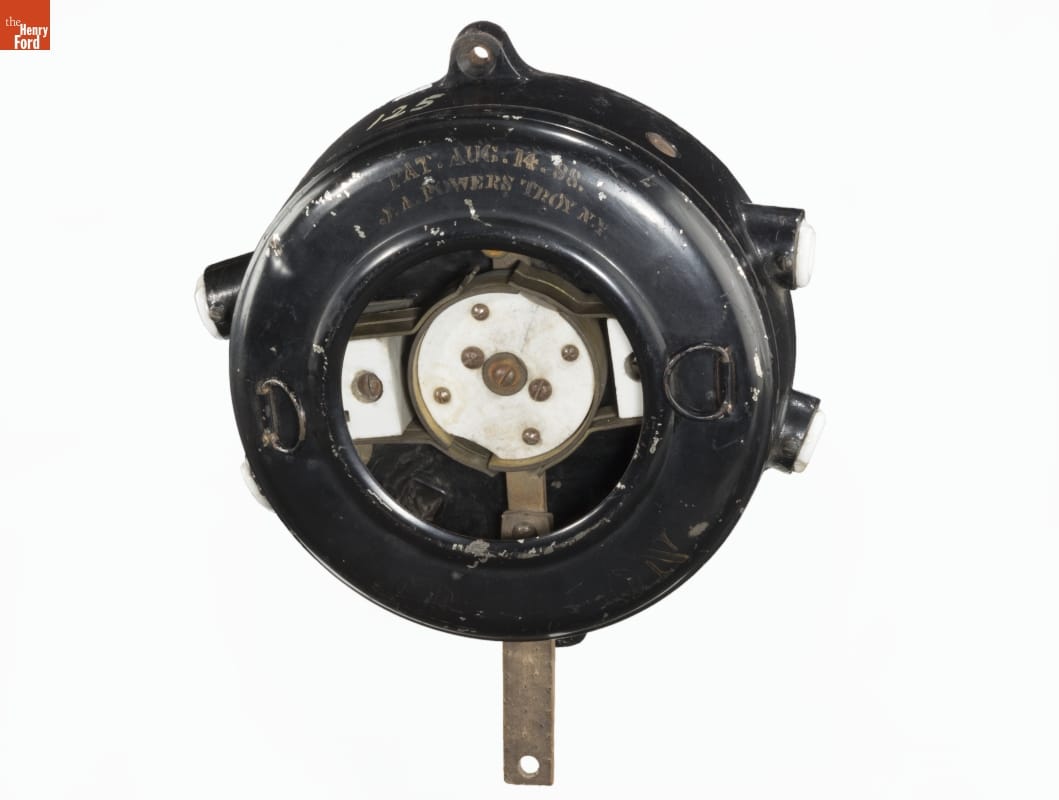
- 1891
- Collections - Artifact
Joseph A. Powers Electric Cut-Out, 1891
- Part of Charles E. Dressler & Bro. Meter, 1895-1905 -
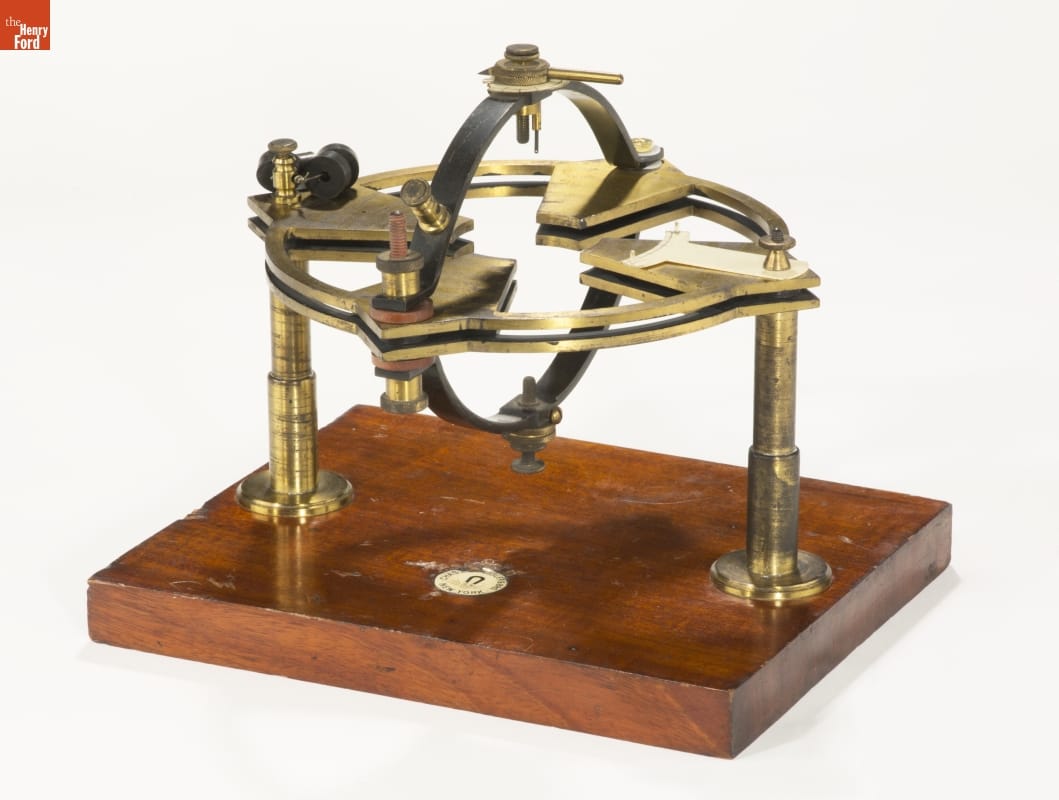
- 1895-1905
- Collections - Artifact
Part of Charles E. Dressler & Bro. Meter, 1895-1905
- Telephone Parts, 1880-1920 -
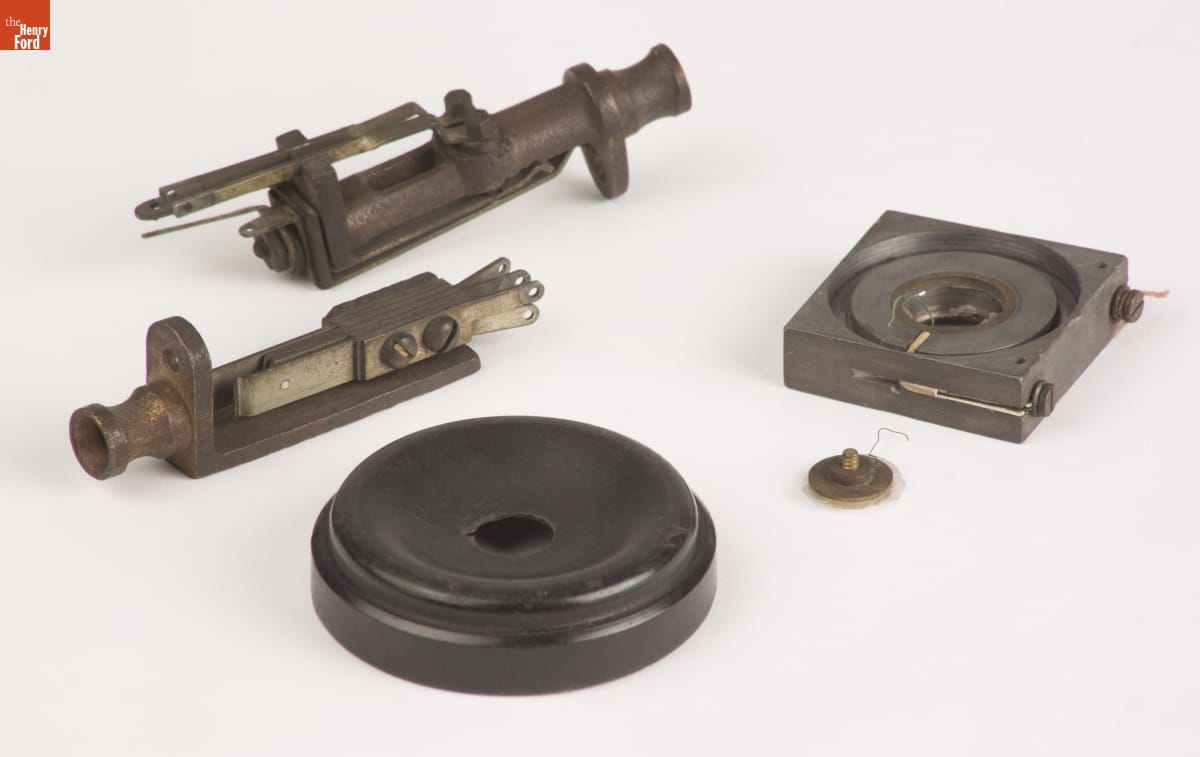
- 1880-1920
- Collections - Artifact
Telephone Parts, 1880-1920