
Search
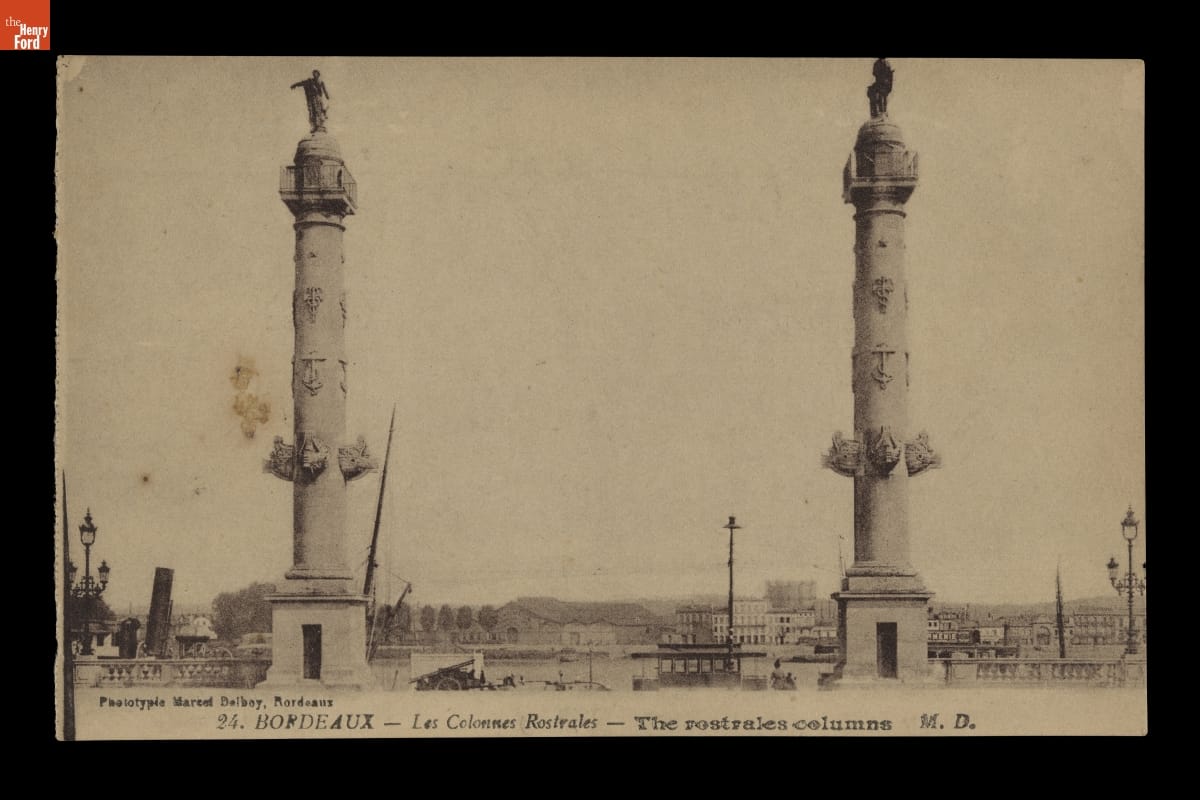
- "Bordeaux - Les Colonnes Rostrales - The Rostrales Columns" - Andrew Purnell Jr. (1898-1975) was born in Selma, Alabama. He joined the all-Black 303rd Stevedore Regiment (with later unit designations) in December 1917. Private Purnell was stationed in Bordeaux, France. He returned to the U.S. in 1919, married, and worked as a railroad freight handler. Like many service members, Purnell kept cards, letters, photographs, and souvenirs from his time in the military.
- Collections - Artifact
"Bordeaux - Les Colonnes Rostrales - The Rostrales Columns"
Andrew Purnell Jr. (1898-1975) was born in Selma, Alabama. He joined the all-Black 303rd Stevedore Regiment (with later unit designations) in December 1917. Private Purnell was stationed in Bordeaux, France. He returned to the U.S. in 1919, married, and worked as a railroad freight handler. Like many service members, Purnell kept cards, letters, photographs, and souvenirs from his time in the military.
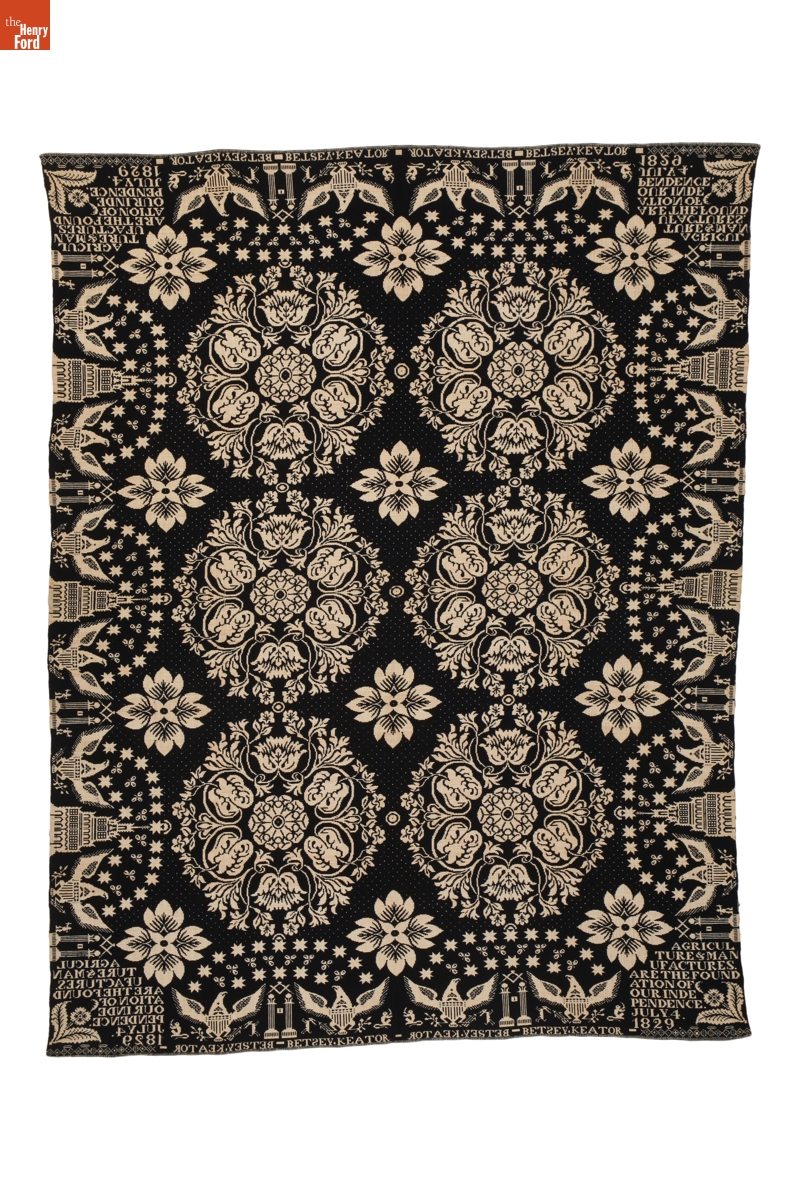
- "Agriculture & Manufactures" Coverlet Woven for Betsey Keator, 1829 -
- July 04, 1829
- Collections - Artifact
"Agriculture & Manufactures" Coverlet Woven for Betsey Keator, 1829
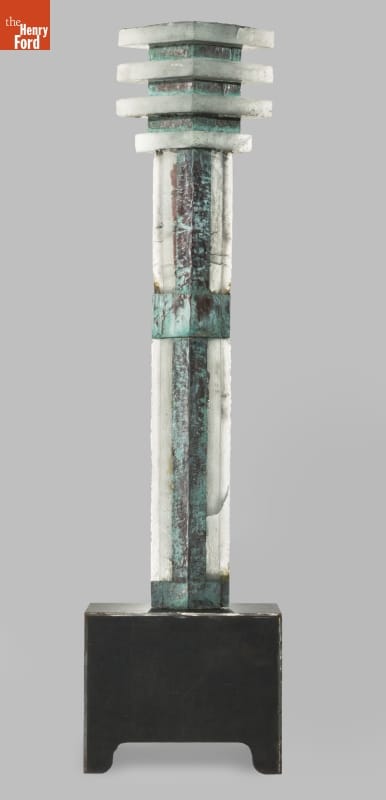
- "Standing Columns #12" by Howard Ben Tre, 1983 - Howard Ben Tré casts glass sculptures using similar techniques he learned while casting metal sculpture. These solid, monumental works often have a green tinge and appear to glow as light passes through. Architectural elements and archeological remains inspire Ben Tré. Works like this one, which weighs well over 500 pounds, will take over two months to cool after molten glass is poured into a mold.
- 1983
- Collections - Artifact
"Standing Columns #12" by Howard Ben Tre, 1983
Howard Ben Tré casts glass sculptures using similar techniques he learned while casting metal sculpture. These solid, monumental works often have a green tinge and appear to glow as light passes through. Architectural elements and archeological remains inspire Ben Tré. Works like this one, which weighs well over 500 pounds, will take over two months to cool after molten glass is poured into a mold.
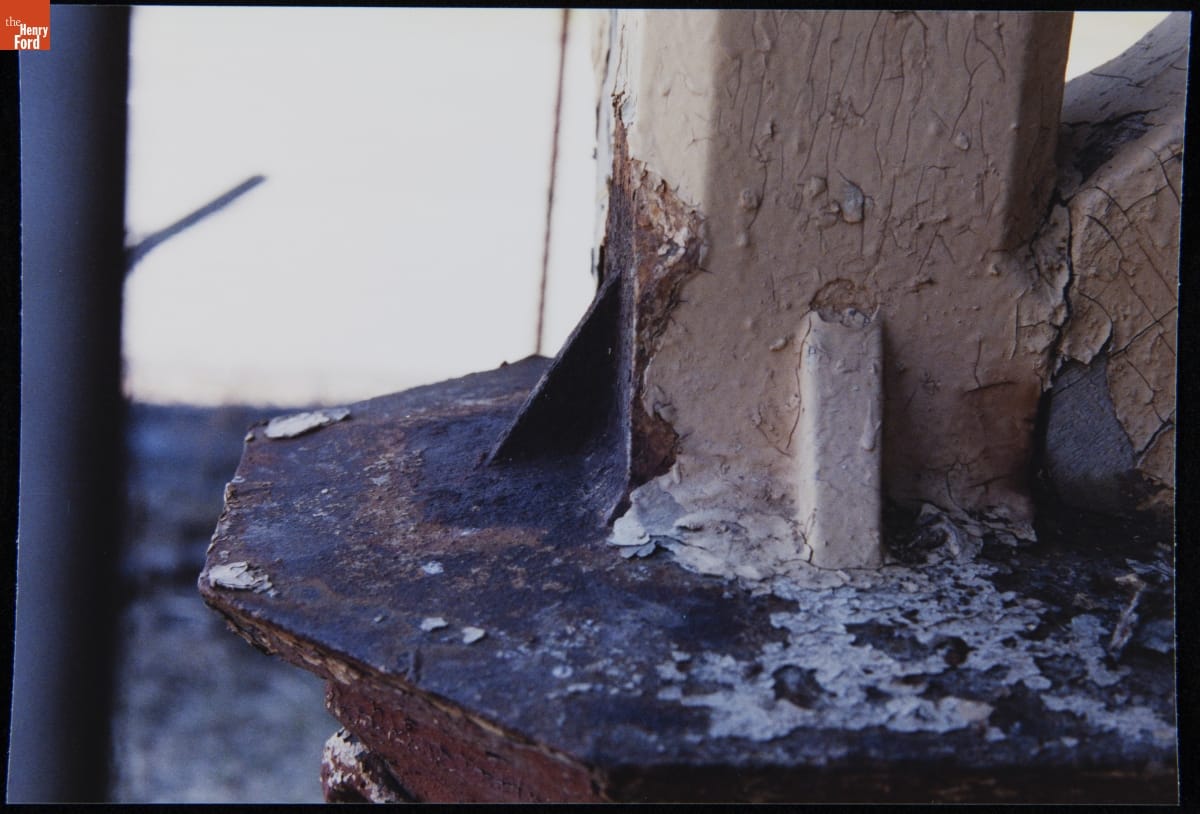
- Detail of Top of Capital from Detroit Central Market Building, circa 2003 - The Vegetable Shed sheltered vendors and customers at Detroit's City Hall Market (later named Central Market) from 1861 until 1893. Its forty-eight cast-iron columns supported sawn-lumber rafters and a slate roof. The city moved it to Belle Isle in 1894 where it served many purposes including housing a riding academy. When labeled for demolition in 2003, The Henry Ford acquired and dismantled it for reconstruction in Greenfield Village.
- circa 2003
- Collections - Artifact
Detail of Top of Capital from Detroit Central Market Building, circa 2003
The Vegetable Shed sheltered vendors and customers at Detroit's City Hall Market (later named Central Market) from 1861 until 1893. Its forty-eight cast-iron columns supported sawn-lumber rafters and a slate roof. The city moved it to Belle Isle in 1894 where it served many purposes including housing a riding academy. When labeled for demolition in 2003, The Henry Ford acquired and dismantled it for reconstruction in Greenfield Village.
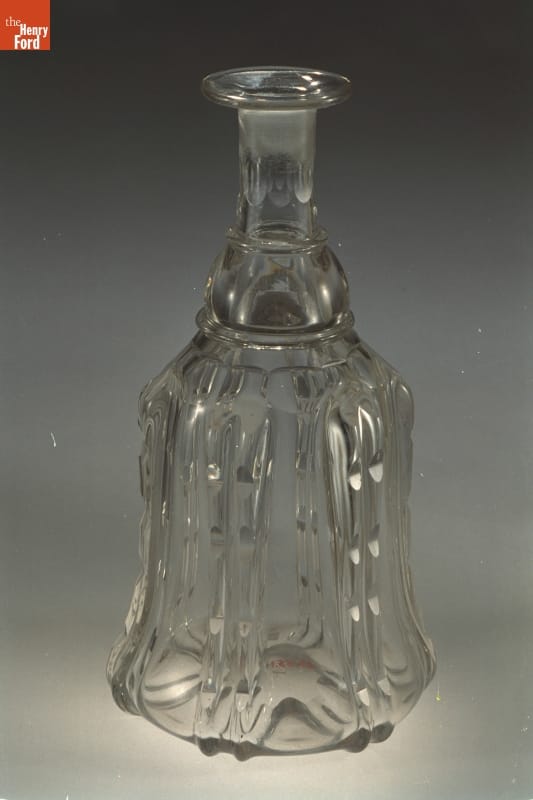
- Decanter, 1840-1870 - Nineteenth-century American glassmakers experimented with new methods to create products for a growing consumer market. In the 1820s, pressing glass into metal molds by machine was perfected, and by the mid-1800s, manufacturers were creating a variety of inexpensive pressed glass housewares. America's middle-class consumers could now decorate their homes with attractive glass bowls, creamers, dishes, plates, vases, and other tableware.
- 1840-1870
- Collections - Artifact
Decanter, 1840-1870
Nineteenth-century American glassmakers experimented with new methods to create products for a growing consumer market. In the 1820s, pressing glass into metal molds by machine was perfected, and by the mid-1800s, manufacturers were creating a variety of inexpensive pressed glass housewares. America's middle-class consumers could now decorate their homes with attractive glass bowls, creamers, dishes, plates, vases, and other tableware.
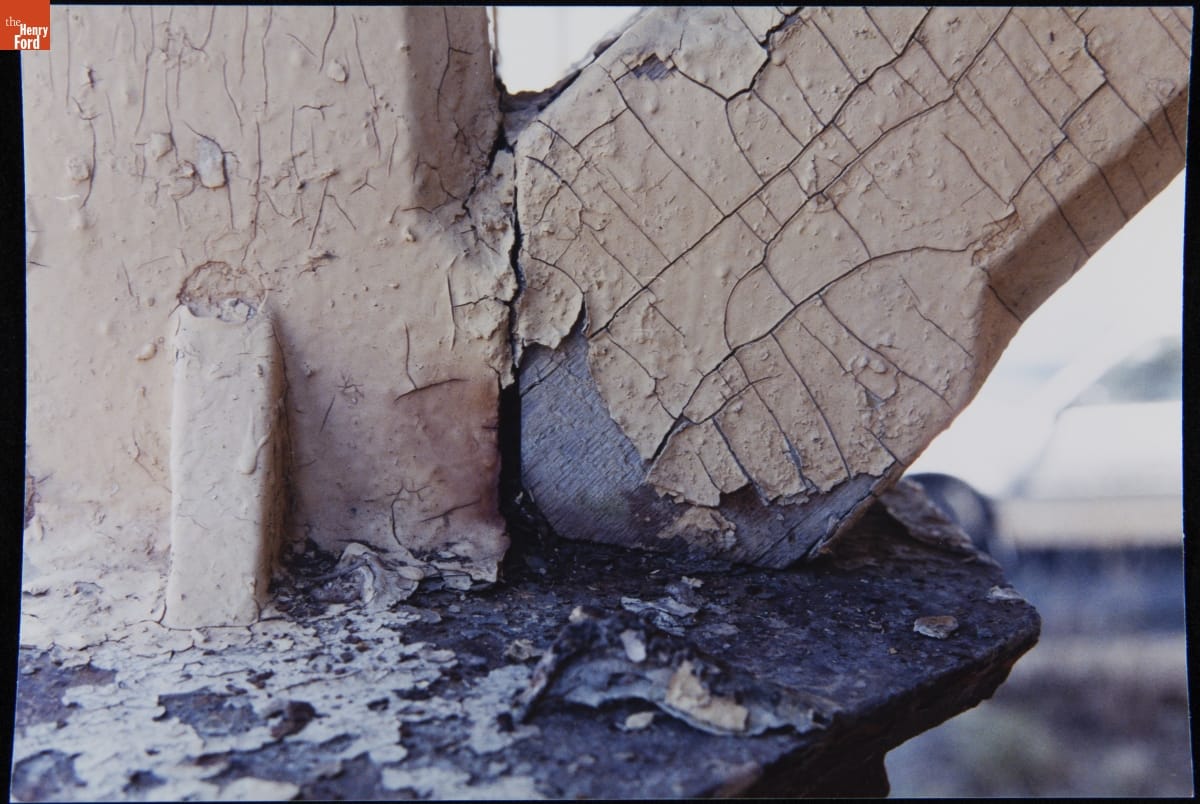
- Detail of Top of Capital from Detroit Central Market Building, circa 2003 - The Vegetable Shed sheltered vendors and customers at Detroit's City Hall Market (later named Central Market) from 1861 until 1893. Its forty-eight cast-iron columns supported sawn-lumber rafters and a slate roof. The city moved it to Belle Isle in 1894 where it served many purposes including housing a riding academy. When labeled for demolition in 2003, The Henry Ford acquired and dismantled it for reconstruction in Greenfield Village.
- circa 2003
- Collections - Artifact
Detail of Top of Capital from Detroit Central Market Building, circa 2003
The Vegetable Shed sheltered vendors and customers at Detroit's City Hall Market (later named Central Market) from 1861 until 1893. Its forty-eight cast-iron columns supported sawn-lumber rafters and a slate roof. The city moved it to Belle Isle in 1894 where it served many purposes including housing a riding academy. When labeled for demolition in 2003, The Henry Ford acquired and dismantled it for reconstruction in Greenfield Village.
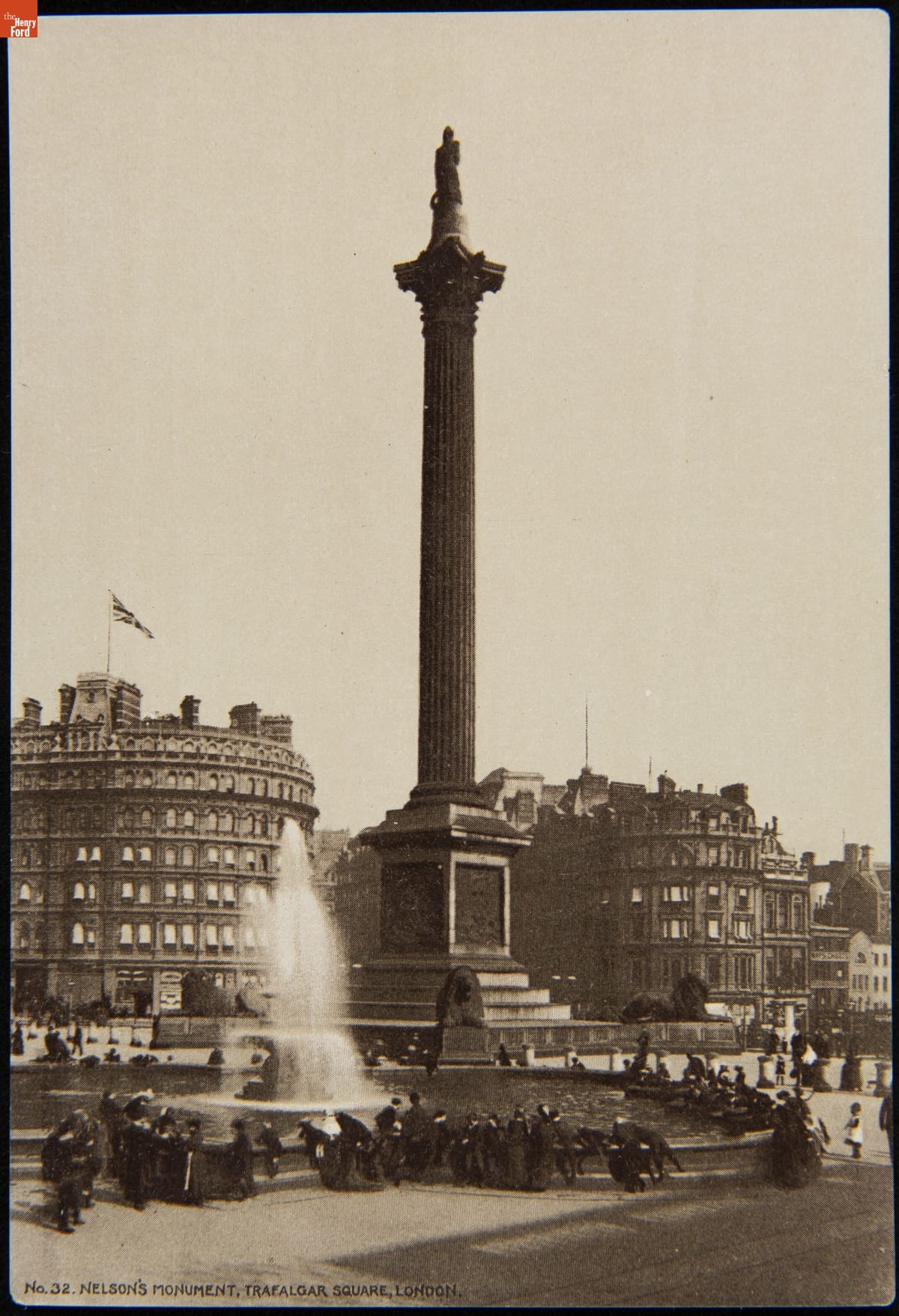
- Trade Card for C.I. Hood & Co. with Hood's Photos of the World, "Nelson's Monument, Trafalgar Square, London," 1890-1910 - In the late 19th century, trade cards were a major means of advertising goods and services. Patent medicine producer, C.I. Hood & Co., had its own advertising department, creating cookbooks, calendars, and, most abundantly, trade cards. The trade card series, "Hood's Photos of the World," became popular among consumers, as it offered views of far-away places, providing a window to the broader world.
- 1890-1910
- Collections - Artifact
Trade Card for C.I. Hood & Co. with Hood's Photos of the World, "Nelson's Monument, Trafalgar Square, London," 1890-1910
In the late 19th century, trade cards were a major means of advertising goods and services. Patent medicine producer, C.I. Hood & Co., had its own advertising department, creating cookbooks, calendars, and, most abundantly, trade cards. The trade card series, "Hood's Photos of the World," became popular among consumers, as it offered views of far-away places, providing a window to the broader world.
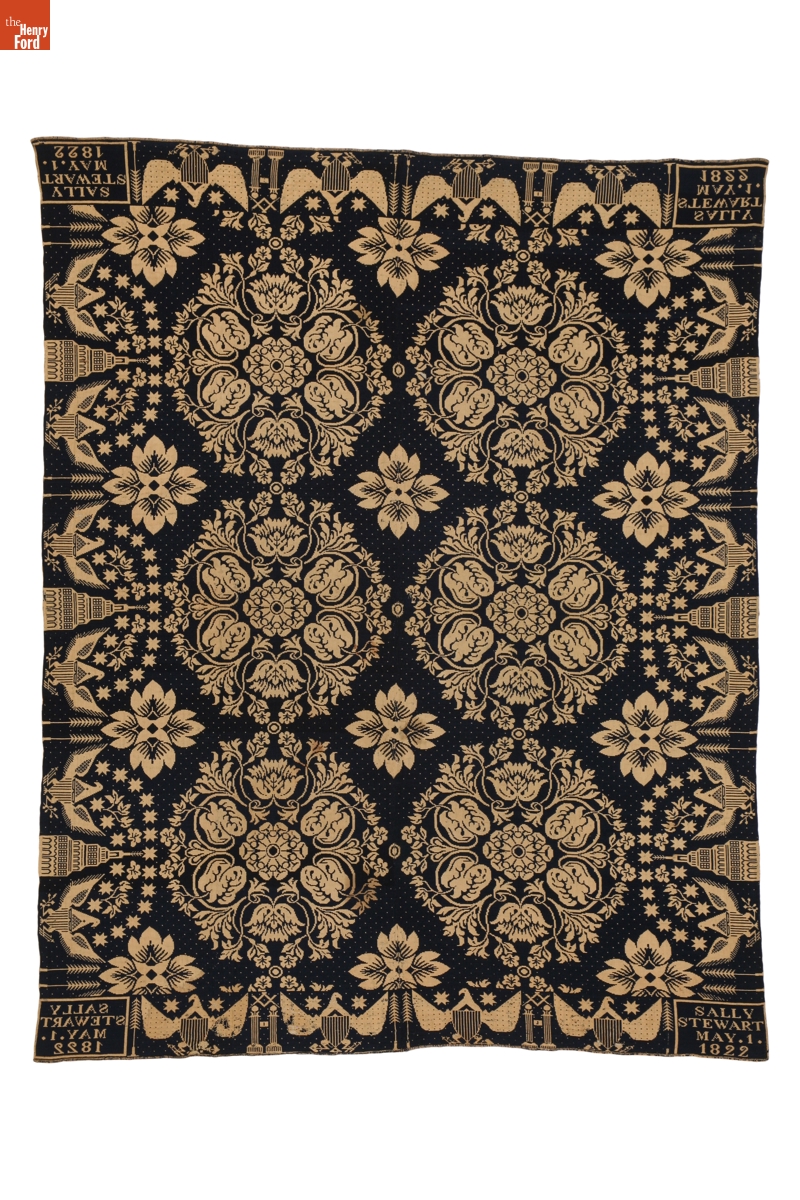
- James Alexander Coverlet Woven in 1822 for Sally Stewart -
- May 01, 1822
- Collections - Artifact
James Alexander Coverlet Woven in 1822 for Sally Stewart