
Search
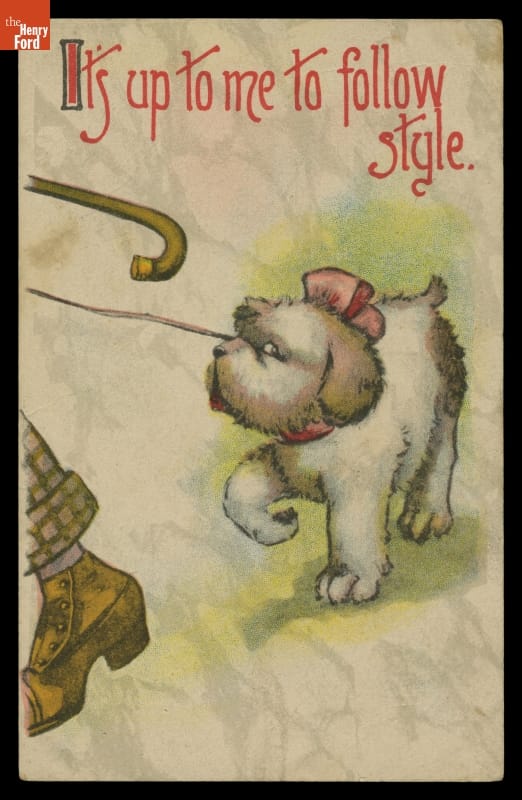
- Walking a Dog, "It's Up to Me to Follow Style," circa 1910 - Depictions of dogs and puppies often appeared in art and folk art in the United States. Inexpensive lithograph prints made in the mid-19th century emphasized people's relationship with dogs. Starting in the late 1890s picture postcards included these types of popular illustrations of dogs. Sending colorful postcards through the U.S. mail continued to be widespread well into the 1910s.
- 1908-1910
- Collections - Artifact
Walking a Dog, "It's Up to Me to Follow Style," circa 1910
Depictions of dogs and puppies often appeared in art and folk art in the United States. Inexpensive lithograph prints made in the mid-19th century emphasized people's relationship with dogs. Starting in the late 1890s picture postcards included these types of popular illustrations of dogs. Sending colorful postcards through the U.S. mail continued to be widespread well into the 1910s.
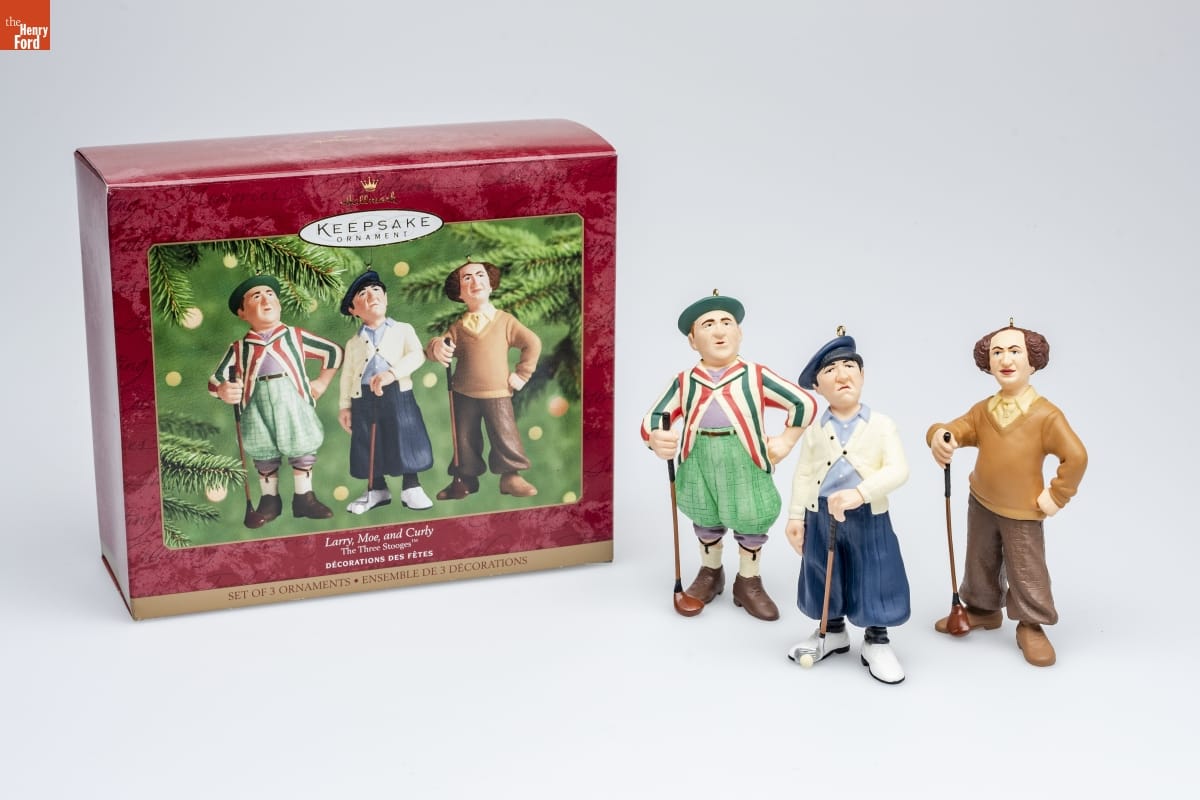
- Hallmark "The Three Stooges: Larry, Moe, and Curly" Christmas Ornaments, 2000 - Already known for greeting cards, Hallmark introduced a line of Christmas ornaments in 1973. The company's annual release of an increasing array of ornaments revolutionized Christmas decorating, appealing to customers' interest in marking memories and milestones as well as expressing one's personality and unique tastes.
- 2000
- Collections - Artifact
Hallmark "The Three Stooges: Larry, Moe, and Curly" Christmas Ornaments, 2000
Already known for greeting cards, Hallmark introduced a line of Christmas ornaments in 1973. The company's annual release of an increasing array of ornaments revolutionized Christmas decorating, appealing to customers' interest in marking memories and milestones as well as expressing one's personality and unique tastes.
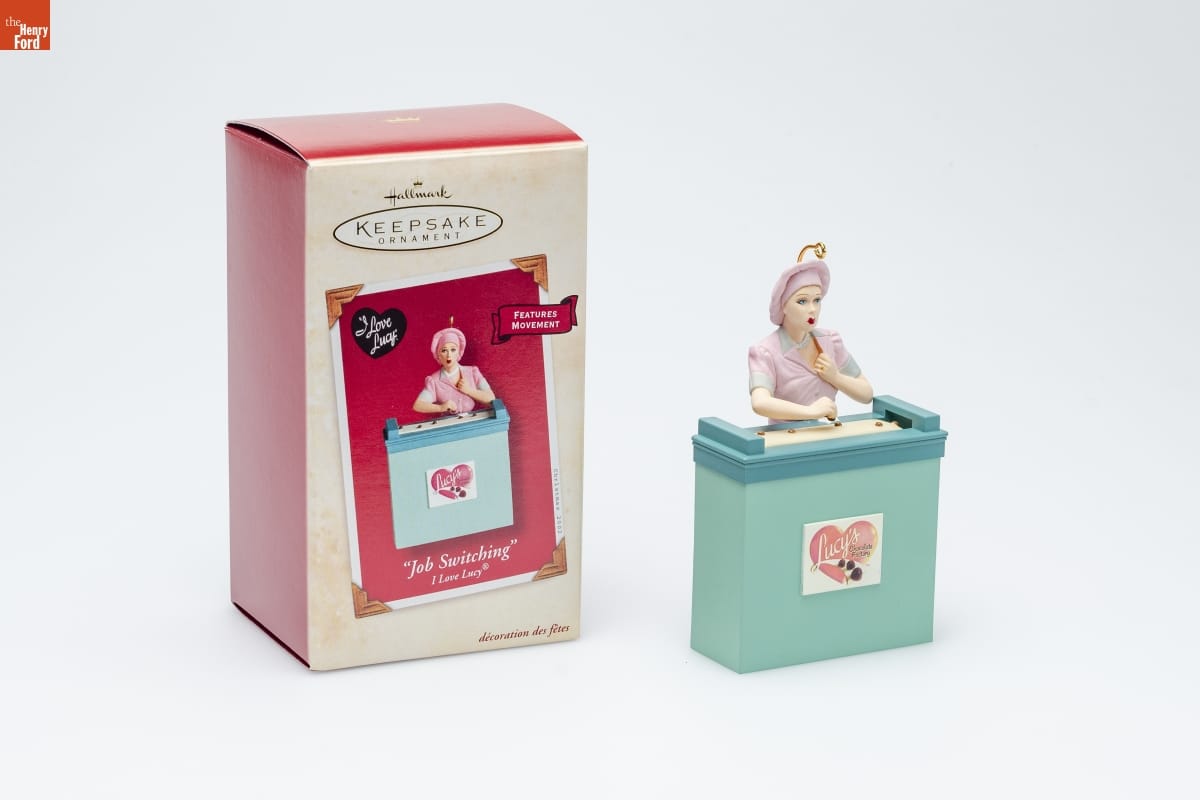
- Hallmark "I Love Lucy: Job Switching" Christmas Ornament, 2002 - Already known for greeting cards, Hallmark introduced a line of Christmas ornaments in 1973. The company's annual release of an increasing array of ornaments revolutionized Christmas decorating, appealing to customers' interest in marking memories and milestones as well as expressing one's personality and unique tastes.
- 2002
- Collections - Artifact
Hallmark "I Love Lucy: Job Switching" Christmas Ornament, 2002
Already known for greeting cards, Hallmark introduced a line of Christmas ornaments in 1973. The company's annual release of an increasing array of ornaments revolutionized Christmas decorating, appealing to customers' interest in marking memories and milestones as well as expressing one's personality and unique tastes.
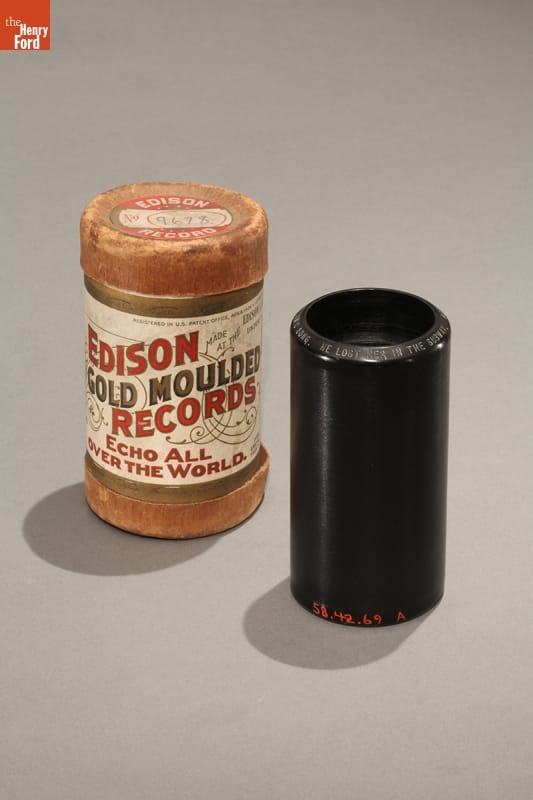
- Edison Gold Moulded Cylinder Record, "He Lost Her in the Subway," 1907 - Ada Jones was the first female popular singer to have a career making records. Her popular song recordings were largely humorous ones wherein she demonstrated her skill at using dialects. In this song, "the train began to swerve, we went around a curve" and 14 men fell into her lap! She found a man she liked more than her brand new husband!
- 1907
- Collections - Artifact
Edison Gold Moulded Cylinder Record, "He Lost Her in the Subway," 1907
Ada Jones was the first female popular singer to have a career making records. Her popular song recordings were largely humorous ones wherein she demonstrated her skill at using dialects. In this song, "the train began to swerve, we went around a curve" and 14 men fell into her lap! She found a man she liked more than her brand new husband!
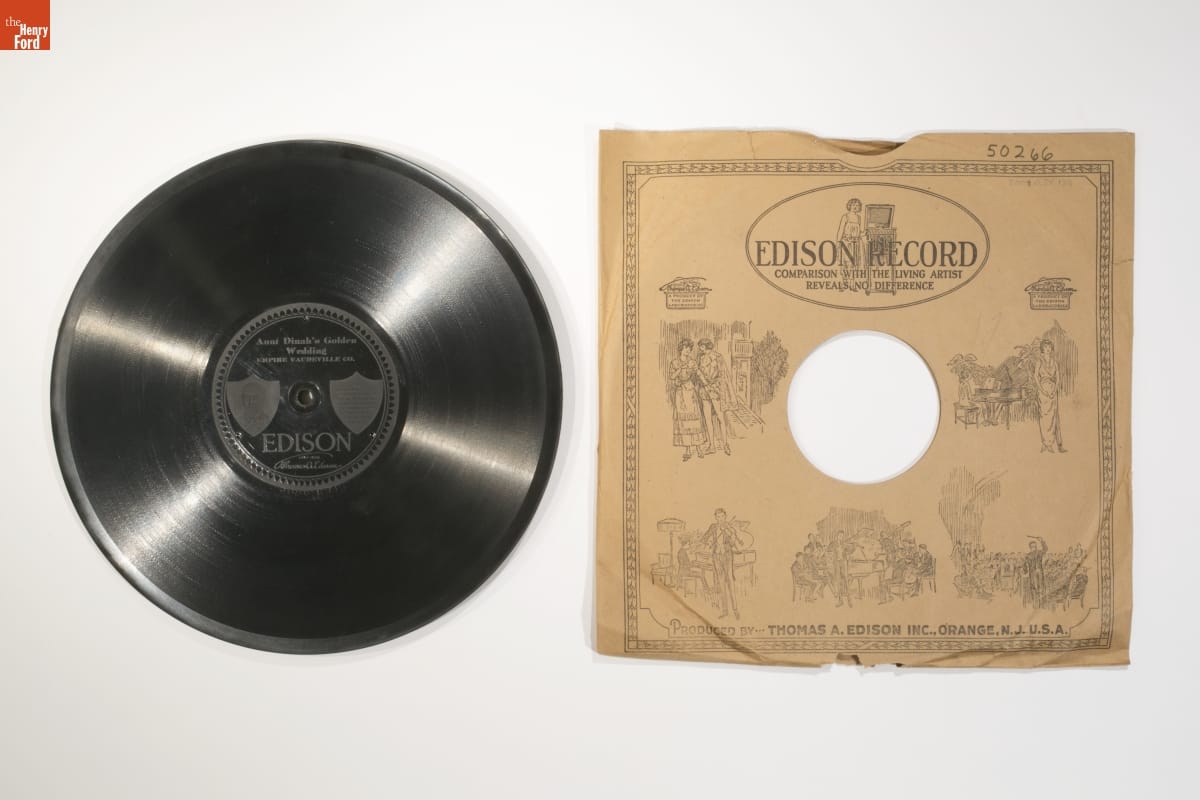
- Edison Diamond Disc Record, "Gasoline Gus and His Jitney Bus" / "Aunt Dinah's Golden Wedding," 1915 - Jitneys were illegal taxis or buses that were not licensed to carry paying passengers. This humorous account of a Jitney driver was performed by Billy Murray, a popular recording artist in the early 20th century. About 1920, the Victor Company stated that, through his recordings, Murray's was likely the most familiar voice in the world!
- June 21, 1915
- Collections - Artifact
Edison Diamond Disc Record, "Gasoline Gus and His Jitney Bus" / "Aunt Dinah's Golden Wedding," 1915
Jitneys were illegal taxis or buses that were not licensed to carry paying passengers. This humorous account of a Jitney driver was performed by Billy Murray, a popular recording artist in the early 20th century. About 1920, the Victor Company stated that, through his recordings, Murray's was likely the most familiar voice in the world!
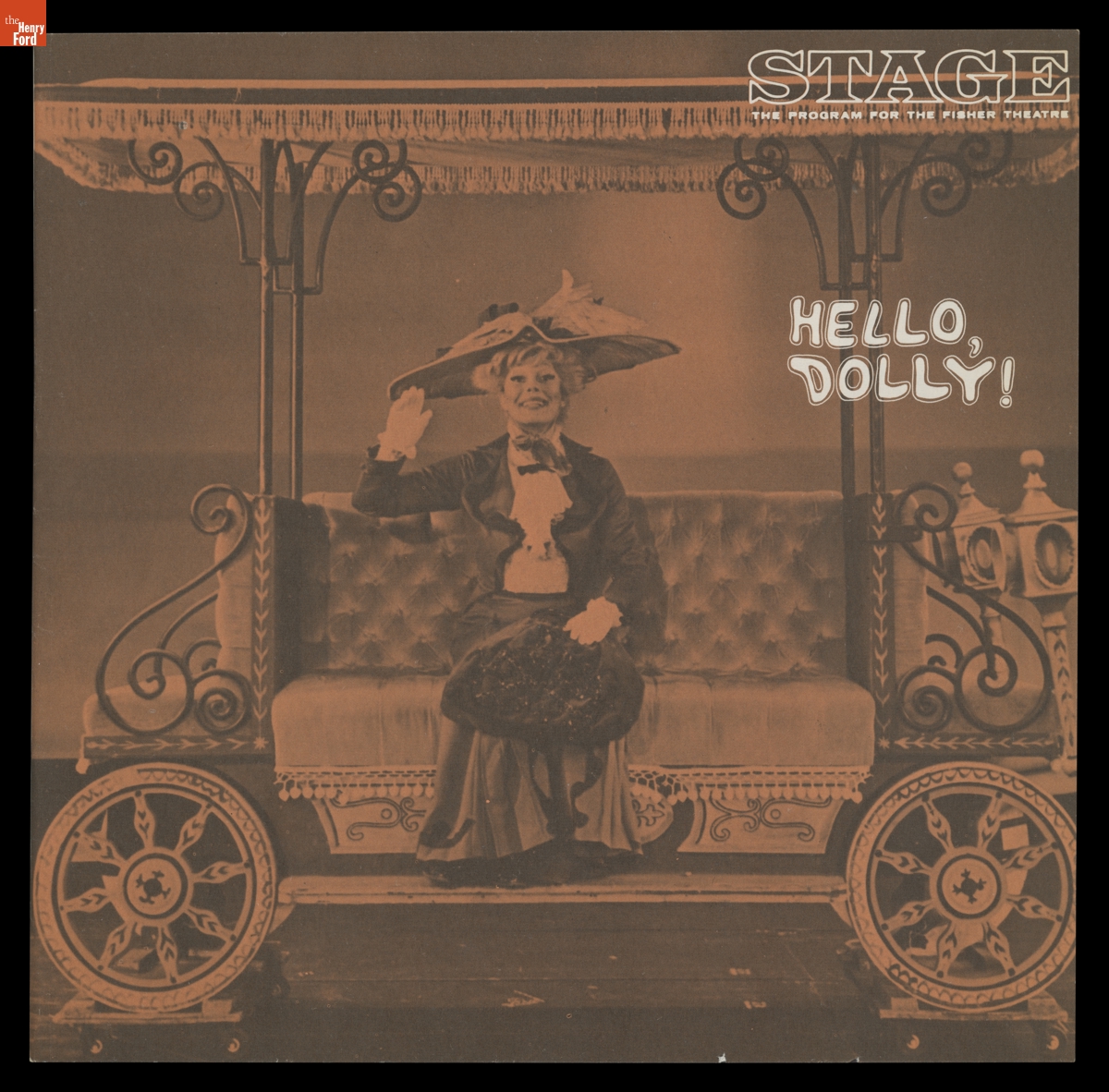
- "Hello Dolly," 1967 - <body>The 1964 musical <i>Hello, Dolly!</i> tells the story of matchmaker Dolly Gallagher Levi in Yonkers, New York. The original cast album reached the top spot on the Billboard chart, and was inducted into the Grammy Hall of Fame in 2002. The lead role of Dolly has been played by such entertainment legends as Carol Channing, Barbra Streisand, and Bette Midler. </body>
- 20 March 1967 - 15 April 1967
- Collections - Artifact
"Hello Dolly," 1967
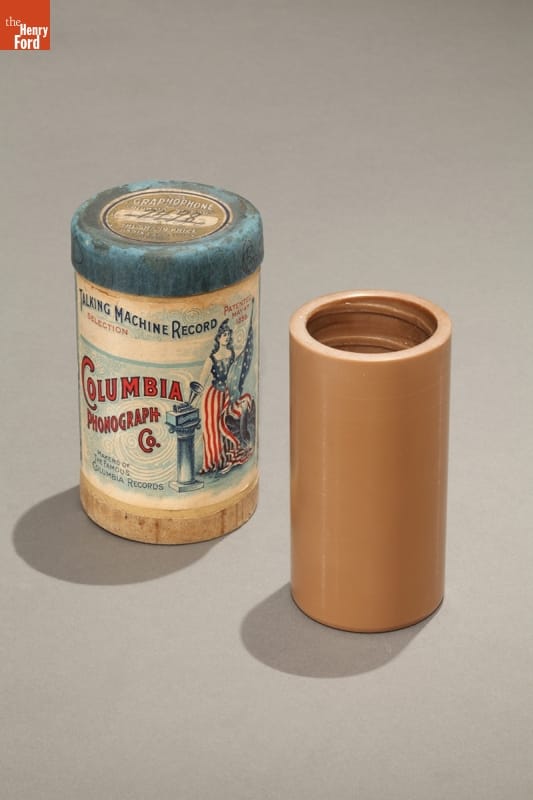
The 1964 musical Hello, Dolly! tells the story of matchmaker Dolly Gallagher Levi in Yonkers, New York. The original cast album reached the top spot on the Billboard chart, and was inducted into the Grammy Hall of Fame in 2002. The lead role of Dolly has been played by such entertainment legends as Carol Channing, Barbra Streisand, and Bette Midler. - Columbia Talking Machine Record, "Casey at the Telephone," 1896 - Russell Hunting was an early recording artist who developed the popular "Michael Casey" character, an Irishman with a heavy brogue who found himself in a variety of comic situations. In this recording, the unsophisticated Casey struggles with technology unfamiliar to him -- the telephone. The caricature of the ignorant Irishman was frequently the subject of 19th century humor.
- 1896
- Collections - Artifact
Columbia Talking Machine Record, "Casey at the Telephone," 1896
Russell Hunting was an early recording artist who developed the popular "Michael Casey" character, an Irishman with a heavy brogue who found himself in a variety of comic situations. In this recording, the unsophisticated Casey struggles with technology unfamiliar to him -- the telephone. The caricature of the ignorant Irishman was frequently the subject of 19th century humor.
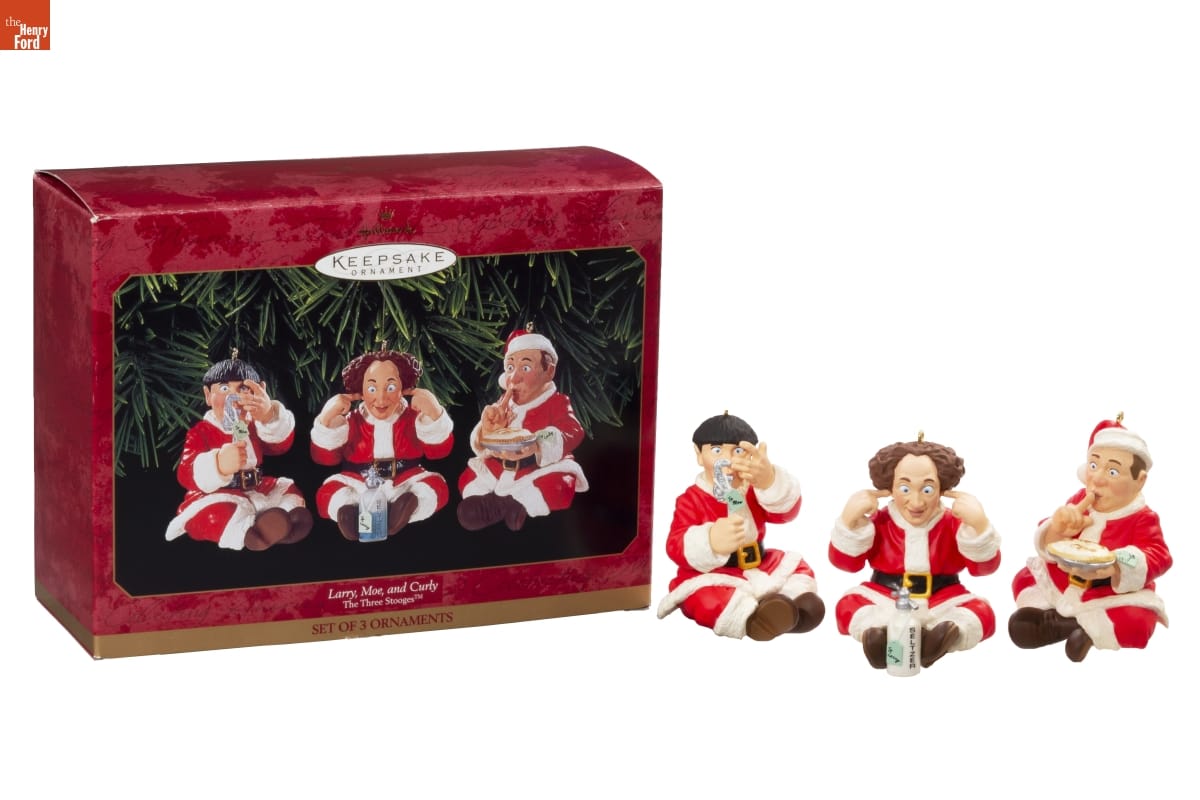
- Hallmark "The Three Stooges: Larry, Moe, and Curly" Christmas Ornaments, 1999 - Already known for greeting cards, Hallmark introduced a line of Christmas ornaments in 1973. The company's annual release of an increasing array of ornaments revolutionized Christmas decorating, appealing to customers' interest in marking memories and milestones as well as expressing one's personality and unique tastes.
- 1999
- Collections - Artifact
Hallmark "The Three Stooges: Larry, Moe, and Curly" Christmas Ornaments, 1999
Already known for greeting cards, Hallmark introduced a line of Christmas ornaments in 1973. The company's annual release of an increasing array of ornaments revolutionized Christmas decorating, appealing to customers' interest in marking memories and milestones as well as expressing one's personality and unique tastes.
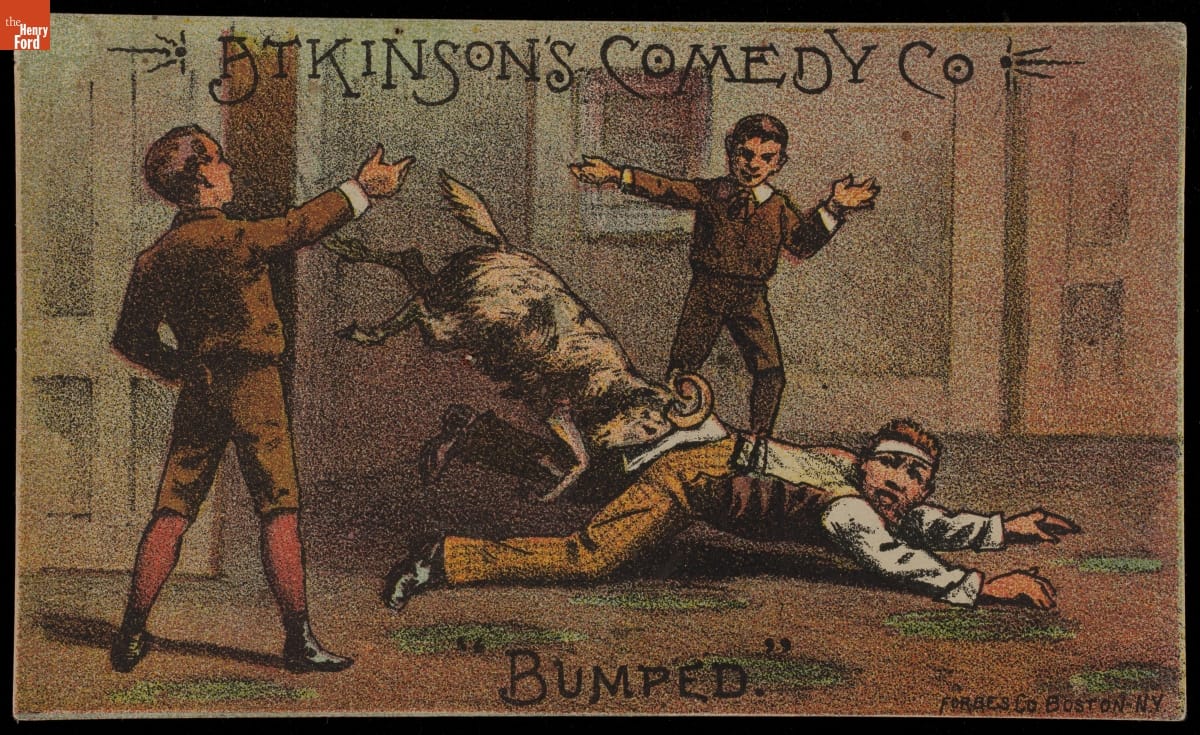
- Trade Card for Atkinson's Comedy Company in "Peck's Bad Boy," 1884-1885 - In the last third of the nineteenth century, promoters used a popular medium--trade cards--to announce shows, activities, and community events. Americans enjoyed and often saved the vibrant little advertisements, which survive as historical records of leisure in the United States.
- 1884-1885
- Collections - Artifact
Trade Card for Atkinson's Comedy Company in "Peck's Bad Boy," 1884-1885
In the last third of the nineteenth century, promoters used a popular medium--trade cards--to announce shows, activities, and community events. Americans enjoyed and often saved the vibrant little advertisements, which survive as historical records of leisure in the United States.
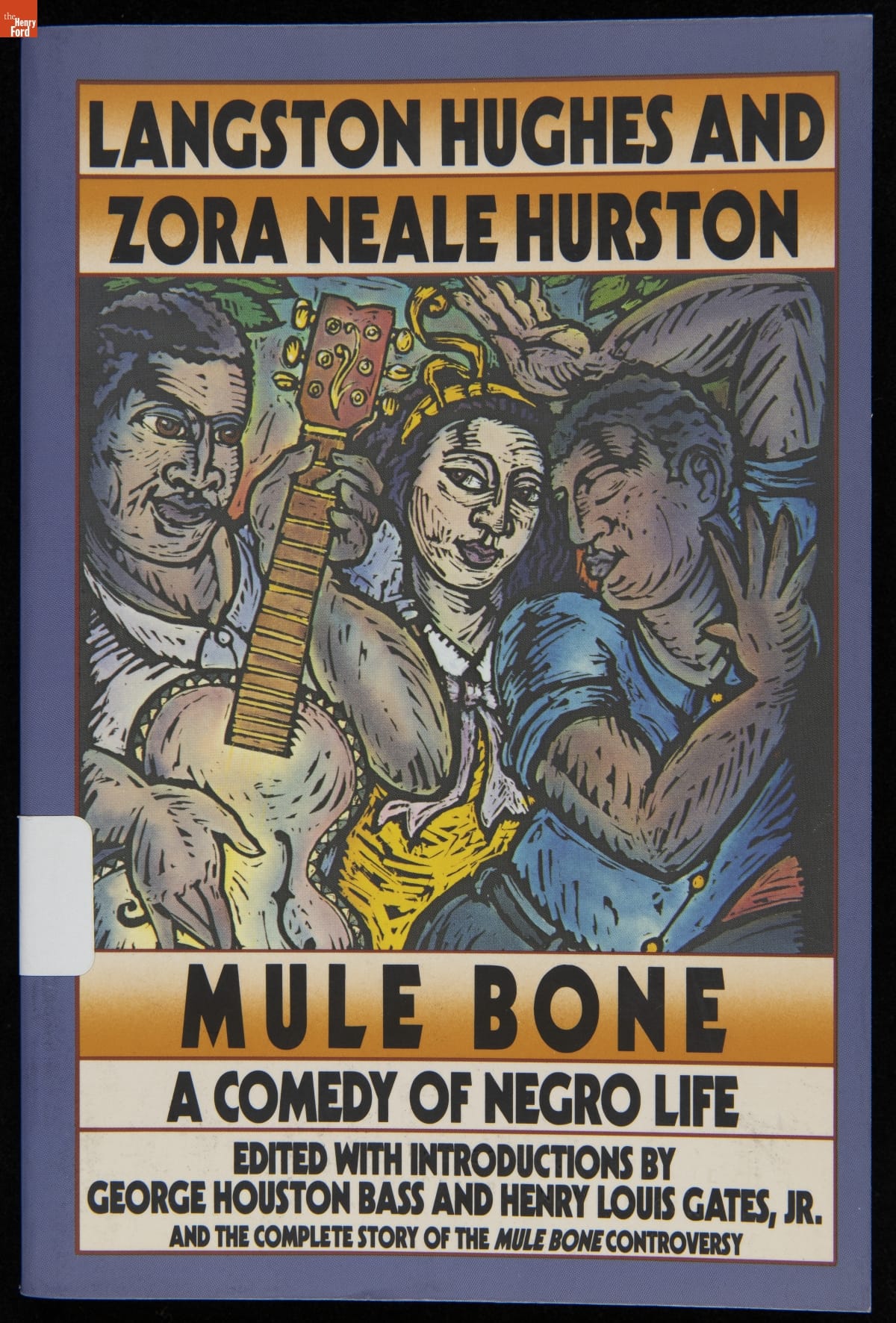
- "Mule Bone: A Comedy of Negro Life," 1991 - Although Harlem Renaissance writers Langston Hughes and Zora Neale Hurston wrote <em>Mule Bone</em> in 1930 and 1931, the play was not produced until 1991, decades after their deaths. Hughes and Hurston were friends and respected colleagues when they began the project, but the two fell out during the writing process due to an authorship dispute.
- 1991
- Collections - Artifact
"Mule Bone: A Comedy of Negro Life," 1991
Although Harlem Renaissance writers Langston Hughes and Zora Neale Hurston wrote Mule Bone in 1930 and 1931, the play was not produced until 1991, decades after their deaths. Hughes and Hurston were friends and respected colleagues when they began the project, but the two fell out during the writing process due to an authorship dispute.